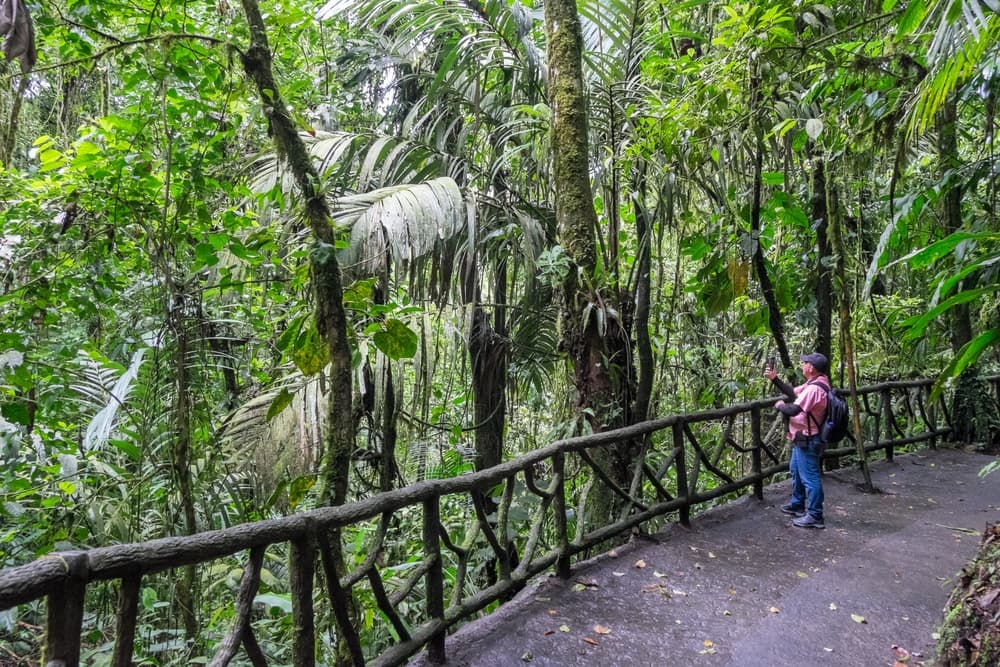
La Fortuna: green, quiet living at the foot of a volcano
A small lowland town of waterfalls, hot springs, and green quiet under Arenal, for people who like knowing their neighbors.
- 16,150
- Population (2022)
- $1,600/mo
- Monthly budget · single
- 74°F / 23°C
- Avg temperature
Budget about $1,600 a month for one person in La Fortuna and $2,300 for a couple. A one-bedroom in the middle of town rents for around $600, or about $450 a little further out. Lunch at a soda runs about $8, and home internet costs about $50.
It's a small place. Around 16,150 people live here on the flats at the foot of Arenal volcano, in Costa Rica's northern lowlands. It suits retirees who want green and quiet rather than polished, remote workers who like having waterfalls and hot springs ten minutes from the house, and anyone who's content to shop at the same three supermarkets every week. The safety index sits at 67, which is high by Central American standards.
Here's the catch: it rains about 115 inches a year, close to ten feet. There's no bus network inside town, so you'll have to think seriously about a car. And because tourism drives the local economy, you'll pay a little more here than you would in a Costa Rican town that visitors don't fly in to see.
At a glance
$1,600
Monthly budget · single person
$600/mo 1-bed rent, center
67/100
Safety index
$50
Internet / month
74°Fannual average
Jan 71° · Apr 76°
Climate
16,150
Population (2022)
Expatsi estimates, updated Aug 2026, based on rental listings, government statistics, and local reporting. Coverage here is thin, so treat these as a rough guide.
Cost of living
What it costs to live in La Fortuna
Single person
$1,200–$2,000/mo
about 50% below Austin, TX
Couple
$1,700–$2,900/mo
about 50% below Austin, TX
Family of four
$2,600–$4,000/mo
about 60% below Austin, TX
Compared with Austin, TX (Expatsi estimate, 2026).
- $8 −60%
- Inexpensive meal
- $450–$750/mo −69%
- 1-bed rent, center
- $350–$550/mo −67%
- 1-bed rent, outside
- $50/mo −23%
- Internet
Expatsi estimates, updated Aug 2026, based on rental listings, government statistics, and local reporting. Coverage here is thin, so treat these as a rough guide.
Daily life
How La Fortuna lives
- C+ grade, 17th percentile among the cities we track
- Dining & cafésmodest
- C- grade, 0th percentile among the cities we track
- Arts & culturemodest
- C- grade, 4th percentile among the cities we track
- Parks & outdoorsmodest
- C grade, 5th percentile among the cities we track
- Schools & educationmodest
- C- grade, 5th percentile among the cities we track
- Healthcare accessmodest
- C- grade, 0th percentile among the cities we track
- Bike infrastructuremodest
- C grade, 8th percentile among the cities we track
- Public transitmodest
Graded on OpenStreetMap amenity density relative to the 298 cities we track. Accessibility is the exception: it's graded against a fixed standard (terrain steepness and sidewalk surfaces), not a curve.
Climate
Weather through the year
Annual average 74°F (23°C) · 116 in of rain a year · Source: Open-Meteo Historical Weather API (temps: ERA5-Land 0.1°; precip/sunshine: ERA5 best-match; 1991-2020 normals)
On the ground
Scenes from La Fortuna
Getting around
Transport in La Fortuna
La Fortuna's center is a tidy grid of a few blocks around the park and the church, and you can walk it. Supermarkets, the bank, pharmacies, the clinic and the bus terminal all sit within about ten minutes of each other on foot. That grid is the extent of the walkable part, and the sidewalks run out once you step past it.
There's no city bus. The buses here run between towns: a handful of direct services a day to San Jose, which takes roughly four hours, frequent departures to Ciudad Quesada about an hour east, and three a day around the lake to Tilaran. Fares are low enough that they won't shape your budget. Uber works in town, though the supply is thin at night, and taxis wait by the park.
Whether you need a car comes down to where you settle. If you rent in town and mostly stay in town, you don't. If you want to live out toward El Castillo, the lake, or up any of the gravel roads with the good views, you do, and you'll want ground clearance for the wet months. Both airports are about three hours away, with San Jose to the southeast and Liberia to the west.
- 0.4/sq mi
- Transit stops
- 0.0/sq mi
- Bike infrastructure
- 0.8/sq mi
- Wheelchair-accessible places
Mapped features per square mile from OpenStreetMap.
Keep exploring
Places like La Fortuna
Living here
Community and practical notes
The expat scene: Most foreigners in the Arenal area don't actually live in La Fortuna. They live around the lake, in Nuevo Arenal, El Castillo and Tilaran, where the retiree community is older and more organized, with farmers markets, pickleball and a restaurant scene built by people who moved here. La Fortuna itself is a working tourism town, home mostly to Ticos who guide, drive and cook, and the Americans here tend to run a business or work remotely. There's no formal club to join, so the social life runs through Facebook groups and the regulars at the same few cafes, which means your Spanish matters more here than it would in Escazu.
Healthcare: The public CCSS clinic sits in town and handles everyday care, alongside private doctors, dentists and pharmacies that will see you the same day for cash. The nearest hospital with a 24-hour emergency room is Hospital San Carlos in Ciudad Quesada, about an hour away. Anything complex, including most surgery, means the private hospitals in San Jose, three to four hours out. Residency comes with enrolling in the Caja and paying into it monthly.
Remote work: Internet runs about $50 a month and fiber reaches town and a lot of the rentals, so video calls are fine on a normal day. Big storms are the exception, and they take out power and connections often enough that serious remote workers keep a hotspot or a second provider as backup. For workspace there's one hostel coworking room in town (the Socialtel, formerly Selina) and a few cafes, so this isn't a nomad hub.
Limited mobility: The town is flat, which helps, though little else about it does. Sidewalks are narrow, broken, high-curbed and often under water, and there's almost no step-free tagging in the map data behind the accessibility grade above, so treat that score as thin rather than reassuring. The famous waterfall sits at the bottom of hundreds of steps down a canyon, and the hot springs vary widely in how well they handle limited mobility. If that's a factor for you, rent single-story in town near the park, plan on a private vehicle, and call resorts and tour operators directly, since a few are genuinely set up for it and most are not.
Retirement: La Fortuna works for retirees who want quiet, warm and green, and who don't mind rain and driving. It works less well if you need specialists nearby or a social life you don't have to build yourself. Costa Rica's pensionado residency runs on a lifetime pension, and there's a rentista route for proven passive income. See how Costa Rica compares to other retirement destinations and our guide to moving to Costa Rica for the full picture on visas, taxes and healthcare.
Housing
Renting and buying
- 1-bed rent (center)
- $450–$750/mo
- 1-bed rent (outside center)
- $350–$550/mo
Expatsi estimates, based on rental listings, government statistics, and local reporting. Coverage here is thin, so treat these as a rough guide.
Good to know
Frequently asked questions
Is La Fortuna, Costa Rica safe?
La Fortuna scores 67 on the safety index and 33 on the crime index, which is high for the region and much better than the bigger Latin American cities. It's a small tourism town where people know each other. The realistic risks are petty theft from cars and rentals, along with the roads, where unlit two-lane highways, potholes and heavy rain do more damage here than crime does.
Is La Fortuna good for remote work?
It's workable but not ideal. Internet runs about $50 a month, fiber reaches most of town, and calls go through fine on a normal day. What you don't get is a real coworking scene, just one hostel work room and a few cafes. Storms knock out power often enough that a backup hotspot is standard. Tamarindo and San Jose have far more infrastructure if that matters to you.
How much does it cost to live in La Fortuna, Costa Rica?
Plan on about $1,600 a month for one person and $2,300 for a couple, all in. A family of four runs closer to $3,300. A one-bedroom in the center goes for around $600 and about $450 outside it, a cheap local meal is about $8, and internet is about $50. Tourist-town prices push groceries and restaurant meals above what you'd pay in a quieter Costa Rican town.
Can Americans retire in La Fortuna?
Yes. Costa Rica's pensionado residency is built for retirees with a lifetime pension, and the rentista route works for people with steady passive income. Both let you live here, both require joining the public Caja health system, and neither lets you take a local job. La Fortuna suits retirees who want nature and quiet. If you want specialists and a big expat social calendar, look at the Central Valley.
Do you need a car to live in La Fortuna?
You don't need one if you live in the center. The grid around the park is walkable, and Uber and taxis cover the rest. But there's no local bus, and the moment you want to live out toward Lake Arenal or El Castillo, or shop somewhere bigger, a car stops being optional. Most people who stay a year end up buying one with decent ground clearance.
How much does it rain in La Fortuna?
About 115 inches a year, or close to ten feet. February through April is the dry stretch, and October and November are the wettest months, with June and July close behind. Rain here usually means heavy afternoon downpours rather than all-day drizzle, but you'll own good boots, run a dehumidifier, and watch mold in closets. If gray, damp weather gets to you, visit in October before you commit.
What is healthcare like in La Fortuna?
It's fine for everyday care and limited for anything serious. There's a public CCSS clinic in town plus private doctors and pharmacies you can see same-day. The nearest hospital with a 24-hour emergency room is in Ciudad Quesada, an hour away, and the big private hospitals are in San Jose, three to four hours out. Most residents keep private insurance on top of their Caja enrollment.
See how La Fortuna fits your life
Take the free Expatsi Test and compare Costa Rica to nearly 200 countries on what actually matters: cost, healthcare, climate, and safety. About five minutes.
Why not you?