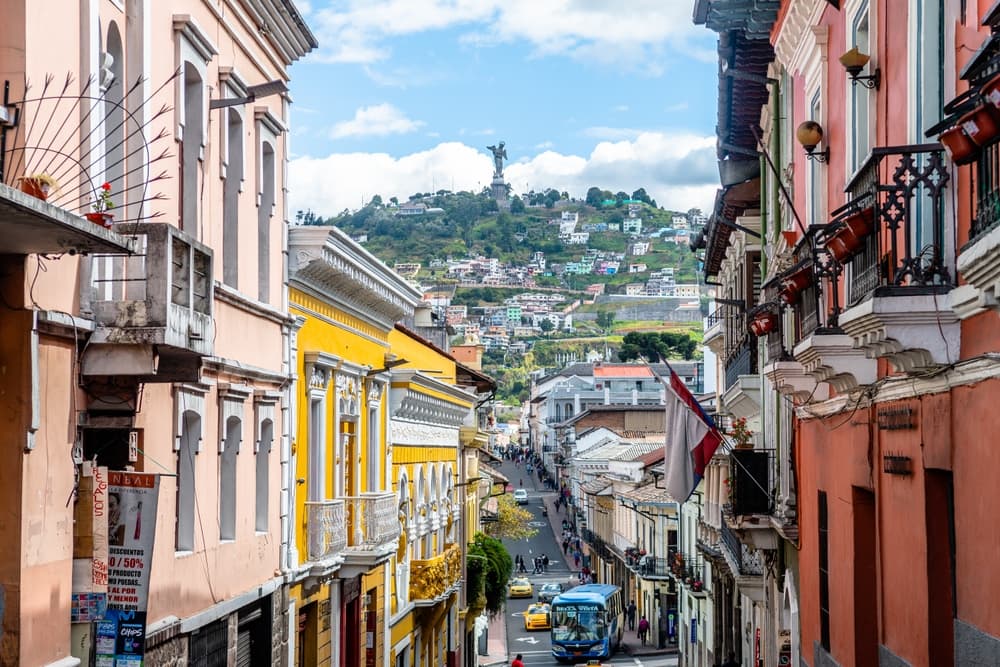
Living in Quito, Ecuador
What a month really costs, how safe the city is, whether you can retire here, and what daily life feels like at 9,350 feet.
- 1,763,275
- Population (2022)
- $1,100/mo
- Monthly budget · single
- 53°F / 12°C
- Avg temperature
Quito runs about $1,100 a month for one person and $1,800 for a couple. A family of four lands closer to $2,900. A one bedroom in a central neighborhood rents for around $500, or $350 further out. Lunch at a neighborhood spot is $5 and home internet is $30. Ecuador uses the U.S. dollar, so nothing you earn or spend here passes through an exchange rate.
It suits retirees who want a real city instead of a small town, remote workers who need direct flights home, and families who come for the international schools out in the valleys. The weather barely moves all year. Average highs sit at 64 to 65F every month and average lows land in the low 40s.
Here's the catch. Quito's safety score is 38, and you should believe it. The city also sits at 9,350 feet, which takes most people a week or two to absorb. Also, it rains about 56 inches a year, most of it between October and May.

Reviewed and updated September 26, 2026 · 4 min read
At a glance
$1,100
Monthly budget · single person
$500/mo 1-bed rent, center
38/100
Safety index
$30
Internet / month
53°Fannual average
Jul 53° · Mar 54°
Climate
1,763,275
Population (2022)
Expatsi estimates, updated Aug 2026, based on rental listings, government statistics, and local reporting.
Cost of living
What it costs to live in Quito
Single person
$1,000–$1,300/mo
about 65% below Austin, TX
Couple
$1,600–$2,000/mo
about 60% below Austin, TX
Family of four
$2,600–$3,200/mo
about 65% below Austin, TX
Compared with Austin, TX (Expatsi estimate, 2026).
- $5 −75%
- Inexpensive meal
- $450–$550/mo −74%
- 1-bed rent, center
- $300–$400/mo −74%
- 1-bed rent, outside
- $30/mo −54%
- Internet
- $139/sq ft −79%
- Buy price, center
Expatsi estimates, updated Aug 2026, based on rental listings, government statistics, and local reporting.
Daily life
How Quito lives
- B+ grade, 58th percentile among the cities we track
- Dining & cafésstrong
- A- grade, 70th percentile among the cities we track
- Arts & culturestrong
- B grade, 48th percentile among the cities we track
- Parks & outdoorstypical
- B+ grade, 66th percentile among the cities we track
- Schools & educationstrong
- A- grade, 84th percentile among the cities we track
- Healthcare accessstrong
- B grade, 41st percentile among the cities we track
- Bike infrastructuretypical
- B grade, 46th percentile among the cities we track
- Public transittypical
- C+ grade, challenging physical accessibility
- Accessibilitychallenging
Graded on OpenStreetMap amenity density relative to the 369 cities we track. Accessibility is the exception: it's graded against a fixed standard (terrain steepness and sidewalk surfaces), not a curve.
Climate
Weather through the year
Annual average 53°F (12°C) · 56 in of rain a year · Source: Meteostat station normals (84088, 1961-1990)
On the ground
Scenes from Quito
Getting around
Transport in Quito
Quito is a ribbon. The city stretches north to south along a narrow Andean valley, which is why each neighborhood feels walkable on its own and impossibly far from the next one. Plan your life around one part of town.
The spine is the metro, running underground from Quitumbe in the south to El Labrador in the north. It has carried passengers since December 2023 and covers the whole route in about 34 minutes. Above it, the Trolebus and Ecovia electric bus corridors run the same north-south axis in their own lanes. Since April 2026 one city card, the Tarjeta Ciudad, pays for all three. A metro ride costs $0.45 and a Trolebus or Ecovia ride $0.35 at 2026 fares.
Taxis are metered and everywhere, but the State Department tells Americans not to flag one on the street. Use an app instead. Uber is affordable here and goes out to the valleys.
Do you need a car? In the city, no. In Cumbaya or Tumbaco, yes. One more thing: the airport sits out in Tababela, well past the valleys, so give yourself real time to reach a flight.
- 18/sq mi
- Transit stops
- 2.5/sq mi
- Bike infrastructure
- 87/sq mi
- Wheelchair-accessible places
Mapped features per square mile from OpenStreetMap.
Keep exploring
Places like Quito
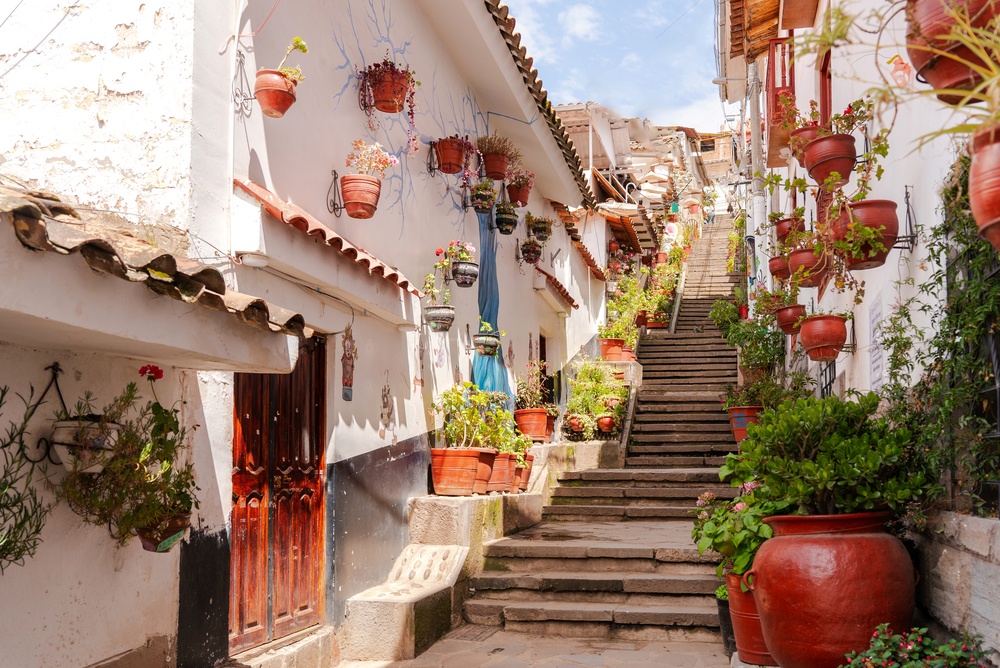
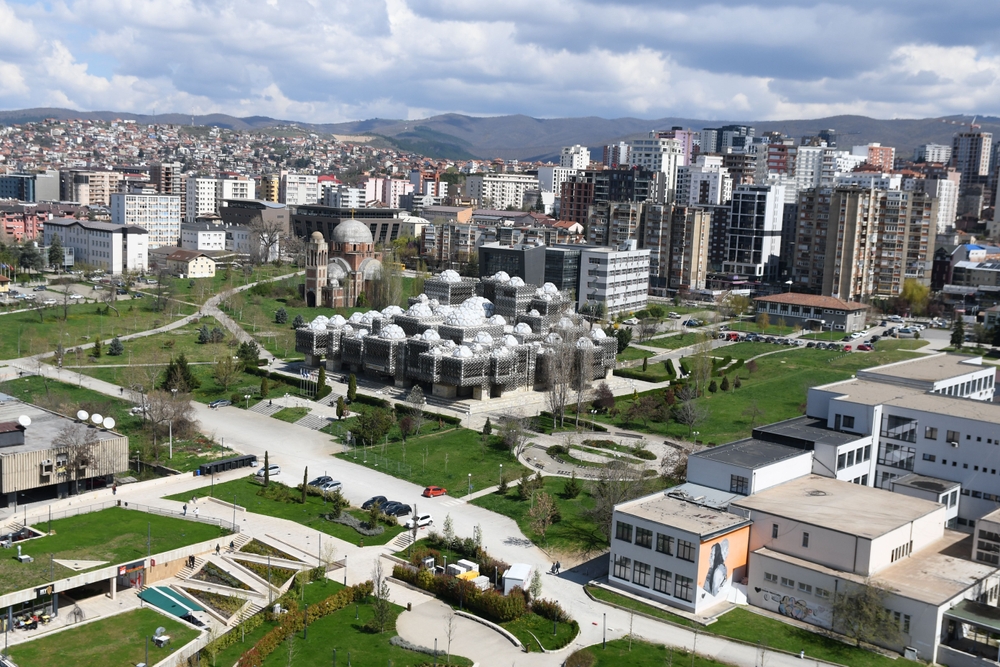
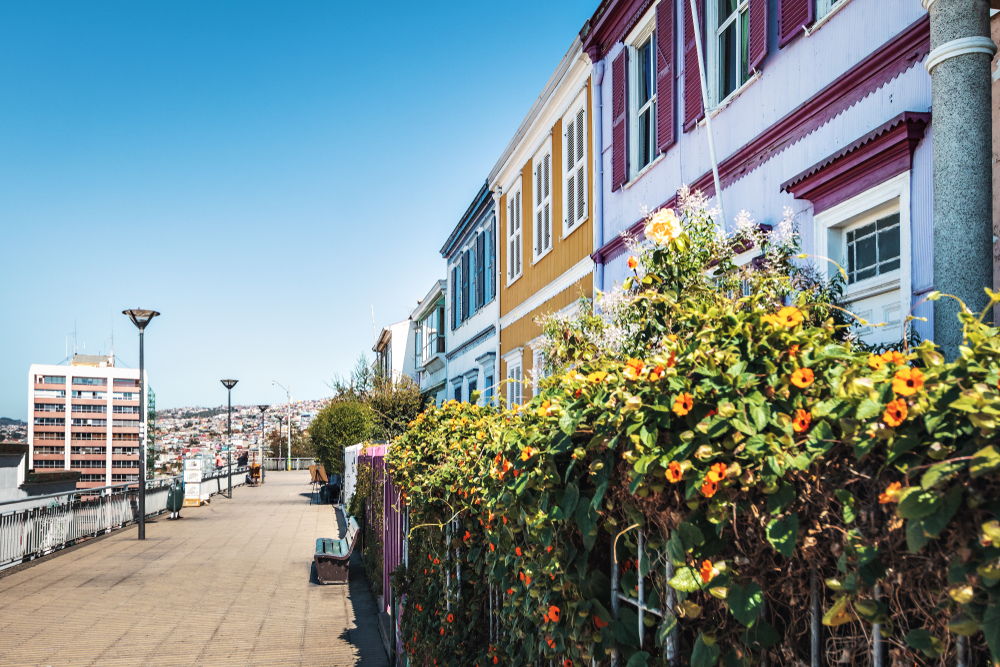
Community
Community & practical notes
The expat scene is bigger than Cuenca's and far more scattered. Retirees, remote workers, embassy and NGO staff, and international school families all live here. There is no single gringo hub. Circles form by neighborhood instead: La Floresta for the artsy, walkable version, the apartment towers along Gonzalez Suarez for the view, La Carolina and Inaquito for park-and-office convenience, Cumbaya and Tumbaco for suburban space. You will work harder to build a social life here than in Cuenca. Spanish is not optional.
Healthcare is one of the reasons to pick the capital. The State Department counts Quito among the Ecuadorian cities with well-resourced facilities. Expats use Hospital Metropolitano, the nonprofit Hospital Vozandes, and Hospital de los Valles out in Cumbaya. Carlos Andrade Marin is the big public referral hospital. Legal residents can join the public IESS system voluntarily for roughly $85 a month at the minimum declaration. Coverage starts after three monthly payments, so most people pair it with cash for routine visits. English is common in private clinics and rare in public ones.
Getting online costs about $30 a month, with CNT and Claro fiber reaching the main residential neighborhoods. Impaqto runs coworking in La Floresta and Cumbaya. The honest caveat is the grid. Ecuador leans on hydropower, and the 2024 drought brought rolling blackouts. In August 2026, the IMF's representative in Ecuador named a return of blackouts as a risk as the dry season advances. A battery backup for your router is cheap insurance against a lost wifi signal.
Schools are why many families end up in the valleys. Academia Cotopaxi in Monteserrin has taught an American curriculum since 1959, holds US accreditation and offers the IB, and it is the school embassy families tend to choose. Colegio Menor and the British School sit in Cumbaya.
Limited mobility is a tale of two cities. The metro is genuinely good: ramps at street level, elevators, tactile paving, wide gates, and trains built for wheelchairs. Aboveground is hard. Quito climbs, the colonial center is cobbled and narrow, curb cuts come and go, and wheelchair users report no adapted taxis. If you use a chair or walker, rent a modern building with an elevator over a charming one in the old center.
Retiring here works if you want a capital's hospitals and flight connections rather than small-town quiet. Ecuador's retirement visa asks for a pension of at least three times the national minimum wage, and Social Security counts toward it. Start with our retirement visa guide, then read how a move to Ecuador works.
Housing
Renting and buying
- 1-bed rent (center)
- $450–$550/mo
- 1-bed rent (outside center)
- $300–$400/mo
- Buy price (center)
- $139/sq ft
- Buy price (outside center)
- $74/sq ft
Expatsi estimates, based on rental listings, government statistics, and local reporting.
Good to know
Frequently asked questions
How much does it cost to live in Quito, Ecuador?
Budget about $1,100 a month for one person, $1,800 for a couple, and $2,900 for a family of four. A one bedroom in a central neighborhood runs around $500 a month, or $350 outside the center. A cheap lunch is $5 and home internet is $30. Ecuador is dollarized, so those are real dollars with no currency conversion.
What is it like living in Quito at 9,350 feet?
Quito is high enough that you will notice. The city sits above the 8,000-foot line where altitude illness starts, so expect a week or two of headaches, short breath on stairs and broken sleep. Most people adjust. Heart or lung conditions matter far more than age here, so ask your doctor first and plan slow first days. Equatorial sun at this height burns fast.
What is the weather like in Quito year round?
It barely changes. Average daytime highs sit at 64 to 65F in every month of the year and average lows land in the low 40s, for an annual average of 53F. What changes is the rain. Quito gets about 56 inches a year, wet from October through May and dry from June to September. Almost no apartment has heating or air conditioning, so evenings feel cold indoors.
Do you need a car to live in Quito?
Not in the city. The metro runs the length of the valley, the bus corridors cover the same axis, and Uber is affordable. If you settle in the Cumbaya or Tumbaco valley, where many expat families land, plan on a car and plan on traffic: the road in and out of the valley backs up every weekday.
Is Quito or Cuenca better for expats?
Cuenca is smaller, drier and costs a little less: $1,000 a month for one person against Quito's $1,100, and $450 center rent against $500. It scores 54 for safety where Quito scores 38, and it has a ready-made expat community. Quito gives you a capital instead, with the country's best hospitals, direct flights to the US and international schools. It also gets 56 inches of rain a year against Cuenca's 19.
Is Quito, Ecuador safe for Americans?
Quito's safety score is 38, which is well below Cuenca's 54, and the honest risk is robbery and pickpocketing rather than gang violence. The State Department kept Ecuador at Level 2 in its August 2026 advisory, and the harshest warnings cover coastal and border provinces, not the Andes. Still, Pichincha, Quito's province, was under a nighttime curfew in May 2026, and a state of emergency covering it runs into November 2026, this time without a curfew. Expats here take precautions they would skip in Cuenca: no phone out on the street, apps instead of street taxis, and no walking in the historic center or La Mariscal after dark.
How do Americans move to Quito?
Most arrive on the 90-day tourist stamp, rent for a few months to test neighborhoods, then apply for residency. The usual routes are the retirement visa for pension income, the income visa for other passive income, the professional visa if you hold a degree, and a real estate investment visa. All start as two-year temporary residencies. Work out which one fits before you ship anything.
Can I retire in Quito on Social Security?
For many people, yes. A comfortable budget is about $1,100 a month for one person and $1,800 for a couple, which fits inside a typical Social Security check or two. To get Ecuador's retirement visa, your pension has to reach at least $1,446 a month in 2026, three times the national minimum wage. Ecuador pays in dollars, so your deposit never moves with an exchange rate. The trade-offs are altitude and street crime, not money.
See how Quito fits your life
Take the free Expatsi Test and compare Ecuador to nearly 100 countries on what actually matters: cost, healthcare, climate, and safety. About five minutes.
Why not you?