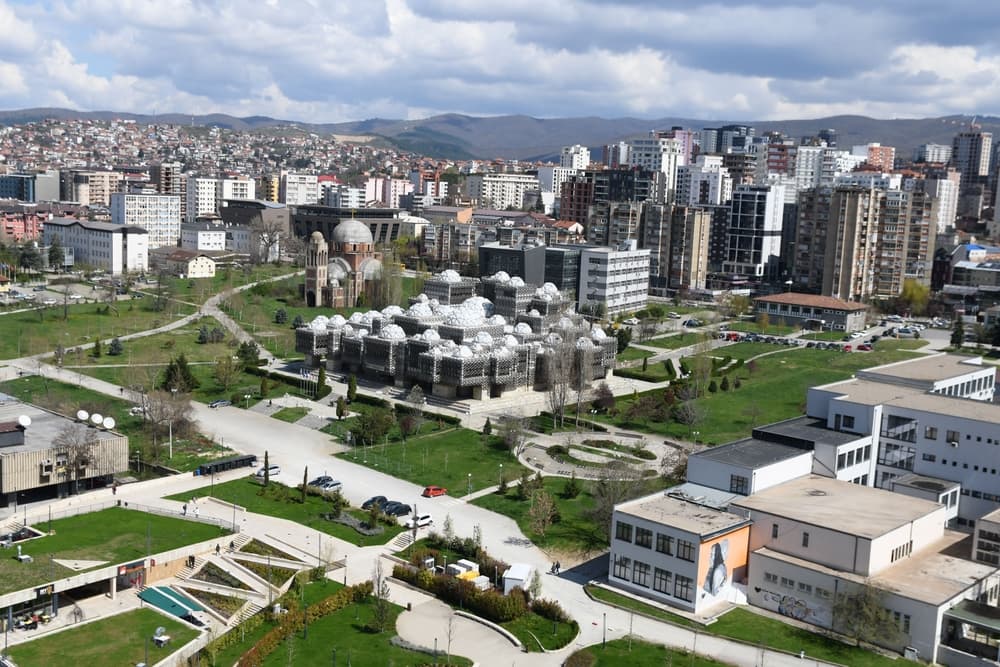
Living in Pristina, Kosovo's euro-based capital
What a month costs, how safe it is, how people get around, and whether Americans can retire there.
- 227,466
- Population (2024)
- $900/mo
- Monthly budget · single
- 51°F / 11°C
- Avg temperature
Budget about $900 a month in U.S. dollars to live alone in Pristina, with most single people spending between $700 and $1,100. A couple needs about $1,500, and a family of four about $2,200. A one-bedroom in the center rents for around $500 a month, or about $300 farther out. Those are 2026 figures, and you'll pay them in euros.
Pristina is Kosovo's capital and largest city, home to about 227,000 people in 2024. It suits people who want a busy capital on a modest budget, with daily life centered on Mother Teresa Boulevard, a mostly car-free promenade lined with shops and cafés.
It's a harder fit if you need specialist care close by or have asthma. The State Department rates medical care below U.S. standards and calls air pollution a problem in greater Pristina, especially in winter.

Reviewed and updated October 15, 2026 · 4 min read
At a glance
$900
Monthly budget · single person
$500/mo 1-bed rent, center
64/100
Safety index
$20
Internet / month
51°Fannual average
Jan 32° · Aug 71°
Climate
227,466
Population (2024)
Expatsi estimates, updated Oct 2026, based on rental listings, government statistics, and local reporting.
Cost of living
What it costs to live in Pristina
Single person
$700–$1,100/mo
about 70% below Austin, TX
Couple
$1,200–$1,800/mo
about 65% below Austin, TX
Family of four
$1,800–$2,700/mo
about 70% below Austin, TX
Compared with Austin, TX (Expatsi estimate, 2026).
- $5 −75%
- Inexpensive meal
- $400–$550/mo −74%
- 1-bed rent, center
- $250–$400/mo −78%
- 1-bed rent, outside
- $20/mo −69%
- Internet
- $20/mo −52%
- Transit pass
- $158/sq ft −76%
- Buy price, center
Expatsi estimates, updated Oct 2026, based on rental listings, government statistics, and local reporting.
Daily life
How Pristina lives
- A- grade, 71st percentile among the cities we track
- Dining & cafésstrong
- B grade, 51st percentile among the cities we track
- Arts & culturetypical
- B- grade, 40th percentile among the cities we track
- Parks & outdoorstypical
- B+ grade, 66th percentile among the cities we track
- Schools & educationstrong
- A grade, 88th percentile among the cities we track
- Healthcare accessstandout
- B grade, 49th percentile among the cities we track
- Bike infrastructuretypical
- B grade, 50th percentile among the cities we track
- Public transittypical
- B+ grade, moderate physical accessibility
- Accessibilitymoderate
Graded on OpenStreetMap amenity density relative to the 369 cities we track. Accessibility is the exception: it's graded against a fixed standard (terrain steepness and sidewalk surfaces), not a curve.
Climate
Weather through the year
Annual average 51°F (11°C) · 24 in of rain a year · Source: Open-Meteo Historical Weather API (temps: ERA5-Land 0.1°; precip/sunshine: ERA5 best-match; 1991-2020 normals)
On the ground
Scenes from Pristina
Getting around
Transport in Pristina
Central Pristina is compact enough to cover on foot. Mother Teresa Boulevard, the main promenade, is mostly closed to cars for about two-thirds of a mile (1 km), and plenty of errands start or end there. Off the boulevard, stay alert: the State Department warns that drivers may not stop for pedestrians, even at crosswalks.
The municipal bus company, Trafiku Urban, runs the city lines. Since July 2026 a one-way ticket costs 80 euro cents in cash (about 90 U.S. cents), or 60 euro cents (about 70 cents) through the digital wallet or by SMS. Buses reach most neighborhoods but get crowded. Our data puts monthly transportation at about $20.
Taxis fill the gaps. The State Department calls them inexpensive, safe and reliable; use an established company and check that the meter starts when you set off.
Pristina International Airport is about 9 miles (15 km) southwest of the city. Bus line 1A links it with the main bus station, just over a mile (2 km) southwest of the center. Trains barely figure: the only passenger line runs west to Peja.
If you live centrally, you can skip a car. For mountain weekends, rent one for the trip and drive in daylight, as the State Department recommends. It describes some roads as narrow and crowded, and mountain roads as poorly marked.
- 23/sq mi
- Transit stops
- 4.7/sq mi
- Bike infrastructure
- 62/sq mi
- Wheelchair-accessible places
Mapped features per square mile from OpenStreetMap.
Keep exploring
Places like Pristina
Community
Community & practical notes
Community: The paperwork starts early. Every foreigner must report their address at the nearest police station within 3 days of arriving or moving. Hotels do it for guests, but in a rental it's your responsibility. Kosovo is still largely a cash economy, though cards are catching on. Petty street crime is the main thing to watch for, and the State Department says violent crime against Americans is rare. Demonstrations do happen in Pristina, sometimes without notice, so follow local news and steer around them.
Healthcare: Pristina has a public hospital and private clinics, and that matters, because the State Department says facilities outside the capital offer limited services. It also rates care below U.S. standards. You'll pay even at a public hospital, often up front, and most providers won't take U.S. insurance or Medicare. Carry international coverage that includes medical evacuation. A residence permit application also asks for proof of local health insurance. Drink bottled water; tap water isn't considered safe.
Remote work: Home internet runs about $20 a month. For a desk outside your apartment, Regus has a coworking center at 37 Mark Isaku in the center, with day passes, dedicated desks and hourly options. Keep offline backups handy, since the State Department notes occasional power outages. Before planning a stay past 90 days on remote income, read the residency chapter of our Kosovo guide.
LGBTQ expats: Kosovo has no laws against same-sex relations and does have anti-discrimination protections. Even so, the State Department says discrimination is still common, advises against public displays of affection, and notes that some police officers may not understand the community's needs. If you're moving as a married couple, ask a local lawyer how your U.S. marriage would be treated for residency before you file.
Black Americans: We found little published about Black Americans living in Pristina. One Black American student who studied in Kosovo wrote that he stood out from the moment he landed, since almost no Black people live there, yet came away more at ease in his identity and open to people's curiosity as long as it wasn't rude. That's one account, not a survey. Spend a few weeks here before you sign a lease, and talk with Black expats elsewhere in the Balkans.
Limited mobility: Plan carefully. Kosovo's law requires access to official buildings, but the State Department says it isn't enforced, most buildings lack access, and accessible public transport is very limited. The pedestrian boulevard is the easiest stretch to get around; beyond it, traffic doesn't reliably yield to people on foot. Look for a newer elevator building near the center, and visit before you commit.
Retirement: Pristina can work for retirees who want a capital's services on about $900 a month and don't mind real winters, with January highs averaging about 39°F. The paperwork is the hurdle. Kosovo has no residence permit category built for retirees, though its Law on Foreigners allows temporary residence "for other purposes as well," so a local lawyer is worth the fee. Our Kosovo guide covers every route, and our retirement visa page compares countries that do offer a pension visa.
Housing
Renting and buying
- 1-bed rent (center)
- $400–$550/mo
- 1-bed rent (outside center)
- $250–$400/mo
- Buy price (center)
- $158/sq ft
- Buy price (outside center)
- $111/sq ft
Expatsi estimates, based on rental listings, government statistics, and local reporting.
Good to know
Frequently asked questions
Can Americans retire in Pristina?
Yes, but not on a retirement visa. Kosovo has no residence permit category built for retirees, though its Law on Foreigners lets authorities grant temporary residence for other purposes. Talk to a local immigration lawyer before you plan a retirement around it.
Do you need a car in Pristina?
Not if you live near the center. The core is walkable, city buses reach most neighborhoods, and the State Department calls metered taxis inexpensive and reliable. A car helps for weekends in the mountains, where roads can be narrow and poorly marked, and the State Department recommends driving in daylight.
Is the air quality bad in Pristina?
In winter, yes. The State Department says air pollution is a problem in greater Pristina, especially in winter, and advises anyone with respiratory problems or asthma-like symptoms to see a doctor before traveling.
What is the weather like in Pristina?
Pristina has four distinct seasons. January highs average about 39°F with lows near 26°F, and August highs average about 81°F. The city gets about 25 inches of precipitation a year, and winters bring snow.
Is Pristina safe for Americans?
Mostly, yes, with some caution. Kosovo carries the State Department's Level 2 advisory, exercise increased caution, reissued in August 2026 over unrest and terrorism, with a stricter Level 3 for four northern municipalities. The State Department says violent crime against Americans is rare and petty street crime is the most common concern. Demonstrations in Pristina can start without notice, so steer clear of them.
Is Pristina LGBTQ-friendly?
Not entirely. Kosovo has no laws against same-sex relations and bans discrimination, but the State Department says discrimination is still common and advises gay and lesbian travelers to avoid public displays of affection.
How much does it cost to live in Pristina, Kosovo?
One person spends about $900 a month in Pristina, in U.S. dollars with rent included, as of 2026. A couple spends about $1,500 and a family of four about $2,200. A one-bedroom in the city center rents for around $500 a month.
How long can Americans stay in Pristina without a visa?
Up to 90 days within a 6-month period. Staying longer takes a temporary residence permit, and the application asks for proof of local health insurance and a police background check. You also have to report your address to the police within 3 days of arriving.
See how Pristina fits your life
Take the free Expatsi Test and see how Kosovo compares with other countries on cost, healthcare, climate, and safety.
Why not you?