St. Kitts and Nevis guide, updated September 2026
St. Kitts and Nevis: no income tax, two small islands, and a $250,000 passport
A couple lives here on about $2,600 a month, paid in a currency pegged to the U.S. dollar since 1976. The catch is the way in: we found no retirement or nomad visa, so most Americans arrive through citizenship by investment or a residence permit that doesn't let them work.
What daily life costs, the four investment routes and the permits that skip them, where serious medical care happens, and the people who handle the paperwork.

Reviewed and updated September 30, 2026 · 12 min read
01 · The case for St. Kitts and Nevis
Two islands, one federation, and a very short list of ways in
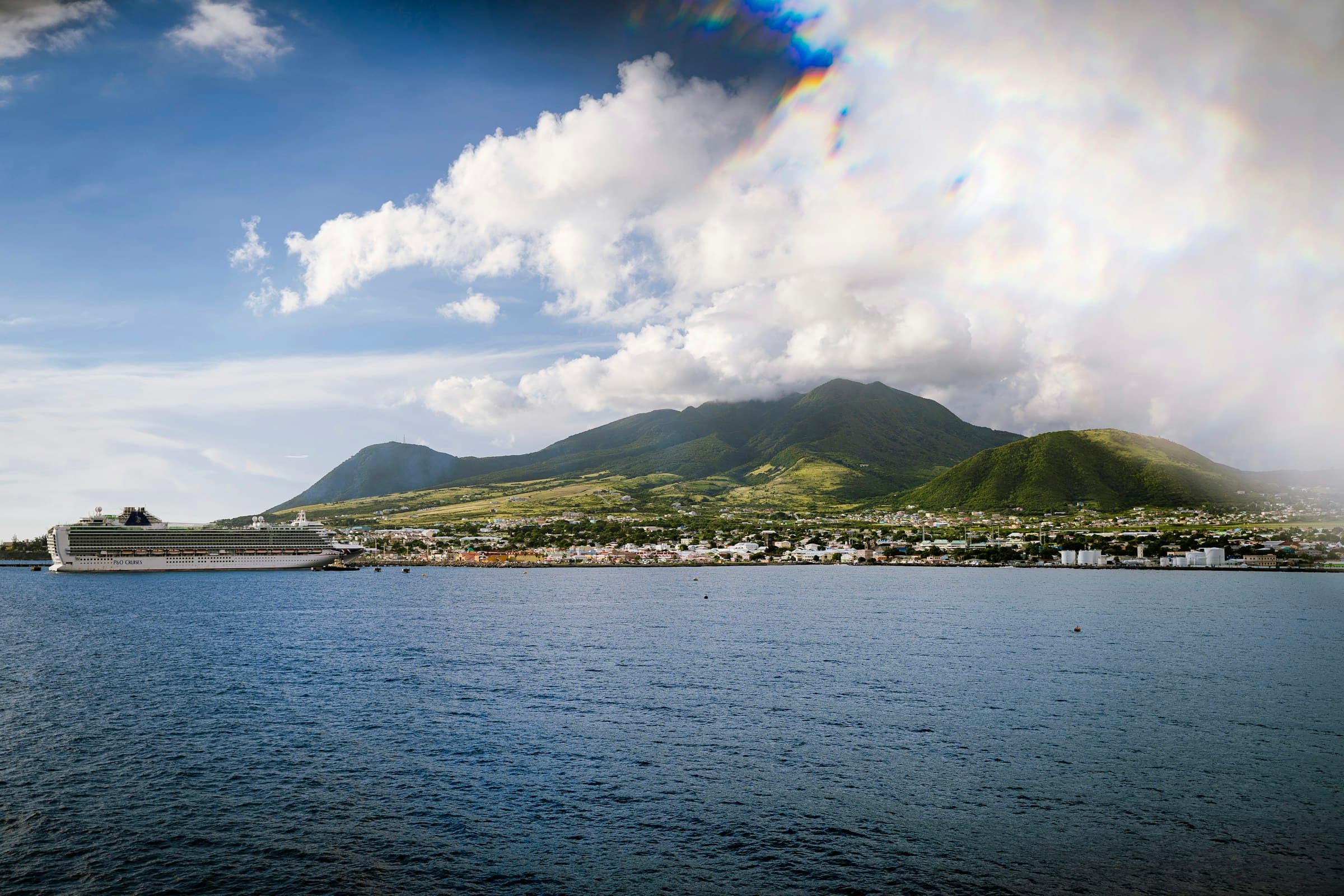
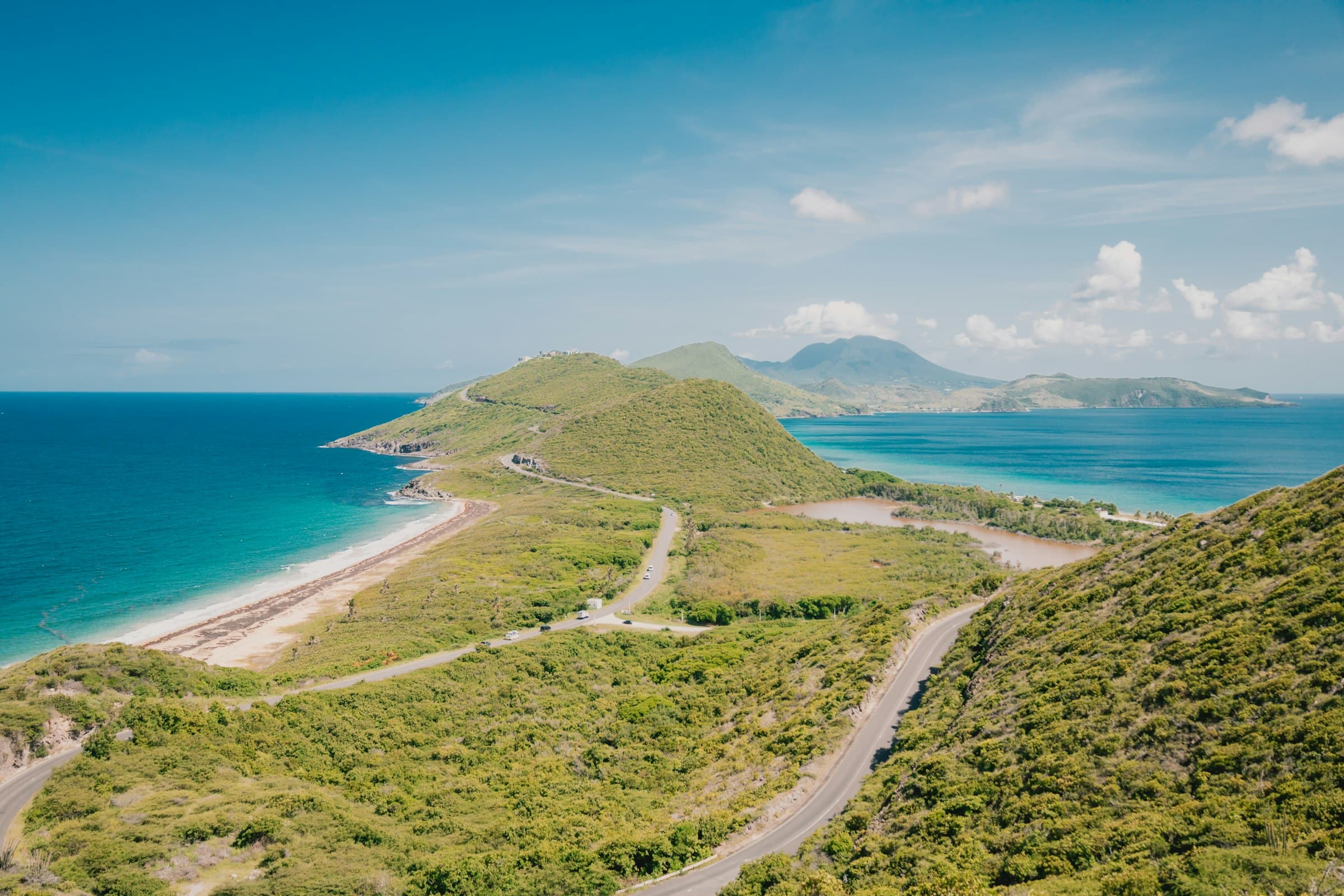
St. Kitts and Nevis is two volcanic islands about 1.9 miles apart across a channel called the Narrows, roughly 101 square miles of land in total with around 47,000 people. English is the everyday language, so there's no new language to learn before you go.
The islands grew sugar for centuries. The government closed the state sugar company in 2005, and the economy has leaned on tourism and the citizenship program ever since.
What pulls Americans here
The tax picture is the headline. The Citizenship by Investment Unit says the federation has no personal income tax, wealth tax or inheritance tax. You'll still owe the IRS (more on that below), but you won't file a second income tax return here.
The money is easy to think about. The Eastern Caribbean dollar has been fixed at EC$2.70 to US$1 since July 1976, so a pension or Social Security check in dollars buys the same amount here every month. There's no exchange rate to watch.
It's close to home, too. American Airlines flies to Miami year-round, and in season you can fly nonstop to Charlotte, Atlanta, New York JFK and Newark on American, Delta, JetBlue and United. The clocks match Eastern time in summer and run an hour ahead in winter, since the islands skip daylight saving.
The U.S. State Department rates the country Level 1, Exercise Normal Precautions, in its advisory issued July 7, 2026.
Here's the catch
There are four honest reasons St. Kitts and Nevis might not be your place.
First, there's no easy visa. We found no visa that turns a pension or remote salary into residency, and no digital nomad visa. Americans get 90 days as visitors. Past that, you either buy citizenship through the investment program, starting at $250,000, or apply for a residence permit, and the most accessible permit doesn't allow you to work.
Second, healthcare is thin. There are two public hospitals, one per island, and no national health insurance. Serious cases, like heart or brain surgery, fly to Trinidad, Puerto Rico or Miami.
Third, it's small and in the storm belt. Hurricane season runs from early June through November, and the State Department notes the country regularly gets hit. Our data rates the expat community as small, so your social life will be mostly local.
Fourth, the rules are moving. In January 2026, the government announced that citizenship by investment will add a residency requirement; as of September 2026, it still hasn't published how many days.
If none of that scared you off, keep going. The rest of this guide covers the money, each route in, and the practical side of island life.
- Cost of living (single)
- $1,700/mo
- Safety index
- 55/100
- English proficiency
- 100/100
- Internet speed
- 35 Mbps
- Currency
- East Caribbean Dollar (XCD)
- Capital
- Basseterre
02 · The numbers
What a month on the islands costs
$2,600
Monthly budget, couple
our 2026 estimate
$1,700
Monthly budget, single
our 2026 estimate
$3,500
Monthly budget, family
our 2026 estimate
$2,400
Rent, 1-bed in town
$1,800 further out
$70
Home internet, monthly
about 35 Mbps
$50
Monthly transport
our 2026 estimate
17%
Standard VAT
10% on tourism
EC$2.70
Per U.S. dollar
fixed since 1976
Where the money goes
Our 2026 estimates put a single person at about $1,700 a month, a couple at about $2,600 and a family at about $3,500. Every figure is in U.S. dollars. Thanks to the peg, they won't drift with the currency.
Housing is the number to pin down before anything else. Our data puts a one-bedroom in town at around $2,400 and $1,800 further out, which means a couple renting in Basseterre could spend most of that $2,600 budget on rent alone. The budgets hold if you find housing well under those averages, share a place, or buy. Get quotes from a local agent before you count on them.
The rest is more predictable. Home internet runs about $70 a month for roughly 35 Mbps, and our transport figure is about $50 a month. Budget for a car if you won't live in town.
Two taxes change the math. VAT is 17% on most purchases, 10% in tourism. And if you buy property, stamp duty runs 6% to 10%; on Nevis, a non-national also pays for an Alien Land Holders License at 10% of the price or the assessed value, whichever is higher. Budget both on top of the purchase price.
Your budget won't open the door here
In most countries, showing a steady income is what earns you a visa. We found no income-based visa for retirees or remote workers in St. Kitts and Nevis. Your real entry cost is either the investment program, from $250,000 plus fees, or a residence permit that costs a few hundred dollars a year but bars you from working. Pick your route first, then build the budget around it.
03 · The right path for you
Buy the passport, or rent the right to stay
Your route depends on how much you're ready to invest and whether you need to work locally. Here's each one, with the numbers as of September 2026.
Buying citizenship: the CBI program
St. Kitts and Nevis launched its citizenship by investment program in 1984, and the Citizenship by Investment Unit (CIU) now lists four routes:
- Sustainable Island State Contribution (SISC): a non-refundable US$250,000 for a main applicant or a family of up to four. Each extra dependent adds $25,000 under 18 or $50,000 at 18 and over.
- Public Benefit Option: from $250,000 in an approved project. Since August 1, 2026, families of up to four pay no extra per-person charges on this route.
- Developer real estate: from $325,000 in an approved project, which you can resell after seven years.
- Private real estate: from $325,000 for a condo or share, or $600,000 for a single-family home, both held for seven years.
On top of that come government processing fees of $10,000 for the main applicant and $7,500 for each dependent aged 16 or older. So a couple on the SISC route starts at $267,500 before agent, legal and due diligence costs. You must be 18 or older, clear due diligence, have a clean record and show where the money came from. You apply through an authorized agent from the CIU's list, every main applicant sits an interview (online, on the islands or at an approved location), and the CIU quotes 120 to 180 days.
The payoff: citizenship for life, no requirement to live here to keep it, and you keep your U.S. passport, since the federation has allowed dual nationality since independence. One more point for a Caribbean passport right now: when the U.S. restricted visas for Antigua and Barbuda and Dominica from January 1, 2026 over vetting concerns, St. Kitts and Nevis wasn't on the list.
The residency rule that's coming
In January 2026, the government announced a physical-presence requirement for new investment citizens. As of September 2026, the CIU hasn't published the minimum days or how you'll prove them. Industry reporting says applications filed before the new rules take effect may still go through under today's terms. If you're close to deciding, ask your agent where the rule stands the week you file.
Living here without the passport: residence permits
If you'd rather not spend $250,000, residence permits exist, run by the Immigration Department. A Nevis real estate firm lists temporary residency at EC$600 a year (about $222) and annual residency at EC$1,500 (about $556). Temporary residency doesn't allow any work, and annual residency usually needs three years on work permits first. You'll need a police certificate, a medical certificate including a TB skin test, proof of where you'll live and proof of funds. We couldn't confirm these fees on a government page, so treat them as a guide.
Retirees 62 and older have a permanent residence route tied to owning a home worth at least US$350,000 for seven years. Ordinary naturalization takes 14 years of residence, which is why almost nobody takes the slow road to the passport.
Working or working remotely
A local job means a work permit, and employers have to show they tried to hire a citizen first. There's no digital nomad visa on any government site we found. Remote workers here are mostly on visitor stays: 90 days visa-free with an electronic travel authorization (eTA), US$17, applied for online before you fly. Working for a U.S. employer from a temporary residence permit is a gray area, so get a written opinion before you plan a year around it.
Citizenship by Investment (CBI)
Running since 1984, with four investment routes
Contribute $250,000 or buy approved real estate from $325,000. Citizenship for life, dual nationality allowed, no residence needed to keep it.
- Donation to Sustainable Island State Contribution (SISC) starting at $250,000 USD plus fees, or real estate investment (minimum $400,000 USD)
- Application through authorized agent
- Background checks
04 · The practical stuff
Healthcare, taxes, money and getting around
The questions that decide whether island life works day to day, answered straight.
Healthcare
There are two public hospitals: Joseph N. France General Hospital in Basseterre with 156 beds, and Alexandra Hospital on Nevis with 52. Seventeen public health centers, 11 on St. Kitts and 6 on Nevis, handle routine care. Canada's travel advisory calls care at the main hospital good and limited elsewhere. The U.S. Embassy notes that patients needing dialysis or a hyperbaric chamber may have to leave the island. Open-heart, major orthopedic and brain surgery go to Trinidad, Puerto Rico or Miami.
There's no national health insurance scheme that gives free care. So private international coverage with medical evacuation isn't optional here. It's the plan. If you have a chronic condition, map out where you'd be treated before you choose the islands. Hunter Schultz, our healthcare coach, spent years in air medical transport and helps people build exactly that plan.
Taxes
There's no personal income tax, so there's no local return on your pension or salary. The IRS still taxes U.S. citizens on worldwide income wherever they live, and you must report foreign bank accounts even when they earn nothing. Benefits like the Foreign Earned Income Exclusion exist, and whether they help depends on the kind of income you have. Tax residency here generally means spending 183 days a year in the country. MyExpatTaxes files U.S. returns for Americans abroad and can check what your move changes.
Banking and money
Local banks include the St. Kitts-Nevis-Anguilla National Bank and the Bank of Nevis. Expect to show your passport, proof of address, bank statements and a reference letter from a bank or a professional. Because the EC dollar is pegged, moving money is about fees and speed, not exchange rates.
Getting around
Traffic drives on the left, and you'll need a local driving permit. Passenger ferries link Basseterre and Charlestown in about 25 to 45 minutes, car ferries cross too, and water taxis run between the beaches. Nevis has its own small airport served by regional carriers; international flights land at Robert L. Bradshaw International, just northeast of Basseterre.
Bringing pets
Dogs and cats need an ISO microchip, a rabies vaccine and a rabies antibody test of at least 0.5 IU/mL taken at least 30 days after the shot, then a health certificate within 30 days of arrival. The import permit comes within 10 days of a complete file, with a US$20 fee per new pet, and new arrivals spend 14 days confined at home. Start the paperwork months before your flight.
This guide is dated on purpose
Citizenship by investment pricing changed on August 1, 2026, the residency requirement was announced in January 2026 without published details. Citizens have until July 31, 2027 to enroll in the new biometric passport program. Everything here reflects the rules as of September 2026. Confirm the current terms with an authorized agent before you send any money.
05 · Finding your spot
St. Kitts or Nevis?
The choice between the two islands shapes your daily life more than any neighborhood does.
St. Kitts is the bigger, busier island. Basseterre is the capital and the main port, the airport with the U.S. flights sits just outside town, and the main hospital is here. If you want the shortest trip to Miami and the doctor, this is your island. Our data also points to quieter towns along the coast, like Sandy Point Town below Brimstone Hill Fortress and Dieppe Bay Town in the north.
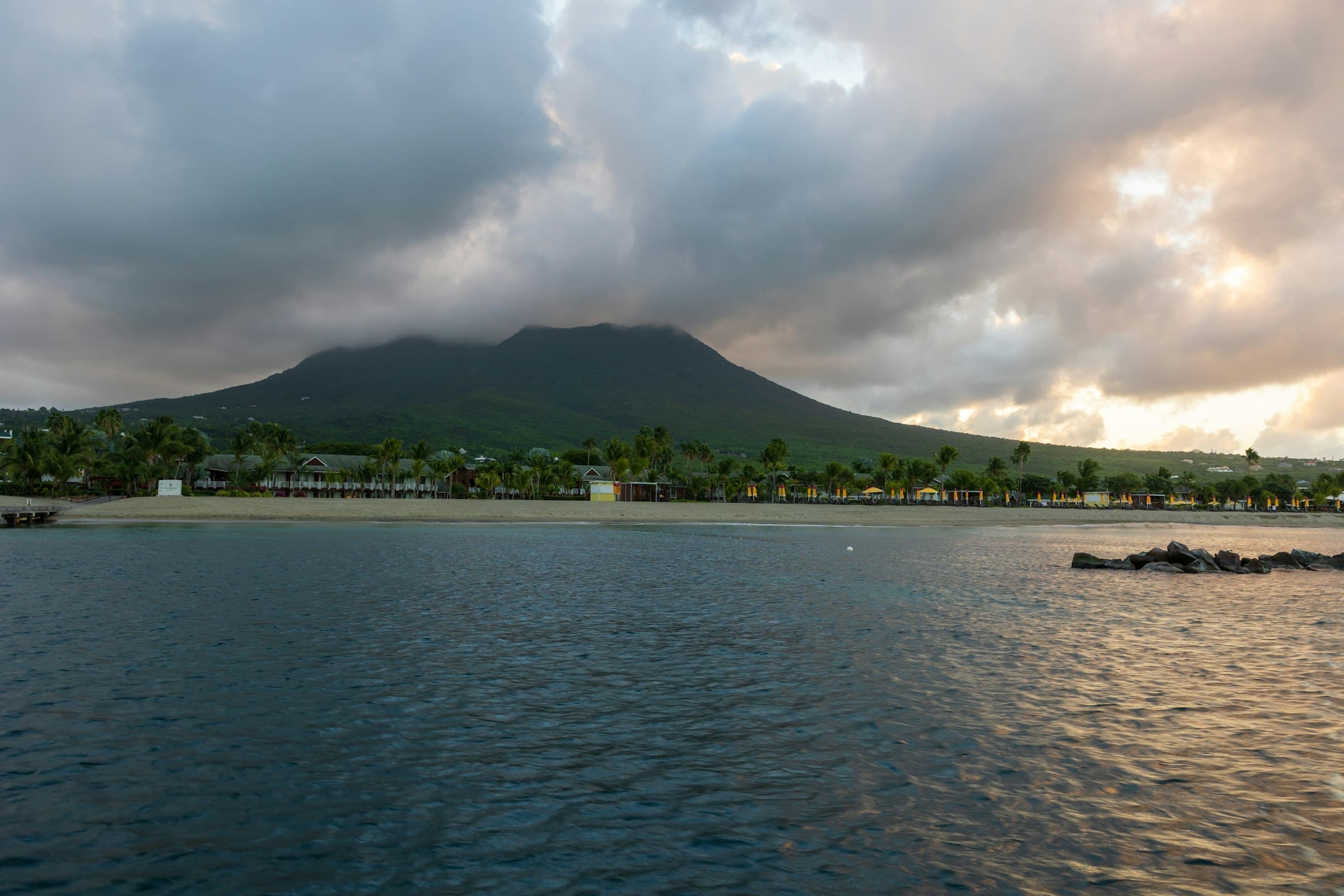
Nevis is smaller and slower, built around Charlestown. It has its own hospital and a small regional airport, while St. Kitts is a 25 to 45 minute ferry ride away. People who pick Nevis usually want quiet more than convenience.
We haven't published city guides for St. Kitts and Nevis yet. When we do, they'll appear right here.
06 · You don't do this alone
Your move team for St. Kitts and Nevis
A move here means an authorized agent for the investment program, private health coverage you can't skip, U.S. taxes that follow you, and a stack of apostilled documents. These are the Expatsi-vetted people who handle each piece, grouped by what they do.


Hunter Schultz
Healthcare Coach
A healthcare coach with more than 20 years of expat life and a background in air medical transport. His one-hour consultation builds a care plan for your destination, including where you'd go when the local hospital can't treat you.
Learn more
ExpatInsure
Global Health Insurance
Expatsi's international health insurance partner, led by Andy Seale and Stephanie Edwards. They match you with a private plan, the coverage that carries the load here, since the islands have no national health insurance.
Learn more
MyExpatTaxes
U.S. Expat Tax Service
Tax software and support built for Americans abroad, filing U.S. returns since 2018. Useful here because moving to a country with no income tax doesn't end your IRS filing.
Learn more
Moneycorp
Currency Exchange
A currency and international payments specialist. They set up the transfers that pay your rent, deposits and investment funds.
Learn more

07 · Quick answers
Moving to St. Kitts and Nevis: frequently asked questions
Do I have to live in St. Kitts and Nevis to get or keep citizenship?
Not to keep it: the Citizenship by Investment Unit says there's no requirement to reside in the country to maintain citizenship. Getting it may change. In January 2026 the government announced a physical-presence requirement for new investment applicants, but as of September 2026 the minimum number of days hadn't been published. Applications filed before the rule takes effect may be processed under current terms.
Can Americans move to St. Kitts and Nevis without buying citizenship?
Yes, but the options are narrow. Americans can stay 90 days as visitors with an eTA. For longer stays, the Immigration Department issues residence permits: temporary residency (about EC$600, or $222, a year according to a local real estate firm) doesn't allow any work, and annual residency usually needs three years on work permits first. Retirees 62 and older can seek permanent residence by owning a home worth at least US$350,000 for seven years. We found no income-based retirement visa or digital nomad visa.
Can I keep my U.S. citizenship if I become a citizen of St. Kitts and Nevis?
Yes. St. Kitts and Nevis has allowed dual nationality since independence, so becoming a citizen through the investment program doesn't require giving up a U.S. passport. Your U.S. tax obligations continue either way, since the United States taxes its citizens wherever they live.
Will I pay income tax in St. Kitts and Nevis as an American?
No. St. Kitts and Nevis has no personal income tax, wealth tax or inheritance tax. You still file U.S. taxes, because the IRS taxes citizens on worldwide income wherever they live, and you must report foreign bank accounts. Benefits such as the Foreign Earned Income Exclusion may reduce what you owe, depending on your income. Expect 17% VAT on most local purchases.
Is St. Kitts and Nevis safe for Americans?
The U.S. State Department rates St. Kitts and Nevis Level 1, Exercise Normal Precautions, in an advisory issued July 7, 2026. Canada's advisory says petty crime happens regularly and that violent crime such as armed robbery also occurs, so take normal precautions. Weather is the other risk: hurricane season runs from early June through November.
How much does St. Kitts and Nevis citizenship by investment cost in 2026?
The cheapest route is a non-refundable US$250,000 Sustainable Island State Contribution, which covers a main applicant or a family of up to four. Government processing fees add $10,000 for the main applicant and $7,500 for each dependent aged 16 or older, so a couple starts at $267,500 before agent, legal and due diligence costs. Real estate routes start at $325,000 and require holding the property for seven years.
How much does it cost to live in St. Kitts and Nevis per month?
Expatsi's 2026 estimates are about $1,700 a month for a single person, $2,600 for a couple and $3,500 for a family. Rent is the swing factor: a one-bedroom in town averages about $2,400 and about $1,800 further out, so the budgets assume housing below those averages. The EC dollar is pegged at EC$2.70 per U.S. dollar, so dollar costs stay stable.
Does St. Kitts and Nevis have a digital nomad visa?
No government site we checked lists an operating digital nomad visa as of September 2026. Remote workers typically come as visitors, who get 90 days visa-free with a US$17 electronic travel authorization obtained online before travel. Working remotely on a longer-term residence permit is a gray area, since temporary residency bars gainful work, so get legal advice before planning a long stay.
Sources
- Sustainable Island State Contribution (SISC) · Citizenship by Investment Unit, St. Kitts and Nevis (checked September 2026)
- St. Kitts and Nevis Citizenship by Investment FAQs · Citizenship by Investment Unit, St. Kitts and Nevis (checked September 2026)
- St. Kitts and Nevis CBI Options · Citizenship by Investment Unit, St. Kitts and Nevis (checked September 2026)
- Travel Advisory: Saint Kitts and Nevis (July 7, 2026) · U.S. Embassy Bridgetown (checked September 2026)
- Medical Assistance: St. Kitts and Nevis · U.S. Embassy Bridgetown (checked September 2026)
- Travel advice and advisories for Saint Kitts and Nevis · Government of Canada (checked September 2026)
- U.S. citizens and resident aliens abroad · IRS (checked September 2026)
- ECCB celebrates 49 years of the EC dollar peg · Eastern Caribbean Central Bank (checked September 2026)
- St. Kitts and Nevis dog and cat import protocol · USDA APHIS (checked September 2026)
- St. Kitts and Nevis residency requirement: CBI program update 2026 · NTL International (checked September 2026)
- St. Kitts and Nevis CBI update: new family pricing for 2026 · Immigrant Invest (checked September 2026)
- Residency: St. Kitts and Nevis requirements · Nevis Style Realty (checked September 2026)
- Cost of living and country data for St. Kitts and Nevis · Expatsi (checked September 2026)
See how St. Kitts and Nevis stacks up for you
Take the free Expatsi Test and compare the islands with other countries on cost, healthcare, climate and safety.
Why not you?