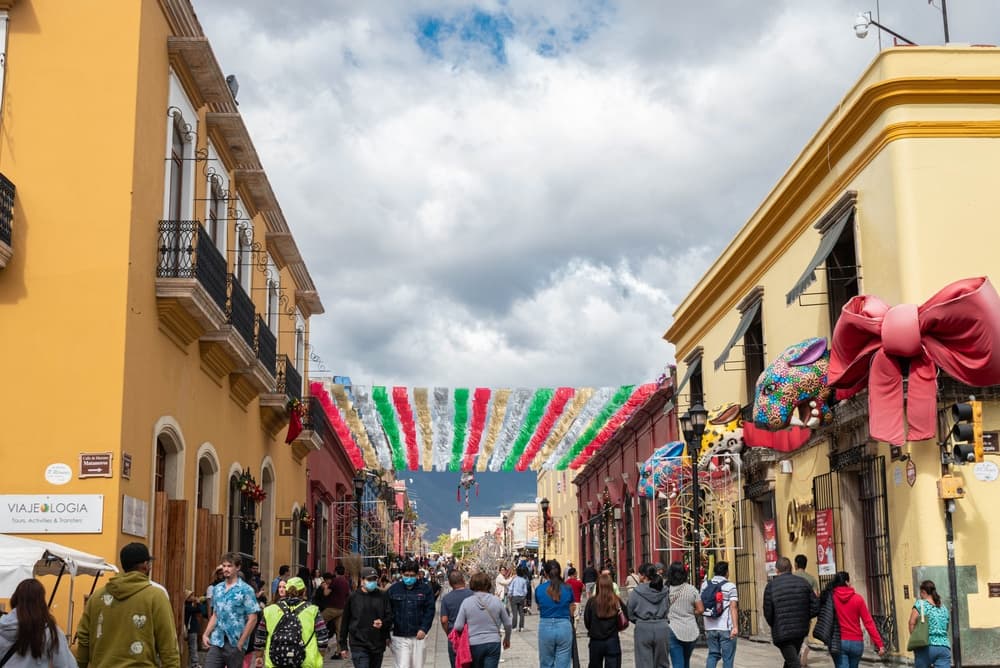
Oaxaca: food, art, and colonial streets that go easy on a budget
A compact, flat colonial center with one of Mexico's great food cultures, for people who want a working Mexican city rather than an enclave.
- 300,050
- Population (2014)
- $1,500/mo
- Monthly budget · single
- 70°F / 21°C
- Avg temperature
Oaxaca de Juárez runs about $1,500 a month for one person and $2,200 for a couple, with a family closer to $3,200. A one bedroom in the historic center averages $550 a month, or about $400 further out. A meal at a local restaurant runs around $6, and home internet costs about $25. Of the 12 Mexican cities we cover, Oaxaca has the cheapest couple budget, center rent and restaurant meal.
It suits people who want a walkable colonial city with real cultural depth instead of a beach or a large expat bubble: remote workers on a modest budget, artists and cooks, and retirees who want a working Mexican city instead of an enclave. The center is compact and mostly flat, and the food alone brings a lot of people back.
The trade-off is that Oaxaca asks more of you than the easy landings do. English is far less common here than in Mérida or San Miguel de Allende. Home internet gets uneven once you leave the center, and the safety index of 56 is middling rather than reassuring.
At a glance
$1,500
Monthly budget · single person
$550/mo 1-bed rent, center
56/100
Safety index
$25
Internet / month
70°Fannual average
Jan 65° · Jun 74°
Climate
300,050
Population (2014)
Expatsi estimates, updated Aug 2026, based on rental listings, government statistics, and local reporting.
Cost of living
What it costs to live in Oaxaca
Single person
$1,300–$1,700/mo
about 50% below Austin, TX
Couple
$1,900–$2,500/mo
about 50% below Austin, TX
Family of four
$2,600–$3,800/mo
about 60% below Austin, TX
Compared with Austin, TX (Expatsi estimate, 2026).
- $6 −70%
- Inexpensive meal
- $500–$600/mo −72%
- 1-bed rent, center
- $350–$450/mo −70%
- 1-bed rent, outside
- $25/mo −62%
- Internet
- $139/sq ft −79%
- Buy price, center
Expatsi estimates, updated Aug 2026, based on rental listings, government statistics, and local reporting.
Daily life
How Oaxaca lives
- B+ grade, 66th percentile among the cities we track
- Dining & cafésstrong
- A grade, 92nd percentile among the cities we track
- Arts & culturestandout
- B- grade, 38th percentile among the cities we track
- Parks & outdoorstypical
- A+ grade, 97th percentile among the cities we track
- Schools & educationstandout
- A+ grade, 99th percentile among the cities we track
- Healthcare accessstandout
- B- grade, 32nd percentile among the cities we track
- Bike infrastructuretypical
- A- grade, 80th percentile among the cities we track
- Public transitstrong
- A- grade, good physical accessibility
- Accessibilitygood
Graded on OpenStreetMap amenity density relative to the 298 cities we track. Accessibility is the exception: it's graded against a fixed standard (terrain steepness and sidewalk surfaces), not a curve.
Climate
Weather through the year
Annual average 70°F (21°C) · 24 in of rain a year · Source: Meteostat station normals (76775, 1961-1990)
On the ground
Scenes from Oaxaca
Getting around
Transport in Oaxaca
Walking is the default. The Centro Histórico is barely a mile across, mostly flat; you can cross from the Zócalo to the Jalatlaco neighborhood in about 12 minutes on foot. Sidewalks are another matter: narrow, uneven and interrupted by high curbs and cobblestones, so sturdy shoes matter. Anyone with limited mobility will find the historic core hard going.
There is no Uber for rides in Oaxaca. The local taxi union has kept it out for yeare; while Uber Eats and other delivery apps work fine, passenger services do not. What people actually use is DiDi, which dispatches the city's yellow taxis through an app and shows the price upfront, or a street taxi. Street taxis have no meters, so agree on the fare before you get in. City buses reach nearly everywhere and cost very little. However, routes are unmarked and not on any app, so most newcomers stick to taxis until a neighbor explains the system.
Colectivos, the shared sedans and vans with their destination propped in the windshield, are how the valley moves. They leave from near the markets and second-class bus station once they fill up. They're the practical way to reach Monte Albán, Mitla and the Tlacolula market. The airport sits about five miles south of the center, 20-30 minutes by road.
You don't need a car to live here. Parking in the center is difficult and colonial streets are narrow, but a car earns its keep if you spend weekends out in the villages and the Sierra.
- 54/sq mi
- Transit stops
- 0.9/sq mi
- Bike infrastructure
- 9.2/sq mi
- Wheelchair-accessible places
Mapped features per square mile from OpenStreetMap.
Keep exploring
Places like Oaxaca
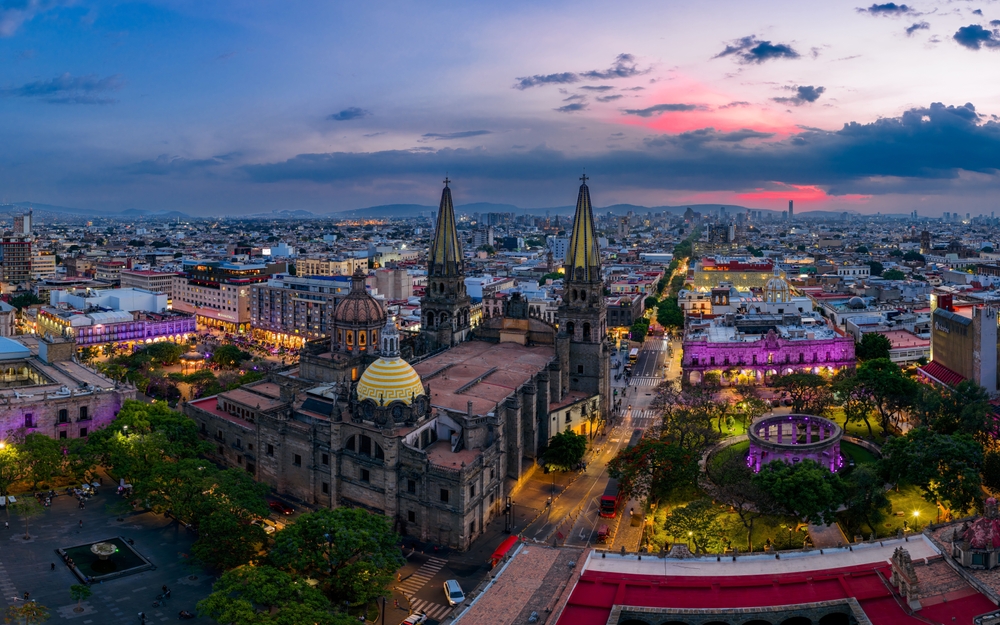
Guadalajara
Mexico
1.4M people · $1,600/mo
 Coming soon
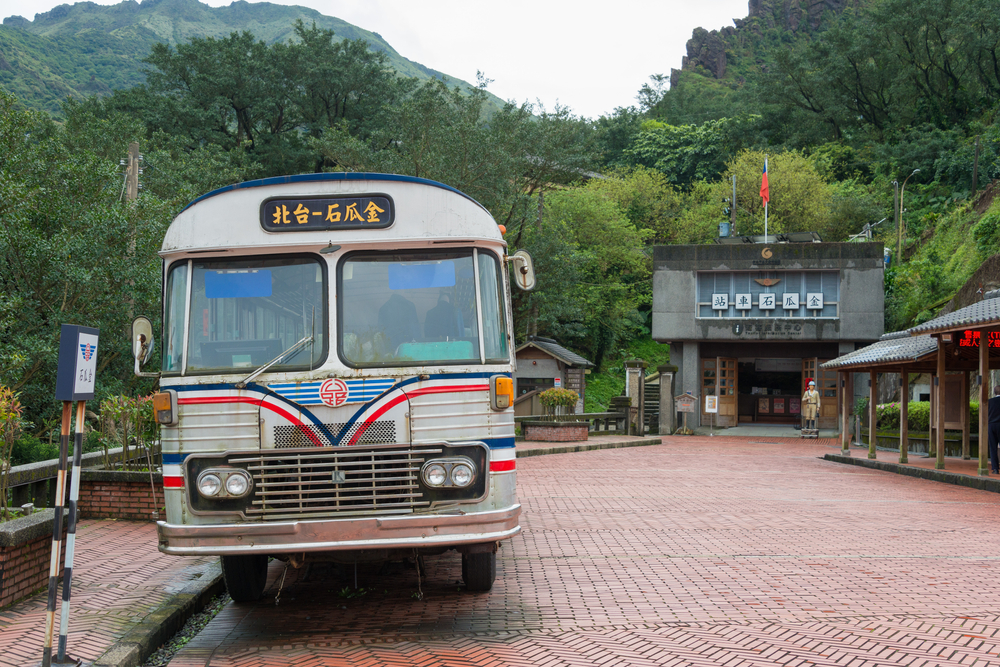
New Taipei City
Taiwan
4M people · $1,400/mo
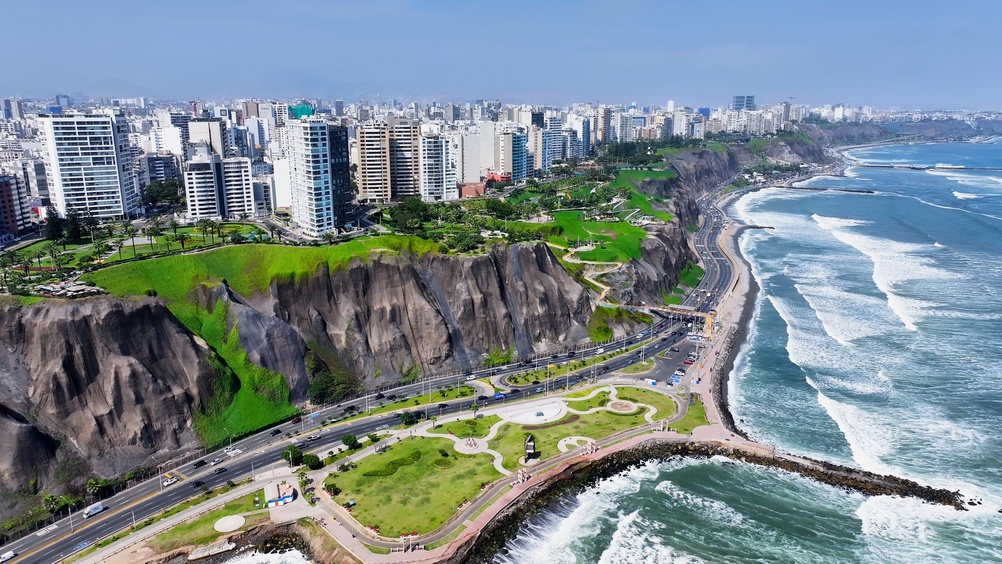
Lima
Peru
9.9M people · $1,400/mo
 Coming soon
São Paulo
Brazil
11.5M people · $1,700/mo
 Coming soon
Taichung
Taiwan
2.9M people · $1,400/mo
Medellín
Colombia
2.5M people · $1,700/mo
Community
Community & practical notes
Community: The foreign community is smaller and more self-selecting than Mérida's or San Miguel's, skewing toward artists, cooks, writers and long-stay remote workers. The Oaxaca Lending Library on Pino Suárez is the closest thing to a front door: a bilingual library and community center running a free Monday-morning orientation led by longtime foreign residents, Saturday language exchange, and a season of lectures and hikes from late October through March. Most newcomers settle in the Centro, in Jalatlaco or Xochimilco just off it, or in Colonia Reforma to the north.
Language: You're going to need Spanish. English is much less common here than in the bigger expat towns, so landlords, market vendors and doctors will mostly speak Spanish, with Zapotec and Mixtec widely spoken across the valley. People are patient about it, but arriving with no Spanish makes daily life harder than it would be in Mérida.
Healthcare: Routine care is good and inexpensive. The private hospitals residents name are Reforma, Molina, del Valle and Clínica Hospital Carmen, most of them in or near Colonia Reforma, while public care runs through IMSS and the Hospital General. The limit is depth rather than price, since complex or specialist treatment usually means a flight to Mexico City about an hour away. Plan to pay at the time of service, since most Mexican hospitals won't bill a U.S. insurer. Medicare and Medicaid don't cover you in Mexico at all.
Internet: Home internet costs about $25 a month, but reliability depends entirely on your address. Fiber reaches much of the Centro but not much past it; speeds inside rentals vary widely with what the landlord signed up for. Ask for a speed test before you sign a lease, keep a Telcel data plan as backup, and expect to use a coworking space such as Convivio if your work depends on video calls.
Retirement: Oaxaca works well for retirees on a modest fixed income, since a couple's budget here is the lowest of the Mexican cities we cover. The usual route is Mexico's temporary resident visa, which converts to permanent residency after four years. Compare the paths in our guide to retirement visa options, and get the wider picture in our Mexico guide.
Housing
Renting and buying
- 1-bed rent (center)
- $500–$600/mo
- 1-bed rent (outside center)
- $350–$450/mo
- Buy price (center)
- $139/sq ft
- Buy price (outside center)
- $102/sq ft
Expatsi estimates, based on rental listings, government statistics, and local reporting.
Good to know
Frequently asked questions
Can you retire in Oaxaca on Social Security?
For many people, yes. A couple's budget here is about $2,200 a month, which two average Social Security checks can cover, and a single retiree needs closer to $1,500. The constraint is the visa rather than the money, since Mexico's temporary resident visa has its own income thresholds, usually higher than what you need to live on.
Is Oaxaca safe for Americans?
Reasonably, with normal city caution. Oaxaca scores 56 on the safety index we use, which is middling for Mexico. The U.S. State Department puts Oaxaca state at Level 2, exercise increased caution, and specifically lists no travel restrictions for Oaxaca City, Monte Albán, Puerto Escondido or Huatulco. The areas its employees must avoid are elsewhere in the state, mainly the Isthmus region and one stretch of Federal Highway 200. Petty theft in crowded markets is the everyday risk.
Do you need a car in Oaxaca?
No, not to live in the city. The historic center is compact and mostly flat, taxis and DiDi are cheap, and colectivos handle trips out to the villages. A car is worth having only to explore the valley and the Sierra on your own schedule, and parking in the center is a real hassle.
How much does it cost to live in Oaxaca, Mexico?
About $1,500 a month for one person and $2,200 for a couple, with a family closer to $3,200. A one bedroom in the historic center averages $550 a month and about $400 outside it, a meal at a local restaurant is around $6, and home internet runs about $25. That makes Oaxaca the cheapest city for couples of the twelve we cover in Mexico.
Do people speak English in Oaxaca?
Much less than in Mérida, Mexico City or San Miguel de Allende. You can get by in tourist restaurants and hotels, but landlords, market vendors, and most doctors will speak Spanish, and Zapotec and Mixtec are widely spoken in the surrounding valley. Plan on learning Spanish if you intend to stay.
How do Americans move to Oaxaca?
Almost always on Mexico's temporary resident visa, which you apply for at a Mexican consulate in the United States and finish at an immigration office after arriving. It requires proving income or savings at thresholds that reset each year and vary by consulate, and converts to permanent residency after four years.
Is there Uber in Oaxaca?
Not for rides. The local taxi union has kept Uber's passenger service out of Oaxaca for years, though Uber Eats and other delivery apps work normally. DiDi is what residents use instead, dispatching the city's yellow taxis through an app with the fare shown upfront.
What is the weather like in Oaxaca?
Warm days and cool nights, year round, because the city sits at about 5,100 feet. Average highs run from about 81F in September to about 91F in April, and January and December nights average around 47F, with hotter and cooler spells on top of those averages. Rain concentrates from May to September, June is the wettest month, and the winter months are close to dry.
See how Oaxaca fits your life
Take the free Expatsi Test and compare Mexico to nearly 200 countries on what actually matters: cost, healthcare, climate, and safety. About five minutes.
Why not you?