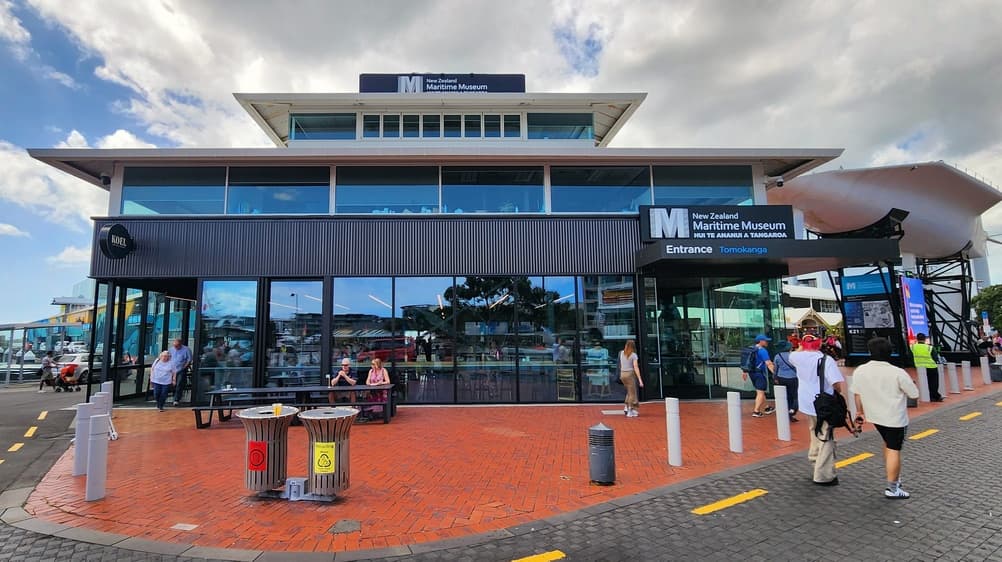
Auckland: a real city between two harbors
New Zealand's biggest city puts beaches, volcanoes, and the country's deepest job market within a single bus ride, all in English.
- 1,470,100
- Population (2020)
- $2,600/mo
- Monthly budget · single
- 60°F / 15°C
- Avg temperature
Plan on about $2,600 a month in U.S. dollars for one person in Auckland, around $3,900 for a couple, and roughly $6,100 for a family. A one-bedroom apartment averages about $1,350 in the city center and $1,250 in the outer suburbs. Groceries and eating out cost more than the rent suggests, since most of what isn't grown here gets shipped in.
Auckland suits people who want a real city without giving up the outdoors. Roughly 1.5 million people live here, more than a quarter of the country, on an isthmus between two harbors, with black-sand surf beaches an hour west and dozens of dormant volcanic cones scattered through the neighborhoods. English is the everyday language, though large Māori, Pasifika, and Asian communities shape the food and the festivals.
The honest drawback is distance. You're a 12-hour-plus flight from the U.S. West Coast, and visits home become annual events rather than long weekends. Housing supply is tight too, so expect competition for good rentals.
At a glance
$2,600
Monthly budget · single person
$1,350/mo 1-bed rent, center
58/100
Safety index
$55
Internet / month
60°Fannual average
Jul 52° · Feb 68°
Climate
1,470,100
Population (2020)
Expatsi estimates, updated Aug 2026, based on rental listings, government statistics, and local reporting.
Cost of living
What it costs to live in Auckland
Single person
$2,300–$2,900/mo
about 15% below Austin, TX
Couple
$3,400–$4,300/mo
about 15% below Austin, TX
Family of four
$5,400–$6,800/mo
about 25% below Austin, TX
Compared with Austin, TX (Expatsi estimate, 2026).
- $15 −25%
- Inexpensive meal
- $1,200–$1,500/mo −31%
- 1-bed rent, center
- $1,100–$1,400/mo −7%
- 1-bed rent, outside
- $55/mo −15%
- Internet
- $130/mo +215%
- Transit pass
- $692/sq ft +6%
- Buy price, center
Expatsi estimates, updated Aug 2026, based on rental listings, government statistics, and local reporting.
Daily life
How Auckland lives
- A- grade, 82nd percentile among the cities we track
- Dining & cafésstrong
- A- grade, 72nd percentile among the cities we track
- Arts & culturestrong
- A+ grade, 96th percentile among the cities we track
- Parks & outdoorsstandout
- B grade, 52nd percentile among the cities we track
- Schools & educationtypical
- B+ grade, 57th percentile among the cities we track
- Healthcare accessstrong
- A grade, 88th percentile among the cities we track
- Bike infrastructurestandout
- B+ grade, 61st percentile among the cities we track
- Public transitstrong
- A grade, good physical accessibility
- Accessibilitygood
Graded on OpenStreetMap amenity density relative to the 298 cities we track. Accessibility is the exception: it's graded against a fixed standard (terrain steepness and sidewalk surfaces), not a curve.
Climate
Weather through the year
Annual average 60°F (15°C) · 43 in of rain a year · Source: Meteostat station normals (93110, 1961-1990; no sunshine data)
On the ground
Scenes from Auckland
Getting around
Transport in Auckland
Auckland Transport runs the buses, trains, and ferries as one system. You pay with an AT HOP card, contactless bank card or phone on most services. Cash isn't accepted on buses at all, so sort one out before your first trip. Budget about $130 a month for transit. Buses do most of the heavy lifting, with frequent Link services looping through the central suburbs and busways serving the North Shore and the southeast.
Trains are the part that's changing. From September 2026 the City Rail Link, a tunnel under the city center, turns the downtown Britomart station into a through-station renamed Waitematā, adds two underground stations, and renames every line on the network. It starts on a reduced timetable after years of rail disruption, so be sure to work from a current map. Ferries are a real commute option, with Devonport, Half Moon Bay, and Hobsonville on the standard fare system, while the Waiheke Island run is ticketed separately.
Central neighborhoods like Ponsonby, the CBD, Parnell, and Kingsland are walkable, though the volcanic terrain means real hills. Auckland sprawls past the inner suburbs, and most households run a car. Settle and work centrally and you can skip one. If you're raising kids out in the suburbs or want weekend access to the west coast beaches and the Waitākere Ranges, a car makes sense. Yes, you'll be driving on the left.
- 37/sq mi
- Transit stops
- 81/sq mi
- Bike infrastructure
- 64/sq mi
- Wheelchair-accessible places
Mapped features per square mile from OpenStreetMap.
Keep exploring
Places like Auckland
Community
Community & practical notes
Community: Auckland absorbs most of New Zealand's immigration, so being foreign-born is unremarkable here. There are established British, South African, Chinese, Indian, and Filipino communities, a growing American contingent, and active expat meetups. Americans tend to find the barrier is less about nationality than it's about Kiwi reserve, which thaws through sports clubs, tramping (hiking) groups, and workplaces rather than small talk.
Healthcare: The public system is good, but access turns on which visa you hold, and short-term visas don't qualify. You'll need private coverage until you're eligible, and even eligible newcomers often private policies because public specialist and elective waits can run long. Enrolling with a GP practice is the first step, and popular central clinics sometimes have closed books, so you may need to try a few. Accident injuries are a separate story, since ACC covers everyone, including visitors.
Limited mobility: The volcanic terrain works against you, with real hills in Ponsonby, Mt Eden, and much of the North Shore, though sidewalks are well maintained. Transit is the bright spot. Train stations and the busways are step-free. The Northern Express and every Link route use wheelchair-accessible buses, while a Total Mobility subsidy covers discounted taxis. Auckland Transport says about 91 percent of its buses are low-floor or ramp-fitted, and suggests calling the operator a day ahead if you need certainty about a route and time. Older ferries and older shopfronts are the weak points, so check the routes and buildings you'd actually use before committing to a neighborhood.
Remote work: Home fiber runs about $55 a month, with gigabit plans widely available. Coworking clusters downtown and on the city fringe, including GridAKL in the Wynyard Quarter and Generator's central sites. Local hiring skews toward tech, construction, healthcare, film and screen production, and professional services. The time zone is the real adjustment: Auckland sits 16 to 21 hours ahead of the mainland U.S., so syncing with an American team means early mornings landing on their afternoon the day before.
Retirement: New Zealand has no straightforward retirement visa. The Temporary Retirement Visitor Visa is built around investment: you must be 66 or older, put NZD 750,000 into the country for two years, hold a further NZD 500,000 for living costs, and show NZD 60,000 a year in income. It renews in two-year blocks rather than leading to residence, and dependent children can't come along. Most Americans who retire here arrived earlier on work or family pathways, or have a New Zealand partner or child sponsoring them. If retiring abroad is the goal, compare retirement visa options across countries and read our New Zealand guide before setting your heart on Auckland.
Housing
Renting and buying
- 1-bed rent (center)
- $1,200–$1,500/mo
- 1-bed rent (outside center)
- $1,100–$1,400/mo
- Buy price (center)
- $692/sq ft
- Buy price (outside center)
- $488/sq ft
Expatsi estimates, based on rental listings, government statistics, and local reporting.
Good to know
Frequently asked questions
How does healthcare work for expats in Auckland?
Residents and anyone holding a work visa valid for two years or more can generally use New Zealand's publicly funded system. Visitor and student visas cannot, so newer arrivals pay privately, and many keep insurance anyway to skip public waiting lists. GP visits carry a co-pay even in the public system, and accident injuries are covered for everyone through ACC.
Can I retire in Auckland?
Not easily. The only retirement-specific route is the Temporary Retirement Visitor Visa, which requires you to be 66 or older and to invest NZD 750,000, on top of separate savings and income tests, and it gives you two years at a time instead of residence. Most American retirees in Auckland got residence earlier through work or family ties. If a dedicated retirement visa matters to you, other countries make it much simpler.
How big is Auckland?
Auckland has about 1.5 million people, which makes it New Zealand's largest city by a wide margin and home to over a quarter of the national population. It's the center of the job market, especially for tech, finance, and professional services, so most Americans who move to New Zealand for work end up here or in Wellington.
Is Auckland safe for Americans?
Auckland scores 58 on the safety index, the lowest of the ten New Zealand cities we track, with the rest running from 63 to 82. Violent crime against strangers is uncommon, and what you'll actually notice is car break-ins, petty theft, and some downtown disorder late at night. Most neighborhoods feel comfortable to walk day and night.
How do Americans move to Auckland?
You'll need a visa before you can settle. The main routes are the Accredited Employer Work Visa with a job offer, the Skilled Migrant Category for residence, partner visas, and a working holiday visa for Americans aged 18 to 30. There's no visa you can get just by showing savings, so most moves start with a job hunt.
Do I need a car in Auckland?
In the central suburbs, no. Buses, trains, and ferries run as one Auckland Transport system, and about $130 a month covers regular commuting. Outside the inner ring the city sprawls and most households keep a car. New Zealand drives on the left, and a U.S. license is only good for a limited window after you arrive, though the U.S. is on the exempt list so converting needs no road test.
How much does it cost to live in Auckland?
One person needs roughly $2,600 a month here in U.S. dollars, a couple about $3,900, and a family around $6,100. A one-bedroom runs about $1,350 in the center and $1,250 outside it, an inexpensive restaurant meal is about $15, and home internet is about $55 a month.
What is the weather like in Auckland?
Mild and damp. The annual average temperature is about 60°F (15°C), with warm humid summers, cool winters, and no snow. Rain comes to about 43 inches (1,102 mm) a year, and because the seasons are flipped, the wettest months are June and July, in the depth of winter. It arrives as frequent showers rather than long storms, so a rain jacket earns its keep.
See how Auckland fits your life
Take the free Expatsi Test and compare New Zealand to nearly 200 countries on what actually matters: cost, healthcare, climate, and safety. About five minutes.
Why not you?