Your Ghana guide
So you want to move to Ghana
The real numbers on cost, visas, healthcare and where to live, so you can plan a move that sticks instead of a very good vacation.
Ghana has spent the last few years telling the diaspora one thing: come home. Here's what home actually costs, what it asks of you and what it gives back.

By Jen Barnett, Co-founder, Expatsi
Reviewed and updated August 19, 2026 · 11 min read
01 · The case for Ghana
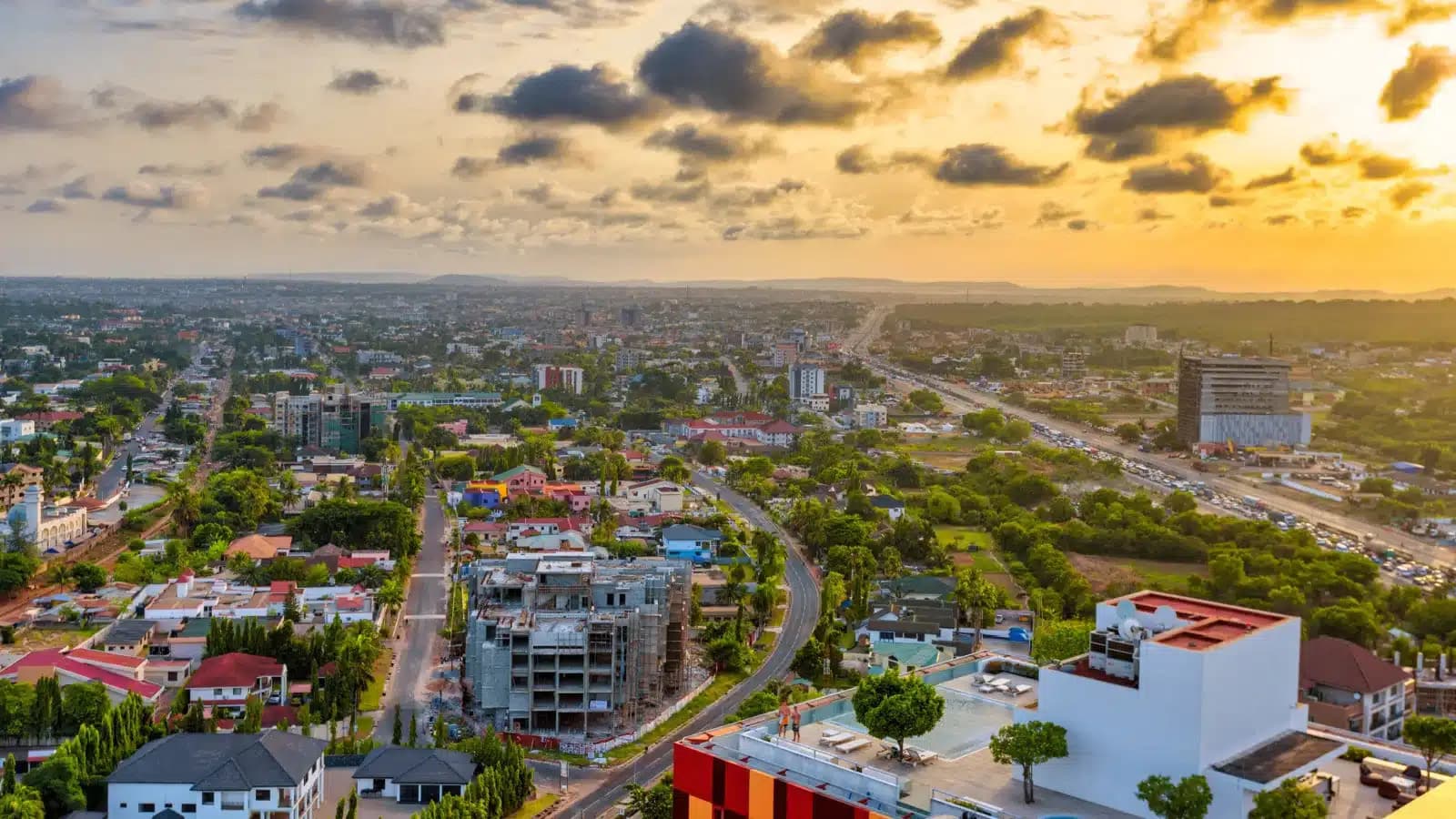
Why people are packing up for Accra
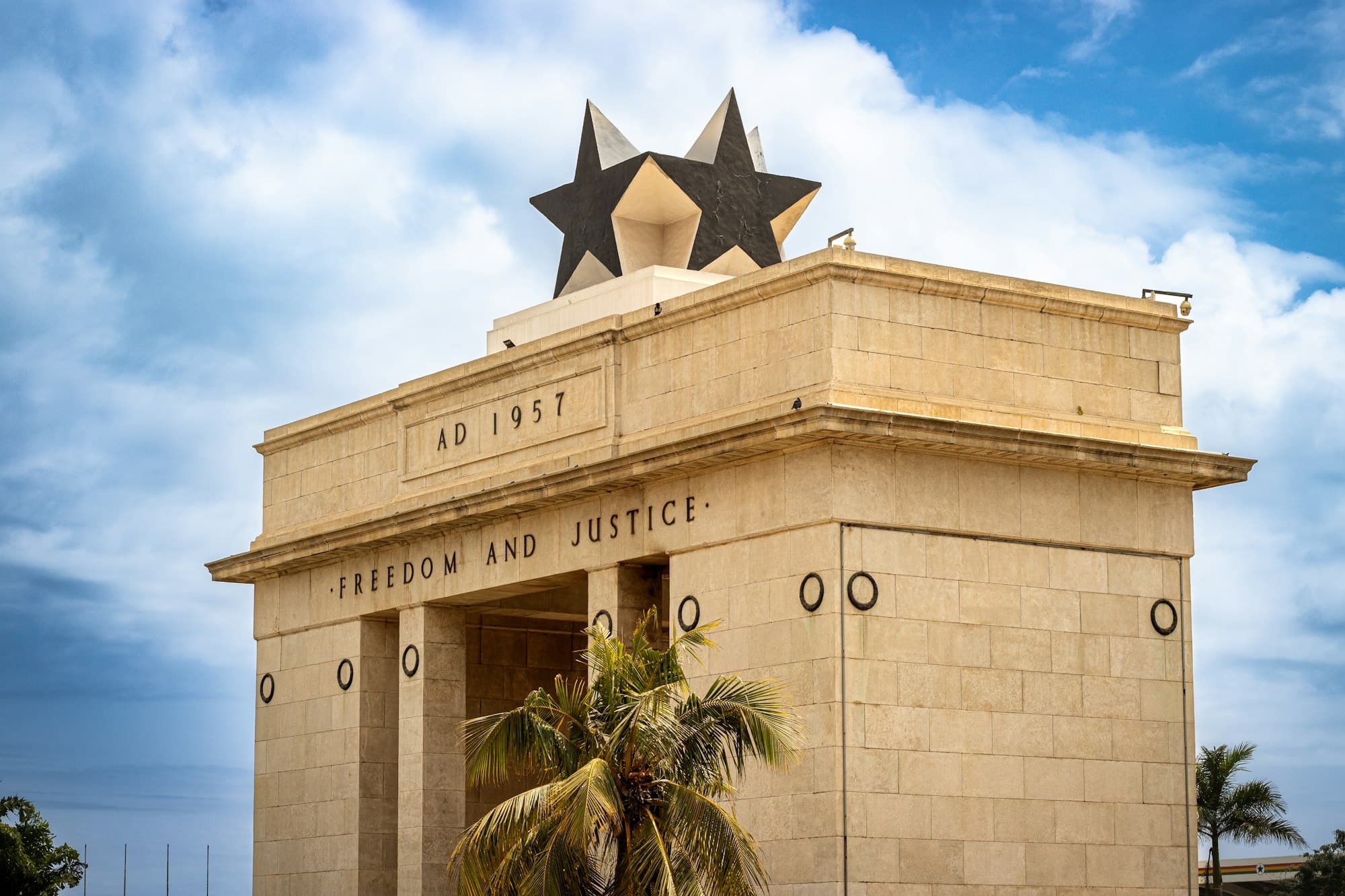
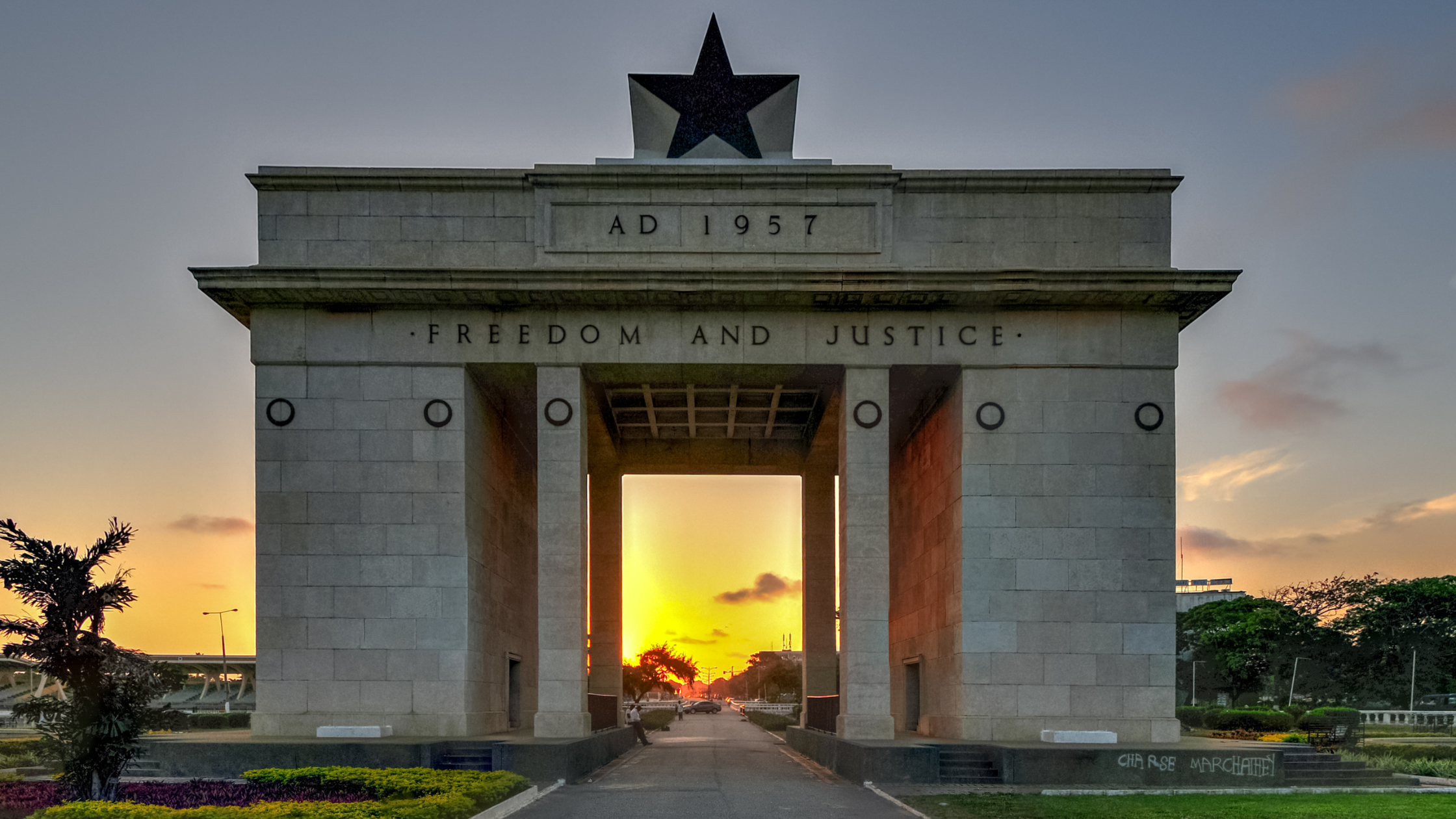
Ghana was the first country in sub-Saharan Africa to win independence back in 1957. It's held peaceful elections every four years since 1992. That stability is the quiet reason that Ghana works. The louder reason is the welcome. In 2019, the government launched the Year of Return to mark 400 years since the first enslaved Africans were taken to Virginia, and invited the diaspora home. That invitation has never stopped. In November 2024, 524 people, most of them Black Americans, were sworn in as citizens in a single Accra ceremony; the follow-on campaign, Beyond the Return, runs through 2030.
For a lot of movers, the pull is simple. English is the official language, so you can open a bank account and see a doctor without a translator. The cost of living is a fraction of what's common in a U.S. city. People are genuinely warm, the food and music are having a global moment, and for anyone of African descent, there's a residency route built specifically for you. Roots run deep here, too: W.E.B. Du Bois spent his final years in Accra, and Kwame Nkrumah's call for African unity is the reason Ghana still frames itself as home for the whole diaspora.
Who Ghana actually fits
It fits people reconnecting with heritage, remote workers who earn in dollars, retirees on a modest budget, and founders who want in early on a growing market. It fits people who can roll with a slower pace and bit of friction. It's less comfortable if you need spotless infrastructure, a big LGBTQ-friendly city, or a place you can settle without doing any homework first.
Here's the catch
Ghana isn't a cheap holiday you can extend forever. The power still cuts out, landlords often want a year or two of rent in advance, and paperwork moves slowly. Returnees also talk about a gap between the dream and the day-to-day, from being seen as the rich American to the real work of making local friends. Go in with your eyes open, and it can be the best move you make. Go in expecting a cozy resort, and you'll be frustrated by month two.
- Cost of living (single)
- $1,100/mo
- Safety index
- 45/100
- Internet speed
- 35 Mbps
- English proficiency
- 90/100
- Capital
- Accra
- Population
- 33.5M
What a month roughly costs
$1,100
Single person, per month
all-in, modest
$1,900
A couple, per month
comfortable
$500
One-bed in the city
Osu or East Legon
$6
A plate of local lunch
waakye or jollof
Your dollars stretch, with two honest catches
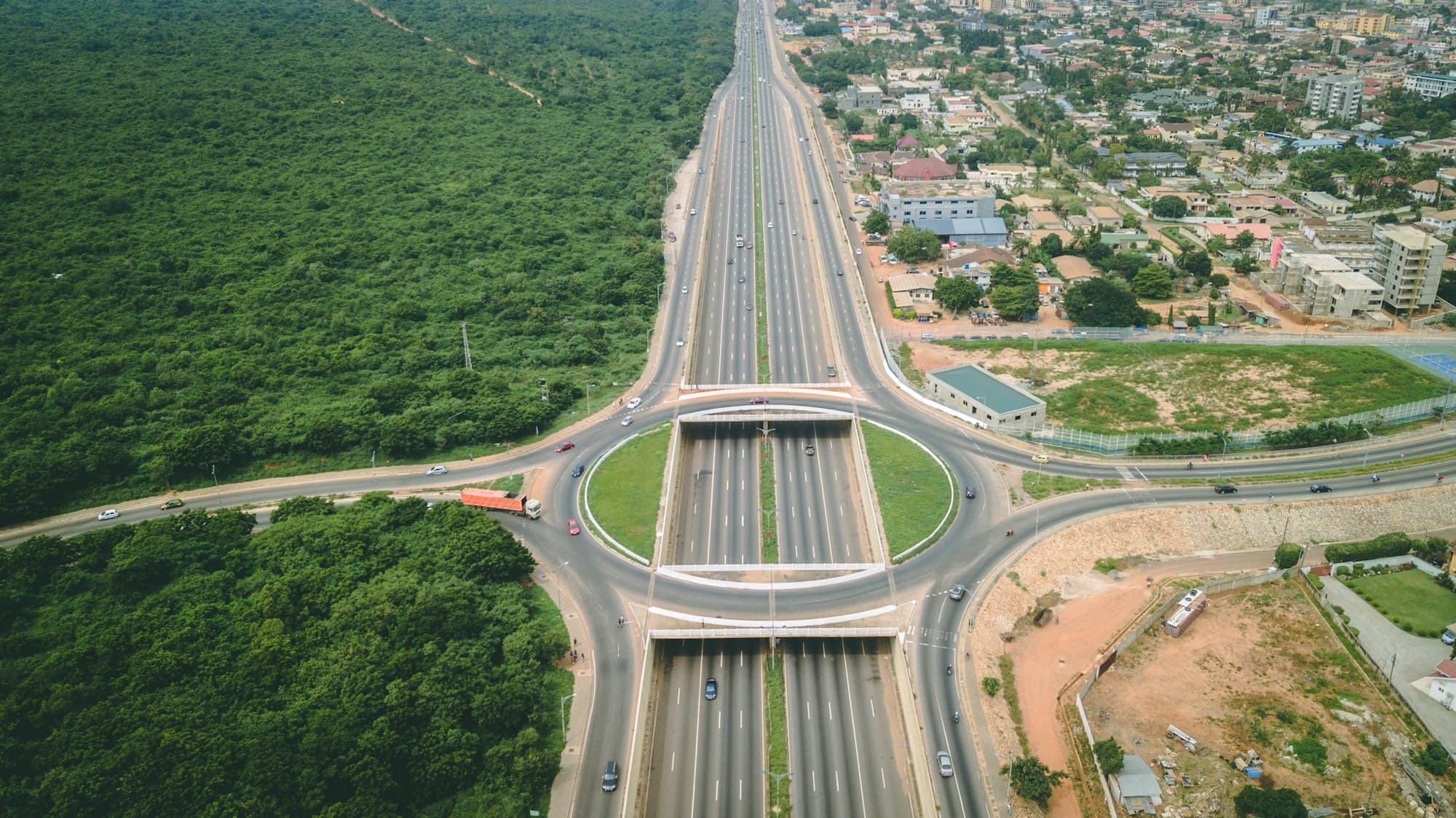
The cedi trades around 16 to the dollar in 2026; it actually gained ground last year while inflation fell to a 25-year low. For anyone earning in dollars, pounds or euros, this is the best purchasing power Ghana has offered in a long time. A comfortable single life in Accra runs about $800 to $1,500 a month all in. A couple can live well on roughly $1,900, and secondary cities like Cape Coast or Takoradi cost even less. A local lunch of waakye or jollof costs a few dollars, a Bolt across town costs two or three, and mobile money means you can pay for almost anything from your phone.
The first catch is rent. It's normal for a landlord to ask for one to two years' rent upfront. The law caps advance rent payments at six months, but that cap is widely ignored; plan for a large lump sum before you ever unpack. Most expat-market apartments come furnished and with a generator, which softens the setup cost but raises the monthly fee. The second catch: anything imported, plus international school fees, is priced close to U.S. levels. Top international schools run tens of thousands a year. Living like a local is genuinely low-cost. Recreating your American lifestyle, imported groceries and all, is not.
One more thing to know early: foreigners can't own land outright in Ghana. The 1992 constitution reserves freehold for Ghanian citizens. What you can do is lease land for up to 50 years, renewable, and own the building on top. If you're thinking about buying, hire a reputable Ghanaian property lawyer and run a full title search, because disputed and double-sold plots are a real and documented risk. Our local partner can help.
Why the budget and the welcome line up
Ghana wants the diaspora to stay, so its easiest entry, the Right of Abode, is built for people of African descent and asks for no minimum income. Pair a modest monthly budget with a residency designed for you, and the math starts to work in a way that it rarely does in Europe. That combination of low costs plus a purpose-built route is the real reason this move pencils out for so many people.
02 · Everyday life
What daily life actually feels like
The language and the welcome
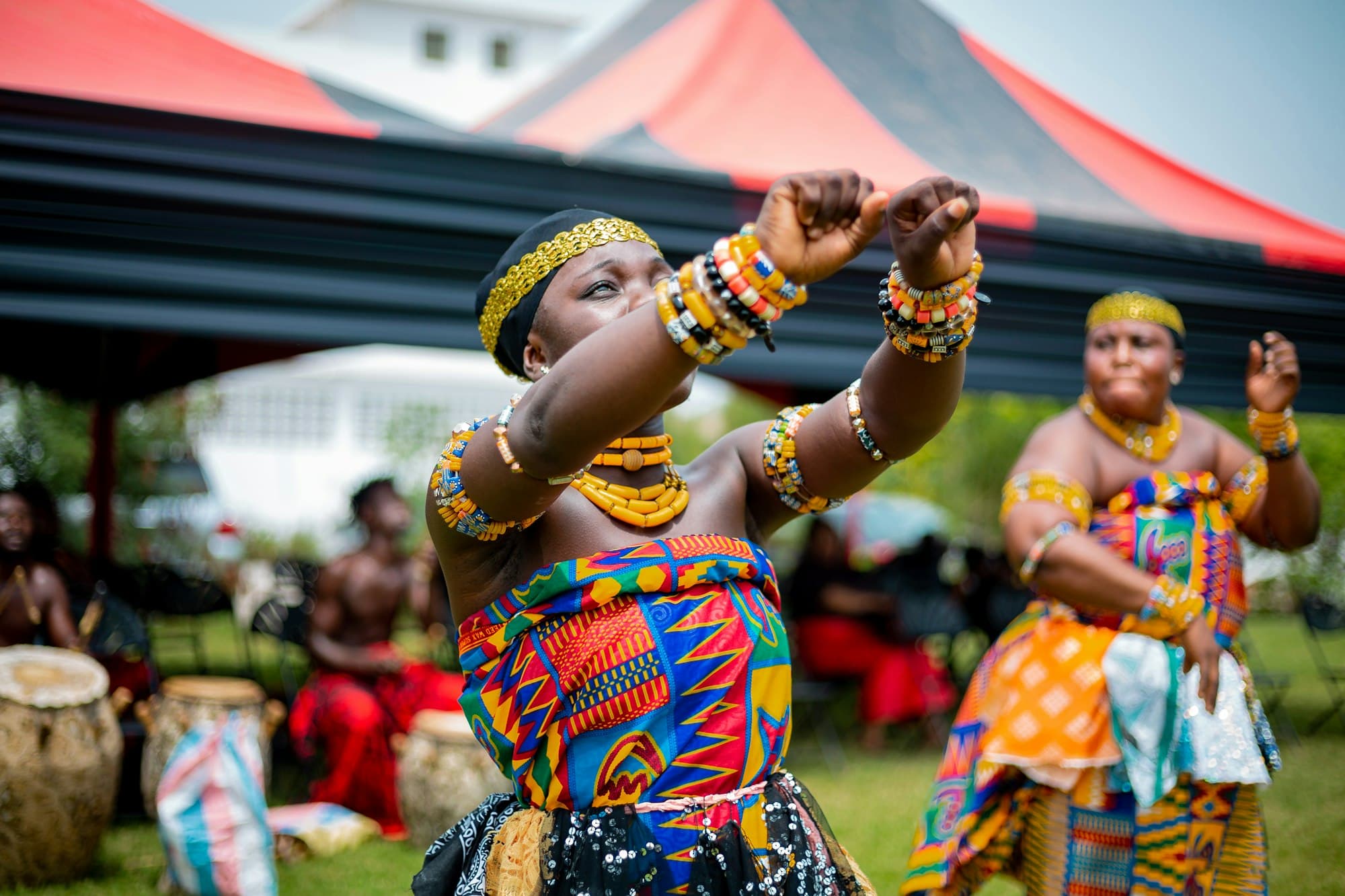
English is the official language. It's near-universal in the cities, so day-to-day life runs in English, even as you pick up Twi greetings fast. The warmth is real. "Akwaaba," meaning welcome, isn't a slogan but how locals treat newcomers. Life leans social and faith-forward: Sundays belong to church and family, weddings and funerals are big communal events, and Accra's Osu strip keeps the Afrobeats going late. Ghanaian jollof, waakye and grilled tilapia will become your regular order. There's a real returnee scene now, too, with co-living houses, meetups and business networks that make landing softer than it was even five years ago, especially in Accra.
Safety, honestly
The U.S. State Department puts Ghana at Level 2, exercise increased caution, mainly for petty theft, the occasional carjacking at night on remote roads, and online romance and money scams. The far northern border with Burkina Faso is a Level 3 zone you simply stay out of. Day to day in Accra, Kumasi or Cape Coast, you'll take normal big-city precautions: use Bolt or Uber instead of flagging street taxis, avoid walking alone late at night, and you're fine. Violent crime against foreigners is not the daily reality; watching your bag and your online "relationships" is.
Getting around
Bolt and Uber are the default for most newcomers: safe, metered and cheap at a few dollars a ride. Shared trotro minibuses cost pennies and go everywhere, once you learn the routes and can handle the crowding. You can drive on an international permit. Ghana drives on the right, but Accra traffic is the real tax on your day, so people plan their lives around it. For longer hops, air-conditioned VIP and STC coaches connect the cities, and quick domestic flights link Accra with Kumasi and Tamale.
One hard caveat
Ghana is socially conservative, and same-sex relationships are illegal under old colonial-era law. Parliament passed a tougher anti-LGBTQ bill in 2024 that was still moving through the courts in early 2026. This is the honest reason that Ghana will not be the right fit for everyone; it deserves serious consideration before you commit.
The trade-offs, on one screen
English everywhere
The official language, near-universal across the cities.
Tropical all year
Around 27C, with real heat and humidity to adjust to.
A steady democracy
Peaceful elections and handovers since 1992.
Ten hours to the East Coast
On GMT year-round, so no daylight-saving math.
Advance rent
Landlords often want one to two years paid up front.
Private healthcare
Budget for insurance and evacuation coverage.
03 · Getting legal
The ways in, from residency to a passport
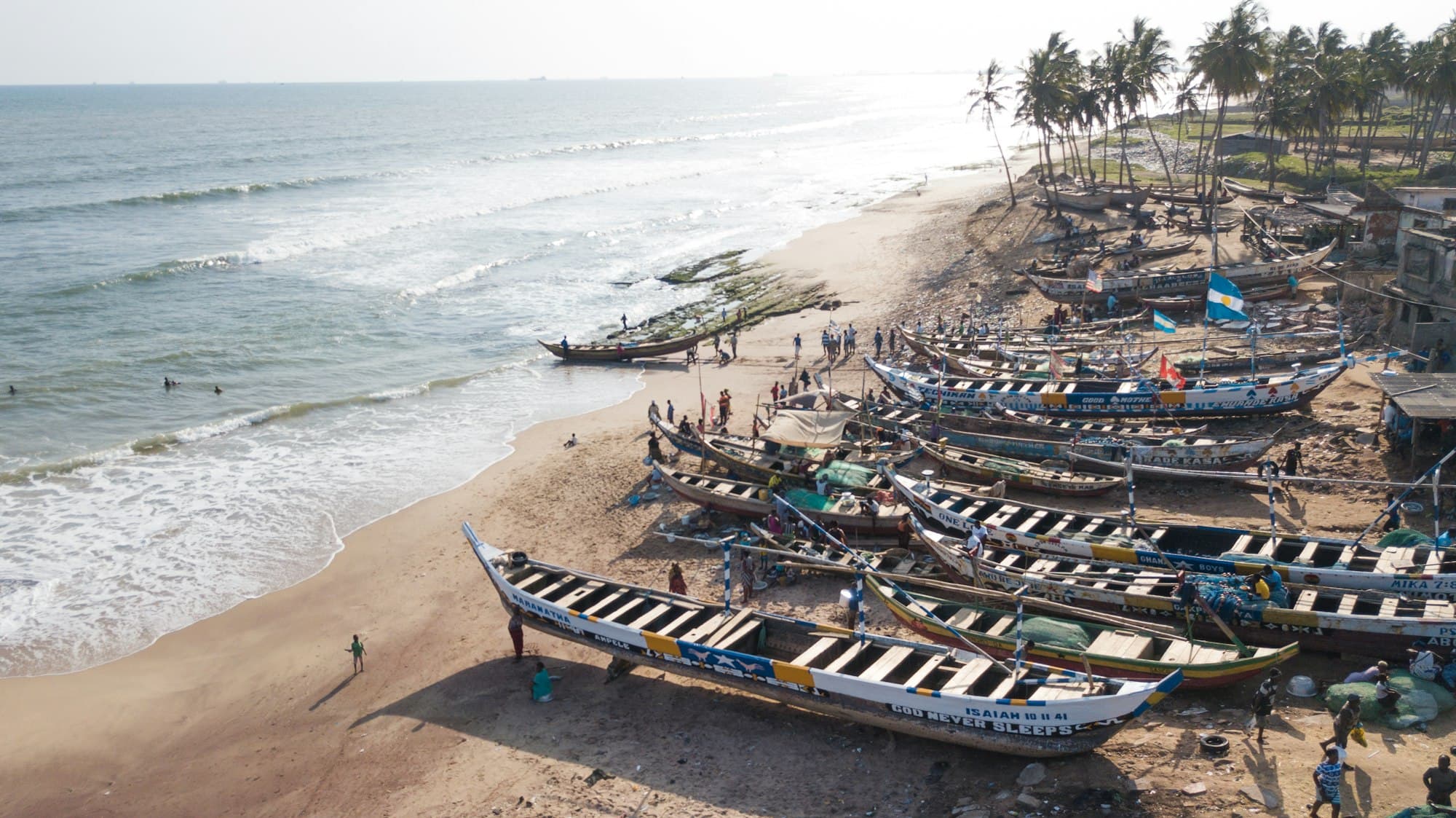
Right of Abode, the diaspora route
This is the one Ghana built for the return. If you're of African descent, the Right of Abode grants you indefinite residency and the right to live and work without a separate permit. It's the highest status short of citizenship, and it's what most returnees actually hold day to day. There's no income floor. You do need to be an adult of good character, with references from two Ghanaians of standing, a clean criminal record, a police clearance from home and proof you can support yourself. The fees are modest, but the timeline is genuinely unpredictable, running anywhere from several months to a couple of years. Treat any promise of a fixed date with caution and build in patience.
Citizenship and the Year of Return
Full citizenship is granted at the president's discretion under the 2000 Citizenship Act; it comes with a vote and an ECOWAS passport that lets you move freely across 15 West African countries. Those headline ceremonies you've seen,with hundreds of Black Americans sworn in at once, are the visible tip of it. It is also slow. The diaspora citizenship drive was paused in early 2026 to rewrite its requirements before restarting, with a proposed Homeland Return Bill aiming to smooth the path further. For now, most returnees hold Right of Abode day to day and let citizenship follow later.
Students, workers and founders
Enrolling in a Ghanaian school? The student residence permit runs about $150 and lasts the length of your studies. Taking a job or starting a company? Those go through the Ghana Immigration Service as work and business permits, usually arranged with an employer or a local lawyer. Whatever the route, the table below lays them out side by side so you can see difficulty, timeline and where each one leads.
Ghana's residency options, side by side
| Visa | Category | Application cost | Processing | Difficulty | Guide |
|---|---|---|---|---|---|
| Residence Permit Student | student | $150 | ~30 days | 3/5 | Guide |
| Right of Abode | skilled work | — | Not specified | 2/5 | Guide |
04 · The practical stuff
Healthcare, money and keeping the lights on
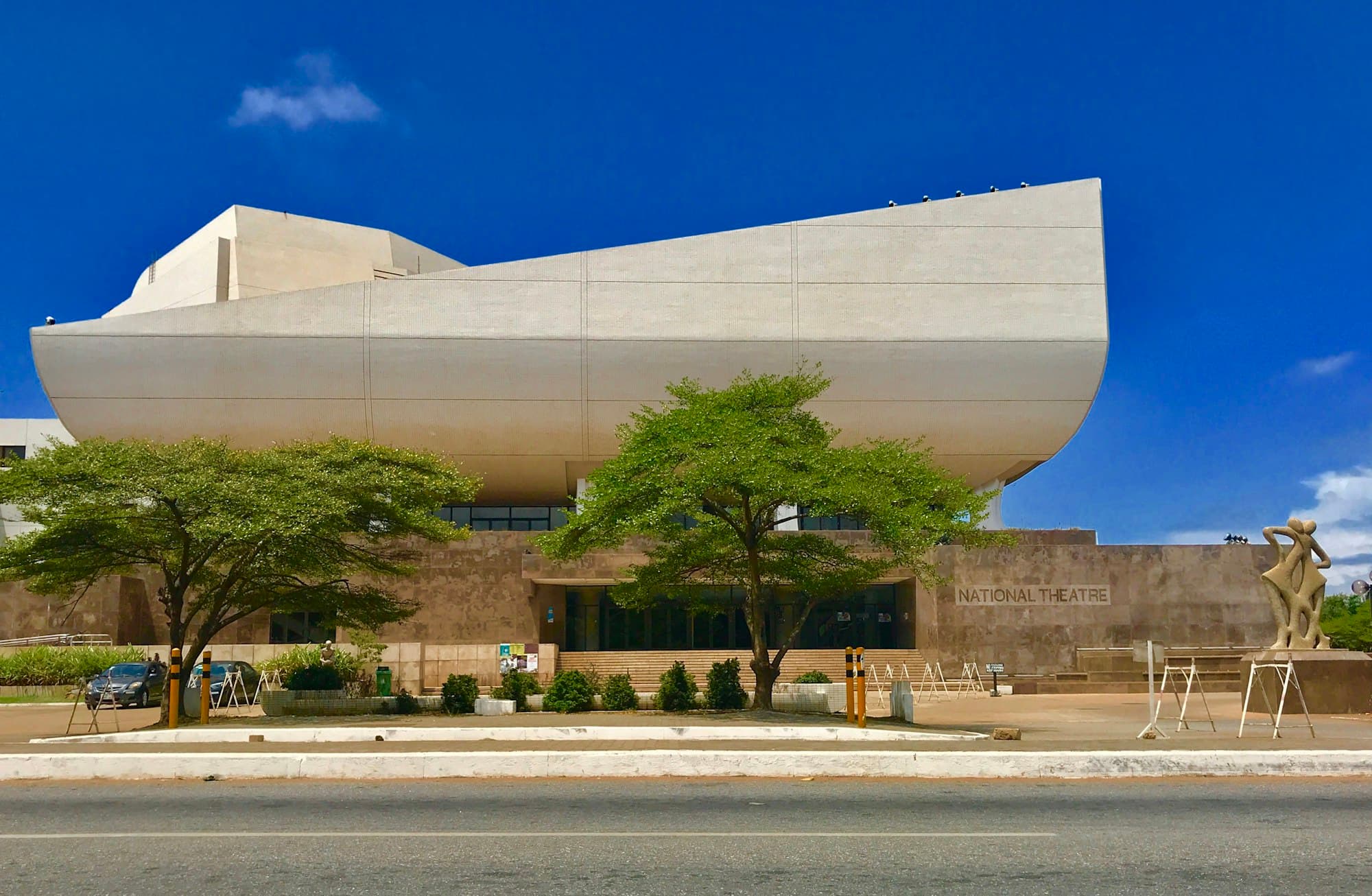
Healthcare runs on two tracks
There's the public National Health Insurance Scheme, which costs almost nothing and covers the basics but comes with crowding and long waits, and the strong private sector that most expats actually use. Accra hospitals like Nyaho Medical Centre have US-trained, English-speaking doctors and direct billing with the big insurers. Because English is the official language, you can explain a symptom and read a prescription without a translator, which matters more than people expect. Budget roughly $2,000 to $4,000 a year for a solid international family plan, and make sure it includes medical evacuation since serious care thins out quickly once you leave Accra or Kumasi. Ghana is also a malaria zone, so pack antimalarials and bring your yellow-fever certificate, which is required for entry.
Money and taxes
Mobile money is everywhere. You'll use it daily, from market stalls to rent. Opening a local bank account is doable once you have a residence permit and a proof of address, though expect paperwork and a slower pace than back home. Many movers keep a U.S. bank account and use Wise or a similar card for the first few months. On taxes, spend 183 days or more in a year and Ghana treats you as a tax resident on your worldwide income; stay less and only Ghana-source income is taxed. There is no US-Ghana tax treaty, so American citizens lean on the Foreign Earned Income Exclusion and foreign tax credits to avoid being taxed twice. You always keep filing a U.S. return. Talk to a cross-border accountant before you move, not after your first Ghanaian tax year.
Power, internet and water
The old rolling blackouts, known locally as dumsor, are far better than they were a decade ago but still happen, so most expat homes come with a generator or an inverter and battery. It's less a crisis than a fact of life you plan around, the way you'd plan around snow somewhere cold. Home internet averages a workable 35 Mbps and is reliable in the cities, which is why Accra's remote-work scene keeps growing, and a cheap local SIM with mobile data is a good backup. Many buildings also store their own water in a rooftop tank or a borehole, a small habit that saves you on the days the main sources run dry.
This guide is dated on purpose
The figures here are 2026: the roughly 16-to-1 exchange rate, the paused citizenship drive, the income and rent norms. Ghana's rules and its currency both move, sometimes quickly. Check the Ghana Immigration Service and a cross-border accountant for the current picture before you book a one-way flight.
05 · Where to live
Where other expats tend to settle down
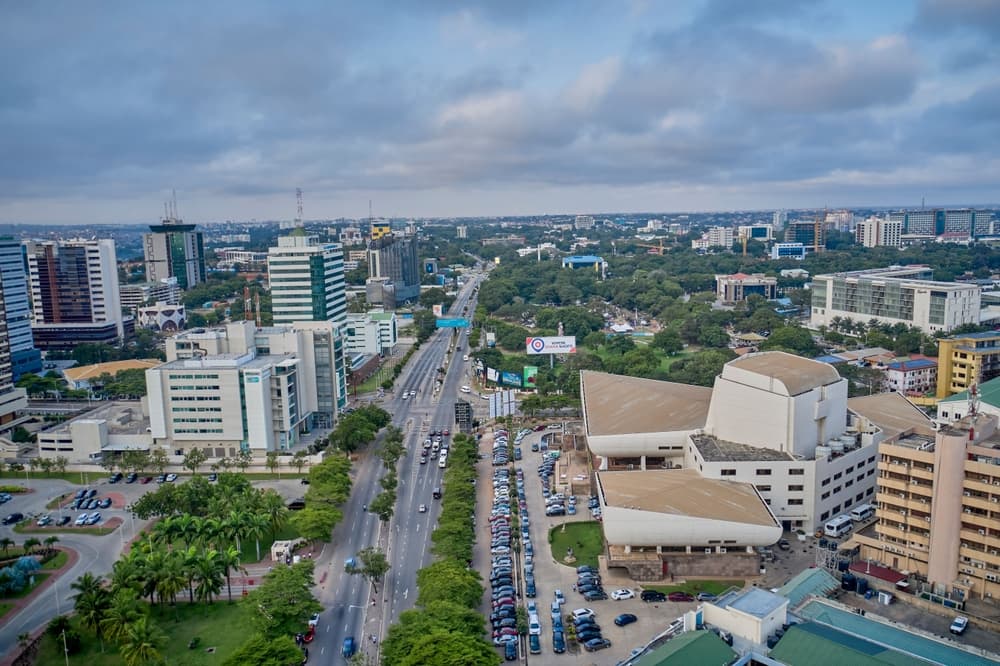
Accra
The capital
Where most diaspora movers land. Neighborhoods like Osu, East Legon and Cantonments have the coworking spaces, the international schools, the best hospitals and the nightlife. They also have the country's worst traffic, so pick your area around your daily commute.
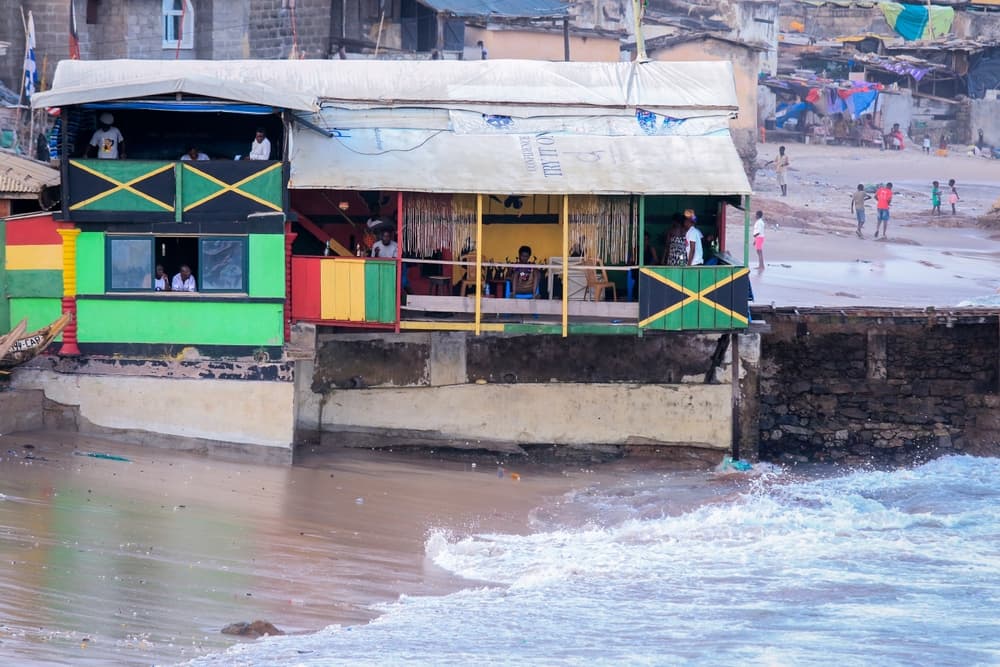
Cape Coast
History and coast
The emotional center of the return, home to the slave castles and the Door of No Return. It's a smaller, student-heavy town with beaches, a UNESCO-listed fort and a slower rhythm, an easy couple of hours west of Accra along the coast. Nearby Kakum National Park and Elmina round out the area.
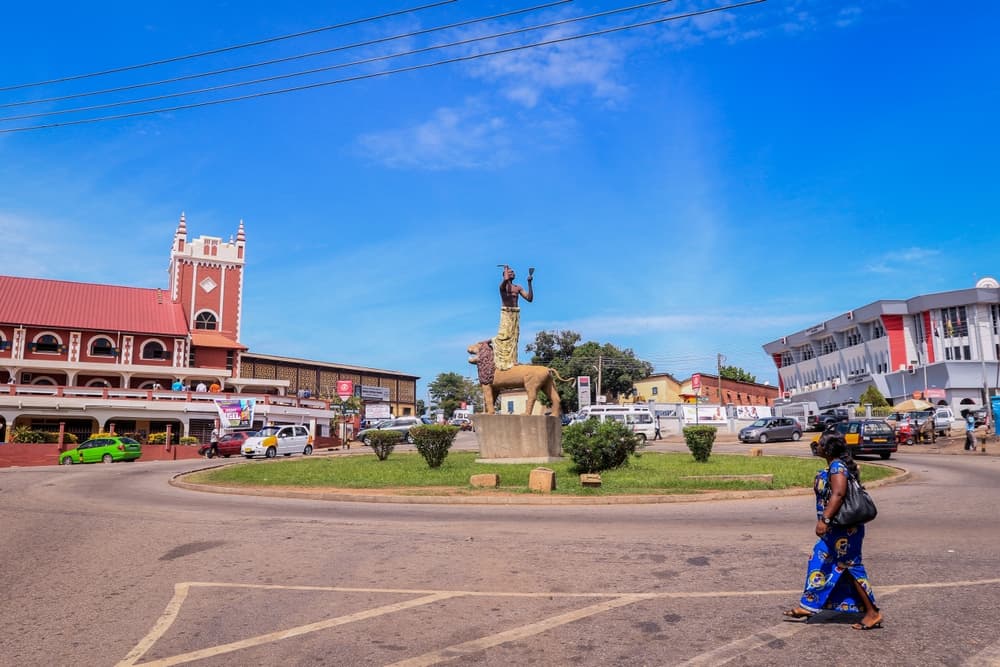
Kumasi
The Ashanti capital
The old Ashanti kingdom's capital and still its cultural center, with the Manhyia Palace, the kente weaving villages of Bonwire and Adanwomase nearby, and West Africa's largest open-air market at Kejetia. Inland and traffic-choked, with none of the coastal escape Accra has and far thinner services for foreigners.
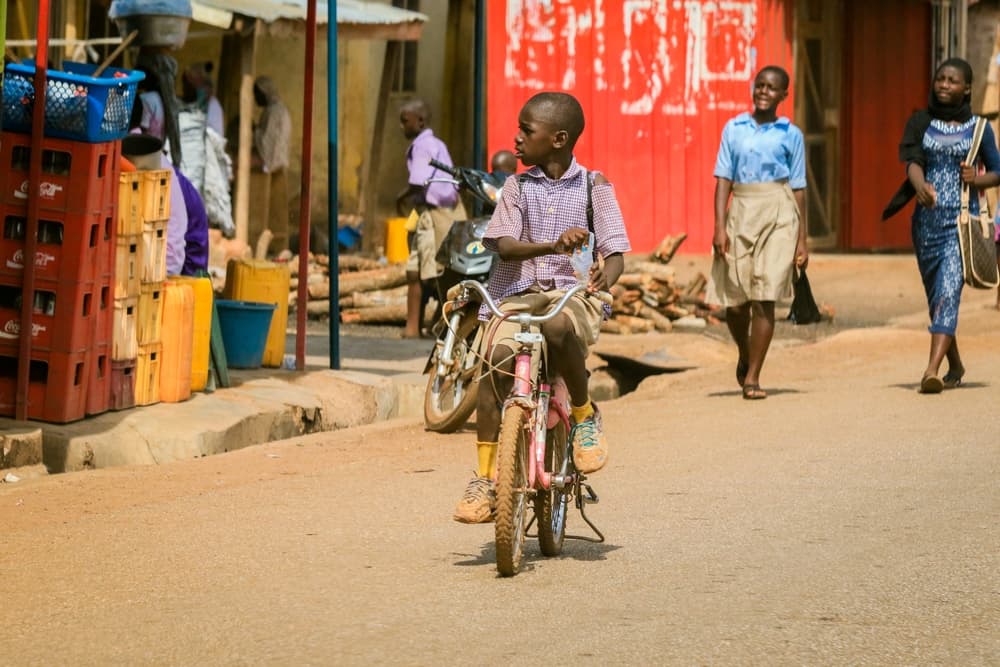
Takoradi
Oil port and beaches
Half of the Sekondi-Takoradi twin city, a working port that boomed when Ghana struck oil offshore in 2007, with surf beaches at Busua and Butre about an hour west. Costs run well under Accra's. Expat life revolves around the oil industry, and there's little international scene beyond it.
06 · Help on the ground
Meet your guides
A move like this goes better with people who've already done it. These are the Ghana-based partners we trust for the parts you can't Google, from the residency paperwork to figuring out which neighborhood actually fits your life and how to avoid the classic newcomer rent trap. They know which lawyer to call, which agent to skip, and how the system really works versus how it looks online. They're the difference between a plan on paper and a plan that survives your first week on the ground.


07 · See it first
Go look before you leap
The smartest thing you can do before a big move is spend a week on the ground with people who live there. Expatsi runs a small-group scouting trip to Ghana built around exactly that: city orientation in Accra, time on the coast, and honest conversations about land, visas, healthcare and cost with returnee experts who did the move themselves. You come home knowing what your money buys, which neighborhood felt right and whether the reality matches the dream. It's the cheapest way to find out whether Ghana is your move or just a very good idea.
Ghana
8 nights · Feb 5-13 or Apr 10-18, 2027 · hosted by Jessy Bernard
- Seminar & opening dinner with experts in visas, healthcare, & taxes
- Lodging included: Four-star accommodations, breakfast, and group transportation
- 7 nights
From $2,499 per person
See this tripFind your people
Ghana
Expatsi Community
Trade notes with other Americans planning or already making the move, from neighborhoods and schools to the paperwork nobody warns you about.
Join the Ghana communityQuestions people actually ask
Will I owe taxes in Ghana?
If you spend 183 days or more in a year, Ghana taxes you on your worldwide income. There is no US-Ghana tax treaty, so American citizens rely on the Foreign Earned Income Exclusion and foreign tax credits, and still file a U.S. return every year. Get a cross-border accountant before you move to get this right from day one.
What's the difference between Right of Abode and citizenship?
Right of Abode gives you indefinite residency and the right to live and work without a permit while you keep your existing passport. Citizenship adds a vote and an ECOWAS passport but is granted slowly at the president's discretion. Most returnees start with Right of Abode and let citizenship come later.
Is Ghana safe?
The U.S. State Department rates it Level 2, exercise increased caution, mostly for petty theft, occasional night and road crime, and online scams. The far northern border with Burkina Faso is a Level 3 area to avoid. In Accra, Kumasi and Cape Coast you take normal city precautions and use Bolt or Uber rather than street taxis.
Can I buy a house or land?
Foreigners can't own freehold land in Ghana, which the constitution reserves for citizens. You can lease land for up to 50 years and own the building on it. Always use a reputable Ghanaian property lawyer and run a full title search, because disputed and double-sold land claims are a real risk.
Do people speak English?
Yes. English is Ghana's official language and near-universal in the cities, so daily life, banking and healthcare all work in English. You'll also hear Twi, Ga, Ewe and other local languages; learning a few Twi greetings goes a long way with neighbors and at the market.
Is the healthcare any good?
It's a two-track system. The public scheme is cheap but basic with long waits, while private hospitals in Accra such as Nyaho Medical Centre offer international-standard, English-speaking care. Buy an international plan that includes medical evacuation, since serious care is limited outside the big cities.
How much does it cost to live in Ghana?
A modest single life runs about $1,100 a month and a comfortable couple around $1,900, with a one-bed in a nice Accra neighborhood near $500. The real shock is upfront rent, since landlords often want one to two years paid in advance. Treat all of these as 2026 estimates that swing with your neighborhood and lifestyle.
Do I have to be of African descent to move to Ghana?
No. Anyone can apply for student, work or business permits and live in Ghana. But the easiest long-term route, the Right of Abode, and the Year of Return citizenship path are both built specifically for people of African descent in the diaspora, which is why so many movers are Black Americans reconnecting with heritage.
Sources
- Ghana Travel Advisory (Level 2, issued July 2026) · U.S. Department of State (checked 2026-07-30)
- 524 Diaspora Members Gain Ghanaian Citizenship in Historic Ceremony · Ghana Tourism Authority (checked 2026-07-30)
- A soul mission: The African Americans moving to Ghana · Al Jazeera (checked 2026-07-30)
- The African countries offering citizenship to diasporans · Global Voices (checked 2026-07-30)
- Cost of Living in Accra, Ghana: 2026 Guide with Real Prices · Ownkey (checked 2026-07-30)
- Health Insurance in Ghana for Expats · Expat Life Ghana (checked 2026-07-30)
- Ghana: Individual - Residence and Taxes · PwC Tax Summaries (checked 2026-07-30)

Is Ghana actually your move?
Take the free Expatsi Test and see how Ghana stacks up against everywhere else you could go.