Qatar for Americans, checked September 2026
Moving to Qatar in 2026: an American's guide to the Doha offer
Qatar works best for Americans with a job offer in hand. Here's what that offer is worth, which residency you'd hold, and what the 2026 conflict means for anyone moving now.
Costs in dollars, every residency route that exists for Americans, and the practical steps from your first permit to bringing the dog.

Reviewed and updated September 28, 2026 · 13 min read

01 · The case for Qatar
A tax-free paycheck, with strings attached
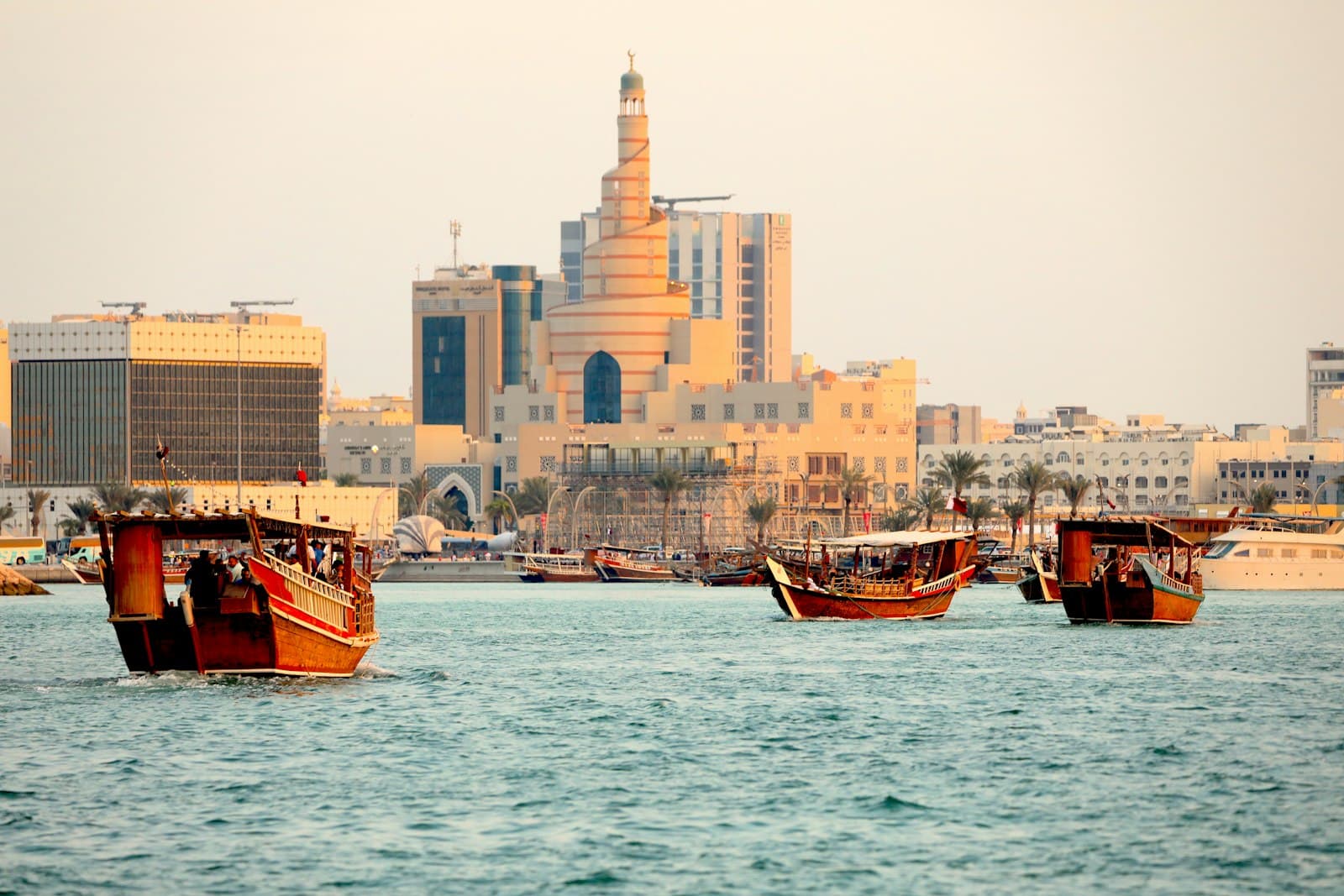
Qatar is a place you move to for a job. The offer might be a university post in Education City, a hospital job, a role in energy or finance, or a teaching contract. That's the first thing to understand about this country. Nearly every way in runs through an employer, and the employer shapes much of what follows, from your health coverage to whether your family can join you.
The draw is easy to see. Qatar doesn't tax employees' salaries, wages or allowances, so the number on your contract is close to the number you keep, before the IRS takes its turn (more on that below). The riyal is pegged to the dollar at about 3.64, so your savings don't swing with exchange rates. And some employers pay school fees directly, which can be worth more than a raise.
American institutions are woven into daily life here. Carnegie Mellon, Georgetown, Northwestern, Texas A&M, Virginia Commonwealth and Weill Cornell Medicine all run campuses in Education City, the Qatar Foundation district in Doha, and the foundation also runs a network of 13 pre-university schools there. As of early September 2026, Qatar Airways was operating Doha flights to New York, Washington, Miami and Seattle. Qatar is seven to eight hours ahead of Eastern, by season, since it doesn't use daylight saving time.
The labor rules have loosened, too. Since 2020, workers don't need an exit permit to leave the country or their employer's sign-off to change jobs.
Here's the catch
Qatar asks a lot of Americans, and 2026 has raised the stakes.
The region is at war. Hostilities between the United States and Iran began February 28, 2026. Iran fired 66 missiles at Qatar on the first day alone, and Qatar's airspace stayed shut until March 7, when it reopened under emergency limits. As of August 28, 2026, the State Department rates Qatar Level 3: Reconsider Travel, citing an ongoing drone and missile threat and disrupted flights. That same day it let families of U.S. government staff return, so the picture is serious but moving. Check the advisory the week you book, not the month you start planning.
It's a job-first country. There's no retirement visa, no digital nomad visa and no freelance visa, and you can't work on a visitor entry. Without an employer, your options narrow to property ownership, a startup route or a student seat.
It's not a forever passport. Naturalization takes at least 25 consecutive years of residence plus good Arabic, and Qatar doesn't recognize dual citizenship. The standard permanent residency route takes 20 years and is capped at 100 approvals a year. Plan on Qatar as a chapter, not a final address.
The laws are conservative, and they apply to you. Same-sex relations between men are illegal. Alcohol is tightly licensed. An unpaid debt, traffic fines or a contract dispute can trigger an exit ban that keeps you in the country for months. And the heat is no joke: daily highs top 100°F from mid-May to late September.
If you're a professional with a solid offer, at ease with those trade-offs and clear-eyed about the security picture, Qatar can be a very good few years. The rest of this guide covers what it costs, how residency works, and what to sort out before you land.
- Cost of living (single)
- $2,450/mo
- Internet speed
- 120 Mbps
- English proficiency
- 70/100
- Currency
- Qatari Riyal (QAR)
- Capital
- Doha
02 · The numbers
What a month in Qatar costs, in dollars
$2,450
Monthly budget, single
rent included
$3,550
Monthly budget, couple
rent included
$6,100
Monthly budget, family
before school fees
$1,550
Rent, 1-bed city center
$1,100 outside center
$7
Inexpensive meal out
country average
$30
Monthly transit pass
public transit
$88
Home internet, monthly
about 120 Mbps
0%
Qatari tax on salaries
U.S. tax still applies
Where the money goes: housing, school and the rest
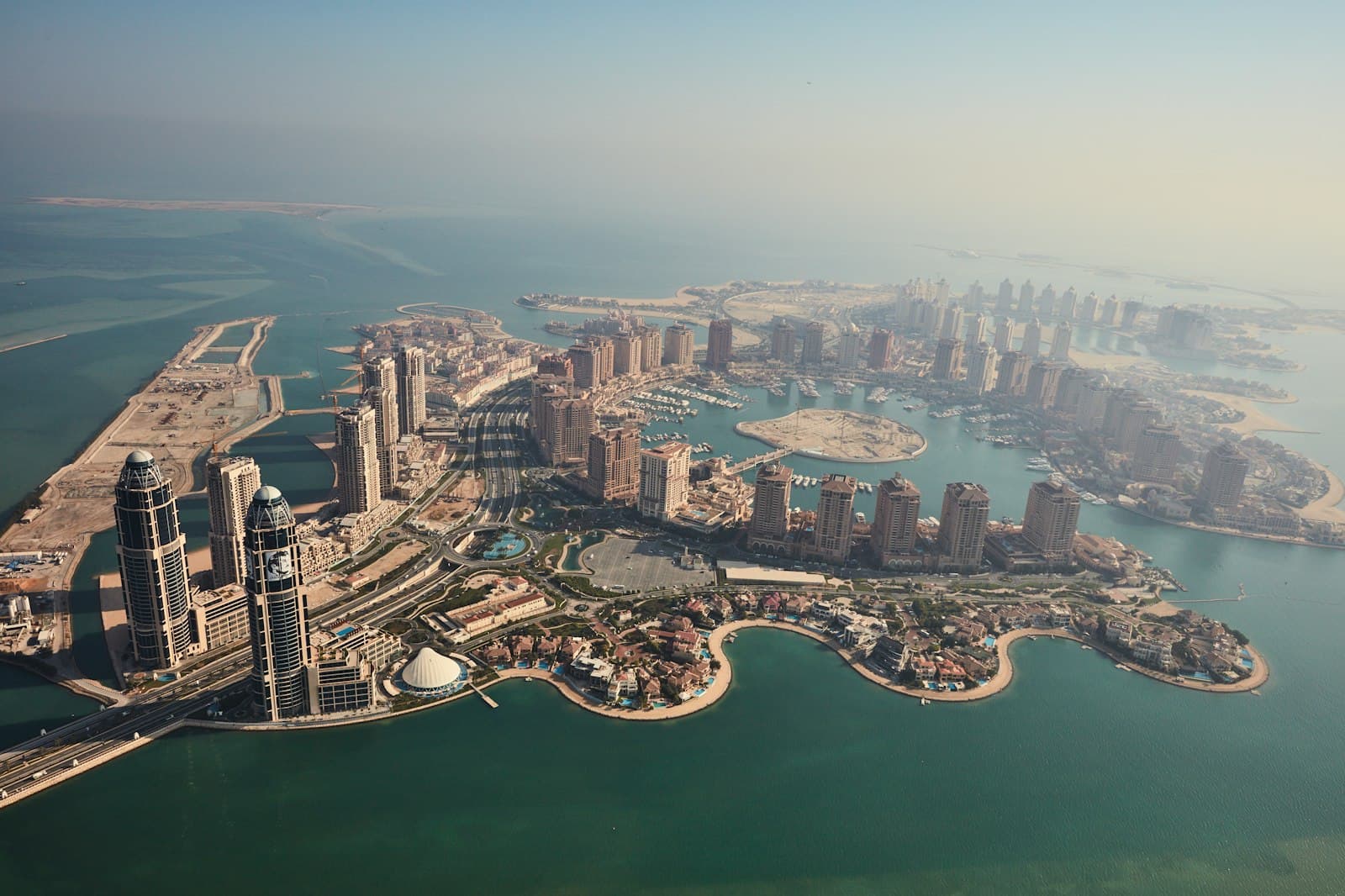
Our 2026 data puts a single person's all-in budget in Qatar at about $2,450 a month, a couple at $3,550 and a family at $6,100. Those figures assume you pay your own rent. On an expat package the math shifts, because housing is the line that swings the most.
Housing is the big number
A one-bedroom in central Doha averages about $1,550 a month and $1,100 further out, but averages flatten a wide range. Mid-2026 listings compiled by Qatar Living put one-bedrooms at The Pearl and Lusail at QAR 7,000 to 10,000 a month (about $1,920 to $2,750), and three-bedroom compound homes at QAR 11,000 to 16,000 (about $3,020 to $4,400). If your offer includes housing or a housing allowance, hold it up against those ranges before you sign.
School fees can outrun rent
With kids, tuition may be your biggest bill. The American School of Doha charges QR 60,982 a year for kindergarten through fifth grade (about $16,750) and QR 79,305 for grades six to twelve (about $21,800), plus a yearly capital fee of QR 14,600 (about $4,010). The school bills company-sponsored students once a year, so ask your employer whether tuition is part of the package. Seats are in high demand, and your first-choice school may not have room right away.
Day to day
Everyday spending is easier to plan. A simple meal out runs about $7, and a monthly transit pass about $30. Home internet averages $88 a month for speeds around 120 Mbps. Numbeo lists gasoline at QAR 2.04 a liter, roughly $2.12 a gallon. Alcohol is the exception to easy budgeting: residents buy it only with a permit from the Qatar Distribution Company, or drink at licensed hotels and restaurants.
The salary line that decides whether your family comes
Since January 2024, sponsoring a spouse and children for residency takes a monthly salary of at least QAR 10,000 (about $2,750), or QAR 6,000 (about $1,650) for private-sector specialists whose employer provides family housing. Put that number next to your offer before you sign; in Qatar the family visa follows your contract, not your savings. That same employer-first logic runs through every route below.
03 · Residency routes
Who sponsors you decides how you live here
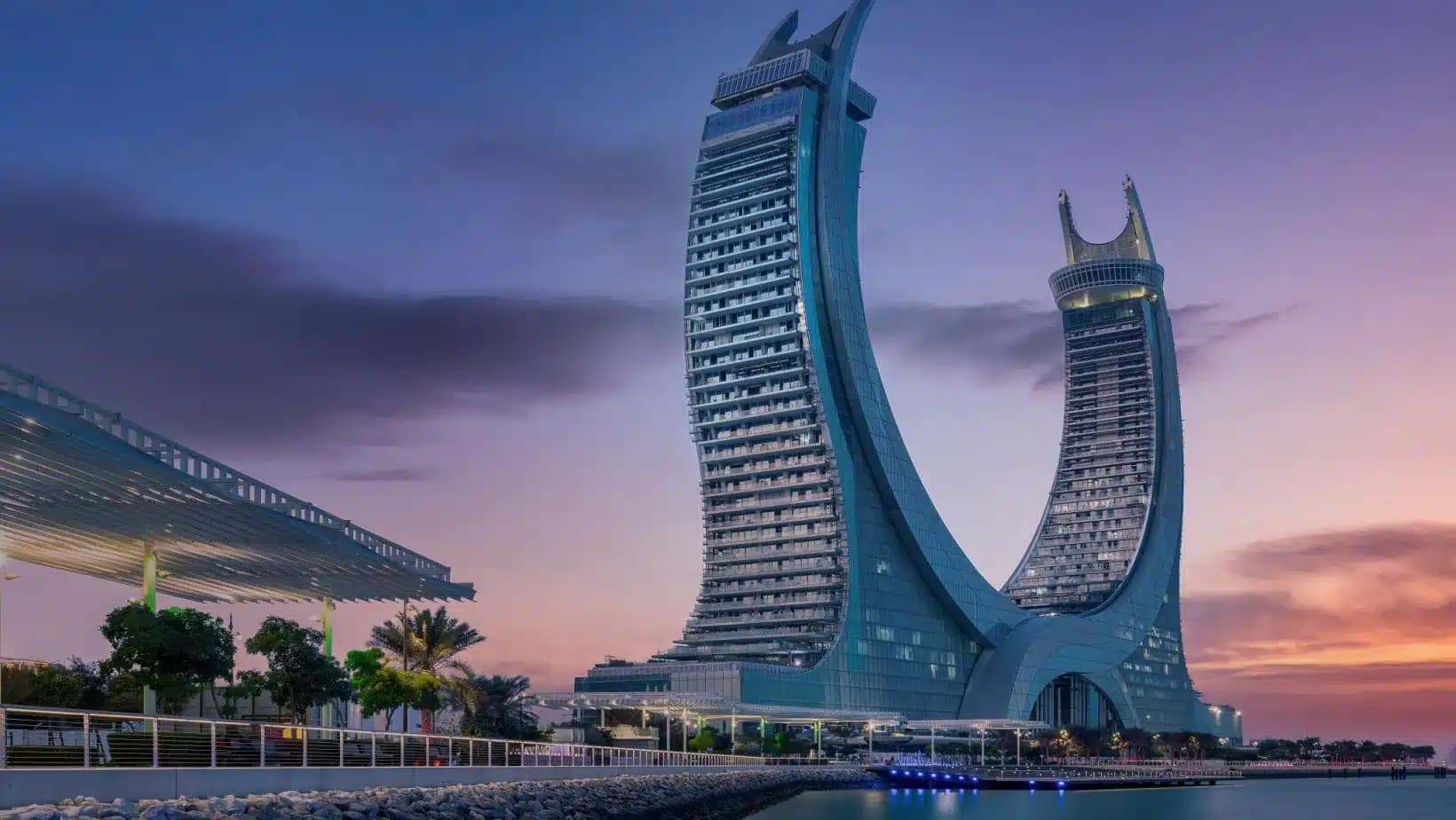
Qatar sorts residents by who vouches for them. For most people that's an employer; for a few it's a property deed, an incubator or a university. Start with where your money comes from.
Working for a Qatari employer: the work residence permit
This one's the standard route. You land a job, and your employer sponsors your entry visa and then your residence permit, which comes with a Qatar ID card. Since February 2024, the permit has to be done within 30 days of arrival, down from 90, and missing the deadline carries a QAR 10,000 (about $2,750) fine. That window includes a medical exam and fingerprints. You can't leave the country on your entry visa until the permit is issued, so don't book a trip home for week three.
Qatar Living lists the government fees at QAR 1,000 a year for the residence permit (about $275), QAR 100 for the ID card and QAR 100 for the medical, and employers normally run and pay for the process. Once you're in, you can switch jobs without your employer's permission. Your spouse, sons up to 25 and unmarried daughters can join you if your salary meets the family rule above.
Buying in: property and business residency
Qatar ties residency to real estate at two levels. Owning property worth at least QAR 730,000 (about $200,000) brings a residence permit tied to that property. At QAR 3,650,000 (about $1 million), you get permanent residency benefits covering health, education and investment. Foreigners can buy units in residential complexes anywhere in the country, plus shops and offices. This is the closest thing Qatar has to a retirement route. The public rules don't spell out whether the lower tier lets you work or sponsor family, so get that answered in writing before you buy.
Founders have a separate door. Invest Qatar's Entrepreneur Residency requires an endorsement from a recognized local incubator such as QSTP or QBIC, and overseas applicants must show about $10,000. Senior executives already living in Qatar can move up to an Executive Residency of up to ten years, but the salary floor starts at QAR 50,000 a month (about $13,700).
Studying: the student residence permit
Admission to a Qatari university comes with a residence permit sponsored by the school, and you cover tuition and living costs. That includes the American branch campuses in Education City. At some universities, including UDST, international students can join a student employment program.
Keeping your status once you have it
A residence permit survives up to six months outside Qatar. For a longer absence, such as a sabbatical or a parent's illness back home, get a re-entry permit before you leave, which can stretch that to a year. Renewals also depend on your employer: permits aren't renewed unless the employer has the required health coverage in place, so a lapse on their side becomes your problem.
What doesn't exist
Americans get a multiple-entry visa at the airport, valid for two years, with stays of up to 90 days each. You'll need a passport with at least three months of validity and health insurance that covers care in Qatar, which you can buy on arrival. That's plenty for a scouting trip, but it isn't permission to work, remote or otherwise. If you earn from U.S. clients and want to live here legally, your realistic choices are a local employer, the entrepreneur route or the property route.
Work Visa
The standard way in
Your employer sponsors the entry visa and residence permit, and you can change jobs later without their sign-off.
- Valid passport
- Employment contract with Qatari company
- Medical examination
Investor Visa
Residency without an employer
Property worth QAR 730,000 or more brings a residence permit, and QAR 3.65 million brings permanent residency benefits. Founders go through an approved incubator.
- Valid passport
- Proof of investment (e.g., property ownership)
- Medical examination
Student Visa
University-sponsored residency
Admission to a Qatari university, including Education City's American branch campuses, comes with a school-sponsored residence permit.
- Valid passport
- Admission letter from Qatari educational institution
- Sponsorship by the institution
04 · Settling in
Healthcare, taxes, money and the rules of daily life
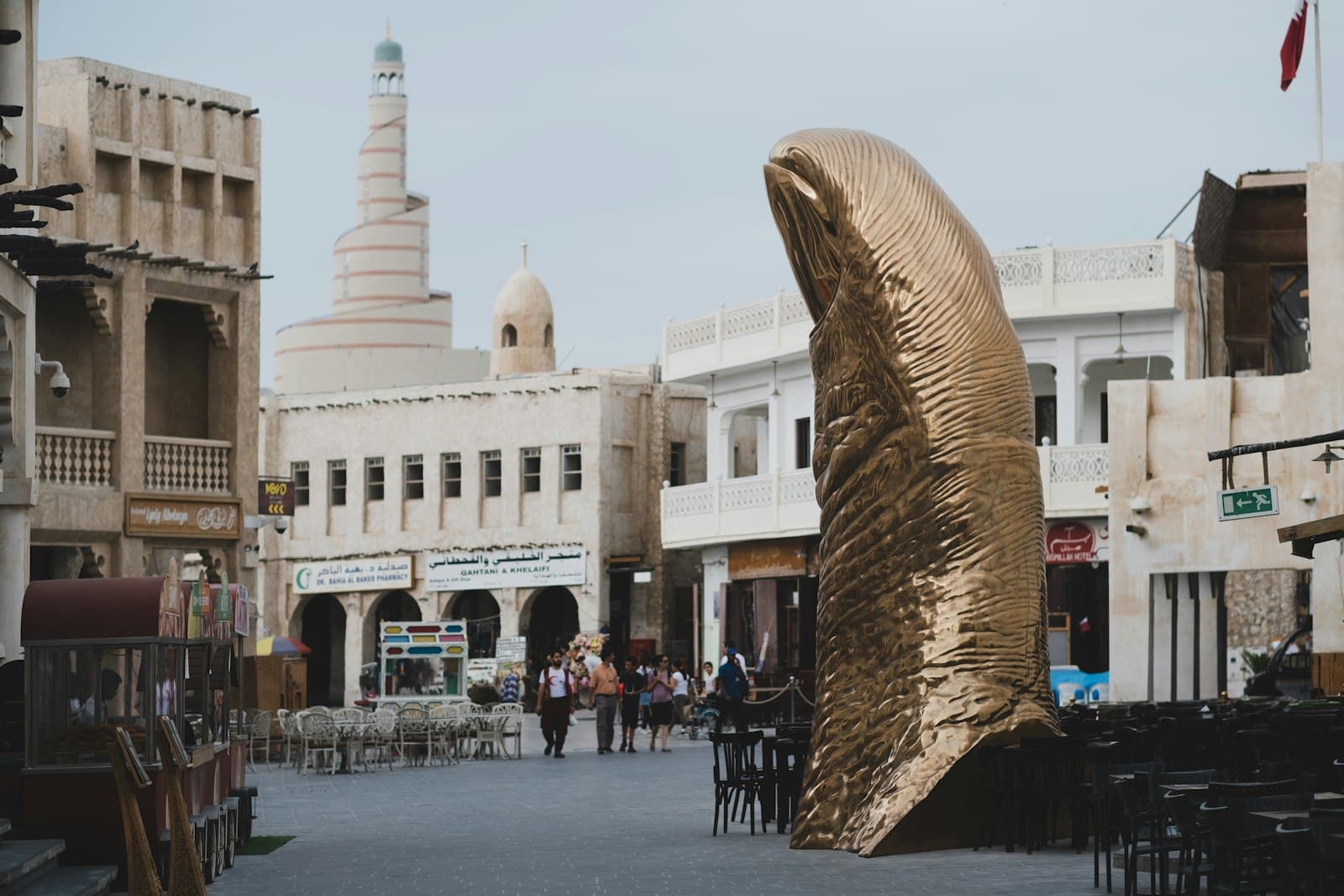
Your first month, in order
Expect a tight sequence. You land on the entry visa your employer arranged, then do the medical exam and fingerprints. The residence permit and Qatar ID have to be finished within 30 days of arrival. With the ID in hand, you apply for the health card and ask HR for the salary certificate the bank will want. Your U.S. license only covers the first 15 days behind the wheel, so book the license swap early or plan on taxis and the Metro until it's done.
Healthcare
Qatar's 2021 health insurance law makes employers pay for basic coverage for expat staff, a spouse and up to three children under 18, and permits aren't renewed unless that coverage is in place. Residents also get a health card, QAR 100 (about $27) for most non-Qataris, which gives subsidized access to government health centers and Hamad Medical Corporation hospitals. The card doesn't work at private clinics, so many residents add private coverage. Hunter Schultz, our healthcare coach, can help you judge what an employer plan leaves out, and ExpatInsure can fill the gaps. Check every prescription before you pack it: some medications are banned or unavailable in Qatar.
Taxes
Qatar doesn't tax salaries, but the U.S. taxes its citizens wherever they live. For 2026, the foreign earned income exclusion shields up to $132,900 of earnings per person, and a housing exclusion can cover part of your rent, with the 2026 housing limit set at $39,870 before adjustments for high-cost cities. Because there's no Qatari income tax to credit against, pay above the exclusion is fully exposed to U.S. tax. There's also no U.S. Social Security totalization agreement with Qatar. MyExpatTaxes files U.S. returns for Americans abroad and can show how your package lands. Freelancing on the side? Qatar can tax Qatar-source self-employment income, so ask before you invoice locally.
Banking and money
You'll need a salary certificate from your employer to open a local account, so banking waits on your job paperwork. Keep a U.S. account open as well. With the riyal pegged to the dollar, moving money home is mostly a question of fees, and Moneycorp can set up regular transfers between the two currencies.
Driving
You can drive on your U.S. license for up to 15 days after you arrive. After that, Americans can swap it for a Qatari license with an eye test and no road test, bringing a no-objection letter from their sponsor. The Qatari license is good for five years.
Pets
A dog or cat needs an import permit from the Ministry of Municipality, an ISO microchip implanted before the rabies shot, and a rabies titer test followed by a 90-day wait. Several breeds are banned outright, including American Staffordshire Terriers, Boxers, Bulldogs, Dobermans and Rottweilers. Starwood Pet Travel manages that paperwork trail end to end.
Rules that catch newcomers
Alcohol permits go only to non-Muslim residents with a basic salary of at least QAR 4,000 (about $1,100), and there's zero tolerance for drinking and driving. Cover shoulders, chests, stomachs and knees in public. And clear any debts and traffic fines before you fly out, since either can trigger an exit ban.
Checked in September 2026, and it will move
Everything here reflects what we could verify as of September 2026. While the U.S.-Iran conflict continues, the State Department advisory, flight schedules and day-to-day security can change week to week, and several residency programs are less than two years old. Check the current advisory and confirm the details with your employer's HR team or a licensed professional before you sign or ship anything.
05 · Picking a neighborhood
Where Americans set up in Doha
Most of Qatar's residents live in and around Doha, so the real choice is the neighborhood, which usually comes down to a tower apartment or compound villa.
Waterfront living: The Pearl and Lusail
Marinas, restaurants and high-rises, and these are the districts where foreigners can buy freehold. Mid-2026 one-bedrooms run QAR 7,000 to 10,000 a month (about $1,920 to $2,750).
Close to the action: West Bay and Msheireb
West Bay one-bedrooms go for QAR 7,000 to 9,500 (about $1,920 to $2,610). Msheireb Downtown Doha is the pedestrian-friendly pick, with cafés and restaurants at street level.
Room for kids: Al Waab, Aziziya and Al Gharrafa
This is villa-and-compound country, with gardens and shared pools. Three-bedroom compound homes rent for QAR 11,000 to 16,000 a month (about $3,020 to $4,400), with standalone villas starting around QAR 12,000.
Stretching the budget: Old Airport and Al Wakra
Older neighborhoods such as Najma and Mansoura, near the Old Airport, have one-bedrooms from about QAR 3,500 to 5,500 (about $960 to $1,510). Al Wakra, a growing coastal city south of Doha, has family-friendly communities and beach access.
06 · Your move team
The people who help you land in Doha
Your employer usually handles the visa. The gaps Americans hit in Qatar are everything around it: health coverage that fits the rules, U.S. taxes, getting a pet in, shipping a household and adjusting to a very different culture. These are the vetted partners we'd call for each piece, grouped by what they do.

ExpatInsure
Global Health Insurance
Andy Seale and Stephanie Edwards's team compares international health plans and matches you with coverage that fits, handy for the private clinics a government health card doesn't reach.
Learn more
Hunter Schultz
Healthcare Coach
A healthcare coach with more than 20 years of expat living and a background in air medical transport. His one-hour consultation turns your health needs into a care plan for your new country.
Learn more
MyExpatTaxes
U.S. Expat Tax Service
Tax software built for Americans living abroad, running since 2018. It e-files your U.S. return, including the foreign earned income exclusion, and takes on complex cases too.
Learn more
Moneycorp
Currency Exchange
A currency and international-payments specialist that converts dollars and sets up the regular transfers your bills and savings will need.
Learn more
Starwood Pet Travel
Pet travel and transport
Moves dogs and cats internationally end to end: health certificates, USDA endorsements, crate rules and airline coordination, with planning for embargoes and rule changes.
Learn more
Aqua Moving Services
Worldwide Shipping and Moving Service
Part of the Clearview Group. One survey of your belongings produces three competing quotes from vetted international movers, with a single point of contact throughout.
Learn more
Culturosity Co.
Cultural Skills Coach
Co-founders Jennifer and Janka run intercultural coaching and workshops built on research-backed frameworks. Jennifer's international education career includes New York University Abu Dhabi.
Learn more07 · Quick answers
Moving to Qatar: common questions from Americans
How much does it cost to live in Doha?
It depends mostly on housing and school fees. Expatsi's 2026 estimate for a single person paying their own rent is about $2,450 a month all in. Families should expect far more once international school tuition is added, so check whether an employer package covers housing or schooling before comparing prices.
Do Americans pay income tax in Qatar?
Not on a salary. Qatar doesn't tax employees' wages, salaries or allowances, though self-employed people can owe tax on Qatar-source business income. Americans still file U.S. returns. For 2026, the foreign earned income exclusion covers up to $132,900 of foreign earnings per person, and income above that is taxed by the U.S.
Can Americans move to Qatar without a job?
Yes, but the options are narrow. Qatar has no retirement, digital nomad or freelance visa. Without an employer, the main routes are buying property worth at least QAR 730,000 (about $200,000), which brings a residence permit; starting a company through Invest Qatar's Entrepreneur Residency with a local incubator's endorsement; or enrolling at a Qatari university. Americans can visit for up to 90 days per stay, but they can't work on that entry.
Can an American become a Qatari citizen?
Rarely. Naturalization requires at least 25 consecutive years of residence and good Arabic, and Qatar doesn't recognize dual citizenship. Permanent residency is more reachable: the standard route takes 20 years and is capped at 100 approvals a year, while owning property worth QAR 3.65 million (about $1 million) brings permanent residency benefits.
Is it safe for Americans to live in Qatar right now?
Everyday crime in Qatar is low, but the regional picture changed in 2026. After U.S.-Iran hostilities began on February 28, 2026, Iran fired missiles at Qatar, and as of August 28, 2026 the U.S. State Department rates Qatar Level 3: Reconsider Travel, citing the risk of armed conflict and flight disruptions. It also let families of U.S. government employees return that day. Check the current advisory before you commit.
Can I bring my dog to Qatar?
Usually, if the breed is allowed and you plan months ahead. You need an import permit from Qatar's Ministry of Municipality, an ISO microchip placed before the rabies vaccine, and a rabies titer test followed by a 90-day wait. Banned breeds include American Staffordshire Terriers, Boxers, Bulldogs, Dobermans and Rottweilers.
Can I drive in Qatar with a U.S. license?
For a short time. Newcomers can drive on a home-country license for up to 15 days. After that, U.S. license holders can exchange it for a Qatari license without a road test, after an eye test and with a no-objection letter from their sponsor. The Qatari license is valid for five years.
Can I bring my spouse and kids to Qatar?
Yes, if your salary qualifies. Since January 2024, sponsoring family residency takes at least QAR 10,000 a month (about $2,750), or QAR 6,000 (about $1,650) for private-sector specialists with employer-provided family housing. Qatari law covers a spouse, sons up to 25 and unmarried daughters, and employers must provide basic health coverage for a spouse and up to three children under 18.
Sources
- Qatar Travel Advisory (Level 3, August 28, 2026) · U.S. Department of State (checked September 2026)
- Qatar International Travel Information · U.S. Department of State (checked September 2026)
- Visas for visiting Qatar · Visit Qatar (checked September 2026)
- Own real estate: residency thresholds for non-Qataris · Real Estate Regulatory Authority (Aqarat) (checked September 2026)
- Residency Program: Entrepreneur and Executive Residency · Invest Qatar (checked September 2026)
- Labour Reform · Government Communications Office, Qatar (checked September 2026)
- Update to the Residence Permit procedures (30-day rule) · Vialto Partners (checked September 2026)
- Qatar: Revised family residency requirements · Fragomen (checked September 2026)
- Executive Regulations to the mandatory health insurance scheme · Clyde & Co (checked September 2026)
- Qatar: Taxes on personal income · PwC Worldwide Tax Summaries (checked September 2026)
- Figuring the foreign earned income exclusion · IRS (checked September 2026)
- Law No. 38 of 2005 on the Acquisition of Qatari Nationality · Gulf Labour Markets and Migration (checked September 2026)
- Expat-Friendly Neighbourhoods in Doha 2026 · Qatar Living (checked September 2026)
- Tuition and fees · American School of Doha (checked September 2026)
- Cost of living and country data for Qatar · Expatsi (checked September 2026)
Is Qatar the right fit, or just the right offer?
Take the free Expatsi Test and see how Qatar compares with other countries on cost, healthcare, climate, safety and the freedoms that matter to you.
Why not you?