Living in Doha as an American
What a job offer in Qatar's capital looks like day to day: budgets and rent, the summer heat, getting around, and the 2026 security picture.
- 1,186,023
- Population (2020)
- $2,400/mo
- Monthly budget · single
- 85°F / 29°C
- Avg temperature
A single person in Doha spends about $2,400 a month and a couple about $3,600, based on our 2026 cost data. Rent is the big line: a one-bedroom in the center runs about $1,550 a month, and about $1,100 farther out.
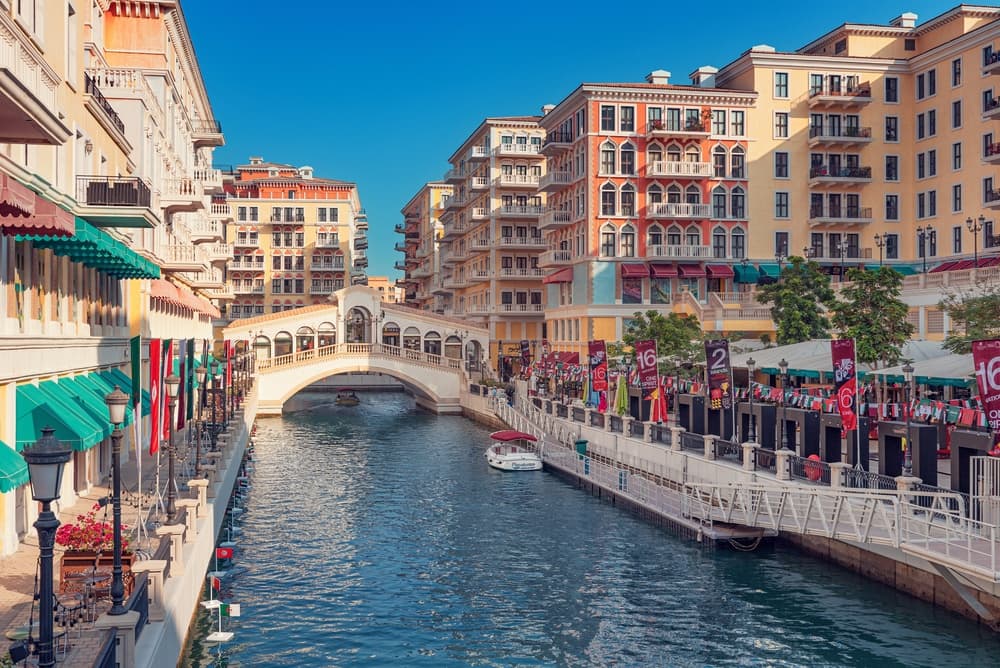
Doha suits people moving for a job. Residence comes through a sponsor such as an employer, or through buying property worth at least about $200,000 (QAR 730,000), which brings a renewable permit without one. Expat life clusters in a few newer districts: the towers of West Bay, The Pearl on its reclaimed island, and Lusail up the coast, with Souq Waqif the usual place for an evening out.
Street crime is rare. The bigger question in 2026 is regional: the State Department rates Qatar Level 3, Reconsider Travel, citing the risk of armed conflict after U.S.-Iran hostilities began in February 2026. Read the current advisory before you sign a contract.

Reviewed and updated October 22, 2026 · 4 min read
At a glance
$2,400
Monthly budget · single person
$1,550/mo 1-bed rent, center
70/100
Safety index
$90
Internet / month
85°Fannual average
Jan 66° · Jul 100°
Climate
1,186,023
Population (2020)
Expatsi estimates, updated Oct 2026, based on rental listings, government statistics, and local reporting.
Cost of living
What it costs to live in Doha
Single person
$2,200–$2,700/mo
about 25% below Austin, TX
Couple
$3,100–$4,000/mo
about 20% below Austin, TX
Family of four
$5,000–$7,200/mo
about 25% below Austin, TX
Compared with Austin, TX (Expatsi estimate, 2026).
- $7 −65%
- Inexpensive meal
- $1,350–$1,750/mo −21%
- 1-bed rent, center
- $950–$1,250/mo −19%
- 1-bed rent, outside
- $90/mo +38%
- Internet
- $30/mo −27%
- Transit pass
- $334/sq ft −49%
- Buy price, center
Expatsi estimates, updated Oct 2026, based on rental listings, government statistics, and local reporting.
Daily life
How Doha lives
- B+ grade, 59th percentile among the cities we track
- Dining & cafésstrong
- B grade, 42nd percentile among the cities we track
- Arts & culturetypical
- C grade, 15th percentile among the cities we track
- Parks & outdoorsmodest
- C grade, 10th percentile among the cities we track
- Schools & educationmodest
- B- grade, 39th percentile among the cities we track
- Healthcare accesstypical
- B grade, 48th percentile among the cities we track
- Bike infrastructuretypical
- B- grade, 38th percentile among the cities we track
- Public transittypical
- A grade, good physical accessibility
- Accessibilitygood
Graded on OpenStreetMap amenity density relative to the 436 cities we track. Accessibility is the exception: it's graded against a fixed standard (terrain steepness and sidewalk surfaces), not a curve.
Climate
Weather through the year
Annual average 85°F (29°C) · 3 in of rain a year · Source: Meteostat station normals (41170, 1991-2020; sunshine from 1981-2010)
On the ground
Scenes from Doha
Getting around
Transport in Doha
The Doha Metro, opened in 2019, is the easiest way across the city. It's air-conditioned, it serves West Bay, Msheireb, Al Sadd and Al Wakra, and it runs to Hamad International Airport. The same travel card works on the Lusail Tram, and Mowasalat's Karwa buses fill in the gaps using a separate Karwa smartcard. Our data puts a monthly transit budget at about $30.
For door-to-door trips, Karwa taxis can be booked in the app, and Uber operates in Doha. Plenty of residents still drive, partly because fuel is inexpensive. Walking is the weak spot. Pedestrian walkways are still a work in progress in much of the city, and from May through September average highs sit above 100F, so a midday walk to the station isn't realistic for much of the year. West Bay, The Pearl and Msheireb are the most pleasant areas on foot in the cooler months. Most people end up using the metro for the commute and a car or taxi for everything else.
- 11/sq mi
- Transit stops
- 4.0/sq mi
- Bike infrastructure
- 2.4/sq mi
- Wheelchair-accessible places
Mapped features per square mile from OpenStreetMap.
Keep exploring
Places like Doha
Sharjah
United Arab Emirates
1.2M people · $2,200/mo
 Coming soon
Port of Spain
Trinidad and Tobago
49K people · $2,100/mo
Bridgetown
Barbados
98.5K people · $2,300/mo
Canggu
Indonesia
7.1K people · $2,100/mo
Puerto Vallarta
Mexico
224.2K people · $2,300/mo
Tulum
Mexico
33.4K people · $2,100/mo
Living here
Day-to-day life in Doha
Who you'll meet: Qatari citizens are a minority in their own country, so most of your neighbors and coworkers will be expats from somewhere else. Social life tends to run through workplaces, schools and residential compounds, and Americans who've lived here say it's easier to make friends with other expats than with Qataris.
Healthcare: Every non-Qatari resident needs private health insurance registered with the Ministry of Public Health. Law No. 22 of 2021 makes it a condition for issuing and renewing a residence permit, and employers are responsible for insuring their staff. Most residents also get a public health card from the Primary Health Care Corporation for about $27 (QAR 100), which opens up subsidized care at Hamad Medical Corporation hospitals, including Hamad General Hospital in Doha. Private hospitals aimed at English-speaking expats sit outside that public system, so check which ones your policy covers.
Remote work: Home internet runs about $90 a month in our data. Qatar is seven to eight hours ahead of Eastern, by season, so a 9 a.m. New York meeting lands at 4 or 5 p.m. in Doha.
LGBTQ expats: Qatar's 2004 Penal Code criminalizes same-sex sexual activity, and a 2021 State Department report cited prison terms of up to seven years for men. Same-sex marriages aren't recognized, and Human Rights Watch documented arrests of LGBTQ people in the run-up to the 2022 World Cup. Weigh this carefully before accepting a posting here.
Black Americans: Black Americans living in Doha describe a city where their passport shapes how they're treated as much as their race does. A teacher interviewed by Expat Arrivals said she felt less fear around police here than at home. A South Carolina native profiled by Travel Noire pointed to a large Black expat community from the U.S., the U.K. and across Africa. The other side: a school counselor told Travel Noire that Black Americans are treated differently from Black residents from African countries, and a UN expert on racism has reported profiling of migrants by national origin.
Limited mobility: The metro is the strong point. Doha Metro stations are wheelchair accessible, with level boarding and tactile paving, and Karwa runs low-floor buses with ramps plus a small fleet of wheelchair-accessible taxis. Getting to the station is harder: walkways are uneven or missing in many areas, and summer heat makes even short outdoor stretches tough.
Retiring here: Qatar has no dedicated retirement visa. Retirees who stay generally buy property worth at least about $200,000 (QAR 730,000) or are sponsored by an adult child working in Qatar, and property worth about $1 million (QAR 3.65 million) can bring permanent residency. Expats don't receive a Qatari pension. With July highs near 109F and residence tied to property or family, Doha is a hard fit for most retirees. See our Qatar investor residency guide, the full guide to moving to Qatar, and our retirement visa hub for other options.
Housing
Renting and buying
- 1-bed rent (center)
- $1,350–$1,750/mo
- 1-bed rent (outside center)
- $950–$1,250/mo
- Buy price (center)
- $334/sq ft
- Buy price (outside center)
- $242/sq ft
Expatsi estimates, based on rental listings, government statistics, and local reporting.
Good to know
Frequently asked questions
Is it legal to be gay in Qatar?
No. Qatar's 2004 Penal Code criminalizes same-sex sexual activity, and State Department reporting has cited prison sentences of up to seven years for men. Same-sex marriages aren't recognized, and rights groups have documented arrests of LGBTQ people. LGBTQ Americans should weigh this carefully before taking a job in Doha.
Can Americans retire in Doha?
Yes, but not on a retirement visa, because Qatar doesn't offer one. The common routes are buying property worth at least about $200,000 (QAR 730,000), which brings a renewable residence permit without an employer sponsor, or being sponsored by an adult child who works in Qatar. Property worth about $1 million (QAR 3.65 million) can qualify for permanent residency. Expats don't receive a Qatari pension, so plan to live on savings and U.S. income.
Do expats need health insurance in Qatar?
Yes. Under Law No. 22 of 2021, non-Qatari residents need private health insurance registered with the Ministry of Public Health to get or renew a residence permit, and employers are responsible for insuring their staff. Most residents also get a public health card from the Primary Health Care Corporation for about $27 (QAR 100), which gives subsidized access to Hamad Medical Corporation hospitals.
How much does it cost to live in Doha?
Most single people in Doha spend between about $2,200 and $2,700 a month, and couples between about $3,100 and $4,000, based on Expatsi's 2026 cost data in U.S. dollars. A family of four should plan on roughly $5,000 to $7,200. Rent is the biggest variable: a one-bedroom in the center ranges from about $1,350 to $1,750 a month.
Is Doha safe for Americans right now?
For everyday crime, yes: street crime is rare, and Doha scores 70 on our safety index. Regional security is the open question. The U.S. State Department rates Qatar Level 3, Reconsider Travel, because of the risk of armed conflict after U.S.-Iran hostilities began in February 2026, and commercial flights have been disrupted. Check the current advisory and enroll in STEP before you move.
How hot does Doha get?
Very hot. Average highs reach about 109F in July and stay above 100F from May through September. Winter is mild, with January averaging highs near 73F and lows near 60F. Rain is scarce, about 3 inches a year, and most of it falls between November and March.
Where do Americans live in Doha?
Expats moving for work often choose West Bay for high-rise apartments near offices and embassies, The Pearl for waterfront living on a reclaimed island, and Lusail for newer developments north of the center. Msheireb Downtown suits people who want a walkable core near the metro. Rents in The Pearl, Lusail and West Bay run well above central areas like Al Sadd.
Do you need a car in Doha?
Not if you live and work near the metro. The Doha Metro links West Bay, Msheireb, Al Sadd and Hamad International Airport, and Karwa taxis and Uber cover the rest. Many residents still drive, though, because fuel is inexpensive, walkways are patchy, and summer heat makes walking to a station hard work.
See how Doha fits your life
Take the free Expatsi Test and compare Qatar to over 100 countries on what actually matters: cost, healthcare, climate, and safety. About five minutes.
Why not you?