Chile country guide
Moving to Chile: the country works, the paperwork takes most of a year
Two people live well here for roughly $1,900 a month, the broadband is among the fastest anywhere, and the permit you want has to be granted before you land.
Chile doesn't ask you to buy a house or pass a points test. It asks where your income comes from, and whether you can start the file about a year before you want to be standing there.

Reviewed and updated September 24, 2026 · 13 min read
01 · The case for Chile
A country that works, laid out end to end
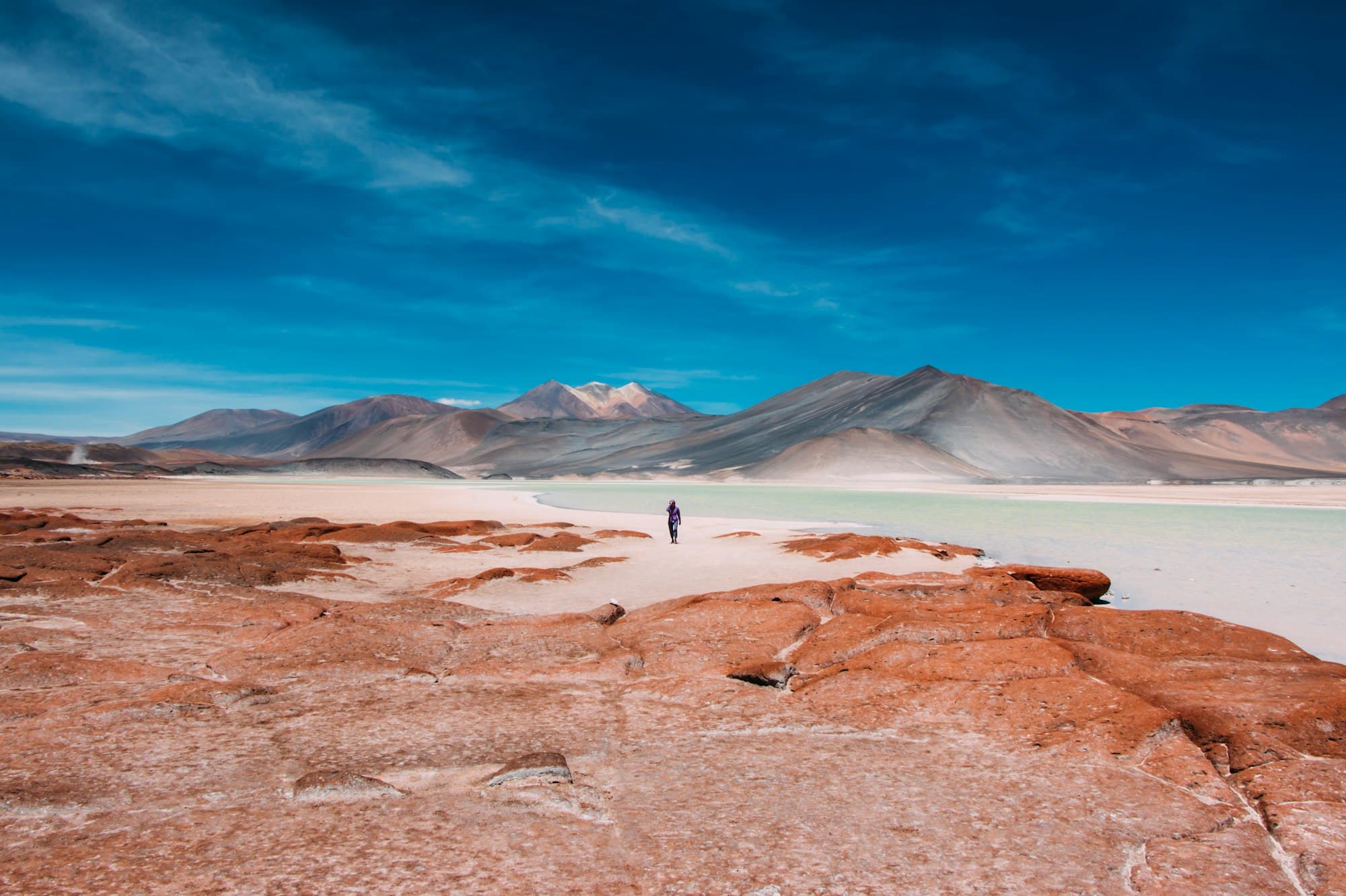
Chile is about the size of Texas stretched into a 4,300 kilometer ribbon, with the Atacama desert at one end and Patagonian ice at the other. That's the postcard. The reason Americans stay is duller and better: the water is drinkable, the buses come, the hospitals are good, and the internet is genuinely world class. Ookla's Speedtest index put Valparaíso first in the world for average city broadband in late 2025, at 398 Mbps, with Los Angeles eleventh.
It's also close to home in the ways that matter. Santiago is about 1 hours' flying from the East Coast. Chile signed an income tax treaty with the United States that took effect in 2024, and it's the only Latin American country inside the U.S. Visa Waiver Program. Neither of those is an accident.
Who gets the most out of it
People with income that arrives from somewhere else. A retiree with a pension, a landlord with rent coming in, a consultant billing U.S. clients. Chile leaves foreign income alone for a new resident's first three years, and that clock is the thing that should set your arrival date. It helps that the country is aging alongside you: the 2024 census counted 18.5 million Chileans, 14 percent of them 65 or over, against 6.6 percent in 1992. Add anyone who organizes life around the outdoors, because skiing, surf and trekking all sit inside one country.
Here's the catch
Crime is moving the wrong way. The State Department holds Chile at Level 2 on its four-step advisory scale, a step worse than Argentina, and its own summary says assaults, homicide, carjackings and home break-ins are all rising. Local salaries average about $950 a month and unemployment hit 9.5 percent in the May to July 2026 quarter, so earning locally is a thinner fallback than the modern airports suggest. English proficiency is low once you step outside a few Santiago comunas. None of that makes Chile a bad move. It's just a move you plan with your eyes open.
- Safety index
- 55/100
- English proficiency
- 35/100
- Currency
- Chilean Peso (CLP)
- Capital
- Santiago
- Language
- Spanish
02 · The money
Four numbers to start from
$1,900
Monthly budget, couple
Rent included, away from the priciest Santiago comunas
$1,100
Monthly budget, one person
Lean. Our figure sits under the independent Santiago estimates
$450
One-bedroom, center of town
About $350 farther out, and less again outside the capital
$8
Meal at an inexpensive restaurant
Restaurants stay good value. Groceries sit near U.S. prices
Pricier than its neighbors, far cheaper than home
Those four figures are our own estimate; they sit at the lean end on purpose. My Latin Life ranks Chile eighth of ten South American countries on cost and treats $2,500 a month as the normal planning figure for one person in Santiago; Expat Focus averages a single resident at about $1,540 and a couple at $2,182. Read it this way: $1,100 buys a careful life in a mid-tier comuna, $2,500 buys a relaxed one in Providencia. Against American prices the gap remains wide; Numbeo puts Chilean consumer costs about 43 percent lower and rents about 70 percent lower in March 2026.
A first budget goes wrong in predictable places. Start with furnished rentals, which carry 19 percent VAT in Chile, so the turnkey listings an American finds in English cost meaningfully more than the unfurnished market a local searches. Sign a proper lease and the number drops. Then groceries, which land close to U.S. prices while restaurants, buses, domestic flights and wine stay cheap. Your spending shifts around rather than shrinking evenly.
Property is quoted in UF, an inflation-indexed unit rather than pesos, which catches every newcomer once. Santiago averages roughly $2,650 per square meter to buy, ranging from about $1,800 to over $3,500 depending on the comuna. And the peso moves: it traded around 950 to the dollar in mid-September 2026 after a 52-week range of roughly 851 to 969, which is why a currency broker like Moneycorp is worth a call before you move a deposit.
The bar is set where your budget already is
Chile publishes no legal income minimum for its retirement and passive income visa. Immigration officers weigh your file against what it costs to live here. Practitioners cluster on a band of $1,000 to $1,500 monthly for a single applicant and another $500 to $600 for each dependent, and one Santiago firm tells clients to show $1,500 to $2,000. Set that beside the figures above and the test is essentially whether your income covers a real Chilean life. Documented income well above the range is what shortens the odds.
03 · Everyday life
What you adjust to in the first year

The Spanish is its own project
Chilean Spanish is the regional outlier. It's fast, the s at the end of a word tends to vanish, and the slang is dense enough that Spanish speakers from elsewhere in Latin America get caught out. Our data puts English proficiency at the low end; that reads true once you leave Providencia, Las Condes and Vitacura. Banks, leases, clinics and the immigration portal all happen in Spanish. Budget lessons with Miss Rosa the same way you'd budget rent.
The mountains are the compensation
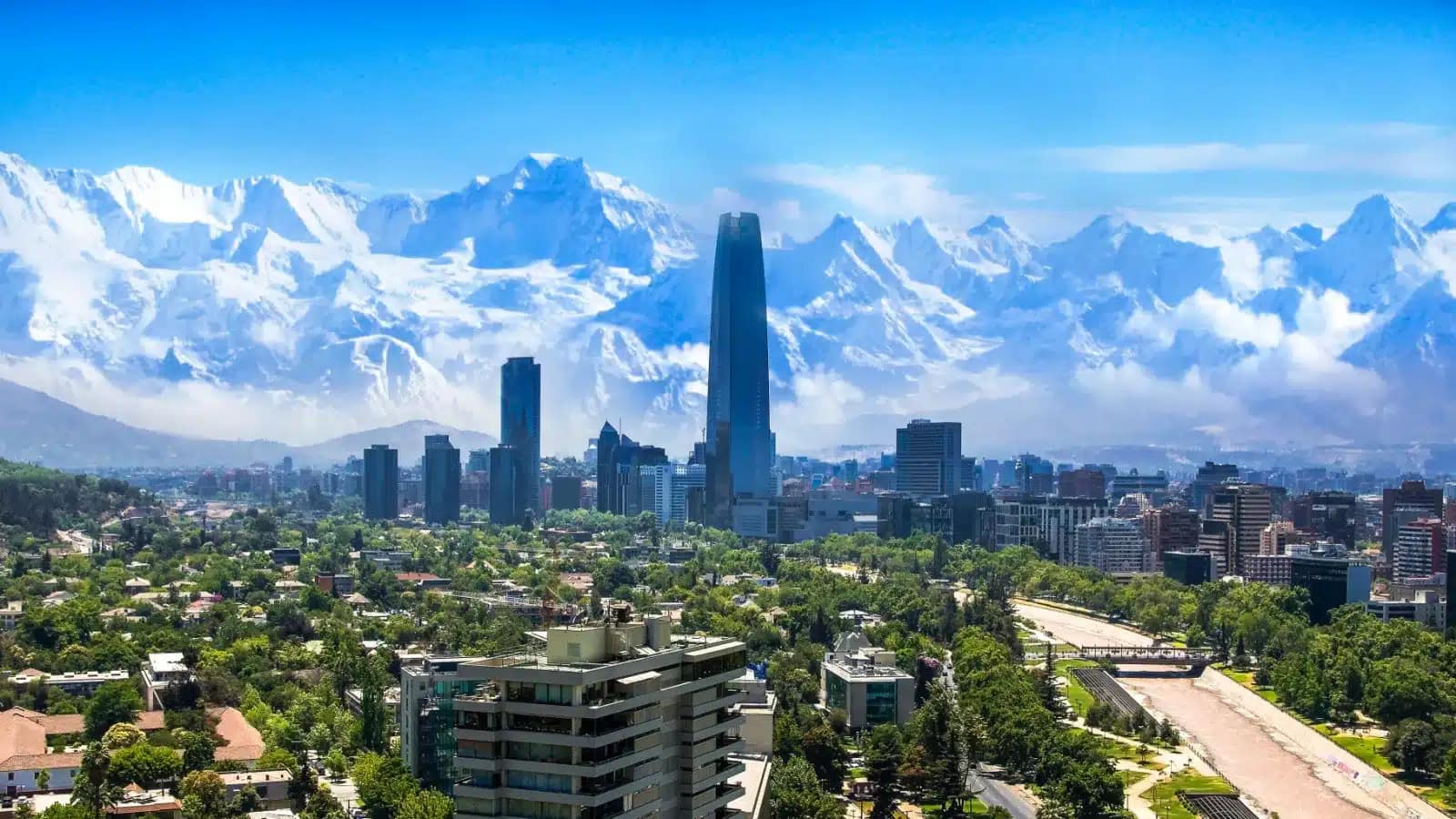
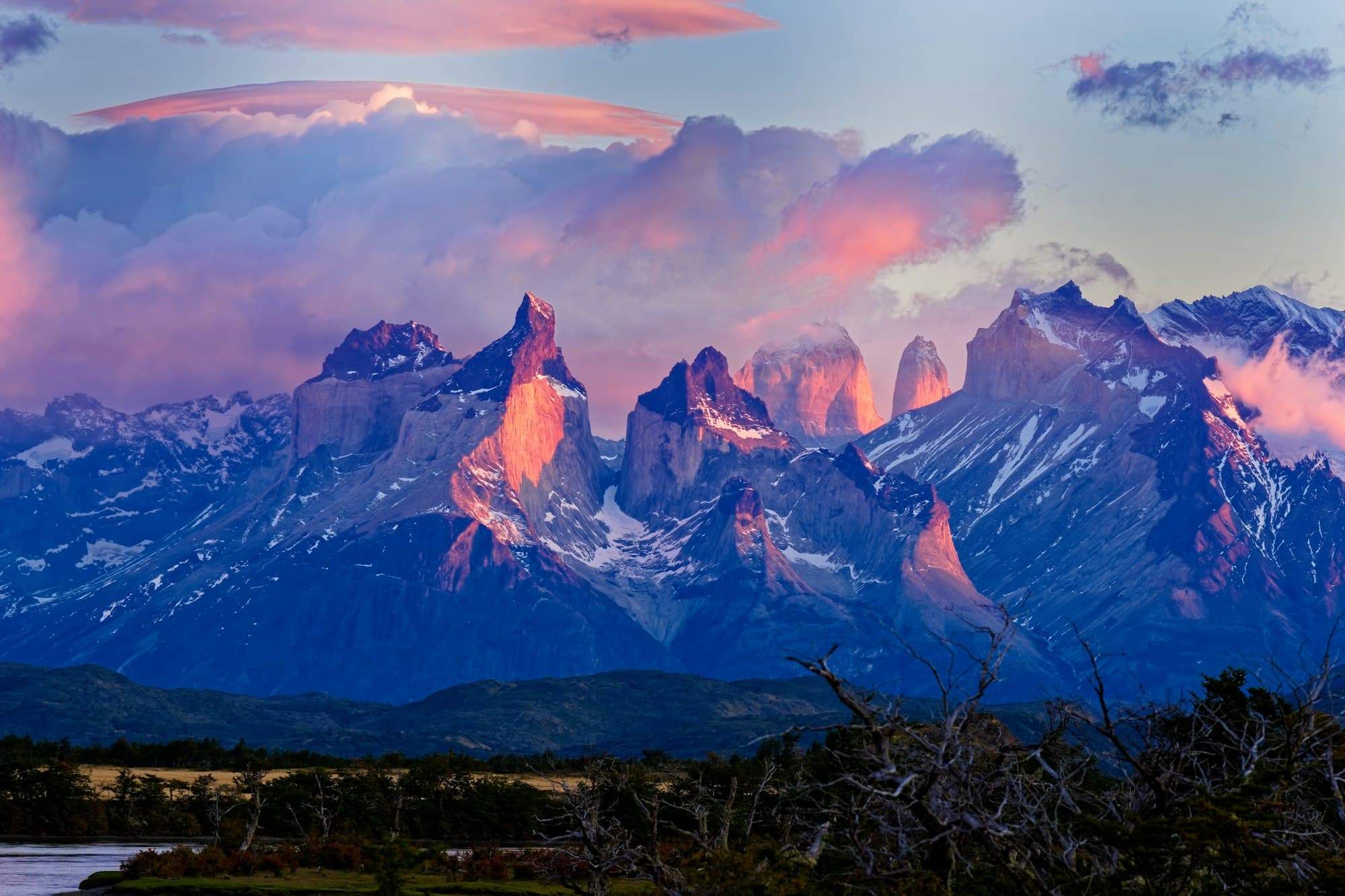
Three ski areas sit inside a 90 minute drive of central Santiago. The coast is about the same in the other direction. Of everything we score a country on, outdoor activity is where Chile posts its highest number; that's the part of the pitch that photographs get right.
Winter air, and the ground
Santiago sits in a bowl below the Andes. In winter, temperature inversions trap wood smoke and traffic exhaust over the city for days. It's a cold-season problem rather than a year-round one and is one of the reasons people trade Santiago for La Serena or the south. Chile also sits where the Nazca plate dives under South America, so it gets real earthquakes. Modern Chilean buildings are engineered for them. Drills are routine, which is reassuring and still takes getting used to.
The political weather changed
José Antonio Kast won the December 2025 runoff with about 58 percent of the vote and took office in March 2026, the sharpest turn to the right in decades, on a platform of crime and irregular migration. He controls neither chamber of Congress. His immigration push is aimed at unauthorized entry rather than at a retiree filing at a U.S. consulate, but it's the political weather a newcomer arrives into.
What you can count on
Fiber almost everywhere
About 70 percent of Chile's fixed lines are fiber, and home coverage had passed 96 percent by early 2024.
One hour off Eastern
Chile runs an hour ahead of Washington and keeps daylight saving, so U.S. calls land in normal hours.
Two health systems
Public FONASA or a private isapre, both open to legal residents once you hold a Chilean ID number.
Desert, vines and ice
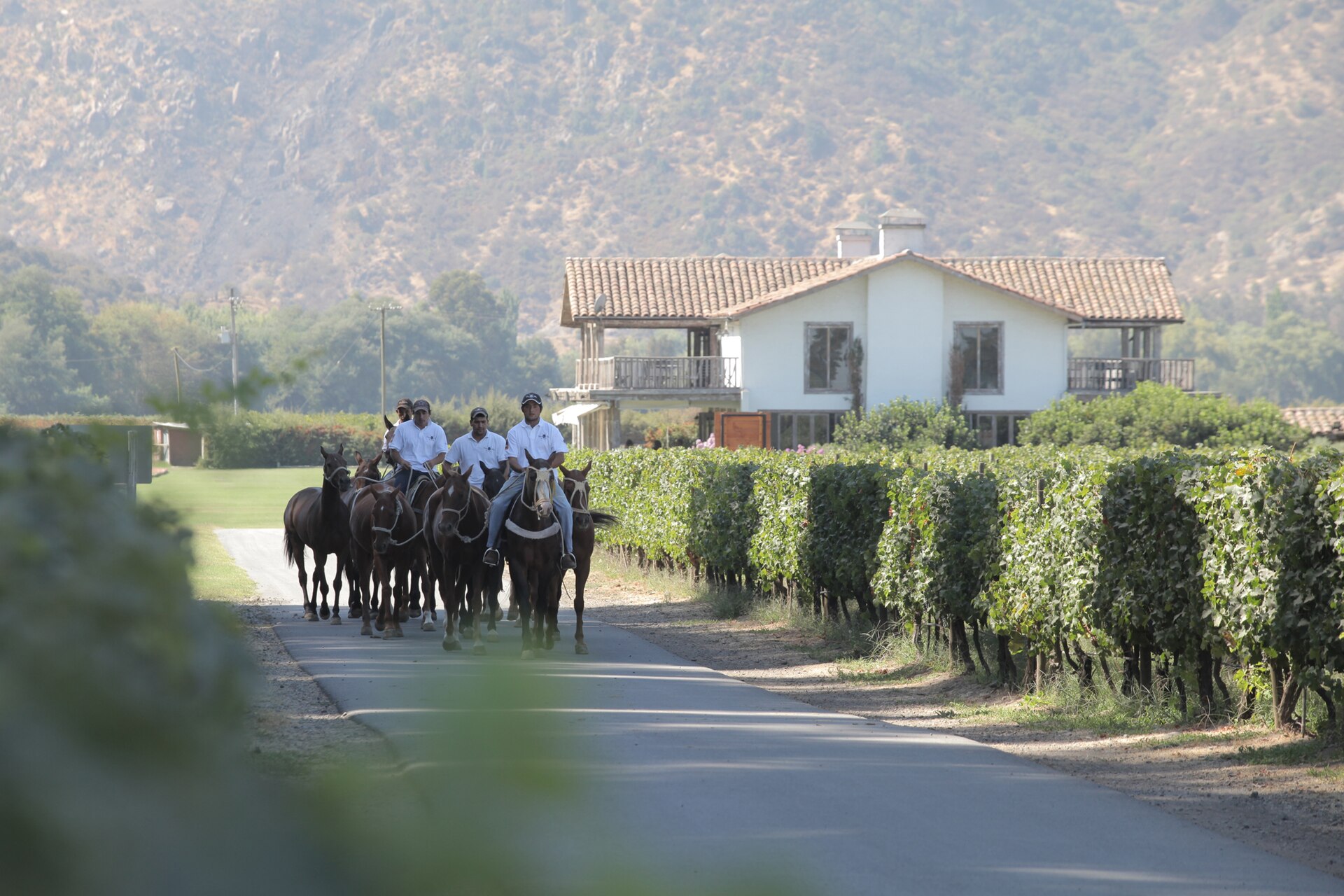
The Atacama, the Casablanca and Colchagua wine valleys and Patagonia are all domestic trips.
OECD member since 2010
The first South American country to join, with investment-grade credit and a freely floating peso.
Dual citizenship is fine
Chile has allowed it since 2005, so naturalizing later doesn't cost you your U.S. passport.
04 · The ways in
You file from home, and that changes everything
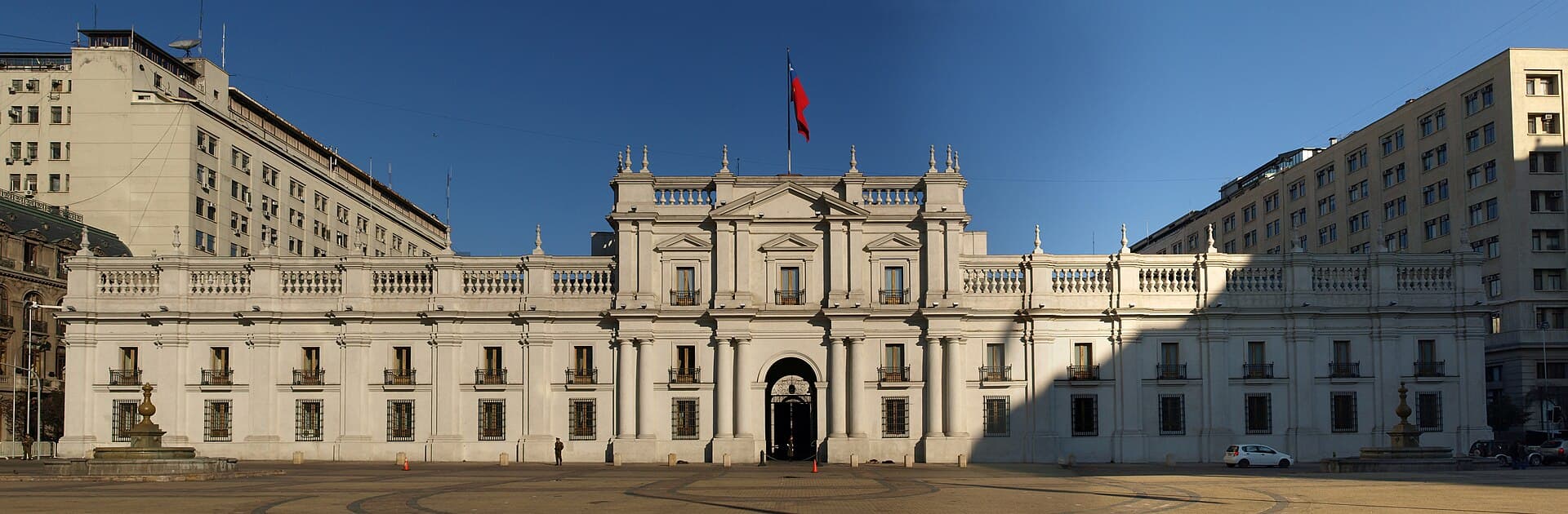
Americans get 90 days on arrival with no application, extendable once for 90 more for about $100. You can't work on it, and here's the rule that reorders every plan: since the 2022 migration law, you can no longer land as a tourist and convert to residency inside Chile. Narrow exceptions in Article 69 cover family ties to a Chilean or permanent resident and humanitarian cases. Everyone else applies from abroad through the migration service's digital portal, then travels once the electronic visa is issued.
Every document issued abroad has to be apostilled, and anything not in Spanish or English needs an approved translation; the portal rejects an incomplete upload outright. If the service comes back asking for more, you get 60 calendar days to answer before the file can be refused. Within 30 days of landing, you'll register with the investigative police and collect your cédula de identidad.
Retirement and periodic income
The workhorse. It covers pensioners and anyone living on rent, dividends, interest or annuities. No published income floor. The surprise is that, despite the name, it carries full work rights. You can take a Chilean job, freelance or start a company on it. The catch is what counts as passive: immigration treats remote salary and client invoices as active work, so a freelancer can't qualify on freelance earnings.
If you work remotely
Chile has no digital nomad visa. Plenty of 2026 guides describe one in detail, complete with fees and renewal rules. It doesn't exist. What remote workers use instead is the temporary residency subcategory for paid activities, built on a service contract with a client outside Chile. It's slower to get than a nomad permit would be, and the time you spend on it counts toward permanent residency.
A job offer, or half a million dollars
The work visa needs a signed, notarized contract with a Chilean employer. Under the 2022 law, it's no longer welded to one company; changing jobs means filing a new contract, not starting over. The investor route wants roughly $500,000 going into productive activity that makes goods, services or jobs. There's no golden visa here, so buying an apartment qualifies you for nothing.
Permanent residency, and then a passport
Temporary permits now run up to two years. The migration service's own rule is that files lodged after May 2022 need 24 months of temporary residence before you apply for permanencia definitiva, which costs about $150, billed as 142,726 pesos. A 12-month version exists for spouses and close family of Chileans and permanent residents. Citizenship opens at five years of residence, counted from your first visa stamp, with an interview in Spanish and questions on Chilean history.
The three permits in our database
| Visa | Category | Application cost | Processing | Difficulty | Guide |
|---|---|---|---|---|---|
| Investor Visa | investment | — | ~60 days | 4/5 | Guide |
| Retirement and Periodic Income Visa | retirement | — | ~60 days | 3/5 | Guide |
| Work Visa | skilled work | — | ~60 days | 4/5 | Guide |
About that data card
Our timing figures up there are the optimistic version. The rows say 60 days and describe a two to four month decision, while every 2026 practitioner we checked puts the migration service at six to twelve months since the 2022 overhaul; some files run past that. Build your plan backwards from that. The list is short, too: Chile's decree sets out around fifteen temporary residency subcategories and we hold three, so student, family, Mercosur and the paid-activities route remote workers use are all missing.
05 · The fine print
Doctors, tax years, and one ID card

Healthcare: FONASA, an isapre, or neither
Formal workers, pensioners and contractors put 7 percent of taxable income into health coverage and choose where it goes: FONASA, the public fund, or one of the private isapres. FONASA now covers around 85 percent of the country, while the private side keeps shrinking. It lost about a quarter of its members in five years. FONASA never turns anyone down for age or pre-existing condition; care inside the public network is free for members aged 60 and over. Isapre premiums run roughly $85 to $315 a month, billed as 80,000 to 300,000 pesos, priced in UF so the peso figure drifts. These can exclude a pre-existing condition for around 18 months or surcharge it. Premiums also climb hard with age, which is why older residents drift back to FONASA.
The gap nobody warns you about
Both systems need legal residency and a Chilean tax ID, so new arrivals spend roughly two to six weeks with no local coverage at all. International plans run about $100 to $400 a month and are the only option in that window, which is also why all three of Chile's permits ask for proof of insurance. Emergency rooms must stabilize a life-threatening case whatever your status, then send the bill.
Taxes: three quiet years
Chile taxes residents on worldwide income, with one large exception: a foreigner is taxed only on Chilean-source income for the first three years in the country. Tax advisers report that the exemption can be extended once by another three years on application. Residence itself is triggered by six consecutive months in Chile in a calendar year, or more than six months across two consecutive years, and intent to stay can pull the date forward. The top marginal rate is 35.5 percent, VAT is 19 percent, and there's no wealth tax. Americans keep filing U.S. returns throughout, which is where a cross-border preparer like MyExpatTaxes earns its fee.
Everything starts with a RUT
The cédula de identidad gives you a RUT, the tax number that opens a bank account, signs a lease, joins a health system and buys a phone plan. Until it lands, fintech cards and a foreign bank do the job. Santiago's metro and bus network runs on a rechargeable bip! card that costs about $2.25 to buy, and fares in the capital are frozen through the end of 2026.
This guide is dated on purpose
The dollar figures here use the peso's mid-September 2026 value of roughly 950 to the dollar, so price your own numbers again on the day you file or transfer. Three other things are live: inflation came back to 4.1 percent a year in August 2026 after dipping below target in February; the migration backlog moves month to month; the Kast government has sent Congress a tax package, including a cut in the corporate rate from 27 to 23 percent that hasn't passed.
06 · Where to live
Chile city guides, as we write them

Santiago
Mountain-view capital
The default landing spot, with Providencia and Las Condes for services and English. The Andes hang over the city and ski areas are within a 90 minute drive. Winter smog and rising crime are the catches.
Viña del Mar
Beach city, Chile style
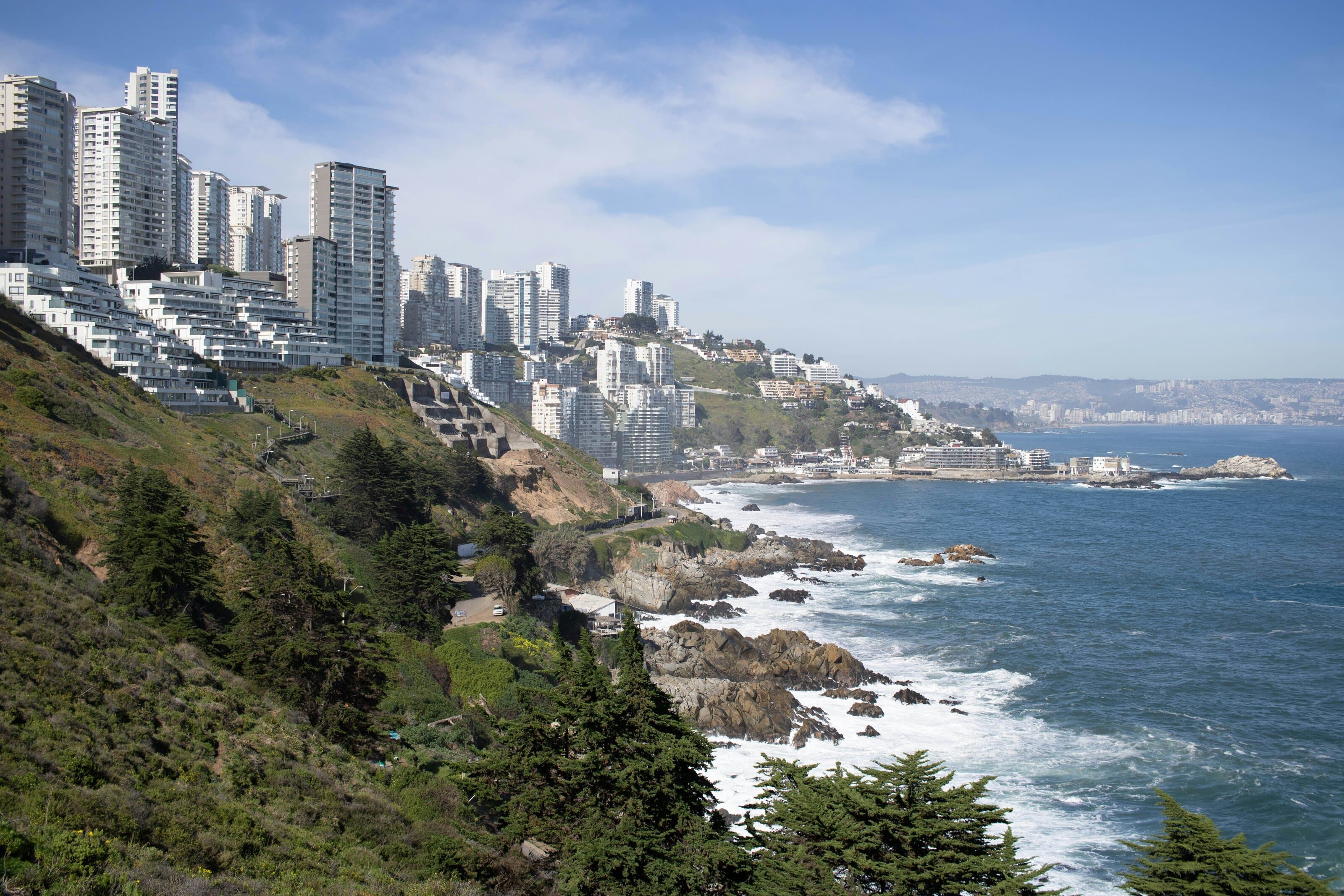
Wide beaches, flat streets and a seafront promenade, with Valparaíso a short ride away. It suits retirees who want ocean views and a metro-train link. Summers are busy with Santiago day-trippers and winter mornings are cold and damp.
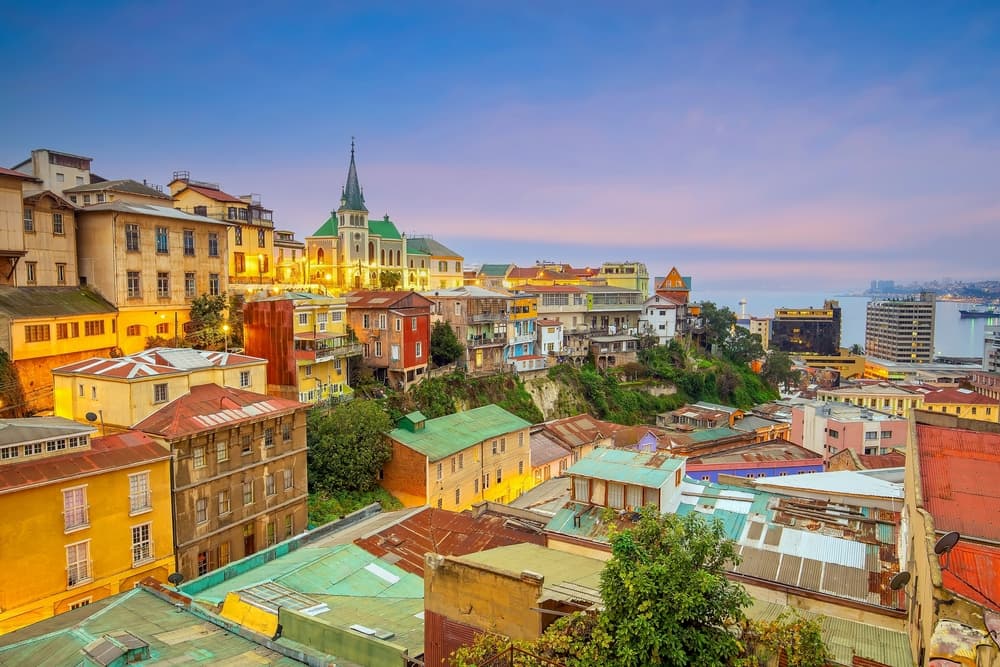
Valparaíso
Painted hill port
A steep port city of colorful hills, ascensores and murals, popular with artists and remote workers. Broadband is excellent. Hills and steps are a real daily cost on your knees, and hillside areas vary a lot in safety.
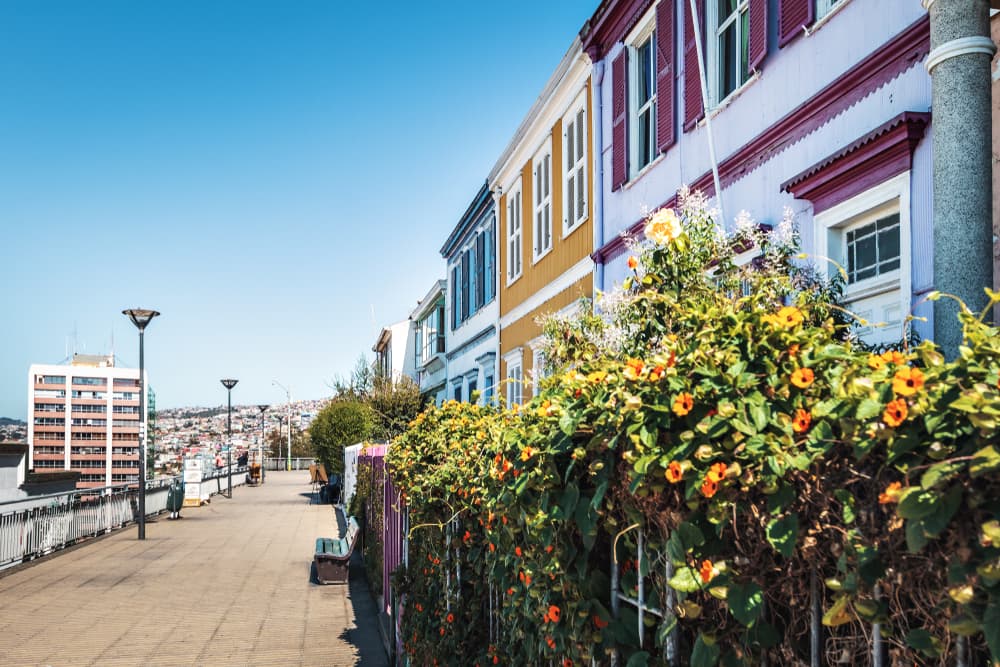
Concepción
Southern university city
A working university city on the Biobío with cafes, rain and a calmer pace than Santiago. Very few foreign residents. It's wet in winter, and you need Spanish from day one.
Coast, capital, or lakes
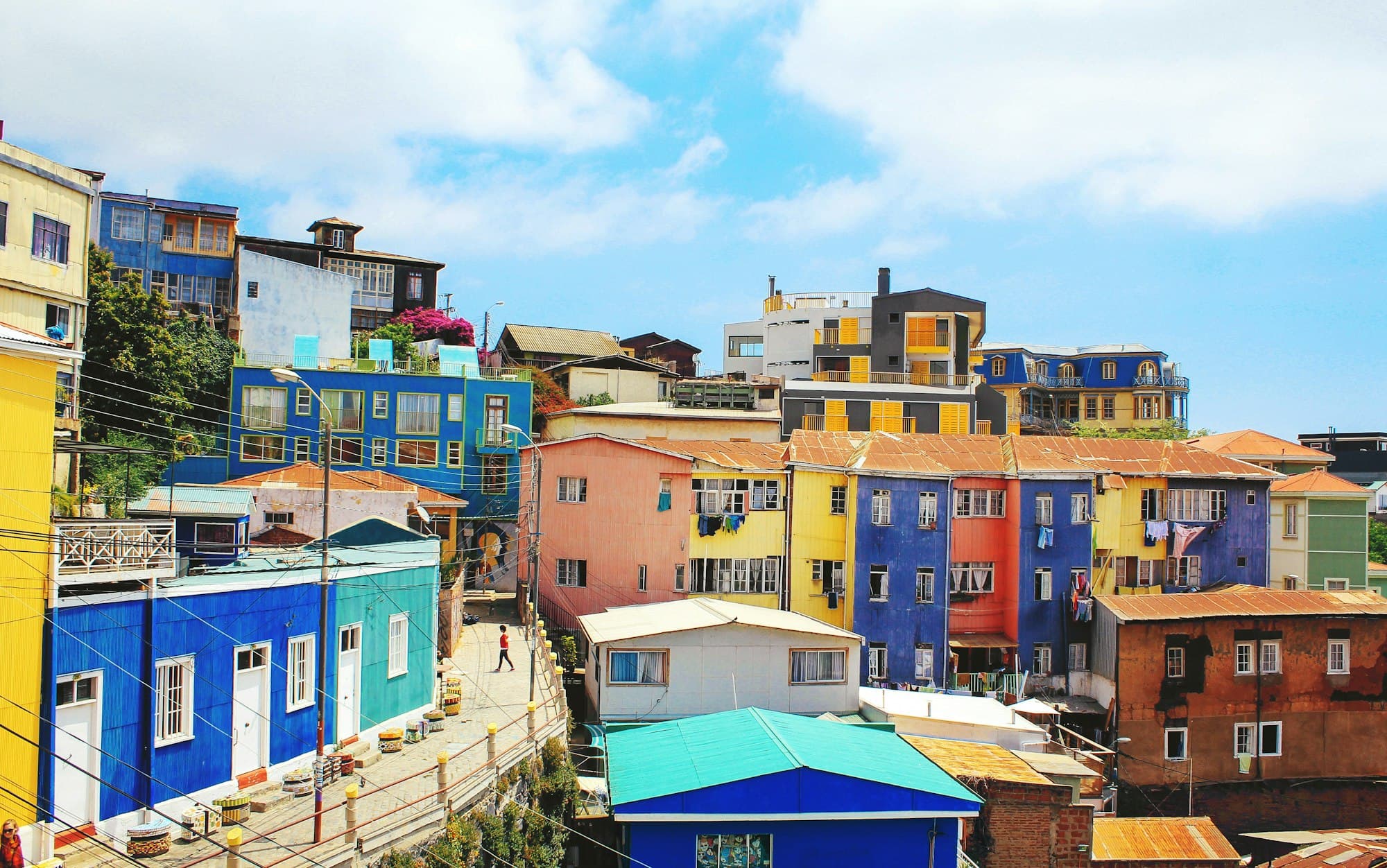
Valparaíso and Viña del Mar
Two cities that function as one. Valparaíso is the painted, vertical, faintly chaotic UNESCO port where artists and remote workers cluster, at roughly $400 to $900 in rent; Viña next door is flatter, greener and more conventional at $500 to $1,000. Both sit about 90 minutes from Santiago, and one of the submarine cables that lands Chile's bandwidth comes ashore at Las Torpederas beach in Valparaíso.
La Serena
Sunshine, colonial streets and a long beach, with rents running around $350 to $800. It draws retirees and families who want a slower pace, and the Elqui Valley observatories are up the road. Less English, fewer specialists, thinner flight connections.
Santiago
Where the specialists, international schools and jobs are, and where the Andes fill the end of the street. Rents span about $600 to $1,200 on the expat-facing market. Providencia and Ñuñoa are the usual landing spots for people who want to walk places; Las Condes and Vitacura are newer, quieter and pricier. The winter air is the trade.
The Lake District
Pucón and Puerto Varas, volcanoes over cold blue water, German-Chilean towns, and trailheads where other places have traffic. Rents from about $300. It rains a great deal, the season swings hard, and serious medical care means a flight or a long drive.
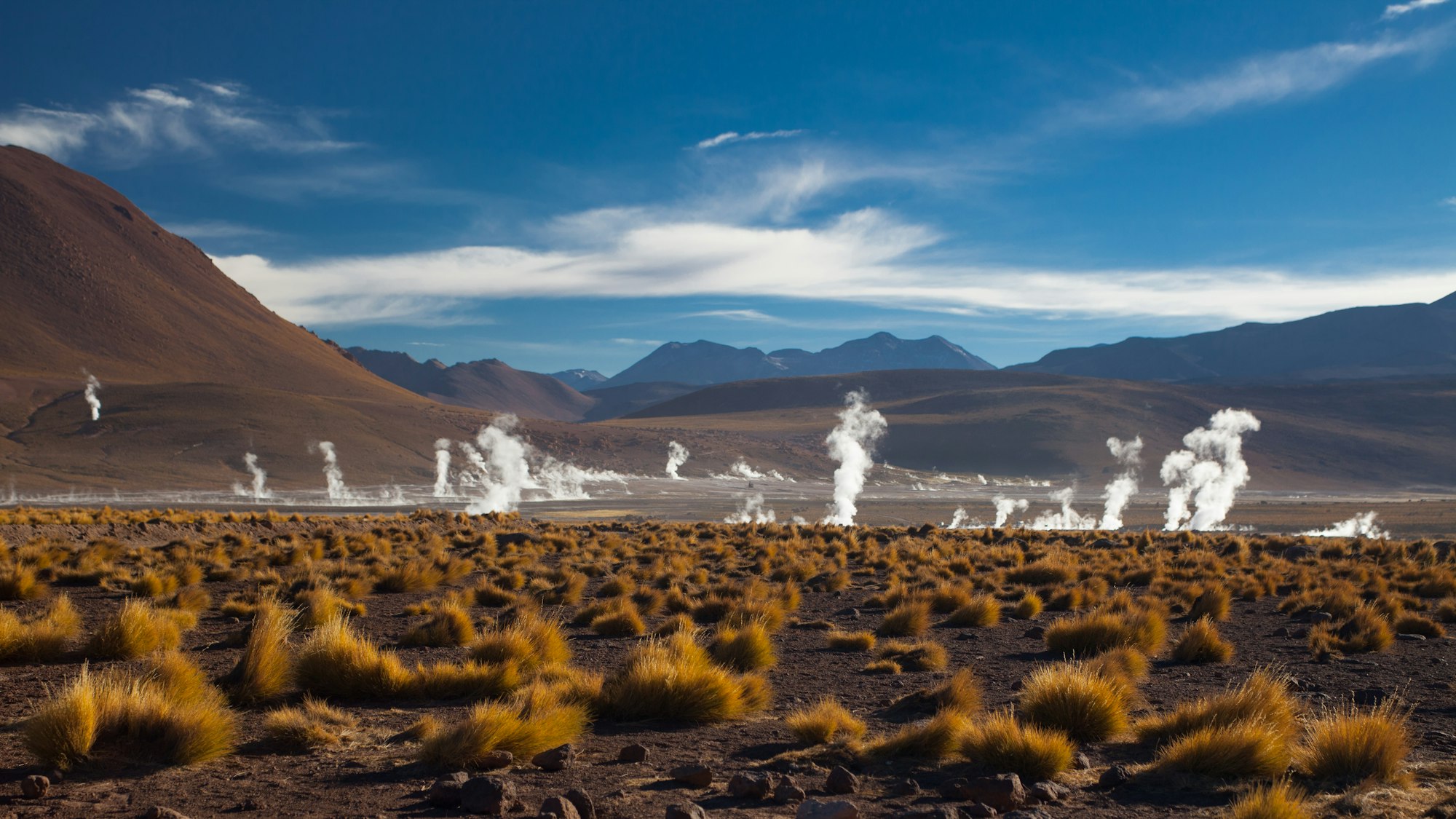


Help exists, but not much of it is Chilean
Chile never grew the relocation industry that sprang up around Portugal or Spain, and there's no local firm in our partner network yet. What that means in practice: far fewer people will try to sell you a package, and far fewer have handled a file like yours. The people below solve the specific problems a Chilean application throws at an American.






Go deeper
Three that cover the decisions this page only summarizes.
Chile Healthcare Report
Healthcare guide for Chile
Our own walkthrough of getting into FONASA or an isapre, and what to carry to a Chilean appointment.
US Expat Taxes 101
Moving abroad doesn't mean leaving the US tax system behind. In this webinar, we'll cover the basics every American expat should know, including filing requirements, foreign income exclusions, tax treaties, reporting foreign bank accounts, and common mistakes to avoid. Whether you're planning your move or already living overseas, this session will help you better understand your tax obligations and where to turn for professional guidance.
What you still owe the IRS while Chile is leaving your foreign income alone.
Learning a Language
Tips for starting and staying motivated in learning a new language.
How to get to functional Spanish before you land. Chile's English proficiency is low and its Spanish is the fast kind.
Swap notes before you commit

Chile
Expatsi Community
Our Chile group is where people compare isapre plans, portal wait times and which comuna they would pick again. A cheap way to sanity-check a plan against someone who has already done it.
Join the communityWhat Americans ask us about Chile
How do I get healthcare in Chile as a foreigner?
You need legal residency and a Chilean tax ID first, then you pick FONASA, the public fund, or a private isapre, funding it with a 7 percent contribution on taxable income. FONASA accepts everyone regardless of age or medical history; isapre premiums run roughly $85 to $315 a month and can exclude pre-existing conditions. Carry an international policy for the two to six weeks before your ID arrives.
Can Americans move to Chile without a visa?
No. Americans get 90 days on arrival, extendable once for 90 more for about $100, and paid work is not allowed on it. Since Chile's 2022 migration law you generally cannot switch from that tourist stamp to residency from inside the country. Residency applications are filed from abroad through the migration service's portal, and the visa is issued before you travel.
Is Chile safe for Americans?
Chile carries a Level 2 rating, exercise increased caution, one step above the mildest grade the State Department issues. Its own summary says street crime is common and that assaults, homicide, carjackings and home break-ins are increasing. The risks it names are property crime in central Santiago and protests around the Plaza Italia corridor. Providencia, Ñuñoa, Las Condes and the far south see fewer incidents.
Do I pay Chilean tax on my US income?
Not for the first three years. Chile taxes new foreign residents only on Chilean-source income for three years after arrival, and advisers report the exemption can be extended once by another three. After that, worldwide income is taxed at up to 35.5 percent. Chile also has an income tax treaty with the United States, in force since 2024. Americans keep filing US returns the whole time.
Does Chile have a digital nomad visa?
No, despite a lot of 2026 web pages that describe one. Chile never created a remote-worker category. Remote workers apply instead under the temporary residency subcategory for paid activities, using a service contract with a client outside Chile. It takes longer than a nomad permit and has one real advantage: the time counts toward permanent residency.
How long does a Chile residency visa take?
Plan for six to twelve months from a clean submission, and longer if the migration service comes back asking for documents. The backlog dates from Chile's 2022 immigration overhaul. After approval you enter Chile, then register with the investigative police and collect your identity card within 30 days of arrival.
When could I apply for a Chilean passport?
Five years of residence, counted from your first visa stamp, and you need permanent residency in hand when you apply. Permanent residency itself normally comes after 24 months on a temporary permit, with a 12-month version for close family of Chileans. Naturalizing involves an interview in Spanish and questions on Chilean history, and Chile has allowed dual citizenship since 2005.
How much does it cost to live in Chile?
We estimate $1,100 monthly for a single resident and $1,900 for two, rent included. Center-of-town one-bedrooms go for around $450 and nearer $350 on the edges, less again outside Santiago. Independent 2026 guides pitch a relaxed single-person Santiago budget higher, between $1,900 and $2,500, so price the comuna rather than the country.
Sources
- Chile Travel Advisory, Level 2 · U.S. State Department (checked September 17, 2026)
- Permanencia Transitoria permit · SERMIG (checked September 17, 2026)
- Retired foreigners or leasers · SERMIG (checked September 17, 2026)
- Residencia Definitiva permit · SERMIG (checked September 17, 2026)
- Chile: individual residence · PwC Tax Summaries (checked September 17, 2026)
- Chile: taxes on personal income · PwC Tax Summaries (checked September 17, 2026)
- Chile: tax treaties and other taxes · PwC Tax Summaries (checked September 17, 2026)
- Censo 2024: 18,480,432 people counted · INE Chile (checked September 17, 2026)
- Chilean city has fastest fixed broadband in world · UPI (checked September 17, 2026)
- No nomad visa, but a six-year tax runway · Rio Times (checked September 17, 2026)
- Chile temporary residency: all categories · Expat.cl (checked September 17, 2026)
- Cost of living and monthly budgets · Expat.cl (checked September 17, 2026)
- Health insurance for expats in Chile · Expat.cl (checked September 17, 2026)
- Cost of living in Chile · Expat Focus (checked September 17, 2026)
- Presidency of Jose Antonio Kast · Wikipedia (checked September 17, 2026)
Run Chile against the rest
Talk to an Expatsi advisor and get your personal expat roadmap put together for you.
Why not you?