The Expatsi guide to moving to Nigeria
Nigeria lets Americans in on a job, an investment or a marriage. Remote work doesn't count.
Africa's most populous country runs on English, deal-making and backup generators. Here's what the permits cost, what Lagos rent really runs, and how the State Department rates the risk as of September 2026.
Who Nigeria actually works for, which permit matches your reason for going, what a year in Lagos costs, and the risks to weigh before you sign a lease.

Reviewed and updated September 28, 2026 · 13 min read
01 · The case for Nigeria
A country you move to with a reason already in hand

Americans rarely drift into Nigeria. They come for a job offer, a business, a Nigerian spouse or family roots, and the people who settle in well almost always had one of those lined up before they landed. That's also how the immigration system is built, so it's the right place to start.
The scale is the first thing that hits you. About 223 million people live here, the most of any country in Africa. English is the main language of offices, courts and daily life, spoken alongside Hausa, Yoruba, Igbo and Pidgin. You can sign a lease, argue with a contractor and read the news without learning a new language.
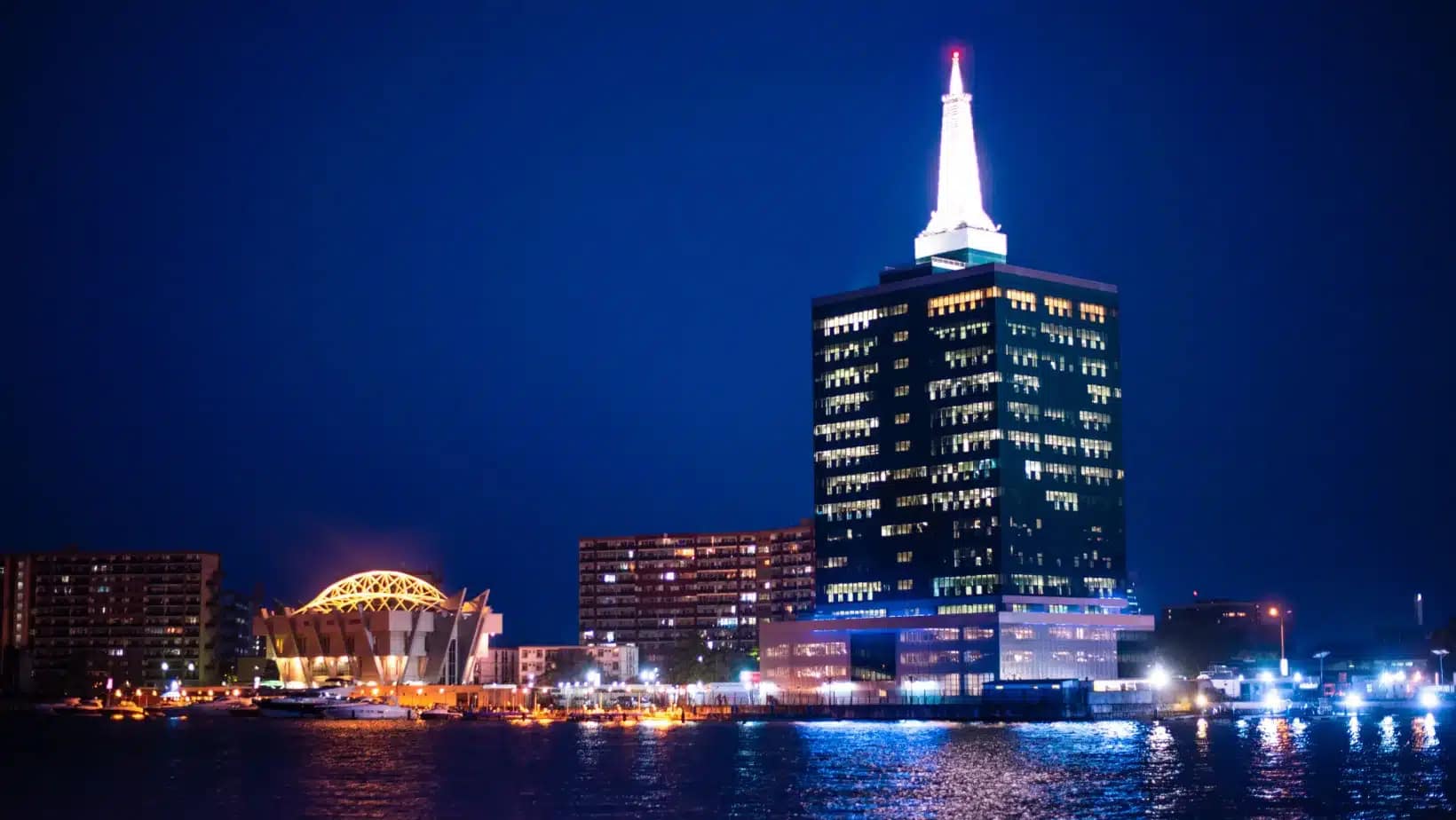
Lagos is the commercial center: banks, energy companies, a fast-growing tech and startup scene, and the music and film industries that give the city its noise and swagger. Abuja, the planned capital, is where the federal government, embassies and international agencies sit, and it's quieter and more orderly. The workforce is young and large, and family and community ties run deep.
Getting home is manageable. Delta flies nonstop between Atlanta and Lagos in about 11 hours and 40 minutes, and Nigeria sits five to six hours ahead of U.S. Eastern time depending on the season, so calls with family are easy to schedule.
Then there are Nigerian-Americans. If you or a parent was born Nigerian, the rules in this guide may play out differently for you. It's worth a conversation with a Nigerian lawyer before you file anything as a foreigner.
The honest reasons to say no
We'd rather you hear these now than after you've shipped a container.
First, safety. As of September 2026, the U.S. State Department rates Nigeria Level 3, Reconsider Travel, and lists all or part of 23 states as Level 4, Do Not Travel, for terrorism, kidnapping, crime or unrest. In April 2026 it authorized non-emergency staff and families to leave the embassy in Abuja. Lagos and Abuja aren't on the Level 4 list, but living there still means planning for secured housing, a trusted driver and a way out.
Second, there's no visa for remote workers. If your plan is to keep your U.S. job and open a laptop in Lagos, Nigeria has no permit for that, plus the tourist visa bans any work. Retirement is limited, too: the retiree visa starts at age 65.
Third, the law. Same-sex relationships, public affection between same-sex couples and LGBTQ organizations are all criminal under a 2013 act, with prison terms of up to 14 years. LGBTQ readers should treat that as a dealbreaker.
Fourth, there's the daily grind. Power cuts, generator bills, traffic and rent paid a year at a time are normal. Citizenship isn't a realistic goal: naturalizing takes 15 years of residence and means giving up your U.S. passport.
Still here? Then you probably have a job offer, a business plan or a Nigerian family, so the rest of this guide is for you.
- Cost of living (single)
- $1,350/mo
- Safety index
- 38/100
- English proficiency
- 90/100
- Internet speed
- 25 Mbps
- Currency
- Nigerian Naira (NGN)
- Capital
- Abuja
02 · The numbers
What a month in Nigeria costs in 2026
$2,000
Monthly budget, couple
national average, 2026
$1,350
Monthly budget, single
national average, 2026
$4,000
Monthly budget, family
Expatsi estimate, 2026
$850
Rent, 1-bed city center
$550 outside the center
$2
Inexpensive meal out
a simple local meal
$34
Local transport, monthly
Expatsi estimate
$32
Home internet, monthly
about 25 Mbps
38/100
Safety index
crime level rated high
Rent, power and the naira: where a Lagos budget really goes

Those cards are national averages. In Lagos, three things decide whether your budget holds: rent, electricity and the exchange rate.
Rent comes by the year
Lagos rents are quoted annually, and the areas that show up in expat guides sit at the top of the market. A two-bedroom in Ikoyi averaged about ₦17.25 million a year in September 2026, roughly $13,000. In Lekki Phase 1, a two-bedroom runs ₦4.5 million to ₦7.5 million a year, about $3,400 to $5,700. Plan on paying a big lump sum when you sign. A Lagos tenancy bill would cap advance rent at one year for yearly tenants and agent commission at 5% of the annual rent; as of September 2026, it's still in committee, not law.
Power is a line item of its own
The grid sells electricity by service band. Band A customers pay ₦209.50 per kilowatt-hour with most distributors, about 16 cents, for a promised 20 or more hours of supply a day. Band E homes are promised only 4 to 8 hours. Plan on a generator; the diesel to run it is one of the least predictable costs you'll carry.
The naira moves, and so do prices
In late September 2026 the official rate was about ₦1,330 to the dollar, with the street rate near ₦1,390. Inflation has cooled but hasn't gone away: 15.39% in August 2026, down from 23.14% a year earlier, with food prices up 19.57%. Earning in dollars protects you from the currency. It doesn't protect you from local prices rising.
Two other costs catch families off guard. International school tuition can rival rent as the biggest bill, and good private health coverage needs its own line in the budget. We cover that below.
Negotiate the move into your offer
The employment route has costs on both sides. Your employer funds the quota position and business permit, about $753 and $1,130. You face the $2,000 CERPAC residence permit and expatriate insurance of $1,000 a year, so roughly $3,000 in year one for the worker alone. Ask for those, plus housing, in the contract before you accept. Without an employer, your options narrow quickly, as the next chapter shows.
03 · Your way in
Five permits, each tied to a reason for being here
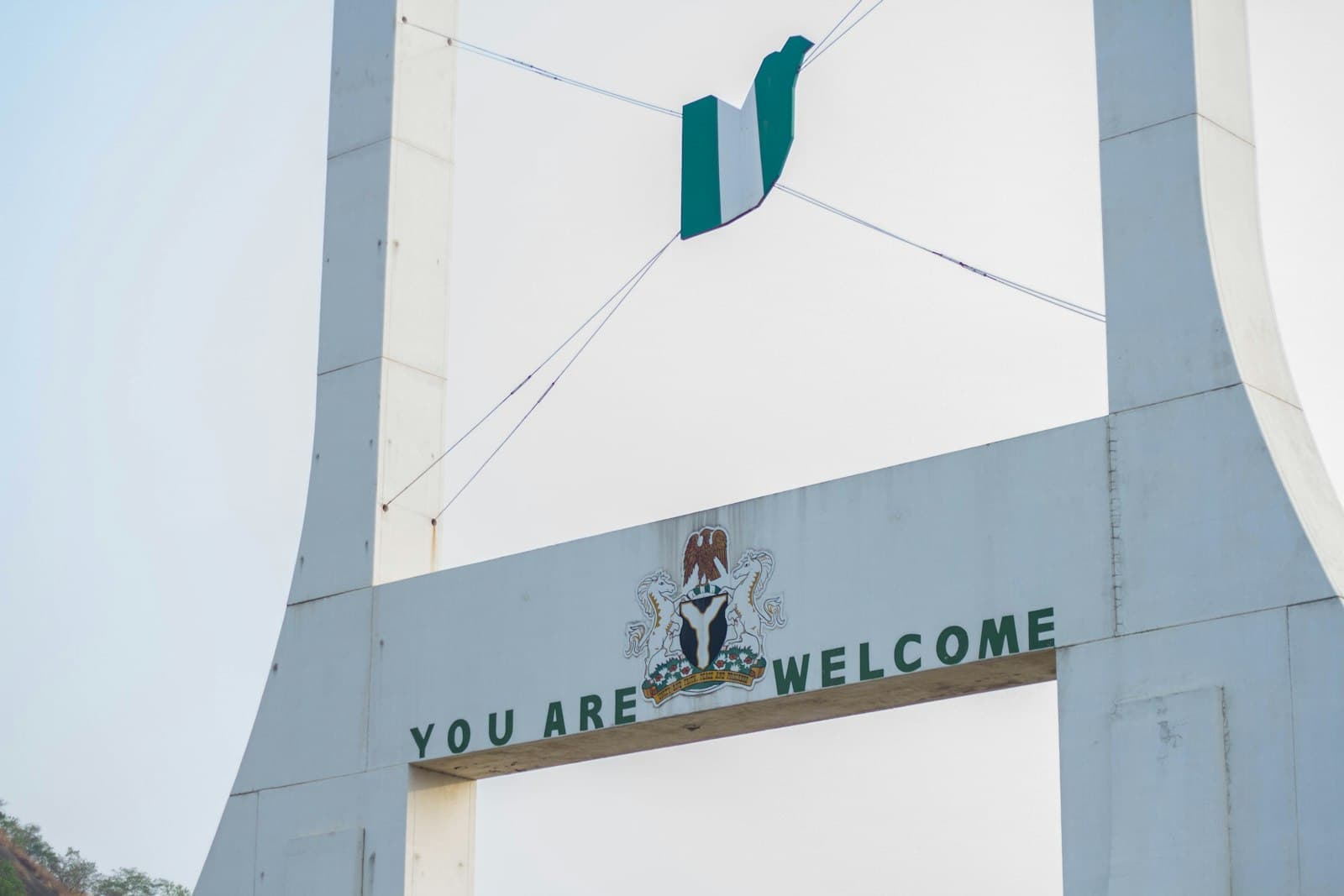
Nigeria sorts visas into three tiers: short visits, temporary residence of up to two years, and permanent residence. Every long-stay route asks the same question: who, or what, is responsible for you here? Find your answer below.
Hired by a Nigerian company: the R2A employment visa and CERPAC
If you have a Nigerian job offer, this is your route. The employer applies first for an expatriate quota, an approved slot for a foreign hire, and only then do you apply for the R2A visa at a Nigerian embassy. It's valid for 90 days. After you arrive, you're regularized onto a CERPAC, the residence permit and alien card that runs two years and can be renewed. The CERPAC fee is $2,000, agents typically charge $300 to $500 to handle it, while a separate expatriate insurance runs $1,000 a year. You can only work for the company that sponsored you. Since a May 2025 announcement, quota, business permit and CERPAC filings all go online. Immigration's own service charter promises a decision 10 days after your biometrics appointment, though agents say the physical card takes two to three months. A spouse or adult child can come on the R2B dependent visa and get a two-year residence permit of their own.
Investing: the N3A investor visa
If you're putting real money into a Nigerian business, the small-enterprise investor visa asks for $250,000 to $500,000 brought into the country and kept there as capital, plus a business plan and company registration papers. It's part of the permanent residence tier and gives a three-year residence permit with multiple entries. Your spouse, children and even parents over 65 apply on their own dependent visas. Executives who travel in and out have a separate route, the frequent business traveler visa, which starts at a $250,000 investment for a year of multiple entries.
Retired and 65 or older: the N5B retiree visa
Nigeria has a retirement visa, but only for foreigners 65 and up who retired abroad. Immigration doesn't publish a minimum pension. It asks for your retirement letter, pension records, bank statements showing money brought into Nigeria, medical insurance, a security clearance from home and a Nigerian address. You can't work on it. If you're younger than 65 and living on savings, there's no retiree route for you yet.
Married to a Nigerian: the N1A spouse visa
Spouses of Nigerian citizens get a permanent-residence-tier visa that turns into a four-year, multiple-entry residence permit. It's tied to the marriage and doesn't allow employment. Two catches for Americans. Citizenship by registration is written only for foreign wives of Nigerian men, not foreign husbands. The U.S. travel ban in force since January 2026 suspends immigrant visas for Nigerian nationals with no exception for spouses of U.S. citizens. Moving the family back to the U.S. later is much harder than it used to be.
Studying: the R7A student visa
If you've been admitted to an accredited Nigerian university, the R7A needs your admission letter, proof you've paid tuition and funds for six months. It's issued for 90 days, then converted into a two-year renewable permit. Work is possible only with approval.
Working remotely: no permit exists
Nigeria has no digital nomad visa, and the tourist e-visa rules out any employment. The e-visa, which replaced visa on arrival in May 2025, gives Americans 30 days per entry for about $160 plus a roughly $20 bank fee, and it can't be extended. Overstaying costs $15 a day and can lead to a ban. If your income comes from a U.S. employer, Nigeria works for visits, not for living.
Work Visa
For anyone with a Nigerian job offer
Your employer secures an expatriate quota, you enter on a 90-day visa, then switch to a two-year CERPAC residence permit tied to that job.
- Valid passport
- Completed visa application form
- Passport-sized photograph
Student Visa
For admitted students at accredited schools
Needs an admission letter, proof of tuition paid and six months of funds. Converts to a two-year renewable permit after arrival.
- Valid passport
- Completed visa application form
- Passport-sized photograph
04 · The practical stuff
Security, healthcare, taxes and your money

These four decide how daily life actually feels. In Nigeria, they deserve extra planning.
Security
The State Department's June 2026 advisory puts Nigeria at Level 3 and marks all or part of 23 states as Do Not Travel, including Borno, Kano, Kaduna, Enugu and Rivers outside Port Harcourt. It warns that violent crime, including kidnapping aimed at Americans, is common throughout the country, and U.S. embassy staff and their families are barred from using any public transportation. If you live in Lagos or Abuja, plan for secured housing, a trusted driver and low-key movements. Enroll in the State Department's STEP program, keep an evacuation plan that doesn't depend on the U.S. government, and know where the embassy in Abuja and the consulate in Lagos are.
Healthcare
This is the area where Nigeria asks the most of you. The State Department says many medicines aren't available, emergency care doesn't meet U.S. standards, counterfeit drugs are common, and medical evacuation insurance is essential. A 2022 law made health insurance mandatory for citizens and legal residents. Private HMO plans from providers like Hygeia, AXA Mansard and Avon cover everyday care at private hospitals, and top corporate plans add evacuation to South Africa, Dubai, India or the U.K. for serious cases. International plans start around $1,500 a year. Bring a yellow fever vaccination certificate, since you'll need it to enter, and talk to a travel clinic about malaria prevention. Healthcare coach Hunter Schultz and our insurance partner ExpatInsure, both further down, can help you set this up properly.
Taxes
Nigeria's new income tax rules took effect in January 2026. The first ₦800,000 a year, about $600, is tax-free, and rates then climb from 15% to 25% on income above ₦50 million, about $37,600. You become a tax resident by spending 183 days or more in Nigeria in a 12-month period, among other tests, and residents are taxed on worldwide income. There's no U.S. income tax treaty with Nigeria, and the U.S. taxes you wherever you live, so the Foreign Earned Income Exclusion and foreign tax credits do the heavy lifting. Our partner MyExpatTaxes files U.S. returns for Americans abroad, and Flamingo Compliance counts your days so the 183-day line doesn't sneak up on you.
Banking and money
Opening a Nigerian account as an American isn't quick. Banks such as Zenith, First Bank, GTBank and Access usually want your residence permit, proof of address and one or two references, and a Bank Verification Number makes later steps easier. Moneycorp, one of our partners, handles dollar-to-naira transfers so you're not stuck with a poor bank rate.
Checked in September 2026
Nigeria's rules have moved fast: a new e-visa in May 2025, online permit filing, a new tax law in January 2026, a U.S. travel ban on Nigerian nationals the same month, and a revised safety advisory in June 2026. Everything here reflects what we could confirm in September 2026. Check the current advisory and have a licensed professional confirm the rules before you file or sign anything.
05 · Picking a base
Lagos, Abuja or a quieter third option
For most Americans, the job decides the city. Where you have a choice, three places come up again and again, and one comes up as a warning.
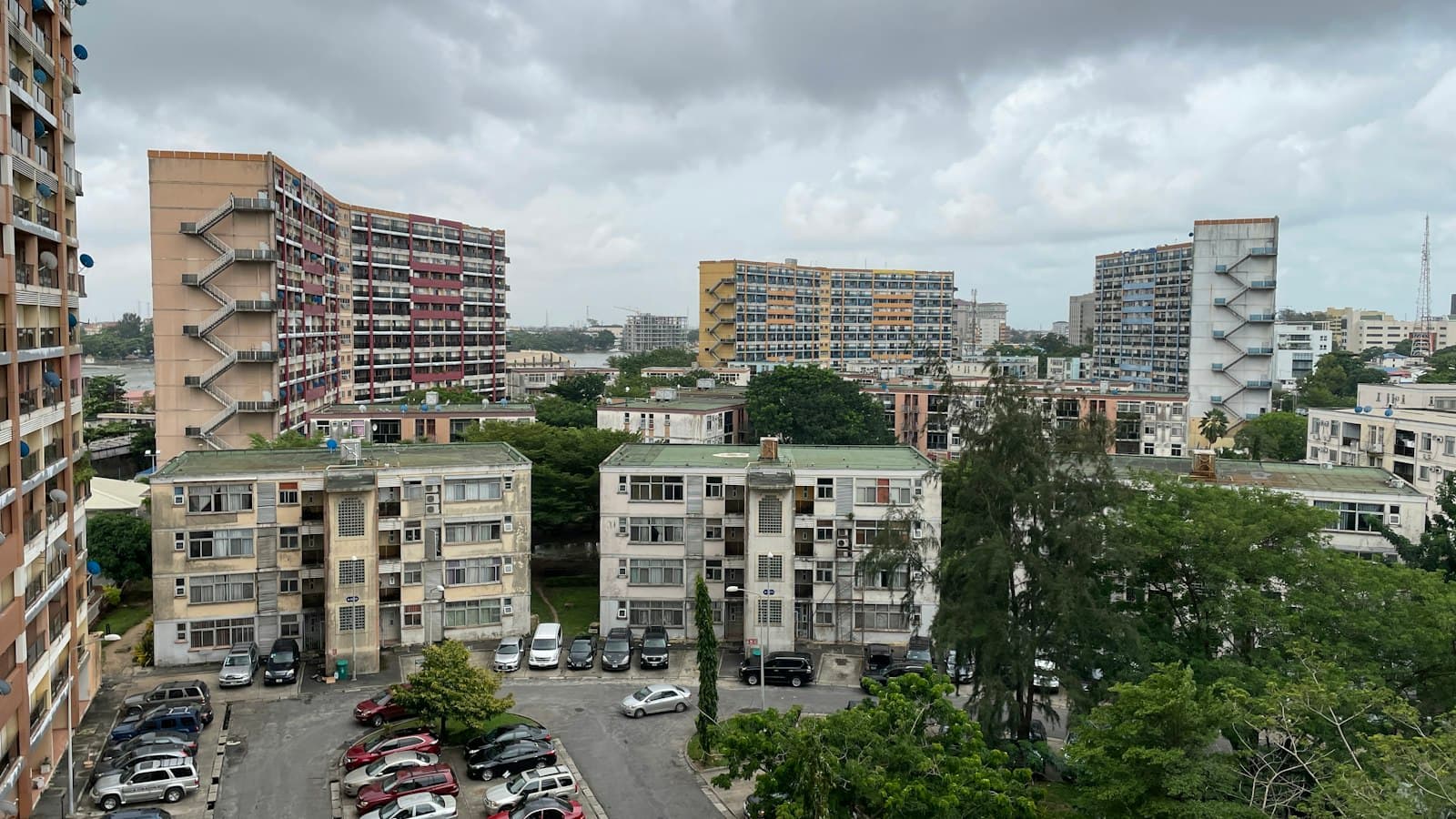
Lagos is the commercial capital: major business districts, lively nightlife and a real expat and investor crowd, mostly in Ikoyi, Victoria Island and Lekki. It's also known for heavy traffic and high living costs. Abuja is the planned capital, built around government institutions and a growing diplomatic community. It's quieter and more orderly, the pick for people who value calm over energy. Port Harcourt is the oil industry hub of the Niger Delta, with its own expat presence. It's specifically carved out of the Level 4 warning that covers the rest of Rivers State, which tells you how carefully you'd need to live there.
Ibadan, one of West Africa's largest cities by area and known for its universities, is more affordable and slower. Kano, the largest city in the north, is in a Level 4 state, so we don't suggest it as a base for Americans right now.
We're building our Nigeria city guides. Any that are live appear below.
06 · Help on the ground
Your Nigeria move team
A Nigeria move has more moving parts than most: permits that run through your employer, health coverage that should include evacuation, a currency that shifts under you and U.S. taxes that follow you anywhere. These are the Expatsi-vetted partners who handle those pieces, grouped by the job they do.
None of them will get you a work permit without an employer, and none can change the safety picture. What they can do is make sure your health plan, your money and your paperwork are solid before you board in Atlanta.

Hunter Schultz
Healthcare Coach
A healthcare coach with more than 20 years of expat life and a background in air medical transport. His one-hour consultation pins down your healthcare concerns and builds a care plan for your destination.
Learn more
ExpatInsure
Global Health Insurance
Our international health insurance partner. They set you up with private global coverage before you go, so you're not shopping for a policy after something goes wrong.
Learn more
Moneycorp
Currency Exchange
A currency and international payments firm operating since 1979. They move dollars into naira at better rates than a typical bank and can set up regular transfers for rent and bills.
Learn more
MyExpatTaxes
U.S. Expat Tax Service
Tax software built for Americans abroad, running since 2018. File your U.S. return from Lagos or Abuja, with help on the more complicated cases.
Learn more
Flamingo Compliance | Tax Residency and Visa Tracker Platform
Tax Residency and Visa Tracker Platform
An app that tracks your days in each country and warns you before you cross a tax residency line, with reports you can hand to your accountant.
Learn more

07 · Quick answers
Moving to Nigeria: your questions answered
Do Americans need a visa to visit Nigeria?
Yes. U.S. citizens need a Nigerian visa before they travel. Since May 2025, short visits go through Nigeria's online e-visa system, which replaced visa on arrival. Americans pay about $160 plus a small bank fee, stays are 30 days per entry, and the visa can't be extended. You'll also fill in a digital landing card online before boarding and need a yellow fever vaccination certificate to enter.
Do Americans living in Nigeria pay Nigerian income tax?
If you become a tax resident, yes. Under the tax law in force since January 2026, spending 183 days or more in Nigeria in a 12-month period is one of the tests, and residents are taxed on worldwide income at rates up to 25%. The U.S. also taxes its citizens abroad, and there's no U.S.-Nigeria income tax treaty, so Americans rely on the Foreign Earned Income Exclusion and foreign tax credits to avoid paying twice.
How do Americans get a work permit in Nigeria?
Through an employer. A Nigerian company first gets an expatriate quota approved for the role, then you apply for the R2A employment visa at a Nigerian embassy. After arriving, you switch to a CERPAC, a two-year renewable residence permit that lets you work only for that employer. Expect a $2,000 CERPAC fee plus expatriate insurance, and agent fees if you use one.
Can I move to Nigeria and work remotely for a U.S. company?
Not legally as a resident. Nigeria has no digital nomad or remote work visa, and the tourist visa prohibits any employment. The long-stay permits are tied to a Nigerian employer, an investment, a Nigerian spouse, study, or retirement at 65 or older. Remote workers can visit on short stays, but there's no permit for living in Nigeria on a foreign salary.
Does Nigeria have a retirement visa for Americans?
Yes, but only from age 65. The N5B retirement visa is for foreigners 65 and older who retired abroad. Immigration doesn't publish a minimum pension, but it asks for pension records, bank statements showing funds brought into Nigeria, medical insurance, a security clearance and a Nigerian address. Holders can't work. Anyone younger has no retirement route.
Can I bring my Nigerian spouse to the U.S. later?
It's much harder in 2026. A U.S. proclamation in force since January 2026 partially suspends visas for Nigerian nationals, including immigrant visas, and it removed the earlier exception for immediate relatives of U.S. citizens. Couples planning to split time between the two countries should talk to a U.S. immigration lawyer before making long-term plans.
Is Nigeria safe for Americans in 2026?
It carries real risk. As of September 2026 the U.S. State Department rates Nigeria Level 3, Reconsider Travel, and lists all or part of 23 states as Do Not Travel for terrorism, kidnapping, crime or unrest. Lagos and Abuja are not on that list, but the State Department says violent crime, including kidnapping of Americans, happens throughout the country, so living there calls for secured housing, a trusted driver and an evacuation plan.
Can an American become a Nigerian citizen?
In theory, but it rarely makes sense. Naturalization requires 15 years of continuous residence, or 15 years in total within the last 20. Anyone who becomes Nigerian by naturalization or registration must renounce other citizenships within five months, which means giving up U.S. citizenship. Foreign wives of Nigerian men can register as citizens; the constitution offers no matching route for foreign husbands.
Sources
- Nigeria Travel Advisory (Level 3, issued June 2026) · U.S. Department of State (checked September 2026)
- Nigeria International Travel Information · U.S. Department of State (checked September 2026)
- Nigeria visa classes · Nigeria Immigration Service (checked September 2026)
- Employment Visa (Expatriate) R2A · Nigeria Immigration Service (checked September 2026)
- Investor Visa (Small Scale Enterprise) N3A · Nigeria Immigration Service (checked September 2026)
- Retirement Visa (Retiree from Abroad) N5B · Nigeria Immigration Service (checked September 2026)
- Spouse of Nigerian Citizen Visa N1A · Nigeria Immigration Service (checked September 2026)
- Cost and requirements for CERPAC processing · Ibe, Chido and Associates (checked September 2026)
- Nigeria: reforms of the personal income tax regime · KPMG (checked September 2026)
- Proclamation of December 2025: travel ban effective January 2026 · NAFSA (checked September 2026)
- Lagos cost of living for expats, 2026 · The Rio Times (checked September 2026)
- Cost of living and country data for Nigeria · Expatsi (checked September 2026)
See how Nigeria fits your life
Take the free Expatsi Test and compare Nigeria with other countries on cost, healthcare, safety and climate before you commit to anything.
Why not you?