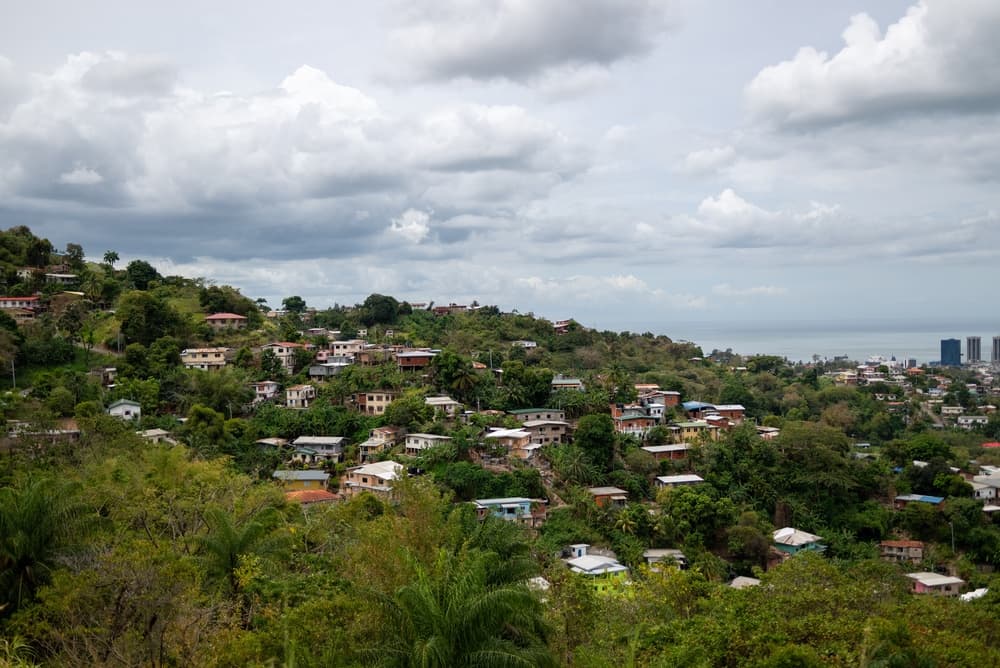
Port of Spain: what it costs, where expats live, and how safe it is
Trinidad's capital in U.S. dollars, for Americans moving for work, marriage or family roots, with an honest look at crime and who it doesn't suit.
- 49,031
- Population (2025)
- $2,100/mo
- Monthly budget · single
- 82°F / 28°C
- Avg temperature
Plan on about $2,100 a month in U.S. dollars for one person in Port of Spain, with most single budgets landing between $1,700 and $2,500. A couple spends about $3,100 a month and a family of four about $4,500. A one-bedroom near the center rents for around $900, or around $600 farther out.
Port of Spain suits people with a reason to be here: a job in energy or finance, a diplomatic posting, a Trinidadian spouse, or family roots. Most foreigners live in the western and northern suburbs, Westmoorings and Maraval above all, rather than downtown. Social life runs on Carnival season and the restaurants and bars along Ariapita Avenue in Woodbrook.
Weigh safety before anything else. The State Department rates Trinidad and Tobago Level 3, Reconsider Travel (April 2026), and lists Port of Spain areas to avoid, including Laventille, Beetham and Sea Lots. The latest state of emergency over violent crime, declared in March 2026, ended in September 2026. Police counted 255 killings in 2026 up to mid-September, against 268 over the same stretch of 2025.

Reviewed and updated October 23, 2026 · 5 min read
At a glance
$2,100
Monthly budget · single person
$900/mo 1-bed rent, center
28/100
Safety index
$45
Internet / month
82°Fannual average
Jan 80° · Sep 84°
Climate
49,031
Population (2025)
Expatsi estimates, updated Oct 2026, based on rental listings, government statistics, and local reporting.
Cost of living
What it costs to live in Port of Spain
Single person
$1,700–$2,500/mo
about 30% below Austin, TX
Couple
$2,500–$3,700/mo
about 35% below Austin, TX
Family of four
$3,500–$5,500/mo
about 45% below Austin, TX
Compared with Austin, TX (Expatsi estimate, 2026).
- $10 −50%
- Inexpensive meal
- $750–$1,050/mo −54%
- 1-bed rent, center
- $500–$700/mo −56%
- 1-bed rent, outside
- $45/mo −31%
- Internet
- $260/sq ft −60%
- Buy price, center
Expatsi estimates, updated Oct 2026, based on rental listings, government statistics, and local reporting.
Daily life
How Port of Spain lives
- B grade, 43rd percentile among the cities we track
- Dining & caféstypical
- B- grade, 37th percentile among the cities we track
- Arts & culturetypical
- B- grade, 32nd percentile among the cities we track
- Parks & outdoorstypical
- B grade, 47th percentile among the cities we track
- Schools & educationtypical
- B grade, 42nd percentile among the cities we track
- Healthcare accesstypical
- B- grade, 32nd percentile among the cities we track
- Bike infrastructuretypical
- C+ grade, 16th percentile among the cities we track
- Public transitmodest
- A grade, good physical accessibility
- Accessibilitygood
Graded on OpenStreetMap amenity density relative to the 436 cities we track. Accessibility is the exception: it's graded against a fixed standard (terrain steepness and sidewalk surfaces), not a curve.
Climate
Weather through the year
Annual average 82°F (28°C) · 71 in of rain a year · Source: Meteostat station normals (78970, 1991-2020)
On the ground
Scenes from Port of Spain
Getting around
Transport in Port of Spain
Most foreign residents drive. Sidewalks are patchy, crossings are few, and the heat and the safety picture keep most people in cars door to door. Traffic drives on the left, roads have potholes and flood in heavy rain, and the main routes clog from about 6 to 8 a.m. and 3 to 6 p.m. A U.S. Embassy family reported dry-season commutes of 20 to 30 minutes, longer if there's been an accident.
Public transport works differently from what you're used to. PTSC runs air-conditioned buses, and you buy tickets before you board. Maxi taxis are privately owned minibuses on set routes with no timetable; yellow-band maxis cover Port of Spain west to Diego Martin. Route taxis are shared cars that only stand out by their H license plates. Buses and maxis heading east to Arima use the Priority Bus Route, built along the old railway line. For San Fernando, the water taxi skips the highway in about 45 minutes.
One thing to factor in: U.S. Embassy staff aren't allowed to use public transportation, for safety reasons. Most expats live by a similar rule, using their own car, a trusted driver, or a taxi they've arranged ahead. Regular taxis aren't metered, so agree on the fare before you get in.
- 1.5/sq mi
- Transit stops
- 0.5/sq mi
- Bike infrastructure
- 3.2/sq mi
- Wheelchair-accessible places
Mapped features per square mile from OpenStreetMap.
Keep exploring
Places like Port of Spain


Community
Community & practical notes
Community: The expat crowd is small and mostly here for work: energy and finance staff, diplomats, and their families. A U.S. Embassy family writing in August 2026 called the community relatively small, described Trinis as friendly and social, and mentioned a network of expat women who plan small-group activities. English is the main language, so you can handle daily life from day one. A few frictions come up again and again: water can go out for days at a time (Maraval gets mentioned most), some homes have mold problems, and imported groceries are expensive.
Healthcare: Foreigners mostly use the private hospitals, with St. Clair Medical Centre and West Shore Medical Centre named most often. They handle routine and moderate problems. For anything serious, residents have long advised going to Miami, so get international health insurance that includes medical evacuation. Dengue is the mosquito-borne illness residents warn about most.
Remote work: Basic home internet runs about $45 a month. That same August 2026 report put a fiber plan solid enough for video calls at $120 a month, and Starlink is also available. Spaces runs a coworking center in Invaders Bay Tower, off the Audrey Jeffers Highway on the waterfront.
Schools: Most expat families use the International School of Port of Spain in Westmoorings, which runs from pre-K through grade 12. It teaches the IB Primary Years and Middle Years Programmes and offers Advanced Placement courses. The school is a big reason so many foreign families settle in Westmoorings.
Black Americans: In the 2011 census, about 34% of Trinidad and Tobago's people identified as being of African descent, about 35% as Indian, and about 23% as mixed. A Black American won't stand out by race here the way they might in much of Europe or Asia. What we couldn't find is an organized African American expat network like the one in Accra, so plan to build your circle through work, church, or a Carnival band.
LGBTQ expats: The law against gay sex is back in force. A 2018 High Court ruling struck it down, but the Court of Appeal reinstated it in March 2025, with a maximum penalty of five years in prison. The Privy Council in London heard the final appeal in July 2026 and reserved judgment, so check for a ruling before you move. There are no anti-discrimination protections, and same-sex couples aren't recognized. Port of Spain has held a Pride parade since 2018, but expect to keep a low profile in public.
Limited mobility: Port of Spain is hard going with a wheelchair or walker. A 2016 account from a local writer described few ramps or crosswalks downtown, buildings without elevators, and a City Gate bus terminal that was largely inaccessible. The August 2026 report agreed that someone with a physical disability would have difficulties here. Plan on door-to-door car travel, and check entrances and elevators before you sign a lease.
Retirement: Port of Spain isn't an easy retirement pick. Trinidad and Tobago has no retirement visa, so a pension on its own gets you visitor stamps and extensions, not residence. It works best for retirees with a Trinidadian spouse or family ties here. Compare countries that do offer retirement visas, or read our Trinidad and Tobago guide for the routes that exist.
Housing
Renting and buying
- 1-bed rent (center)
- $750–$1,050/mo
- 1-bed rent (outside center)
- $500–$700/mo
- Buy price (center)
- $260/sq ft
- Buy price (outside center)
- $186/sq ft
Expatsi estimates, based on rental listings, government statistics, and local reporting.
Good to know
Frequently asked questions
Do you need a car in Port of Spain?
Most foreign residents say yes. Buses, maxi taxis and shared route taxis run throughout the city, but U.S. Embassy staff are barred from using public transportation for safety reasons, and many expats follow the same rule. Traffic drives on the left, rush hours are heavy, and sidewalks are inconsistent, so a car or a trusted driver is the usual answer.
Is Port of Spain safe for Americans?
It takes real caution. The U.S. State Department rates Trinidad and Tobago Level 3, Reconsider Travel, as of April 2026, citing crime, health and terrorism, and says most violent crime is gang related. It tells travelers to avoid Laventille, Beetham, Sea Lots and several downtown streets at any time, and downtown and the Queen's Park Savannah at night. A state of emergency over violent crime ran from March to September 2026. Most foreign residents live in suburbs like Westmoorings and Maraval and drive door to door.
Can I retire in Port of Spain?
Not easily. Trinidad and Tobago has no retirement visa, and a pension alone doesn't qualify you for residence. Americans can stay 90 days visa-free and ask for extensions, but that time doesn't lead to permanent residence. Retirees who settle in Port of Spain usually have a Trinidadian spouse or family ties that open a residence route.
Is Port of Spain LGBTQ friendly?
Legally, no. Trinidad and Tobago's law against gay sex was reinstated by the Court of Appeal in March 2025, with a penalty of up to five years in prison, and the Privy Council reserved judgment on the final appeal in July 2026. There are no anti-discrimination protections or recognition of same-sex couples. Port of Spain does have an LGBTQ community and has held Pride since 2018, but most LGBTQ residents stay discreet in public.
What is the weather like in Port of Spain?
It's hot all year, averaging about 82F, with average highs between about 88F and 92F every month. The driest stretch runs from February through April. Rain picks up sharply from June, and June through August are the wettest months, with about 70 inches of rain a year in total. Saharan dust sometimes settles over the city and can bother people with allergies.
How much does it cost to live in Port of Spain?
A single person in Port of Spain spends about $2,100 a month in U.S. dollars, with most budgets falling between $1,700 and $2,500. A couple spends about $3,100 and a family of four about $4,500. A one-bedroom apartment near the center rents for around $900 a month, or around $600 outside it. Imported groceries cost more than local food, so a U.S.-style shopping basket pushes the total up.
Are there international schools in Port of Spain?
Yes. The International School of Port of Spain in Westmoorings teaches pre-K through grade 12, follows the IB Primary Years and Middle Years Programmes, offers Advanced Placement courses, and is accredited by the Southern Association of Colleges and Schools. It's the school most expat families in Port of Spain choose.
Where do expats live in Port of Spain?
Most foreigners live in Westmoorings, on the coast west of the city and close to the International School of Port of Spain, or in Maraval, in the hills north of downtown. Woodbrook, closer in, is the city's restaurant and nightlife area around Ariapita Avenue. Very few expats live downtown.
See how Port of Spain fits your life
Take the free Expatsi Test and compare Trinidad and Tobago to over 100 countries on what actually matters: cost, healthcare, climate, and safety. About five minutes.
Why not you?