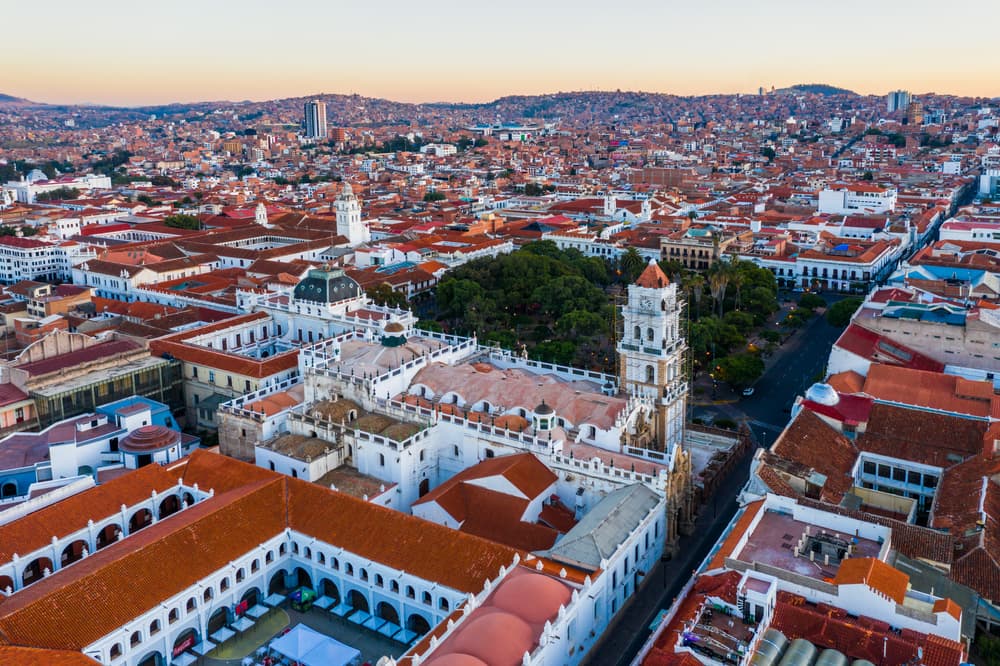
Sucre: Bolivia's whitewashed capital, mild and walkable
A guide to costs, safety, healthcare and retiring in Bolivia's constitutional capital, updated for October 2026.
- 360,544
- Population (2021)
- $900/mo
- Monthly budget · single
- 58°F / 15°C
- Avg temperature
Our 2026 estimate puts one person in Sucre at about $900 a month in U.S. dollars, within a likely range of $700 to $1,100. A couple spends around $1,400 and a family of four around $2,000. A one-bedroom near the center rents for about $250, and closer to $200 farther out. These are low-confidence estimates, so use them as a starting point and price a few listings yourself.
Sucre is Bolivia's constitutional capital, a city of about 360,000 at roughly 9,200 feet whose white colonial center has been a UNESCO World Heritage site since 1991. Days are mild all year and the center is easy to cover on foot. It suits people who want a slower, smaller city, who'll live in Spanish, and who like the idea of a modest budget.
It's a harder fit if you need specialist medical care nearby, a quick trip home, or calm politics. In May and June 2026, road blockades cut Sucre off from the rest of the country for weeks.

Reviewed and updated October 15, 2026 · 5 min read
At a glance
$900
Monthly budget · single person
$250/mo 1-bed rent, center
55/100
Safety index
$30
Internet / month
58°Fannual average
Jul 54° · Dec 61°
Climate
360,544
Population (2021)
Expatsi estimates, updated Oct 2026, based on rental listings, government statistics, and local reporting. Coverage here is thin, so treat these as a rough guide.
Cost of living
What it costs to live in Sucre
Single person
$700–$1,100/mo
about 70% below Austin, TX
Couple
$1,000–$1,800/mo
about 70% below Austin, TX
Family of four
$1,600–$2,500/mo
about 75% below Austin, TX
Compared with Austin, TX (Expatsi estimate, 2026).
- $3 −85%
- Inexpensive meal
- $200–$300/mo −87%
- 1-bed rent, center
- $150–$250/mo −85%
- 1-bed rent, outside
- $30/mo −54%
- Internet
- $93/sq ft −86%
- Buy price, center
Expatsi estimates, updated Oct 2026, based on rental listings, government statistics, and local reporting. Coverage here is thin, so treat these as a rough guide.
Daily life
How Sucre lives
- B- grade, 34th percentile among the cities we track
- Dining & caféstypical
- B+ grade, 56th percentile among the cities we track
- Arts & culturestrong
- B+ grade, 60th percentile among the cities we track
- Parks & outdoorsstrong
- B grade, 43rd percentile among the cities we track
- Schools & educationtypical
- B+ grade, 59th percentile among the cities we track
- Healthcare accessstrong
- C+ grade, 24th percentile among the cities we track
- Bike infrastructuremodest
- C+ grade, 20th percentile among the cities we track
- Public transitmodest
- C+ grade, challenging physical accessibility
- Accessibilitychallenging
Graded on OpenStreetMap amenity density relative to the 369 cities we track. Accessibility is the exception: it's graded against a fixed standard (terrain steepness and sidewalk surfaces), not a curve.
Climate
Weather through the year
Annual average 58°F (15°C) · 24 in of rain a year · Source: Meteostat station normals (85283, 1991-2020; no sunshine data)
On the ground
Scenes from Sucre
Getting around
Transport in Sucre
The historic center is compact, and most errands there happen on foot. Streets get steep once you head up toward lookouts like La Recoleta, and cobblestones and uneven sidewalks are normal.
For longer trips, people ride micros, small buses on fixed routes with the route number on the windshield. You wave one down anywhere along the route, pay the driver in cash, and call out a block before your stop. They get packed at rush hour, so keep an eye on your phone and wallet. Taxis are easy to find; the State Department recommends only marked radio taxis, which show the company name and phone number on the roof.
You don't need a car in town. If you do drive, you'll need an International Driving Permit plus your U.S. license. Alcantarí airport sits roughly 25 to 30 kilometers (about 16 to 19 miles) south of the city, around 40 minutes by taxi or airport bus. Its scheduled flights go to Santa Cruz, Cochabamba and La Paz, so flying home means connecting. Intercity buses leave from the main terminal, but check that the roads are open before you buy a ticket, since blockades can close every route out of the city.
- 2.8/sq mi
- Transit stops
- 0.1/sq mi
- Bike infrastructure
- 1.8/sq mi
- Wheelchair-accessible places
Mapped features per square mile from OpenStreetMap.
Keep exploring
Places like Sucre
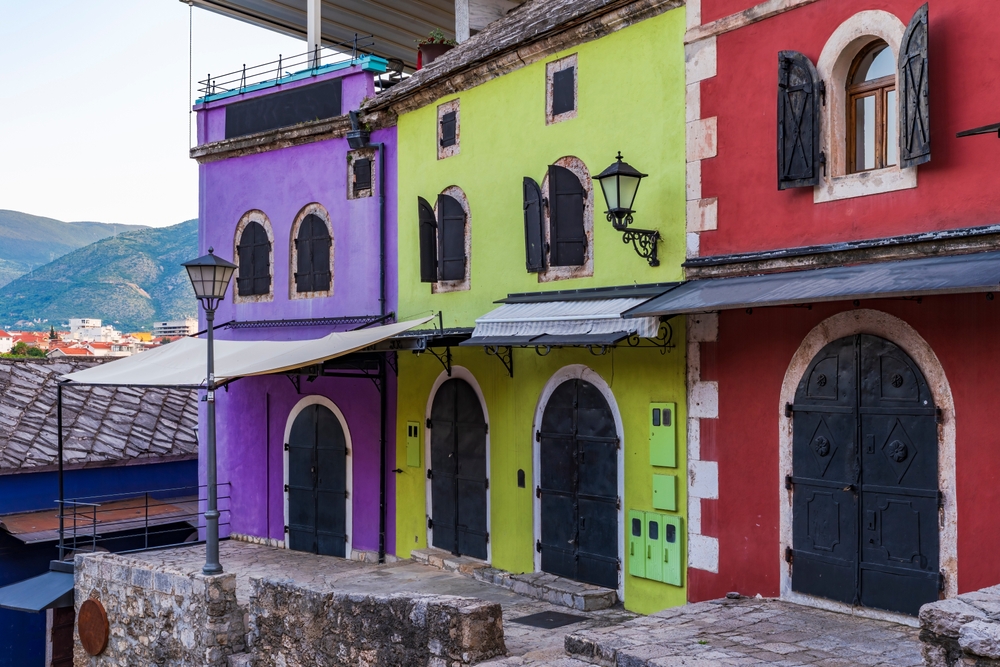
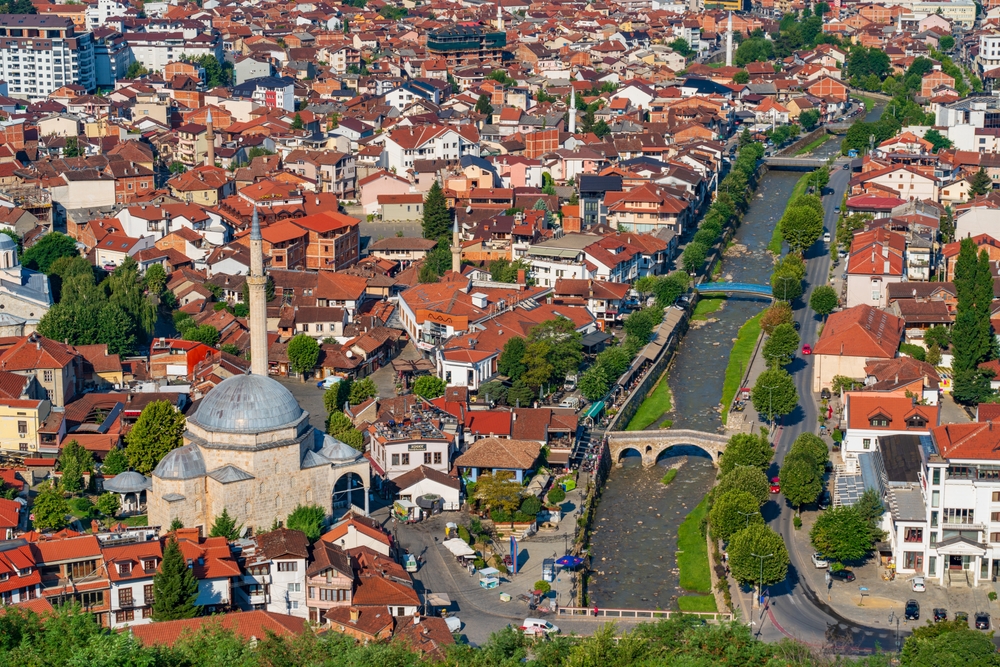
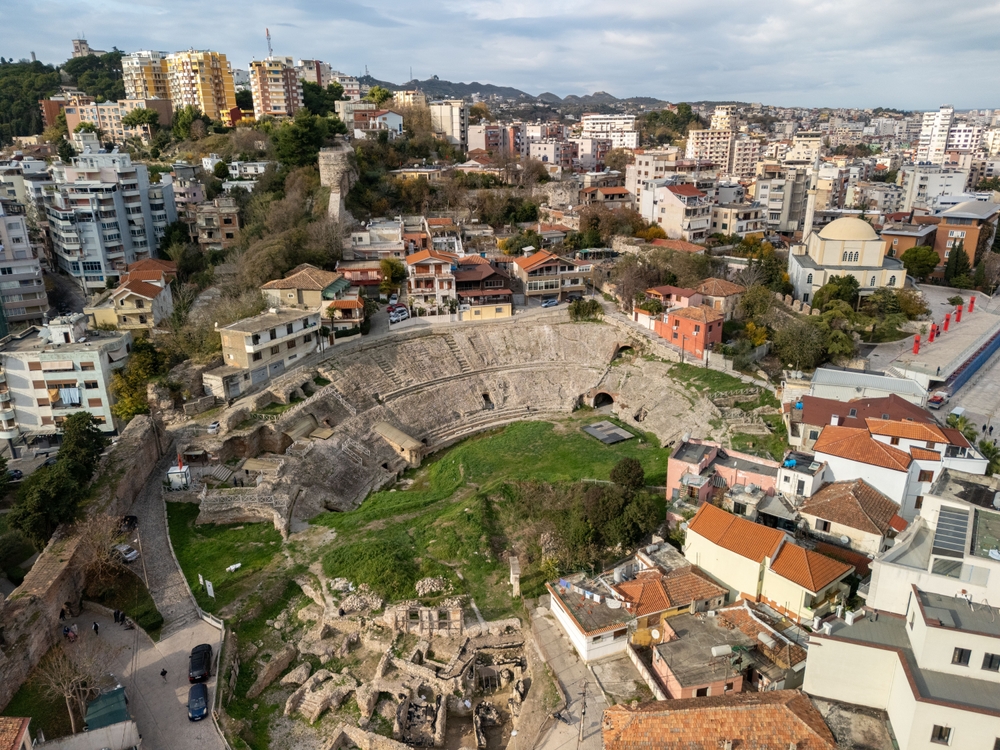
Community & practical notes
Day-to-day realities in Sucre
Who's here: The foreign community is small. Many foreigners who stay a while come to study Spanish, and the city has a long list of language schools offering intensive classes. Outside those circles, daily life runs in Spanish: at the market, with your landlord and at the doctor's office.
Healthcare: Hospital Santa Bárbara, the city's main public hospital, is also the only reference hospital for neurosurgery in the department of Chuquisaca. Most foreign residents use private clinics, and complex cases can mean a trip to Santa Cruz or La Paz. The State Department says most medical providers speak only Spanish and hospitals often want payment up front. Medicare doesn't pay for care abroad, so carry coverage that includes medical evacuation. Healthcare coach Hunter Schultz, one of our partners, can help you plan your care, and ExpatInsure can quote the coverage.
Money: Bolivia dropped its 6.96-per-dollar peg in June 2026 and now sets an official rate every day; the central bank had it at 11.73 bolivianos per dollar in October 2026. Prices in bolivianos can move fast, so recheck any quote. Bring crisp U.S. bills, since banks and exchange houses often reject folded or worn ones, and don't lean on ATMs, which the State Department says are frequently out of order. Tap water isn't safe to drink.
Working remotely: Home internet runs about $30 a month in our data. Keep a mobile data plan as a backup for outages.
Protests and the roads: Roadblocks are a standard protest tactic in Bolivia, and 2026 hit Sucre hard. For weeks in May and June, blockades on the highways isolated the city and held up food and medicine. The government declared a state of emergency in June 2026, and the legislature extended it by 90 days in September, into December. The State Department says to keep food, water and fuel for several days or more. It rates Bolivia Level 2, Exercise Increased Caution, and says not to travel to Chapare Province.
Limited mobility: Sucre is tough going on a wheelchair or walker. Cobblestones, uneven sidewalks and hills add up, and micros aren't built for accessibility. The State Department says to expect very limited accessibility in transport, lodging and public spaces, and the disability law is unevenly enforced. Visit before you sign a lease and test the route from your door to shops and a clinic.
LGBTQ expats: Same-sex civil unions have been recognized nationwide since March 2023. The constitution limits marriage to opposite-sex couples, and the first same-sex civil marriage, in Santa Cruz in August 2026, came through a court ruling for one couple. The State Department calls Bolivia generally tolerant of gay and lesbian travelers in La Paz, Cochabamba and Santa Cruz, but it doesn't mention Sucre. Talk to LGBTQ people living there before you commit.
Black Americans: We couldn't find reporting specific to Sucre. Bolivia passed an anti-racism law in 2010, and its Afro-Bolivian community is small. A Black student on a Princeton program near Cochabamba described racist comments and stares as a daily part of life. Expect to stand out, talk with Black expats in Bolivia, and try a stay of a few weeks before you sign anything long term.
Retiring here: Sucre works for retirees who want mild weather, a single budget near $900 a month and daily life in Spanish, and who are fine traveling for specialist care. Americans can visit visa-free for up to 90 days in a year, which makes a trial stay simple. Our retirement visa guide compares residency routes, and our Bolivia moving guide covers residency and the bigger picture.
Housing
Renting and buying
- 1-bed rent (center)
- $200–$300/mo
- 1-bed rent (outside center)
- $150–$250/mo
- Buy price (center)
- $93/sq ft
- Buy price (outside center)
- $65/sq ft
Expatsi estimates, based on rental listings, government statistics, and local reporting. Coverage here is thin, so treat these as a rough guide.
Good to know
Frequently asked questions
How much does it cost to live in Sucre, Bolivia?
Expatsi's 2026 estimate is about $900 a month for one person in Sucre, with a likely range of $700 to $1,100, and around $1,400 for a couple. A one-bedroom apartment near the center rents for about $250 a month. Bolivia let its currency float in June 2026, so recheck any price quoted in bolivianos.
Do Americans need a visa to move to Sucre?
Not to visit. U.S. citizens can enter Bolivia without a visa for tourism or business for less than 90 days in a year. Living there longer means applying for residency with Bolivia's immigration authorities, and a visa-free entry doesn't allow you to work for a Bolivian employer.
What is healthcare like in Sucre?
Basic care is available, and most foreign residents use private clinics. Hospital Santa Bárbara is the main public hospital. Specialist care is thinner than in Santa Cruz or La Paz, most doctors speak only Spanish, and hospitals often want payment up front. Medicare doesn't cover care abroad, so carry insurance that includes medical evacuation.
Is Sucre a good place to retire?
It can be, if you want mild weather, a modest budget and daily life in Spanish. Expatsi estimates about $900 a month for one person. The trade-offs are limited specialist care, Spanish-speaking doctors and periodic road blockades. Americans can visit visa-free for up to 90 days a year, so a trial stay is easy to arrange.
Is Sucre safe for Americans?
The State Department rates Bolivia Level 2, Exercise Increased Caution, as of August 2026, citing crime and unrest, and it says not to travel to Chapare Province, far from Sucre. Petty theft is the usual risk, so use marked radio taxis and watch your belongings on crowded minibuses. The bigger disruption in 2026 was road blockades, which isolated Sucre for weeks in May and June.
Is the altitude in Sucre a problem?
Sucre sits at about 9,200 feet, lower than La Paz, El Alto or Potosí, which range from 10,000 to 13,000 feet. Many people adjust within a few days, but talk to your doctor first if you have a heart or lung condition, high blood pressure or diabetes, or are pregnant.
Do I need to speak Spanish to live in Sucre?
Yes, for daily life. Landlords, shopkeepers and most medical staff speak Spanish, and English is uncommon outside places that cater to travelers. The good news is that Sucre has many language schools offering intensive classes, so it's a practical place to learn after you arrive.
What is the weather like in Sucre?
Sucre is mild all year. Average highs sit between about 68F and 72F in every month, and average lows dip near 40F in July. Most rain falls from December through March, while May through August is very dry. The annual average temperature is about 58F.
See how Sucre fits your life
Take the free Expatsi Test and compare Bolivia to over 100 countries on what actually matters: cost, healthcare, climate, and safety. About five minutes.
Why not you?