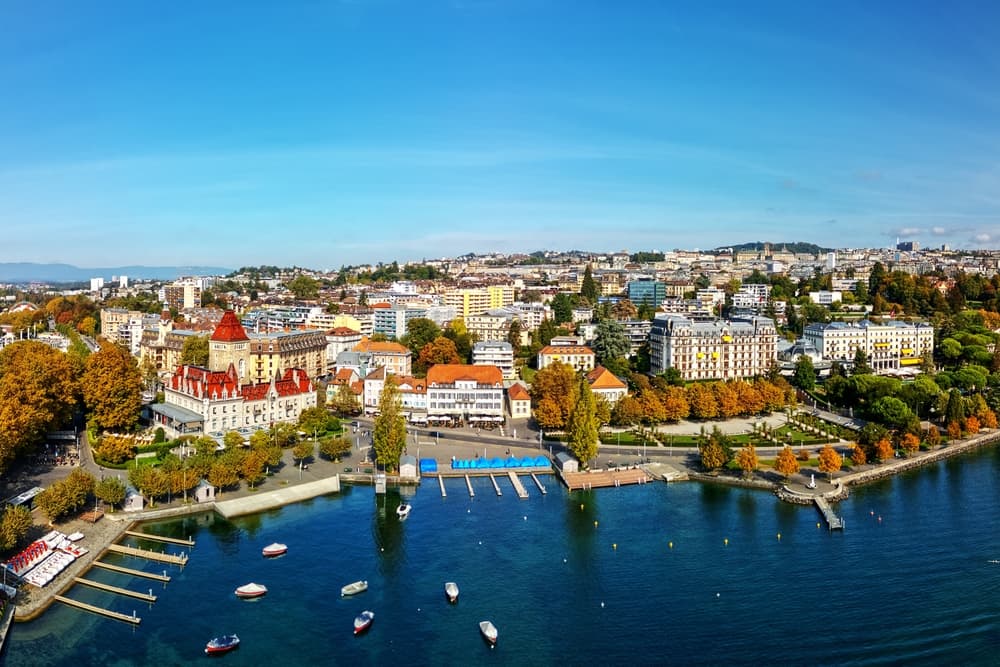
Lausanne: a hillside university city above Lake Geneva
The Olympic Capital speaks French, runs on a metro that climbs the hills for you, and rewards people who arrive with a Swiss job or a university place.
- 144,873
- Population (2024)
- $4,100/mo
- Monthly budget · single
- 51°F / 11°C
- Avg temperature
Plan on about $4,100 a month in U.S. dollars for one person in Lausanne, with a realistic range of $3,400 to $4,800 depending on your rent and habits. A couple needs around $5,800, and a family of four around $8,400. Housing is the big line: a one-bedroom runs about $2,000 in the center and about $1,650 farther out.
Lausanne suits people coming for a Swiss job, a research post or a degree, who want a mid-size city with the lake at the bottom of the street. It has been the Olympic Capital since 1994, with some 60 international sports federations and organizations in the area, and 43% of residents were foreign nationals in 2025.
It's a harder fit without Swiss income. Health insurance is your own monthly bill, the retiree permit is discretionary, and the steep streets ask a lot of knees and wheels.

Reviewed and updated October 9, 2026 · 3 min read
At a glance
$4,100
Monthly budget · single person
$2,000/mo 1-bed rent, center
75/100
Safety index
$50
Internet / month
51°Fannual average
Jan 36° · Aug 67°
Climate
144,873
Population (2024)
Expatsi estimates, updated Oct 2026, based on rental listings, government statistics, and local reporting.
Cost of living
What it costs to live in Lausanne
Single person
$3,400–$4,800/mo
about 30% above Austin, TX
Couple
$4,800–$6,800/mo
about 25% above Austin, TX
Family of four
$6,900–$9,900/mo
about 5% above Austin, TX
Compared with Austin, TX (Expatsi estimate, 2026).
- $25 +25%
- Inexpensive meal
- $1,650–$2,350/mo +3%
- 1-bed rent, center
- $1,350–$1,950/mo +22%
- 1-bed rent, outside
- $50/mo −23%
- Internet
- $85/mo +106%
- Transit pass
- $1,533/sq ft +136%
- Buy price, center
Expatsi estimates, updated Oct 2026, based on rental listings, government statistics, and local reporting.
Daily life
How Lausanne lives
- B+ grade, 63rd percentile among the cities we track
- Dining & cafésstrong
- A- grade, 80th percentile among the cities we track
- Arts & culturestrong
- A grade, 89th percentile among the cities we track
- Parks & outdoorsstandout
- A- grade, 74th percentile among the cities we track
- Schools & educationstrong
- B+ grade, 61st percentile among the cities we track
- Healthcare accessstrong
- B+ grade, 68th percentile among the cities we track
- Bike infrastructurestrong
- A- grade, 76th percentile among the cities we track
- Public transitstrong
- B grade, moderate physical accessibility
- Accessibilitymoderate
Graded on OpenStreetMap amenity density relative to the 298 cities we track. Accessibility is the exception: it's graded against a fixed standard (terrain steepness and sidewalk surfaces), not a curve.
Climate
Weather through the year
Annual average 51°F (11°C) · 51 in of rain a year · Source: Open-Meteo Historical Weather API (temps: ERA5-Land 0.1°; precip/sunshine: ERA5 best-match; 1991-2020 normals)
On the ground
Scenes from Lausanne
Getting around
Transport in Lausanne
Most people here live without a car, and the hills make that an easy call. The tl network of buses, trolleybuses and metro runs on Mobilis, the canton's zone fare system, so one ticket covers the bus, the metro and eligible local trains in the zones you pay for. Budget about $85 a month for transit.
The m2 metro does the climbing. It handles grades of up to 12%, running from the lakefront at Ouchy past the main train station and the Flon district up to the northern neighborhoods. Pick an apartment near an m2 stop and the city gets a lot smaller. Walking is pleasant downhill and a workout on the way back.
Late nights are the weak spot. A city council motion in May 2026 pointed out that the last m2 from the station toward Croisettes left at 12:28 a.m., one minute before a late train from Geneva pulled in, and called the night buses infrequent and slower. Taxibus shared rides cost less than a regular cab.
- 51/sq mi
- Transit stops
- 28/sq mi
- Bike infrastructure
- 92/sq mi
- Wheelchair-accessible places
Mapped features per square mile from OpenStreetMap.
Keep exploring
Places like Lausanne

Community
Community & practical notes
Community: Students, researchers and sports administrators set the tone. The University of Lausanne and EPFL draw people from around the world, and the IOC has been based here since 1915. Lausanne is a French-speaking city, so French is the language of neighbors, landlords and city offices.
LGBTQ expats: Same-sex couples have been able to marry in Switzerland since July 1, 2022, and a marriage from abroad has to be reported and entered in the Swiss civil register. The City joined the Rainbow Cities Network in April 2023, the fourth Swiss city to do so, and has had a staff member for LGBTIQ+ policy since February 2023. VoGay runs a drop-in center on Rue Pépinet, and Lilith has organized lesbian women in Lausanne since 1994.
Black Americans: Lausanne's diversity doesn't mean it's free of racism. The City says xenophobia and anti-Black racism top the list of what gets reported; hiring is among the areas most affected. Its immigrant office (BLI) runs Info-racisme for people who experience or witness racist acts, plus an annual week of anti-racism events around March 21.
Healthcare: Lausanne University Hospital (CHUV) anchors care in the region. Basic health insurance is compulsory, and you have three months from arrival to buy it. Sign up in time and coverage applies back to your arrival; miss the deadline and it starts only when the policy does, and you may owe a surcharge.
Limited mobility: The hills are the main barrier, so live near the metro. Local councillors said in May 2026 that accessible parking is short, especially around the CHUV. On the lake, Vidy beach became the first in Switzerland to offer a SEATRAC Mover in April 2025, a powered seat and ramp that lets you swim without assistance. The City also subsidizes adapted-vehicle trips for residents who can't use public transit.
Remote work: Home internet runs about $50 a month.
Retirement: Switzerland's retiree permit generally requires you to be at least 55, have personal ties to Switzerland, support yourself, and not work in Switzerland or abroad. The canton and the federal government both have to approve it, and there's no right to it. Wealthier applicants can read our lump-sum tax residence guide, compare retirement visa options, or start with our full Switzerland guide.
Housing
Renting and buying
- 1-bed rent (center)
- $1,650–$2,350/mo
- 1-bed rent (outside center)
- $1,350–$1,950/mo
- Buy price (center)
- $1,533/sq ft
- Buy price (outside center)
- $1,068/sq ft
Expatsi estimates, based on rental listings, government statistics, and local reporting.
Good to know
Frequently asked questions
What is the weather like in Lausanne?
Lausanne has four seasons. Average highs reach about 72°F in July and August and drop to about 41°F in January, when lows sit near freezing. It gets about 51 inches of precipitation a year, spread fairly evenly across the months.
Is Lausanne safe?
Yes. Lausanne scores 75 out of 100 on our safety index, with a crime index of 25. Ordinary city precautions are enough for most residents.
Do you need a car in Lausanne?
No. Buses, trolleybuses and the m2 metro cover the city on one Mobilis zone ticket, and transit runs about $85 a month. The metro climbs the steepest hills, so living near a stop makes a car unnecessary for most people.
How much is rent in Lausanne?
A one-bedroom apartment in central Lausanne runs about $2,000 a month, usually between $1,650 and $2,350. Outside the center, expect about $1,650, usually between $1,350 and $1,950.
Can Americans retire in Lausanne?
It's possible but not easy. Switzerland's retiree permit generally requires you to be at least 55, show personal ties to Switzerland, prove you can support yourself, and stop working in Switzerland and abroad. Both the canton of Vaud and the federal government must approve it, and they can refuse.
Is Lausanne cheaper than Geneva?
Yes, by our numbers. One person spends about $4,100 a month in Lausanne versus about $4,700 in Geneva, and a central one-bedroom costs about $2,000 compared with about $2,600 in Geneva.
How much does it cost to live in Lausanne?
One person spends about $4,100 a month in Lausanne, with a typical range of $3,400 to $4,800. A couple needs around $5,800 a month and a family of four around $8,400. Rent is the largest cost.
See how Lausanne fits your life
Take the free Expatsi Test and compare Switzerland to over 100 countries on what actually matters: cost, healthcare, climate, and safety. About five minutes.
Why not you?