How Americans get a Canadian study permit
A province has to hold a seat for you before Ottawa will even look at your file. Here's what that costs, what you can earn, and what the permit turns into after you graduate.
Canada rations student spots by province now, and that changed the order of operations. Pick a school, pay tuition, get the province's letter, then apply. The good news is that Americans get a shorter version of this than almost anyone else.
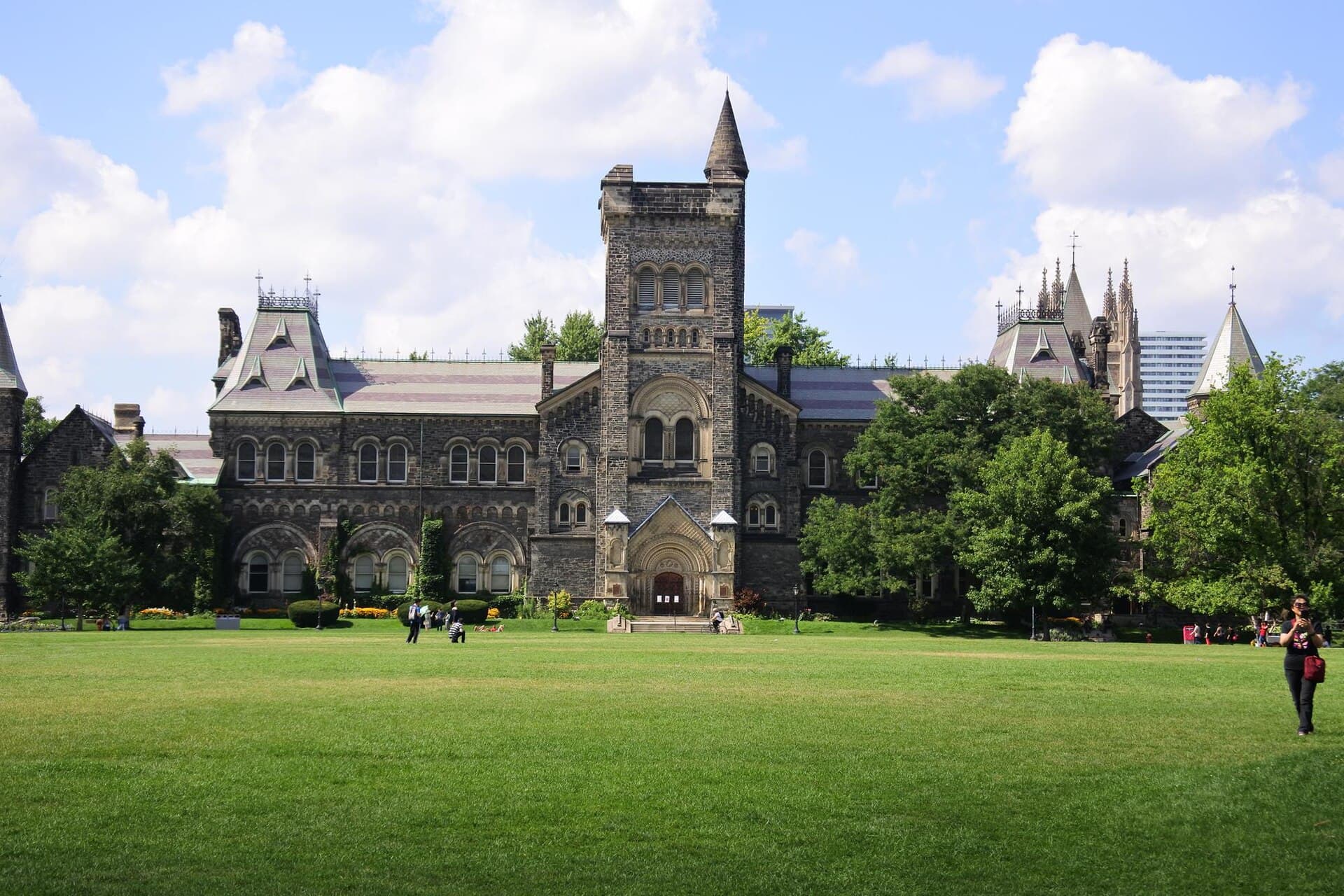
Study Permit
US citizens can study in Canada with a study permit. A valid passport and acceptance letter from a Canadian school are required. Study permits can be a pathway to work and permanent residence.
- Government cost
- $150
- Processing time
- ~60 days
- Timeline
- 2 months or more
- Difficulty
- Easy
Key requirements
- Letter of acceptance from a designated learning institution
- Proof of funds
- Clean criminal record
- Medical exam if required
About that data card
Three notes. The 150 is a Canadian dollar figure sitting in a U.S. dollar field, so the real fee is about $108, and Americans skip the $85 biometrics charge everyone else pays. The requirements list is also missing the document that now decides most files: the provincial or territorial attestation letter. The 60 days is IRCC's service standard; U.S. files finish well inside of it.
Step one
A province has to say yes before Ottawa does
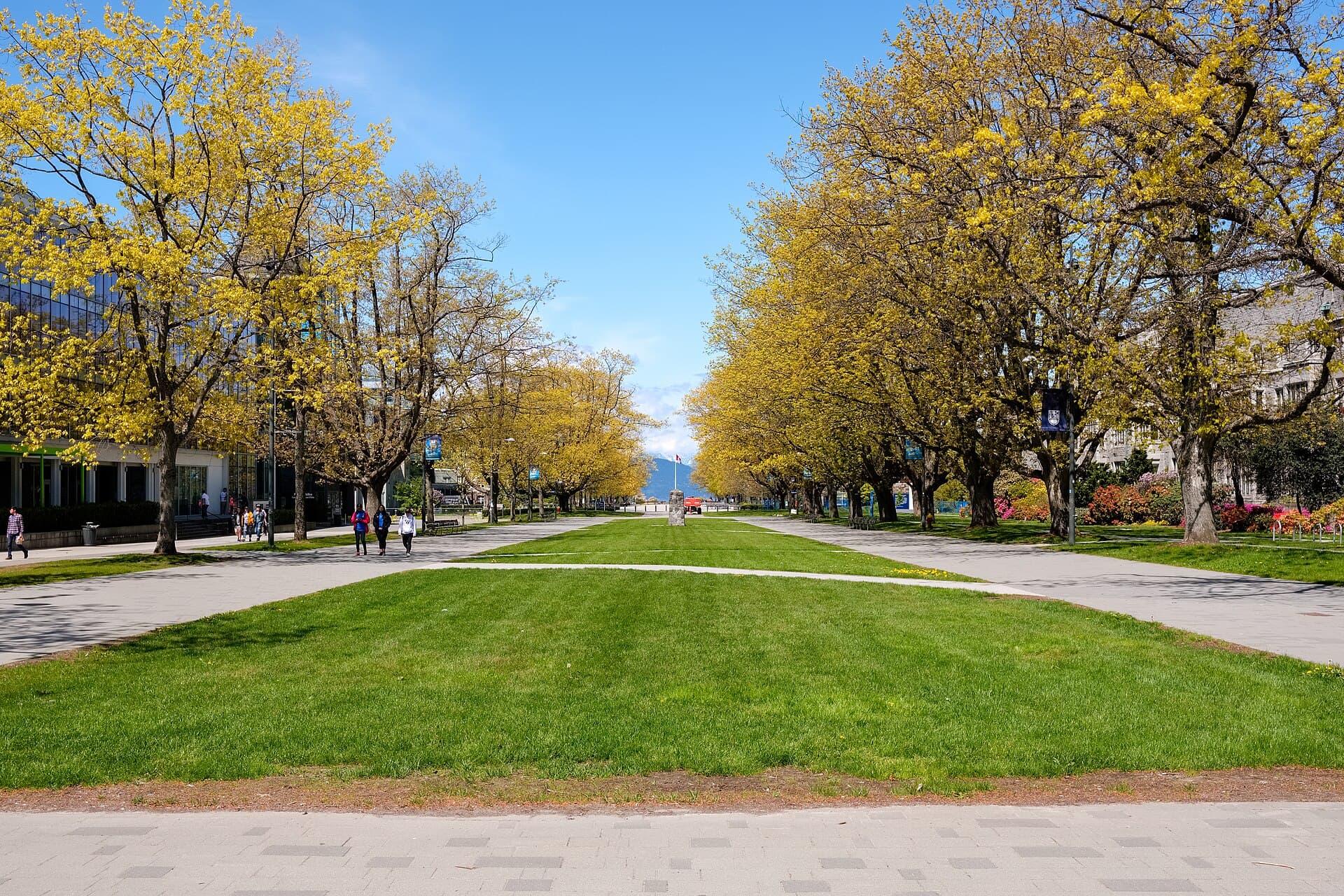
Since 2024, Canada has capped how many study permit applications it will process, splitting that cap among the provinces. Your proof that a seat is yours is a provincial or territorial attestation letter, a PAL or TAL. Your school requests it, the province issues it, you upload it. No letter, no file. British Columbia, whose Main Mall is pictured, runs it the way most provinces do.
You pay before you can apply
In most cases you have to accept the offer and pay tuition, in part or in full, before the school will request your letter. That is real money committed before anyone reads your permit application.
The letter expires with the calendar
A 2026 letter is good until December 31, 2026, and cannot carry into the next cap year. You also cannot reuse one after a decision, approved or refused. Change schools and you start over.
Quebec runs its own system
In Quebec you need a Quebec Acceptance Certificate, a CAQ, instead of an attestation letter. The province sets its own money rules on top of the federal ones.
A master's degree skips the line
From January 2026, a degree-granting master's or doctoral program at a public school needs no attestation letter and sits outside the cap. Finish it and the work permit afterward runs three years, even if the program itself ran a single year. That one choice moves the attestation letter, the cap, and the work permit together.
The four numbers that shape this
$108
Government fee for the permit
billed as 150 Canadian dollars
$16,900
Savings you must show for a year
23,448 Canadian dollars, on top of tuition
24 hours
Off-campus work per week in term
unlimited during scheduled breaks
3 years
Work permit after a master's
even a one-year program qualifies

The money
The savings bar moved on September 1
Apply on or after September 1, 2026 for anywhere outside Quebec and you must show $16,900, which IRCC sets at 23,448 Canadian dollars, purely for living costs. Tuition and the flight are separate. Most guides still print the old 22,895 figure, so check canada.ca the day you file.
Bring family and the bar climbs
Two people need about $21,000 (29,192 Canadian dollars), four about $31,400. Those are floors for approval, not a budget for a comfortable year in Toronto.
Tuition is the bigger line
Statistics Canada puts average international tuition near $30,100 a year for a bachelor's and $17,300 for a graduate degree, and province changes that a lot. Newfoundland and Labrador sits at the bottom of the range.
Show where it came from
IRCC wants six months of bank statements and the source of the money. A lump sum that landed last week reads badly.
What the permit actually lets you do
Work 24 hours a week
Off campus, in term, across every job combined.
Keep a US remote job
Work for an employer outside Canada does not count toward the 24 hours.
Apply at the border
Americans can request the permit at a port of entry.
Travel on one approval
Your visa or eTA comes with the permit, no second fee.
Health cover varies by province
Alberta and Saskatchewan cover students. Ontario uses UHIP instead.
Stay on afterward
A post-graduation work permit turns the degree into Canadian experience.
While you're there
Working, and what the degree turns into

You can work 24 hours a week off campus once the program starts, and unlimited hours during breaks your school schedules. The rule Americans miss: remote work for an employer outside Canada is not counted at all, so a US job can keep paying full time while you study.
Stay enrolled or lose it
You have to be actively studying, and an authorized leave cannot run past 150 days. Break the conditions and a new permit can be barred for six months.
The permit you get after is the prize
Finish a program of eight months or more at an eligible school and you apply within 180 days of your completion letter. Two years or more earns three years of open work permit, and since 2024 so does a master's. You get one, ever.
Two rules that catch Americans
You need a language test at CLB 7 even as a native English speaker. A college diploma, unlike a degree, also has to be in an approved field of study.
Master Immigration Services (Canada)
Canada Immigration
A regulated Canadian consultant in Vancouver who handles study permits and the paths out of them. Worth a call if your program sits in a gray area for the work permit afterward.
Legalize That Doc
Document Preparation
Vital records, FBI background checks, apostilles and translations: the US paperwork an admissions office or a visa officer asks for.
Amanda Franzoni
Canada Local Guide
An American who moved to British Columbia and now helps others with the ordinary parts: housing, banking, health cards, winter.
Here's the catch
The American side of the money got harder this year
Canadian schools are not the problem. The University of Toronto, McGill and Waterloo all still take U.S. federal loans and publish live guidance for 2026-27. What changed is the lending.
Grad PLUS is gone
It closed to new borrowers on July 1, 2026. That was the loan that covered a full cost of attendance. Graduate borrowing now caps at $20,500 a year and $100,000 in total, inside a $257,500 lifetime limit. Parent PLUS is capped, too. Borrowed for your current program before that date? You keep the old rules for up to three more years, same school, same program.
No Pell, and no online courses
Pell Grants have never worked at a foreign school. And one online course can end your Direct Loan eligibility for the term, because federal aid abroad requires in-person study. Canada points the same way: more than half your program online and there is no work permit afterward.
Ask your financial aid office in writing what it will certify before you accept an offer.
Other ways into Canada
Citizenship by Descent
- A documented Canadian-citizen parent, grandparent, or earlier ancestor in your direct line
- Proof of that ancestor's Canadian citizenship (birth certificate, citizenship certificate, or naturalization record)
- An unbroken chain of birth/marriage/adoption records connecting you to that ancestor
Express Entry
- Eligible under Federal Skilled Worker, Canadian Experience Class, or Federal Skilled Trades
- Language proficiency (English/French)
- Educational credential assessment
Provincial Nominee Program (PNP)
- Nomination by a Canadian province or territory
- Job offer or connection to province
- Language proficiency
Start-up Visa
- Qualifying business
- Letter of support from designated organization
- Proof of funds
Work Permit
- Job offer from a Canadian employer
- Labor Market Impact Assessment (LMIA) in most cases
- Proof of qualifications
Study permit questions Americans ask
Do I need a provincial attestation letter?
Most applicants do. It is a letter from the province confirming a study permit spot is held for you, and your school requests it after you accept the offer. Starting January 1, 2026, students entering a degree-granting master's or doctoral program at a public institution no longer need one. Quebec uses a Quebec Acceptance Certificate instead.
Can I still use US federal student loans in Canada?
Yes, at schools approved by the Department of Education, including the University of Toronto, McGill and Waterloo. But Grad PLUS closed to new borrowers on July 1, 2026, graduate borrowing is now capped at $20,500 a year, Pell Grants never applied abroad, and enrolling in any online course can end your eligibility for the term. Confirm what your school will certify before you commit.
How much money do I need for a Canadian study permit?
For applications filed on or after September 1, 2026 outside Quebec, a single student must show about $16,900 in living funds, which IRCC sets at 23,448 Canadian dollars. Tuition for your first year and travel costs are on top of that. The figure rises with each family member who comes along, and Quebec sets its own requirement.
How long is the work permit after you graduate in Canada?
You apply for a post-graduation work permit within 180 days of confirmation that you finished. A program of eight months to two years buys a permit of roughly the same length. Two years or more gets you three years, and a master's gets three regardless of how short it was. It is once in a lifetime, and you need a language test even as a native English speaker.
Can Americans apply for a Canadian study permit at the border?
Yes. US citizens and US permanent residents are among the few people who can request a study permit at a port of entry rather than filing online from abroad. You still need the full document set, including the attestation letter, and the officer can refuse. A refusal at the border means you traveled for nothing, so weigh that against the speed.
Can I work while I study in Canada?
You can work up to 24 hours a week off campus once your program has started, and unlimited hours during breaks your school schedules. Multiple jobs count toward the same 24 hours. Remote work for an employer outside Canada is treated separately and does not count against the limit.
How much does a Canadian study permit cost?
The government fee is about $108, billed as 150 Canadian dollars. Americans are exempt from giving biometrics, so the 85 dollar charge most guides add does not apply. Budget separately for a medical exam if one is required, and for the work permit after graduation, which costs about $185.
Still weighing Canada against everywhere else?
Canada is one answer. The Expatsi Test shows you the others, scored against what matters to you.
Why not you?