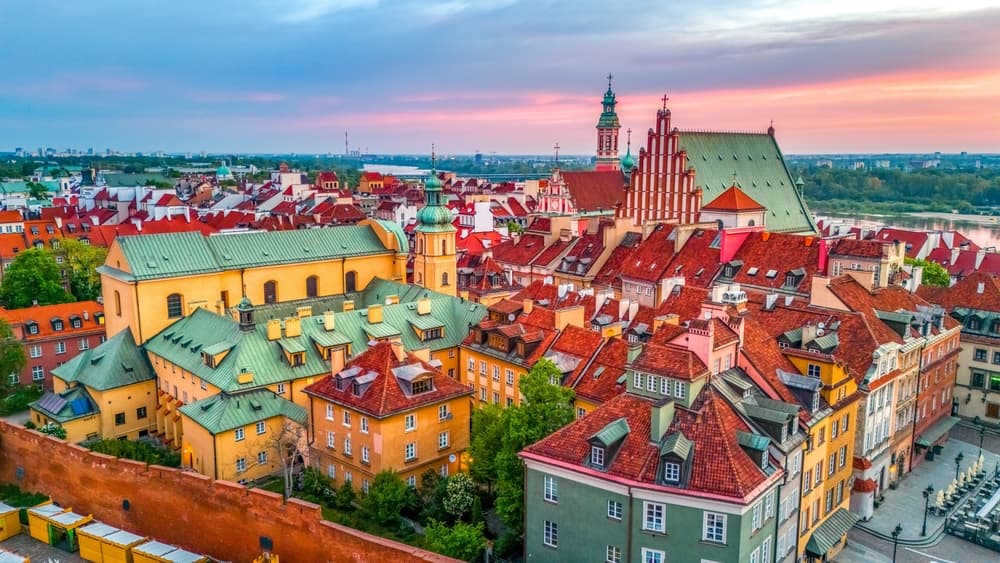
Living in Warsaw on about $2,100 a month: big-city careers, long gray winters
What it costs to move to Poland's capital, how safe it feels, how people get around, and who it suits, from career movers to families with kids.
- 1,862,402
- Population (2024)
- $2,100/mo
- Monthly budget · single
- 48°F / 9°C
- Avg temperature
Plan on about $2,100 a month in U.S. dollars if you live alone in Warsaw. Most single budgets fall between $1,800 and $2,400, and a couple spends around $3,000. A one-bedroom in the center rents for about $1,200 a month. Those figures are as of October 2026.
Warsaw is Poland's capital, a city of about 1.86 million people. It suits people who want a big-city career and big-city services: corporate transferees, remote workers who care about reliable infrastructure, and families who need an English-language international school. If you're after a small, walkable old town above all else, look at Poland's smaller cities too.
The tradeoffs are weather and paperwork. January highs average near 34F, and Poland's state audit office found residence permit applications took about a year on average (reported March 2024). Summers are easy, with July highs averaging near 77F.

Reviewed and updated October 9, 2026 · 4 min read
At a glance
$2,100
Monthly budget · single person
$1,200/mo 1-bed rent, center
76/100
Safety index
$15
Internet / month
48°Fannual average
Jan 29° · Jul 68°
Climate
1,862,402
Population (2024)
Expatsi estimates, updated Oct 2026, based on rental listings, government statistics, and local reporting.
Cost of living
What it costs to live in Warsaw
Single person
$1,800–$2,400/mo
about 30% below Austin, TX
Couple
$2,600–$3,400/mo
about 35% below Austin, TX
Family of four
$3,900–$4,900/mo
about 45% below Austin, TX
Compared with Austin, TX (Expatsi estimate, 2026).
- $10 −50%
- Inexpensive meal
- $1,050–$1,350/mo −38%
- 1-bed rent, center
- $800–$1,000/mo −33%
- 1-bed rent, outside
- $15/mo −77%
- Internet
- $30/mo −27%
- Transit pass
- $557/sq ft −14%
- Buy price, center
Expatsi estimates, updated Oct 2026, based on rental listings, government statistics, and local reporting.
Daily life
How Warsaw lives
- A grade, 87th percentile among the cities we track
- Dining & cafésstandout
- A+ grade, 95th percentile among the cities we track
- Arts & culturestandout
- A- grade, 77th percentile among the cities we track
- Parks & outdoorsstrong
- A grade, 94th percentile among the cities we track
- Schools & educationstandout
- A grade, 92nd percentile among the cities we track
- Healthcare accessstandout
- A grade, 94th percentile among the cities we track
- Bike infrastructurestandout
- A grade, 87th percentile among the cities we track
- Public transitstandout
- A grade, good physical accessibility
- Accessibilitygood
Graded on OpenStreetMap amenity density relative to the 298 cities we track. Accessibility is the exception: it's graded against a fixed standard (terrain steepness and sidewalk surfaces), not a curve.
Climate
Weather through the year
Annual average 48°F (9°C) · 22 in of rain a year · Source: Meteostat station normals (12375, 1991-2020)
On the ground
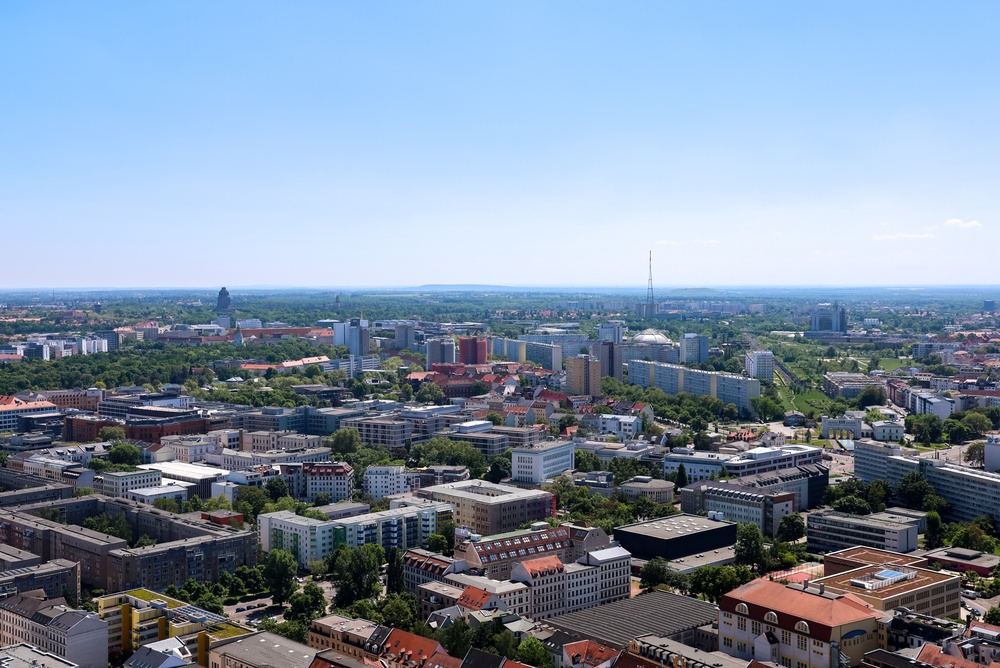
Scenes from Warsaw
Getting around
Transport in Warsaw
Warsaw runs one integrated network. The metro, trams, buses and SKM commuter trains all take ZTM tickets, and our data puts a monthly pass at about $30. A long-term ticket loaded on the Warsaw City Card covers every one of those, plus the Koleje Mazowieckie and WKD regional trains within the city zone.
The center, Śródmieście, is easy on foot. Neighborhoods like Mokotów, Ursynów and Praga across the Vistula connect to it by metro, tram or bus, so most residents pick an apartment by its nearest stop.
Getting to Chopin Airport is simple without a car. SKM trains S2 and S3 run there from Warszawa Śródmieście and Warszawa Centralna, bus 175 runs from the center along Nowy Świat and Aleje Jerozolimskie, and night bus N32 covers late flights from Warszawa Centralna.
Do you need a car? Not if you live near a metro or tram line. A car earns its keep if you settle in an outer suburb, or if your kids go to a school outside the city limits.
- 64/sq mi
- Transit stops
- 164/sq mi
- Bike infrastructure
- 533/sq mi
- Wheelchair-accessible places
Mapped features per square mile from OpenStreetMap.
Keep exploring
Places like Warsaw


Day to day
Paperwork, doctors, schools and who you'll meet
Paperwork: Build slack into your plans. Poland's Supreme Audit Office found residence permit applications took about a year on average, with some cases stretching for years (reported March 2024). Until your card arrives, travel and job changes can get complicated, so keep copies of everything you file.
Healthcare: The State Department calls medical care in Poland adequate and doctors generally well trained. Many younger doctors speak English, though nurses and staff may not. Doctors and hospitals often expect payment before treatment, and private hospitals want payment up front or proof of insurance. Medicare doesn't apply overseas, so arrive with coverage.
Schools: The American School of Warsaw, founded in 1953, teaches pre-K through grade 12 and offers both an American high school diploma and the IB Diploma. It's accredited by the New England Association of Schools and Colleges. Its campus is in Konstancin-Jeziorna, just outside the city, so factor the commute into where you rent. Ask the school directly about fees and open places.
Remote work: Home internet runs about $15 a month. Warsaw is usually six hours ahead of Eastern, so calls with the U.S. land in your afternoon and evening.
LGBTQ expats: The State Department says social acceptance of LGB people in Poland isn't as widespread as in the U.S., and openly LGB travelers may face harassment. Warsaw holds a large Equality Parade each June. Couples should read the legal picture in our Poland guide before moving.
Black Americans: We couldn't find reporting specific to Warsaw, and the State Department's Poland page doesn't address race. In January 2024 a Black American medical student in Poland described being called slurs and having his residence photo rejected over his Afro, while saying he plans to stay in Europe. That's one person's account. Talk to Black residents, through our community or local groups, before you sign a lease.
Limited mobility: Every metro station has an elevator down to the platform, and ZTM timetables mark which runs use low-floor vehicles. The State Department warns that newer trains and stations may be accessible but older ones aren't, and that wheelchair users face many challenges across Poland. Visit the specific building and stop before you commit to an apartment.
Retirement: Warsaw can work for retirees who want big-city healthcare, culture and transit and can live with gray winters. The visa is the harder question, so settle it first. Compare countries that grant residence on retirement income in our retirement visa guide, and see the routes Poland does offer in the full Poland guide.
Housing
Renting and buying
- 1-bed rent (center)
- $1,050–$1,350/mo
- 1-bed rent (outside center)
- $800–$1,000/mo
- Buy price (center)
- $557/sq ft
- Buy price (outside center)
- $399/sq ft
Expatsi estimates, based on rental listings, government statistics, and local reporting.
Good to know
Frequently asked questions
Are there American schools in Warsaw?
Yes. The American School of Warsaw, founded in 1953, teaches pre-K through grade 12 and offers an American high school diploma and the IB Diploma. Its campus is in Konstancin-Jeziorna, just south of the city.
Can I retire in Warsaw?
You can live well there on a retirement income, but the residence route is the first thing to sort out, since Poland's main options run through work, study, business or family. Compare retirement-friendly countries in our retirement visa guide and check Poland's routes before you plan a move.
Is Warsaw safe for Americans?
Yes, for most people. The U.S. State Department rates Poland Level 1, exercise normal precautions (June 2025), though it notes crime risk is higher in big cities and suggests going out in groups at night in nightlife areas like Warsaw's Old Town. Our data gives Warsaw a safety score of 76 and a crime score of 24, where higher safety and lower crime are better.
How much does it cost to live in Warsaw?
One person typically spends $1,800 to $2,400 a month in U.S. dollars, and a family of four about $4,400, as of October 2026. A one-bedroom outside the center rents for about $900 a month.
Do you need a car to live in Warsaw?
No, not if you live near a metro or tram line. One ZTM monthly pass, about $30 a month, covers the metro, trams, buses and commuter trains inside the city, including trains to Chopin Airport.
Is healthcare good in Warsaw?
The U.S. State Department calls medical care in Poland adequate, with generally well-trained doctors, many of the younger ones English-speaking. Expect to pay up front or show proof of insurance at private hospitals. Medicare doesn't cover you in Poland, so bring international or local coverage.
How long does it take to get residency in Poland?
Plan for months, not weeks. Poland's Supreme Audit Office found residence permit applications took about a year on average, with some cases running for years (reported March 2024). Waits vary by office and by the type of permit.
What is the weather like in Warsaw?
Warsaw has cold, dark winters and warm summers. January highs average near 34F and lows near 25F, while July highs average near 77F. It gets about 22 inches of precipitation a year.
See how Warsaw fits your life
Take the free Expatsi Test and compare Poland to over 100 countries on what actually matters: cost, healthcare, climate, and safety. About five minutes.
Why not you?