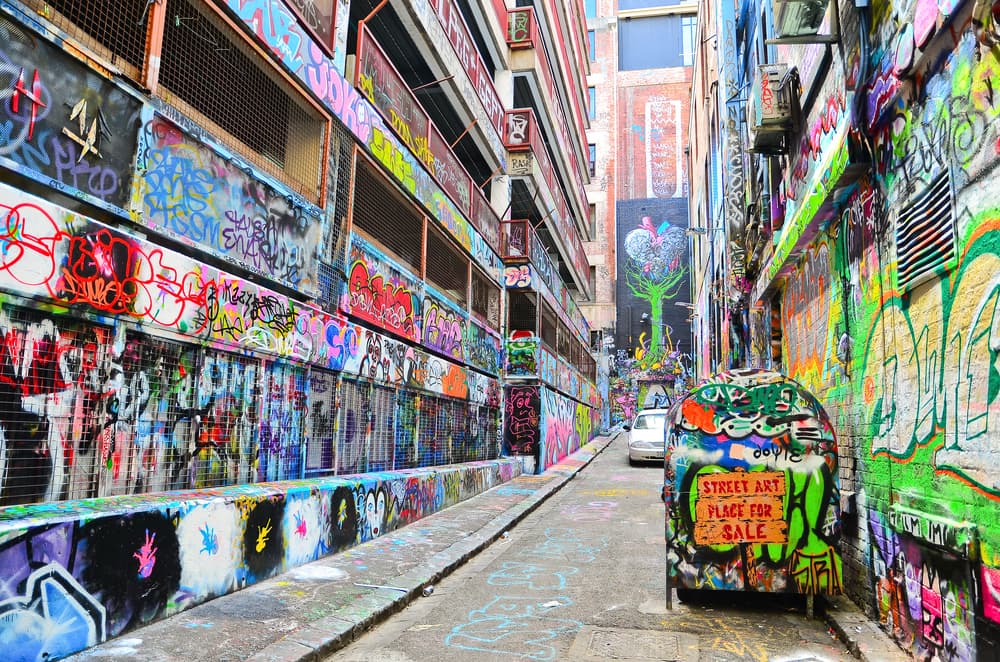
Melbourne: trams, laneway cafes and four seasons in a day
Victoria's capital of about 5.4 million runs about $2,900 a month for one person, with free trams across the city center and inner neighborhoods where you can skip the car.
- 5,350,705
- Population (2024)
- $2,900/mo
- Monthly budget · single
- 59°F / 15°C
- Avg temperature
Budget about $2,900 a month in U.S. dollars to live alone in Melbourne, with a typical range of $2,600 to $3,200 (2026 estimates). Couples land near $4,100, and a family of four near $5,900. Rent is the biggest line: a one-bedroom in the center averages $1,750 a month, and about $1,400 farther out.
Melbourne is Australia's culture-first city, built around laneway cafes, a deep live music and sports calendar, and inner neighborhoods like Fitzroy and St Kilda where trams and your own two feet cover most errands. It suits people who want big-city life with a European feel, remote workers who can live with late-night calls to the U.S., and families who'd rather lean on transit than a second car.
It's a harder fit if you run on sunshine. Winters are gray and cool, with July highs averaging near 57F, and the weather can swing through four seasons in one day. Retirees should also know that Australia has no retirement visa open to new applicants.

Reviewed and updated October 9, 2026 · 4 min read
At a glance
$2,900
Monthly budget · single person
$1,750/mo 1-bed rent, center
70/100
Safety index
$50
Internet / month
59°Fannual average
Jul 50° · Feb 69°
Climate
5,350,705
Population (2024)
Expatsi estimates, updated Oct 2026, based on rental listings, government statistics, and local reporting.
Cost of living
What it costs to live in Melbourne
Single person
$2,600–$3,200/mo
about 5% below Austin, TX
Couple
$3,600–$4,600/mo
about 10% below Austin, TX
Family of four
$4,800–$7,000/mo
about 25% below Austin, TX
Compared with Austin, TX (Expatsi estimate, 2026).
- $16 −20%
- Inexpensive meal
- $1,550–$1,950/mo −10%
- 1-bed rent, center
- $1,250–$1,550/mo +4%
- 1-bed rent, outside
- $50/mo −23%
- Internet
- $145/mo +252%
- Transit pass
- $725/sq ft +11%
- Buy price, center
Expatsi estimates, updated Oct 2026, based on rental listings, government statistics, and local reporting.
Daily life
How Melbourne lives
- A grade, 95th percentile among the cities we track
- Dining & cafésstandout
- A grade, 90th percentile among the cities we track
- Arts & culturestandout
- A- grade, 83rd percentile among the cities we track
- Parks & outdoorsstrong
- B+ grade, 58th percentile among the cities we track
- Schools & educationstrong
- A- grade, 74th percentile among the cities we track
- Healthcare accessstrong
- A grade, 86th percentile among the cities we track
- Bike infrastructurestandout
- A grade, 91st percentile among the cities we track
- Public transitstandout
- A+ grade, good physical accessibility
- Accessibilitygood
Graded on OpenStreetMap amenity density relative to the 298 cities we track. Accessibility is the exception: it's graded against a fixed standard (terrain steepness and sidewalk surfaces), not a curve.
Climate
Weather through the year
Annual average 59°F (15°C) · 26 in of rain a year · Source: Meteostat station normals (95873, 1991-2020; no sunshine data); sunshine: Melbourne Airport (1991–2020 averages 1970–2022 extremes) via en.wikipedia.org/wiki/Climate_of_Melbourne
On the ground
Scenes from Melbourne
Getting around
Transport in Melbourne
Trams are how inner Melbourne moves. Inside the Free Tram Zone, which covers the central city, Docklands and the streets around Queen Victoria Market, rides are free and you don't tap on at all. Everywhere else you pay with a myki, either the plastic card or a mobile myki on your phone, and tap on trams, trains and buses. Our estimate for a month of getting around is about $145. On Friday and Saturday nights, trains and some trams and buses keep running all night.
Do you need a car? In inner neighborhoods like Fitzroy and St Kilda, you can get by without one: trams run along the main streets, and groceries and cafes are a short walk away. In the middle and outer suburbs, where yards get bigger and service thins out, a car earns its keep. A car also makes weekend trips out of the city a lot easier.
- 70/sq mi
- Transit stops
- 75/sq mi
- Bike infrastructure
- 298/sq mi
- Wheelchair-accessible places
Mapped features per square mile from OpenStreetMap.
Keep exploring
Places like Melbourne
Community & practical notes
Settling into Melbourne
Finding your people: Expect to build a circle the way locals do, through work, sports clubs, neighborhood cafes and your kids' schools. For the visa and relocation side, Working In Australia is the Expatsi specialist for the country.
LGBTQ expats: The Victorian Pride Centre on Fitzroy Street in St Kilda is a purpose-built home for LGBTIQA+ health services, community groups and events. It's free to visit, open seven days, and its events calendar is an easy first stop for meeting people.
Black Americans: Victoria's Black community has deep African roots; the state's African-born residents come from more than 50 countries. Racism is part of life here too, and the state government now runs its first anti-racism strategy, a five-year plan covering 2024 to 2029. Before you commit, talk with Black expats already in Melbourne about renting, work and daily life.
Healthcare: Medicare is for people who live in Australia permanently, and the U.S. isn't one of the countries with a reciprocal health deal. On a temporary visa, you'll need private coverage until you get permanent residency. Our Australia healthcare report explains when Medicare kicks in and what you should carry until then.
Working remotely: Home internet runs about $50 a month. The time gap is the harder part. Victoria uses daylight saving from the first Sunday in October to the first Sunday in April, and the U.S. switches on different dates, so Melbourne sits 14 to 16 hours ahead of Eastern, by season. A 9am call in New York lands somewhere between 11pm and 1am.
Limited mobility: Melbourne is a mixed picture. Yarra Trams says plainly that not every tram or stop is easy to use with a wheelchair or other mobility aid. Some routes, including 96 and 109, run only low-floor trams, while others still use high-floor trams with steps. The safe approach is to board low-floor trams at level-access stops and check both ends of a trip before you go, so look at the routes near any apartment before you sign a lease.
Retirement: The arts scene, cafes and trams suit retirees who'd rather not drive, but here's the catch: Australia's Investor Retirement and Retirement visas are both closed to new applicants. Unless you qualify through work or family, Melbourne works better for long visits than a full move. Our retirement visa hub compares countries that still offer a route, and the guide to moving to Australia covers the visas that are open, like the Skilled Independent 189 if you're still working.
Housing
Renting and buying
- 1-bed rent (center)
- $1,550–$1,950/mo
- 1-bed rent (outside center)
- $1,250–$1,550/mo
- Buy price (center)
- $725/sq ft
- Buy price (outside center)
- $483/sq ft
Expatsi estimates, based on rental listings, government statistics, and local reporting.
Good to know
Frequently asked questions
How many hours ahead of the U.S. is Melbourne?
Melbourne is 14 to 16 hours ahead of U.S. Eastern time, by season, because Victoria and the U.S. switch to daylight saving at opposite times of year. A morning meeting in New York usually falls late at night in Melbourne.
What is the weather like in Melbourne?
Mild and changeable. January highs average near 80F, July highs average near 57F, and the city gets about 26 inches of rain a year. The weather can swing through four seasons in one day, so a warm morning can turn cool and wet by afternoon.
Can I retire in Melbourne as an American?
Not on a retirement visa. Australia's Investor Retirement and Retirement visas are both closed to new applicants, so Americans who want to live in Melbourne long term usually need a work, family or skilled visa. Retirees without one of those routes can visit, but can't settle permanently on retirement income alone.
Can Americans use Medicare in Australia?
Not on a temporary visa. Medicare is for people who live in Australia permanently, and the U.S. has no reciprocal health care agreement with Australia. Americans need private health coverage until they become permanent residents.
Do you need a car to live in Melbourne?
Not if you live in the inner neighborhoods. Trams cover the main streets, rides inside the central Free Tram Zone are free, and our estimate for monthly transit is about $145. In the outer suburbs, where service is thinner, a car is more useful.
How do Americans move to Melbourne?
The main long-term routes run through work: an employer-sponsored visa such as the Skills in Demand 482, or a points-tested skilled visa like the 189 or the state-nominated 190. Younger Americans can look at the Work and Holiday 462 visa, and students at the Student 500 visa.
Is Melbourne safe for Americans?
It scores well on the measures we track: 70 out of 100 on the safety index we use, where higher is safer, and 30 on the crime index. Use the same care you would in any large U.S. city, especially late at night around busy nightlife streets.
How much does it cost to live in Melbourne per month?
A single person should plan on about $2,900 a month in U.S. dollars, with a typical range of $2,600 to $3,200 (2026 estimates). Rent drives most of that: a one-bedroom in central Melbourne averages about $1,750 a month.
See how Melbourne fits your life
Take the free Expatsi Test and compare Australia to over 100 countries on what actually matters: cost, healthcare, climate, and safety. About five minutes.
Why not you?