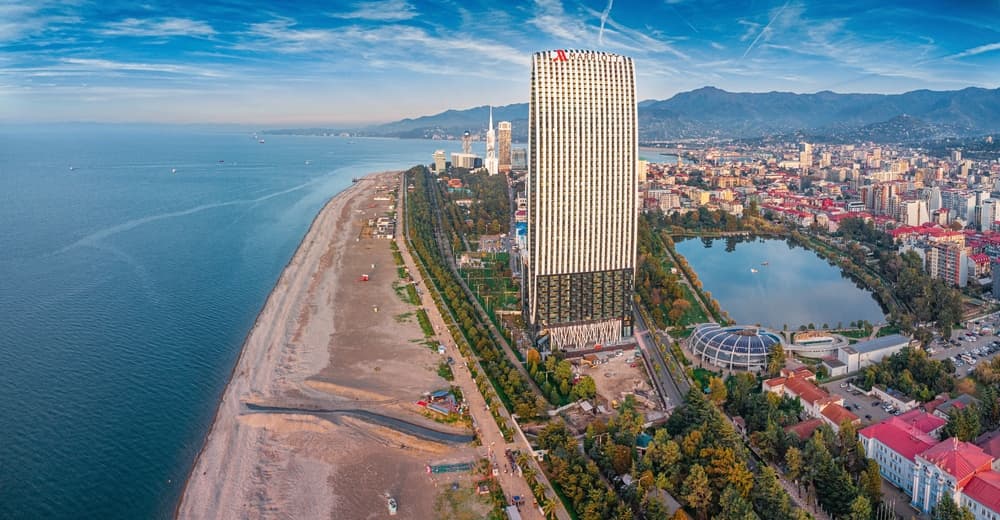
Batumi: a flat, walkable Black Sea city with a very wet winter
Cost of living, safety and retiring in Georgia's seaside second city, where a U.S. passport lets you try a full rainy season before you buy anything.
- 235,668
- Population (2024)
- $1,300/mo
- Monthly budget · single
- 59°F / 15°C
- Avg temperature
One person lives in Batumi on about $1,300 a month in U.S. dollars, and most single budgets land between $1,100 and $1,500. A couple needs around $2,000, and a family of four about $2,800. A one-bedroom near the center rents for about $600, or about $400 farther out. Those are our 2026 figures.
Batumi suits remote workers and retirees who want the sea at the end of the street, a flat city they can cover on foot or by bike, and the chance to spend a year in Georgia on a U.S. passport before committing. Most foreigners settle in the towers along the Old and New Boulevard and head into the Old Town for cafés and errands.
It's a weaker fit if you hate rain or need a full international school. The city averages about 99 inches of rain a year, more than half of it between September and January, and the beachfront gets loud and crowded in July and August.

Reviewed and updated October 15, 2026 · 4 min read
At a glance
$1,300
Monthly budget · single person
$600/mo 1-bed rent, center
72/100
Safety index
$15
Internet / month
59°Fannual average
Jan 44° · Aug 76°
Climate
235,668
Population (2024)
Expatsi estimates, updated Oct 2026, based on rental listings, government statistics, and local reporting.
Cost of living
What it costs to live in Batumi
Single person
$1,100–$1,500/mo
about 60% below Austin, TX
Couple
$1,600–$2,300/mo
about 55% below Austin, TX
Family of four
$2,200–$3,500/mo
about 65% below Austin, TX
Compared with Austin, TX (Expatsi estimate, 2026).
- $6 −70%
- Inexpensive meal
- $500–$700/mo −69%
- 1-bed rent, center
- $350–$500/mo −70%
- 1-bed rent, outside
- $15/mo −77%
- Internet
- $139/sq ft −79%
- Buy price, center
Expatsi estimates, updated Oct 2026, based on rental listings, government statistics, and local reporting.
Daily life
How Batumi lives
- A- grade, 71st percentile among the cities we track
- Dining & cafésstrong
- B grade, 42nd percentile among the cities we track
- Arts & culturetypical
- B grade, 43rd percentile among the cities we track
- Parks & outdoorstypical
- B+ grade, 69th percentile among the cities we track
- Schools & educationstrong
- A- grade, 82nd percentile among the cities we track
- Healthcare accessstrong
- B- grade, 39th percentile among the cities we track
- Bike infrastructuretypical
- B+ grade, 65th percentile among the cities we track
- Public transitstrong
- A- grade, good physical accessibility
- Accessibilitygood
Graded on OpenStreetMap amenity density relative to the 369 cities we track. Accessibility is the exception: it's graded against a fixed standard (terrain steepness and sidewalk surfaces), not a curve.
Climate
Weather through the year
Annual average 59°F (15°C) · 99 in of rain a year · Source: NOAA NCEI WMO 1991-2020 normals, Qobuleti (Kobuleti, WMO 37481, 5m), 22km N of Batumi on the same coast; no sunshine data
On the ground
Scenes from Batumi
Getting around
Transport in Batumi
Batumi is flat, so going without a car is easy here. The seafront boulevard, the Old Town and the newer tower districts are all walkable, and it's a comfortable city to bike, with far fewer hills than Tbilisi.
City buses don't take cash. Pay with a Batumi Card, sold at payment terminals, bank branches and tourist info centers, or tap a contactless bank card, which costs about 1 lari more per ride. Minibuses do take cash. Buses 10 and 10a link the airport and the city in about 20 to 30 minutes, but the last one leaves the airport around 9:55 p.m., so late arrivals need a taxi.
For taxis, use an app such as Bolt. The State Department tells Americans to avoid unmarked cars not booked through a recognized app. It also warns that reckless driving is common and pedestrians don't get the right-of-way, so cross the boulevard roads with care.
Tbilisi is about four to five hours away on the Stadler train. In summer, tickets sell out within days, so book early on the Georgian Railway website. You'll only want a car for trips into the mountains, and the State Department advises against driving at night outside cities.
- 37/sq mi
- Transit stops
- 1.7/sq mi
- Bike infrastructure
- 31/sq mi
- Wheelchair-accessible places
Mapped features per square mile from OpenStreetMap.
Keep exploring
Places like Batumi
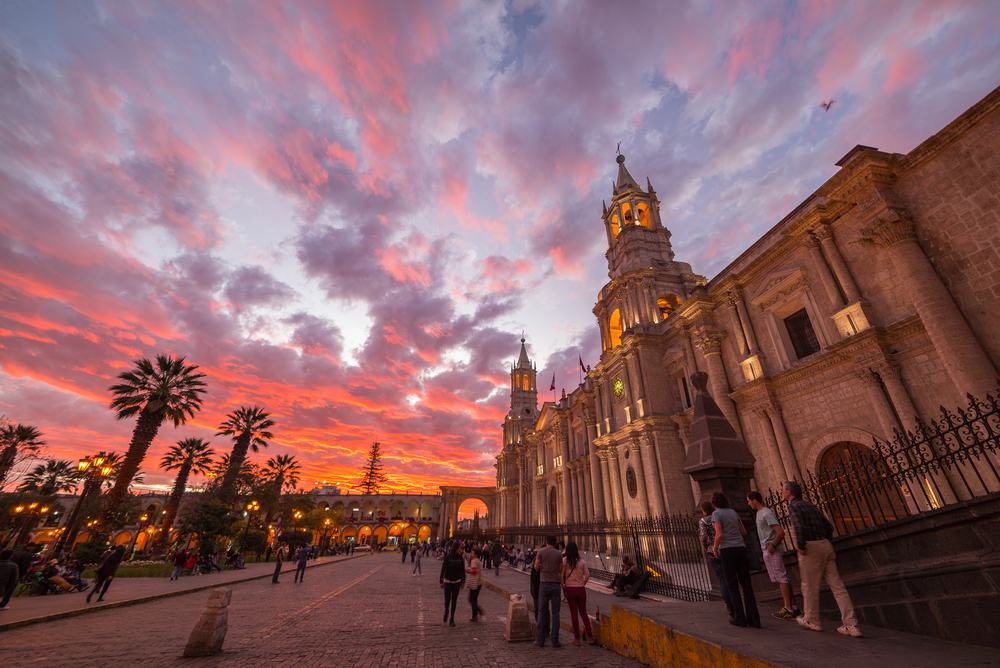
Arequipa
Peru
1M people · $1,200/mo
Varna
Bulgaria
322.7K people · $1,300/mo
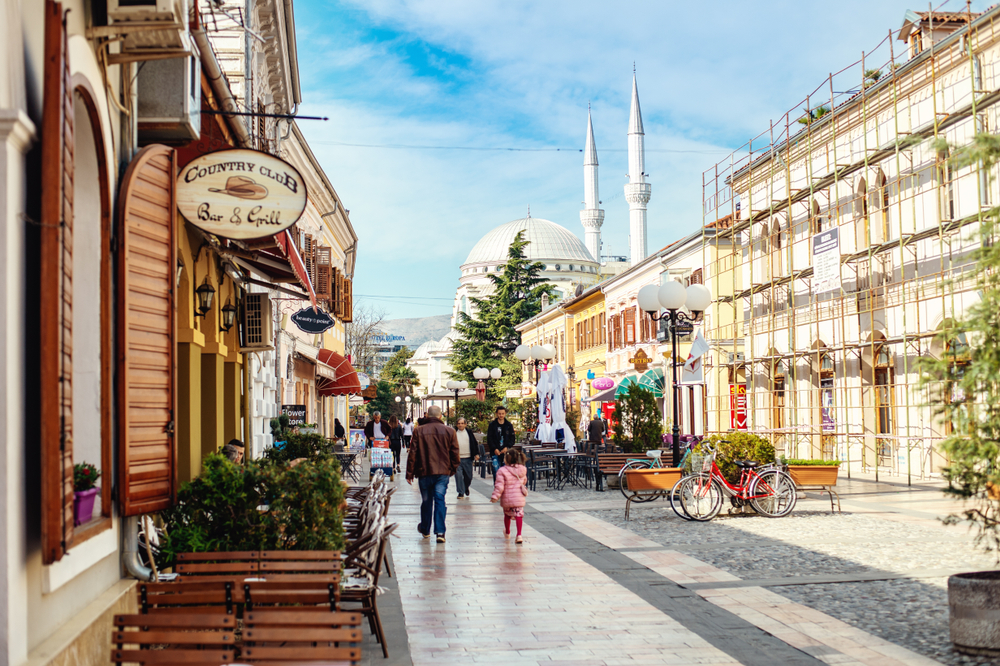
Shkodër
Albania
61.6K people · $1,100/mo
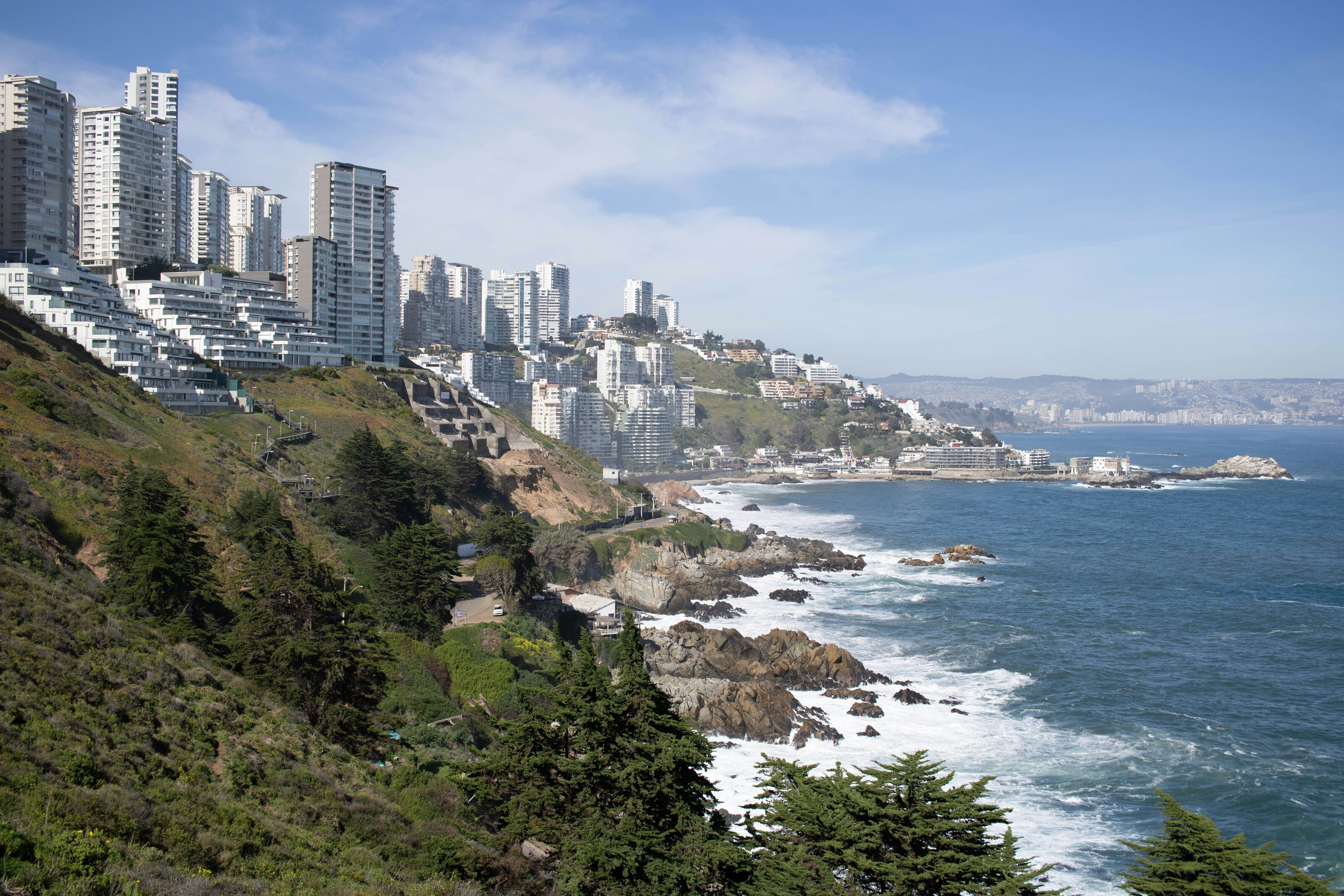
Viña del Mar
Chile
332.9K people · $1,400/mo
 Coming soon
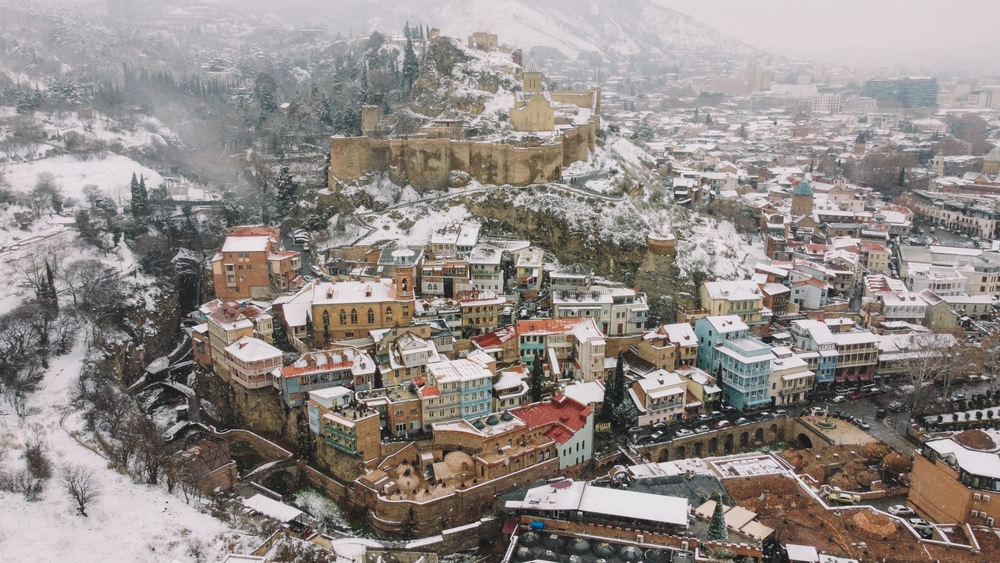
Tbilisi
Georgia
1.3M people · $1,400/mo
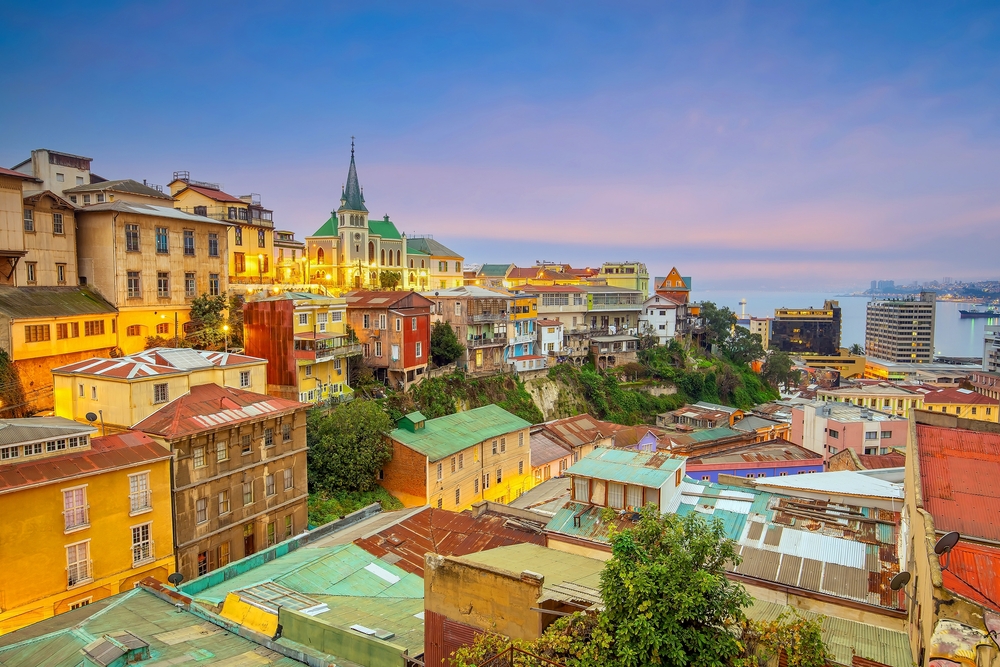
Valparaíso
Chile
296.7K people · $1,200/mo
Community
Community & practical notes
Community: The foreign crowd here is smaller than in Tbilisi and partly seasonal, since many tower apartments belong to people who come for the summer. Year-round expats cluster on the Old and New Boulevard and meet up in Old Town cafés. Outside hotels and the tourist strip, expect little English, so keep a translation app handy. In the off-season many boulevard cafés and restaurants close, and winter feels like a different, quieter town.
Healthcare: Evex, Georgia's largest hospital chain, has a Batumi facility, and International University Hospital is another option. Staff can be short on English. The State Department says most hospitals want cash and won't take U.S. insurance. It also states that ambulances are unreliable outside Tbilisi. Carry private international coverage with medical evacuation. You need health and accident insurance to enter Georgia anyway.
Remote work: Connections in the center are fine for video calls, but service can drop in outlying districts, so test the line before you sign a lease. Coworking choices are thin, and most remote workers end up working from cafés.
Schools: Options are narrow. The Georgian-American School of Batumi teaches mainly in English, but families who want a broad choice of international schools usually look at Tbilisi.
LGBTQ expats: Same-sex relations are legal in Georgia, but a December 2024 law bans public gatherings on gay and lesbian issues and restricts how those topics come up in schools and public settings. The State Department says gay and lesbian people often face discrimination and harassment, and some have been attacked. Batumi's resort feel doesn't change the national law, so weigh this before anything else.
Black Americans: Very little has been published about Black Americans' daily life in Batumi, and the State Department's Georgia page has nothing on race. Treat the first month as a trial: rent short-term, and find Black travelers and expats who've lived in Georgia through online communities before you commit.
Limited mobility: The flat ground helps, but the State Department says accessibility is limited across transit, lodging and public infrastructure, and pavement quality varies a lot from one district to the next. Some older apartment blocks are in rough shape. Look for a newer tower with a working elevator near the boulevard, and check the entrance and nearby sidewalks in person.
Retirement: Batumi works for retirees who want a mild seaside winter, with January highs averaging about 51°F, and a private hospital in town. Georgia has no pension visa. Most retirees spend the visa-free year here first, then qualify through property worth at least $150,000, which brings a renewable one-year permit. Our Georgia guide covers each route, and our retirement visa page compares countries that do offer one.
Housing
Renting and buying
- 1-bed rent (center)
- $500–$700/mo
- 1-bed rent (outside center)
- $350–$500/mo
- Buy price (center)
- $139/sq ft
- Buy price (outside center)
- $98/sq ft
Expatsi estimates, based on rental listings, government statistics, and local reporting.
Good to know
Frequently asked questions
Do people speak English in Batumi?
Not widely. You'll find English in hotels, newer cafés and some private clinics, but much less in shops, offices and with taxi drivers. A translation app and a few Georgian phrases go a long way.
How much does it cost to live in Batumi, Georgia?
A single person spends about $1,300 a month in Batumi as of 2026, with most budgets between $1,100 and $1,500. A couple needs about $2,000. Rent is the biggest line, at about $600 for a one-bedroom near the center. Private health insurance is an extra cost to plan for, since Georgia's public program generally doesn't cover foreigners.
Can I retire in Batumi?
Yes, but Georgia has no retirement or pension visa. Most retirees start with the 365-day visa-free stay, then get a residence permit by owning property worth at least $150,000. That permit lasts one year and renews each year you own the property, though it doesn't give you the right to work.
How rainy is Batumi?
Very. The nearest long-term weather station, in Kobuleti about 14 miles up the coast, averages about 99 inches of rain a year. September and October are the wettest months. Summers are warm, with August highs averaging about 83°F, and winters are mild, with January highs near 51°F.
Do I need a visa to move to Batumi?
Not at first. A U.S. passport lets you stay in Georgia for up to 365 days with no visa. Since January 2026 you must carry health and accident insurance with at least 30,000 lari (about $11,100) of coverage. If you'll work for a Georgian employer or run a business there, you also need a right-to-work permit, required since March 2026. Remote work for U.S. clients generally doesn't.
Is Batumi or Tbilisi better for expats?
It depends on what you need. Tbilisi has the larger expat community, the major private hospitals, more English and more international schools, but also traffic and air pollution. Batumi is smaller, flat and on the sea, with a quieter, partly seasonal foreign crowd and far more rain. The train between them takes about four to five hours, so many people try both.
Is Batumi safe for Americans?
Yes, for the most part. Batumi scores 72 out of 100 on our safety index, and the U.S. State Department rates Georgia at Level 1, exercise normal precautions, its lowest advisory level. The bigger day-to-day risk is traffic: drivers often ignore traffic laws and pedestrians don't get the right-of-way. Book taxis through an app, and stay away from the Russian-occupied regions of Abkhazia and South Ossetia, which are rated Do Not Travel.
What is healthcare like in Batumi?
Care is mostly private. Evex, Georgia's largest hospital chain, has a Batumi facility, and International University Hospital is another option, though staff may have limited English. Most hospitals expect cash and won't bill U.S. insurance, so carry an international policy that includes medical evacuation. For complex care, people often travel to Tbilisi.
See how Batumi fits your life
Take the free Expatsi Test and compare Georgia to over 100 countries on what actually matters: cost, healthcare, climate, and safety. About five minutes.
Why not you?