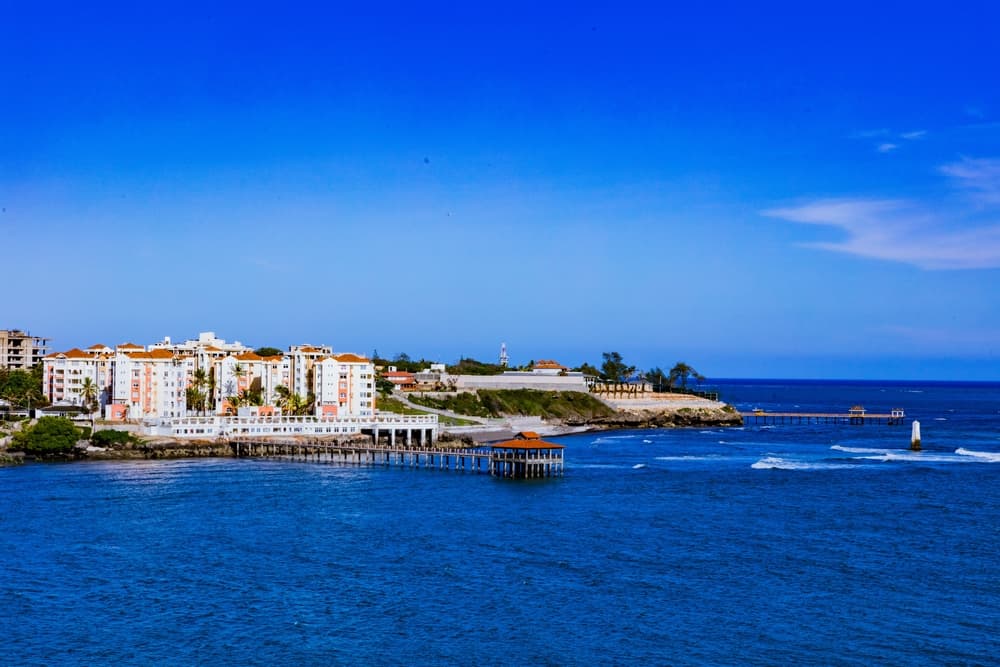
Living in Mombasa: about $1,200 a month on Kenya's Indian Ocean coast
What daily life, safety, heat and residence permits look like for Americans thinking about moving to or retiring in Kenya's Swahili port city.
- 1,208,333
- Population (2019)
- $1,200/mo
- Monthly budget · single
- 78°F / 26°C
- Avg temperature
Plan on about $1,200 a month for one person in Mombasa, with most budgets landing between $900 and $1,400. A couple should set aside about $1,700, and a family of four about $2,400. A one-bedroom apartment rents for around $400 a month in the center and closer to $250 farther out. Those cost figures carry a wide margin, so treat them as a starting point and price real listings before you sign anything.
Mombasa suits people who want the Indian Ocean on their doorstep and don't mind heat. The yearly average sits near 78F, and February's average highs reach about 89F. Nyali gives you a beach without leaving the city, the Swahili old town and Fort Jesus give it real history, and Diani's sand is a ferry ride and a drive south.
Here's the catch: the U.S. State Department rates Kenya Level 2 (exercise increased caution) and marks the coast north of Malindi as Level 4. Mombasa isn't on that do-not-travel list, but security awareness is part of daily life, and Nairobi still has the deeper bench of services.

Reviewed and updated October 15, 2026 · 4 min read
At a glance
$1,200
Monthly budget · single person
$400/mo 1-bed rent, center
40/100
Safety index
$35
Internet / month
78°Fannual average
Jul 75° · Mar 82°
Climate
1,208,333
Population (2019)
Expatsi estimates, updated Oct 2026, based on rental listings, government statistics, and local reporting. Coverage here is thin, so treat these as a rough guide.
Cost of living
What it costs to live in Mombasa
Single person
$900–$1,400/mo
about 60% below Austin, TX
Couple
$1,300–$2,100/mo
about 65% below Austin, TX
Family of four
$1,900–$3,000/mo
about 70% below Austin, TX
Compared with Austin, TX (Expatsi estimate, 2026).
- $4 −80%
- Inexpensive meal
- $300–$500/mo −79%
- 1-bed rent, center
- $200–$300/mo −81%
- 1-bed rent, outside
- $35/mo −46%
- Internet
- $111/sq ft −83%
- Buy price, center
Expatsi estimates, updated Oct 2026, based on rental listings, government statistics, and local reporting. Coverage here is thin, so treat these as a rough guide.
Daily life
How Mombasa lives
- C+ grade, 19th percentile among the cities we track
- Dining & cafésmodest
- C+ grade, 21st percentile among the cities we track
- Arts & culturemodest
- C+ grade, 23rd percentile among the cities we track
- Parks & outdoorsmodest
- B- grade, 37th percentile among the cities we track
- Schools & educationtypical
- C+ grade, 24th percentile among the cities we track
- Healthcare accessmodest
- C- grade, 0th percentile among the cities we track
- Bike infrastructuremodest
- C grade, 9th percentile among the cities we track
- Public transitmodest
Graded on OpenStreetMap amenity density relative to the 369 cities we track. Accessibility is the exception: it's graded against a fixed standard (terrain steepness and sidewalk surfaces), not a curve.
Climate
Weather through the year
Annual average 78°F (26°C) · 44 in of rain a year · Source: Open-Meteo Historical Weather API (temps: ERA5-Land 0.1°; precip/sunshine: ERA5 best-match; 1991-2020 normals); precipitation: Meteostat station 63820 normals 1991-2020
On the ground
Scenes from Mombasa
Getting around
Transport in Mombasa
Ride-hailing is the easiest start for newcomers. Bolt runs cars and motorcycles in Mombasa and added tuk-tuks to its app in 2026, which makes short hops around town easy to book and pay for in advance. Booking through an app matters: the State Department says Americans using off-the-street taxis have been robbed, kidnapped and extorted.
Locals ride matatus (shared minibuses) and boda bodas (motorcycle taxis), and both are everywhere. The State Department calls matatus the biggest danger on Kenyan roads, says boda boda injuries and deaths are common, and bars its own staff from using either. You'll see them constantly, but you don't have to use them.
Mombasa's center sits on an island. The Likoni Ferry, run by Kenya Ferry Services, carries traffic across to the southern mainland and is the usual route toward Diani. Pedestrians and cyclists ride free, and peak-hour crowds are part of the trip.
For Nairobi, the Madaraka Express train is the easy option, and it's the one train route U.S. government personnel are approved to take. The highway between the two cities is only two lanes, so skip intercity driving after dark.
Walking works for short stretches in the old town, but sidewalks are often patchy and the midday heat wears you down. A car helps if you live outside the center or head south often. You can drive on a valid U.S. license for up to three months.
- 0.4/sq mi
- Transit stops
- 0.0/sq mi
- Bike infrastructure
- 0.9/sq mi
- Wheelchair-accessible places
Mapped features per square mile from OpenStreetMap.
Keep exploring
Places like Mombasa
Community
Community & practical notes
Community: Mombasa is a Swahili port city first, built around its old town and Fort Jesus. Expats come for the coast, but the city lacks Nairobi's range of services, so plan on occasional trips inland for anything specialized. English and Swahili are both official languages in Kenya, so errands don't require a new language, though a few Swahili greetings go a long way.
Healthcare: For care close to U.S. standards, look to private hospitals. The Aga Khan Hospital in Mombasa, part of the Aga Khan Health Services network, has run since 1944 and offers general medicine, specialist clinics and diagnostics. The State Department lists Mombasa among the three Kenyan cities where appropriate injury treatment is typically available, but it also notes that hospitals usually want payment up front and generally don't accept U.S. insurance. Buy international coverage that includes medical evacuation.
Limited mobility: Mombasa is a tough city in a wheelchair. Sidewalks are often unpaved or missing, crossings are frequently unmarked, and public transportation and taxis don't accommodate wheelchairs. Kenyan law bans disability discrimination, but enforcement is uneven. Plan on a private car with a driver; check the building entrance before you sign a lease.
Remote work: Home internet runs about $35 a month. Keep a mobile data plan as a backup. If your paycheck comes from a U.S. employer or foreign clients, read our guide to Kenya's Class N permit.
LGBTQ expats: Kenyan law makes same-sex sexual activity illegal, with penalties of up to 14 years in prison. A UK government review found prosecutions are rare, but the State Department says discrimination is common and it has received many reports of gay travelers being assaulted after meeting Kenyans. Mombasa has also seen anti-LGBT demonstrations. It's a hard place to live openly.
Black Americans: Kenya has drawn Black Americans looking to reconnect with shared heritage and to live where Blackness is the majority. The reporting on that move centers on Nairobi, so if community with other Black Americans matters to you, visit both cities before choosing a base.
Retirement: Kenya has no visa labeled for retirees. The route people use is the Class K permit, which asks you to be 35 or older with an assured income of at least $24,000 a year (Kenya sets it in U.S. dollars) from a pension or annuity. Read the Class K guide, compare retirement visas worldwide, or start with our full Kenya guide.
Housing
Renting and buying
- 1-bed rent (center)
- $300–$500/mo
- 1-bed rent (outside center)
- $200–$300/mo
- Buy price (center)
- $111/sq ft
- Buy price (outside center)
- $74/sq ft
Expatsi estimates, based on rental listings, government statistics, and local reporting. Coverage here is thin, so treat these as a rough guide.
Good to know
Frequently asked questions
Is Mombasa safe for Americans?
Mombasa is not on the U.S. State Department's do-not-travel list, but Kenya as a whole is rated Level 2, exercise increased caution, as of July 2026, for crime, kidnapping, terrorism and traffic safety. The Level 4 areas on the coast are Lamu, Kilifi north of highway C103 and the coast north of Malindi. In the city, book rides through an app rather than flagging street taxis.
Is healthcare good in Mombasa?
Mombasa has private hospitals, including the Aga Khan Hospital, that handle general and specialist care. Hospitals usually want payment up front and generally don't accept U.S. insurance, so expats carry international health coverage. Serious cases may need evacuation, and the State Department strongly recommends insurance that covers it.
How do you get from Mombasa to Nairobi?
The simplest option is the Madaraka Express, the standard gauge train between the two cities, which is also the only train route the State Department approves for its own staff. Driving is possible, but the highway is only two lanes, and the State Department advises against driving between cities at night.
Is Mombasa a good place for LGBTQ expats?
It's a difficult one. Same-sex sexual activity is illegal in Kenya, with penalties of up to 14 years in prison. Prosecutions are rare, but discrimination is common, and the State Department has received many reports of gay travelers being assaulted.
What is the weather like in Mombasa?
Mombasa is hot and humid all year, with an annual average temperature near 78F. February is the hottest month, with average highs around 89F, and July is the mildest, with average highs near 79F. May is by far the wettest month, with a second, lighter rainy stretch in October and November, and the city gets about 44 inches of rain a year.
How much does it cost to live in Mombasa, Kenya?
A single person can live in Mombasa on about $1,200 a month, with most budgets falling between $900 and $1,400 as of 2026. Rent is the biggest variable: a one-bedroom apartment in the center runs around $400 a month. These figures are estimates, so check current listings before you plan around them.
Can Americans retire in Mombasa?
Yes. Kenya has no visa labeled for retirees, so most retirees use the Class K permit. You need to be at least 35 and show an assured income of at least $24,000 a year from a pension or annuity. The government charges a KSh 20,000 processing fee and a KSh 250,000 issuance fee per year.
Do Americans need a visa to visit Kenya?
U.S. citizens need an electronic travel authorization before they arrive, applied for online. Your passport should be valid for six months beyond your arrival date and have two blank pages. Living in Kenya long term requires a residence permit such as Class K or Class N.
See how Mombasa fits your life
Take the free Expatsi Test and compare Kenya to over 100 countries on what actually matters: cost, healthcare, climate, and safety. About five minutes.
Why not you?