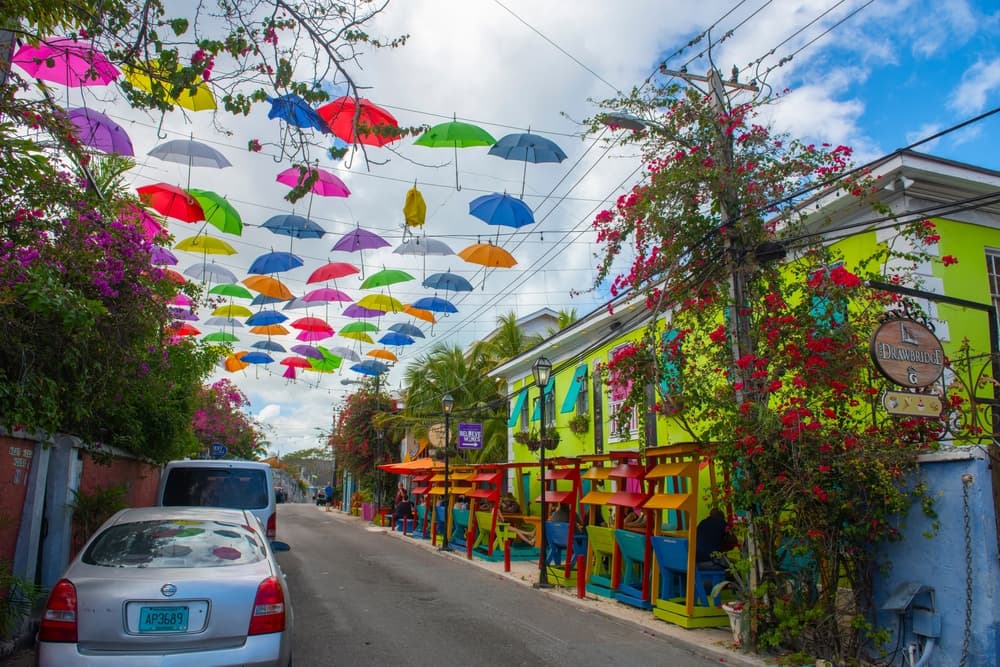
Living in Nassau: about $3,400 a month, with U.S. customs done before you fly home
What it costs to live in the Bahamas' capital, where expats settle, how safe it is, and whether it works for retirees.
- 227,940
- Population (2025)
- $3,400/mo
- Monthly budget · single
- 78°F / 26°C
- Avg temperature
One person in Nassau spends about $3,400 a month, and most land somewhere between $2,800 and $4,000. Couples should plan on around $5,100 and a family of four around $7,400. Rent is the biggest line: about $2,000 a month for a one-bedroom near the center, or about $1,400 farther out. All figures are 2026 estimates in U.S. dollars.
Nassau is the capital, and about two-thirds of Bahamians live on New Providence, the island it sits on. That puts the country's largest hospital, its banks and its main airport within a short drive. It's warm all year, with average highs near 79F in January.
It suits people with income from outside the country who want English, warm winters and the U.S. close by, and who are fine paying U.S.-level prices for it. It's a harder fit on a tight budget, or if you'd rather not think much about where you live. Crime is the main trade-off, and most expats pick their neighborhood with care.

Reviewed and updated October 15, 2026 · 4 min read
At a glance
$3,400
Monthly budget · single person
$2,000/mo 1-bed rent, center
38/100
Safety index
$90
Internet / month
78°Fannual average
Jan 72° · Aug 84°
Climate
227,940
Population (2025)
Expatsi estimates, updated Oct 2026, based on rental listings, government statistics, and local reporting.
Cost of living
What it costs to live in Nassau
Single person
$2,800–$4,000/mo
about 10% above Austin, TX
Couple
$4,200–$6,000/mo
about 10% above Austin, TX
Family of four
$5,800–$9,000/mo
about 5% below Austin, TX
Compared with Austin, TX (Expatsi estimate, 2026).
- $25 +25%
- Inexpensive meal
- $1,650–$2,350/mo +3%
- 1-bed rent, center
- $1,150–$1,650/mo +4%
- 1-bed rent, outside
- $90/mo +38%
- Internet
- $446/sq ft −31%
- Buy price, center
Expatsi estimates, updated Oct 2026, based on rental listings, government statistics, and local reporting.
Daily life
How Nassau lives
- C+ grade, 20th percentile among the cities we track
- Dining & cafésmodest
- B- grade, 33rd percentile among the cities we track
- Arts & culturetypical
- B- grade, 34th percentile among the cities we track
- Parks & outdoorstypical
- B- grade, 33rd percentile among the cities we track
- Schools & educationtypical
- B- grade, 34th percentile among the cities we track
- Healthcare accesstypical
- C- grade, 0th percentile among the cities we track
- Bike infrastructuremodest
- C+ grade, 18th percentile among the cities we track
- Public transitmodest
Graded on OpenStreetMap amenity density relative to the 369 cities we track. Accessibility is the exception: it's graded against a fixed standard (terrain steepness and sidewalk surfaces), not a curve.
Climate
Weather through the year
Annual average 78°F (26°C) · 57 in of rain a year · Source: Meteostat station normals (78073, 1991-2020)
On the ground
Scenes from Nassau
Getting around
Transport in Nassau
Most expats drive. Traffic keeps to the left, so if you bring or buy a left-hand-drive car, give yourself a few weeks before it feels natural. Congestion on New Providence is common enough that the State Department flags it.
Without a car, you'll use jitneys, the minibuses that run through downtown and out along Cable Beach. The fare is about $1.50, and you'll want exact change. Taxis charge set fares by zone rather than by meter, so agree on the price before you get in. Nassau has no Uber, Lyft or other ride-sharing service, so most people keep a couple of drivers' numbers in their phone.
Walking works in pockets, like downtown near the harbor, but not as a way to run errands across the island. Getting home is the easy part. You do U.S. customs and security at Lynden Pindling International before you fly, and TSA PreCheck lanes have run there since February 2022.
- 2.2/sq mi
- Transit stops
- 0.0/sq mi
- Bike infrastructure
- 0.7/sq mi
- Wheelchair-accessible places
Mapped features per square mile from OpenStreetMap.
Keep exploring
Places like Nassau


Community and practical notes
Nassau beyond the brochure
Community
Cable Beach and the western end of New Providence hold most of the condos and beaches that draw foreign residents, so that's where you'll meet other Americans. The wider community is Bahamian, and everything happens in English, the official language.
Safety
The U.S. State Department rates The Bahamas Level 2, Exercise Increased Caution, because of crime, and says most of it happens in Nassau and Freeport. It specifically warns about the "Over the Hill" area south of Shirley Street, where gang violence has killed residents, and about vacation rentals without private security. Our safety index for Nassau is 38 out of 100. If you move, choose a building or community with security, drive rather than walk at night, and rent before you buy.
Healthcare
Princess Margaret Hospital is the public hospital and the largest in the country, and Doctors Hospital is the other main one. Serious cases can still mean a flight to the U.S., since the State Department warns that some illnesses and injuries can't be treated locally, and traffic can slow ambulances. Most providers want cash up front, most don't take U.S. insurance, and Medicare doesn't apply at all, so the State Department strongly recommends medical evacuation coverage. Hunter Schultz, our healthcare coach, and ExpatInsure, which offers global health insurance, can help you sort that out before you move.
Internet and remote work
Home internet runs about $90 a month. If you work on video calls, test the connection at the exact address before you sign a lease. Keep a mobile hotspot as a backup for storm season.
Hurricanes
Hurricane season runs June through November, and June is the wettest month here. Budget for shutters, a generator and insurance. Airports and seaports close well before a storm arrives, and seats sell out far in advance, so decide early if you're leaving.
Retiring in Nassau
Nassau works for retirees who want the country's largest hospital nearby and can afford about $3,400 a month for one person. You can stay up to 90 days as a tourist; living here longer takes a residence permit. Compare countries in our retirement visas guide, see every route in Moving to The Bahamas, and read the details of the Annual Residence Permit.
LGBTQ expats
The State Department says there are no legal restrictions on same-sex relations or on organizing LGB events in The Bahamas. We couldn't confirm current rules on recognizing same-sex couples, so talk to a Bahamian lawyer about wills, powers of attorney and residence for a partner before you move.
Black Americans
About 90.6% of Bahamians are of African descent (a 2010 estimate), so as a Black American you'll blend into daily life in a way you may not in much of the world. The bigger adjustment is being a foreigner with residency paperwork. We couldn't find firsthand accounts specific to Nassau, so talk to people on a scouting trip.
Limited mobility
Getting around Nassau with a wheelchair or limited mobility takes planning. The State Department says newer buildings, especially in tourist areas, are accessible, but many older ones aren't. Visit the specific buildings, beaches and clinics you'd use before you commit, and plan on getting around by car.
Housing
Renting and buying
- 1-bed rent (center)
- $1,650–$2,350/mo
- 1-bed rent (outside center)
- $1,150–$1,650/mo
- Buy price (center)
- $446/sq ft
- Buy price (outside center)
- $297/sq ft
Expatsi estimates, based on rental listings, government statistics, and local reporting.
Good to know
Frequently asked questions
What is the weather like in Nassau year-round?
Nassau is warm all year. Average highs are near 79F in January and near 91F in August, with average lows near 65F in January. Rain picks up from May through October, and June is the wettest month on average.
Is Nassau safe for Americans to live in?
It can be, with care. The U.S. State Department rates The Bahamas Level 2, Exercise Increased Caution, because of crime, and says most of it happens in Nassau and Freeport. It warns specifically about the Over the Hill area south of Shirley Street. Expats who settle in well choose a secure building or community, drive rather than walk after dark, and rent before buying.
Is there Uber in Nassau?
No. Nassau has no Uber, Lyft or other ride-sharing service. People use taxis, which charge set fares by zone, and jitneys, the local minibuses, which cost about $1.50 a ride with exact change.
Can Americans retire in Nassau?
Yes. Americans can visit The Bahamas for up to 90 days as tourists without a visa, and living there longer takes a residence permit, such as the Annual Residence Permit. Nassau appeals to retirees because it has the country's largest hospital, but it costs about $3,400 a month for one person.
How much does it cost to live in Nassau, Bahamas?
One person should budget about $3,400 a month in Nassau, with most people spending between $2,800 and $4,000 depending on housing and how often they eat out. Rent drives the total: a one-bedroom near the center runs about $2,000 a month. These are 2026 estimates in U.S. dollars.
When is hurricane season in Nassau?
Hurricane season in The Bahamas generally runs June through November, though storms can form outside it. Airports and seaports close well before a predicted storm, so residents plan shutters, generators and an exit early.
What is healthcare like in Nassau?
Nassau has the country's two main hospitals, Princess Margaret Hospital (public) and Doctors Hospital. Some serious conditions still can't be treated locally. Most providers expect cash up front, most don't accept U.S. insurance, and Medicare doesn't apply in The Bahamas, so the State Department strongly recommends medical evacuation coverage.
Do you need a car to live in Nassau?
For most people, yes. Jitneys, the local minibuses, run through downtown and along Cable Beach, but walking only works in small pockets and there's no ride-sharing. Traffic drives on the left.
See how Nassau fits your life
Take the free Expatsi Test and compare Bahamas to vover 100 countries on what actually matters: cost, healthcare, climate, and safety. About five minutes.
Why not you?