Starting a business in Japan now takes $191,000 and a Japanese employee
The October 2025 rules turned a $32,000 route into a six-figure one. Here is the full bar, and the two tax bills the capital quietly triggers.
If you want to own and run a company in Japan, this is the status that lets you do it. The bar moved in October 2025: the capital test went up sixfold, and three more tests came with it. This page walks the whole thing in order.
The four tests, since October 2025
$191,000
Paid-in capital or total investment, set in law at 30 million yen.
Six times the old floor
1 hire
A full-time employee whose status carries no work restriction.
Relatives on your visa don't count
JLPT N2
Japanese at CEFR B2, held by you or by that employee.
Brand new in 2025
3 years
Managing a business, or a master's degree instead.
A bachelor's isn't enough
The reform
What actually changed

The old test was cheap and easy to clear. You put 5 million yen into a Japanese company, about $32,000, or you hired two full-time staff. Either one did it. By the end of 2024, the Immigration Services Agency counted 41,600 people on this status, up from roughly 18,100 a decade earlier. Plenty of those companies existed mainly on paper.
A ministerial ordinance signed October 10, 2025 took effect six days later. It turned that or into an and. You now need the capital, the employee, the language, the experience and a business plan that a licensed professional has signed.
Who the new bar hits
Read the four tests together and you start to see the shape of company they describe. It has staff, revenue and somebody in the room who reads Japanese. A one-person consultancy doesn't fit it, nor does a single restaurant or small import shop. Justice Minister Keisuke Suzuki said the point was to filter out applications with no long-term investment intent.
Business Manager Visa
For individuals starting or managing a business in Japan. Requires COE and proof of business activity.
- Processing time
- ~30 days
- Timeline
- Valid for 1–5 years, renewable
- Difficulty
- Moderate
Key requirements
- Certificate of Eligibility (COE)
- Valid US passport
- Completed application form
- Passport-sized photo
- Business plan
- Proof of investment or business activity in Japan
- Office space in Japan
About that data card
Three lines on it need context. The requirements list is the document folder, not the test. Every item on it is real, though none of the four bars added in October 2025 appears there. The difficulty field is the bigger problem: it holds a value from 1 to 5 against a word map built for a 1 to 10 scale, so our hardest routes and our easiest ones land on the same word, and the same field feeds the comparison table further down. Treat the processing figure as the fast end. Practitioners quote one to three months for the Certificate of Eligibility alone.
The real budget
The money behind the money
The 30 million yen is the headline. It isn't the budget.
It has to be money paid into the company, evidenced with bank records and transfer receipts. Borrowed money doesn't count. Your own savings wired from a U.S. account do. You also can't park it, register the company and pull it back out, because immigration follows the fund flow.
Then come the costs the capital itself creates. A new Japanese company capitalized under 10 million yen is exempt from consumption tax for its first two years. Fund yours at 30 million and that exemption is gone, so you charge and remit the 10 percent from your first invoice. The per-capita slice of corporate inhabitants tax behaves the same way. It starts at 70,000 yen a year for companies at or under 10 million. If it steps up above that line, you'll owe in the years you lose money.
Budget the hire, as well. A full-time employee on social insurance is a standing monthly cost, not a one-off.
Rights that come with the status
You run the company
You manage it yourself. Nominee arrangements get refused.
Family comes along
Spouse and minor children get Dependent status and public school.
Your spouse can earn
Up to 28 hours a week, once immigration grants permission.
One to five years
Renewable. Early grants usually run a year while you prove the business.
The clock counts
A work status, so the years count toward permanent residence.
A faster lane exists
Strong credentials and income can convert it to Highly Skilled Professional.
The process
How the file gets built

The company comes first
You register the business before applying for the status. That puts everything in an awkward order. Japan dropped the rule that a representative director must live in Japan back in 2015, so a non-resident can legally incorporate. The banks never followed suit. In practice, they want a resident representative director with a personal Japanese account before they will open a corporate one, and a kabushiki kaisha's capital has to sit in a personal account before registration. Plan for a local representative or a firm that supplies one.
Then the certificate
Your business plan goes to a certified public accountant, licensed tax accountant or registered SME management consultant for sign-off. The file then goes to a regional immigration bureau for a Certificate of Eligibility; only after that does a consulate issue the visa. Your premises get checked. A home office is out, along with a pure virtual office. A coworking desk passes if you hold a documented right to use it.
If 30 million yen is out of reach
There's a runway, though it isn't a loophole. The Startup Visa, sponsored by local governments and available nationwide since 2025, buys you up to two years in Japan to build the business first, and that time counts toward the three-year management test. What it doesn't do is waive the capital or the hire at the end of it. Sources disagree about whether startup-track applicants get judged against the old criteria, so settle that question with a scrivener before building a plan around it.
Tax
Two tax systems, both of them yours

Japan's side
At 30 million yen of capital, your company sits well inside Japan's definition of a small or medium enterprise, which runs to 100 million yen. It keeps the reduced 15 percent national rate on its first 8 million yen of taxable income and pays 23.2 percent above that. Local taxes push the effective burden in Tokyo to roughly a third of profit. Your personal tax is separate. For your first five years of residence, Japan taxes foreign income only to the extent you bring it into the country.
The American side
A Japanese company you control is a controlled foreign corporation as far as the IRS is concerned. That means Form 5471 attached to your return every year, earnings or no earnings, with a penalty starting at $10,000. The regime changed for tax years beginning in 2026, when GILTI became net CFC tested income and the old tangible-asset carve-out went away. Find someone who handles both sides before you incorporate, not after.
Who to line up before you start
Japan Remotely
Japan Relocation Specialist
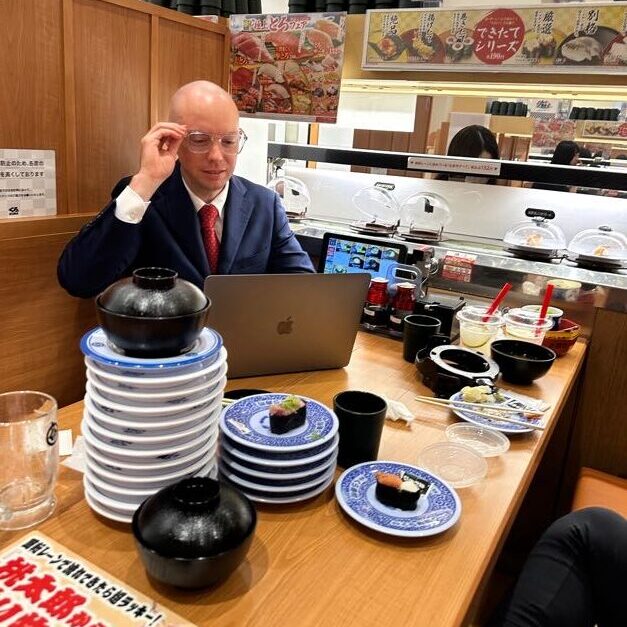
Nick Woolsey is a relocation specialist covering Tokyo and Kyoto. Worth having for the parts that happen in Japanese: premises, the ward office, and finding the scrivener who files your case.

MyExpatTaxes
U.S. Expat Tax Service
Form 5471 belongs to your American return, so your Japanese accountant won't be preparing it. This team works on the U.S. half for people living overseas.

Moneycorp
Currency Exchange
You have to get roughly 30 million yen into a Japanese account and document where it came from. On a transfer that size, the exchange spread costs more than the fee does.
Japan's residence routes, side by side
| Visa | Category | Application cost | Processing | Difficulty | Guide |
|---|---|---|---|---|---|
| Business Manager Visa | self employment | — | ~30 days | 3/5 | |
| Digital Nomad Visa | digital nomad | — | ~30 days | 2/5 | Guide |
| Student Visa | student | — | ~30 days | 2/5 | Guide |
| Work Visa | skilled work | — | ~53 days | 3/5 | Guide |
Before you wire the money
I already hold this visa. Do the new rules apply to me?
Not immediately. Anyone holding the status on 16 October 2025 has until 16 October 2028. Renewals inside that window are judged on how the business is performing and whether it looks likely to reach the new standard. Baker McKenzie notes the same trap catches managers employed by a company capitalized under 30 million yen.
How long until I can apply for permanent residence?
The standard route asks for ten years in Japan with five on a work status, and Business Manager counts toward both. Highly Skilled Professional points can shorten that to three years, or one at eighty points. From April 2027, applicants are expected to hold the longest period of stay their category offers.
How much does the Japan Business Manager visa cost?
The test is capital, not income. You show 30 million yen, about $191,000 at late-September 2026 rates, as capital paid into the business. Debt doesn't qualify, and the money has to stay working in the business. Add a qualifying employee's salary and the realistic figure runs higher.
Can my spouse be the required full-time employee?
No. The person must be a Japanese national, a special permanent resident, a permanent resident, the spouse or child of either, or a long-term resident. Relatives living in Japan on your Dependent visa are excluded, and so are foreign staff on engineer or specified skilled worker permits. Part-time arrangements don't count.
Does owning a company or property in Japan give me residency?
It gives you nothing. Foreigners can incorporate from abroad and buy freehold property with no nationality restriction, and neither act touches your immigration status. Japan runs no golden visa and no residence-by-investment scheme. To live here and manage the company you own, you still need this status or another one.
Do I have to speak Japanese to get the Business Manager visa?
Somebody does. The requirement is CEFR B2, usually evidenced by JLPT N2, and either you or a qualifying full-time employee can hold it. A Japanese degree or twenty years of residence also satisfies it. If English has been your working language, hiring a Japanese speaker is faster. The exam runs only in July and December.
Is a coworking space enough for the office requirement?
Immigration is testing whether the business occupies space, not whether an address exists. A desk in a shared workspace can clear that bar when the company holds a usage agreement it can produce. A room in your house cannot, and neither can a mailbox provider. Expect to supply a lease in the company's name and evidence that the space gets used.
Is Japan the right bet for your business?
Answer a few questions and we'll show you which countries fit the budget and the company you already have.
Why not you?