Country guide
A couple lives in Türkiye on about $2,100 a month
Americans walk in visa-free for 90 days. Everything after that runs through the migration office, and in 2026 that part got stricter.
What follows: the monthly arithmetic, the legal routes past day 90, what the June 2026 tax law does and does not do for an American, and the parts of the country people settle in. Every figure here was checked in mid-September 2026.

Reviewed and updated September 19, 2026 · 14 min read
01 · The case for Türkiye
Türkiye changed its offer in 2026
Türkiye's always been the cheap, beautiful option Americans talk themselves out of. In June 2026, the government gave them a reason to look again. Law No. 7582 hands qualifying new tax residents twenty years with no Turkish income tax on money earned outside the country. Pair that with a property route to a Turkish passport that carries no residency requirement and a 90-day entry that costs nothing, and the math stops looking ordinary.
The country isn't a niche destination. It's about the size of Texas and Oklahoma together, sitting on two continents. Istanbul is a genuine world city. The Aegean and Mediterranean coasts have had foreign residents for decades. Private hospitals in the big cities carry international accreditation, and the State Department calls Türkiye a leading global destination for medical tourism.
Who it suits
Dollar earners, mostly. If your money arrives in dollars and your life happens in lira, Türkiye's generous. Remote workers between 21 and 55 have a visa written for them. Property buyers with real capital have two separate doors: one to residency, one to a passport. People who want a warm coast and two-hour flight to the nearest EU capital tend to like it here.
Here's the catch
Prices are chasing you. Housing and utilities rose close to 40 percent in the year to August 2026, so last year's dollar budget doesn't rent last year's apartment. Staying past day 90 got harder in 2026; a lease plus a modest bank balance no longer clears the bar on its own. English isn't a fallback: EF's 2025 index scores Türkiye 488, inside its low-proficiency band. And the State Department's June 2026 advisory names arbitrary detentions alongside terrorism. That's a sentence worth reading twice.
- Currency
- Turkish lira (TRY)
- Capital
- Ankara
- Language
- Turkish
- English proficiency
- 45/100
- Population
- 85.3M
02 · Your monthly bill
Dollars in, lira out
$1,300
One person, a month
Our country figures, priced in dollars
$2,100
A couple, a month
Two people sharing one apartment
$600
One-bedroom, city center
Nearer $450 once you leave the core
$8
A meal out, cheap end
Food ran 33.79 percent in the same month
$44
A month of transit
One card covers metro, bus and ferry
31.51%
Annual inflation, August 2026
Core inflation was 30.07 percent
Your budget is a snapshot, not a rate
Every figure in that grid is a dollar figure, and that's the whole problem with quoting Turkish costs. The lira is doing the work underneath them. Groceries, rent and utilities all reprice on a Turkish clock while your income sits in a currency that does not move the same way.
Two mechanics are worth knowing before you sign anything. The first is the rent rule. Article 344 of the Turkish Code of Obligations caps the increase on a renewed residential lease at the twelve-month average CPI, and the monthly caps announced through 2026 have run in the low thirties: 34.88 percent in January, 33.39 percent in March, 32.82 percent in April. The temporary 25 percent cap expired in July 2024 and hasn't come back.
The second mechanic is the one that catches newcomers. That cap only governs renewals. A landlord setting an opening rent for a brand-new tenant isn't bound by it at all. So the number you're quoted as a foreigner arriving in September is a market number, and the protection only starts once you are inside a contract. Sign a proper notarized lease, in your name, at the address you plan to register.
What this means in practice: budget in dollars, but expect the lira price of the same apartment to climb every single year. Expect your landlord to ask for the full legal increase. Utilities move, too. Food, housing and health all ran above the headline rate in the year to August 2026.
The cheap part is arriving
Money's the easy question in Türkiye. Permission is the hard one, and those two are almost completely separate problems. You can afford the country comfortably and still have no lawful way to be in it on day 91. Work out the permission side first, then build the budget around the address it forces you into.
03 · Getting in and staying
How Americans get past day 90
There's no retirement visa here and no lifestyle permit with an income floor printed on it. What Türkiye has instead is a short-term residence permit that bends to fit several situations, plus a handful of specific routes. Here's what each one asks of you:
The 90 days you get for free
Ordinary U.S. passport holders need no visa at all for 90 days out of any 180, whether the trip is tourism or business. The Turkish foreign ministry publishes that in its own country list, and the $50 e-Visa Americans used to buy disappeared in 2024. Your passport needs six months of validity beyond arrival and a blank page. That's a real window, and it's enough to scout properly.
The short-term residence permit, and why it got harder
Anything past day 90 runs through the Presidency of Migration Management, filed online at e-ikamet.goc.gov.tr and finished in person at a provincial office. Through 2026, the bar has risen. Applications resting on nothing but a rental contract and small bank balance are being refused, while officers want a purpose of stay they can name. Property ownership, study, family ties or work all qualify. Tourism, on its own, increasingly doesn't.
Two more things decide this file. Private Turkish health insurance covering the full permit period is mandatory. And the address matters as much as the paperwork: migration can close a neighborhood to new foreign registrations once foreigners pass a share of its population, which has happened to well over a thousand mahalles. The list moves, and provinces don't all enforce it the same way. Check your exact neighborhood before you sign a lease or a deed, not after.
Buying a permit with a property
A property-based short-term permit now expects a home worth at least $200,000, recorded at that value on the title deed. That's a residency route, not a citizenship one, though the two thresholds get confused constantly.
Buying citizenship outright
A separate and much larger threshold buys a passport rather than a permit. The Presidency Investment Office lists property worth at least $400,000, with a note on the title deed promising not to resell for three years, attested by the Ministry of Environment, Urbanization and Climate Change. There are $500,000 alternatives in bank deposits, bonds, fixed capital or a private pension, and a route for creating 50 jobs. No residency or language test attach to any of them. A Turkish passport is useful, but it doesn't reach Schengen or the UK.
The digital nomad route
Türkiye's Digital Nomad Identification Certificate is a pre-application, not the visa itself. The official portal asks for ages 21 to 55, a university degree, a contract with a company outside Türkiye, and income of $3,000 a month or $36,000 a year. Americans are on the eligible list. You take the certificate to a Turkish consulate for the visa, then file for the residence permit after you land.
A Turkish employer
A residence permit doesn't let you work. The work permit is a separate application your employer files with the Ministry of Labor and Social Security, and it doubles as your residence permit while it runs.
The consulate visas, priced
| Visa | Category | Application cost | Processing | Difficulty | Guide |
|---|---|---|---|---|---|
| Residence Visa | residency | $100 | ~30 days | 3/5 | Guide |
| Student Visa | student | $60 | ~14 days | 2/5 | Guide |
| Work Visa | work | $200 | ~14 days | 3/5 | Guide |
About that data card
Some caveats on the table above. It holds only the visas a Turkish consulate issues, so two routes this guide spends real time on are missing from it: there's no row for the Digital Nomad Certificate and none for the $400,000 citizenship purchase. We've flagged both for our data team. Separately, the Difficulty column shows a score out of ten that was recorded on a one-to-five scale, which flatters every Turkish route on the page. And the 30-day figure on the residence visa is a target, not a promise.
04 · Money and tax
The 20-year tax rule, and what it does not do for Americans
When Türkiye starts calling you a resident
Turkish tax residency follows a legal home in the country or more than six months inside it in a calendar year. Cross that line and, under the old rules, your worldwide income came into the Turkish net. Personal rates run 15 to 40 percent, VAT is 20 percent, and corporate tax is 25 percent.
What Law No. 7582 changed
On 4 June 2026 Türkiye published Law No. 7582 in the Official Gazette, inserting Article 20/D into the Income Tax Law. It exempts foreign-source income and gains from Turkish income tax for twenty years. To qualify you have to become a Turkish tax resident from 1 January 2026 onward and have had no Turkish domicile and no Turkish tax liability in the three calendar years before that. Turkish-source income stays fully taxable. A 1 percent inheritance rate rides along for people inside the regime. The Ministry of Treasury and Finance had not published the implementing communiqué when we wrote this, so the documentation trail is still being defined.
Why an American gets less out of it than a European
Here's the part the offshore newsletters skip. Washington doesn't care where you sleep. Your U.S. return, your FBAR and your FATCA forms survive the move intact, and a Turkish exemption does nothing to any of them. Worse, the exemption removes the Turkish tax you would otherwise have credited against your U.S. bill. A German moving to Antalya can drop to zero. An American mostly swaps two tax systems for one, which is still an improvement, though it's a smaller one than the headline suggests. Have both tax systems priced together before you count any savings.
Banking and getting money in
You need a Turkish tax number before a bank will open an account, and the branch will want your permit or at least the application receipt. Move money as a deliberate transaction rather than a drip of card withdrawals: the spread is the cost on a large transfer, not the fee.
05 · Paperwork
What the first year asks you to produce
A Turkish tax number
The vergi numarası comes before almost everything else, including the bank account.
An address that qualifies
Your lease or deed has to match the address on the file, and the neighborhood has to be open to new foreign registrations.
A Turkish insurance policy
Private coverage for the whole permit period is mandatory, and the public system will not stand in for it.
Apostilles and sworn translations
US documents need an apostille from the issuing state, then a translation by a sworn translator in Türkiye.
An e-ikamet appointment
You start online at e-ikamet.goc.gov.tr, then carry the printed file to a provincial migration office in person.
A separate work permit
Residency does not include the right to work. The çalışma izni is a different application and your employer files it.
06 · Healthcare
One year of private insurance before the public system opens
Türkiye runs a public system through the Sosyal Güvenlik Kurumu and a large private sector alongside it. They open to foreigners at different moments, and the gap between those moments is where people get caught.
If a Turkish employer sponsors you, SGK enrolls you from your first day of work and your premiums are shared with the employer. Everyone else waits. You can join Genel Sağlık Sigortası voluntarily only after one full, unbroken year of legal residence on a permit, and only if no other country's system already covers you. Students get a shortcut: ask within three months of first registering at a Turkish university and the wait disappears.
So year one is private insurance, and there's no way around it because SGK won't satisfy the residence permit file either. The regulator sets a floor for what those policies must cover: since April 2025, at least 15,000 lira of outpatient coverage and 150,000 lira of inpatient coverage at non-contracted hospitals. Basic compliance policies are cheap. They're also thin, and almost all of them exclude conditions you already have.
The private hospitals in Istanbul, Ankara, İzmir, Antalya and Adana are the reason people move here for treatment in the first place, with international accreditation and US-trained doctors. Standards fall off outside the big cities. Two warnings from the U.S. embassy are worth carrying: Turkish hospitals often charge foreign patients more than locals, and psychological and psychiatric care is thin, even in large cities. If mental health care is part of your plan, sort it out before you choose a city.

07 · Safety, politics and rights
The risk here is legal as much as physical
Level 2, and the word under it
Türkiye sits at Level 2 of four on the State Department's scale, reissued on 9 June 2026, and three reasons are attached to it: terrorism, armed conflict and arbitrary detentions. The third one is the one Americans underestimate. That advisory says the Turkish government has detained and arrested people, Americans among them, for alleged links to terrorist groups "based on scant evidence and minimal due process," and that Americans have been hit with exit bans that stop them leaving.
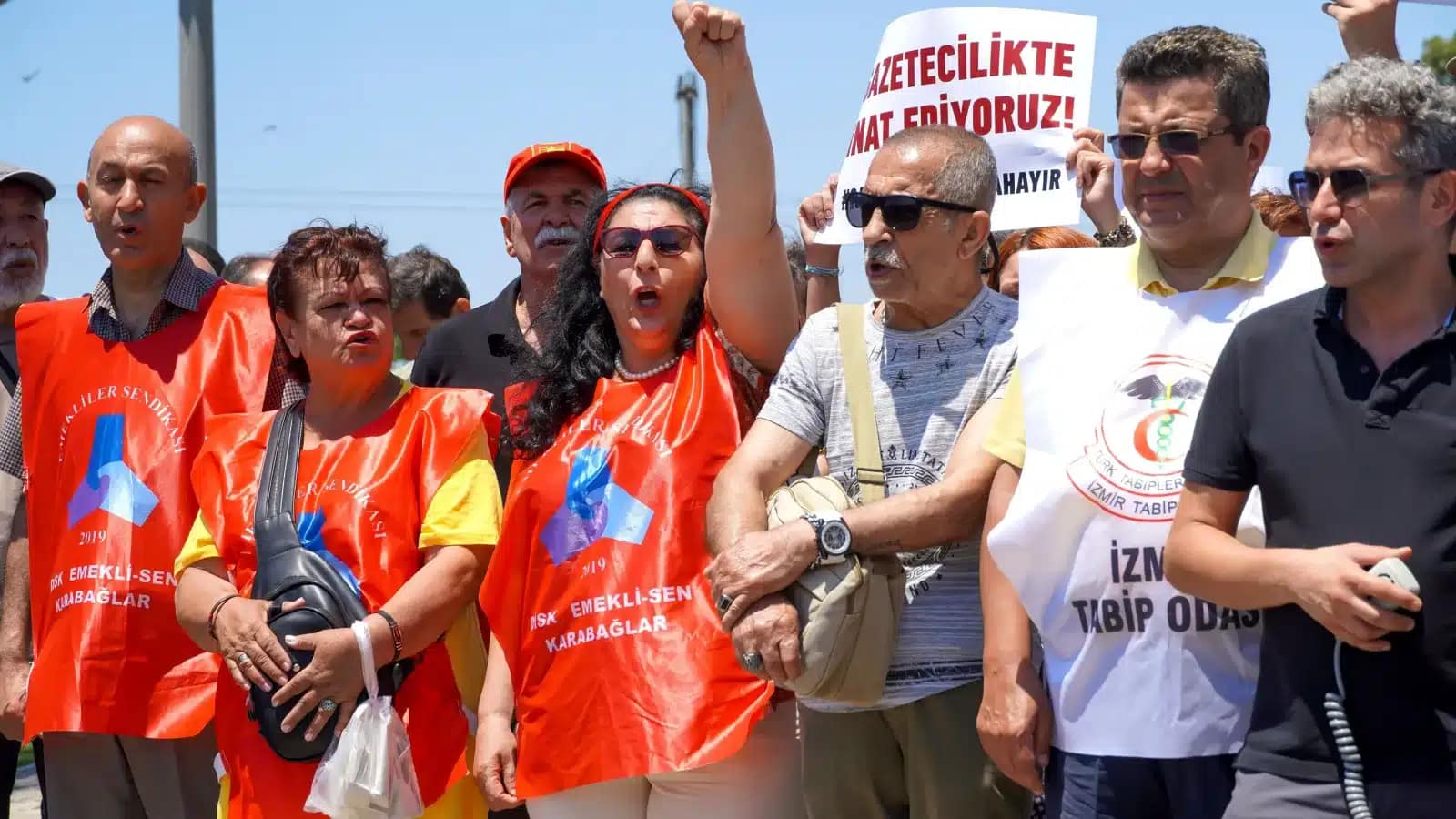
It goes further. Criticizing the government, including on social media, can lead to arrest. Insulting Atatürk, religious feelings, the flag, the president or the security forces is a criminal matter. Protests the government has not approved are their own risk. If you're used to an absolute right to complain in public, sit with that feeling before you commit.
Everyday crime, and the border
Street crime reads like any large European country: pickpocketing, bag snatching, restaurant bills inflated for tourists. The same advisory tells Americans to stay more than 10 km back from the Syrian and Iraqi borders, and rates that strip Level 4, do not travel.
Who should think hardest
Same-sex relations are legal, and the State Department describes big cities like Istanbul and İzmir as more liberal than the rest of the country. It also says legal protections are limited and discrimination occurs. Our own country notes score LGBTQ acceptance at 35 out of 100. Wheelchair users should know the embassy's blunt assessment: access to buildings and public transport in most Turkish cities is quite limited, though airports and metro stations are usually fine.
Earthquakes
Earthquakes happen across Türkiye, as do severe summer wildfires and floods. That's a building-quality question more than a geography one. Ask when your building was built, ask whether it has been through a seismic retrofit, and read the answer as a real part of the rent.
08 · Where to live
Our Türkiye city guides, as we publish them
Istanbul
Two continents, one city
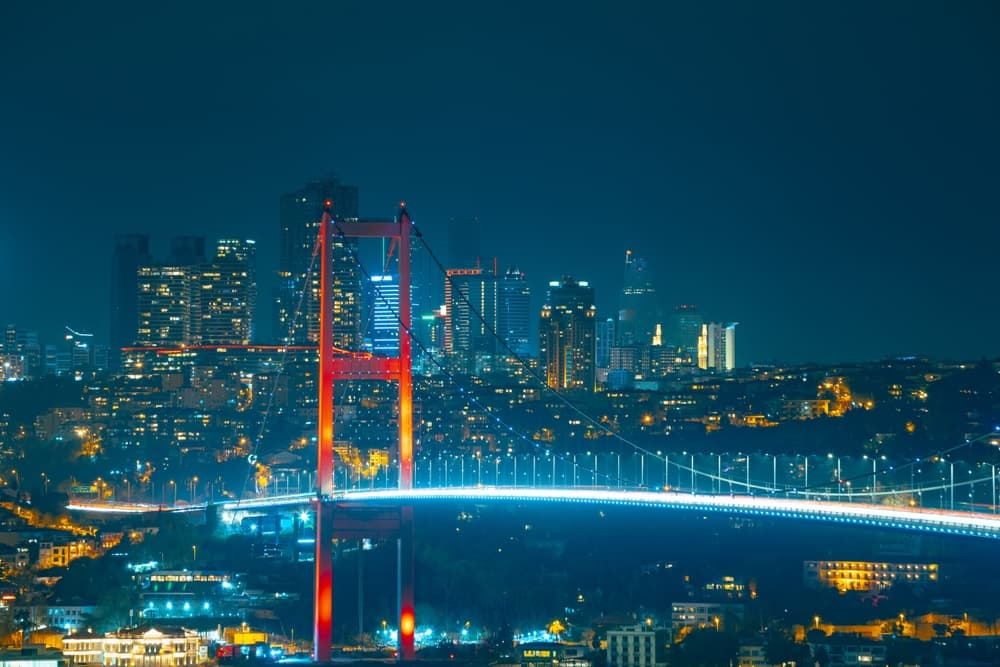
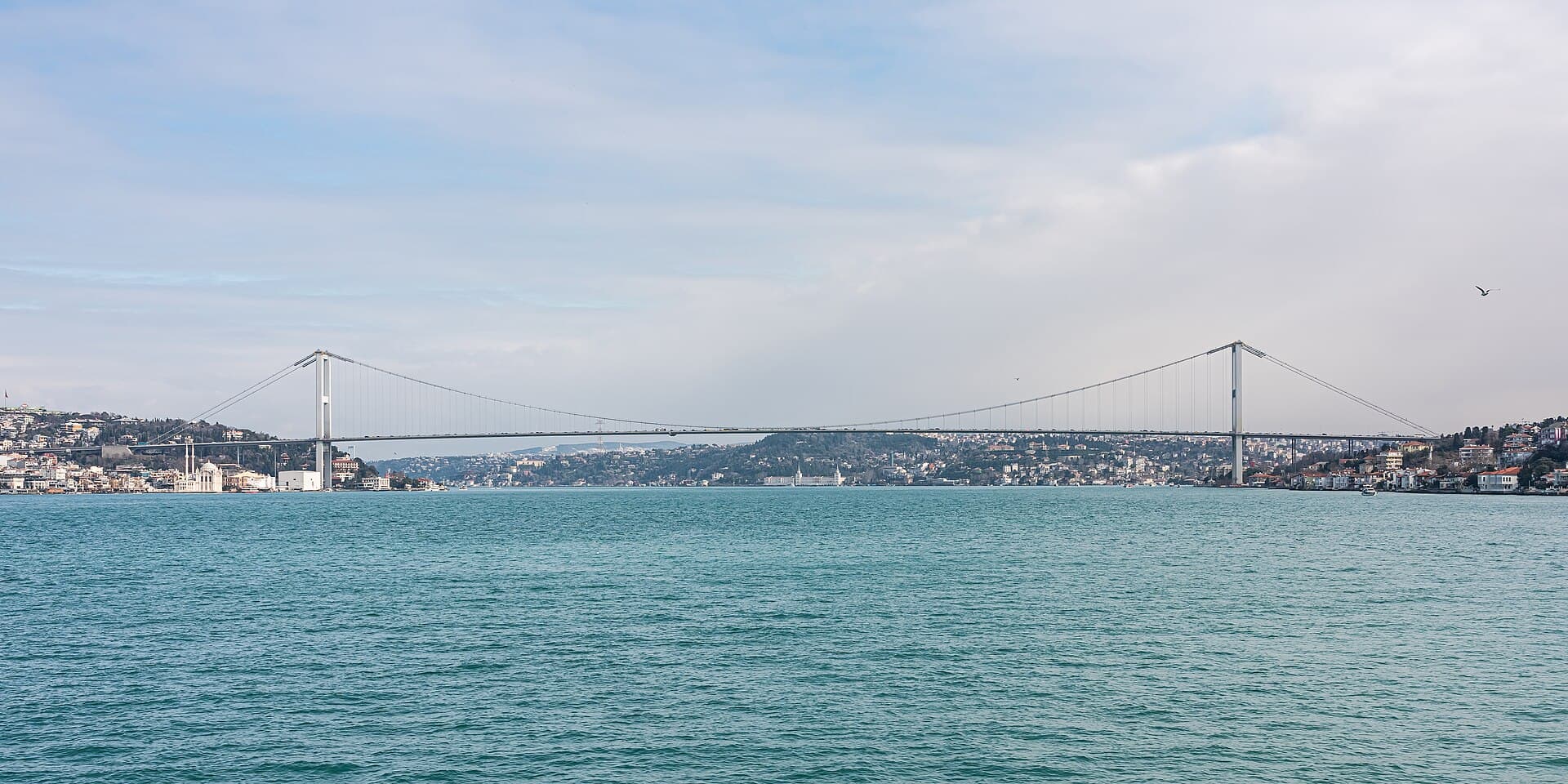
A city of 15 million with Kadikoy and Cihangir for cafe life, Bosphorus ferries as everyday transit, and nonstop flights to several US cities. It has the biggest expat scene in Türkiye. The catch is sheer size: long commutes, heavy traffic, and a fault line under the region.
Antalya
Mediterranean resort coast
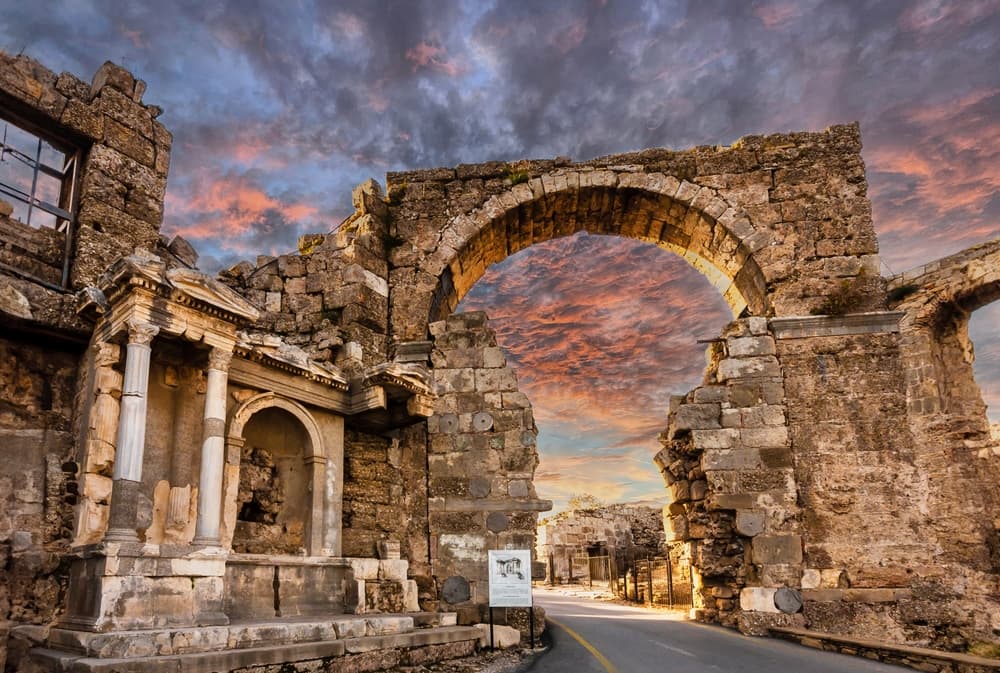
Old Kaleici lanes, a clifftop park above the sea, long beaches and mild winters, with a well-established foreign community. It suits people who want sun and an easy social life. The catch is hot, humid summers and a city that bends heavily toward tourism.
Izmir
Aegean, local feel
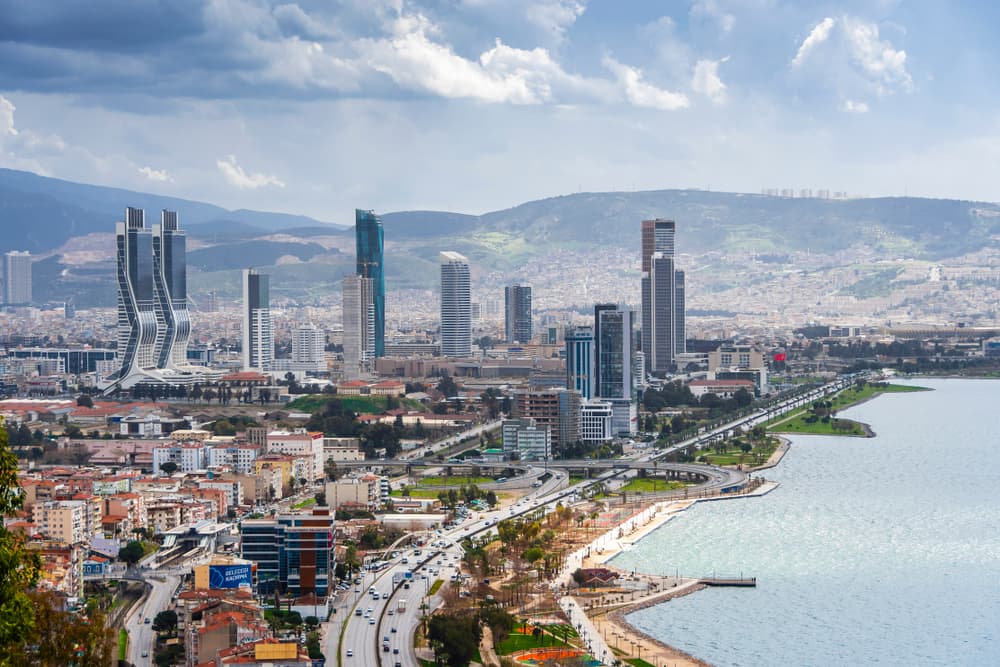
Türkiye's third-largest city, with the Kordon seafront, Alsancak's cafes and an old bazaar, plus ferries across the bay. Fewer tourists and a more relaxed Aegean pace than Istanbul. The catch is less English than the big expat spots and hot summers.
Ankara
Capital, not a resort
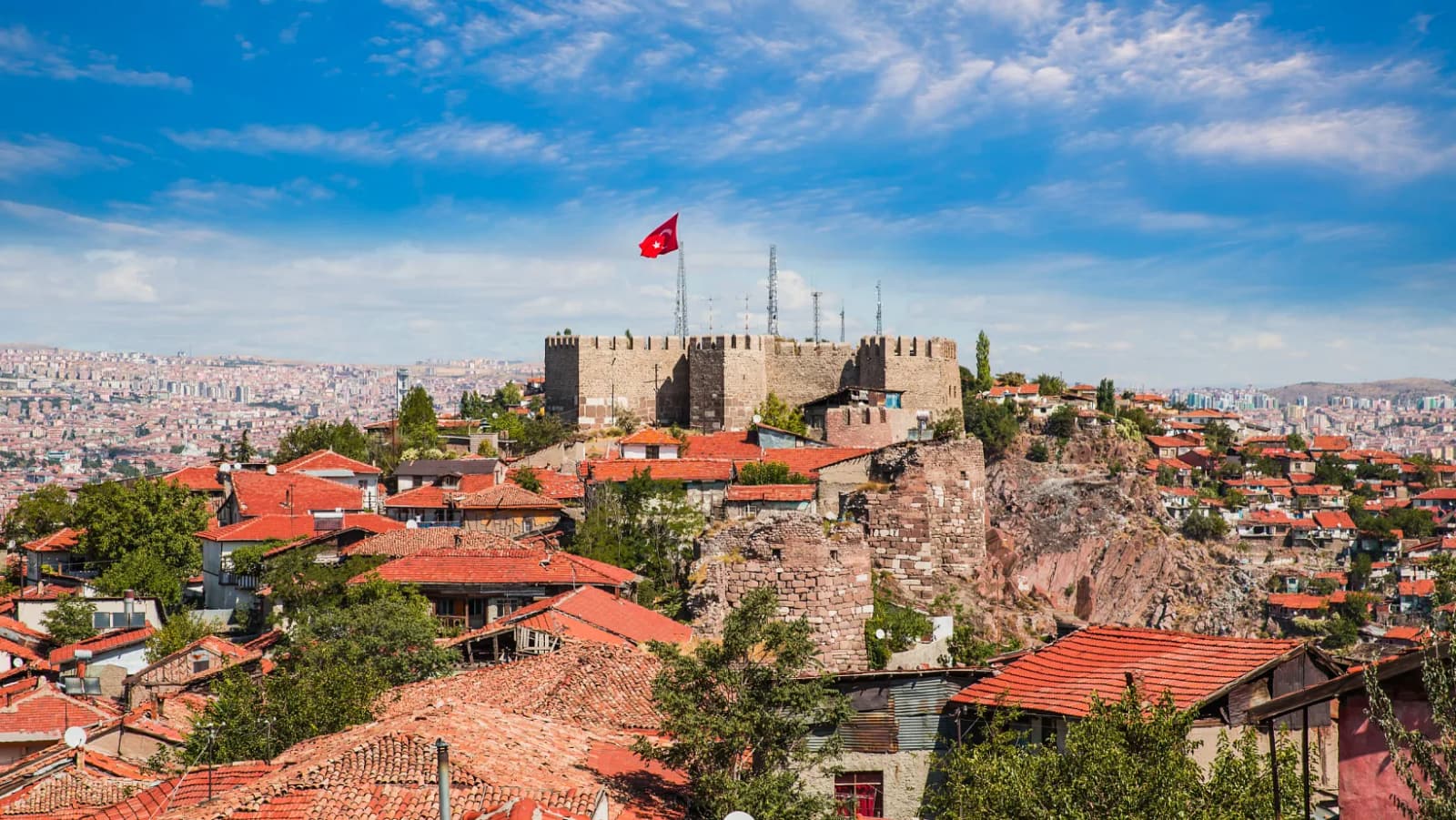
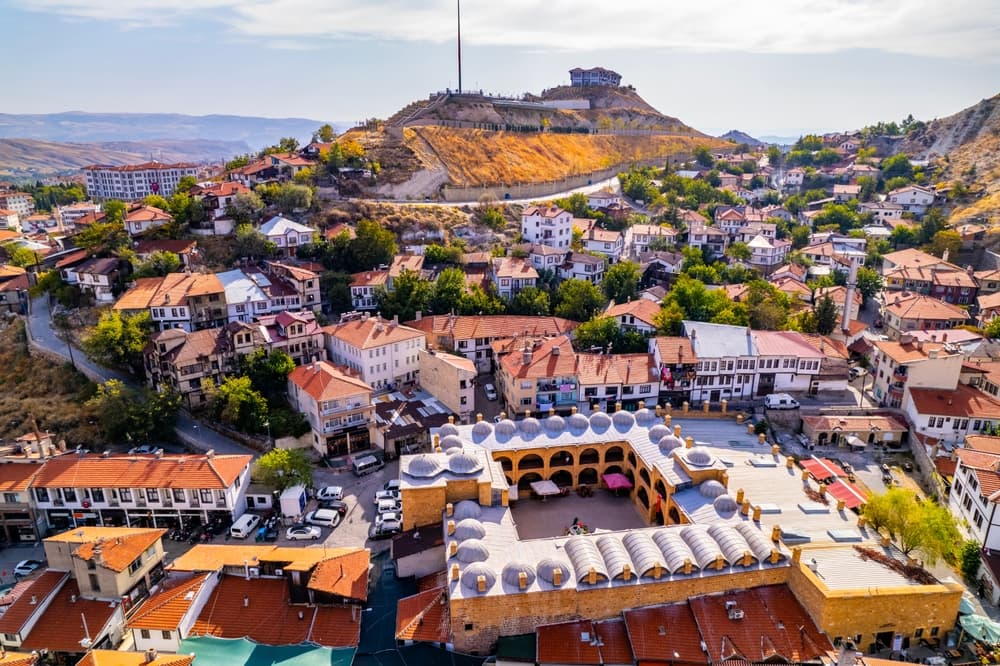
The capital, with embassies, universities and the Anitkabir mausoleum, and a more orderly feel than Istanbul. Parks, museums and cheaper rent come with it. The catch is that it's inland, with cold winters and a small foreign crowd outside the diplomatic and university circles.
Five places, and the trade in each
We haven't published city guides for Türkiye yet. Until we do, here are the five places that belong on a scouting itinerary, with our own country data's rent range where we hold one.
Istanbul
More than fifteen million people across two continents. If your work needs an office and colleagues, this is the realistic address. Rents run roughly $600 to $1,300 for a one-bedroom. Kadıköy and Moda on the Asian side are residential in a way Sultanahmet isn't.
Antalya
The Mediterranean option, warm from spring into late fall, with a long-established foreign community and $500 to $1,000 rents. It's also a province where the neighborhood registration limits are still being enforced, so check the address twice.
İzmir
Aegean, secular, walkable along the water, and the city Turks themselves name when they want coast without tourism. Rents sit around $500 to $1,000.
The Muğla coast
Fethiye, Bodrum and their neighbors are where the long-stay British and Northern European crowd settled. Beautiful, seasonal, and thin on winter services once you're outside the towns.
Ankara
The capital, cheaper than the coast at $400 to $900, heavy on government, universities and a dry continental winter. It's the practical address if your work touches the Turkish state or a university.
Paying for help, and when it's worth it



MyExpatTaxes
U.S. Expat Tax Service
U.S. expat tax filers. The specific question for Türkiye is what happens to your foreign tax credits once the Turkish exemption leaves you with no Turkish tax to credit.
Learn more
ExpatInsure
Global Health Insurance
Health insurance broker. Ask whether a policy clears the migration office's minimum coverage levels, because a plan that is good medically can still fail the permit file.
Learn more
Go deeper
Four sessions that map onto the parts of a Türkiye move people get wrong.
US Expat Taxes 101
Moving abroad doesn't mean leaving the US tax system behind. In this webinar, we'll cover the basics every American expat should know, including filing requirements, foreign income exclusions, tax treaties, reporting foreign bank accounts, and common mistakes to avoid. Whether you're planning your move or already living overseas, this session will help you better understand your tax obligations and where to turn for professional guidance.
Start here if the twenty-year exemption is what pulled you in.
Moving Money Internationally
Join us for an eye-opening session where we'll break down the must-know strategies for moving money internationally with confidence and ease.
Moving a property deposit across a moving exchange rate.
Navigating Healthcare as an Expat
Moving abroad? don't let healthcare be an afterthought. This webinar covers everything you need to know about securing the right international health coverage and care plan.
How to think about coverage in a country where year one is private.
Learning a Language
Tips for starting and staying motivated in learning a new language.
Because 488 on the EF index means you will be the one adapting.
Türkiye, question by question
Is Türkiye safe for Americans?
Türkiye has sat at Level 2 of four on the State Department scale since the 9 June 2026 reissue, with a Level 4 band along the Syrian and Iraqi borders. Ordinary street crime is the usual big-city kind. The unusual risk here is legal: that advisory warns about arbitrary detentions of Americans and about exit bans.
Can I buy property in Türkiye and get residency or citizenship?
Both, at different prices. A property-based residence permit expects a home recorded at $200,000 or more. Citizenship by investment needs property valued at $400,000 with a three-year no-resale note on the title deed, attested by the Ministry of Environment, Urbanization and Climate Change. There is no residency or language requirement for it.
How much does it cost to live in Türkiye?
Our country data puts one person near $1,300 a month, two people near $2,100, a central one-bedroom near $600 and the same apartment nearer $450 outside the core. Those are dollar figures. Turkish inflation ran 31.51 percent in the year to August 2026, so read every number as a snapshot.
How do I get healthcare in Türkiye as a foreigner?
Private insurance first. A residence permit application requires a Turkish policy covering the full permit period, and the public system will not satisfy it. After one unbroken year of legal residence you can join Genel Sağlık Sigortası voluntarily. A work permit puts you in SGK from day one, and students can apply within three months of enrolling.
Can I stay in Türkiye longer than 90 days?
Yes, but you need a residence permit. You apply through the Presidency of Migration Management online and finish in person. Through 2026 the office has been refusing applications backed only by a lease and a small bank balance, so you need a nameable reason to stay: property, study, family or work.
Does Türkiye exempt foreign income from tax for 20 years?
Law No. 7582, published 4 June 2026, exempts foreign-source income from Turkish income tax for twenty years if you became a Turkish tax resident from 1 January 2026 and had no Turkish domicile or tax liability in the three calendar years before. Turkish-source income stays taxable, and the implementing guidance is still pending.
Does that Turkish tax break help an American?
Less than it helps a European. Your US filing obligation follows the passport, not the address, so the return, the FBAR and the FATCA forms all continue. The exemption also wipes out Turkish tax you could have credited against the US bill. It is a real benefit, just a smaller one than the headline. Get it priced properly.
Can Americans enter Türkiye without a visa?
Yes. An ordinary US passport gets you in with no visa and no fee for 90 days out of any 180, for tourism or business, and the $50 e-Visa was dropped in 2024. Your passport needs six months of validity past your arrival date and one blank page. Official and diplomatic passports still need a visa.
Sources
- Visa Information For Foreigners · Türkiye Ministry of Foreign Affairs (checked 2026-09-18)
- Türkiye Travel Advisory · US Department of State (checked 2026-09-18)
- Acquiring Property and Citizenship · Presidency Investment Office (checked 2026-09-18)
- Digital Nomad Identification Certificate requirements · GoTürkiye (checked 2026-09-18)
- Residence permit types · Presidency of Migration Management (checked 2026-09-18)
- Law No. 7582 and the 20-year foreign income exemption · CottGroup (checked 2026-09-18)
- Article 20/D, 20-year income tax advantage on foreign-sourced income · Karen Audit (checked 2026-09-18)
- Türkiye gazettes its 20-year foreign-income exemption · IMI Daily (checked 2026-09-18)
- Consumer price index, August 2026 · TurkStat via Trading Economics (checked 2026-09-18)
- Rent increase rate calculation · CBH Hukuk (checked 2026-09-18)
- Health insurance for foreigners and SGK eligibility · Feather (checked 2026-09-18)
- General Health Insurance for foreigners · Ozbek CPA (checked 2026-09-18)
- EF English Proficiency Index 2025 · EF Education First (checked 2026-09-18)
- Turkish residence permit guide and closed neighborhoods · Rona Legal (checked 2026-09-18)
Türkiye is one answer. Is it yours?
Talk to an Expatsi advisor about your needs, options, and the roadmap to get you moved abroad.
Why not you?