
Episode 24 · August 25, 2026 · 40:28
"Can I Get My Social Security Check in Another Country?" Everything Finance!
Moneycorp's Kelly Cutchin on moving dollars abroad without losing 3-5% to your bank, plus whether Social Security follows you.
Listen on Spotify →Featured in this episode
In this episode
Hosts Jen Barnett and Stephanie open with what a falling dollar does to daily life. Stephanie's costs in Portugal are up about 10%, and Jen's peso math in Mexico has stopped being simple. Then they talk with Kelly Cutchin, an FX specialist at Moneycorp, about getting money from the US to a new home country.
Kelly covers when Moneycorp beats Wise, how target-rate alerts and forward contracts work, and who can send and receive the money. The two mistakes she sees most are waiting too long and counting on a US bank while traveling. A listener question closes the show. Yes, you can collect Social Security in almost every country.
Key takeaways
- Most US banks take at best a 3 to 5% margin on the exchange rate, plus fees. On a $500,000 house, 3% is $15,000.
- Start talking to a currency specialist months before you need the money. Waiting leaves you with whatever the rate is on the day you pay.
- Ask for a rate alert. If the dollar hits your target, the specialist calls you, and you're under no obligation to buy.
- A forward contract locks today's rate for up to two years with a 10% deposit. The other 90% is due when you need the currency.
- Neither end of a Moneycorp transfer has to be your own account. Payments can go straight to a notaire, attorney, developer or charity, so you don't need a foreign bank account to put down a deposit.
- Don't count on moving money out of your US bank while you're abroad house-hunting. Put a balance in your Moneycorp account before you travel.
- Wise suits small payments, like $200 to family or a utility bill. For property deposits, legal fees or Golden Visa investments, Kelly recommends a dedicated specialist who can issue attestation letters on request.
- Jen's rent in Mexico is 25,000 pesos a month. It cost about $1,200 when the dollar bought over 20 pesos, and it costs more now that the rate is back near 17.5.
Chapters
Show notes
Currency exchanges, bank access, transfers...There are a TON of things to worry about when it comes to finances abroad. Fortunately, help is out there. Kelly Cutchin is a seasoned FX specialist with MoneyCorp, specializing in international payment solutions. We talk everything international finance and pitfalls to avoid!
Learn more about Kelly and MoneyCorp.
To begin your journey abroad take our FREE quiz!
This episode is general information, not legal, tax or financial advice. Talk to a professional about your own situation.
Questions from this episode
What is a forward contract for currency exchange?
It locks today's exchange rate for a payment you'll make later, for up to two years. You send a 10% deposit now, and Moneycorp buys the full amount of foreign currency for you. When the payment comes due, say a property closing, you send the other 90%. It's useful when your money is still tied up in a house you're selling or earning interest in savings.
Why shouldn't I just use my US bank for an international transfer?
Cost. Most US banks charge fees and take at best a 3 to 5% margin on the exchange rate. On a $500,000 house, 3% is $15,000. Your US bank also might not send an international transfer while you're traveling, so put a balance with your currency provider before you go.
Can I get my Social Security check if I move to another country?
Yes. You can collect it in any country that has an agreement with the US, and that's almost every country in the world. The handful of exceptions include North Korea and Cuba. You can also keep collecting it in the US and move it abroad yourself.
Should I use Wise or Moneycorp to send money abroad?
Wise is fine for small payments, like $200 to a family member or an electricity bill. For property deposits, legal fees or Golden Visa investments, Moneycorp gives you a dedicated currency specialist. They can watch the market for months ahead, offer forward contracts and send documents like attestation letters on request.
Do I need a foreign bank account before I can pay for property abroad?
No. The money has to go through bank-to-bank transfers, but the receiving account doesn't have to be yours. Moneycorp can pay a notaire, attorney or developer directly. Once you open a local account, transfers can go straight there.
Do I lose Social Security after 30 days outside the US?
No. That's misinformation. The cutoff people are thinking of applies to foreigners who paid into Social Security in the US and then left. It isn't 30 days either. If you're American, it's your money, and you can collect it abroad.
Go deeper
Moneycorp
Kelly Cutchin, this episode's guest, and the Moneycorp team.

So you want to move to Mexico
Jen lives in Mexico, where her rent in dollars has swung with the peso.
Investor and golden visas, side by side
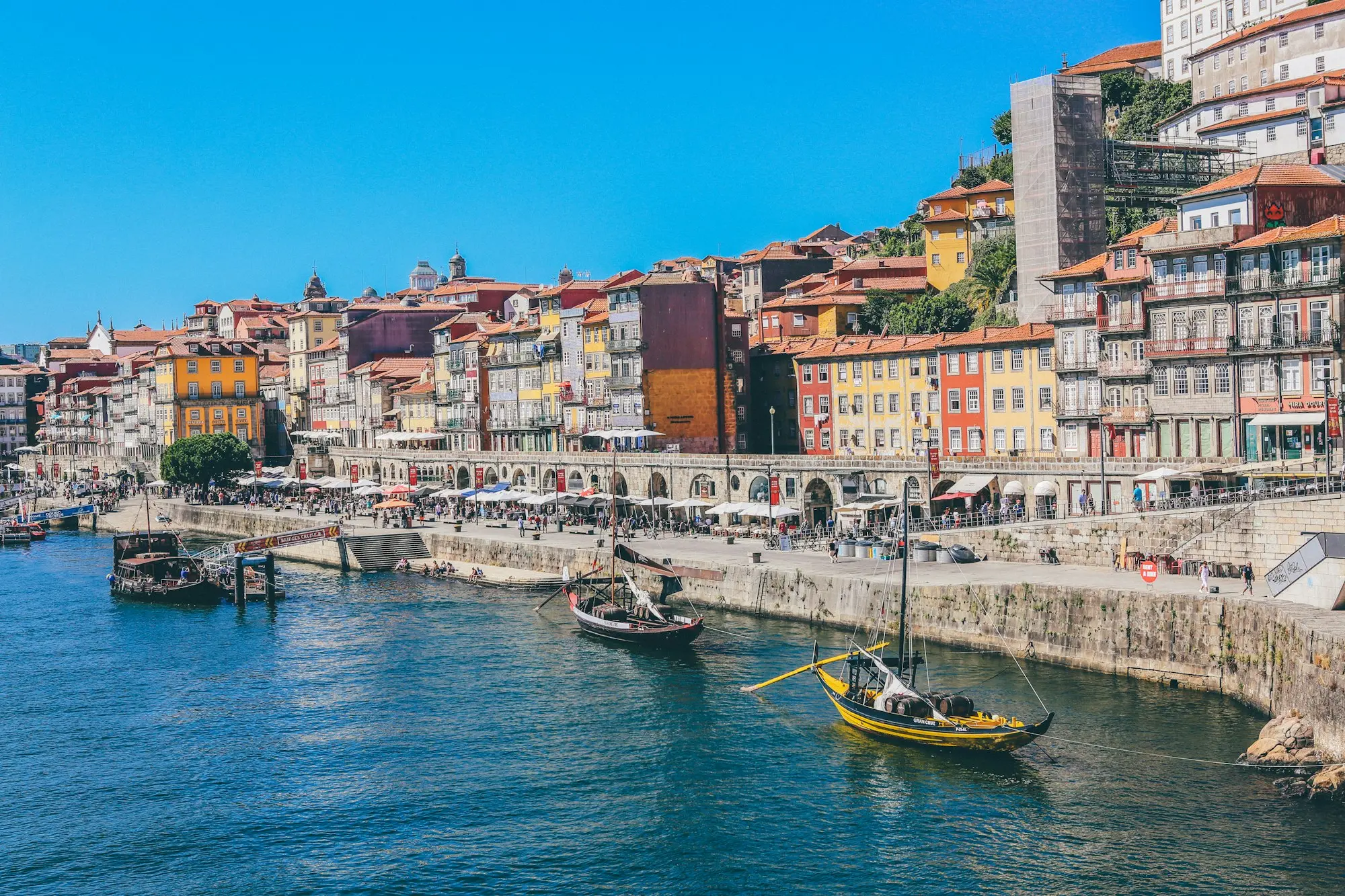
Kelly recommends a currency specialist for Golden Visa investments and the attestation letters they can require.

How to Buy Property Abroad as an American (2026 Guide)
Kelly explains how to fund property deposits abroad without losing 3 to 5% to your bank.

5 Countries That Don’t Tax Your Social Security in 2026
The listener question confirmed Social Security follows you almost anywhere; how it's taxed abroad varies.

Cost of Living in Portugal and Full Budget Guide for You
Stephanie says her costs in Portugal are up about 10% as the dollar has fallen.
Transcript
Transcript is auto-generated and lightly corrected; it may contain errors.
Read the full transcript(6,795 words)
English speakers are still a novelty here. And of course, I had two cats who basically destroyed their carriers on days one and three. There was a lot of. Discussion to make sure that we were aligned and that we were doing it for for similar reasons. What are the visa paths? Are you running towards something or are you running away from something?
And then what? I can't believe we're finally here. This is Americans Abroad. OK, so Stephanie, I know that you, I don't know when it will air, but I know you did an interview with NPR on how currency exchange or how the falling dollar affects your life in Portugal. So what did you say? Yeah. So, you know, I talked about when we first started to really plan this move abroad, it was March of last year's work. I guess now a year into it and between March of last year when we started our visa process to
where we are today, March of 2026, we've seen about a 10% decrease in the value of the US dollar against the euro. So it it's yeah, it's, it's definitely not insignificant, you know, so instantly, you know, and you know me, I'm a I'm a spreadsheet person. I may let me pre plan to the enth degree. So I had, you know, budgets built. And so just taking that budget and going, okay, well, we've got, you know, a nice little cushion when we move to going, okay, our cushion is 10% flatter each and every month. You know, every, every bottle of
port wine is 10% more exactly. You know, my, my rent is 10% more without us even doing anything. And it's, you know, that that dollar fluctuation is something that I never thought I'd be watching closely, but that I watch relatively closely because, you know, just with things that, you know, are going on in the US, just knowing, well, you know, what else is coming from the US economy that's going to affect me here in Portugal.
It makes a huge difference. By the way, the interview was done with Steven. He is my old improv partner. So he's like, I can't interview you because conflict of interest. He was a delight, he was an absolute delight. Steven nobody saw us do improv together and never will. It makes a huge difference. So for us, when we got here to Mexico about two years ago, it was about 16.67 pesos to the dollar.
When we came on our scouting trip, it was more like 22 pesos to the dollar. So you can imagine that's tremendous. Yeah. And there are two aspects to it. One is, of course, it's literally less money. But the other is it is harder to calculate. So if I pick up something and it's 420 pesos, well, if if I know it's about 20 pesos, it's like that's 21 bucks because I can divide by mm hmm, by two and then by 10. And so that's what you do and it becomes really quick. And if it's more than 20 pesos, then you're calculating it as 20.
So you're getting a little bargain, more so than you even realize. And of course we live here, but we do earn almost all of our money in pesos. Occasionally we earn EUR or whatever else from a partner. So we got when we moved here, it was over 20 again, which was fantastic or no, no, no, I'm sorry.
When we got here it was 16 and 67. And then over time the dollar really climbed and so it was in the low 20s again, like 20.3 or whatever. And so that was perfect, made very easy. But now we're back to like 17 1/2. And so from a just exchange perspective, when we first got our place to live, it was 25,000 pesos per month, and that was about 15115 fifty a month. But when it got down to over 20 pesos, my rent was down to like $1200 a month.
That's real money. You know, that makes a big difference in your life to suddenly have 300 extra dollars per month. But now the dollar has fallen again and we're more at like 17 and a half. And so we're back to impossible math. And I just have to pray and be austere because I'm not going to do that calculation every time I pick up a can of soup at the grocery store. It's just, it's just impossible.
But it also you would think that the dollar falling would be good for Mexico, but it isn't because there are 11,000,000 Mexicans in the US, many of whom send dollars back to family in Mexico. And so when the dollar is worth less, it actually hurts Mexicans as well. Wow, I never thought about that, but that, that makes so much sense. I know.
I love that you mentioned the the struggle of the simple math and I think that's really kind of bitten us in the behind in with our move. When we first started, it was pretty much a one to one exchange. A euro is about a dollar, a dollar is about a euro. And I still find us from time to time, you know, picking up something and let's say it's €10.
I go, oh, it's only like $10 because my, I want to do the OK. No, technically it's $12.00 because it's just so much easier to just remember this one to one exchange. So I know that as I pay attention to our budget a little bit more closely. And that was one of the things that Dave and I decided to do this month is to track, to track every, every piece of gum we bought, every every tiny little thing to it's hard because I knew we were falling into this trap of like, oh, this dinner is 25 euros, $25.
No, wait. It's not because that math, that math can get hard. And especially if the math can fluctuate day over day. Yeah, it, it makes a huge, huge difference, pound sterling or even worse, it's like 1 LB sterling is like a dollar and a quarter or $1.35 cents. And it, it makes a big difference for Expatsi as well.
Because, you know, on the scouting trips now we pay for the hotel rooms. So I have all these hotel rooms booked in euros, but my price has stayed the same in dollars. That comes out of what Expatsi earns because, you know, I don't pass on currency exchange. Right. Comes to clients. Clients want to just know what they're going into and keep things simple.
But it does affect the price of our scouting trips. It can affect the price of our experts because a lot of our expert, well, almost all of our experts are in other countries, right? Almost none of our experts are in the US I certainly did not set out to build, you know, a multinational global exchange with all these different exchange rates. So I, it's, it's surprising.
I will be quite delighted if things turn around at some point and the dollar gets really strong. And I'm probably going to do what Kelly suggested, which is set up that 20 peso flag. If you don't know what I'm talking about, the interview coming up, in the interview coming up, I always forget we do this backwards, But so we're going to talk to Kelly about how you can set a target price and then buy foreign currency when it hits that.
So I think if we get to another 20 peso deal, I'm just going to buy up pesos so that I can do my math, do my simple math. No, that's something that I, I want to do as well, you know, and there, there, there is, you know, hindsight's 2020 and there is so much kind of kicking myself of, you know, OK, the euro to dollar exchange is fine. OK, it's dipping a little bit, but surely it'll it's like, it feels like This is why I don't buy stocks because I'm like, OK, well, it dipped.
I'm told that I should wait until it comes back up. Oops, it dipped even further. And now you're trying to like climb, climb out a little bit. You know, we're recording this end of the first week of March and we've seen last couple days like some increase at least the dollar to euro exchange. And you know, that would work into my favor.
And so I think I need to book time with Kelly and just go, you know, is this a signal that I need to by now? Is this a a signal that hold on a little bit, the trend may continue. Is this like a a little like magic wish granted? And it's like, girl, do it now because you're going to regret it if you don't.
And that's, I think the other stressful part is not knowing when is the right time to make that change so that you're not kicking yourself down the down the road. Yeah, human brains are annoying. I'm like you, I'm super frugal and when I was in the US isn't my fact, it's the only way that I could function. I I found that just like everybody, when I didn't have money, I wasn't frugal because it was like, what difference does it make?
I started to to grow up and mature and become better at managing my money. I would fear sometimes into being overly austere and an example I gave my financial planner was I would use a green onion, but I would be mad if I couldn't use both the green part and the white part. So it's like, OK, what is my next recipe I'm going to make that uses all the white part because I used all the green part And I would be, and you know, I like to make my own soup stock and blah, blah, blah, blah.
I would absolutely homestead if I could and I always liked knowing how much money I had to the penny that was I checked my bank balance every day, I still do, but I would always know to the penny and that is something that I had to give up because there is no to the penny anymore because my monthly expenses I can't predict. I might be able to say how much they are going to be in pesos, but that still doesn't tell me how much is going to come out of my account.
If I have to pay 25,000 pesos for rent and my money is in dollars, I can't predict if that's going to be 1300 dollars, 137522142295, whatever. And so there is an emotional aspect that sounds like it's just money and math, but there is an emotional aspect to this too, which is that I have to let go and have faith that I will have enough and that I'm playing correctly and with it with. And I had to let go of that knowing what I had to the penny and it.
And it took a little bit of time, being perfectly honest. Yeah. You know, we say all the time when, you know, our our clients ask about, well, what if this happens or what do you think is going to happen down the road? And you know, we can only deal with the information that we have in front of us. And so when it comes to money and how far does my American paycheck get me here in port in Portugal, sometimes I just have to remind myself I can only deal with the information I have in front of me and make choices
based on the information that I have today. Because I will drive myself crazy if I try to extrapolate what it's going to be a day from now, a week from now, a month from now. Well said. So, you know, we talked to thousands of people every year who are moving abroad and one of the biggest questions they have is how they get their money to another country.
It's it's such a mystery to us of how to get new currency. Do I keep AUS Bank? Do I have a new bank? How do I get it from one place to another? How do I know when to transport, transfer it and that sort of thing? And so we asked our friend Kelly Cutchin to come on, She works for Moneycorp and I want, I wanted to hear some of those questions answered.
First of all, do you say Moneycorp or Moneycorp? Because we debate that a lot internally. That's such a good question. I say Moneycorp. The P is there for a reason, so let's pronounce it Moneycorp, okay? Moneycorp. So what is Moneycorp exactly? We are a foreign currency exchange and international payments specialist. So what we are not is we're not a lender.
We're we're not a traditional bank. We are specifically helping with converting currency and making international payments. So why might people use a service like Moneycorp? So what Moneycorp? Again, I'm going to start with what we are not. We're not a company that you would use necessarily to convert your small kind of travel cash like you'd traditionally do in an airport if you were going on a vacation for a weekend.
What we're really useful is for people that have requirements to pay for things in other countries. And oftentimes what that looks like is people may be sending their children to study abroad and needing to pay tuition payments. It could look like someone renting a flat in another country. It could also look like someone purchasing real estate internationally or of course, looking to emigrate and then receive their kind of ongoing payments in their new home country, Right. So people often use us for deposits and and things on properties, but then continue to use us as they want to receive their pension payments or in the
future they want to sell anything in the US and get those funds moved to where they're where they're now residing. So what's the difference between what you do and what like wise does? If if you if people don't know, why is this sort of an online PayPal type app that a lot of people use where they transfer money in different currencies?
That's a great question. I think there is a a very good use case for for Wise, but then there's also a very good use case for when you would choose to use Moneycorp. In my experience, customers find benefit in using Wise when they're looking to make smaller international payments, right. You're sending a friend or a family member $200 or maybe you're paying an electricity bill and you've got, you know, $100 to send over then absolutely logging into an app, sending a quick payment internationally.
You can't really go wrong there with using Wise when it comes to actually paying invoices, right? I need to pick, put down a deposit on a property. I need to pay my attorney for some legal fees. I want to buy a property. I'm investing in the Golden Visa and we're sending over, you know, 10,000 dollars, 50,100 thousand half $1,000,000.
You do not want to use an app in those situations. There's a few reasons why. First and foremost, we want to be a bit more proactive, right? We want to not just open the app on the day that you need to do the transaction. I want to start talking with you 3 months, six months, 24 months in advance of you looking to make this type of investment so that we can help you to better target a specific rate of exchange. We can market, excuse me, we can monitor the market on your behalf and really help you to
determine the best time to actually do the transaction. So it's more of a white glove concierge. There's expert guidance type approach versus you're on your own, use an app. So that's kind of one thing. We do also have the opportunity to do what's known as a forward contract. So we can lock into an exchange rate for up to two years. But I think the biggest difference is just the human interaction.
And Jen, what we find with your clients and just American clients in general, sending money internationally is a scary thing. And people want kind of the reassurance that they're doing it correctly. They want expert guidance. They want someone to make sure they've dotted their IS and crossed their T's. And with Moneycorp, that's just a standard practice. Every client does have a dedicated currency exchange specialist to ask questions to get that guidance.
And again, just to make sure we're kind of checking their work. Yeah, you've you've done this correctly and helping them get the best rates of exchange along the way. That's super helpful. I'm also one of those wise casualties where once we were in Mexico, they started asking us to prove who we were, where we were, and it just could not give them an answer that satisfied it ended up having to close our account.
Wow, I'll, I'll add a little bit more to this as well. There's certain instances where, so I'll take the example of buying a property in France. When you're buying a property in France and you're sending a payment to a notaire, the notaire often will ask you to provide what's known as an attestation letter. So this is a letter that we can easily provide and make sure that you, your notaire, and anyone else that needs it has has access to it.
And again, if, if, if a notaire were to ask you for that document and you're using wise, you don't have a representative to kind of make that request to, right? So send us that request. We'll have it in your inbox in the next 30 seconds. With Wise, my understanding is you can kind of send in an inquiry, but that might take you 48 hours to get a response to. So again, if you're if you're purchasing real estate and you think you might need to provide wire transfer confirmations, attestation letters or anything kind of outside of the box, again, we can create that for
you. One of the things that you mentioned, what you know as part of that white glove service is being able to get the best exchange rates for your clients and that that that forward contract when it comes to exchanges, we've all seen huge fluctuations in the value of the US dollar when it comes to international currency. So what are the some of the things that Moneycorp can do to help, you know, maybe mitigate some of that risk or to set your clients up for success when it comes to these fluctuations we're seeing in the dollar? So first and foremost, I truly
believe if anyone out there believes or thinks even that they might want to convert currency in the future, there is no harm in someone having Moneycorp targeted rate for them, right? So today, you know, let's say hypothetically that the exchange rate between the dollar and the euro is about 1:15, right? 116. Let's say hypothetically that someone that's looking to move somewhere in Europe thinks, all right, I don't need to urgently do this, but I think it's something that I'm considering doing in the next 6-6 months or so.
Hey, currency dealer, give me a heads up if the rate hits 113, right? There is no reason why someone wouldn't want to throw that out there. And then they can go about putting their other ducks in a row checking off the other boxes to to make this a reality. And hey, if we see that rate become available, we're going to proactively reach out to you. It doesn't mean you have to do anything, but you could just say, hey, thanks for the heads up. That's something for me to consider now. Or hey, let's change the goal post. Call me back if it hits 110.
There's no no reason why you shouldn't have someone kind of being your eyes and ears on the foreign exchange market to give you that heads up. So that's one thing that I truly believe everyone should take advantage of as far as a forward contract is concerned. Of course, you always have the ability to just buy your currency, right?
You could today convert $100,000 into euros and leave it on your Moneycorp account. And lo and behold, when you decide to purchase something or you need it in the future, you let us know where to send into the EUR. That is an option, but the second option with a forward contract, it allows you to lock into today's exchange rate for a payment that you know isn't going to be due or you won't need those EUR until a future date.
What the forward contract specifically allows you to do is only put in only Send Moneycorp a 10% deposit today, right? So you send in 10% of your U.S. dollars and Moneycorp on your behalf will purchase 100% of the ultimate EUR that you want to receive. This is super helpful for someone that may you know they they don't have access to that liquid right now. They may need to still sell a property, but they don't want to risk waiting until the property sells to take advantage of this exchange rate.
Or perhaps they've got their funds sitting in a high interest yielding savings account where it just makes sense to let it sit there and continue to work for you and not proactively send all of your dollars into your Moneycorp account. So again, the forward contract allows you to take advantage of today's exchange rate. You only need to be 10% kind of out of pocket today and then come that date in the future when you go. All right, great.
My closing is this Friday. Let me go ahead and get those EUR. Then you send in the other 90% balance and we make those EUR available for you on there that day. So I know that was a lot, but what the message ultimately is here for clients is speak to your currency specialist, explain to them what your hopes and dreams and wants are, and they will work with you as a human to come up with the best plan of action so that you can save the most money. And maybe a forward contract is right for you. Maybe it isn't.
But they'll go through all of those options with each and every customer. Kelly, it's like bail. You mean from prison? Yeah, yeah, because you put your 10% down. I don't have any experience with that. There's time. So do they have to have like an American bank account and a foreign bank account already set up? Do they have to have accounts on both ends so.
Everything that we do is through bank to bank transfers. So absolutely funds need to come into your Moneycorp account from a financial institution and Moneycorp needs to transfer that foreign currency into a a different international bank account. However, the bank account does not need to be yours, right? So Jen, let's say you have a really nice uncle who says, Jen, I want to pay you 10,000 dollars. And you go, well, I don't really need dollars, I need Mexican pesos.
Your uncle could pay you into your Moneycorp account, right? So he would effectively send a deposit into your Moneycorp account, which means you don't need an American bank account. Your funds can come straight to Moneycorp. And then you might say, well, I want to pass on the the niceness here and I don't want to actually send those funds to my Mexican bank account. I want to make a charitable donation and have those pesos sent directly to such a charity.
So again, Moneycorp could send the Mexican pesos to a third party account. So yes, money needs to be transacted through a financial institution, but it does not need to be your account. Again, when people are buying real estate, oftentimes we send the payments directly to a notaire, an attorney, a developer, etcetera, which means people don't need to be freaked out that Oh my gosh, well, I don't have a bank account in Portugal, Portugal yet.
That's OK. Moneycorp can make those payments to these different providers on a case by case basis. And then ultimately, if you're going to decide to spend a substantial amount of time in any specific country, you are going to get a bank account, right? And at that point, absolutely Moneycorp can make the transfers directly into your personal account. So then you can get issued a debit card. You can go to the market and go to the grocery store and go about your kind of daily spending activity. Kelly, are you starting to see more Americans using your service here at Moneycorp?
Oh my gosh, so much so. So Stephanie, I've been with Moneycorp in July it will be 20 years. I can tell you in the 1st decade of my career, it was inbound transactions. It was it was Brits and Canadians buying second homes and real estate properties in places like Florida, Arizona, Texas, California. The. Table has completely turned and I'd say 99.9% of my day now is working with Americans that are looking to buy, live, move, you name it, abroad.
That other tiny percentage, right, I think would be split between, yeah, there are still some foreign investors into the US, but then a lot of those foreign investors that that invested decades ago, they're actually now selling as well. So of course we're dealing with all kinds of things, foreign buyers, foreign sellers, but the lion's share of the activity that we are seeing right now is hands down Americans looking to to go abroad. That's fascinating.
You know, we have a theory that that capital exiting the US will have a big impact over time. Can you see where folks are going? Where do you see people sending their money? Americans sending their money? The majority of the clients that we're working with right now are continuing to send funds into Europe. That would be into Portugal, Spain, France, Italy and Greece seems to be kind of, I'd say Italy and Greece are kind of right there. But those are the main places that we are seeing clients send money to.
But then secondary to that, I would say Mexico, Costa Rica, Belize, Uruguay. Yeah. We are very much aligned on that. We see exactly the same thing. Any other trends that you're seeing in the foreign exchange world? There's one other thing that I'm seeing a lot of clients do, and that is there's people that don't have any clue where they want to go. They just know that they don't want their money in U.S. dollars and they don't want to have all of their eggs in one basket and have all of their funds in their, you know, U.S. bank. So what we're seeing clients do
is actually purchase currencies like Swiss francs as it is kind of known as a one of the safer currencies out there. So we'll have people kind of diversify their portfolio a bit, proactively purchase Swiss Francs and then you know, wait to see where they end up ultimately. And then of course convert the Swiss francs to Mexican pesos if they end up in Mexico or convert them to euros if they ultimately want to do something in Europe. But I do think people that are in the really early stages where they go, wow, I haven't, I still
need to take the Expatsi test a few more times to make sure I'm going to the right place. A lot of those people are just proactively purchasing Swiss francs. You have some people that go, all right, I don't know what part of Europe that I want to go to, but I know I'm going to end up in Europe. And so again, they're proactively just starting to drip feed and starting to convert some funds into euros in anticipation that they know they're going to end up in either Portugal or France or Spain in the future. Kelly that's fascinating to me.
That's like, what arbitrage is that what where you are become a currency trader. That's just. Plastic it's, you know, there's two different types of kind of currency exchange aspects. 1 is speculative trading. And this is someone that kind of doesn't sleep and kind of buys Japanese yen today and sells yen and buys pesos tomorrow. And they're just all day long trying to, to kind of gamble and, and make a profit on the exchange rate.
That's not the service that we offer. We are providing a service to people who ultimately have a need for that other currency. So, so again, they have a need to get their funds out of U.S. dollars and diversify their portfolio with the hope of one day needing to make international payments. But I think it is important that I point out that this person that is still undecided of where they want to go, but they know it's going to be Europe.
So they go ahead and buy their EUR and the event just plans change and they go, never mind I'm, I'm not going anywhere. Then by all means they can convert those EUR back into U.S. Dollars and we can put the money back in there, you know U.S. bank account or if they go great, I bought Swiss francs and now I'm going to Mexico again. We can convert and and do a different currency transaction in the future.
That's fascinating to me. So I have my own analogy of this, that you will appreciate being in Florida, and that is we planned a huge Disney trip and, you know, it's so insanely expensive, right? And so I would go to Sam's every week and buy gift cards, Disney gift cards. And you got like 2 1/2% off and you got another 2 1/2% off because you had a Sam's card or whatever.
And I would squirrel away. And by the time it was time to pay for the trip, I had a huge collection like this of Disney gift cards. So that's kind of what you're suggesting doing with euros, is that, you know, there's no reason why you couldn't put 500, 100 euros, $500 in euros away every paycheck. So that when you do, let's say your move is two or three or four years in the future, when you get there, suddenly you have a really nice nest egg to pay for your housing or do all the things that you need to do once
you get there. And we absolutely see clients do that, right? If I leave it in my checking account, guess what? My shoe collection is going to continue to grow. But if it's kind of out of sight, out of mind and I every paycheck and putting, you know, 5 percent, 10%, whatever it is into this dedicated savings account in euros, then absolutely.
I think it would make someone very pleasantly surprised when they actually go, you know, get the green light and want to do something that wow, I've, you know, got this nice nest egg of EUR sat there that I've put to good use versus buying another pair of shoes that I don't need. Speaking of of Disney, Jen, I can, I can relate to that, that it's just so expensive these days, right? They're funny story or fun fact, a million years ago, I used to be an entertainer at Disney and I never had to pay to go to Disney, right?
I was at Disney all the time. I loved Disney and now they thought of having to pay, you know, $300 to get my family in the door. I just can't do it. It's it's unfathomable to me. So yeah, it it's very costly to take family to Disney these. Days it's fun, it's worth it, but yeah, and you get those in state discounts and and you don't have to book, you know, rooms and stuff too.
That's true. It's about I, I can see and actually more importantly, I can feel the Disney fireworks every night from where I am. You can, you know, kind of get the rattling of the walls every, every evening about 9930. Good news is I don't have any babies anymore so you just move on. Wow. So I have one last question for you Kelly.
What are some of the common mistakes you see people make when they are exchanging their currency and what advice would you have for someone who you know maybe is pre planning their move abroad when it comes to currency exchange? The number one thing I see people do wrong is they wait. And So what I say is don't wait. People think that they don't need to start thinking about the movement of money until they've kind of signed a contract or they're ready to actually make an international payment. And like we've talked about so far, that's just not the case and actually a very risky thing
to do. We can again, monitor the rate for you, help you to take advantage of a favorable rate of exchange, even if it's only there for a split second. And you don't actually need those funds until, you know, later down the down the line. So I'd say people that wait to have this discussion, that's definitely not something that we would recommend. Plus, if you do that, you're just subject to the exchange rate on that day.
And again, then that's when people tend to go, I'll just use my bank, which is the worst decision you could make, right? Because the banks are going to charge fees just to make the money get, you know, wherever it needs to go. But more importantly, the margin on the exchange rate that the banks are selling the currency to clients at is, is astronomical, right? So you're looking at A at best A3 to 5% margin on the exchange rate when using a most U.S.
banks to facilitate a transfer. And what I find is that people have that have these tools in place early on, then then they'll make sure to use a different service. But if you wait till the last minute, then you go, oh fine, I'll just use Chase Bank. And then that's when you're, you're going to regret it. You're going to get hit with fees. You're not going to get the bang for your buck that you deserve on the exchange rate and you're not going to have had the opportunity to take advantage of, you know, a positive rate fluctuation.
The second biggest mistake that I see people do is they travel to where they ultimately think they want to go and they then think they're going to have access to their money that's still in their U.S. bank. And unfortunately, that's not always the case. So example perhaps I decide to go to, I didn't even know to, to Ireland this weekend and look at real estate. And whilst there I find something and I go, oh, let me put down a deposit.
And when they contact their U.S. bank to actually get the money moved there because of the United States Patriot Act, the the US bank will probably say, no, no, no, no, no, we're not going to do an international transfer for you unless you're physically present in your bank. So again, it's just having these discussions with us early on so that we can help you to avoid some of these pitfalls that otherwise you just wouldn't know about. South, in that specific situation, what we tend to do is we speak to clients who say, yeah, I'm going to be traveling, you know, next month to look for
a property. I hope to find something. We would encourage that customer to proactively put a little balance in your Moneycorp account. That way, wherever you are in the world, if you need access to those funds, you pick up the phone, you contact your currency dealer, and we can then get the money converted and sent to wherever ultimately it needs to go.
But those are probably the top 2 mistakes that I see clients make regularly. Amazing. Thank you so much, Kelly, for being here today. We always learn stuff when we when we talk to you. And these are big decisions and the stakes are large. You know, you're buying a house abroad, 3%. Oh, what's 3%? Well, you're buying a $500,000 house. That's a $15,000 fee you can end up with, not to mention getting the worst exchange rate.
And it really does make a huge difference. If you have questions for Kelly, you can always meet her on expatsi.com slash experts. Kelly, thanks so much. Thank you for having me, Jen and Stephanie. You know what it's time for. It's time for I'm not going to sing it. Listener questions, Listener questions, questions from listeners. Let me tell you. We would get cancelled if I if I tried to sing, we'd be like, no, it'd just be.
We'd just see our subscriber range just completely can't have. Any worse than that? Maybe we'll see if Ron has auto. Tune. Absolutely. Absolutely. So what? Questions do we have? Yes. Yeah. So this week we had a listener write in and ask, is it really possible to get your Social Security check in another country? Jen, what do you know about that? So I'm glad that someone asked that. I had an e-mail about this recently from someone who had read that after you were out of the country 30 days, you didn't get your Social Security anymore. And they were.
And they are on their way to another country. And they're like, and so this is misinformation. You absolutely can collect your Social Security in another country. What they are thinking of, and it isn't 30 days, but what they are thinking of is if you are a foreigner in the US and you pay into Social Security and then at the end of your career you start to collect Social Security and then you leave. Yes, there is a point at which they cut it off for foreigners. I honestly don't think that's fair either. But you know, them's the brakes.
But this is you're American. It's your money. You can have it and you can collect it in any country that has an agreement with the US, which is almost every country in the world. The only the exceptions are, I don't mean to lump them all in together, but it's a lot of the stands. So it's like Afghanistan, Kazakhstan, Kazakhstan, I, I, you know, maybe Turkmenistan, Uzbekistan, you can, I don't know.
But it's some of those countries. And there are two countries or three countries where you cannot get it at all, ever, forever, and that is North Korea, Cuba, and I believe Afghanistan. So if you move to one of those countries, you're done. Now I will tell you no one has no one has come to Expatsi and said, can you help me move to North Korea? So I have not considered that to be a big stop suffer for people. But in most places you absolutely can. You can also continue to collect it in the US and then do something like send it to Money
Corp with Kelly like we like we talked about or, or whatever makes sense. If you have a question you'd like us to answer, e-mail podcast at expatsi.com. Americans Abroad is an Expatsi production. Please like, share, subscribe, and leave a review. Are you thinking about moving abroad? Start with our quiz at expatsi.com. That's EXPAP. Si.com.
Not sure where you’d go?
Take the free Expatsi test to see which countries fit you, then come back and listen to the episodes about them.