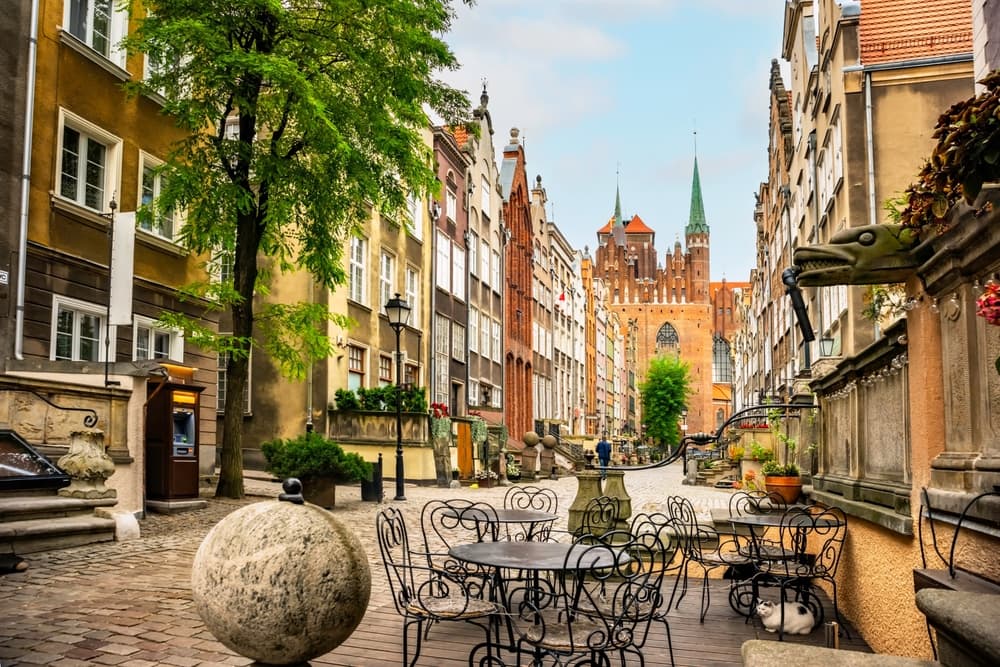
Gdańsk puts a Baltic beach and a Gothic old town on one commuter line
A port city of about 488,000 on Poland's north coast, joined to Sopot and Gdynia by a train that comes as often as every 6 minutes.
- 487,834
- Population (2024)
- $2,000/mo
- Monthly budget · single
- 48°F / 9°C
- Avg temperature
Plan on about $2,000 a month for one person in Gdańsk, with most singles landing somewhere between $1,800 and $2,200. A couple runs about $2,800 and a family of four about $4,200. A one-bedroom in the center rents for around $1,050, or about $850 farther out. Home internet is about $15 a month and a transit pass about $25. All figures are in U.S. dollars as of October 2026, and they sit above the $1,600 our Poland guide uses for one person nationwide. The coast costs a little extra.
Gdańsk suits people who want a real working city and the sea at the same time: remote workers on dollar incomes, couples who'd rather walk and ride the train than own a car, and history people who want to live near the shipyards where Solidarity began. Sopot's beach and Gdynia's port are on the same train line, so you get three cities' worth of restaurants and neighborhoods without moving.
It's a harder sell if you need warmth. The annual average is about 48F, January highs sit near 35F, and winter on the Baltic is gray and windy. July highs average around 72F, which makes summer lovely and short.

Reviewed and updated October 8, 2026 · 4 min read
At a glance
$2,000
Monthly budget · single person
$1,050/mo 1-bed rent, center
77/100
Safety index
$15
Internet / month
48°Fannual average
Jan 31° · Jul 66°
Climate
487,834
Population (2024)
Expatsi estimates, updated Oct 2026, based on rental listings, government statistics, and local reporting.
Cost of living
What it costs to live in Gdańsk
Single person
$1,800–$2,200/mo
about 35% below Austin, TX
Couple
$2,500–$3,200/mo
about 40% below Austin, TX
Family of four
$3,700–$4,600/mo
about 45% below Austin, TX
Compared with Austin, TX (Expatsi estimate, 2026).
- $10 −50%
- Inexpensive meal
- $900–$1,200/mo −46%
- 1-bed rent, center
- $750–$950/mo −37%
- 1-bed rent, outside
- $15/mo −77%
- Internet
- $25/mo −39%
- Transit pass
- $539/sq ft −17%
- Buy price, center
Expatsi estimates, updated Oct 2026, based on rental listings, government statistics, and local reporting.
Daily life
How Gdańsk lives
- B+ grade, 57th percentile among the cities we track
- Dining & cafésstrong
- A- grade, 78th percentile among the cities we track
- Arts & culturestrong
- B- grade, 39th percentile among the cities we track
- Parks & outdoorstypical
- B grade, 51st percentile among the cities we track
- Schools & educationtypical
- B grade, 53rd percentile among the cities we track
- Healthcare accesstypical
- B+ grade, 70th percentile among the cities we track
- Bike infrastructurestrong
- B grade, 53rd percentile among the cities we track
- Public transittypical
- A grade, good physical accessibility
- Accessibilitygood
Graded on OpenStreetMap amenity density relative to the 298 cities we track. Accessibility is the exception: it's graded against a fixed standard (terrain steepness and sidewalk surfaces), not a curve.
Climate
Weather through the year
Annual average 48°F (9°C) · 21 in of rain a year · Source: Open-Meteo Historical Weather API (temps: ERA5-Land 0.1°; precip/sunshine: ERA5 best-match; 1991-2020 normals); precipitation: Meteostat station 12150 normals 1971-2000
On the ground
Scenes from Gdańsk
Getting around
Transport in Gdańsk
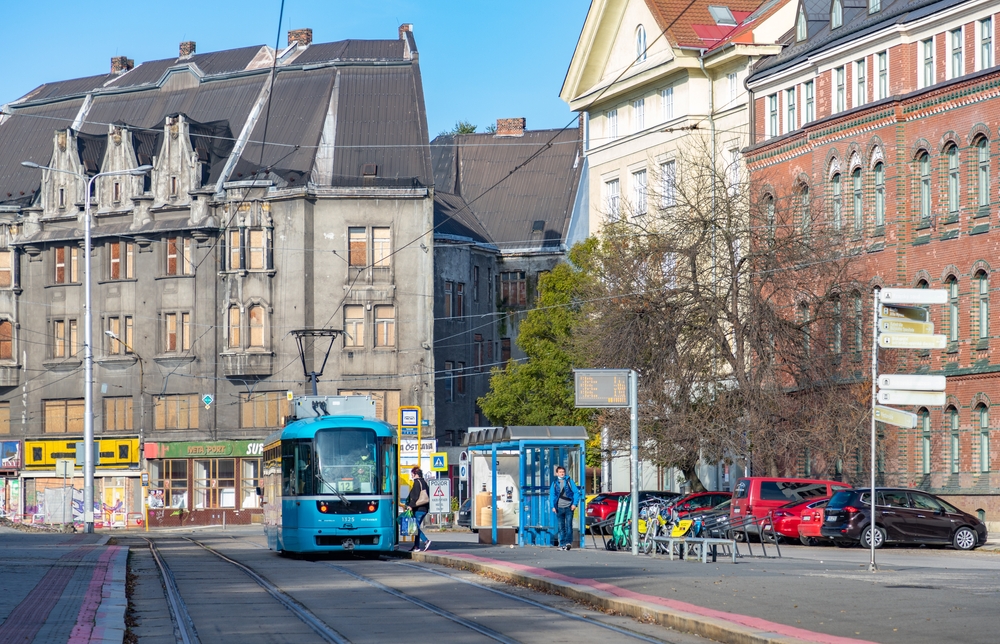
The backbone is the SKM, the commuter train that runs up the coast from Gdańsk through Sopot and Gdynia to Wejherowo. On the central stretch between Gdańsk and Gdynia, trains come every 6 to 30 minutes depending on the time of day, so most people treat it like a metro rather than a timetable. A second line, the PKM, runs from Gdańsk Wrzeszcz past the airport to Gdynia.
Inside Gdańsk, trams and buses fill in the gaps, and our data puts a monthly pass at about $25. A Gdańsk city ticket also covers Sopot, and a metropolitan ticket covers the whole area. You can buy tickets in the Jakdojade app, and platform machines have English menus. Validate paper tickets before you board, since an unvalidated ticket counts as no ticket.
The airport sits about 16 km (10 miles) west of the center. The train to Gdańsk Główny takes about 30 minutes direct, or about 45 with a change at Wrzeszcz.
For bikes, the metropolitan Mevo bike share came back in November 2023, and as of August 2025 about three-quarters of its 5,299 bikes were electric.
Do you need a car? Not if you live near the rail line. A car starts to make sense for weekend trips into the countryside or if you settle far from a station.
- 29/sq mi
- Transit stops
- 28/sq mi
- Bike infrastructure
- 47/sq mi
- Wheelchair-accessible places
Mapped features per square mile from OpenStreetMap.
Keep exploring
Places like Gdańsk

Living here
Community and practical notes
Neighborhoods and community: Gdańsk's international community is smaller than Warsaw's and doesn't form one big expat bubble. Wrzeszcz is the lively, younger district with bars and cultural events. Oliwa is quieter, built around its park and cathedral. Living in the old center is beautiful and busy with tourists in summer. The city runs a formal Immigrant Integration Model, a policy recognized in the 2018 Innovation in Politics Awards. Younger locals often speak English, but learn some Polish anyway; official letters and offices run in it.
Healthcare: The University Clinical Centre (UCK), the teaching hospital of the Medical University of Gdańsk, is the largest hospital in northern Poland. Public care runs through the national NFZ system once you have a job, a registered business or a voluntary contract. Many foreigners also pay for a private plan to get faster appointments and English-speaking doctors.
Schools: Several international schools operate in the Tricity. The International School of Gdańsk is an IB World School teaching the Primary Years Programme, British International School Gdańsk offers the IB Diploma in its final two years, and Gdynia International School follows the British National Curriculum. We didn't find one teaching an American curriculum.
Remote work: Home internet runs about $15 a month. The bigger adjustment is the clock: Gdańsk is six hours ahead of New York, so U.S. meetings land in your afternoon and evening.
LGBTQ expats: Gdańsk has been friendlier ground than much of Poland. The Tricity Equality March has run here since 2015. In 2017, it became the first march in Poland endorsed by its own city government, and about 7,500 people marched in 2024. The city also adopted a Model for Equal Treatment aimed squarely at discrimination over sexual orientation. National law is another story: Poland still doesn't legally recognize same-sex couples, and the State Department notes that openly gay travelers may face harassment in some parts of the country.
Black Americans: We couldn't find reporting specific to Gdańsk. A Black American teacher writing about life in Wrocław describes constant stares and being treated as a curiosity, while also noting that being read as American brought real advantages. Talk to Black residents of the Tricity, through our community or local groups, before you sign a lease.
Limited mobility: Gdańsk sits near sea level, and our street sample shows mostly flat, well surfaced paths. The trouble spots are the old center's uneven paving and older rail stations, some of which have lacked elevators. Check your nearest SKM stop before you choose an apartment.
Retirement: Gdańsk works well for retirees who can handle winter: flat streets, frequent trains and a major teaching hospital. The obstacle is legal, not practical. Poland has no retirement visa, so most American retirees get here through Polish ancestry, an EU passport, family or a business. Compare countries that do sell residence on income in our retirement visa guide, and read the full Poland guide for the routes that exist.
Housing
Renting and buying
- 1-bed rent (center)
- $900–$1,200/mo
- 1-bed rent (outside center)
- $750–$950/mo
- Buy price (center)
- $539/sq ft
- Buy price (outside center)
- $399/sq ft
Expatsi estimates, based on rental listings, government statistics, and local reporting.
Good to know
Frequently asked questions
Is Gdańsk safe to live in?
Yes. Gdańsk scores 77 out of 100 on our safety index, with a crime index of 23. The U.S. State Department rates Poland at Level 1, its lowest advisory level, meaning exercise normal precautions.
Can Americans retire in Gdańsk?
Yes, but not on a retirement visa, because Poland doesn't have one. Americans who retire here usually qualify through Polish ancestry, an EU passport, a spouse or family member, or by registering a business. Without one of those, you're limited to 90 days in any 180 in the Schengen area.
What is the cost of living in Gdańsk for an American?
One person spends about $2,000 a month in Gdańsk, usually between $1,800 and $2,200. A couple needs about $2,800 and a family of four about $4,200. A one-bedroom in the center rents for about $1,050, or about $850 outside it. Figures are in U.S. dollars as of October 2026.
Do you need a car in Gdańsk?
Not if you live near the commuter rail. The SKM train links Gdańsk, Sopot and Gdynia every 6 to 30 minutes depending on the time of day, trams and buses cover the city, and a monthly pass runs about $25. A car mostly helps for countryside weekends.
How cold are winters in Gdańsk?
Cold, gray and windy rather than brutal. January highs average about 35F with lows near 27F. Summers are mild, with July highs averaging about 72F, and the annual average is about 48F.
Is Gdańsk LGBTQ friendly?
More than most of Poland. The city government endorsed the Tricity Equality March in 2017, and about 7,500 people marched in 2024. Poland still doesn't legally recognize same-sex couples, so the city is friendlier than the national law.
Is English widely spoken in Gdańsk?
Many younger people speak English, and you can get through shops, cafes and train ticket machines without Polish. Government offices, leases and official letters are in Polish, so plan on a translator or lessons for the paperwork.
See how Gdańsk fits your life
Take the free Expatsi Test and compare Poland to over 100 countries on what actually matters: cost, healthcare, climate, and safety. About five minutes.
Why not you?