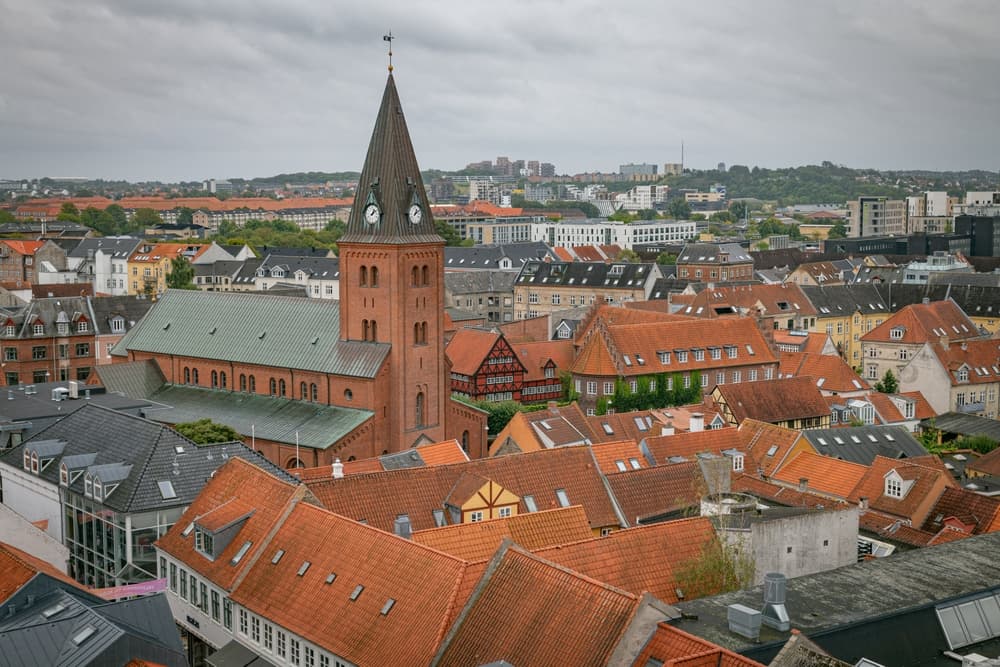
Living in Aalborg, the harbor city at the top of Jutland
What it costs, how safe it is, and who can get a permit to live in Denmark's fourth-largest city, home to about 122,000 people.
- 121,878
- Population (2025)
- $2,300/mo
- Monthly budget · single
- 47°F / 9°C
- Avg temperature
One person lives in Aalborg on about $2,300 a month, and our estimates run from $1,900 to $2,700 depending on how you live. A couple needs about $3,700 and a family of four about $5,300. Rent is the swing factor: a one-bedroom in the center goes for about $1,000, or about $800 farther out. All figures are 2026 estimates in U.S. dollars.
It's a university city with the largest hospital in the North Denmark Region and a waterfront rebuilt for people instead of shipping. Aalborg suits Americans who already have a reason to be in Denmark, like a job offer, a university place or a Danish partner, and who want a city they can learn quickly instead of the capital's scale.
Here's the catch: Denmark hands out residence permits for work, study and family, not for savings, so retirees and remote workers without one of those ties can't settle here. And the weather leans gray, with about 25 inches of rain and snow a year.

Reviewed and updated October 14, 2026 · 4 min read
At a glance
$2,300
Monthly budget · single person
$1,000/mo 1-bed rent, center
74/100
Safety index
$40
Internet / month
47°Fannual average
Jan 34° · Jul 62°
Climate
121,878
Population (2025)
Expatsi estimates, updated Oct 2026, based on rental listings, government statistics, and local reporting.
Cost of living
What it costs to live in Aalborg
Single person
$1,900–$2,700/mo
about 25% below Austin, TX
Couple
$3,000–$4,400/mo
about 20% below Austin, TX
Family of four
$4,300–$6,300/mo
about 35% below Austin, TX
Compared with Austin, TX (Expatsi estimate, 2026).
- $20 ±0%
- Inexpensive meal
- $800–$1,200/mo −49%
- 1-bed rent, center
- $650–$950/mo −41%
- 1-bed rent, outside
- $40/mo −38%
- Internet
- $60/mo +45%
- Transit pass
- $297/sq ft −54%
- Buy price, center
Expatsi estimates, updated Oct 2026, based on rental listings, government statistics, and local reporting.
Daily life
How Aalborg lives
- B grade, 42nd percentile among the cities we track
- Dining & caféstypical
- B+ grade, 60th percentile among the cities we track
- Arts & culturestrong
- B+ grade, 61st percentile among the cities we track
- Parks & outdoorsstrong
- B grade, 45th percentile among the cities we track
- Schools & educationtypical
- B grade, 40th percentile among the cities we track
- Healthcare accesstypical
- A grade, 92nd percentile among the cities we track
- Bike infrastructurestandout
- B grade, 54th percentile among the cities we track
- Public transittypical
- A grade, good physical accessibility
- Accessibilitygood
Graded on OpenStreetMap amenity density relative to the 369 cities we track. Accessibility is the exception: it's graded against a fixed standard (terrain steepness and sidewalk surfaces), not a curve.
Climate
Weather through the year
Annual average 47°F (9°C) · 25 in of rain a year · Source: Meteostat station normals (06030, 1991-2020; no sunshine data); sunshine: Aalborg (WMO 06030) 1961-1990 via Deutscher Wetterdienst Klimatafel, dwd.de/DWD/klima/beratung/ak/ak_060300_kt.pdf
On the ground
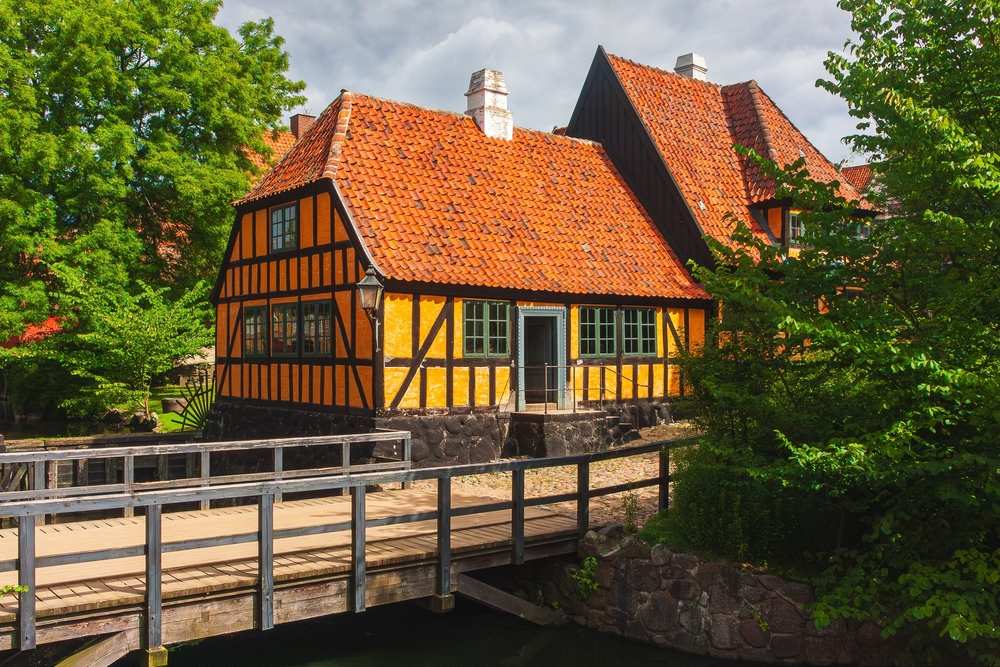
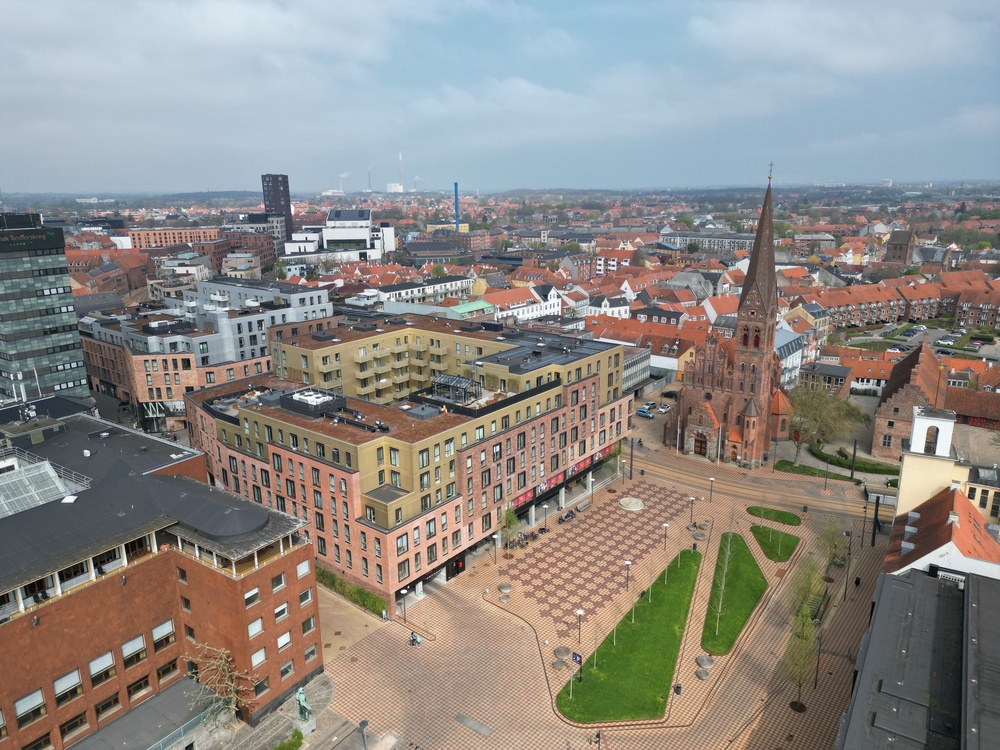
Scenes from Aalborg
Getting around
Transport in Aalborg
Most of daily life in Aalborg fits on foot, on a bike or on the Plusbus. The center is compact and mostly level, and dedicated bike lanes run through much of the city, so plenty of people handle errands without a car.
The Plusbus is the spine of the system. Denmark's first bus rapid transit line opened in 2023 and runs about 7.5 miles (12 km) through the center in its own lanes, with priority at traffic lights. It links the railway station, the university areas and Aalborg University Hospital, and at peak hours a bus comes every 7.5 minutes. NT, the North Jutland transit company, runs the regular city and regional buses, and the Rejseplanen app plans trips across all of it.
Getting out of town is simple. Aalborg Airport sits about 10 minutes from the center, with bus 12 running into town several times an hour and an hourly train that takes about 10 minutes. Flights to Copenhagen take about 35 minutes, which is how most trips home to the U.S. start. Trains also run to Copenhagen and other Danish cities every hour.
You don't need a car to live in Aalborg. You'll want one, or a rental, for the Rebild Hills and the Jutland beaches, which are far easier on your own schedule.
- 27/sq mi
- Transit stops
- 121/sq mi
- Bike infrastructure
- 44/sq mi
- Wheelchair-accessible places
Mapped features per square mile from OpenStreetMap.
Keep exploring
Places like Aalborg

Community & practical notes
Settling into Aalborg
Finding your people: International House North Denmark, based in Aalborg, helps newcomers and their families with paperwork, networking and activities for spouses, and Language Center Aalborg runs Danish classes. You can get by in English at first: Denmark placed 7th of 123 countries in the 2025 EF English Proficiency Index. Learning Danish still pays off, for friendships and later for permanent residence.
Healthcare: Aalborg University Hospital is the largest hospital in the North Denmark Region. It's a teaching hospital tied to Aalborg University, it has an emergency department, and it covers nearly every medical specialty on site. Once you're registered and have your CPR number, you'll find that family doctor visits, specialists and public hospital care are free. Adult dental care isn't covered, so budget for it privately.
Working remotely: Home internet runs about $40 a month. Remote work alone won't get you a permit, though, since Denmark has no digital nomad visa. It fits here only on top of a permit you already hold through a job, study or a partner.
Schools: Skipper Clement International School teaches Cambridge curricula in English and Danish from age 5. Tuition for 2026/27 is about $4,000 to $4,300 a year (DKK 26,345 to 28,050), and the school keeps a waiting list, so apply early. For the final years of high school, Hasseris Gymnasium offers the International Baccalaureate.
LGBTQ expats: Aalborg holds its own Pride every year: a free parade anyone can join, then debates, stalls and stage performances, with festivities in Karolinelund park. The organizers focus on rights for LGBTQ+ people across North Jutland, so it's also a good first place to meet people.
Black Americans: There's no Aalborg-specific data, so the best guide is the EU's 2023 Being Black in the EU survey of people of sub-Saharan African descent in 13 countries. In Denmark, 8% of respondents reported racist violence in the five years before the survey, among the highest rates in the study. Denmark also had the highest awareness of equality bodies, at 67%, so people there tend to know where to report discrimination. Talking with Black residents of North Jutland before you commit is worth the effort.
Limited mobility: The mostly level center helps. Plusbus stops are built for level boarding, and city buses generally have ramps and wheelchair spaces. Older buildings and walk-up apartments are where it gets harder, so confirm an elevator and step-free entry in person before you sign a lease.
Retirement: On paper Aalborg would suit a retiree, with a calm pace and a safety index of 74. The problem is the permit. Denmark has no residence permit for retirees living on savings, a pension or Social Security, so retiring here only works if you qualify another way, usually through a Danish spouse or partner. Our retirement visa guide compares countries that welcome retirees, and our Denmark moving guide covers the partner route.
Housing
Renting and buying
- 1-bed rent (center)
- $800–$1,200/mo
- 1-bed rent (outside center)
- $650–$950/mo
- Buy price (center)
- $297/sq ft
- Buy price (outside center)
- $223/sq ft
Expatsi estimates, based on rental listings, government statistics, and local reporting.
Good to know
Frequently asked questions
Do you need a car in Aalborg?
No, not for daily life in the city. The center is compact and mostly level, bike lanes are widespread, and the Plusbus rapid transit line links the railway station, the university and the main hospital, running every 7.5 minutes at peak. A car helps for trips to the coast and countryside.
Do people speak English in Aalborg?
Yes, you can get by in English in Aalborg, especially at work, at the university and in shops. Denmark placed 7th of 123 countries in the 2025 EF English Proficiency Index. Learning Danish still helps socially and is required later for permanent residence.
How do you get to Aalborg from the U.S.?
Most Americans fly into Copenhagen and connect to Aalborg Airport, a flight of about 35 minutes. The airport sits about 10 minutes from the city center, with bus 12 running into town several times an hour and an hourly train. Hourly trains from Copenhagen are the ground option.
What is the cost of living in Aalborg, Denmark?
One person spends about $2,300 a month in Aalborg, with a realistic range of $1,900 to $2,700 depending on housing and habits. A couple needs about $3,700 a month and a family of four about $5,300. These are 2026 estimates in U.S. dollars.
Can an American retire in Aalborg?
Usually not on retirement income alone. Denmark has no residence permit for retirees living on savings, a pension or Social Security. Americans who retire there typically qualify another way, most often through a Danish spouse or partner. Without that, you can visit for up to 90 days at a time.
Is Aalborg safe?
Yes. Aalborg scores 74 out of 100 on our safety index, with a crime index of 26, which points to low crime for a city of its size. Ordinary city precautions, like locking your bike, still apply.
What is the weather like in Aalborg?
Aalborg is cool and damp. The annual average temperature is about 47F, January average highs sit near 39F and July average highs near 70F. It gets about 25 inches of rain and snow a year, spread across every season.
How much is rent in Aalborg?
A one-bedroom apartment in central Aalborg rents for about $1,000 a month, usually between $800 and $1,200. Outside the center, expect about $800, or roughly $650 to $950. Plan for a large move-in bill: Danish landlords can ask for up to three months' deposit plus up to three months' prepaid rent. Figures are 2026 estimates.
See how Aalborg fits your life
Take the free Expatsi Test and compare Denmark to over 100 countries on what actually matters: cost, healthcare, climate, and safety. About five minutes.
Why not you?