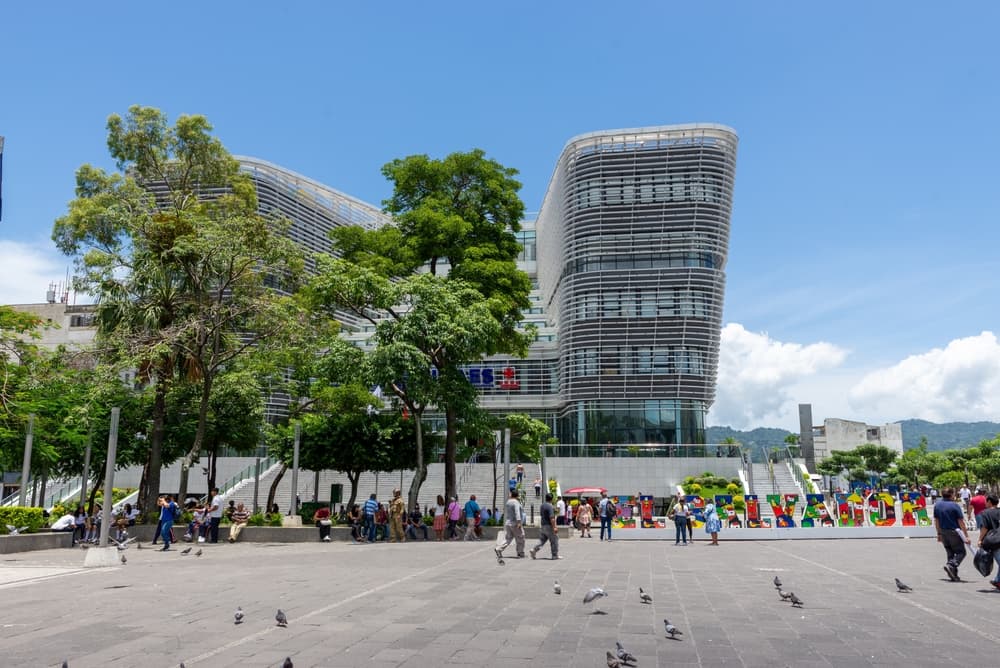
Living in San Salvador, El Salvador's volcano-valley capital
What it costs, how safe it feels in 2026, and whether the capital works for Americans retiring or working remotely here.
- 330,543
- Population (2024)
- $1,600/mo
- Monthly budget · single
- 76°F / 24°C
- Avg temperature
One person can live comfortably in San Salvador on about $1,600 a month, and most single budgets in our 2026 data fall between $1,300 and $1,900. A couple spends about $2,500 and a family of four about $3,700. A one-bedroom near the center rents for around $900, or about $650 farther out.
San Salvador sits in a volcanic valley at about 2,200 feet, and it's where El Salvador keeps its best private hospitals and its nonstop flights home. It suits Americans who want a dollar economy, short trips back to the U.S. and city-level healthcare, and who are ready to run daily life in Spanish.
It's a harder fit if you want a large English-speaking circle or a small-town pace. The Pacific beaches around La Libertad are a drive away, which makes them weekend territory rather than your front yard.

Reviewed and updated October 15, 2026 · 4 min read
At a glance
$1,600
Monthly budget · single person
$900/mo 1-bed rent, center
68/100
Safety index
$35
Internet / month
76°Fannual average
Oct 74° · Apr 78°
Climate
330,543
Population (2024)
Expatsi estimates, updated Oct 2026, based on rental listings, government statistics, and local reporting.
Cost of living
What it costs to live in San Salvador
Single person
$1,300–$1,900/mo
about 50% below Austin, TX
Couple
$2,000–$3,000/mo
about 45% below Austin, TX
Family of four
$2,900–$4,500/mo
about 55% below Austin, TX
Compared with Austin, TX (Expatsi estimate, 2026).
- $6 −70%
- Inexpensive meal
- $750–$1,050/mo −54%
- 1-bed rent, center
- $550–$750/mo −52%
- 1-bed rent, outside
- $35/mo −46%
- Internet
- $167/sq ft −74%
- Buy price, center
Expatsi estimates, updated Oct 2026, based on rental listings, government statistics, and local reporting.
Daily life
How San Salvador lives
- B- grade, 25th percentile among the cities we track
- Dining & caféstypical
- B grade, 42nd percentile among the cities we track
- Arts & culturetypical
- B- grade, 40th percentile among the cities we track
- Parks & outdoorstypical
- B+ grade, 57th percentile among the cities we track
- Schools & educationstrong
- B+ grade, 69th percentile among the cities we track
- Healthcare accessstrong
- C- grade, 0th percentile among the cities we track
- Bike infrastructuremodest
- B grade, 40th percentile among the cities we track
- Public transittypical
Graded on OpenStreetMap amenity density relative to the 369 cities we track. Accessibility is the exception: it's graded against a fixed standard (terrain steepness and sidewalk surfaces), not a curve.
Climate
Weather through the year
Annual average 76°F (24°C) · 69 in of rain a year · Source: Open-Meteo Historical Weather API (temps: ERA5-Land 0.1°; precip/sunshine: ERA5 best-match; 1991-2020 normals); precipitation: Meteostat station 78662 normals 1961-1990
On the ground
Scenes from San Salvador
Getting around
Transport in San Salvador
Uber and other ride-hailing apps are the easy way to get around. The State Department tells Americans to avoid public transportation, especially buses, and to use radio-dispatched taxis, cabs waiting outside major hotels, or app-based ride-hailing instead.
San Salvador is a driving city more than a walking one. Escalón and San Benito have stretches you can cover on foot, but errands across town, trips to Santa Tecla and weekends on the coast at La Libertad are easier by car or app. If you buy a car, the main highways are among the best in Central America, but the State Department warns that many drivers ignore traffic rules and says not to drive at night. Any alcohol in your blood while driving is a crime here, punishable by 2 to 5 years in prison.
For trips home, Canada's travel advice suggests arranging your ride to the airport in advance, which in practice means a hotel car or an app booking rather than a cab from the stand.
- 14/sq mi
- Transit stops
- 0.0/sq mi
- Bike infrastructure
- 1.1/sq mi
- Wheelchair-accessible places
Mapped features per square mile from OpenStreetMap.
Keep exploring
Places like San Salvador
Community & practical notes
Hospitals, apps and Spanish: settling into the capital
Who's here: The foreign community is small, and you won't find an English-speaking retiree bubble. Newcomers cluster in the west of the city: Colonia Escalón and San Benito, plus Antiguo Cuscatlán and Santa Tecla just over the line. Expect to handle your landlord, your bank and your doctor's front desk in Spanish, so start lessons before you land.
Healthcare: This is the city's strongest card. Hospital de Diagnóstico and Centro Médico Escalón are two of the main private hospitals, and both sit in the west-side neighborhoods above. The State Department notes that private hospitals often want payment or proof of accepted insurance before they treat you, many providers want cash, and staff may speak little English. Medicare doesn't pay for care abroad, so plan on private coverage that includes medical evacuation. Healthcare coach Hunter Schultz, one of our partners, can help you map out care for your own health needs, and ExpatInsure can quote the policy. Drink bottled or filtered water: tap water generally isn't safe.
Working remotely: Home internet runs about $35 a month in our data. Regus and Spaces run coworking centers across the west side, including Colonia Escalón, San Benito and the World Trade Center, so you've got options when the apartment gets too quiet.
Safety and the law: Gang violence has dropped sharply since 2022, and in June 2026 the State Department kept El Salvador at Level 1, its lowest advisory. The tradeoff is a state of exception, in force since March 2022, that suspends several constitutional rights and lets police arrest people they suspect of gang ties; several U.S. citizens have been detained under it. Know the strict rules before you arrive: bringing in ammunition or even spent shell casings is illegal, as are most CBD products.
Limited mobility: San Salvador is uneven going on a wheelchair or walker. The State Department says to expect limited accessibility on public transportation and in general infrastructure, though newer buildings are more often accessible. Disability discrimination is illegal on paper, but the law isn't enforced. Favor a newer apartment tower with an elevator, and rely on ride-hailing rather than buses.
LGBTQ expats: Same-sex relationships are legal, but same-sex marriage isn't recognized. Polling has long shown high levels of prejudice against LGBTQ people, and Canada's travel advice notes that harassment and violence against them sometimes happen. The country's Pride march dates to 1997 and still takes place. Many people keep a lower profile in public than they would at home and find their circle through friends and the expat crowd first.
Black Americans: We couldn't find reporting on Black Americans' day-to-day experience in San Salvador, and the foreign community is small enough that you may stand out. Before committing, talk with Black expats already living in Central America and do a trial stay of a few weeks.
Retiring here: San Salvador makes sense for retirees who put healthcare and easy flights home first and are fine living in Spanish in a big, busy capital. Our retirement visa guide compares residency routes across countries, and our El Salvador moving guide covers the pensionado and rentista options, taxes and banking in full.
Housing
Renting and buying
- 1-bed rent (center)
- $750–$1,050/mo
- 1-bed rent (outside center)
- $550–$750/mo
- Buy price (center)
- $167/sq ft
- Buy price (outside center)
- $121/sq ft
Expatsi estimates, based on rental listings, government statistics, and local reporting.
Good to know
Frequently asked questions
Where do expats live in San Salvador?
Newcomers tend to settle on the city's west side, in Colonia Escalón and San Benito, close to the main private hospitals and coworking centers. Santa Tecla and Antiguo Cuscatlán, just outside the city line, are the other usual choices. The Pacific beaches around La Libertad are a weekend drive rather than a daily commute.
Is San Salvador good for remote workers?
It works well for remote workers who want a capital city base. Home internet costs about $35 a month, and Regus and Spaces run coworking centers in Colonia Escalón, San Benito and the World Trade Center. Nonstop flights to the U.S. make trips back to the office straightforward.
Can you retire in San Salvador?
Yes, if healthcare and easy flights to the U.S. matter most to you and you're ready to live in Spanish. San Salvador has El Salvador's leading private hospitals, though many want payment or proof of insurance up front and Medicare won't pay. Americans can stay up to 90 days without a visa, so sort out a residency route before you move.
Is San Salvador safe for Americans?
In its June 2026 advisory, the U.S. State Department rated El Salvador Level 1, "Exercise normal precautions," and it says gang violence has dropped sharply since 2022. The catch is a state of exception that suspends several constitutional rights; several U.S. citizens have been detained under it. Use ride-hailing apps instead of buses, and don't drive at night.
Do I need a car in San Salvador?
Not at first. Uber and other ride-hailing apps cover most trips, and the State Department advises Americans to avoid the city's public buses. If you drive, note that any alcohol in your blood is a crime, punishable by 2 to 5 years in prison.
What is the weather like in San Salvador?
Warm all year. Average monthly highs run from about 82F to 89F and average lows from about 67F to 71F. The rainy season runs from May to October, when flooding and landslides are common, and December through March is the driest stretch.
Do I need to speak Spanish to live in San Salvador?
In practice, yes. The foreign community is small, and landlords, banks and clinic front desks work in Spanish. The State Department also notes that medical staff may speak little English, so plan on lessons before you arrive.
How much does it cost to live in San Salvador, El Salvador?
Expatsi's 2026 estimate is about $1,600 a month for one person in San Salvador, with most single budgets between $1,300 and $1,900. A couple spends about $2,500 and a family of four about $3,700. A one-bedroom apartment in the city center rents for around $900 a month. El Salvador uses the U.S. dollar, so there's no exchange rate to track.
See how San Salvador fits your life
Take the free Expatsi Test and compare El Salvador to over 100 countries on what actually matters: cost, healthcare, climate, and safety. About five minutes.
Why not you?