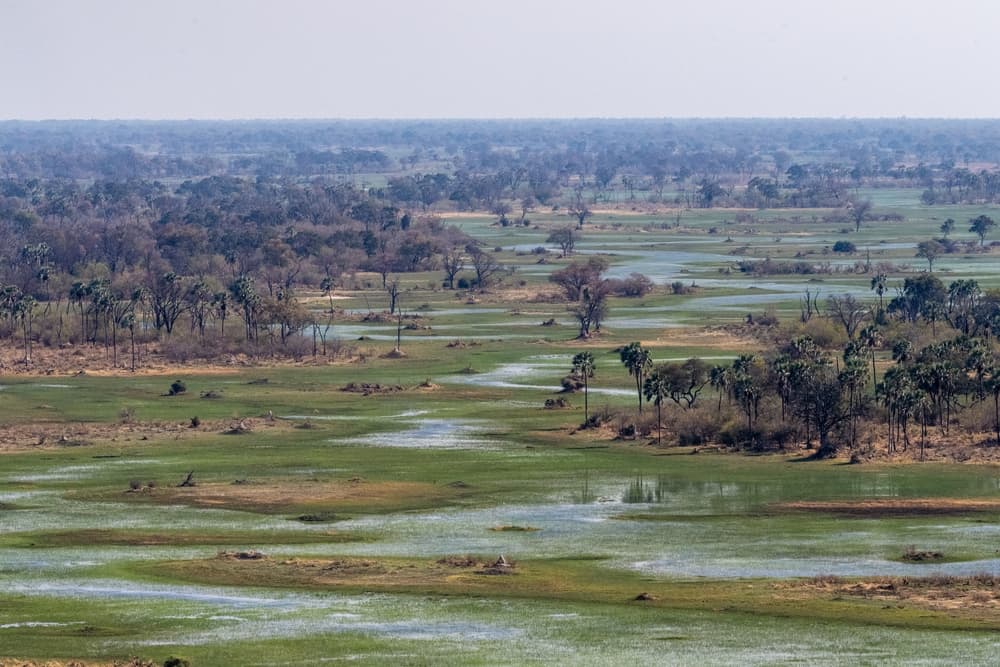
Living in Maun, the safari town on the edge of the Okavango Delta
What a month costs, how safe it is, the malaria and healthcare questions, and who should (and shouldn't) move to Botswana's bush capital.
- 85,293
- Population (2021)
- $1,200/mo
- Monthly budget · single
- 73°F / 23°C
- Avg temperature
Plan on roughly $1,200 a month for one person in Maun, with $900 to $1,400 as the realistic spread. A couple should budget about $1,700 and a family of four about $2,400. A one-bedroom near the center runs around $450 a month, or about $300 farther out. These are 2026 estimates in U.S. dollars built on limited data, so use them to plan, not to sign a lease.
Maun is the jumping-off point for the Okavango Delta. Safari outfitters and air-charter companies are based here, light planes ferry guests out to the camps, and donkeys and goats share the sandy roads with supply trucks. The town sits on the Thamalakane River in Botswana's North-West District and had about 85,300 people in 2021.
It suits people whose work or love is the bush: guides, pilots, lodge staff, conservation and research people, and anyone happy with a small town and long drives. If you need specialist medical care nearby, a busy social life, or a walkable city, look at Gaborone first.

Reviewed and updated October 15, 2026 · 5 min read
At a glance
$1,200
Monthly budget · single person
$450/mo 1-bed rent, center
52/100
Safety index
$55
Internet / month
73°Fannual average
Jun 61° · Nov 80°
Climate
85,293
Population (2021)
Expatsi estimates, updated Oct 2026, based on rental listings, government statistics, and local reporting. Coverage here is thin, so treat these as a rough guide.
Cost of living
What it costs to live in Maun
Single person
$900–$1,400/mo
about 60% below Austin, TX
Couple
$1,300–$2,100/mo
about 65% below Austin, TX
Family of four
$1,900–$3,000/mo
about 70% below Austin, TX
Compared with Austin, TX (Expatsi estimate, 2026).
- $7 −65%
- Inexpensive meal
- $350–$550/mo −77%
- 1-bed rent, center
- $250–$400/mo −78%
- 1-bed rent, outside
- $55/mo −15%
- Internet
Expatsi estimates, updated Oct 2026, based on rental listings, government statistics, and local reporting. Coverage here is thin, so treat these as a rough guide.
Daily life
How Maun lives
- C grade, 7th percentile among the cities we track
- Dining & cafésmodest
- C grade, 10th percentile among the cities we track
- Arts & culturemodest
- C- grade, 2nd percentile among the cities we track
- Parks & outdoorsmodest
- C grade, 15th percentile among the cities we track
- Schools & educationmodest
- C grade, 14th percentile among the cities we track
- Healthcare accessmodest
- C- grade, 0th percentile among the cities we track
- Bike infrastructuremodest
- C- grade, 0th percentile among the cities we track
- Public transitmodest
Graded on OpenStreetMap amenity density relative to the 369 cities we track. Accessibility is the exception: it's graded against a fixed standard (terrain steepness and sidewalk surfaces), not a curve.
Climate
Weather through the year
Annual average 73°F (23°C) · 19 in of rain a year · Source: Meteostat station normals (68032, 1961-1990; no sunshine data); sunshine: Maun (WMO 68032) 1963-1989 sunshine via Deutscher Wetterdienst Klimatafel, dwd.de/DWD/klima/beratung/ak/ak_680320_kt.pdf
On the ground
Scenes from Maun
Getting around
Transport in Maun
Maun is spread out and sandy, and most foreigners who live here drive. Shops, the airport and homes along the river are far enough apart that a car, ideally one with good clearance, makes daily life much easier. Car hire is available in town. Taxis fill the gaps: the State Department calls taxis in Botswana generally safe, and Uber isn't available. Locals ride combis, the shared minibuses, but foreign visitors usually don't.
Drive with care. Traffic keeps to the left, you'll need an international driving permit, and loose donkeys, goats and cattle wander onto the roads in town and out. The State Department warns that fatal accidents are most frequent on weekends and end-of-month Friday paydays, and that traffic lights and streetlights often don't work. Take extra care after dark.
The A3 highway links Maun with Francistown to the east. Maun Airport (MUB) sits on the north side of town, a short taxi or shuttle ride away. Air Botswana and Airlink have both flown Maun to Johannesburg, the usual connection for flights home to the U.S., and Air Botswana also serves Gaborone. Check current schedules before you plan around any route. Out into the Delta, small charter planes cover in minutes what takes hours by 4x4.
- 0.0/sq mi
- Transit stops
- 0.0/sq mi
- Bike infrastructure
- 0.8/sq mi
- Wheelchair-accessible places
Mapped features per square mile from OpenStreetMap.
Keep exploring
Places like Maun
Community and practical notes
Day-to-day life in Maun
Community
Maun's foreign residents mostly work in tourism or conservation: guiding, flying, running lodges, studying wildlife. Almost everyone arrives with a job, which matches how Botswana's permits work, so read up on the Botswana work permit before you plan anything else. Your circle will come from colleagues and neighbors, so expect to make the first move.
Healthcare
Letsholathebe II Memorial Hospital is the government hospital in town, opened in 2008. Maun Private Hospital, on Sedia Road, opened in July 2021 and is the private choice locally. For anything complex, plan on Gaborone or South Africa. The State Department notes that health facilities are concentrated in Gaborone and other major cities, that public clinics lack basic supplies, and that patients usually pay up front in cash. It also warns that medical evacuation can be delayed, especially at night and from remote areas.
That makes international coverage with evacuation the backbone of any Maun plan. If you want help working it out before you move, Hunter Schultz coaches expats on healthcare decisions, and ExpatInsure offers global health insurance.
Malaria
Malaria is part of life here. Fit for Travel, the NHS Scotland travel health service, treats northern Botswana, including the Okavango Delta area, as high risk. See a travel doctor about tablets before you move, use repellent and a bed net, and get any fever checked fast. Malaria can show up as late as a year after exposure.
Internet and remote work
Home internet runs about $55 a month. If your income rides on video calls, test the connection at the exact address before you sign. Keep mobile data as a backup.
Safety
The State Department rates Botswana Level 2, exercise increased caution, as of June 2026. It describes petty crime as common and reports home invasions, muggings and smash-and-grab car thefts, including around lodges and remote tourist areas. Choose a place with solid security, and keep bags out of sight in the car.
Retiring in Maun
A U.S. pension covers the monthly budget, but Maun is a tough retirement for most people. Specialist care is a flight away, and October brings average highs near 94F. Botswana's government doesn't list a retirement permit: retirees apply for the general residence permit, which the government says takes 30 working days to process. If wildlife and quiet matter more to you than easy healthcare, it can work. Compare options in our retirement visas guide, and read Moving to Botswana for the full permit picture.
LGBTQ expats
Same-sex relationships are legal in Botswana, settled by the Court of Appeal in November 2021, but same-sex couples get no legal recognition, through marriage or civil union. The State Department says LGBTQ+ people still face discrimination, especially in villages and rural areas outside the capital, and Maun is a long way from Gaborone. Most people keep public affection low-key.
Black Americans
We haven't found firsthand accounts from Black Americans living in Maun yet. A visit before you commit is the best test of daily life, and if you live here, we'd like to hear from you.
Limited mobility
Maun is hard going with a wheelchair or limited mobility. The town is sandy and spread out, and the State Department says many private buildings and older government buildings in Botswana remain inaccessible, with limited accessible public transport. Expect to rely on a car or a private driver.
Housing
Renting and buying
- 1-bed rent (center)
- $350–$550/mo
- 1-bed rent (outside center)
- $250–$400/mo
Expatsi estimates, based on rental listings, government statistics, and local reporting. Coverage here is thin, so treat these as a rough guide.
Good to know
Frequently asked questions
Do you need a car in Maun?
Most foreign residents say yes. The town is sandy and spread out, Uber isn't available, and foreigners rarely ride the shared minibuses. Taxis work for short trips, and car hire is available locally. Botswana drives on the left and requires an international driving permit.
What is the weather like in Maun?
Hot and mostly dry. October is the hottest month, with average highs near 94F, and most rain falls from about November to March. June and July are the coolest months, with average highs around 77F and chilly nights near 45F.
Can I retire in Maun?
You can, but it isn't easy. Botswana has no retirement-specific permit listed by its government, so retirees apply for the general residence permit. Maun's hospitals handle everyday care, while complex treatment usually means Gaborone or South Africa, so international health insurance with evacuation coverage is essential.
How much does it cost to live in Maun, Botswana?
A single person should plan on about $1,200 a month in U.S. dollars (2026 estimate), and a couple on about $1,700. The estimates rest on limited data, and imported goods and flights out of town are where budgets tend to stretch.
Is Maun safe for Americans?
The U.S. State Department rates Botswana Level 2, exercise increased caution (June 2026). Petty crime is common, and home invasions, muggings and car smash-and-grabs also happen. Secure housing and keeping valuables out of sight go a long way. On the road, loose livestock and night driving are real hazards.
How do you get to Maun from the U.S.?
Most Americans fly into Johannesburg and connect to Maun Airport (MUB). Air Botswana and Airlink have both run that route, and Air Botswana also flies from Gaborone. Check current schedules, since routes change. You can also drive the A3 highway from Francistown.
What visa do Americans need to live in Maun?
Anyone staying past the visitor period needs a Botswana residence permit, and most foreigners in Maun also hold a work permit tied to a job in tourism or conservation. The government says residence permit applications take 30 working days to process.
Is there malaria in Maun?
Yes. NHS Scotland's Fit for Travel service treats northern Botswana, including the Okavango Delta area around Maun, as high risk. Talk to a travel doctor about antimalarial tablets before you move, use repellent and bed nets, and see a doctor quickly for any fever.
See how Maun fits your life
Take the free Expatsi Test and compare Botswana to over 100 countries on what actually matters: cost, healthcare, climate, and safety. About five minutes.
Why not you?