
Episode 16 · June 30, 2026 · 36:34
"We're About To Launch Something Pretty Cool" How to Buy a Home in France
What it takes for an American to get a French mortgage, from the 25% down payment to the age-70 cutoff.
Listen on Spotify →Featured in this episode

In this episode
Jeevanthy Nivert heads the broker team at Societe2Courtage, which arranges mortgages for international buyers in France. She has been doing this for 15 years, and has seen American buyers climb since 2021. Jen and Stephanie walk her through the whole thing. Down payments, rates, age limits, contracts. She also explains what a French property hunter does and why an American might want one.
The short version: French banks finance the people, not the property. That means the paperwork is about your income and your debt, and a foreign buyer's file can run three months. The episode closes with a listener question about retirement communities abroad.
Key takeaways
- French banks lend to the borrower, not to the property. The due diligence is on your income, your existing debt, and whether you can carry the loan for 20 years.
- Common terms are 75% loan to value, 25% down plus all extra fees, and a 20-year loan, with a debt ratio under 35%. Some banks go to 70%, some to 80%, some to 100%.
- Most traditional French banks want the mortgage paid off before you turn 70. Private banks are the exception, and they are for buyers with a lot of assets who don't want to sell them.
- Interest rates are around 4% on 20 years. They used to be 2 to 3%.
- You can buy in France before you have residency. What matters is showing income — from a job or a retirement account — with the paperwork to back it up.
- Once an offer is accepted, the agreement takes two to three weeks to prepare. From there it's about two months to the keys, and three to three and a half months for a foreign buyer.
- Property hunters work from a list of what you want and don't want, down to which street, which floor, and which side of the building. They also check you aren't paying above market price.
- Jen's quick conversions: multiply square meters by 10 for a rough square footage, and add 10% to a euro price to get dollars.
Chapters
Show notes
Jeevanthy Nivert heads the broker team at Societe Courtage, a company specializing in mortgages for international buyers, particularly in France. Today's episode breaks down the process of buying property in France! Also, we've got some very exciting Expatsi news regarding buying a home abroad!
Learn more about Societe Courtage
To begin your journey abroad take our FREE quiz!
This episode is general information, not legal, tax or financial advice. Talk to a professional about your own situation.
Questions from this episode
Can Americans buy property in France before getting residency?
Yes. What matters is income. Show income from your job or your retirement account, with the documents to prove it, and you are technically eligible for a mortgage in France.
How much do you need to put down on a French property?
The common arrangement is 75% loan to value — so 25% down, plus all extra fees, on a 20-year loan. Banks vary: some finance 70% of the price, some 80%, some 100%. They also want your debt ratio under 35%.
Is there an age limit on French mortgages?
It depends on the bank, but most traditional banks want the mortgage paid off before you turn 70. Private banks can be more flexible. They're aimed at buyers with substantial assets who'd rather borrow than sell stock to fund the purchase.
How long does it take to buy a home in France?
After an offer is accepted, the agreement takes about two to three weeks to prepare. From there it's usually two months to the keys. For a foreign buyer it can run three months, sometimes three and a half, because the bank is studying your full financial profile.
Go deeper

Societe2Courtage
Jeevanthy Nivert's brokerage, Societe2Courtage, which arranges French mortgages for international buyers.
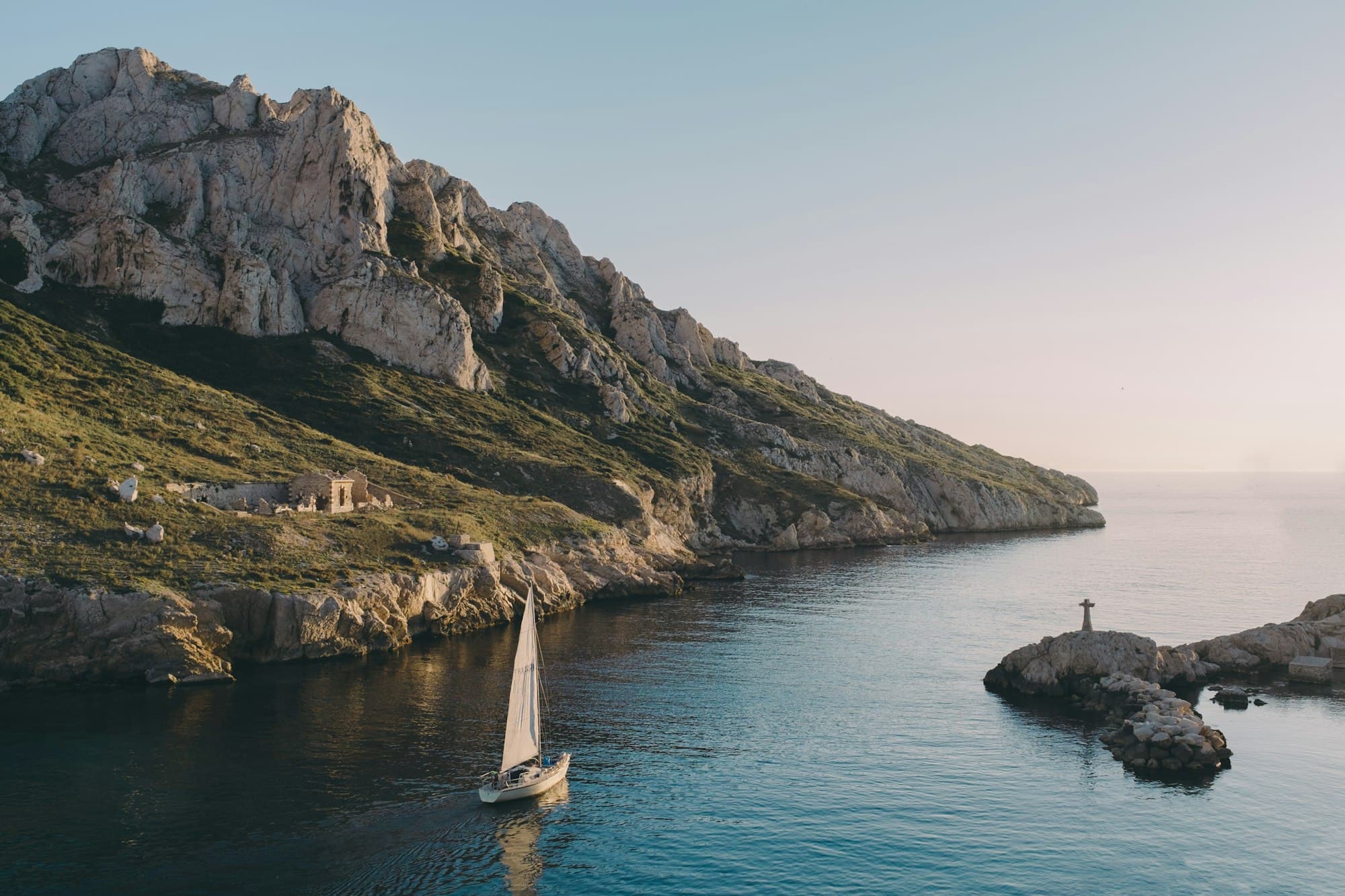
Moving to France, the real guide
The episode is about buying a home in France, where Jeevanthy says you can buy before you have residency.

How to Buy Property Abroad as an American (2026 Guide)
Jen and Stephanie spend the episode on what an American faces when financing a purchase abroad.

How to Retire Abroad: The Complete 2026 Guide for Americans
French banks want the loan paid off by 70, and the episode closes on retiring abroad.
Transcript
Transcript is auto-generated and lightly corrected; it may contain errors.
Read the full transcript(5,768 words)
English speakers are still a novelty. Here and of course I had two cats who basically destroyed their carriers on days one and. Three, there was a lot of discussion to make sure that we were aligned and that we were doing it for for similar reasons. What are the visa paths? Are you running towards something or are you running away from something?
And then what? I can't believe we're finally here. This is Americans Abroad. Welcome to this week's episode of Americans Abroad. I'm Stephanie. And I'm Jen. And this week, we are joined by Jeevanthy Nivert to talk about getting a mortgage and buying a home in France. Speaking of buying homes, we're about to launch something pretty cool here at Expatsi. Jen, can you talk about that?
I can. So you know you and I have always had a lot of interest in homes. You are realtor yourself. Both of my parents were Realtors and I think we both cut our teeth on looking at houses. And I will say, listen, you know, I got a six step process to moving abroad La, La, la and I say do it all in order.
That said, looking at homes and daydreaming about where you'll live to me is one of those little fun diversions that keeps you motivated and get you to the endpoint. But it's hard. You know, there isn't Zillow of the world or even realtor.com of the world. You know, it dabbles in a few countries here and there and there are sites in Mexico. We have something called Inmuebles24 and in Spain and Portugal you have Idealista.
However, it just doesn't work quite the same. There isn't an MLS, MLS system of listings and so on. And so one of the things that we saw when we were helping people move abroad is we basically get them to the finish line and then we're like, good luck, you're on your own by the place to live. So that it became sort of like The Amazing Race and House Hunters International combined, but you're on your own.
And so it's a problem that we've wanted to solve solve ever since we got started. And this week we are taking a massive step in that direction. The first thing we needed to do is that Brett or I needed to get our real estate license, our US American real estate license. And we drew straws and then I told Brett he had to do it. He.
Just gave him both of the straws. That's right, pick, pick your favorite straw. And he has been studying. He's taking his test on Thursday. Fingers crossed for him. And I don't want to talk about it too loud or he'll come in and tell you his last 8. Yes, and anxiety dreams, Absolutely. But so once we do that, we are building out a network of global Realtors.
And after that, that will probably start. First will be the boots on the ground because that's what really matters, right? Is, is being able to introduce you to someone who we trust who can help you find a place to live. But then Step 2 will be our own listings directory where we can show you properties around the world for practical reasons so you can find a place to live, but also for fun reasons. So you can, you know, when you are sitting in your desk job or you are lamenting the fact that
you can't afford a house in LA or whatever it is that you are doing, that you can come and see what it's like. Now you, you know that what gets a lot of what goes viral are one euro homes in Italy and, you know, cheap properties everywhere. And there is some of that, you know, they come with their own challenges.
There's, you know, fire. Beware, you get what you pay for. But that said, housing is less expensive than it is in the US and many, many different places. And so it's a place where you can go and imagine what your life might be like abroad, whether money is a consideration to you or not. It isn't to everyone, but it'll give you an idea of what you are imagining moving towards instead of just what you're trying to potentially get away from in your current life. I think one of the things that I'm really excited for as you know, someone you know as a
former like full time real estate agent is the directory of trusted, vetted agents. And the main reason is real estate works so different in other countries. You know, in the US, we are used to if you are selling a property, you have a listing agent. But if you're buying a property, you have a buyer's agent and you know, how they get compensated is negotiable.
And the due diligence and, you know, the ability to put down an earnest money deposit and know that it's protected based on your contract. All of these things that we just sort of take for granted in terms of a process or even renting a property. You know, I remember getting my, my last apartment before we, we bought our house in Texas.
And it was, you know, we went to the apartment complex, they showed us 3 units and we're like, we'll take that one. And they go, great, here's an application. And we heard later that day if we were going to get the apartment or not. And it's very, it can take time, time in other countries. So just having people that not only understand how the nuts and bolts and all the red tape works in their country or even the region of the country, but can also be a little bit more sympathetic to kind of translating that process from American to whatever that that
country is. You know, Buyer's agents aren't common in in a lot of countries. They're becoming more common. And you will hear today about what that buying process looks like from a buyer's side, but just being able to go. So I know in the US that this is how it works. Here, we don't have this, but we have this to protect you or here. You're going to want to make sure that you do this, which may be a little bit different than how you approach things in the US.
When we got our apartment here in Portugal, one of the things that we had to do was 1, make sure that our landlord was willing to register the lease with the Portuguese government and that was for our residency. And two, we had to have our lease. Well, didn't have to, but a best practice to have our lease reviewed by an attorney because there are no standard contracts in other countries like there are, you know, in Texas we had contracts that were set by the state of Texas and you never deviated everything.
Everything looked the same. So apartment lease was the same as a house, police was the same in Dallas as it was in Houston. A buying contract in San Antonio would be the same contract that I would fill out if somebody was buying a house in Amarillo. And it is everything is written from scratch in most other countries, especially in other in European countries.
So just the things that you need to know to protect yourself and having somebody in your corner who can help you understand so that you, you know, don't get taken advantage of or you don't miss an important step. And that's really one of the things that I'm really excited for about Expatsi Homes. Yeah, completely. I think it's going to be such a huge step if our goal is to take away all the friction points along the way. There are going to be friction points when you move abroad, you know they're going to be the
internal ones as you hone some of your traits to be more flexible, more resilient, more tolerant, more of a doer. There are going to be ones with your family and things like that, and they're going to be ones where you are fitting in and getting to know your new place. And those are not going to go away.
And they're really important for us. That leads to growth. But if we can make the process as low stress as possible, that is really important to us and it's what will facilitate more people moving abroad. They've shown that throughout history, whenever great migrations happen, there has been, you know, a push to leave an old place, a pull to a new place, a flow of trusted information, and then practical helpers who help you, whether it is finding homes, finding jobs, learning language, whatever those things are along the way. And our goal is to continue to
offer those services, to be those for as many people as we can. Hi, welcome to this week's episode of Americans Abroad. This week we are interviewing Jeevanthy Nivert, who is in France and helps Americans buy homes in France all over from Provence to Paris. And I know that that has long been my dream and I think it will be a lot of other people's as well.
Thank you so much for being here. Thank you. Thank you very much. My pleasure. Have you seen an increase over the past few years in the number of Americans moving to France? Yeah, I'm doing this business for last, I would say 15 years. I think after COVID, from 2021, I see a lot of people from America, especially moving from America to France.
And in France, people, they would select cities like Oxytani province, Don Lizalp, when it's like a chalet Montaigne. Some of people they are looking for Paris because Paris is always Paris. They want to have a small apartment or medium apartment next next to Eiffel Tower because they want to enjoy the life in the Cathy Mahe, because they want to have that nightlife experience in Paris.
So they want to have a typical French apartment, Osmania, sometime with a chimine in the nice street or they want a peaceful house in Oxytani or in Bergerac, like 300 or 2000 square meter terrace land and a small house to with 2-3 rooms and a lot of lavender around them. And they want, they want to feel that, they want to feel that and they want to feel the weather, they want to feel the food because they want to enjoy the market, the special, I mean the local market. And when they come on holidays, they they, when they see all these colours and the price of
the properties and what they can get, they just go mad of this and they want to move. I could listen to you talk about this for hours. One of the things that I love is that you are talking about what is drawing Americans there as opposed to what is driving Americans out of the US. Do you think that most of the people you talk to are drawn to the French lifestyle? I think so.
They are dreaming of the simplest city. This is what I say every time I say to people are to American like things will be like this is. It's so simple. I'm not talking about the paperwork. Of course we are a bureaucratic country. That's there's no way because we are, we are, we live with that. It's in our at the end paperwork. But if you want to have a good lifestyle and relaxed, no, I mean no stressful and you want to enjoy a countryside home, this is a place.
This is a place because the price is very good, price of the houses are very good and the quality of the construction. This is what they see that the people, the owner in front of these small, small houses, they maintain the houses, they take care of the houses. So they when they leave you the house, you don't need to do a lot of renovation.
You're happy to take it as it is and you enjoy it for 10 or 15 years. I don't know what is their plan. Maybe they go back to the US because they're, they have their family. But in the meantime, like from 60 to 7580, they want to enjoy their life. As a French resident, that I see it.
It's amazing. So I'm curious, can Americans buy property in France before they have their residency? Or is OK perfect perfect? It's possible. What is important for an American, because we are talking about American, if you want to buy a property, is to show your income, either your income from your job and then your income from your retirement account. And when the income is visible and you have the income, you have the paper for that.
Technically, you are eligible for a loan or mortgage in France. So you mentioned that they need to show income. What about things like down payment? Other documents that an American may need to have on hand before they start the home buying process in France? Yeah, it's important like on an American we have like we have plenty banks in France.
They all basically technically finance properties for American. What will be different between them, They will check their their own criteria. Some banks, they will say I will finance loan to value 70% of the property price, some others 80, some others 100 And the parameters will be completely different from loan to value and will be different of the age of the borrowers where they want to buy and the quality of the property. And generally we get 75% loan to value when the the borrowers can show their income and the debt ratio is less than 35%. We go 20 years loan and 25% down
payment on the property plus all extra fees. This is very common here. And then what are interest? And then what are interest rates like currently in France? Interest rate are around 4% on 20 years. That's right now. We used to be at 2-3, now we are 4. But you know why? It's international context, which is not very good, but hopefully things will be changed, improved.
So the buyers that you see, are they mostly retirees or are they remote workers or local? Are families coming to take local jobs or something? Else I have all all kind of profit. I have people, they are 4045 years old. They want to buy a second home in Paris like 50 square meter, 70 square meter for six 700,000 and I do have like people at the early 5055 they want to buy a second home pseudo France Provence Oxytani for 300 four 100,000 because they want to enjoy with the family with the kids. It depends if they have the kids. It depends if their kids are
going to the school and the, the how do you say the their dream is different from if they have kids or they don't have kids And if they want to spend time with their family because they like going on holidays in France and they when they pick a city, they like going to the same like Montpellier. They will go every year to Montpellier in the same city, maybe, maybe at the same hotel. And after five years, they say, why don't I buy an apartment for 250 in Montpellier?
It's so affordable and I like the city and I can rent it out on Airbnb when I'm not there so some people are looking that way also. I heard you mention their age. It's true that people have to have their mortgages paid off by what, age 75? It depends on the bank. Most of them, they want the mortgage to be paid off before 70. But. 70, yeah, they don't want people to have a mortgage after 70.
But in France we have two kind of banks. We have traditional banks which are well known and we have private banks, traditional banks, they have their own parameters and all. I will say restriction there. They will say 70 is the maximum loan to value, 75 down payment. I want the debt ratio below 35%. But we do have some private banks. But as you know, private banks are not for everybody. They are for some kind of people. They have a lot of assets and they don't want to sell their assets to buy the property.
I think can I have a couple now. Now they want to buy a property in Cannes for 1.2 million. They don't want to sell the stock in the US, So what I'm offering them, they keep the stock in the assets in the US or they transfer to a new bank in France and we get a loan for them 100%.
A couple of quick conversion rates for American listeners. I multiply square meters by 10 to get a rough idea of how many square feet a property is. It's not perfect, but so a an apartment that's 50 square meters would be about 500 square feet. And don't forget that in Europe, space is used very economically and intelligently, I feel like and and there isn't anything wasted.
And the euro is about $1.10 right now. Is that right, Stephanie? So. Give or take, that's a pretty good estimate, yeah. Yeah. So if you add 10% to any of these costs, you can get an idea of what it would cost in dollar. I want to shift just a little bit from the mortgage process to buying a property in the process of finding a property agent representation. You know, we know that it, it can vary widely from what we experienced here in the US.
Do you mind sharing a little bit about what the actual home buying process might look like? Contracts. Of course, of course, I would say there's two ways to find your your dream home in France. And then you check on Internet the city where you want to buy like Soloje, PIP, ECBBIC, Le Bon Quan. You just mentioned the city where you want to buy. You will have list of the properties and then you will have list of the agency.
This is what we say Lizations in Mobilier. So the realtor, they also, they offer their own stock. So you will find plenty of properties in the city where you want to buy the property. Let's say Montpellier if you mention you you mentioned I want apartment Centralville center in the city, minimum 50 square meter, 2 bedrooms. My budget will be between 250 and 350.
You will have plenty of. I will I will say offers and then you have to pick one of them. And what I will say to my my what I say to my customers is like when you come to France, you do that first and you go and you select few properties from the agents online and agent in the in the street. You will you can push any door and you can visit any, any agents branch and see with them what kind of properties they can offer you for your proper for your budget. And then and then you have all
these people like we call Hunter, they have list of parameters of things you want and you don't want. And those people are very good because they are able to to filter and they are able to say in this city, I will avoid this road. I will avoid this road. But I will go for this road at third floor, not on the 2nd floor this side without this side, because they know the street well, not and they know where the building, the best place of the building you have to be.
So this is my suggestion. If you can click a good, I have good relation with this kind of people, you will for at the end finding the right property in the right St. in this right floor. And then you enjoy the apartment. If it's an apartment, of course. How do those hunters get compensated? Are they paid directly by the potential fire?
OK, Yeah. They they job is like to make sure that you buy the property you really wanted as a first job. They make sure that you buy the property at the right price. You don't pay something above the price, the market price and they are able to compare two different properties with different properties but they will have the same price and they will be able to say why this property has this price and why this property has this price. So you can select also sometime we can make the wrong decision on 2 properties.
We are not able to to see why they are different and why the price are same or different. Those people are there here for that reason. And then once a buyer, let's say they, they maybe they're working with a, with a hunter or a buyer's representative, they find that apartment and they go, OK, great. We want to make an offer from, let's say offer being accepted to closing.
What does that time period normally look like? The time periods quite can be fast, it depends of the seller and it depends of the property. Let's say for the property in Montpelier, you have like 5 viewers, 5 people are visiting the property and if they all make an offer, it's quite difficult. So you don't know, you don't know which one is going to be selected.
But like within one week you will be able to finalize the property and make an offer. And, and we as a broker, we come at that time. At that time, what I say to my customers at those your budget is 350, don't go above, negotiate below and you're, you're the price of the property is too, too high or that property needs a lot of renovation. I'm not going to finance the renovation. Be aware of that.
You have to negotiate with the seller right now. So we will come at that stage and we will negotiate the price of the property. Then when the property you made an offer, the offer is accepted. I think within two weeks to three weeks they prepare the agreement with another confirmative vote. And then from the time that that agreement is, let's say, finalized, how, how soon can somebody have keys, for example? In France, usually it takes two months for everybody. It takes two months to finalize between the company they want and you get the keys.
Even though for French people living here, I think for a foreigner it may take like 3 months, sometime 3 1/2 month because there's so many. I will say process between the clear client, the bank and it depends of the profile of my customers. If it's a complicated situation, maybe sometime there's two people working for their own company. They have accounts everywhere.
They have business in Mexico, they have business in the areas, they have business in Italy. So it's a complicated situation. In that case, it may take like sometime, some more weeks to finalize the study of the profile. You have to understand in France, we don't give a loan for the property you're buying. We give a loan to the people who are buying. So we first trust the people, we don't trust the property. It's not the property we are financing. We are financing the people.
So when you finance the people, you have to understand the profile of the people who are there. Are they going to pay back the loan? Are they going struggling? Are they going to be over debt? Are they going to be able to manage this loan for 20 years? So all these questions be asked now. So we are free and our customers, they are also relaxed because the loan amount they are getting from the bank, this is something they can easily paid off.
We don't want to give a loan to someone who's already, I mean it has a lot of debt in the US you know. So we take care of the profile of the customers and we make sure that person has the ability to pay off the loan. It's so important for us and that's why that three months sometimes needed because we did due diligence, fully due diligence of the global situation of the customer.
You mentioned that some people were buying properties as investments or to use as Airbnb's during the time that they're not staying in France. We've heard about places like Barcelona that are outlawing Airbnb's. Have there been any overtures to regulating Airbnb's in that way in Paris or anywhere? Else in France. It is the case is like nowadays like Nice, Biarritz, Paris and I'm sure so many cities are going on are going to be listed on this list. They are going to regulate more and more the properties where they are rented on Airbnb.
But you know for the the reason why they are doing behind that. In case you are not able to rent it out on short term in France, you always have possibilities to rent it out on a one year long one year term agreement. And the rents are are pretty good, pretty good. But what we do is like when we receive a simulation of proposal for a customer, we check if this property can be rented on Airbnb and rented out also normal rental. If normal rental is good, we will tell to the customer, this property you may have the change
like in the future you may not be able to rent it on Airbnb. So you have to come back to a normal system. Are you OK? Are you aware of that? And they are always aware of that because of the agent. They have informed them in advance. Right, Yeah. Are there any housing shortages in France? We hear about this a lot in the Netherlands and in Ireland. Do you see that in?
France How's what? Shortages. Housing shortages. I yeah, in the big cities, in the big cities, when you put it online, you list a property for renting people. This, this is what they say within a day is rented out. People are making queue because it's so difficult, so difficult even for a French resident to buy a property nowadays. And banks, they have slightly increased the rate for the resident and the criterias and the parameters are going up and up.
So for the normal, I will say couple, it's quite difficult to to buy a property. And for them buying a property sometime they're not at the early stage of their life, they won't, they don't know if they're going to move in Paris or in Montpellier, Cannes, whatever. So they've rented out for three years. So that's a reason why renting a property, it's always, I will say, a struggling thing in the big cities.
Are there any? Are there any up and coming cities or maybe hidden gems in France that you would recommend somebody take a second look at? For the holiday home as a holiday. Holiday or or even where their money may go. Yeah, or where their money may go further for living in France if they're looking to buy it.
Depends on the profile, the people, because if you want in the north the weather, winter is very cold, summer it's OK. But if you're in the suit of France, summer is always good. You have that. How do you say that vibration of the weather there in the pseudo France that you really enjoyed? No, in no, no, the France is quickly different because it's cloudy, it's raining. We don't know when it's going to rain. It's different.
So it depends on the the people. Can they can they be in a sunny cities or it's like Strasbourg where we have nice, nice properties there. The price is still low for investment. I think Strasbourg still, it's a city that people they should consider is close to Belgium and Germany, all these places, Luxembourg. So you have a lot of expats from there looking for a property for renting purpose there. So I think that is good things and Botai Normandy we have, we still have, how do you say sea lover? They want to be in Botain or
they want to be in Normandy because of the weather and for the food, the fish and all the good food you will get from Botain and Normandy. When you you're a good eater and you enjoyed being Samalu, you will never go back to Canu somewhere else because you are so used to that city. And especially Thomas. Thomas is someone from Normandy and both that he loves that he loves that city because the the weather is like very changing in the same time.
You have sunny in the morning, you have cloudy in the afternoon, the rainy and you enjoy the food you enjoy. The cities are really structure that people they enjoy the the day life and they they are happy there. So it depends where you want to be. There's somewhere I see a lot of Americans going. It's like in Oxytani, in that chant, Maritim Bergerac.
I saw a lot of Americans going there because of the price. Very good, still good. And the quality of the lifestyle you will get there is still nice. Fantastic recommendations. Well, Jeevanthy, thank you so much for joining us today and educating our audience on how they can explore their real estate options in France. If you are interested in buying a property in France, you can find ourfrenchmortgage.partners@xpatsi.com.
Jeevanthy, thank you so much for joining. Us. Thank you. Very much. Thank you. Jen, do you know what time it is? Not a clue. Not a clue. I am. Cool. Well, thank you for. Joining us for this week's episode of Americans I Do. Know what time it is. It is time for Q&A and because and in honor of having a question today, I wrote a little song you did.
Will you share your song with us? I will. You'd have to kill me to keep me from from sharing it because when I have a song in my heart. Yeah, don't hide it under a bushel. Thank you. I'm not a yeah, I'm not a hide it under a bushel girly, OK. And it is also in honor of you and your life in Portugal. And here's how it goes.
I've got 2 tickets to Portugal once you pack your capital FBI background check and your NIF number and all your documents and your completed visa form and your 12 month lease and your bank account and we'll leave tonight. I've got 2 tickets. Support to go La La la. I love it, absolutely love it. Thank you. Well, we've been talking a lot about housing on today's episode and we actually had someone write in about a house with a housing question. They ask they wonder if we might consider looking into retirement villages and communities for those of us who prefer not to live in single family dwellings.
Can you talk a little bit about maybe some of those options for our retirees who are looking to live in a retirement community abroad? Absolutely. And I hope that we will find more and more options like this in future. Right now we have a couple. One is we have a partner called Yarin that's in Bali and they are, they have an option where you can buy what's called a lifetime lease on a resort property in Bali.
It's about $180,000 for a one bedroom apartment in a resort and you just live there the rest of your life. You don't need a car. They has a restaurant on site they drive you to, they'll drive you to the mall or the hospital or whatever else. They have transportation. And it's a beautiful, a beautiful life. We also work with moving to Spain, and moving to Spain has done a lot of research on retirement communities along the coast. You know, there's the Costa del Sol and the Costa Blanca and those are the two primary regions. So those are the regions between
Valencia and Alicante and then down around Malaga to Cadiz. And so those two places there are also a number of properties and growing in Portugal. And I will say these properties, in case you were curious, they are almost entirely English speaking. Most people who moved to these are British or Dutch because, as you can imagine, most people take care of their elderly relatives in these countries, unlike the way that we do in the UK and the US And so these are mostly for folks who don't have that system.
You know, we have a very nuclear family system. Love it or hate it, it is what it is. And so you'll find lots of people like. You. I do hope that once we launch Expatsi Homes that we can find more options. For example, we were just talking to someone who has a retreat center where you can live in Costa Rica and we have someone who also offers property where you can live in a community in Belize. So whether or not it includes more of just lifestyle, but it others that might also include healthcare and things like that, it just depends.
But absolutely it is a an important part of Expatsi's. Future. Well, thank you for answering that question, Jen, if you have a question you'd like us to answer here on the podcast, you can e-mail your questions to podcast at expatsi.com. Americans Abroad is an Expatsi production. Please like, share, subscribe and leave a review. Are you thinking about moving abroad? Start with our quiz at expatsi.com. That's expatsi.com.
Not sure where you’d go?
Take the free Expatsi test to see which countries fit you, then come back and listen to the episodes about them.