
Episode 17 · July 7, 2026 · 34:56
"What is the Biggest Mistake People Make?" Cyprus and Quick Ways to Permanent Residency
Cyprus hands out permanent residency if you buy property at €300,000 or above, and it sits outside Schengen.
Listen on Spotify →Featured in this episode
In this episode
Calvin Mazlumyan, an immigration attorney in California and founder of Plan-B Outbound Migration Consultancy, joins Jen Barnett and Stephanie to talk about Cyprus. He does more outbound work than inbound now. Americans keep asking him for a Plan B. The conversation covers what changed after the European Court of Justice shut down citizenship by investment in the EU, and what Cyprus offers instead.
Buy property at €300,000 or above and you get direct permanent residency, with no renewals. Retirees and digital nomads can lease instead, on a slower track with a residence requirement. Cyprus is in the EU but not in Schengen, which makes it a useful place to sit out 90 days. Asked about the biggest mistake people make, Calvin says taxes. The episode closes with underrated and overrated countries.
Key takeaways
- Cyprus gives direct permanent residency if you purchase any property of €300,000 or above. A permanent residency card never needs renewing — when it expires, they issue a new one.
- The property route takes about a year to become a resident. Retirees and digital nomads can lease a property instead, which can take a year or sometimes two, and you are allowed to stay in Cyprus legally while the application is processed.
- On the permanent residency through real estate, it doesn't matter how long you live in Cyprus. On the retiree and digital nomad paths you can't be out of the country more than three months.
- No EU country sells citizenship anymore. The European Court of Justice shut down direct citizenship by investment, so anything advertising an EU passport for money is a scam.
- Cyprus is in the EU but not in the Schengen zone, so clients spend 90 days in Schengen, then three months in Cyprus, then go back in. You never have to return to the United States to reset it.
- Cyprus taxes pension income at 5%, royalties at 3%, and corporate income at 15%.
- Citizenship in Cyprus takes five or seven years depending on the type of residency, and you need either B1 or A2 level Greek depending on your card.
- Expatsi's four underrated countries for the past three years have been Albania, Estonia, Slovenia and Uruguay. Albania and Uruguay aren't underrated anymore; Slovenia and Estonia still are.
Chapters
Show notes
Calvin Mazlumyan is the Managing Director and Founding Partner of Outbound Migration. They help Americans relocate abroad all over the world. This week's focus is Cyprus, which offers a fairly quick path to Permanent Residency.
More information on the July 11 Webinar.
More information on Outbound Migration.
To begin your journey abroad take our FREE quiz!
This episode is general information, not legal, tax or financial advice. Talk to a professional about your own situation.
Questions from this episode
How much property do you have to buy for permanent residency in Cyprus?
Any property of €300,000 or above gets you direct permanent residency. You can literally buy a summer home. Within one year you become a resident of the country. The process runs through Cypriot attorneys, and you choose among different developments and sections of the island.
Do you have to live in Cyprus to keep permanent residency?
Not on the real estate route. So long as you continue to own your property and remain a permanent resident, it doesn't matter how long you live in Cyprus. The retiree and digital nomad paths are different — there's a stay requirement, and you're not supposed to be out of the country more than three months.
How long does it take to get Cypriot citizenship?
Five years or seven years, depending on the type of residency you hold. The language requirement also depends on your residency card: either B1 level Greek or A2 level Greek.
Is Cyprus in the Schengen zone?
It's part of the EU but not part of Schengen. Schengen rules require you to stay 90 days, then get out for another 90. Plenty of Calvin's clients spend 90 days in Italy, France or Portugal, then hang out in Cyprus for three months to satisfy the rest before going back in. You never have to return to the United States to do it.
Is English spoken in Cyprus?
Widely. Cyprus was a British territory from 1878 until after World War II, and over 70% of the population speaks fluent English in addition to Greek or Turkish. There are British bases on the island, plus British and international schools. If you don't speak any Greek or Turkish, you'll be fine.
Can you still buy citizenship in an EU country?
No. The European Court of Justice ruled a few years ago and shut down direct citizenship by investment by any EU nation. Cyprus and Malta both had versions of it; neither is available now. If you read anywhere that an EU country is giving away passports for money, it's a lie and a scam. The only pathway to citizenship in an EU country today is through a residency program.
Go deeper
Plan-B Outbound Migration
Calvin Mazlumyan's firm, Plan-B Outbound Migration, the consultancy he founded and talks about in this episode.
Moving to Cyprus: an EU island that speaks English
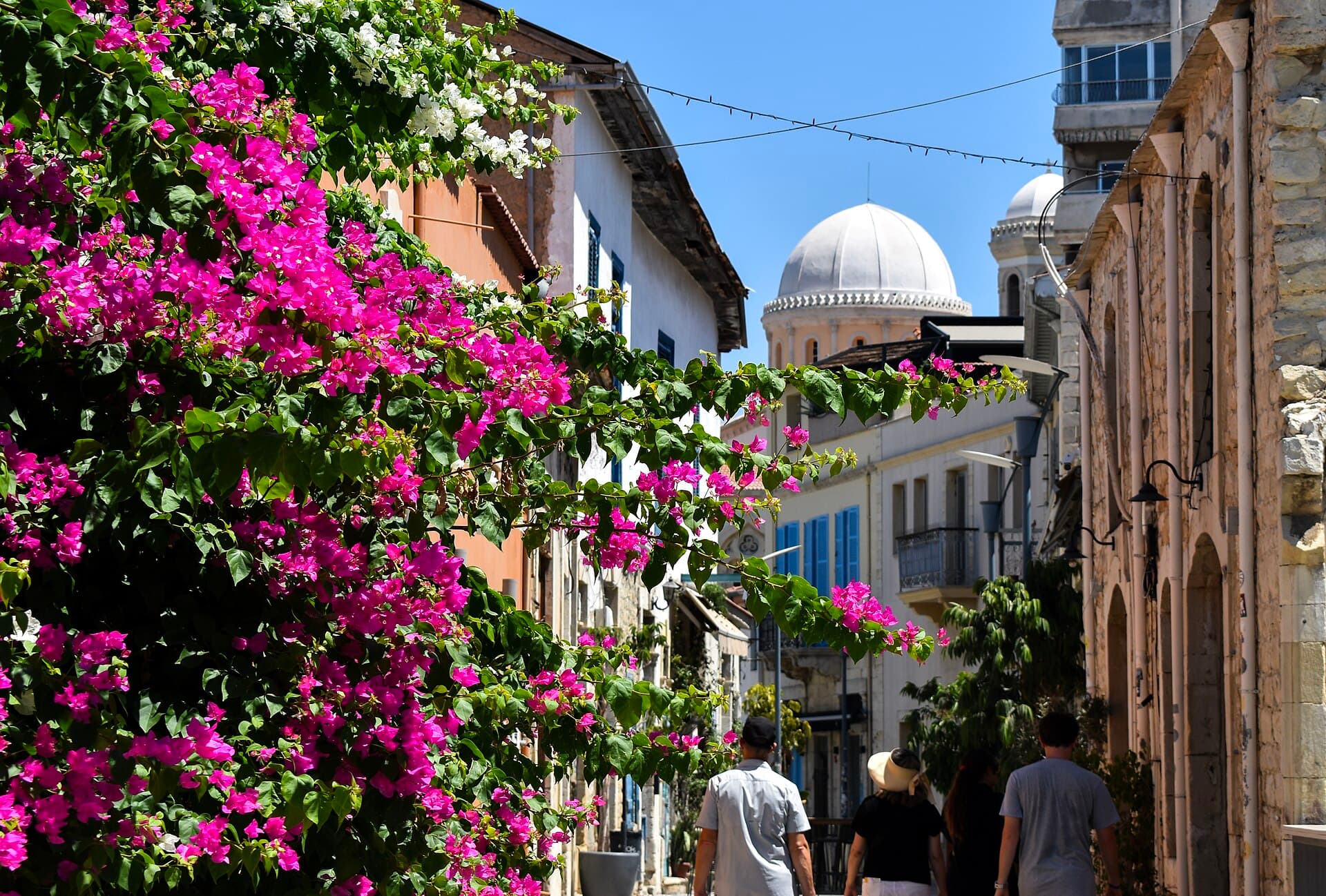
Cyprus, the country Calvin walks through: EU but not Schengen, with permanent residency through property.
Investor and golden visas, side by side
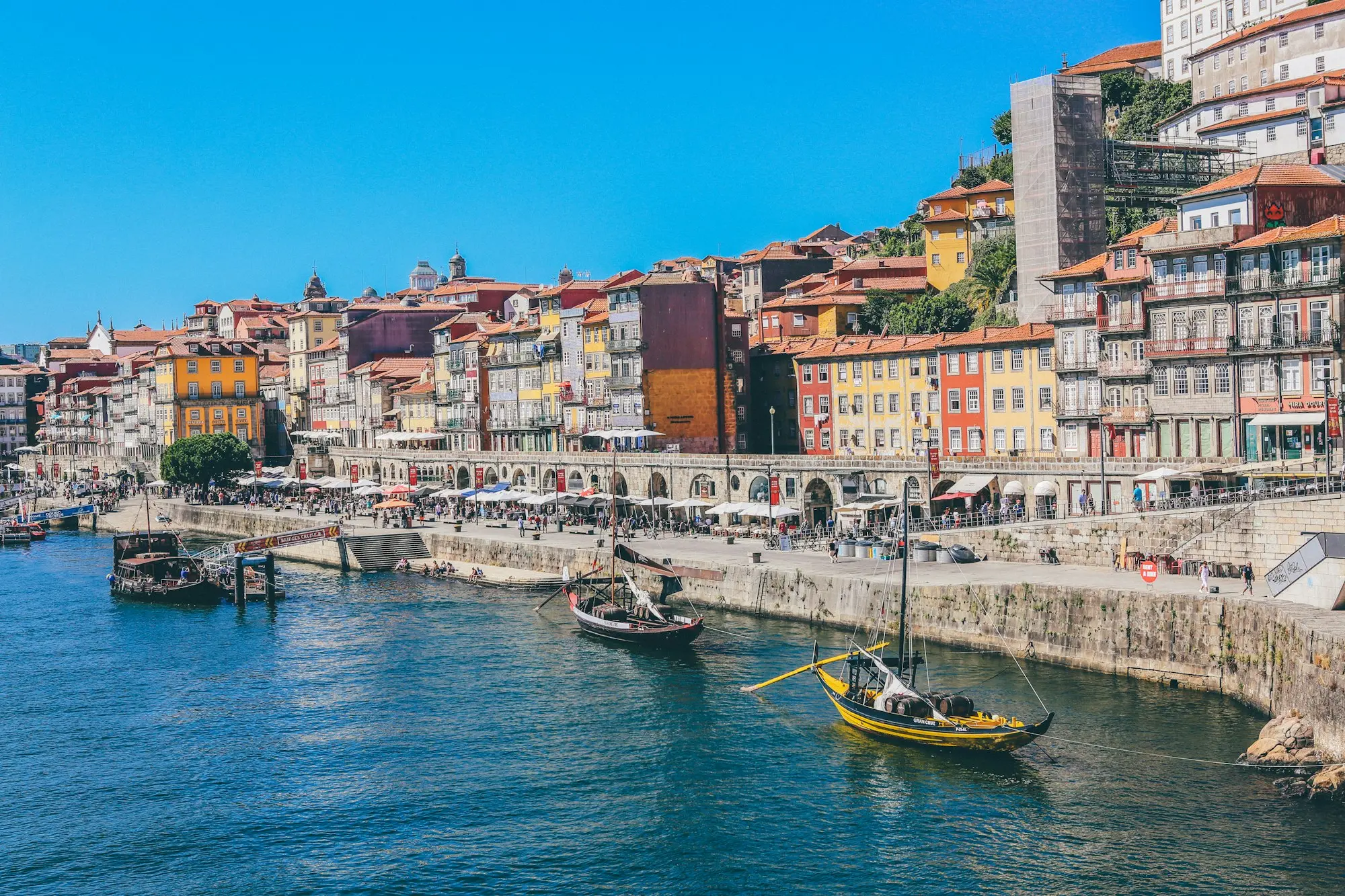
The €300,000 property route Calvin describes sits alongside other countries' investor and golden visa programs.

How to Buy Property Abroad as an American (2026 Guide)
Cyprus grants residency for a purchase of €300,000 or more, so the buying itself is the immigration step.

How long does it take to get citizenship in another country?
Calvin says Cyprus citizenship takes five or seven years depending on which residency card you hold.

5 Countries That Don’t Tax Your Social Security in 2026
Taxes are the biggest mistake Calvin sees; Cyprus taxes pension income at 5%.
Transcript
Transcript is auto-generated and lightly corrected; it may contain errors.
Read the full transcript(6,134 words)
English speakers are still a novelty here. And of course, I had two cats who basically destroyed their carriers on days one and three. There's a lot of discussion to make sure that we were aligned and that we were doing it for for similar. Reasons. What are the visa paths? Are you running towards something or are you running away from something?
And then what? I can't believe we're finally here. This is Americans abroad. This week on Americans Abroad, we talked to Calvin Mazlumyan who helps people move all over the world. Stephanie, he is somebody who thinks that you should be essentially collecting residencies and citizenships like Pokémon. How do you feel about all that? Yeah, I mean, I, I think it's, it's an interesting option because it gives you flexibility.
You know, if if one place isn't your vibe or something changes geopolitically or financially, you have, you know, a, a, a Plan-B. And in fact, his company is Plan-B Outbound Migration. I know that for us moving to Portugal, one of our goals is to eventually get that always desired EU passport. So, you know, it's something that I've been thinking about now, will I go out and get passports for, you know, half a dozen different countries? Probably not.
But having something that gives me that extra flexibility, not only for travel, but also for where we want to settle, you know, 10 years from now, 20 years from now. I think it's kind of interesting for you, Jen. Are you planning on getting your Mexican citizenship or are you thinking of staying in a in a residency status?
What is your plan, you and Brett? Well, I do think this whole business of gaining residencies and citizenships is shrewd. I don't know if I personally have it in me to go. I, you know, who knows, who knows what the future holds. And I do like the idea of spending time in a lot of different countries over the rest of my life. Once you, once you're out, then the whole world is open to you. And you know, it's sort of like when you have to go run an errand and let's say that you
want to buy a shirt and go to the post office and go to the store and I don't know, go to the gym. And it is so hard to get up off the couch. But once you get up off the couch and go do the first errand, the rest are not that big of a deal. And now it's kind of fun to be out and about.
And then maybe you even start thinking, oh, you know what, as long as I'm out, I think I'm going to go get a blowout or pick up a new nail Polish or whatever. And you start coming up with new ideas. And I think moving abroad can be kind of like that too, because now that I'm out, I'm like, I could spend time in this country, in that country and whatever.
Maybe eventually we'll get to try all these different places. So, OK, so that said, yes, we do intend to get Mexican citizenship. I, I love Mexico. I think it's a really special, amazing place. I just don't see any reason not to not to make it a greater part of our lives and and make that commitment. I'm not going to swear that that won't change.
The world is a is a mercurial place of shifting sands and anything could happen with us and Expatsi in the world. And so I don't want to swear to it because we still have about four years to go before we'd be eligible. But yes, as it stands, that is our plan. What about you? Yeah, and I want to definitely want to get citizenship at some point.
And I'm and the reason why I say it at some point because I know that there are people listening to this episode who are thinking, oh, well, it used to be 5 years and now it's going to be 10 years. And they're maybe thinking for themselves, do I want to pursue Portugal now that it's 10 years? And I also want to talk about the fact that, you know, what if, if we're just permanent residents for a little bit longer, if it takes a little bit longer, I'm OK with it.
I, I don't, I don't need to vote in Portugal that I mean, immediately, you know, that's not a big, a big impetigate of flexibility, the passport, the ability to go, hey, we now want to settle in Germany because it's even colder and we want colder weather or whatever we want to do. But I think even having that permanent residency could be kind of cool. Again, citizenship, yes, would be amazing. I'm also reminding myself that I have to have B1 proficiency in Portuguese in order to get that citizenship. So I think secretly, I'm kind of
glad that I have to wait five more years before they'll even allow me to take that test. We just started our Portuguese tutoring this week and maybe we've got a long way to go. So just, you know, just knowing where we can settle, I think it's great. Permanent residency will also allow us to travel freely in and out of Portugal.
We are not beholden to that. You know, have to be in country X number of months every two years. It changes a lot. But I don't know there. I think there's just something special about having that second passport. On this week's episode of Americans Abroad, we are joined by Calvin Mazlumyan from Outbound Migration. Calvin, thank you so much for joining us on the podcast. Thank you for inviting me.
So I would love to learn what got you into this business of helping people move abroad. Is there a personal connection for you? Tell us a little bit about your story. Well, that's a very good question. Actually, I do have a personal link to the whole thing. I'm Armenian by ethnicity. I was born in Istanbul, Turkey, and we immigrated to the United States at a very young age. And I do see the value of holding multiple nationalities, multiple residencies, whenever the right time comes. It becomes a benefit all of a sudden. I'll give you a couple of
examples real quick off the top of my head that I can think of just right now. My nephew was in Qatar end of January thinking he was just going to have a time of his life because it's winter and nice and warm out there, etcetera. And that the Iran war took place and he was stuck in Qatar, bombs flying over him and missiles and everything else.
And he reached out to the US embassy saying how can I get out of here? And the embassy staff said we don't have anything arranged for American citizens abroad. We're sorry. Just keep waiting. Well, I told him, guess what? You also have Turkish citizenship. Call the Turkish embassy. Let's see what they say. And they were able to get him out by bus from Qatar to Riyadh. And then from there, he flew out back to the United States. So you never know which passport at what time in your life will really provide a benefit to you.
It could be something little or major. You never know. But it's always good to have it in your pocket. Yeah, that that flexibility can be, can be very important. You're a multiple passport holder, is that correct? Correct. Yeah, I hold multiple citizenships. I hold residencies. I mean, during COVID, it was just something else. I'll give you another example.
Like I really wanted to celebrate my birthday in Mykonos, Greece in the year 2020. And because of COVID, Greece shut down its borders and we just could not fly. Everything got cancelled. I barely got my money back. It was annoying. And then I said, OK, next year for sure, I'm doing it. And guess what? In 2021, Greece still didn't open up its borders. So as AUS citizen, we were just not able to enter the European Union, you know?
So that's when I said, OK, I need to have a residency from some within the European Union. That way, next time a COVID pandemic shuts down the borders, I will not be restricted. I will be able to get in and out of Europe as I please. And so talk to us about how you decided to start your business outbound migration. Well, I am an immigration attorney based in California. So my main thing was supposed to be inbound migration to the United States.
But as time went by, this COVID piece especially raised a lot of concerns among Americans. And they kept on asking like Calvin, how can we move abroad? How can we have some type of a Plan B abroad, etcetera. And I, I realized that rather than doing this as a volunteer, I might as well just open up a separate consultancy. And our consultancy firm is called Plan-B Outbound Migration Consultancy.
And there we help Americans kind of consider what Plan B options they have available. Can they immediately move? Can they move later on down the road? Do they just want to have a residence card for emergencies like I mentioned, if they just want to travel to Europe, but they cannot enter, for example. So all of those features kind of added up nicely. And then of course, the political climate changing, etcetera, also raised the amount of inquiries we have. So believe it or not, I'm doing more than 50% outbound than inbound right now.
So United States is not as popular as it used to be as far as immigration, but Americans definitely want to move abroad. Calvin, I respect the fact that your business was inspired by wanting to have a birthday party. I can. I can completely respect that. So what are all the countries that you help Americans move to? Great question. I mean it all depends on needs, right? So with Americans for example, becoming a Dubai resident does not really help them out much because when you're a U.S. citizen, your taxation is based on citizenship. So even if Dubai charges you 0%
tax, you still pay Uncle Sam your dues. So therefore it's not as attractive for Americans. What attracts Americans the most is the lifestyle. So European Union is always on top of the list for Americans, preferably Portugal, Spain, Malta, Italy, Greece, Cyprus, you know, all of these Mediterranean climate countries are very attractive to Americans because of its lifestyle.
And like if you want to retire sooner or later, you want to have that European destination online. Next is usually ancestry based immigration. We have lots, the British ancestry, Irish ancestry, German ancestry, clients who just say, you know what, can we just obtain citizenship through our ancestry? And yeah, by all means. And once you become a European Union citizen, you basically have access to all the 2728 European Union nations where you can live, work, do whatever you want as long as you want. So that's a huge plus.
And then we have another category of Americans who say we cannot move to Europe because of the time zone changes because we still have to do some digital work within the United States. So for them, time zone matters, in which case we recommend something in Central or South America. Most popular ones are usually Panama, Costa Rica, Uruguay.
You know, these are like the stable nations within our hemisphere that, you know, life is good to live in. And Mexico too, of course, because of its proximity. Yeah. I wanted to focus on Cyprus for for just a moment and in fact, we are hosting A webinar with Calvin on July 11th where we'll do a deep dive in what Cyprus has to offer. What pathways are there?
You can find more about that at expatsi.com/events. But let's touch on Cyprus just a little bit here on on this week's podcast. So some people may have remembered in the past this idea of, you know, buying citizenship in in Cyprus, but I understand that some of the programs have changed. So talk to us about what has changed in terms of citizenship or residency by investment and what does that program look like today?
Definitely. I mean, let's not even say something specific. Malta also had the citizenship by investment when you pay and then get citizenship. The European Court of Justice has been very strict about this matter. They absolutely, absolutely do not want any European Union country selling out citizenships for money. You know, it's no longer available. The court ruled a few years ago and shut down anything and everything relates to direct citizenship by an EU nation. So if you see or read anywhere that says a country in the European Union is just giving away passports, it's a lie, it's a scam.
Beware, do not follow. So the only way right now to have a pathway to citizenship within the European Union country is through a residency program. Various countries have their own setups, Cyprus has its own right now. The cool thing with Cyprus compared to most of the other European Union countries is that it can give you direct permanent residency so long as you purchase any property of €300,000 or above.
So it's not a huge amount of an investment. You can literally buy a summer home there and then get that permanent residency. The difference between a permanent residency and a temporary residency in another EU nation is the renewal process. When it's a permanent residency, you don't have to renew it anymore. You just get the card and you're all set. Card expires, they'll issue you a new one and so on. With the temporary residency, every one to two years you have some restrictions, regulations, rules that you have to follow to be able to renew that card.
So it's not as exciting. So that's what makes Cyprus unique compared to the other European Union nations. The other part of Cyprus is that it is part of the EU, but it is not part of the Schengen zone. And you may or may not be familiar with the Schengen zone rules, but it does require you to stay 90 days in Schengen and then you got to get out of Schengen for another 90 days. So I have a lot of clients who literally spent 90 days in a Schengen zone country, let's say like Italy or France or Portugal, and then they go to
Cyprus for another three months and hang out there to fill out the other 90 days out of the Schengen zone to get back into the Schengen zone later. So you can literally play this game within the European European Union without really getting out anywhere. You don't, you don't have to like return to the United States to satisfy that requirement.
You can literally go to Cyprus, you can go to Ireland, you can go to Turkey, some other country around Europe and then get back to the Schengen zone that way too. What is it like in Cyprus? What is life like? That that's a good question because a lot of people may or may not know much about Cyprus. Cyprus is like the third largest island in the Mediterranean. It's only a little bit smaller than Sicily and Sardinia islands.
So it's pretty big. I would say it's about the same size of Puerto Rico. If we have a comparable size, it's 10 times or maybe even 20 times bigger than Malta. So there's a lot more to do in Cyprus than in many of the other islands around the Mediterranean. 2/3 of the island is Greek, 1/3 of the island is more Turkish.
There is a separation between the sections. The Greek part is the European Union, it's the Republic of Cyprus, and then the Turkish part is its own separate entity that was only recognized by Turkey. But that's just the way it is. But it's a very peaceful island overall. There is nothing happening. For the last 50 years, that separation has been set, and that's just the way life goes on there.
On the European Union side, the euro is the currency that they use. The climate is Mediterranean climate. However, there are some mountain ranges within Cyprus Island, so you can actually even go skiing in the winter for about a few weeks. It's doable. But overall, it is a Mediterranean climate, which means that the temperatures would be in the 80s and 90s. Three, 100 plus days of sunshine, easily accessible. You know, you can fly to Cyprus from anywhere in the European Union, and then to the northern side, you could fly from Istanbul nonstop.
So you know, the island is accessible whichever way you look at it. The prices are pretty reasonable. Again, you can't buy something in the beachfront for €300,000 or so. And life is simple. I mean, that's the European lifestyle. Again, the same thing. So if you like the Greek culture, you like the Turkish culture, this island offers you a little bit of both.
So it's kind of cool in that sense. I didn't know it was so big. I did know that it's shaped like the US. Mixture wise. No, it looks like it the island itself, yeah, Yeah. So I can always find it on the on the map is. English. Yeah. Is English widely spoken there or is it mostly Greek or Turkish? No, absolutely.
Cyprus was a British territory between 1878, I think all the way until after World War 2. So there's a lot of British influence in there. I mean, I can easily say over 70% of the population speaks fluent English in addition to of course, Greek or Turkish. But there's also a big British influence. They have British bases out there in Cyprus, as well as British schools, international schools. So in that sense, English is an issue. Like linguistically, if you don't speak any Greek or any Turkish, you'll be just fine at the island. And do you see a lot of
Americans moving there? And is it to be remote workers or retirees or something else? Americans are just starting to discover the island, honestly. I mean, most Americans were all into Greece and the Greek islands. And I keep telling them, like, guess what? Here is a bigger Greek island. There's a lot more to do in Cyprus than any of the smaller Greek islands out there.
So yes, I mean, technology wise, they're definitely up there. So any digital nomad could easily work from Cyprus no problem at all. And again, because the island itself is a European Union member, access to in and out of the country is not that difficult. Life is again, based on EUR, very stable. And for an American individual, again for that Mediterranean climates, you know, seekers, it's a good alternative to consider. So I want to ask a couple questions about the process. Is the residency process done from the US? Just talk to us a little bit about, you know what somebody maybe find that property to buy
for 300,000 or more. What does that process look like? I mean, we work hand in hand with the Cypriot attorneys that take care of all the process from A-Z. And that's what I'm proud of saying. You know, like we always say, hey, we will, you know, hold hands and do the whole thing with you. But it's not just us.
Obviously, we work hand in hand with the lawyers of that country that you want to move to. So in this case with the Cypriot attorneys, we have great relationships. The pathway to permanent residency goes through that purchasing of that €300,000 property or more and you get to choose. There's different developments, different sections of the island that you can consider, etcetera.
That that process is pretty fast actually. Within one year you become a resident of the country. However, alternatively, there are some people who say, you know what, I don't want to purchase anything. What other options are out there? They do have something for retirees and digital nomads, in which case you can lease a property instead of purchasing it. That process is a little bit longer, but the good news is when you submit your application into the system, no matter how long the process takes, you're allowed to stay in Cyprus in the meanwhile.
So you are legal. You remain legal during that process. So even though it could take about a year, sometimes two years for the whole thing to be processed, it doesn't matter. You're not going to be considered out of status while living in Cyprus. For both of these pathways, is there a minimum amount of time that you have to stay in country?
So your permanent residency, let's say to the real estate investment, is there a minimum time that you have to be in country? And then the same for the retiree or digital nomad path, what does that operation look like? Good question. So the permanent residency does allow you to stay outside. So, so long as you continue to own your property or remain as permanent resident of the country.
So it doesn't matter how long you live in Cyprus. They do want you to, I believe, visit once every two years for a few days. But that's pretty much it with the retiree and the digital nomad because there is a state requirement that you're not supposed to be out of the country for more than three months. So up to 90 days, you could be out of Cyprus, but otherwise you need to, you know, literally live on the island.
But they have some taxation benefits. I mean, I can look into the tax rates, like pension income is only at 5%, tax royalties are at 3%. Let's see, employment income depends. It's anywhere from zero to 30 something. And the corporate tax is 15%. So they have some exciting tax benefits compared to the other EU nations that you would be living in. So it's not a bad deal to live in Cyprus. And is the tax resident threshold similar to other EU nations where it's 183 days and once you pass that you become a tax resident?
Is that how Cypress treats it? That's yeah, that's pretty typical globally, actually. Like 183 days is always a threshold. And some countries actually say, I don't care about the days, but I care about your ties to the country. So if you have your spouse and children going to school in the country, etcetera, even if you yourself don't, you know, like some people adjust themselves to 180 days or 170 days to make sure they don't get it to that thing. But some countries treat it differently. Shakira had that problem with Spain, for example, where she thought that 183 days matter.
But no, they said it's the ties. It's not the ties. Ultimately she won her case on the taxation thing, but it's a challenge. So you don't want to really risk it, I think. So if you don't want to be a tax resident of a specific country, it just make sure that you don't build those strong ties to the country.
Do you know if the country has a totalization agreement with the United States, Speaking of taxes? Speaking of taxes, I don't know. I can find out though probably by by the time we have our webinar next week. I'll get the answer for you about that one. Amazing. So what are you going to talk about in the webinar? Well, I'm thinking of going over the three different pathways, the digital nomad, the retiree and the property purchase pathways for Cyprus Residency leading to pathway to citizenship as far as what the timelines will be, linguistic requirements, etcetera.
And then again, the convenience of Cyprus as far as being the European Union nation, not being part of the Schengen zone, proximity to the different countries around. Like right now it's an Israeli favorite. Actually, if you think about it because of the war, all these Israelis were escaping Israel and heading towards Cyprus. It's right across. What is the timeline to gain citizenship in Cyprus? It depends on the type of residency you have. Normally it's five years or seven years depending on the type of residency.
And depending on the type of residency card you have, you have to either know B1 level Greek or A2 level Greek. So all of those details I will provide during the webinar. Got it. And explain what the benefits are of having EU citizenship. Well, again, when you have an EU passport from whatever EU nation among the 27 or 28 countries out there, you have access to the entire continent.
Like you can literally, let's assume you became a separate citizen the very next day, you can move to France and live there forever and ever and you can take advantage of their health benefits, educational options, everything. You can work, you can do whatever you want. Same thing for any other country. You can, you can just get to choose.
You pick and choose. You go, OK, now I want to try Germany, I want to try Ireland, I want to try Portugal. You can just move, live, work, do whatever you want. And and it's multi generational, right? I mean, when your children are born, they will be born that European Union citizen. You know, if it's Cyprus, it's a citizen and these rights are not taken away from you.
And that's super cool. Like to give you an easy example, if an American person moves to Italy, they have to get a temporary residency card. They have to, you know, apply for permanent residency, become a resident, then apply for citizenship, etcetera, etcetera. But if you're a Cypriot citizen moving to Italy, the only thing you do is go to the nearest municipality and say hello, I'm a European Union citizen, here's my Cyprus, you know, passport, just register and that's it.
It's literally like moving from California to Nevada type of the thing. It's beyond simple. Amazing. Calvin, you have such a diverse background when it comes to helping people move internationally, Immigration, investment, real estate. Tell me, what is one of the biggest mistakes that you see people make as they navigate their move abroad? Oh, tax considerations. I have to be honest with you because a lot of time people don't realize what type of income has a specific tax consequence.
This one I'll, I'll give you the Portuguese example. For example, Portugal had this non habitual residents taxation set up for many, many years. They don't have it anymore. They don't have that version anymore. But that version basically made you tax exempt from all active income. But I had a couple of clients who were retired and used that formula and moved to Portugal.
And guess what? Passive income is not included in there. So now they are paying some taxes on their Social Security, on their rental income, etcetera. And they were surprised like, oh, you know, we didn't know. Well, guess what? I am not a tax advisor. I'm not a tax attorney. I'm an immigration attorney. I connected you. These guys have connected to, you know, Cpas in Portugal.
And all they had to do was ask what type of tax consequences am I gonna have? So anytime and every time a client wants to move abroad, the tax consequences will matter. Find out if the US has a tax treaty with that specific country. What are you going to be paying? I mean, whenever there's a dual taxation agreement, you will not pay double tax. That's a given.
But there will be a cumulative tax and it could be higher than what you would be paying otherwise. So you have to put it on a balance like, is it worth my move, this additional tax that I'm going to be paying, or is it not worth it? And then make a decision. Perfect. Well, Calvin, thank you so much for joining us today. If you are listening to this honor before July 11th, 2026, you can join us live for our webinar to learn more about moving to Cyprus at expatsi.com/events. If you missed the live show, don't worry, you can watch the replay at expatsi.com/resources.
Calvin, again, thank you so much for joining us on Americans Abroad. Yeah, thank you for inviting me. Have a great one. Jen, do you know what time it is? I was born knowing what time it is, and let me tell you, I have been really thinking about specifically people like you and me, American women. And because of that, I wrote a little song for the Q&A.
OK, ready. I'm so ready. American. Woman. Let's get away. Listen what I say. What do you think? I love it. I love, I love all the A's at the end. I think that. Thank you. I think. I could add a couple more, but you know. We're having a AIDS, AIDS for days. Let's get into our listener question this week. So we had somebody write in and they asked what is 1 country that's getting a lot of attention right now that you think people should take a second look at and one that's maybe a little overhyped, so underrated, overrated. What do you think, John?
I like this as a follow up to our earlier TV discussion because because it's so personal, right? I mean, it isn't a lot of times you read all of these listicles, articles and, and they do treat countries like they are brands, you know, and you know, this country is trending and this country is not trending. And it's like, Can you imagine the thousands of years of human history and wars and things and if they could step forward in time and see that they are a trending hashtag, I know or that.
It's the moment, yeah. Or, you know, this summer's hottest visa is the Portugal D7 or whatever else. But the truth is it is kind of like, it's kind of like that whatever it is about human beings, the, the biggest indicator of whether or not humans are going to want to move somewhere is if humans have moved there.
And by humans in this case, I mean Americans. So if Americans are hyping up a place, then everybody wants to move there. And at some point it will hit a critical mass and it will decline. Now the one thing that I will say is that regardless of anything you read, no country has hit that tipping point or is anywhere close to it. Yeah, I I just there really isn't up. We'll talk about over hyped because and again, it's so personal, but yeah, there is no Americans have invaded blank country.
That is actually true. You know, I think at this point, even in Portugal, which is you know what we're obviously what we're going to talk about in terms of being super popular. I think there are 22,000 Americans in the whole freaking country, which is I mean, think about that. That's not enough to fill. Yeah, yeah. High school stadium in Texas, like it's just not a huge number of people. So in terms of countries that have been very popular, without a doubt, Portugal is high on the list. There's a lot of talk about Mexico. The truth is 80% of people, 80%
of Americans who moved to Mexico have Mexican heritage. So it is people who are typically dual citizens cross-border. And so right there are some American enclaves in Mexico. There's one in IHIC and there's one in San Miguel de Allende. I would say that's probably true in Costa Rica, but in a country as big as Portugal I just don't even think maybe what may be in Keshkai's you could say.
Right or down in the Algarve, but that may be more British citizens. But I just looked at some. Numbers. Yeah, that I looked up. If we combine both US and UK citizens, it counts for .6 of all residents nationwide in Portugal. So US in England would have to reform to still be less than 1%. Well, Americans in particular don't even make up 1% of immigrants of Portugal. Not just 1% of Portuguese, but not even 1% of immigrants, because there are over 1,000,000 immigrants in Portugal. Most of him are Brazilians.
So anyway, you know, I don't know that there isn't any place where it's too late. You know, I've had friends say that before, you know, oh, we want to move to Portugal. We think it's going to be too late. And we're just so funny. Because too late for what? Yeah, too late for what? It's not like, it's like, it's so over. And I think it's like.
City and the fire marshals at the door. The bouncer is not letting anybody else through the velvet ropes. Exactly. Or it's no longer cool or something like that's just not how. And I, I know people get those impressions even about American cities and things like that. You're from San Antonio, so I'm sure you've heard that about Austin your whole life and you lived in Austin and stuff like that. So I don't know, I think that's funny. The the point is that you find a place that suits you and makes you happy.
Now that said, since we launched Expatsi, which has been 4 1/2 years now, crazy, I won't say since we launched it, but since we launched it and then learned a little bit. So maybe for about the past three years, we have said that there are 4 underrated countries and those are Albania, Estonia, Slovenia and Uruguay. And I will say that as of today, Albania and Uruguay are not nearly as underrated.
People are actually taking those two countries seriously and starting to move there, and they're very, very different. Uruguay and South America, if you don't know, which is nestled between Brazil and Argentina, is incredibly posh and nice. It is beautiful, it is peaceful, It is a stable democracy, which you know, the US is not. And it's very progressive and it is known for wine and beef and like, it's just, it's just a really nice, nice, nice place. Albania.
Another big benefit of Uruguay is you can apply for residency after you get there, and you can get citizenship in as short as three years if you are married, with five years if you're not married. Isn't that funny? Because you take two years to find a partner. Well, but, and it's not even a Uruguay partner, it's just period. They just want married couples.
It's so funny anyway. And then Albania is rough around the edges, although, you know, they've been given it what to and what for to Ivanka and Jared, which has been fun to watch. But it is, you know, underdeveloped for sure. It is low cost, although, you know, there are certainly parts that are rising in cost on the coast. But it is Mediterranean.
It's in the Balkans, easy access to places like Greece and Italy and Slovenia and things like that. And it is not in the Schengen zone. And Americans can go there for a year, no questions asked, and only Americans. So it's a great place to find a place to go live on $1000 a month and figure out your next steps. So those two, I think, are really becoming more and more popular.
Slovenia and Estonia are still very much under the radar. Amazing. Well, if you have a question you would like for us to answer here on the podcast, you can e-mail your questions to podcast at expatsi.com. Americans Abroad is an Expatsi production. Please like, share, subscribe and leave a review. Are you thinking about moving abroad? Start with our quiz at expatsi.com.
That's expatsi.com.
Not sure where you’d go?
Take the free Expatsi test to see which countries fit you, then come back and listen to the episodes about them.