
Episode 15 · June 23, 2026 · 37:41
"Don't Be Afraid To Be Curious" How to Move to Ecuador
What it takes to move to Ecuador, from visa income minimums to how safe daily life really is.
Listen on Spotify →Featured in this episode
In this episode
Jen Barnett and Stephanie talk with Marcos Chiluisa, CEO of EcuaAssist, about moving to Ecuador. It opens with Jen reading from her journal. She grew up with a book that painted Ecuador as dangerous, and found the friendliest country she has visited. The hosts connect that to misinformation, curiosity and Anthony Bourdain.
Marcos covers dollarization and crime, then the visa paths: professional, rentista, pension and investor. He moves on to housing, everyday costs, transport and healthcare. Ecuador suits people who want a slower pace of life. The episode ends with a listener question about the US dollar. The hosts' answer: plan for it to go up or down, since nobody can predict it.
Key takeaways
- The professional visa needs three things: a diploma registered in Ecuador, background checks and income of at least $482 a month for the three months before you apply. Expect about six months from gathering documents to approval.
- You can start the professional visa from the US, or from anywhere else. After at least 21 months on a temporary residency visa, you can apply for permanent residency.
- The rentista visa (passive income) and the pension visa both require at least $1,446 a month. Bank statements have to show the money arriving.
- The investor visa starts at $48,200, held in real estate, a certificate of deposit at an Ecuadorian bank or shares in an Ecuadorian company. Ecuadorian banks pay between 5.5% and 11% interest on deposits.
- Wait six months before buying property. Don't use real estate for the investor visa unless you're 100% sure of the place.
- Leaving rent aside, budget $500 to $600 a month. Rent runs $500 to $800, electricity for a two-bedroom is $60 to $70, and a cell phone is $25.
- Cab rides cost $1.50 to $5. A decent car costs about $9,000 and can go up to $30,000.
- Ecuador has universal healthcare, but expats must carry insurance once they have a visa. By law, people with pre-existing conditions can still get coverage if they declare them.
Chapters
Show notes
Marcos Chiluisa is the CEO of EcuaAssist, a company specializing in Ecuador Relocation. The team has an in-depth conversation about Ecuador, pros, cons, and even the more difficult topic of crime. We also cover themes such as curiosity, battling misinformation, and even life lessons from Anthony Bourdain!
Learn more about EcuaAssist
To begin your journey abroad take our FREE quiz!
This episode is general information, not legal, tax or financial advice. Talk to a professional about your own situation.
Questions from this episode
Do expats need health insurance in Ecuador?
Yes. Once you have a visa, you must have insurance in Ecuador. Public insurance has good infrastructure, but waits for an appointment can stretch to months. Private insurance costs $150 to $350, depending on your age and pre-existing conditions. By law, you can still get coverage with a pre-existing condition as long as you declare it.
What does it cost to live in Ecuador each month?
Budget $500 to $600 a month before rent. Rent runs $500 to $800. Electricity for a two-bedroom apartment is $60 to $70, and a cell phone is $25. Cab rides cost $1.50 to $5.
How much income do I need for a professional visa in Ecuador?
$482 a month, received in your account for the three months before you apply. You also need a diploma registered in Ecuador and background checks. You don't need a job, a business or a business plan. Registering the diploma takes about two and a half months, and the visa itself takes about three. Plan on roughly six months in total.
How long until I can get permanent residency in Ecuador?
You need to hold a temporary residency visa for at least 21 months. After that, you can apply for permanent residency. Starting your temporary visa before you arrive starts that clock sooner.
Go deeper
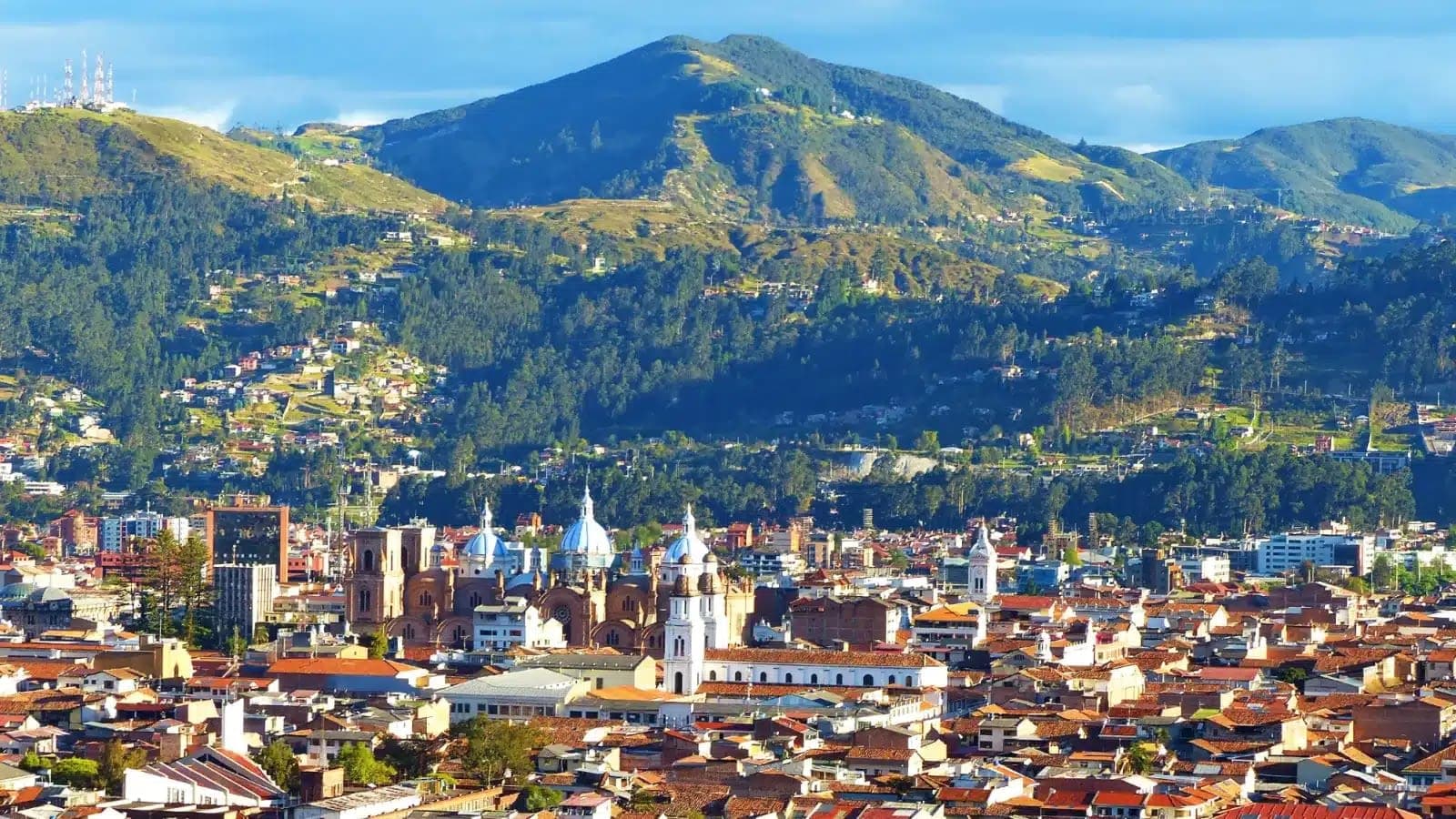
Moving to Ecuador: the honest 2026 guide
Our Ecuador guide covers the visas, costs and crime questions Marcos Chiluisa walks through in this episode.

Ecuador's easiest door to residency
Marcos explains the professional visa: a registered diploma, background checks and about six months from start to finish.
EcuaAssist
EcuaAssist, the Ecuador relocation firm led by this episode's guest, Marcos Chiluisa.

Ecuador vs Peru for Expats: Costs, Visas & Safety
Compares Ecuador's costs, visas and safety with Peru's, the same questions Marcos answers for Ecuador.
Most Welcoming Countries for American Expats Abroad
Jen calls Ecuador the warmest country she has visited, despite a book that painted it as dangerous.

Top Tax-Free Health Havens: Quality Care for Less
Marcos says private health insurance in Ecuador runs $150 to $350 a month, even with pre-existing conditions.
Transcript
Transcript is auto-generated and lightly corrected; it may contain errors.
Read the full transcript(5,437 words)
English speakers are still a novelty. Here And of course I had two cats who basically destroyed their carriers on days one and three. There's a lot of discussion to make sure that we were aligned and that we were doing it for for similar reasons. What are the visa paths? Are you running towards something or are you running away from something?
And then what? I can't believe we're finally here. This is Americans Abroad. Hello, and welcome to Americans Abroad. I'm Jen, and this is Stephanie. And today we are going to have, you know what? I don't think we've ever introduced ourselves with one like that, surprise surprise, since 20. You get to learn our names. We play hard to get. I'm Jen and this is Stephanie.
And we talk about life abroad. Today we're going to be talking to Marcos Chiluisa from EcuaAssist all about how to move to Ecuador. And I actually want to kick off today like the 13 year old by popping out my diary and telling you my experience. Last year when I went to Ecuador we had our first group scouting trip in November and I didn't get to do the whole thing because of time.
But we went and spent a few days in quantum and it was really important to me and I and I just want to explain why. So if y'all will indulge me as I get out my pink fuzzy. I'm like all written in bubble letters. Yeah, yeah, in code. OK, I said. Here is why joining the Ecuador scouting trip was so important to me. Being raised evangelical, I attended Southern Baptist Church and I went to an assembly of God's school through 8th grade. I was assigned to read a best selling book about some missionaries who were killed in Ecuador. Not to blame the victims, but
the mission was called Operation Savage in the local language, and the missionaries thought they went over the remote, famously violent Amazonian tribe by dropping gifts from their airplane. In fact, they thought the warriors who eventually killed them were actually coming to ask for rides on the airplane. But more than that, it was portrayed to us that all of Ecuador, and maybe all the world aside from the US and Europe, was like this, full of bloodthirsty, uncivilized killers who might murder you just for sharing God's Word. But what I found to be true is that Ecuador, just like my hometown and the rest of the
world, is filled with ordinary people trying to find love, raise happy families, do fulfilling work, and live in healthy communities. And also just like my hometown has some problems, cartel activity and corruption, especially in Gaia kill, affect local security. Kwinka where we visited had just over 8 murders per 100,000 people last year. By comparison the city I'm from, Birmingham, had 81 and Gaia kill, the most dangerous city, had 39. Besides that, there are different laws amongst indigenous groups and they're allowed to police themselves and they have some policies that the average American might consider to be vigilante justice.
But personally, I would rather stay in my own lane and not judge those groups. What I believe is that Ecuador is the friendliest, warmest, most welcoming country I'm visited. Yet it makes it easy to move there, not just logistically, but emotionally as well because people are so kind and open. I can only hope they never read that book. That's lovely.
That's really, really, I got like a little like emotional just, you know, thinking about, you know, especially us in the USI feel like we're only shown like the bad stuff. Like it is, you know, America's the greatest country in in the world. And when we look outside, it's the highlight of the the death and the murders and the natural disasters and all of these things.
So, you know, to have Someone Like You, like myself, like our Expatsi audience who have made the move, who are adventurous and, and will step outside of that comfort zone and go like, no, I really want to see what it's really all about. And recognizing that like deep down, we're all just the same. We all just, you know, want to have a happy life and, and a healthy life and, you know, find joys in the day-to-day, you know, to to varying degrees. And just recognizing that that is really like the the universal experience.
I agree, and it scares me because I spent decades believing that Ecuador was primarily jungle with with uncontacted tribes because information was kept from me and I thought that that time was behind us. I thought that as as time we're on, the country would get more progressive because this information would be shared. In a lot of ways it has. People forget we're in the middle of Pride month right now and I and I commented in the newsletter that I didn't know an openly gay person until I was at my second cut job out of college.
You know, that is how different things were. And there are a lot of a lot of things that have improved because the ways that people can share information. Mm hmm. But I my biggest fear is going back to a time where people don't have info. And the The funny thing is, is that as much info as we can share, misinformation just spreads like wildfire.
Oh my gosh. I mean, the craziest A conspiracy theory pops up before, before it hit the real story hits the ground. It's it's just wild. And I think maybe that's my neurodivergence is being very truth seeking. Yeah. And fact seeking. And it scares me. There are faction we're going to talk to Marcos very frankly about crime in Ecuador. They have had an uptick this decade. You know, it doesn't affect everyone, but it exists. And we don't want to bury our heads in the sand about it. But I just fear so much the control of information inside the US and the wildfire spread
of misinformation. I think it is the biggest danger to society. I think more than anything, it makes us afraid, which takes away our curiosity. And when we can continue to be genuinely curious about the world around us, genuinely curious about other people, it allows us to kind of open our horizons. Yesterday I was going through my Facebook memories and realized that it was the, I believe, the 10th anniversary of Anthony Bourdain passing. And I read you read this thing that I wrote, you know, thinking Tony Bourdain for being this person that through food and travel, you know, like, like we
started talked about that. Like at the end of the day, we're all just kind of the same. You know, we we we want the same things. We appreciate the same things. Our stories are similar. Our wants for our families are similar. And having, you know, this, you know, it's not no kids, not nose kid of a chef who became this personality. And that was like the power of Tony Bourdain was going into these places that people didn't normally travel to and sitting down with people that a tourist wouldn't normally meet, eating a dish that a tourist might be
afraid to try and igniting curiosity in the American population. So I, I think that really resonates with me. It's really comes down to not being afraid to be curious at the end of the day, and that's how you get exposed to this wonderful world that we live in. Welcome to this week's episode of Americans Abroad. Today, we have Marcos Chiluisa from EcuaAssist to talk all about moving to Ecuador. And Marcos, thank you so much for joining us today. Yeah, absolutely.
Thank you so much, Stephanie for for that introduction. Absolutely. So I understand that you're an an expat too. You're an immigrant as well. Where did you grow up? Yeah, I was born and raised in Venezuela. My parents actually, they, they are expats, they immigrate to Venezuela back in the 70s when it was the boom of the oil in industry in Venezuela.
So I was born and raised in Venezuela. And then we moved in 2000 when Ecuador became, I mean, it was the anniversary of the dollarization when I moved to, to Ecuador. Explain what you mean by dollarization, because I don't know if everyone listening understands that benefit of living in Ecuador. Oh yeah, absolutely. Well, when in January 9th of 2000, Ecuador made official as the currency, the dollar, Ecuador before it had what a lot of countries they're having right now, problems with inflation, problems with inflation because government, I don't want to get into any, any political conversation right now, but when governments, they
don't have money, they start printing money without any, any supporting backup. So what happened in, in late 99 in, in late 90s in Ecuador, they have so much debt with the teachers with a lot of people. So they start printing money and inflation, it was skyrocketing. And since January 9 of 2000, Ecuador that we don't have our own currency, but we have the dollar. So we don't have the power to print money. So that limits the the and the same time that's a benefit because we're limited to the printing of the money. We don't have inflation like other countries have. We have only the dollarization
that allowed us to keep and stable a price of everything in the market. And it's a huge benefit for Americans because everywhere else you go, aside from I guess Panama believes you have exchange rates and so you have to pay some percentage in exchange fees. You have to deal with arbitration. But when you are moving to Ecuador, it's dollar for dollar.
So whatever price you see on a menu is the price that you pay. And you aren't doing that math in your head. So as someone who lives in Mexico, you know, I know that stories about things like crime can be grossly over exaggerated in the USI know that Ecuador has gone through some turmoil. And listen, I don't want to get into politics either.
Let me tell you, everybody will be delighted not to talk about politics for the next 30 minutes, but there has been a surge in crime. Do people need to be afraid? Is it localized? What is it like on the ground? I, you know, I was there in November and I felt safe as a clam. I didn't see everybody was so lovely and kind. So what is it really like?
Yeah, absolutely. Yeah. I this this crime topic, it started in 2022 when when one of the largest media in in the US, they made a big article. And what I always say is like media and press, they want to sell news. That's a business. That's how they generate income. So what happened? This is my reading of what happened back in the time.
What happened was like, OK, well, this, this is a country where historically it never has been like a country with any or major issues with crime. And now it's a it's a big thing. So that's, that's my reading on that, that regarding the people living in Ecuador, this is always I, I say this, unless you are in the drug business, human trafficking business, then you should be concerned. If not, you can live your life day-to-day life. You will be absolutely safe and you don't have anything to worry.
Of course, I mean, you cannot walk in the middle of the night and in downtown because it might be a little bit risky. But in general, if you stay with everyone, with a lot of people are you, you will be okay. And of course, I don't want to be naive, but something that concerns me a lot is like casualties. And you never know when this is going to happen. And but crime in Ecuador, they're, they're, they have the crimes against their, their own, I mean, between gangs. So they mostly are very focused and in very specific areas. It's very hard to see where they
go and do commit some crimes. It related to the drug trafficking and, and, and human trafficking and all those business in other areas that they're not their own. Would you say that there are certain areas that have less activity than other areas? Oh yeah, absolutely. Quanke is one of those actually Cuenca in 2025 was and still, but in general in South America was nominated one of the safest cities in South America and in Ecuador.
Cuenca is the safest city in in Ecuador. Then it follows by Kotakachi Bill, Kabamba Loca and some areas in Quito the the Kumbaya area where where is the the most absolutely safest place in in in all Ecuador. Perfect. Thank you so much for your your honest answer on that question that I know a lot of our our listeners have. So what is it about Ecuador that makes Americans want to move there?
And are you seeing an increase in Americans wanting to relocate to Ecuador? Yeah, absolutely. And I and I love this topic. I'm, I'm personally passionate about this when, when I have to speak about Ecuador here and I always say it's not about the currency, it's not about the US dollar that actually in Ecuador. I mean, I always ask this when it was the last time in the US when you have the chance to buy something with 1/4 with $0.25, actually in Ecuador you can use coins with, with $0.25. You can buy 5 or 6 bananas and
probably 2 avocados, but that's where the money goes further if you're using the dollar. Of course, the quality of the food. We have food all year round. The weather is a spring like it's like in the 70s all year round. And of course the quality of life, I mean, your, your health will get increased because you start walking more, you start eating better.
But those four are not the main reason why Ecuador is a good expat destination. The main reason why Ecuador is the is a good expat destination and it's hard to find in, in other places. And it's, it's people, people in Ecuador, they are very, very friendly. They are a welcoming towards N Americans and this is very unique and what is towards N Americans.
One of the theories I have and I want to be very, very sure with this is back in in the time when President Kennedy was in office, he created Peace Corps Volunteers. And when Peace Corps Volunteers came to Ecuador, they start helping a lot of people, teaching agriculture, teaching about business, teaching about a new language and a lot of things. So in the back of the minds of five generations right now in Ecuador, there is this perception towards N Americans that they are coming to help, they're nice people. So whenever they see you walk in the street, they associate you with that.
They see you as a nice person. That five generations they they perceive N Americans like like that. And have you seen more Americans exploring moving to Ecuador, especially in the last few years? And the last few? Well, the last seven or eight months we have been very, very busy in, in our office. I've seen every time more people asking on, on Facebook how they can get help and, and relocation visas, but also health insurance. But it's, it's just like the last seven months when we got increased.
But back in the time in 2009, 2010, it was the big boom of, of Ecuador. And still it's there. And we, we, you can find expat. They have been living in Ecuador for 15 years now. I mean, they go to other countries, they go to Portugal, they start travelling all around the world. But they always have their heart with Ecuador and they are always, in their minds coming back to Ecuador. So how can people move there?
I'm I'd like to go through some of the visa paths because I think Ecuador has a lot of options other countries don't. For example, would you tell us about the professional visa? Yeah, for the professional visa, basically you need 3 requirements. One is to get registered your diploma. You don't need a business plan, you don't need a, you don't need to own a business or create a business. You don't need to get a job.
You, the only thing you need is your diploma. Once your diploma gets registered in Ecuador and on top of this, your FBI background check if you're coming from the US and state level background check if you're coming from the US or the RCMP background check, if you're coming from Canada or from any other country, your background check, Those are their requirements that you need to get the professional piece.
The minimum income required for for this visa is $482 and if you are in your account, if you are receiving your account for the last three months before the application, 482 dollars, then you qualify for the professional visa. The processing time of the professional visa in Ecuador is taking right now three months and the processing time of getting registered you're deployment in Ecuador, it takes 2 1/2 months. So in total for the professional visa will be from the beginning of collecting your documents in your home country to your visa gets approved, it takes roughly 6 months. Can you do that from within
Ecuador or do you need to do it from the US? Oh, you can do it from the US, You can do it from from anywhere. I sometimes I will. I recommend to start the process before because by the time when you enter Ecuador, you can start the the qualifying to get the permanent residency visa. Because for you to get permanent residency visa, you need to have the temporary residency visa at least 21 months and after that you become eligible to apply for permanent residency in Ecuador. That's so short.
What about you have Pincianada and Rentista options, right? Rentista. Yeah, Rentista. Yeah, that's a good our pronunciation. Thanks. The Rentista option it's the passive income. If you have a passive income, let's say you have an investment or you are renting your property, this passive income is more than $1446. Then you qualify for the Rentista visa. Of course you need to have a contract that says that you are getting paid that amount of money every month, but also you need the bank statements showing that that amount of money actually you are receiving that that payment every month.
That's the Rentista visa and on top of that the background check. And then we have the pension visa. The pension visa, it's for those who are receiving whether it's Social Security letter, benefits or Veterans Affairs letter or any other pension that as long as you are receiving a minimum of $1446. And again you has to match with the your bank statements.
And here's something important. In Ecuador the requirement is $1446 and actually you can live well in Ecuador with $1500 a month. There are other countries that the minimum is 1000. The main your expenses to live in that country is 2500 minimum so. Costa Rica. Yeah. Well, yeah. So then in Ecuador with the minimum $1446, you can make a good living in Ecuador with $1500 a month. I will say we saw some apartments in Ecuador I would move into tomorrow that were amazing pet houses. But Oh my God, I just, oh, it's beautiful. OK.
I don't want to get off on a TIGIT. So also there is an investor visa. Tell us about that. OK. For the investor Visa, the minimum requirement is $48,200 and you can invest in real estate or a certificate of deposit in an Ecuadorian bank or shares in an Ecuadorian company. For the real estate, I always recommend wait six months before buying anything. So my, my initial recommendation is not, not to go through real estate for the investor visa unless I mean you have done your research and you are 100% sure that that's the place you want. The second option of the
certificate of deposit in an Ecuadorian bank is the probably the most secure because and the, the, and I think it's better because Ecuadorian banks, they pay you between 5.5% to 11% interest rate and you can collect that money monthly or you can get paid at the end of the year. But that's something that you can get those rates in Ecuador.
That's I, for those of you who aren't watching Jen and I on the video, I think both of us just like the surprise face emoji. You know, we, we, we search out for banks with savings accounts that are, we'll pay you 1 1/2% and we're, we feel like we're getting away with a crime. So 5 to 11% that is, that is phenomenal. You mentioned investing in real estate. And so I'm, I'm kind of curious, you know, are there houses available, you know, under 50,000? And also, what do things generally cost, especially in a popular destination like Cuenca?
OK, normally in Ecuador the, and I'm I'm going to speak in square meters in Ecuador, the most expensive square meter that you can find in in a nice building with with amenities like pool, private security, the most expensive that you can find in Ecuador in, in, in a building like this, it will be 2900 per square meter. And of course you can go a lot more. You can go up to $10,000 per square meter. But if you want to buy the house under $50,000, there's some options.
And those options are were it's, it's like a complex of houses that they are built next to each other. You can find probably a three bedroom, 2 bathroom apartment in a small yard. And of course, you have to share your, your wall with, with your neighbor. And you can find those houses between 45 to $50,000 in, in, in places like Wanka. But of course, I mean you can find something that is super nice between the ranges of 70 to 150 that will be something that it will give you a good idea on the housing or an apartment, a condo with the US standard
constructions. And then what about other items that go into cost of living? You know, you mentioned being able to buy, you know, your fruits and vegetables for under a dollar, but what about things like utilities, gas, anything else that folks have to factor in when they're budgeting for their move to Ecuador? Yeah, absolutely. For example, for for utilities, for rent.
No, for I'm sorry for electricity you will be paying between 60 and $70 a Visa 2 bedroom apartment for cell phone you will be paying $25. What are sometimes is included with the with the HOA fees. What else? The the, the gas. I mean we still have good gas prices in Ecuador, but in general if you are planning to live in Ecuador, your your budget for for expenses not including rent, we're talking about between 500 to $600 a month. If we are adding rent to that, you can find rent between 500 to $800 and you can you can have some room to other miscellaneous expenses.
It's so nice now I know cars are a little bit more, but in Quicka I didn't feel like you had to have a car if you didn't want to. Yeah, I mean cab rights and also this is what I recommend to my clients. Get two or three drivers that you know them and they will take you anywhere. If someone is busy you, you will go for the second one in line. But cab rights in Ecuador, they go between 1:50 to $5. And I mean, if you don't want to drive, if you want, you don't want to drive, that's a good
option. If you need to buy the car, you can buy cars and cars in Ecuador. They are they're expensive. They, I mean a decent car, you can buy it for $9000, but of course you can go up to $30,000. And right now we have a lot of Chinese cars. But yeah, cars are expensive but you have the option of getting a cat for you to get around. I love the Chinese cars.
That's what I want here in Mexico when it's time for us to get a new car. So what about healthcare? What is the quality like? How do expats access it? OK, All right. In Ecuador we have universal healthcare. So if something happens to you, the the public system will take care of you. They if you go to a public hospital, they will not be asking you if you have insurance.
They just will take care of you and they will take care of the bill. But if you want, you can, I mean experts, they need to have insurance in Ecuador. Once they get their, their visas, they, they, they must have an insurance in Ecuador. We have private health insurance and we have public health insurance. With the public health insurance that is handled by the government. They have good infrastructure.
But the problem with, with the public health insurance is that it's sometimes it's overcrowded for you to get an appointment. It's it you have to wait sometimes months if you are lucky few weeks but normally you have to wait several months if you get private health insurance. The private health insurance, depending on your age and I mean pre-existing conditions, you can get it from 1:50 to $350.00.
That's the most expensive health insurance I have heard. And there is another thing in Ecuador passed a law probably 5 or 6 years ago where people with pre-existing conditions they still can get health insurance. That's not a limitation for you to get health insurance as long as I mean you declare those pre-existing conditions. The the prime will go a little bit up, but you by law you are protected to get health insurance. So who is Ecuador best suited for? Who should explore moving to Ecuador? Who are people who are willing to get a pace of life more relaxed were because something
that is called tronic, but or it's just like things move in a slower pace. Actually, I remember we went in in the scouting trip last year and we have to wait for, for the service to come for, I don't know, several minutes and. Minutes, Mark. And it was a waiting of 35 plus minutes that we have to wait for them.
And I mean, if you, if you're in a rush, Ecuador is not, it's not a place for you if you are accepting and embracing the kilter of like. And this is something that happened to me actually, because I was living in Quito and then I moved to the coast. And the coast they take one hour lunch break, they go out and have lunch with their families.
But I was coming from Kita, where everything is super fast. And for me it was like I didn't understand what was going on. But that's normally what you will be finding in Ecuador. So it's just like for people that they want a slower pace of life. Fantastic. Well, if you are. Interested in learning more about Ecuador, our Ecuador scouting trips, and how you can work with Marcos and his team at EcuaAssist?
Visit expatsi.com. Marcos, thank you so much for joining us today. Thank you so much for having me. Thank you. Hey Jen, do you know what time it is? What time it is? What time is? It ready for this? It is time for listener questions and we have a great listener question this week. But in order to hear it, you will have to hear my song I wrote.
It's sort of it's kind of like a rappy kind of song. It's like a spoken word song and I I also wrote this in my journal as well. So you know my story about Ecuador and the lyrics to the song I wrote. OK, you ready? Let's go. OK and sing along if you pick up on it. OK G0T 0G0 TTOGO baby, we have got to go GOTTO.
Choreography Original choreography Original song by your two favorite podcaster. I do have red hair I want to point out. If I could only find a a pink fringed like leotard and then we can go the full thing. Tours coming to use 20. We'll be at Coachella in 2027. And we don't want your kids looking at us. Facts. Just in general, it has.
Yeah, just in general. It has nothing to do with our celebrity. So this week we have a question about money. This listener writes in and asks, given the current political slash economic environment, what concerns do you foresee for the value of the US dollar throughout the world? So this is a great question and you know the Expatsi official policy which is we do not predict the future. This is really important to us because we don't agree and we're all wrong.
And if you spend too much time trying to predict the future, you will end up doing nothing because what if the dollar goes down? What if the dollar goes up? What if the dollar goes up and down? What if the dollar goes down and up? And So what we recommend is that you just plan the best you can, presuming that it will go down, that it will go up, that it will go down and then up, that it will go up and then down.
And what would you do in the absolute worst case scenario? What will you do in the absolute best case scenario? The truth is, we don't know. I do think that, you know, I love an optimist. I married one His his catch phrase is everything always works out and girl it don't. My anxiety. So yeah, I'm like, here's why it works out. It's because I am behind the scenes making it all work out. But I, you know, I love an optimist, whatever. But yeah, what if, like, what if? What if Social Security ends?
You know, because you have no control over it. You can do your best. You can tilt it windmills. You can be in a Facebook group. You can go to a March. But what if it ends? What are you going to do? And you need to know, what if your money becomes useless? Keep in mind that if your money becomes useless, so does everyone's. You know, every American is now impoverished. So we're talking Mad Max at that point in time, right? So let's be real, you know, if it's Mad Max, it's Mad Max. And you know, we got other
problems to deal with, but it might go down. You know, the dollar has gone down since we moved to Mexico, so it made my rent go from 1300 to 1550. So what am I going to do? So I have to make 250 more dollars or I have to allocate 250 more dollars. So you do need to be prepared that it will change and brace yourself for that. But if you were thinking about economic collapse, then we're all going to be in bunkers with those big crates of powdered food, right?
And is that who you want to be? I prefer to not live that way. Well, if you have a question you'd like us to answer here on the the podcast, you can e-mail your question to podcast at expatsi.com. Americans Abroad is an Expatsi production. Please like, share, subscribe and leave a review. Are you thinking about moving abroad? Start with our quiz at expatsi.com. That's expatsi.com.
Not sure where you’d go?
Take the free Expatsi test to see which countries fit you, then come back and listen to the episodes about them.