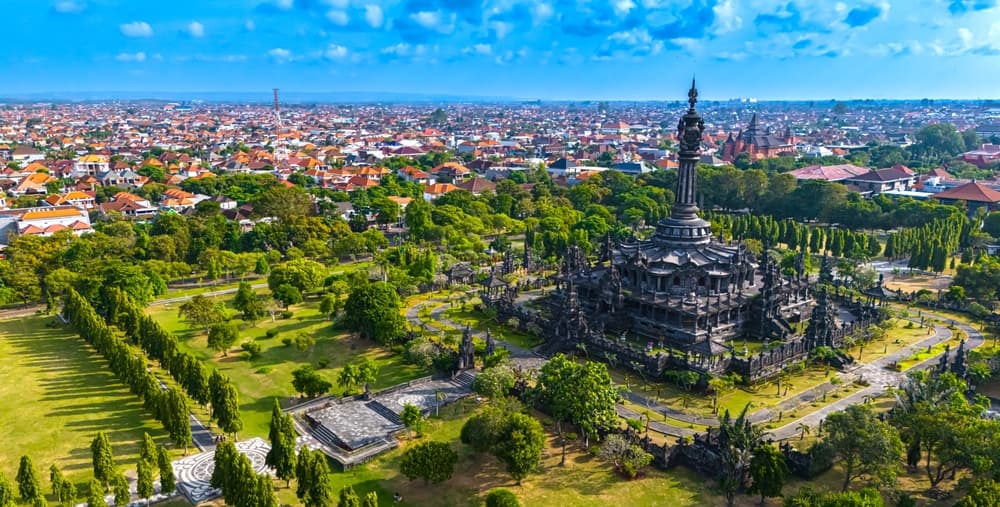
Living in Bali's south: Sanur, Denpasar, and the island's practical side
Where people on Bali run errands, see doctors, and send kids to school, with heat all year and a scooter-first road culture to plan around.
- 670,210
- Population (2024)
- $1,900/mo
- Monthly budget · single
- 82°F / 28°C
- Avg temperature
Plan on about $1,900 a month in U.S. dollars for one person living in south Bali, with most singles landing between $1,600 and $2,200. A couple spends about $2,900, and a family of four about $4,200. A one-bedroom near the center averages around $700 a month, closer to $500 farther out, and a meal at an inexpensive restaurant costs about $3. Those are 2026 figures.
This page covers the Denpasar side of the island: the provincial capital, the older seafront town of Sanur, and the airport between them. It's not Canggu or Ubud, which run on their own budgets and crowds. People choose this stretch for practical reasons: the island's private hospitals, an IB school that has been teaching in Sanur since the mid-1980s, and a car-free seafront path for morning walks.
South Bali suits retirees, families, and remote workers who want year-round warmth with a working town around them. It's a poor fit if you want reliable public transit or hate humid heat. Foreigners also can't hold freehold title to land here, so most people rent or lease.

Reviewed and updated October 8, 2026 · 4 min read
At a glance
$1,900
Monthly budget · single person
$700/mo 1-bed rent, center
62/100
Safety index
$25
Internet / month
82°Fannual average
Aug 80° · Nov 83°
Climate
670,210
Population (2024)
Expatsi estimates, updated Oct 2026, based on rental listings, government statistics, and local reporting.
Cost of living
What it costs to live in Bali
Single person
$1,600–$2,200/mo
about 40% below Austin, TX
Couple
$2,400–$3,400/mo
about 35% below Austin, TX
Family of four
$3,300–$5,100/mo
about 45% below Austin, TX
Compared with Austin, TX (Expatsi estimate, 2026).
- $3 −85%
- Inexpensive meal
- $550–$850/mo −64%
- 1-bed rent, center
- $400–$600/mo −63%
- 1-bed rent, outside
- $25/mo −62%
- Internet
Expatsi estimates, updated Oct 2026, based on rental listings, government statistics, and local reporting.
Daily life
How Bali lives
- B- grade, 30th percentile among the cities we track
- Dining & caféstypical
- C+ grade, 18th percentile among the cities we track
- Arts & culturemodest
- C+ grade, 16th percentile among the cities we track
- Parks & outdoorsmodest
- B- grade, 32nd percentile among the cities we track
- Schools & educationtypical
- C+ grade, 22nd percentile among the cities we track
- Healthcare accessmodest
- C+ grade, 24th percentile among the cities we track
- Bike infrastructuremodest
- C+ grade, 18th percentile among the cities we track
- Public transitmodest
- A grade, good physical accessibility
- Accessibilitygood
Graded on OpenStreetMap amenity density relative to the 298 cities we track. Accessibility is the exception: it's graded against a fixed standard (terrain steepness and sidewalk surfaces), not a curve.
Climate
Weather through the year
Annual average 82°F (28°C) · 68 in of rain a year · Source: Meteostat station normals (97230, 1991-2020)
On the ground
Scenes from Bali
Getting around
Transport in Bali
Most people in south Bali get around by scooter, by car with a hired driver, or by app. Grab and Gojek both run here; plenty of newcomers lean on them for the first months instead of buying a vehicle.
There is a public bus. Trans Metro Dewata runs six corridors across Denpasar, Badung, Gianyar, and Tabanan, including routes from Ubung Terminal to the airport and lines serving Sanur and Nusa Dua. A ride costs Rp 4,400, about 25 cents. The service shut down on January 1, 2025 when national funding ended, and came back on April 20, 2025 on provincial and local money. Confirm your route is still running before you plan a commute around it.
If you plan to drive or ride, sort out the paperwork first. A U.S. driver's license alone isn't recognized in Indonesia, and foreign drivers need an International Driving Permit. Traffic is aggressive, motorcycles pass on both sides, and when a car and a scooter collide, the driver of the larger vehicle is often presumed responsible.
Walking works in pockets. Sanur's paved beachfront path runs more than 4 km (about 2.5 miles) past cafes, resorts, and fishing boats, and it's the easiest stretch of the island to cover on foot or by bike. Away from it, sidewalks come and go.
- 2.7/sq mi
- Transit stops
- 0.2/sq mi
- Bike infrastructure
- 1.3/sq mi
- Wheelchair-accessible places
Mapped features per square mile from OpenStreetMap.
Keep exploring
Places like Bali

Community
Community & practical notes
Community: Sanur has drawn foreigners for decades, and some of its old seafront villas were built by expats who came and stayed. It skews older and quieter than Canggu. Denpasar itself is a working Indonesian city, and English thins out fast once you leave the tourist strips, so a little Bahasa Indonesia pays off.
Healthcare: This is the strongest part of Bali for hospitals. BIMC Hospital Kuta is open 24 hours, and its sister, BIMC Siloam Nusa Dua, was the first hospital in Indonesia accredited by the Australian Council on Healthcare Standards International. Bali International Hospital, inside the Sanur Special Economic Zone, is the first facility in Indonesia allowed to employ foreign doctors, and offers cancer, heart, and emergency care. Sanglah in Denpasar is the island's largest public hospital. Expect to pay up front: hospitals often ask for payment or a sizable deposit before admission, ambulances can take 45 minutes or longer, and Medicare doesn't cover care abroad. Carry international coverage that includes evacuation.
Remote work: Most people work from home or a café on a home connection. Indonesia's median fixed broadband speed is about 46 Mbps, so ask a landlord to run a speed test before you sign and keep a mobile hotspot as a backup.
Schools: Bali Island School in Sanur teaches the full International Baccalaureate program for ages 3 to 18. Sanur Independent School follows the British curriculum for ages 2 to 15.
Limited mobility: Difficult. In many urban and beach areas, sidewalks are missing or blocked by parked scooters. Sanur and Nusa Dua are the smoothest parts of the island, and Icon Bali Mall in Sanur and Living World in Denpasar are wheelchair-friendly. Trans Metro Dewata buses set aside space for riders with disabilities, but reaching the stops is the hard part. Bali Access Travel, based in Denpasar, runs vans with wheelchair lifts. Rent close to the seafront path and ask about steps and elevators before you commit.
Retirement: Sanur works for retirees who want the beach, a hospital within reach, and average highs of 84F to 89F in every month. Indonesia has a one-year renewable retirement permit and a Second Home Visa built around a bank deposit; neither lets you work. Indonesia doesn't recognize dual nationality, so for most Americans permanent residency is the end of the road. Compare options on our retirement visa page and read the full rules in our Indonesia guide.
Housing
Renting and buying
- 1-bed rent (center)
- $550–$850/mo
- 1-bed rent (outside center)
- $400–$600/mo
Expatsi estimates, based on rental listings, government statistics, and local reporting.
Good to know
Frequently asked questions
What is the weather like in Bali year-round?
Hot and humid every month. Around Denpasar, average highs run from about 84F in July to about 89F in November, and average lows sit between about 75F and 78F. Rain peaks from December through February and is lightest from July through September.
Is Bali safe for Americans?
For most people, yes, with ordinary precautions. South Bali scores 62 out of 100 on our safety index. The State Department rates Indonesia at Level 2, exercise increased caution. In daily life the bigger risk is the road: traffic is aggressive and accidents are common, so wear a helmet and carry an International Driving Permit if you drive or ride.
Are there good hospitals in Bali?
South Bali has the island's best options. BIMC runs a 24-hour hospital in Kuta and an accredited hospital in Nusa Dua, and Bali International Hospital in Sanur offers cancer, heart, and emergency care. Hospitals often ask for payment or a deposit before admission, and Medicare doesn't apply in Indonesia, so carry international health coverage with evacuation.
Can foreigners buy property in Bali?
Not freehold land. Indonesian law reserves freehold title for citizens, and nominee deals where a local holds title for you are void. Foreigners with a stay permit (KITAS or KITAP) can hold a right of use called Hak Pakai, for up to 80 years in total, or lease. Most Americans in Bali rent or sign long leases.
Do you need a car to live in Bali?
Not necessarily. Many residents use Grab or Gojek, hire a driver, or ride a scooter. Trans Metro Dewata buses run six corridors around Denpasar, Sanur, Nusa Dua, and the airport for Rp 4,400 a ride. If you do drive, Indonesia doesn't recognize a U.S. license on its own, so get an International Driving Permit before you arrive.
Can Americans retire in Bali?
Yes. Indonesia offers a one-year retirement permit that can be renewed, and a Second Home Visa that runs five or ten years in exchange for a large deposit in a state-owned Indonesian bank. Neither allows work. Age rules shifted during 2026, so confirm the current requirements with an agent before you apply. Indonesia doesn't recognize dual nationality, so naturalizing would mean giving up U.S. citizenship.
How much does it cost to live in Bali per month?
In south Bali, around Denpasar and Sanur, one person spends about $1,900 a month, and most singles land between $1,600 and $2,200 (2026 figures). A couple spends about $2,900 and a family of four about $4,200. Canggu and Ubud have their own price levels, so budget for the specific area you plan to live in.
See how Bali fits your life
Take the free Expatsi Test and compare Indonesia to over 100 countries on what actually matters: cost, healthcare, climate, and safety. About five minutes.
Why not you?