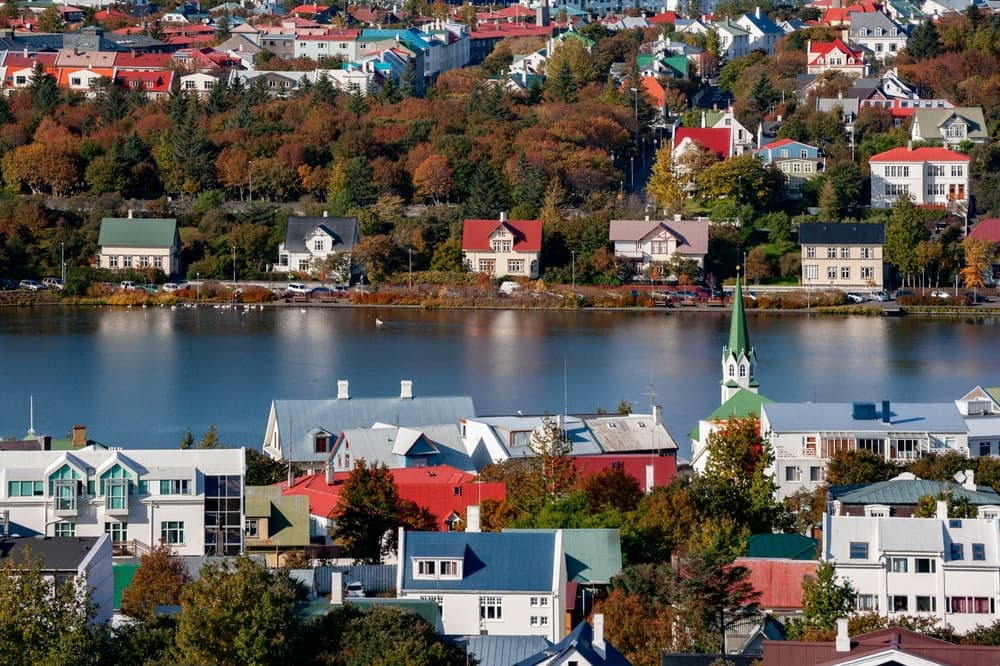
Reykjavík for Americans: about $3,900 a month in a small, safe capital
What it costs to live in Iceland's capital, how safe it is, how people get around without a car, and whether you can move or retire here on a U.S. passport.
- 138,772
- Population (2025)
- $3,900/mo
- Monthly budget · single
- 42°F / 5°C
- Avg temperature
Plan on about $3,900 a month in U.S. dollars for one person in Reykjavík, with most single budgets in our 2026 data falling between $3,400 and $4,400. A couple needs about $5,900, and a family of four about $8,500. Rent is the biggest line: a one-bedroom in the center runs about $2,250 a month, and living farther out saves only about $250.
Reykjavík is a capital of about 139,000 people, small enough to learn in a season. It suits people who want a safe city where English works, a daily soak in the geothermal pools, and wild nature a short drive away. It scores 88 out of 100 on safety in our data.
Here's the catch: around the December solstice you get about four hours of daylight, and Iceland only grants residence for a job, a degree program or family. If you don't have one of those reasons yet, that's the first thing to sort out.

Reviewed and updated October 15, 2026 · 4 min read
At a glance
$3,900
Monthly budget · single person
$2,250/mo 1-bed rent, center
88/100
Safety index
$65
Internet / month
42°Fannual average
Jan 33° · Jul 54°
Climate
138,772
Population (2025)
Expatsi estimates, updated Oct 2026, based on rental listings, government statistics, and local reporting.
Cost of living
What it costs to live in Reykjavík
Single person
$3,400–$4,400/mo
about 25% above Austin, TX
Couple
$5,200–$6,600/mo
about 30% above Austin, TX
Family of four
$7,000–$10,000/mo
about 10% above Austin, TX
Compared with Austin, TX (Expatsi estimate, 2026).
- $27 +35%
- Inexpensive meal
- $2,000–$2,500/mo +15%
- 1-bed rent, center
- $1,750–$2,250/mo +48%
- 1-bed rent, outside
- $65/mo ±0%
- Internet
- $95/mo +130%
- Transit pass
- $771/sq ft +19%
- Buy price, center
Expatsi estimates, updated Oct 2026, based on rental listings, government statistics, and local reporting.
Daily life
How Reykjavík lives
- B grade, 48th percentile among the cities we track
- Dining & caféstypical
- A- grade, 70th percentile among the cities we track
- Arts & culturestrong
- B- grade, 31st percentile among the cities we track
- Parks & outdoorstypical
- B grade, 51st percentile among the cities we track
- Schools & educationtypical
- B- grade, 25th percentile among the cities we track
- Healthcare accesstypical
- B+ grade, 69th percentile among the cities we track
- Bike infrastructurestrong
- B grade, 51st percentile among the cities we track
- Public transittypical
- A+ grade, good physical accessibility
- Accessibilitygood
Graded on OpenStreetMap amenity density relative to the 369 cities we track. Accessibility is the exception: it's graded against a fixed standard (terrain steepness and sidewalk surfaces), not a curve.
Climate
Weather through the year
Annual average 42°F (5°C) · 34 in of rain a year · Source: Meteostat station normals (04030, 1991-2020)
On the ground
Scenes from Reykjavík
Getting around
Transport in Reykjavík
Most people without a car rely on Strætó, the bus network that covers the whole capital area. You can tap a Visa or Mastercard to pay on board, or use the Klappið app or a Klapp card. A fare cap called Kapp means an adult never pays for more than three rides in a day or nine in a week, as long as you stick with one payment method. Our data puts transport at about $95 a month.
The old center, from the harbor up Laugavegur, is compact and easy on foot. Wind, ice and short days slow walking and biking from late fall into spring, so check how far your address is from a bus stop before you sign a lease.
Getting home to the U.S. is easy. The Flybus runs with every arriving flight at Keflavík International Airport and takes about 45 minutes to the BSÍ terminal in town.
Do you need a car? For daily life in the city, no. For the outer suburbs, weekends in the countryside and winter trips outside the capital area, a car makes life much easier, and you'll want winter tires.
- 24/sq mi
- Transit stops
- 23/sq mi
- Bike infrastructure
- 23/sq mi
- Wheelchair-accessible places
Mapped features per square mile from OpenStreetMap.
Keep exploring
Places like Reykjavík
Community
Community & practical notes
The people around you: Reykjavík is where most of Iceland's newcomers settle. About two-thirds of the country's first- and second-generation immigrants live in the Capital Region, and immigrants made up 18.9% of Iceland's population in January 2025. Poles are by far the largest group. Americans are a small slice, so most people build a circle through work, classes, Icelandic lessons and the neighborhood pool rather than an expat scene.
LGBTQ expats: Reykjavík Pride, held each August, is Iceland's biggest annual festival and draws more than 100,000 guests. It grew out of a weekend the LGBTQ association Samtökin '78 first held in 1999, and the association remains a good first contact for community.
Black Americans: The Black community here is small, and our research didn't turn up a dedicated organization for Black residents. In June 2020, about 4,000 people joined a Black Lives Matter demonstration in the city, with speakers who were Black people living in Iceland. Experiences vary: a Black American living here told the Reykjavík Grapevine in 2019 that she'd met ignorance more than racism, and that not everyone had been that lucky. Expect to stand out, and talk with Black residents before you commit.
Healthcare: For anything that isn't an emergency, you register with your local health center, the heilsugæsla. Emergencies go to Landspítali University Hospital in Fossvogur. Public insurance starts six months after you register your residence, so plan on private coverage for your first half-year, and know that dental care generally isn't covered. Hunter Schultz, our healthcare coach, can help you plan that gap, and ExpatInsure can set up the private policy.
Families: The International School of Iceland, in neighboring Garðabær, teaches kindergarten through grade 10 in English and Icelandic streams, with the IB Middle Years Programme from grade 7. Its English stream is aimed at families on temporary assignments.
Limited mobility: Every Strætó bus in the capital area has wheelchair access, though only one wheelchair fits on a bus at a time. Residents who can't use regular buses can apply through their municipality for Pant, a shuttle for older and disabled people. Snow and ice make sidewalks harder going for several months a year, and buses outside the capital area have no wheelchair access, so day trips usually mean a car.
Working online: Home internet runs about $65 a month in our data. If your paycheck comes from a U.S. employer, know that Iceland ended its remote work visa in May 2026, so there's no permit built for that right now.
Retiring here: Reykjavík has a lot that retirees want: low crime, a university hospital and a walkable center. But Iceland has no retirement visa, and Social Security or savings alone won't get you a permit. The main exception is parents 67 or older joining an adult child who already lives in Iceland. Our Iceland guide covers the details, and our retirement visa guide compares countries that do welcome retirees.
Housing
Renting and buying
- 1-bed rent (center)
- $2,000–$2,500/mo
- 1-bed rent (outside center)
- $1,750–$2,250/mo
- Buy price (center)
- $771/sq ft
- Buy price (outside center)
- $557/sq ft
Expatsi estimates, based on rental listings, government statistics, and local reporting.
Good to know
Frequently asked questions
Is Reykjavík safe for Americans?
Yes. Reykjavík scores 88 out of 100 on our safety index, with a crime index of 12 in our 2026 data, and Iceland placed first on the 2026 Global Peace Index. Ordinary city sense still applies. For most residents the bigger daily hazards are winter wind and icy sidewalks.
How dark does Reykjavík get in winter?
Around the December solstice, Reykjavík gets about four hours of daylight. Winters are milder than many people expect, with January averaging highs near 38F and lows near 29F, but they're windy and wet. In late June the sun is up for more than 21 hours.
How can an American move to Reykjavík?
You need a reason Iceland recognizes: a job with an Icelandic employer, a place in a degree program, or a spouse or close family member living there. A first residence permit can take eight to 10 months, so start early. Working remotely for a U.S. company isn't a route right now, since Iceland ended its remote work visa in May 2026.
Do people speak English in Reykjavík?
Yes, English works for most daily life in Reykjavík. Learning Icelandic still pays off if you plan to stay: permanent residence asks for 150 Icelandic lessons or a passing test, and citizenship requires a language test.
How much does it cost to live in Reykjavík?
One person should budget about $3,900 a month in U.S. dollars as of 2026, rent included. A couple needs about $5,900 and a family of four about $8,500. Housing takes the biggest share. Eating out adds up fast, with a simple restaurant meal around $27, so cooking at home makes a real difference.
Can Americans retire in Reykjavík?
Not on a retirement visa, because Iceland doesn't have one. Social Security, a pension or savings alone won't qualify you for a residence permit. The main exception is family: parents 67 or older can join an adult child who's an Icelandic citizen, a permanent resident or on a qualifying permit. Otherwise, Americans can visit visa-free for up to 90 days in any 180.
What is healthcare like in Reykjavík for expats?
Iceland has public health insurance, but newcomers from outside Europe wait six months after registering their residence before it covers them, and need private coverage until then. After that, you see a doctor at your local health center (heilsugæsla), and emergencies go to Landspítali University Hospital. Dental care generally isn't covered.
Do you need a car in Reykjavík?
Not for daily life in the city. Strætó buses cover the capital area, you can pay by tapping a bank card, and daily and weekly fare caps keep costs predictable. A car helps for the outer suburbs, trips outside the capital area and winter weekends away.
See how Reykjavík fits your life
Take the free Expatsi Test and compare Iceland to over 100 countries on what actually matters: cost, healthcare, climate, and safety. About five minutes.
Why not you?