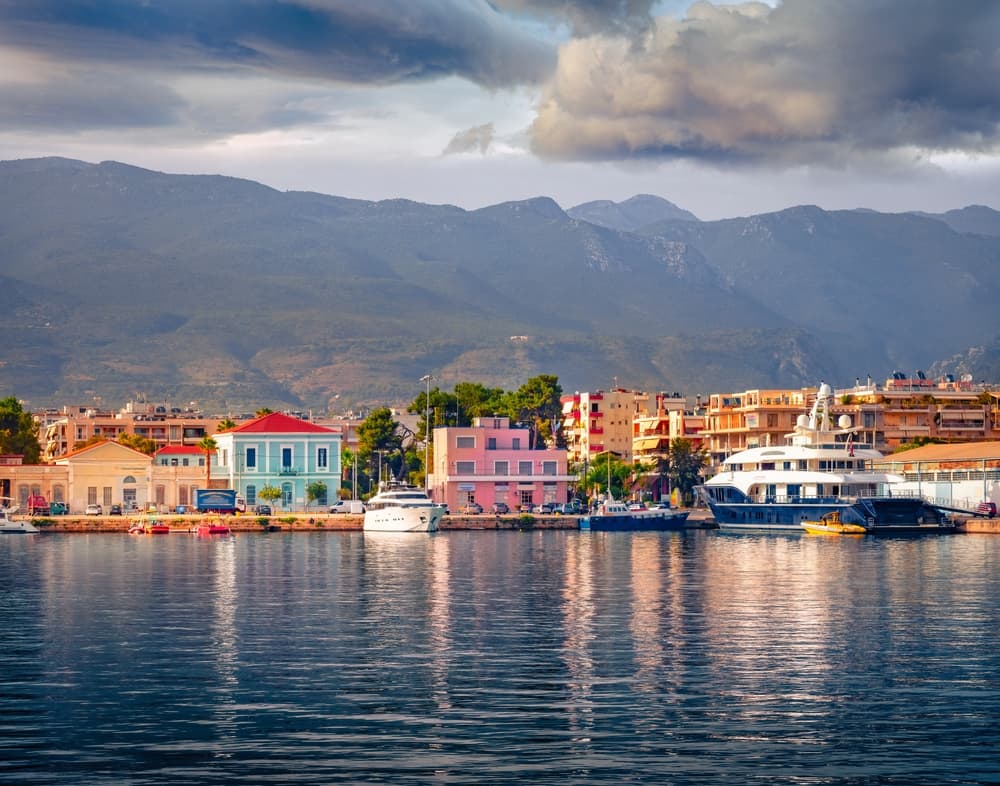
Kalamata: olive country's capital, with a city beach and mountains behind it
A Peloponnese port city where Greek is the everyday language, and the hospital, market and seafront are all in town.
- 57,706
- Population (2021)
- $1,600/mo
- Monthly budget · single
- 63°F / 17°C
- Avg temperature
Plan on about $1,600 a month for one person in Kalamata (2026 figures, in U.S. dollars), with most single budgets falling between $1,300 and $1,900. A couple needs about $2,300, and a family of four about $3,300. A one-bedroom in the center rents for about $550 a month, or about $400 farther out.
Kalamata is the capital and main port of Messinia, in the southern Peloponnese. About 58,000 people lived here at the 2021 census, and nearly everyone you'll deal with day to day is Greek. The seafront has its own beach, and the Taygetos mountains rise right behind town.
It suits people who want a real Greek city with a beach and a hospital in town, and who'd rather learn Greek than live in an English bubble. It's a harder fit if you need frequent flights home in winter, a big expat social scene, or English at every counter.

Reviewed and updated October 8, 2026 · 4 min read
At a glance
$1,600
Monthly budget · single person
$550/mo 1-bed rent, center
74/100
Safety index
$30
Internet / month
63°Fannual average
Feb 50° · Aug 78°
Climate
57,706
Population (2021)
Expatsi estimates, updated Oct 2026, based on rental listings, government statistics, and local reporting.
Cost of living
What it costs to live in Kalamata
Single person
$1,300–$1,900/mo
about 50% below Austin, TX
Couple
$1,900–$2,700/mo
about 50% below Austin, TX
Family of four
$2,600–$4,000/mo
about 60% below Austin, TX
Compared with Austin, TX (Expatsi estimate, 2026).
- $10 −50%
- Inexpensive meal
- $450–$650/mo −72%
- 1-bed rent, center
- $350–$500/mo −70%
- 1-bed rent, outside
- $30/mo −54%
- Internet
- $139/sq ft −79%
- Buy price, center
Expatsi estimates, updated Oct 2026, based on rental listings, government statistics, and local reporting.
Daily life
How Kalamata lives
- C+ grade, 24th percentile among the cities we track
- Dining & cafésmodest
- B- grade, 35th percentile among the cities we track
- Arts & culturetypical
- C+ grade, 20th percentile among the cities we track
- Parks & outdoorsmodest
- B- grade, 34th percentile among the cities we track
- Schools & educationtypical
- C+ grade, 18th percentile among the cities we track
- Healthcare accessmodest
- B- grade, 32nd percentile among the cities we track
- Bike infrastructuretypical
- C+ grade, 23rd percentile among the cities we track
- Public transitmodest
- A- grade, good physical accessibility
- Accessibilitygood
Graded on OpenStreetMap amenity density relative to the 298 cities we track. Accessibility is the exception: it's graded against a fixed standard (terrain steepness and sidewalk surfaces), not a curve.
Climate
Weather through the year
Annual average 63°F (17°C) · 30 in of rain a year · Source: Meteostat station normals (16726, 1991-2020)
On the ground
Scenes from Kalamata
Getting around
Transport in Kalamata
Inside the city, you'll get around on local buses, on foot and by bike. The city bus company (KTEL Astikon Grammon Kalamatas) runs along the seafront and out to the hospital, the university and nearby villages. The terrain is flat, so walking and cycling work well for everyday errands.
Intercity coaches run by KTEL Messinias leave from the bus station next to the central market. Buses to Kifissos station in Athens run daily and take about three hours, and other routes head to Sparta, Pylos, Koroni and Kardamyli. Messinia has no railway connection, so Athens is a bus ride or a drive: about 240 km (150 miles), roughly two and a half hours by car.
Kalamata's airport is just west of the city, and the bus into town takes 20 to 25 minutes. It mainly handles summer flights, so in winter most trips back to the U.S. start with the bus or the drive to Athens.
Do you need a car? Not if you live in the center or along the seafront bus routes. If you want to explore the Mani villages, the olive groves or the quieter beaches down the coast, you'll want one.
- 4.0/sq mi
- Transit stops
- 0.9/sq mi
- Bike infrastructure
- 5.8/sq mi
- Wheelchair-accessible places
Mapped features per square mile from OpenStreetMap.
Keep exploring
Places like Kalamata
Community & practical notes
Settling in: people, doctors and the details
The people
Kalamata's foreign community is small, and the expats who write about it describe a mostly European, mostly retired crowd. English is common in tourist areas and among younger Greeks, but less so in residential neighborhoods and with older neighbors. Plan on using Greek at the market and the pharmacy. Start lessons before you arrive.
Healthcare
The General Hospital of Kalamata is the area's main public hospital. City Hospital, a private 32-bed hospital in the center, runs an International Patient Center for foreign residents and visitors. For some specialist care or surgery, people still travel to Athens. Budget for private health coverage from day one.
Working remotely
Home internet runs about $30 a month. Test the connection before you sign a lease in a village outside town. If you'll keep working for a U.S. employer, start with the Greece digital nomad visa.
LGBTQ residents
Greece's parliament legalized same-sex civil marriage in February 2024, over the Orthodox Church's opposition. The law gives married same-sex couples full parental rights but rules out surrogacy in Greece. Civil partnerships have been legal since 2015. We didn't find an LGBTQ group based in Kalamata, so ask in expat groups and plan a scouting trip before you commit.
Black Americans
We didn't find a network for Black Americans or the African diaspora in Kalamata, and the foreign community here is small and mostly European. A longer stay outside the summer season is the best way to judge how everyday life feels.
Limited mobility
The city's flat terrain is a plus. Seatrac chairs at Kordias beach (west of the port) and Bouka beach let wheelchair users get into the sea on their own. Older apartment buildings vary a lot, so ask about entrance steps and elevators before you sign anything.
Retiring here
Kalamata works for retirees who want a single budget of about $1,600 a month, public and private hospitals in town, and a beach they can walk to. Visit in winter first: November and December are the wettest months, each averaging more than 5 inches of rain. Then read our Greece retirement visa guide, the full guide to moving to Greece, and our retirement visa hub.
Housing
Renting and buying
- 1-bed rent (center)
- $450–$650/mo
- 1-bed rent (outside center)
- $350–$500/mo
- Buy price (center)
- $139/sq ft
- Buy price (outside center)
- $102/sq ft
Expatsi estimates, based on rental listings, government statistics, and local reporting.
Good to know
Frequently asked questions
Is Kalamata safe for Americans?
Yes, by most measures. Kalamata scores 74 on our safety index and 26 on our crime index for 2026. Normal city precautions apply, like watching your bag in crowded spots.
What is the weather like in Kalamata?
Summers are hot and dry, with average highs near 89F in July and 90F in August. Winters are mild and wet: January averages highs near 59F and lows near 42F. Kalamata gets about 30 inches of rain a year, most of it from November through February.
Is Kalamata a good place to retire?
It's a good fit for retirees who want a mid-sized Greek city with a public hospital, a private hospital and a walkable seafront, on about $1,600 a month for one person. It's a harder fit if you don't want to learn Greek or need frequent winter flights home, since the airport mainly handles summer flights.
Do you need a car in Kalamata?
Not in the center. City buses cover the seafront, the hospital and the university, and the flat streets are easy to walk or bike. A car helps if you live in a village or want to explore the Mani and the rest of Messinia.
How do you get from Athens to Kalamata?
KTEL Messinias buses leave Kifissos station in Athens daily and take about three hours. Driving the 240 km (150 miles) takes roughly two and a half hours. There's no train, and direct flights from Athens come and go by season.
How much does it cost to live in Kalamata, Greece?
One person spends about $1,600 a month in Kalamata (2026, in U.S. dollars), and most single budgets land between $1,300 and $1,900. A couple should plan on about $2,300 and a family of four about $3,300. A one-bedroom apartment in the center rents for about $550 a month.
Do people speak English in Kalamata?
In tourist areas and among younger Greeks, often. In residential neighborhoods and with older locals, less so. Most expats in Kalamata find that basic Greek makes daily errands much easier.
See how Kalamata fits your life
Take the free Expatsi Test and compare Greece with other countries on what actually matters: cost, healthcare, climate, and safety.
Why not you?