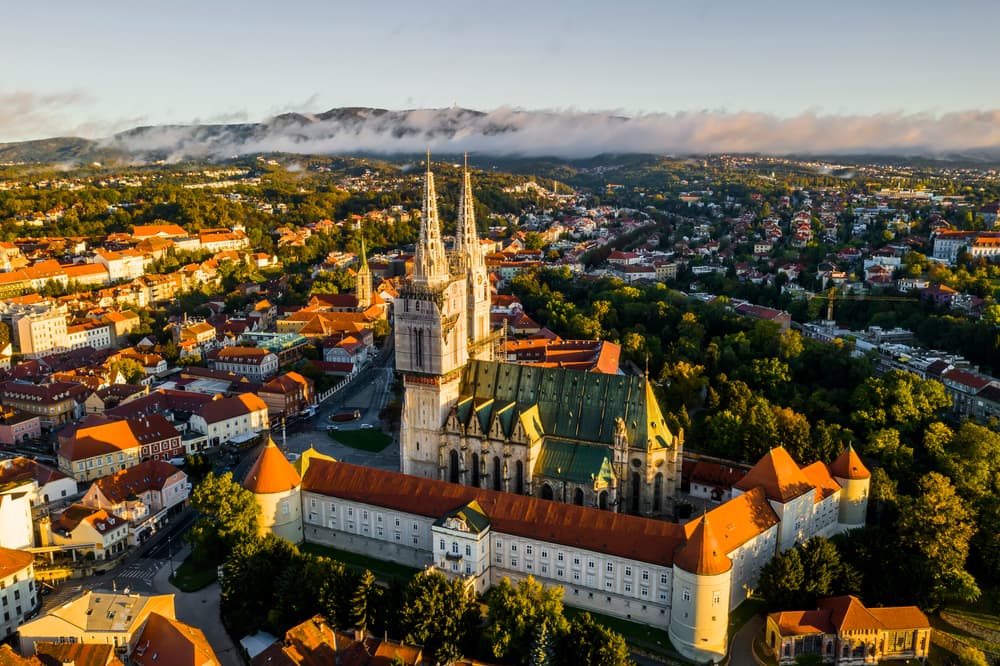
Zagreb: a year-round capital where the trams do the driving
What a life in Croatia's capital costs, how safe it is, and whether its big hospitals outweigh the gray winters and the drive to the coast.
- 767,131
- Population (2021)
- $2,100/mo
- Monthly budget · single
- 56°F / 13°C
- Avg temperature
One person can live in Zagreb on about $2,100 a month in U.S. dollars, and most single budgets land between $1,800 and $2,400 (2026 figures). Couples should budget around $3,100, and a family of four around $4,500. A one-bedroom in the center rents for about $850, or about $650 farther out.
Zagreb is a working capital of about 767,000 people (2021 count), not a resort town. Blue trams carry most of the city, the Upper Town on the hill is made for walking, and cafe terraces fill up on Saturday mornings. It suits families, remote workers and retirees who want city services all year, with the country's largest hospital in town.
The tradeoff is the setting. Zagreb sits inland with no beach, and winter is cold and gray, with January highs averaging near 42F.

Reviewed and updated October 9, 2026 · 3 min read
At a glance
$2,100
Monthly budget · single person
$850/mo 1-bed rent, center
78/100
Safety index
$35
Internet / month
56°Fannual average
Jan 37° · Jul 74°
Climate
767,131
Population (2021)
Expatsi estimates, updated Oct 2026, based on rental listings, government statistics, and local reporting.
Cost of living
What it costs to live in Zagreb
Single person
$1,800–$2,400/mo
about 30% below Austin, TX
Couple
$2,700–$3,500/mo
about 35% below Austin, TX
Family of four
$3,700–$5,300/mo
about 45% below Austin, TX
Compared with Austin, TX (Expatsi estimate, 2026).
- $14 −30%
- Inexpensive meal
- $750–$950/mo −56%
- 1-bed rent, center
- $550–$750/mo −52%
- 1-bed rent, outside
- $35/mo −46%
- Internet
- $55/mo +33%
- Transit pass
- $409/sq ft −37%
- Buy price, center
Expatsi estimates, updated Oct 2026, based on rental listings, government statistics, and local reporting.
Daily life
How Zagreb lives
- A- grade, 79th percentile among the cities we track
- Dining & cafésstrong
- A grade, 89th percentile among the cities we track
- Arts & culturestandout
- A- grade, 78th percentile among the cities we track
- Parks & outdoorsstrong
- A grade, 88th percentile among the cities we track
- Schools & educationstandout
- A- grade, 81st percentile among the cities we track
- Healthcare accessstrong
- A- grade, 70th percentile among the cities we track
- Bike infrastructurestrong
- A- grade, 75th percentile among the cities we track
- Public transitstrong
- A- grade, good physical accessibility
- Accessibilitygood
Graded on OpenStreetMap amenity density relative to the 298 cities we track. Accessibility is the exception: it's graded against a fixed standard (terrain steepness and sidewalk surfaces), not a curve.
Climate
Weather through the year
Annual average 56°F (13°C) · 35 in of rain a year · Source: Meteostat station normals (14236, 1991-2020)
On the ground
Scenes from Zagreb
Getting around
Transport in Zagreb
ZET, the city transit company, runs Zagreb's trams and buses, and the trams are what most residents use day to day. Buses fill in the outer neighborhoods, and a few night bus lines keep running after the trams stop. The short funicular up to the Upper Town has been running again since May 2026, and a separate cable car climbs from Gračansko dolje to the top of Sljeme, the mountain on the city's northern edge.
Fares are low: a 60-minute daytime ticket costs 0.93 euros at ZET's regular price, and tickets bought from the driver cost more, so stock up in advance or use the Moj ZET app. Budget about $55 a month for local transport. One safety note from the State Department: Zagreb's trams move fast through narrow streets, so look both ways twice.
Do you need a car? Not if you live near the center. A car helps for weekend trips to the coast or the countryside. If you keep driving after 12 months in Croatia, you'll need a Croatian driver's license.
- 50/sq mi
- Transit stops
- 30/sq mi
- Bike infrastructure
- 44/sq mi
- Wheelchair-accessible places
Mapped features per square mile from OpenStreetMap.
Keep exploring
Places like Zagreb


Community & practical notes
Settling into Zagreb day to day
Healthcare
University Hospital Centre Zagreb (KBC Zagreb) is the largest hospital in Croatia and the teaching hospital of the University of Zagreb, so specialist care is close at hand. Plan for how you'll pay: the State Department says Croatian hospitals don't accept U.S. health insurance, private hospitals often want payment up front, and staff may speak little or no English. Our Croatia healthcare report explains how expats get into the public system.
Internet and remote work
Home internet runs about $35 a month. If you earn from U.S. clients or U.S. employer, read up on the Croatia digital nomad permit before you sign a lease. Check that any coworking space is still open before you plan your week around it.
Your first week
You have to register your address with the local police within 3 days of arriving. Hotels and vacation rentals handle it for guests; once you sign your own lease, it's your job. For residence paperwork, ZBA 24/7 Law is a Croatia relocation and immigration firm that works with newcomers. You'll find them in the Featured Experts section on our Croatia country guide.
Limited mobility
Zagreb is one of the easier Croatian cities to manage with limited mobility, though it takes planning. The State Department says accessible public transportation is common in Zagreb but accessible lodging is limited. The flat Lower Town is easier going than the hilly Upper Town, so check the walk from any apartment to the nearest tram stop before you commit.
LGBTQ expats
Croatia passed its Law on Life Partnership of Same Sex Couples in 2014. The State Department notes that same-sex couples may still face legal issues with adoption and next-of-kin matters, so get your paperwork in order early.
Black Americans
We couldn't find reliable reporting on daily life for Black Americans in Zagreb, and the State Department's Croatia page doesn't address race. Talk with Black expats already living in Croatia, and spend a few weeks in the city as a resident before you commit to a lease.
Retiring in Zagreb
Zagreb fits retirees who care more about hospitals, trams and year-round city life than sea views. Expect real winters, with January lows averaging near 32F, and warm summers, with July highs near 83F. Compare residence routes in our retirement visa guide and our guide to moving to Croatia.
Housing
Renting and buying
- 1-bed rent (center)
- $750–$950/mo
- 1-bed rent (outside center)
- $550–$750/mo
- Buy price (center)
- $409/sq ft
- Buy price (outside center)
- $279/sq ft
Expatsi estimates, based on rental listings, government statistics, and local reporting.
Good to know
Frequently asked questions
How much does it cost to live in Zagreb?
A single person in Zagreb typically spends about $2,100 a month in U.S. dollars, with most budgets between $1,800 and $2,400 (2026 figures). A couple spends around $3,100 and a family of four around $4,500. Rent is the biggest cost: about $850 for a one-bedroom in the center.
Do you have to register your address when you move to Zagreb?
Yes. Croatia requires you to register with the local police within 3 days of arriving. Hotels and vacation rentals register their guests, but once you rent your own apartment, registering is up to you.
Do you need a car in Zagreb?
No, not if you live near the center. Trams and buses cover the city, and local transport runs about $55 a month. A car is handy for trips to the coast, and drivers who stay in Croatia longer than 12 months need a Croatian driver's license.
Is healthcare good in Zagreb?
Zagreb has Croatia's largest hospital, University Hospital Centre Zagreb, which is also the University of Zagreb's teaching hospital. The catch for Americans is payment: Croatian hospitals don't accept U.S. health insurance, private hospitals often want payment up front, and some staff speak little English.
Is Zagreb safe for Americans?
Yes, for the most part. The U.S. State Department advises Americans to exercise normal precautions in Croatia, its lowest advisory level, and Zagreb scores 78 out of 100 on the safety index we use. The State Department's main local warning is about trams, which move fast through narrow streets.
What is the weather like in Zagreb?
Zagreb has four distinct seasons. January highs average near 42F with lows near freezing, while July highs average near 83F. September is the wettest month, and winter brings the fewest sunny days.
Can Americans retire in Zagreb?
Yes. Retirees choose Zagreb for its hospitals, tram network and year-round city life, but they have to accept cold, gray winters and a drive to reach the sea. Residence rules depend on your situation, so compare options in Expatsi's retirement visa guide and Croatia guide before you plan the move.
See how Zagreb fits your life
Take the free Expatsi Test and compare Croatia with other countries on what actually matters: cost, healthcare, climate, and safety.
Why not you?