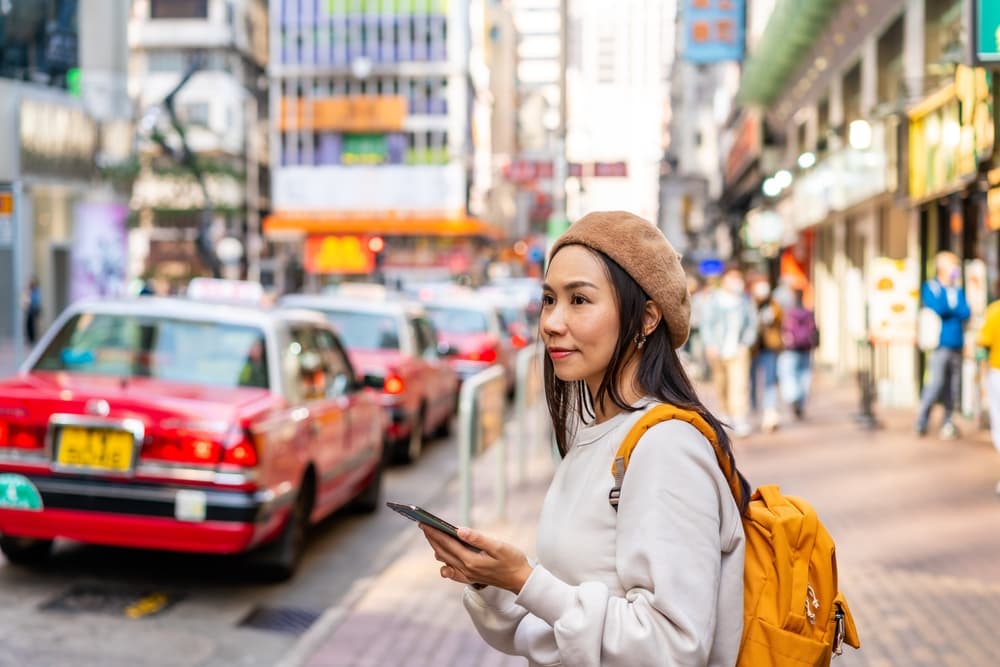
Hong Kong: a harbor city of high rents, fast trains and trails out the back door
What a move to Hong Kong costs in U.S. dollars, how safe it is for Americans under its security laws, and who can get a visa to live here.
- 7,413,070
- Population (2021)
- $4,000/mo
- Monthly budget · single
- 74°F / 24°C
- Avg temperature
One person needs about $4,000 a month to live in Hong Kong, and most single budgets land between $3,300 and $4,700. A couple should plan on about $5,800, and a family of four about $8,400. Housing drives those numbers: a one-bedroom in the center rents for about $2,800 a month, and about $1,800 farther out. All figures are in U.S. dollars as of 2026.
Hong Kong suits people who arrive with a job offer or a company transfer and want a safe, dense city where you can be on a hiking trail within minutes of the high-rises.
It's a hard fit for most retirees and for anyone hoping to work remotely on a tourist stay. Americans get 90 days visa-free, but visitors can't work, and switching to residence after you arrive is allowed only in the most unusual circumstances.

Reviewed and updated October 15, 2026 · 4 min read
At a glance
$4,000
Monthly budget · single person
$2,800/mo 1-bed rent, center
85/100
Safety index
$25
Internet / month
74°Fannual average
Jan 62° · Jul 84°
Climate
7,413,070
Population (2021)
Expatsi estimates, updated Oct 2026, based on rental listings, government statistics, and local reporting.
Cost of living
What it costs to live in Hong Kong
Single person
$3,300–$4,700/mo
about 30% above Austin, TX
Couple
$4,800–$6,800/mo
about 25% above Austin, TX
Family of four
$6,900–$9,900/mo
about 5% above Austin, TX
Compared with Austin, TX (Expatsi estimate, 2026).
- $8 −60%
- Inexpensive meal
- $2,300–$3,300/mo +44%
- 1-bed rent, center
- $1,500–$2,100/mo +33%
- 1-bed rent, outside
- $25/mo −62%
- Internet
- $75/mo +82%
- Transit pass
- $2,044/sq ft +214%
- Buy price, center
Expatsi estimates, updated Oct 2026, based on rental listings, government statistics, and local reporting.
Daily life
How Hong Kong lives
- A grade, 88th percentile among the cities we track
- Dining & cafésstandout
- A- grade, 72nd percentile among the cities we track
- Arts & culturestrong
- A- grade, 83rd percentile among the cities we track
- Parks & outdoorsstrong
- B+ grade, 60th percentile among the cities we track
- Schools & educationstrong
- B+ grade, 62nd percentile among the cities we track
- Healthcare accessstrong
- C- grade, 0th percentile among the cities we track
- Bike infrastructuremodest
- A+ grade, 99th percentile among the cities we track
- Public transitstandout
- B- grade, moderate physical accessibility
- Accessibilitymoderate
Graded on OpenStreetMap amenity density relative to the 369 cities we track. Accessibility is the exception: it's graded against a fixed standard (terrain steepness and sidewalk surfaces), not a curve.
Climate
Weather through the year
Annual average 74°F (24°C) · 93 in of rain a year · Source: Meteostat station normals (45004, 1991-2020)
On the ground
Scenes from Hong Kong
Getting around
Transport in Hong Kong
You don't need a car here. The MTR rail network, buses, minibuses, trams and ferries cover daily life, and an Octopus card pays for most of them. Budget about $75 a month for getting around.
From the airport, the Airport Express reaches Hong Kong station in Central in about 24 minutes. The city is steep, so expect stairs and slopes between your front door and the station, and weigh that when you pick an apartment.
If you do want to drive, a valid U.S. license works for 12 months after your last entry. After that you'll need a Hong Kong license. The Transport Department issues one without a test only to holders of licenses from places on its recognized list, so check that your state qualifies before you count on skipping the driving test.
- 112/sq mi
- Transit stops
- 0.0/sq mi
- Bike infrastructure
- 25/sq mi
- Wheelchair-accessible places
Mapped features per square mile from OpenStreetMap.
Keep exploring
Places like Hong Kong


Living here
The practical side of Hong Kong life
Not the mainland: Hong Kong runs its own immigration system, currency and transit, so moving here isn't the same as moving to mainland China. Teresa Arena, our Hong Kong guide, came from Texas in 2010 and is now a permanent resident. She helps newcomers with healthcare, schools, taxes, pets and getting set up.
Healthcare: Until you hold a Hong Kong Identity Card, public hospitals bill you as a non-eligible person. Since January 2026, an emergency room visit costs HK$2,100 (about $270) for non-eligible patients, compared to HK$400 (about $50) for card holders. Private international coverage is worth sorting out before you land: ExpatInsure sets that up. Hunter Schultz, our healthcare coach, can help you work out what level of care you need.
Safety and the law: Our safety index for Hong Kong is 85 out of 100. The bigger risk for Americans is legal. As of September 2026, the State Department rates Hong Kong Level 2, exercise increased caution, because of arbitrary enforcement of local laws. In national security cases it's now a crime to refuse to give police your device passwords, and that applies to U.S. citizens on arrival.
Internet and remote work: Home internet runs about $25 a month. Hong Kong is 12 to 13 hours ahead of Eastern, by season, so calls with the U.S. land early in the morning or late in the evening.
LGBTQ expats: Since September 2018, Hong Kong has granted dependant visas to same-sex spouses and civil partners married abroad, so someone moving for work can bring a same-sex partner. Recognition stops there. In September 2025 the Legislative Council voted 71 to 14 against a bill to register same-sex partnerships.
Black Americans: The city's Black community is small, and Black residents have described being ignored in shops and service settings. Hong Kong has had a Race Discrimination Ordinance since 2009, yet an African American reported being turned down by landlords while apartment hunting in 2016. HomeGrown, a podcast started by two Black residents, interviews people living the experience now.
Limited mobility: Expect a mixed picture. Every MTR station has at least one barrier-free entrance with a lift, ramp or stair lift, but the hills mean slopes and steps on many streets. Living close to a station with a lift makes daily life much easier.
Retirement: Hong Kong doesn't fit most retirees. There's no visa for living here on a pension, and the main way in without a job is the New Capital Investment Entrant Scheme, which takes an investment of at least HK$30 million (about $3.8 million). Our retirement visa hub compares countries that do have a route, and the guide to moving to China covers the mainland, which has separate rules.
Housing
Renting and buying
- 1-bed rent (center)
- $2,300–$3,300/mo
- 1-bed rent (outside center)
- $1,500–$2,100/mo
- Buy price (center)
- $2,044/sq ft
- Buy price (outside center)
- $1,208/sq ft
Expatsi estimates, based on rental listings, government statistics, and local reporting.
Good to know
Frequently asked questions
Is Hong Kong safe for Americans?
Street safety is good: Expatsi's safety index for Hong Kong is 85 out of 100. The main risk is legal. As of September 2026 the U.S. State Department rates Hong Kong Level 2, exercise increased caution, because of arbitrary enforcement of local laws, and refusing to give police device passwords in national security cases is now a crime.
What's the weather like in Hong Kong?
Hot and wet in summer, mild in winter. July and August average highs near 88F with lows near 80F, and most of the roughly 93 inches of yearly rain falls from May to September. January averages highs near 67F and lows near 57F, and October through February is the drier season.
How much does a hospital visit cost in Hong Kong for a newcomer?
Until you hold a Hong Kong Identity Card, public hospitals charge non-eligible rates. Since January 2026, an emergency room visit costs HK$2,100 (about $270), compared with HK$400 (about $50) for card holders. Many newcomers buy private international health coverage to cover the gap.
How much does it cost to live in Hong Kong?
One person spends about $4,000 a month in Hong Kong, with most single budgets between $3,300 and $4,700. A couple needs about $5,800 and a family of four about $8,400. Rent is the biggest cost: a one-bedroom in the center runs about $2,800 a month, and about $1,800 farther out (U.S. dollars, 2026).
Can I move to Hong Kong without a job?
Only in limited ways. Americans can visit for 90 days without a visa, but visitors can't work or study, and they can change to residence after arrival only in the most unusual circumstances. Most people move with a job offer, as the dependant of someone who has one, or through the HK$30 million (about $3.8 million) investment scheme.
Can Americans retire in Hong Kong?
Not easily. Hong Kong has no visa for living on a pension. The main route without a job is the New Capital Investment Entrant Scheme, which requires investing at least HK$30 million (about $3.8 million). After seven years of continuous ordinary residence, investors can apply for permanent residence.
Can same-sex couples move to Hong Kong together?
Yes, if you're married or in a civil partnership recognized where you entered it. Since September 2018, Hong Kong has granted dependant visas to same-sex spouses and civil partners of people moving there. Hong Kong itself doesn't recognize same-sex partnerships: lawmakers voted down a registration bill in September 2025.
Do you need a car in Hong Kong?
No. Trains, buses, minibuses, trams and ferries cover daily life, and an Octopus card pays for most of them, at about $75 a month. Visitors can drive on a valid U.S. license for 12 months after their last entry; after that you need a Hong Kong license.
See how Hong Kong fits your life
Take the free Expatsi Test and compare China to over 100 countries on what actually matters: cost, healthcare, climate, and safety. About five minutes.
Why not you?