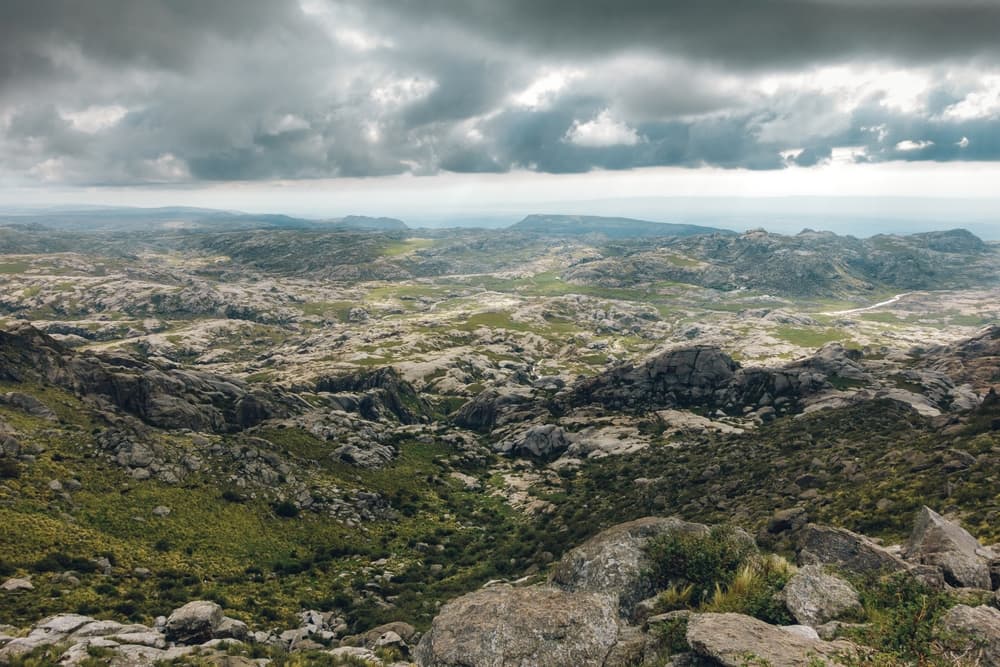
Córdoba: a big university city with the sierras close by
An inland Argentine city of about 1.5 million, with hot, rainy summers, dry winters, and daily life that runs almost entirely in Spanish.
- 1,505,250
- Population (2022)
- $1,200/mo
- Monthly budget · single
- 66°F / 19°C
- Avg temperature
Plan on about $1,200 a month for one person in Córdoba, in U.S. dollars as of 2026, and most singles land somewhere between $1,000 and $1,500. A couple needs about $1,800 and a family of four about $2,800. A one-bedroom in the center rents for around $500, or closer to $400 farther out.
For that you get a city of about 1.5 million in the middle of the country, with a downtown anchored by the Jesuit Block, a UNESCO World Heritage Site since 2000 and home to the old university. Córdoba suits people who want real hospitals and an airport without Buenos Aires rents, who speak Spanish or are learning it, and who'd spend weekends in the Sierras Chicas, under an hour's drive away.
It's a harder sell if you want an English-speaking social circle or a mild summer. January's average high is near 87F, and the rainiest months run November through March.

Reviewed and updated October 8, 2026 · 4 min read
At a glance
$1,200
Monthly budget · single person
$500/mo 1-bed rent, center
46/100
Safety index
$20
Internet / month
66°Fannual average
Jul 54° · Jan 76°
Climate
1,505,250
Population (2022)
Expatsi estimates, updated Oct 2026, based on rental listings, government statistics, and local reporting.
Cost of living
What it costs to live in Córdoba
Single person
$1,000–$1,500/mo
about 60% below Austin, TX
Couple
$1,500–$2,200/mo
about 60% below Austin, TX
Family of four
$2,300–$3,300/mo
about 65% below Austin, TX
Compared with Austin, TX (Expatsi estimate, 2026).
- $7 −65%
- Inexpensive meal
- $400–$600/mo −74%
- 1-bed rent, center
- $300–$450/mo −70%
- 1-bed rent, outside
- $20/mo −69%
- Internet
- $50/mo +21%
- Transit pass
- $139/sq ft −79%
- Buy price, center
Expatsi estimates, updated Oct 2026, based on rental listings, government statistics, and local reporting.
Daily life
How Córdoba lives
- B grade, 47th percentile among the cities we track
- Dining & caféstypical
- B+ grade, 65th percentile among the cities we track
- Arts & culturestrong
- B+ grade, 58th percentile among the cities we track
- Parks & outdoorsstrong
- B+ grade, 60th percentile among the cities we track
- Schools & educationstrong
- A- grade, 84th percentile among the cities we track
- Healthcare accessstrong
- B+ grade, 63rd percentile among the cities we track
- Bike infrastructurestrong
- A+ grade, 97th percentile among the cities we track
- Public transitstandout
- A grade, good physical accessibility
- Accessibilitygood
Graded on OpenStreetMap amenity density relative to the 298 cities we track. Accessibility is the exception: it's graded against a fixed standard (terrain steepness and sidewalk surfaces), not a curve.
Climate
Weather through the year
Annual average 66°F (19°C) · 34 in of rain a year · Source: Meteostat station normals (87345, 1991-2020)
On the ground
Scenes from Córdoba
Getting around
Transport in Córdoba
Córdoba has no subway, so city buses (colectivos) do most of the work, with a small electric trolleybus network alongside them. Since May 2025 you can pay with Argentina's national SUBE card. As of October 2025, cards were handed out at the Palacio 6 de Julio, the city council building and bus company ticket offices, and pickup required a DNI, the Argentine national ID. Budget about $50 a month for transport.
In the center and the neighborhoods right around it, most errands happen on foot. The city also launched BiciCba, a free public bike program with stations at the university campus, Parque Sarmiento and near Plaza San Martín, and it has been fixing up bike lanes in the central area. Check current stations and hours before you count on them.
You can skip owning a car if you live centrally. One starts to make sense if you rent in the outer neighborhoods or want to get into the sierras often.
The airport sits about 6 miles north-northwest of the city, and Aerolíneas Argentinas uses it as a hub for domestic flights. There are international routes around South America and to Madrid, but expect most trips to the U.S. to connect through Buenos Aires or another hub.
- 87/sq mi
- Transit stops
- 17/sq mi
- Bike infrastructure
- 6.3/sq mi
- Wheelchair-accessible places
Mapped features per square mile from OpenStreetMap.
Keep exploring
Places like Córdoba
 Coming soon
Trujillo
Peru
919.9K people · $1,000/mo
Lima
Peru
9.9M people · $1,400/mo
New Taipei City
Taiwan
4M people · $1,400/mo
 Coming soon
Shkodër
Albania
61.6K people · $1,100/mo
Oaxaca
Mexico
300.1K people · $1,500/mo
Interior
Uruguay
114K people · $1,300/mo
Day to day
Community and practical notes
The people: Córdoba's foreign community is smaller and less English-oriented than Buenos Aires's, and most expats settle in the central part of the city. Students set the pace here. Expat.com's city guide counts more than 200,000 of them; they're why the central neighborhoods stay busy late. Spanish isn't optional: you'll use it with landlords, doctors, the bank and your neighbors.
Healthcare: Argentina runs public and private hospitals side by side. Public care is free, while private hospitals tend to offer shorter waits and more specialized care. Córdoba has well-known private hospitals, including Sanatorio Allende, Hospital Privado and Clínica Reina Fabiola, so you won't need to travel for most care. Before you buy coverage, check that it pays at the hospital you'd actually use.
Remote work: Home internet runs about $20 a month. Test the connection at any rental before you sign, especially away from the center.
Safety: The U.S. State Department rates Argentina Level 1, its lowest advisory, but warns that thieves on motorcycles (motochorros) grab phones and bags in Argentine cities. Stay aware on the sidewalk and don't resist a robbery.
LGBTQ expats: According to the State Department, Argentina has no legal restrictions on same-sex relationships or on LGBTQ events. Córdoba holds its own Pride march along Avenida General Paz downtown, which the local paper La Voz has called the country's second most important after Buenos Aires's.
Black Americans: Fewer than 1% of Argentines identify as Black, according to Travel Noire, so expect to stand out. A Black American professor in Argentina told the site in 2024 that people point out your Blackness often and that racism had become more open, but that she felt as safe there as anywhere. We didn't find reporting specific to Córdoba, so talk with Black expats already in Argentina before you commit.
Limited mobility: This is a hard city for wheelchair users. In November 2025, Perfil reported that 69% of city blocks had none of the required curb ramps, citing a 2010 survey, and that wheelchair lifts on buses often didn't work. Look for a ground-floor rental on a level block near the places you'll go, and budget for taxis.
Retirement: Córdoba fits retirees who speak some Spanish, want private hospitals in town, and can live with hot summers. Argentina has a dedicated retirement visa. Compare Argentina with other retirement destinations on our retirement visa hub, and read the Argentina move guide for taxes and healthcare.
Housing
Renting and buying
- 1-bed rent (center)
- $400–$600/mo
- 1-bed rent (outside center)
- $300–$450/mo
- Buy price (center)
- $139/sq ft
- Buy price (outside center)
- $93/sq ft
Expatsi estimates, based on rental listings, government statistics, and local reporting.
Good to know
Frequently asked questions
Can Americans retire in Córdoba?
Yes. Argentina has a retirement visa, and Córdoba offers private hospitals in the city, a domestic airline hub, and lower rents than Buenos Aires. It suits retirees who speak or are learning Spanish and can handle hot summers, when January highs average near 87F.
Do you need a car in Córdoba?
Not if you live centrally. City buses and a small trolleybus network cover Córdoba, paid with Argentina's SUBE card, and most central errands are walkable. A car helps if you live in the outer neighborhoods or head into the Sierras Chicas often, which are under an hour's drive away.
What is the cost of living in Córdoba, Argentina?
One person spends about $1,200 a month in U.S. dollars as of 2026, usually somewhere between $1,000 and $1,500. A couple spends about $1,800 and a family of four about $2,800. A one-bedroom apartment in the center rents for around $500 a month, or about $400 outside the center.
What is the weather like in Córdoba, Argentina?
Summers are hot and wet: January averages highs near 87F, and the wettest stretch runs November through March. Winters are dry and mild, with July highs around 66F and lows near 42F. The yearly average temperature is about 66F.
Do you need to speak Spanish to live in Córdoba?
Yes, for most of daily life. Córdoba's foreign community is smaller and less English-oriented than the one in Buenos Aires, so plan on handling landlords, doctors, banks and neighbors in Spanish. Getting to a working level before you move makes the first months much easier.
Is Córdoba, Argentina safe for Americans?
Córdoba scores 46 out of 100 on the safety index we use, where higher is safer, and 54 on the matching crime index, so ordinary city caution matters. The U.S. State Department rates Argentina Level 1, its lowest advisory level, but warns that thieves on motorcycles snatch phones and bags in Argentine cities. If it happens, don't resist.
Is Córdoba a good city for LGBTQ expats?
Argentina has no legal restrictions on same-sex relationships or LGBTQ events, according to the U.S. State Department. Córdoba holds its own Pride march downtown, which the local paper La Voz has described as the country's second most important after the one in Buenos Aires.
See how Córdoba fits your life
Take the free Expatsi Test and compare Argentina to over 100 countries on what actually matters: cost, healthcare, climate, and safety. About five minutes.
Why not you?