Spanish citizenship in two years, not ten
Hold a Latin American or Puerto Rican passport? Spain lets you become a citizen after just two years of residence, and keep your original one.


Why you
Your passport is the hard part. You already have it.
Most people wait 10 years to naturalize in Spain. You don't. Spain gives nationals of Latin American countries, Puerto Rico, and a few others a shorter clock: two years of legal residence, then you apply. It's written into Article 22 of the Civil Code.
The deal in four numbers
2 years
Legal residence, versus ten for most nationalities
The fast track
104 euros
Government filing fee, the Tasa 790
Plus about 85 for the culture exam
Both passports
Keep your original nationality
Dual citizenship allowed
No DELE
Spanish speakers skip the language exam
2025 rule change

Who qualifies
Built for our community
It's for nationals of Ibero-American countries, from Mexico and Colombia to Argentina. Puerto Ricans count, also. Even with a U.S. passport, Spain treats a natural-born Puerto Rican as an Ibero-American national by origin, so you'd get the same two-year clock.
- You hold the nationality by origin, not by naturalizing later
- You keep it, no renunciation required
Fast-Track Citizenship (2-Year Residency)
Spain lets nationals of Ibero-American (Latin American) countries, the Philippines, Equatorial Guinea, Andorra, Portugal, and Sephardic Jews naturalize as Spanish citizens after just 2 years of legal residence in Spain, instead of the standard 10 — and they keep their original citizenship (no renunciation required). It is based on your nationality, not distant heritage: you must be a national of an eligible country (U.S. applicants often first claim that nationality by descent, then use this route). You do have to actually live in Spain for the 2 years on a residence permit before applying.
- Government cost
- $113
- Processing time
- ~365 days
- Timeline
- 2 years of legal residence in Spain, then roughly 6–24 months for the citizenship decision
- Difficulty
- Moderate
Key requirements
- Be a national of an eligible country: an Ibero-American/LATAM country, the Philippines, Equatorial Guinea, Andorra, Portugal, or a recognized Sephardic Jew
- 2 years of legal, continuous residence in Spain on a valid permit (work, student, family, non-lucrative, digital nomad, etc.) with absences under ~3 months/year
- Pass the CCSE exam (Spanish constitution & culture, Instituto Cervantes, ~€85)
- Pass the DELE A2 Spanish exam — waived for Ibero-American nationals (2025 change)
- Clean criminal record in Spain and your country of origin
- Birth certificate and origin-country criminal record, apostilled and sworn-translated into Spanish
- Government fee: Tasa 790 (Modelo 026), €104.05 (~$113)
- No renunciation of your original nationality required for these groups
Read this first
Here's the catch
The two years aren't on paper. You have to live in Spain on a residence permit, and the non-lucrative, digital nomad, work, and family visas all count. Tourist time doesn't, and long absences will break the clock. The nationality also has to be yours by origin by birth or bloodline, so it can't be one you naturalized into later.



Scouting Trips
See Spain like a local before you move there.
- We walk neighborhoods
- Meet local experts
- Tour healthcare facilities
- Explore housing options
- Help you understand what daily life actually feels like
Who can help you get there

Moving to Spain
Spain Relocation Specialist
The two-year clock starts once you're a legal resident. They handle the visa and the move.

Sovereign Roots
Citizenship by Ancestry
Your case rests on proving nationality by origin. That's exactly their specialty.

Legalize That Doc
Document Preparation
Birth certificates and criminal records need apostilles and sworn translations. They assemble the file.
The payoff
A Spanish passport is an EU passport
Citizenship lets you live, work, study, and retire anywhere in the EU, with one of the world's strongest passports.
Where to spend the two years
Pick your corner of Spain

Madrid
Capital energy
Spain's big, buzzing center: the Prado, the Reina Sofia, a serious food scene, endless nightlife, and fast trains to anywhere. Pricey and landlocked, but nothing else in the country moves like it, and jobs cluster here.

Barcelona
Cosmopolitan coast
Beach and mountains at the edge of a global city, with Sitges down the coast and the Costa Brava towns up it. Endless culture and jobs, plus the highest rents in Spain and the most tourists to dodge.
Malaga
Costa del Sol hub
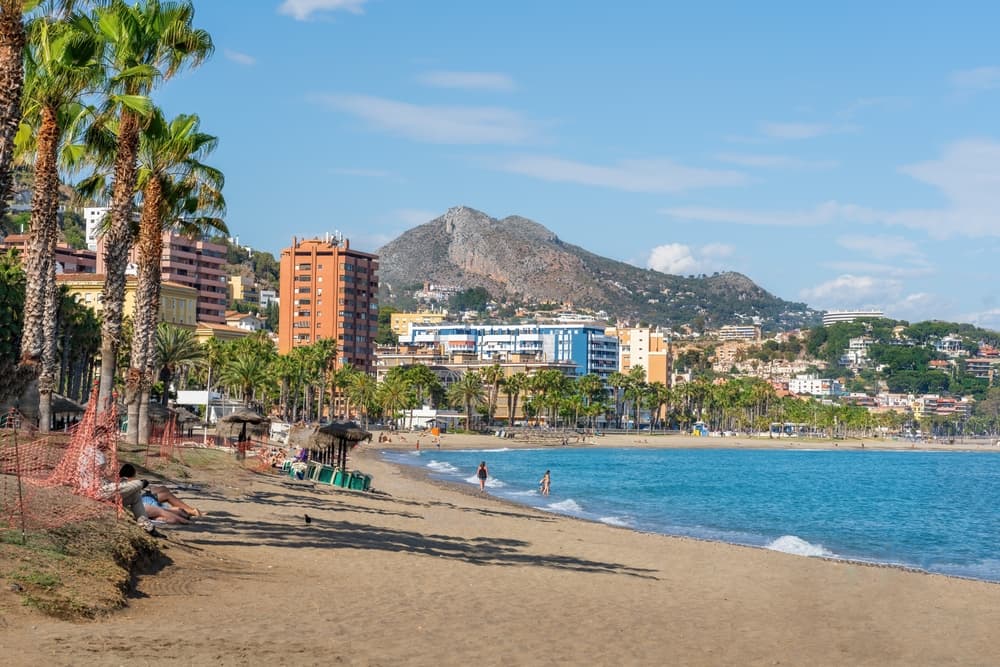
The Costa del Sol capital has grown into a stylish tech and culture magnet, with an airport that flies everywhere and winters warm enough to swim in.

Valencia
The expat favorite
The current darling: a proper city with beaches, the birthplace of paella, futuristic architecture, and rents well below Madrid. Big American community, easy to settle into, and hard to leave.
Questions, answered
Do I need to prove I speak Spanish?
Everyone takes the CCSE exam on Spanish culture and the constitution. The DELE A2 language exam is waived for native Spanish speakers, which covers most Latin American and Puerto Rican applicants. Non-Spanish-speaking nationals, like Brazilians, still sit it.
Do Puerto Ricans really qualify if they hold a US passport?
Yes. Spanish law treats a natural-born Puerto Rican as an Ibero-American national by origin. You'll need your Puerto Rican birth certificate and the Certificate of Puerto Rican Citizenship issued by the Puerto Rico Department of State. It applies to people born in Puerto Rico, or born elsewhere to Puerto Rico-born parents, not to mainland US citizens who simply moved to the island.
How long does the whole thing take?
Two years of legal residence before you can even apply, then the Ministry of Justice decision usually lands in six to twenty-four months. Realistically, plan on roughly three to five years from your first day in Spain to a passport in hand.
What does it cost?
The government filing fee is about 104 euros, the Tasa 790. Budget another 85 or so for the CCSE exam, plus the cost of apostilles and sworn Spanish translations of your birth certificate and criminal record.
Do I have to give up my current citizenship?
No. Latin American nationals, Puerto Ricans, and the other eligible groups keep their original passport. Spain does not ask you to renounce it, so you end up holding both.
Does the nationality have to be one I hold by origin?
Yes, and this is the part that trips people up. The two-year benefit only attaches to a nationality you hold by origin, by birth or bloodline. One you picked up by naturalizing in another country does not count. A 2025 Spanish court ruling confirmed that dual US and Latin American nationals by origin still qualify, even if they were born in the US.
Who qualifies for Spain's two-year citizenship route?
Nationals of Ibero-American countries, meaning all of Latin America, plus Portugal, Andorra, the Philippines, Equatorial Guinea, and people of Sephardic Jewish origin. Puerto Ricans qualify too, treated as Ibero-American nationals even though they carry a US passport.
Other ways into Spain
Live in Spain, Keep Your Remote Job
Spain's Digital Nomad Visa lets you work for clients and employers abroad while you settle into life in Spain.
Start or move your business to Spain
A three-year residence and work permit for non-EU founders.
Get Hired in Spain on the Fast Track
A Spanish job offer becomes residency in about a month, family included.
Retire to Spain Without Working a Day
Spain's route for retirees living on a pension or savings.
Spain's student visa comes with 30 hours of work a week
The money bar sits near $700 a month and the work right is real. The catch is one word: a study stay isn't residence, and in some regions that word decides your tuition.
Find out if Spain is your move.
Speak to an Expatsi advisor about your next steps.
Why not you?