Episode 19 · July 21, 2026 · 49:19
"If We Live in a Fishbowl, We Don't Know It" Panama Residency By Investing in Timber
How Panama's teak farm path gets you permanent residency for under $28,000, and how expats get mortgages in Central America.
Listen on Spotify →Featured in this episode
In this episode
Jen Barnett and Stephanie talk with Mike Cobb, CEO of ECI Developments, who moved to Belize in 1998 and then spent 14 years in Nicaragua. First, the hosts trade medical stories. Jen had a facelift in Merida. Stephanie got her first mammogram at a Portuguese hospital inside a mall.
Mike covers raising kids abroad, his mortgage bank for foreign buyers and Panama residency through a half acre of teak for under $28,000. He also previews the Expatsi roadshow outside DC on August 21. The episode ends with a listener asking how much money you need before you move.
Key takeaways
- Owning half an acre of land planted with baby teak qualifies you for Panama residency through the friendly nations visa. It costs under $28,000.
- The Panama teak residency is provisional for two years. If you don't commit a felony in that time, it converts to permanent automatically.
- To keep the teak residency, you only have to be in Panama one day every two years. If you stay a couple of weeks on your first trip, getting it takes just two trips.
- Panama's traditional investor residency program costs at least $100,000.
- Local banks in the region don't lend to foreigners, and US banks won't lend on collateral abroad. Mike Cobb's bank in Belize lends on the property's value instead, with no credit check, and usually wants half the price as a down payment.
- If the seller carries a second position, you can finance about 80% of a purchase. On a $100,000 home, that's $20,000 from you, $30,000 from the seller and $50,000 from the bank.
- Earmark $10,000 for the move itself. Under the rule of four, spending 4% of your savings a year makes them last 30 years, so $1,000,000 supports $40,000 a year.
- Stephanie got a triage nurse within 10 minutes at a Saturday urgent care in Portugal. The hospital's website lists what things cost.
Chapters
Show notes
Did you know there are opportunities out there where you can gain residency in a country AND get a return on an investment?Mike Cobb is the CEO of ECI Development, a real estate development company working in Central and Latin America for over 26 years, creating people-centered, vibrant communities.
More information of ECI Developments
To begin your journey abroad take our FREE quiz!
This episode is general information, not legal, tax or financial advice. Talk to a professional about your own situation.
Questions from this episode
Is the Panama teak residency permanent?
Yes, after two years. It starts as a two-year provisional residency. If you don't commit a felony in those two years, it converts to permanent on its own.
Can a foreigner get a mortgage to buy property in Central America?
Yes, but not from local banks, which don't lend to foreigners, or from US banks, which won't lend on property abroad. Mike Cobb's bank in Belize makes loans based on the property's value, with no credit check. Expect to put down half. If the seller takes a second position, you can get to about 80% financing.
How much money should I set aside for the move itself?
Earmark $10,000. That covers a visa, a flight, shipping your belongings and a little cleanup work around the house. If you're really spending, it can run up to $40,000.
How often do I have to be in Panama to keep the teak residency?
One day every two years. A long weekend every other year keeps your permanent residency. You're also free to live there all year.
How much does Panama residency through a teak farm cost?
Under $28,000. That buys half an acre of land with a couple hundred baby teak trees planted on it. Panama's traditional investor residency program costs at least $100,000.
Go deeper
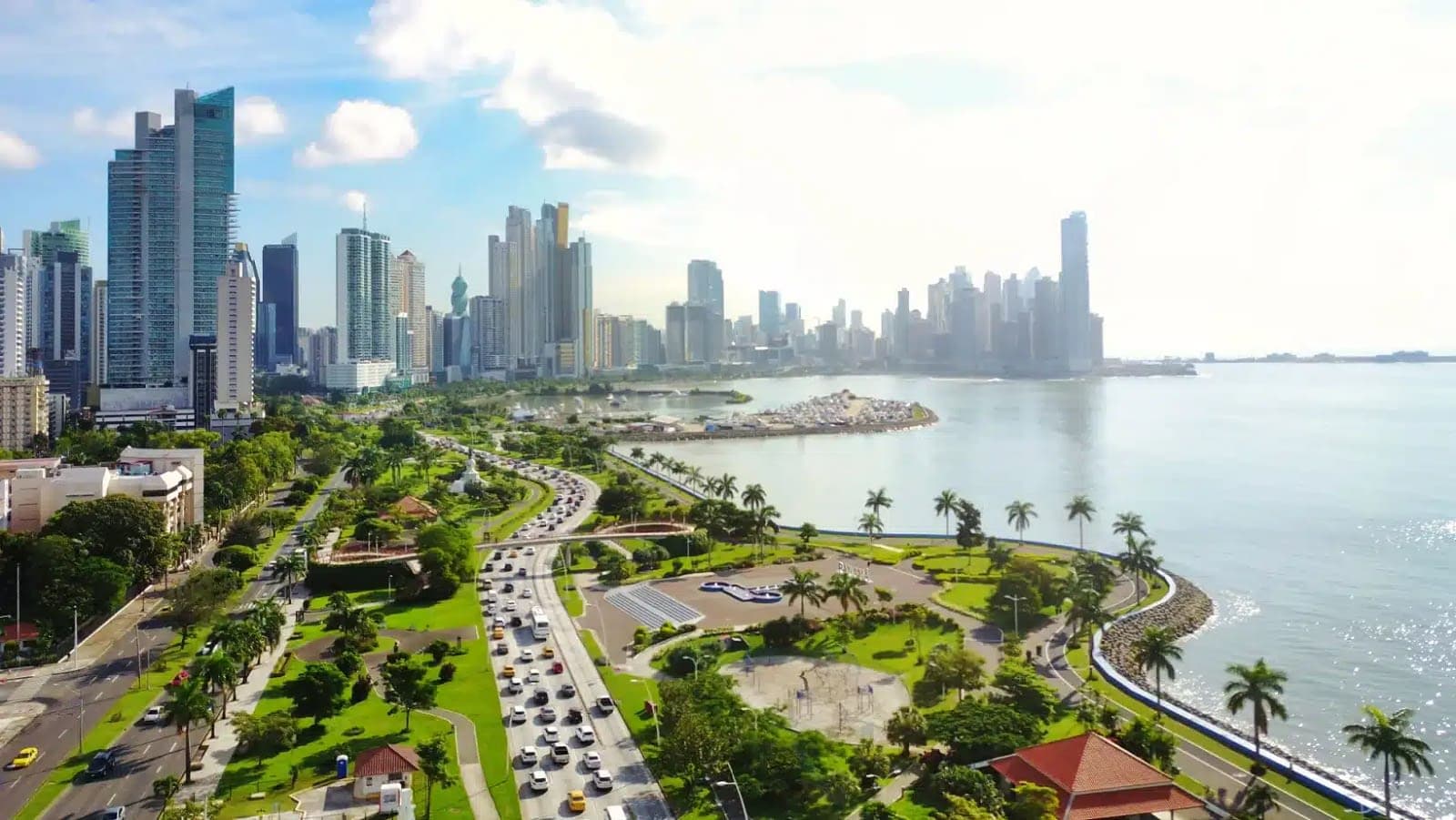
Panama might be the easiest move you'll ever make
Mike Cobb lays out a Panama residency path that costs under $28,000 and needs just one visit every two years.

Panama Friendly Nations Visa for Investors
Owning half an acre of teak qualifies you for residency through Panama's friendly nations visa.

How to Buy Property Abroad as an American (2026 Guide)
Mike explains why local and US banks won't lend to foreign buyers in Central America, and how his bank does.
ECI Developments
ECI Developments, led by this episode's guest Mike Cobb, builds and finances real estate in Belize and Panama.
Expat Guide: How to Get Healthcare in Panama
The hosts swap stories about medical care abroad, and Panama is the country this episode focuses on.
Transcript
Transcript is auto-generated and lightly corrected; it may contain errors.
Read the full transcript(8,765 words)
English speakers are still a novelty here. And of course, I had two cats who basically destroyed their carriers on days one and three. There's a lot of discussion to make sure that we were aligned and that we were doing it for for similar reasons. What are the visa paths? Are you running towards something or are you running away from something? And then what?
I can't believe we're finally here. This is Americans Abroad. On this week's episode of Americans Abroad, we talked to Mike Cobb about opportunities in Central America and what it's like to live in different countries. Jen, we have a lot to talk about today. Yes, and you can't see me while I tell you and. There's a reason, Jen, can you share with everybody what your last seven days have been like?
Yes, one week ago today I had a facelift in Merida. I got fix it. So you know, we've all been looking at ourselves a lot in the era of the Zoom call like since 2020. I feel like like I just spent so much time looking at my face. It was really funny because that's when I started doing Botox was, I mean, not immediately, but at some point because I was looking at my face all the time. And I was so frustrated with my boss that I started to develop an actual wrinkle, like, you know, a like where your elevens are purely because I was
constantly consternated at that, man. And I started getting Botox over it because I was so tired of the way it looked. And you know, it's complex to talk about stuff like vanity because I, I do have complicated feelings about it, about loving yourself the way you are and whatever else. And then also just being like Yolo. Absolutely.
But you know, we do have there. We I make content, I post videos. I am never going to be an aesthetic type person. I'm a goober and and whatever and I'm never going to go do my clean girl aesthetic and makeup and get ready with me. That'll never happen. But I just was post menopause. I'm about God, six years post menopause now, 5 or well, not that many.
Five, I know four or five, something like that. Yeah, I guess about five years post menopause and I just was feeling saggy and heavy. And I also lost some weight after I moved to Mexico. And so I just, I looked at it all the time. You can't always see it because I use a, you know, a fancy light.
And I think that when we do live streams, sometimes it puts a little bit of filter on you, but I can see it. And I just was so tired of looking at it. And so there was a woman last year who went viral for getting a facelift in Guadalajara. And I got and now she I mean different human being like 30 years off the clock kind of a thing, because I don't want like my worst nightmare.
OK, listen, my two worst nightmares, the biggest worst nightmare going into the well, dying, I guess, But the second is coming out with like Mar a Lago face, right? Like right, Just I hate it. It's hideous. It looks insane. Why would I want to look like an alien? My other this is not a nightmare, but my other thought was coming out and it looks like nothing's been done. So I'm like, if you could just like take it right down the middle, I'd be so happy.
But anyway, this girl, she looked so different. And so I started kind of looking at the celeb plastic surgeons all over and, and different things in Mexico and people who, you know, they make viral content and I kind of got fixated on it. And there are ones in the US and this and that and they do this kind of, there are all these different techniques. And finally, what I realized that I wanted more than anything was to just do it at home.
I realized that more than picking because I wrote to some of the fancy surgeons or ask for. And fancy doesn't always mean expensive in Mexico, but just well known. And I had started with, you know, scheduling appointments and stuff like that. And there's even one in Cancun, which is not so far. But I thought, you know what, I got to be really good plastic surgeons here in who might just not be social media stars.
And so I decided that that was really the most important thing. I researched all the doctors here and I ended up meeting with two of them. The first one I did not connect with it all and the second one I really did. So I decided to wait until after move a broad con because obviously yes. And I had it done a week ago and I, you know, listen, has it been the most fun experience of my life? It hasn't, but it was, I haven't had any pain. That is a big one.
It's just awkward and uncomfortable and I look like terrible, just everyone so swollen. But it was. And just so you know, it was $8000 and that included an overnight stay at, you know, super nice private hospital. And I had a deep plain neck lift I had and Max facelift, which just is a superficial sort of facelift because OK, you know, I, it wasn't anyway, that wasn't my biggest problem. I had an upper blepharoplasty.
I had fat transfer. So they took that. I thought that I thought they were just moving it around on my face, but they actually took some out of my tummy, which plenty to spare. And they put it like under my eyes and in my chin and my lips. And then I had some moles removed. It's so funny.
I don't think about my moles at all. But I will tell you, whenever I get on the wrong side of social media algorithms, that is what all the comments are about. People are obsessed with my moles. And I thought, well, you know, as long as you're there, let's just go ahead and put these off. Yeah. Yeah. Big deal.
Yeah. And so that's what I did. The two biggest differences, one was positive and one was negative. And having it done here in Mexico, the biggest negative was I was in post op and I was having some fear. I was having a panic attack essentially. And I was asking for help and everybody was ignoring me until finally, you know, I got a nurse to come over and I was asking for help in Spanish.
But I was like, maybe my Spanish was terrible and I was on drugs. So that was the negative and I asked the doctor about it because I said, you know, did I do something wrong? And and he said no, but I honestly, I don't know. It was strange, I'm sure. I guess at the end of the day, there was nothing really wrong with me and all the machines for telling them that. And you just.
Needed an adult? I did, I wanted AI wanted somebody to come over and say, did you do you doing a good job? You're feeling so good and, and, but then on the positive side. So I was going to ask if Brett could stay in the room because, you know, in the US we have visiting hours and they're very short and there are exceptions they'll make in certain cases and stuff. But in this case, they, they said no, he's required to be there.
And this is how it works here. You were required to have family with you 24/7. Now, you know, we cheated a little because I was like, well, at least go take care of the dog and stuff. But he they, we had this huge nice room, a huge nice place for him to sleep, like a really nice soap, like a full sofa that he could sleep on.
It was really nice. And so he was able to stay with me. But they do expect that your family stays with you and does certain, you know, get you to the bathroom and stuff like that as opposed to you calling for the nurses. I actually really, actually really liked that. So anyway, so all that to say, that is why my camera is off. I have, you know, this crazy face bra on. I will say, Stephanie, we got Ava our rest. I mean, our stray kitten, we got her fixed the same day. So she and I have just been here
in our cones for the past week, like recuperating together. I've been better than her because she did take her stitches out and I have left. I let I know, I know, but she's fine. She got her cone off and immediately was free of the stitches. So yeah. So I just don't look super pretty, but I think honestly, in a week I'm not going to be done or anything, but I think I'll be fine to be on camera and put some makeup on and and stuff like that.
So there you go. There is my I, my secret vanity. I had a facelift. Amazing. Well, yeah, I'm. Glad you're on the road to recovery. Thank you. Thank you. So you were telling me about your baby's first mammogram. I cannot believe you had never had a mammogram before. I forget what a baby you are sometimes. Well, it's also I have a lot of medical trauma in with that come as medical anxiety.
So you know, not proud of it, but I hadn't been to a doctor in since before COVID. Any even then was like prior to that was probably five years before that. So oh. My God, you might as well be a man. Tell me about it. I'm just like no, if I don't, if I don't know about it, then everything is fine and I can lie to myself that nothing is wrong.
I know, I know. But I guess about a week ago, a little over a week ago, I had some weird symptoms and I just started crying to my partner and I was like, I think I'm going to I want to go to the doctor. So we went on a Saturday to urgent care to to one of the private hospitals not too far from my house. And let me tell you, my favorite thing about this is that it's inside a mall, so you can go shop and also do your doctor's appointments and have your surgery. It's fantastic.
So went to the doctor's office and, you know, one of the things that again, when you're on the wrong side of the social medias, you know, Yeah, they have, you know, national healthcare or socialized healthcare, but you're going to wait six months to see somebody even with like a broken leg or you're going to have a heart attack in the parking lot.
I will tell you, I go in, in my very broken Portuguese, I pull a number, go up to the front desk of my numbers called, they tell, they send me to where the urgent care is. I pull another number. They check me in and I'm seeing a triage nurse within 10 minutes. And I'm not, you know, I'm not bleeding from my eyeballs.
I'm not like in an urgent situation. It was just I have the bravery to do it today. So I'm going to do it today. Triage nurse in 10 minutes. They asked me what was wrong, took my vitals, sent me back to the waiting room and then in front of an an actual doctor probably 1520 minutes after that.
And this is on a Saturday. While I was there, the doctor said we need to get you with like an actual doctor just for ongoing stuff. I'm also was pre diabetic and so like we need to get you just, you know, check out everything. And I was like, OK, she's like, I'll make the appointment for you. Are you free this day and this time? Absolutely.
And so today was all the lab work that doctor ordered. And again, bumper to bumper, I had blood drawn. I had my first mammogram ever in my life because again, I don't go to the doctor. I had my kidneys checked, my liver checked. And one of the things that I love about the way that doctor's visits and labs happen here is it isn't OK. We do the test and they go, OK, miss, don't get dressed and we'll meet you in, in the office or get dressed and we'll call you with the results in three to five days. No, I knew when I went to ER,
they did an EKG they took, they discussed it with me right then and there. Today I had ultrasound of my liver and my kidneys as part of my, my bumper to bumper and the, you know, imaging person was like, yeah, I see this, but I'm not too worried. I see, I see this. It's pretty normal. Nothing advanced.
You're fine. So just having that reassurance I think also did a lot for my medical anxiety because I'm not sitting in a waiting room expecting the worst or sitting at home for three days waiting for a follow up appointment expecting the worst. Great experience. Also, one of the things that I really appreciate it because, you know, we talked about cost and affordability and I have never seen this in the US on the website for the hospital, they tell you what things cost. You need an overnight stay.
This is the cost of an overnight stay. You are coming to get X-rays. This is the cost of your X-rays. It makes the financial part a lot less intimidating even if you don't have insurance. So that's my my navigation of the Portuguese medical system and it's been great so far. I'm so proud of you for going and getting that done me.
Too. You get a bitch, you're doing a good job. I'm going to treat myself to some new shoes. I have a follow up appointment on Thursday to go over all of the labs and like what they want to do in terms of medication to manage my blood sugars and stuff. So I'm treating myself to a pair of shoes. Why?
Because my hospital's in the mall. Brilliant. Love it. This week on Americans Abroad, we are lucky to be joined by Mike Cobb. He is our partner for all things Central America focused and he has expertise in real estate and in mortgages and in living abroad himself. Mike, thank you so much for being here. Hi, Jen. Good to be with you.
Stephanie, Hello. Hello. So where have you lived and what made you decide to initially? Because this is way before the current movement of people moving abroad that you lived abroad. So how did you get started and where all have you lived? Sure. Yeah, I started in business back in the mid nineties, 1994 in Belize and then in 1998 I did my first ex padding. I I had left a full time job in the computer business in the Washington DC area in the spring of 98, gotten married and in the fall of 98 my wife and I moved
to Ambergus Key, Belize to take over a small resort that we purchased in September. We lived there from September to about February of 99. It was a very interesting experience owning and running a resort, living on property, but it was a just a fantastic general experience for getting our feet wet in the business. And then in 2000, we bought a very, very large piece of property in Nicaragua and in 2002 talked to my wife and I said, Hey, hey, honey, we had a 2 year old daughter said, honey, let's, let's, you know, we got
to go to Nicaragua. We got to, we got to get our project down there started start the, you know, start the real work. We had a couple years of permitting and things like that. So we moved to Nicaragua. And after about three, 3 1/2 years, we had every, we had, you know, chief operating officer, accountants, architects, engineers, marketing people. We had the whole staff put together and we could have come back to where we Live Today, Shepherdstown, WV, because we just simply rented our home, which is a great idea, by the way, and we can talk about that
later. But you know, so we'd rented our home when we made the move. And Carol and I went out to dinner one night to our favorite restaurant, La Casa de Los Nogueros. And we sat down with a piece of paper and we listed every reason to stay in Nicaragua and every reason to go home. And, but very quickly it was obvious, like there were lots of reasons to stay and not very many reasons to go home. And we decided to stay a while longer. And that was 14 years, Jen.
We, we lived in Nicaragua pragma for 14 years. We had another little daughter who came along. So we raised a family there. And so great, great expatting experiences. And then sort of what I called the reverse expat experience, which is coming home back to the US after being an expat and that. And, and if we get a little time, I'll tell the story about Lord of the Rings, which doesn't seem like it would apply, but it really does. So anyway.
So Mike, for someone who's lived all over the place, what is your favorite place that you have lived and what did you love about it? Well, you know, it's interesting. We lived in Belize for that six months and, you know, and, and, and I'm very honest and, and, and people can't believe I say this because we develop real estate, we build homes for folks in Belize.
We lived in Belize for six months. And for Carol and I, it was 5 1/2 months too long, which is, you know, people laugh kind of like, but it's true. It did not hit our heart. It was not a place that we wanted to live. Whereas when we moved to Nicaragua for what we thought would be 2-3 years, we loved it.
It hit our hearts and we ended up staying there for 14 years. And so, you know, lifestyle decisions. I mean, we went for work, but we stayed for the lifestyle. We stayed because we loved it. And so for Carol and I, living in Nicaragua was by far our favorite place. Both of us have spent a ton of time in Panama starting in 1998 through maybe 2002. Thousand and one.
We never actually lived there, but we were there for 2-3 weeks at a time many times. And we like Panama as well, but Nicaragua is our favorite specifically. So what was it like? You mentioned that you had your second daughter while you were abroad. What was it like raising kids abroad in Central America? How was it different? What were schools like?
What were their lives like? Yeah, you know, in, in, in one word, phenomenal, phenomenal. And I highly recommend it to to anybody who's even considering moving overseas and, and if they have children, instead of the children being maybe the, oh, I wonder if we should, it should be the opposite. It should be. We absolutely should. You know, we took a 2 year old daughter Amanda with us and literally we got there, we kind of got moved into our house over the first couple weeks, but then we just took her to a Spanish speaking preschool age of two and just said, Hey, honey, love
you see you at noon kind of thing. Dropped her off right. And, and, and, and what was interesting was, you know, her very first Spanish word think about this as a 2 year old was. Mio, you know mine. OK, so right. So it's a perfect first word in Spanish for a 2 year old. Anyway, they, they learn Spanish. And then we, we put, put Amanda into the German school preschool program because there was, there's a Great American school, international schools, French school. There's some other, you know, private schools as well. We, we picked the German school because of the curriculum. The curriculum is strong and,
and, and we liked the teachers there that that was really it. We like the teachers there and, and, and the rationale was that we would put our girls and we had Emily who came along a couple years later, put them into a foreign language school, this case, the German school. So they would go to school in Spanish, learn German as their quote UN quote, second language and speak English at home. And what we really wanted was the Spanish language instruction.
We wanted them to go to school in Spanish with other Nicaraguan children. It was a very small German embassy that ran the program. So in a small number of Germans, but but mostly Nicaraguan. So our girls went to school with other Nicaraguans, spoke Spanish, learned German, and then spoke English at home. The educational system throughout Latin America is, is robust, right?
I mean, in, in, in Panama, they have the, the French schools and you can get the, you know, the, the baccalaureate programs, the IB programs and things like that. So, so again, your educational opportunities for children are phenomenal. But, but the, but the, but the one thing that I think is the most powerful reason to take children overseas, even at those very, very young ages for any amount of time is that if we live in a fishbowl, we don't really know we're in a fishbowl. And culture is like a fishbowl.
It's like the water we swim in, right? And, and if, if we're swimming around in the same fishbowl in the same culture water all the time, we don't really even know it, right. But when you've got 2 fish bowls in which we did, we had the US fishbowl in the Nicaraguan fishbowl. Sometimes things would happen at school or at home or with play groups or whatever.
And we, well, that's how they do it here in Nicaragua. It's not how we do it in the US or if we were in the US, we'd see things we saw. That's how we do it here in the US. It's not how we do it in Nicaragua. And when you start to have two fish bowls, this is it. The consciousness of culture gets to the front of your brain as opposed to being a totally subconscious, unconscious thing. And now it's a conscious thing.
And the awareness of culture is powerful in in so many ways. And so to me, the single biggest benefit is the awareness of culture. Language, obviously another big benefit as well. But but those two reasons, I would say if you have kids, do it, do it, do it, do it. That was fascinating. So they're what you call those third culture kids. Yes, correct.
Yep. And, and what are they like now? Do they do they live abroad? Do they are they multilingual? So they started talking to me again. They're 21 and 25 S for a period of about four. Or five years that. That was the dumbest guy in the whole world, right? They didn't shake me very much. But anyway, they're back to talking to me so I can answer your question better. You know, both of them actually trained in classical ballet. Their teacher in Nicaragua was at one point Nicaragua's ballerina.
She had trained in Cuba and Russia, danced with the Marinski and, and so she came back to Nicaragua, danced all over Central America, kind of aged out, probably got to like 40 or something, I don't know, and started a school and that's where my daughter's trained. And they got incredible world class ballet training. And in fact, the reason we moved back to the US was that when Amanda was 15, she received a scholarship at one of the ballet competitions that she was at in Panama to go study with the Joffrey Ballet High School
program in New York City. So at the age of 15, she went to New York for a semester. We stayed in Nicaragua to kind of give her the chance to test it out. She liked it. That's why we came back to the US. Both girls are now professional ballerinas. Amanda, my oldest, is at the Ballet Theatre of Maryland in Annapolis, and my little 1 is in San Jose at the New Ballet of San Jose.
So both took that training that we would never have been able to afford in the US. Probably couldn't have found it first of all, but then to afford that kind of training would have been out outrageously expensive. And so they were able to really capitalize on something very unique, very special that could have only happened in a place like Nicaragua.
It could happen in Costa Rica and Panama too, but in that part of the world and and they've capitalized on it, become professional ballerinas. Wow, what an amazing opportunity for them to explore something creative. We don't often get to do that here in the US. So congratulations to them and and to you and your wife. I want to shift gears a little bit.
You started a mortgage company for expats. Talk to us a little bit about why you made that choice and what you were hoping to do for the expat community. Sure, you know it was truly by accident. Back in 1993, I went with a business best friend in college, now business partner to Belize. And we, we looked around for some real estate, went back a few months later and we bought a couple condos. And the condos we bought were in the development where one group of 11 buildings was done.
We bought in the second group of, of buildings. And there were three buildings beside ours, one that was kind of going up, one that was maybe a foundation and one was a hole in the ground. And over the course of the end of 93 and into 94, like we never saw anybody working on these buildings. And so that we were sitting by the pool one day and the developer came by and we're just chit chatting with them. And we asked him, we said, well, Jim, what's the deal? But why don't you finish?
Why aren't you working on these buildings, right? Because that's your business. Build them, sell them, make money. And he tell us the story that he came down with a few 1,000,000 bucks. He bought the land, built the first buildings, but when he went to sell them, there was no mortgage money because a bank up in, you know, Shepherdstown or wherever in the US is never going to lend money on collateral outside the US.
And the banks in Belize and throughout the region didn't loan money to foreigners. And so there was this big hole in the marketplace. And so Jim and many other developers like him had to finance the sales. So somebody come along and he'd say, well, you know, it's, you know, it's 100 grand or whatever. And, you know, and they'd say, I don't have 100.
I got, you know, 2530. He'd take their 25 or 30 and finance the rest. The problem was as he was stuck and he couldn't finish buildings because he was getting mortgage payments rather than, you know, the lump sums. And so we started a mortgage company and for the 1st 10 years, literally all we did was buy paper from developers.
We went to a developer, bought their paper, cashed them out so they can continue with their development business. And then in 2003, we received our banking license. And so since 2003, we've been a bank in Belize, but we're still a mortgage company. And what that really means to a consumer is the ability to finance properties. Many developers, by the way, just simply say no, like it's 100 grand, wire me the money or go away, right?
And, and So what, what, what the, what the now bank, what the mortgage company now bank does is really offers liquidity into a marketplace with very thin liquidity, but specifically for foreigners who can't borrow from the local banks and from they can't borrow from a bank back home either. So we've really filled a very important niche in the marketplace to to allow more transactions, to allow more people to get what they want, which is that property overseas.
What are some of the differences between getting a mortgage in the US and getting a mortgage internationally, and what do people need to be prepared for as they navigate those differences? Yeah. You know, it's, it's actually pretty, it's pretty similar, right. I mean, you, you the only, the only, the major difference is there's no credit check per SE because there's no way to really enforce sort of a credit report kind of or a credit, a crediting attachment in the US or Canada.
And so the, the financing is based on the loan to value, right. It's, it's, it's based on the value of the property. So it's really a collateral based loan. That's the primary difference, which generally means that we're looking for or at least half the money down from the client. So if it's $100,000, a client comes with half 50,000 and the, and you know the bank puts in the other 50. But we work with a lot of sellers. It can be developers, it can be individual sellers of a home, for example.
And we say, look, we can only put half the money in. But if you want to take and take a second position, the client could send me put $20,000 down the the seller would keep 30,000 and we would put up 50. So we can, we can help sellers get get to the point of about 80% financing, but that's really the only difference, Stephanie, there's they're, they're very similar in process, they're very similar in, in how they work.
How do you go get them back if you have to if somebody doesn't pay? Yeah, great, Great question. So in believe. Do you send your daughters in to? No, to do the Roundhouse kick, they can get their legs way above their head. It's amazing how these ballerinas do this kind of stuff. But anyway, no, no, you know it.
It's all very legal. It's all very procedural. In Belize. We have, we register mortgages. So literally it's a mortgage in Belize outside of Belize because we're not a bank in any other country. What we do is we have the seller transfer the property into a Belize corporation and then the shares of the corporation are actually held by the bank during the term of the loan.
And then when the loan's paid off, we give the company to the to the buyer. They can either keep the property in the company or they can strip it out and, and take it in their own name or, or however they want to. So. So there's really two different ways to secure the collateral depending on where it's located.
Smart and how many countries do you operate this in? I think currently we have loans in maybe six or seven countries, but over the 23 years, I think we've probably had loans in maybe 12 or 13 countries, all in Central America and the Caribbean, although Colombia, that's South America. So Latin America and the Caribbean is our is our turf.
Yeah. What are the other businesses that you operate in Central and South America? Yeah. So we have a development company. We build resort communities in Belize and Nicaragua. We have properties in Panama and Costa Rica as well. We've worked with developers in Honduras. We actually worked with a project in Portugal of all places. So it was really an outlier in the Azores.
The the other business is a timber business. 27 years ago, Carol and I were stomping around Panama. That's what I mentioned. We spent a ton of time in Panama in 9899 and 2000 looking for a property and buying it to plant teak trees. So we, we bought a farm and a cattle pasture basically and planted 100 acres of teak trees in 1999 and kind of just scratched our head and said, well, that's 25 years from now, we'll figure out what to do with it. And, and that was a couple years ago. And we, we've since built a
sawmill and, and, and are now producing lumber and finished products as well. So, so really three businesses, banking and finance, mortgages mostly development of of homes and residential product, resort product and then the timber and sawmill business. So three, I guess, differentiated business lines, but all in Central America. OK. So Mike, we, you and I partner on an opportunity that our clients use to get residency in Panama through your teak farm. And I know that everyone thinks that it is swampland in Florida. Do you mind to just explain what this is? Sure.
In fact, we have AI. Don't know when the podcast is going live, but we actually have a webinar tomorrow, Stephanie, we're going to do a webinar all about this particular topic. But in a nutshell, it's really simple. The, the, the ownership of half an acre of land with the teak trees planted. They're baby teak. So they come out of them, you know, there's a couple hundred of them on your property, on your half acre.
And that's what qualifies you for the permanent residency. Now it's a two year provisional, right? So the first two years it's provisional. And basically if you don't commit a felony in the first two years, then it converts automatically to permanent. And then once it's permanent, it's done a couple things I really like about it. It's it's about 27, almost just call it $28,000. It's it's under 28.
But anyway. And so it's very, very affordable. It's very fast. You only have to go to Panama twice, maybe three times, depending on how long you want to stay the first time. But if you can stay a couple weeks on your first trip, then you only have to go to Panama twice to get it, which is very convenient. But the thing that I like about it the best is that once you have it, you only have to go to Panama one day every two years to keep it forever.
And, and it is a permanent residency. And, you know, we, we kind of talked about people wanting you asked the very first question, Jen, about people, You know, I moved long before people were really thinking about moving. I'll tell you what the number of people thinking about moving is skyrocketing, as you guys know, and you've seen at your conferences and your and your and your and your mailing list, right? I mean, tons of people are, are, you know, saying I, I need to get out of here.
I, I need to plan on it. I need to, but I want to, but a lot of people are just saying I need two. And the nice thing about the Panama residency, we call it a Plan B, right? And, and, and even if it's not your destination country, you say that's not really where I want to live in Portugal. I'm going to live in Greece or where I'm in Thailand. It doesn't matter, right?
Having a Plan B, having a place that you can go and stay if things really go off the rails is critically important. I mean, that's Peace of Mind, right? And I think many of us, me included, like I'm worried about where things are headed. I mean, I think the train wreck is already happening. I don't think we're going to have a train wreck. I think we're watching a train wreck happen in slow motion, maybe not that slow sometimes, right? And so this train wreck's already happening. And, and if it continues to unfold in bad ways, many, many, many more people are going to be
looking for ways to secure that Peace of Mind knowing that they can get out and they can stay out. And, and that's what the Panama Teak residency does for folks. It gives them a very fast, easy, simple way to get that and then and then have it for for forever. Yeah, it's really interesting to me because we have a lot, we have a lot of clients who do investor visas around the world and most of them are, you know, $600,000 or $1,000,000 or $3,000,000. And so, and even if you were to go to Panama through a traditional investor residency program, it's at least 100,000, right?
Yeah. So this is through the friendly nations visa, which is just a different path. And so I'm not going to get into all that now. But anyway, I just, I wanted to share it. I have my teak cutting board in the in the kitchen and I just, it's, it is without a doubt the most affordable residency by investment program that we have at Expatsi.
Not to get a big sales pitch, but I also want to share that if you're recording the webinar tomorrow, it will be available for ever for our Xbox Ego members so they can come and watch it anytime. Fantastic. Yeah. And, and, and you're right, it is affordable that, that it's one of the most affordable in the world. Like I don't know if it really is the most affordable, but it's certainly one of the most compared to many of the others out there.
The thing that I really, I, I said this, but I'll say it again, that I really, I love about it is that it's so easy to keep and maintain. Many residencies require you to be in country some number of days a year and maybe that works for your lifestyle, maybe it doesn't. Panama makes it so easy. Go there one day every two years, fly down for a long weekend every other year and you maintain your permanent residency.
And, and, and, and, and look, if it's a place you want to live, go spend as much time as you want. It's permanent resident, you live there all year long, right? But if it's truly just a Plan B, it's your insurance policy if things go off the rails. I love that about it. And, and then you pair it up with the teak investment, right?
And now all of a sudden you have an investment piece of this that will produce a significant return in 25 years as well. So you've got Peace of Mind, you've got easy to easy to keep it easy to, you know, whatever have it. But then there's also the investment component over time that's phenomenal as well. Now I I love the flexibility of of a program like this. Like you said, having that Plan B, being able to plant your flag now, well, the kids finish high school or whatever retirement comes in five years that you know where where you can go. You're not starting from scratch
when these big life events happen. I think it's fantastic. I've got one other question. So we're partnering with you on something very, very exciting and that is our Expatsi roadshow and in fact, we have one coming up in DC in August. Can you tell us a little bit about the roadshow that we're working on working on with you?
You know, I can, I wish I could tell you the date, but I don't know. I don't know it off the top of my head, but I. Can tell you. I can tell you which, yeah, it's August 21st. That part is set and I and I have some other little details I'm working on too if you need those.
Awesome. Thank you, Jen. Yes, so August 21st. But the thing I love about these Rd. shows is that they're small and intimate. I think it's going to be, you know, 253035 people at the most, right? So now all of a sudden you're going to get the same kind of content that you got it move abroad, although, you know, scaled way back, not as many speakers, not as broad, but at the end of the day, you're going to hear about the kind of things that are really, really important. You know what I'll be talking about due diligence, which is my book topic.
You know, the how do you buy your home overseas or how do you make an investment overseas and get it right the first time, right? So due diligence and, and big general stuff. And, and I think they've got somebody coming in to talk about health issues and health insurance and, and, and I don't know who else is coming, but these are what I call the big picture things you really want to get right. You want to get your you want to get your property acquisition done right the first time.
You want to make sure your healthcare and your insurance programs are in place and solid right and so to cover these issues. But then you have lots of time. This is, I think the bigger part is that you have lots of time with the other, call it 30 people who are, are becoming your community, right? These are people who are thinking about doing the same thing you're doing.
And because we do them around the around the country, these are people in your neck of the woods, right? We're doing this outside of DC in Reston, VA, right? So they'll be from DC, Maryland and Virginia there. And so you, you'll meet, you know, hopefully a bunch of those people there. I think Laura's got some activities lined up to help people get to know one another and kind of crisscross, right? But at the end of the day, if you walk out of there with five or six phone numbers and emails of other people just like you who are saying to themselves,
you know what, I really want to do this, But gosh, and you know, I'm a little nervous about it. And my friends at work are telling me I'm insane, right? And you're going to come and be with this group of people go, no, you're not insane. This is, this is really OK to do, right? And, and, and, and you're going to build the connections that start to create this community. And what's really cool is I'm talking to someone in Merida, Mexico and Porto, Portugal right now. And and you know, and and and the community we have as. This little group right here,
right? But, but this is a microcosm of what we have broader in the expat community. We had friends from all over the world and, and, and many of them were local in the sense that they were near us, right? We had a Korean couple who had lived in Argentina across the street from us. They were expats in Nicaragua too. We had great relationships with.
So you're not just meeting American expats, you're meeting expats, but the community that you will build by coming to an event like this and, and the network that you can start to create that will become a support network because culture shock's real. It is absolutely real. You're, you're going to bang your head against it at some point. Everyone does, right?
And if you have a network of people you can tap into and reach out to get on a call or go on a zoom or, or, or, you know, if they're a neighbor, go across the street. Like this is how we get through these life events that happen as expats and, and the community is powerful and profound.
And these these events like we're doing in Washington and then around the country over in the next 12 months, let us build community. Now I think that's that's very, very well said. Mike. I want to thank you for joining us today for your information, the support that you provide to our audience. And again, we are so excited for this upcoming roadshow.
Thank you. Good to be here. If you want to learn more about Mike and his business, ECI Developments, as well as find more information on our upcoming roadshow, you can go to expatsi.com. Mike, again, thanks so much for being on Americans Abroad. Thanks, Stephanie. Jen, do you know what time it is? What time is it, Stephanie? It's time for listener questions and we have a, a really interesting one this week. And I I I love this question because. Wait.
Oh, do you have? A Listen. Stop. This is an important part of the podcast, is the part where I give you my musical stylings. And, you know, I was feeling wistful this weekend and so I wrote something that was kind of like a a ballad about moving abroad. Let's let's. Go. OK, OK. Are you ready? Mm hmm.
Very great. I'm leaving on on a jet play. I don't know when I'll be back again. Leaving on a jet play, don't know when I'll be back again. And I'm listen, I'm just playing with that part. So I I only have like part of a verse written and the chorus but. Jen is the Jen. You are the hardest working person in the music industry.
Even when recovering from surgical procedures, you are still giving the people what they want. I thank you. I'm quite prolific, I won't deny it. So this week we had a question for one of our listeners and they ask how much money do you realistically need in the bank before making an international move? I want to live simply but also not struggle. What is enough?
Jen, how would you approach that question? It's, it's a great question and it's kind of two questions in one, right? Like there's a certain amount that you need to move. But then they go on to ask, I want to live simply and not struggle. And it's like, OK, so that says to me that they are not asking how much the move will cost. They want to know how much they need to live. And it depends.
I mean, it just depends dramatically, right? First of all, it's the whole champagne versus beer taste. But in general, are you talking about living for the rest of your life? Are you 80? Are you 40? There is a huge movement called the FIRE movement. It stands for, I never get it right. But like, it's like financial independence, retire early and the ideas that people save up and they peace out. And I, I think it's, it's very cool. I think it's a cool idea.
Why not, you know, and so somebody who might be 35 or 40 is like, I'm going to work my ass off. I'm going to get $1,000,000 in the bank. And then I am going Tom from Myspace and you ain't going to see me again. And there are plenty of places where you can do that because, because life is so much less expensive in a lot of other places where even if you're young, if you have the right amount.
But so it, it really depends on that. What we say is that first of all, you need to earmark $10,000 for this move. It might cost you way more. You might have a couple of crazy Frenchies that you want to put on a charter night, No? Comment. Into Portugal. It might cost you less in the beginning. You know, we always use Kelly as our a case study. She moved to Albania with about 1500 bucks or she spent about 1500 bucks on her flight and she moved with a cat and a dog. But even still, you know, she
had to get an apartment together and now she's living in Romania. And now she's moved to a place in Romania that's quite posh. She started off very humbly and now she's in a penthouse in a beautiful city in Romania. So at this point in time, she's probably spent closer to $10,000 on her move. She just didn't spend it all upfront.
She used our putting your purse down strategy, which you know I talk about every week on the webinar. Or you do. So it depends. But in general, if you can earmark 10,000, that'll get you a visa, a flight, enough to take your belongings, a little bit of clean up work around the house, you know, whatever it is that you might need. Personally, I think that you could, it could be up to probably 40,000 if you were really, if you were really spending and then how much you need to live abroad. We are not financial planners.
We are not your financial planners. But there is something called the rule of four and that says that whatever your amount you have saved is, if you spend 4% every year, it will last you for 30 years, for 30 year retirement. And so you know how old you are and how long you know you might expect to live.
None of us know of course, but so if you have $1,000,000 in the bank, that means that you can spend 40,000 a year, which is, I've done this math before, now I can't, I think it's 3666 a month or something. Plus if you have Social Security or disability or child, I mean not child support, but alimony or whatever else, investment income.
So keeping that in mind, if you have 250,000, I remember off the top of my head that's $833 a month. So, you know, I think that probably, I mean, that would be really hard to live on. And don't forget it's still $833 in 30 years. So yeah, keep that, keep that in mind at least I think it is. Or maybe it grows, I don't know.
Listen again, I'm not a financial planner. I'm a poet. Yes, not a quant. You're a songwriter. It does obviously, and singer and singer. So in general, think about what you need. I, we do have a webinar every Sunday. It's at what, 2:00 PM Eastern. And we go over a budget tool that we use where you can plan out your own budget and then figure out how much money you need. Now also, we don't know, this person might be wanting a job, so they might just need to support themselves for a year in a place like Germany until they
qualify, until they find a job. So it could be that they need, you know, $24,000 to live for a year in Hamburg and then go from there. It just. It really depends. Yeah, well, if you have a question you'd like us to answer here on Americans Abroad, you can e-mail your question to podcast at expatsi.com. Americans Abroad is an Expatsi production.
Please like, share, subscribe and leave a review. Are you thinking about moving abroad? Start with our quiz at expatsi.com. That's expatsi.com.
Not sure where you’d go?
Take the free Expatsi test to see which countries fit you, then come back and listen to the episodes about them.