
Episode 7 · April 28, 2026 · 39:41
"A Master's Degree for 1,000 Euros": The Benefits of Education Abroad
Why an American couple went to Belgium for master's degrees, and how studying there became a path to staying.
Listen on Spotify →Featured in this episode

In this episode
Jen Barnett and Stephanie talk with Rebecca Poulsen, who moved from California to Belgium to earn a master's degree and is coming up on five years there. Before the interview, the hosts compare what their own degrees cost. Jen is still paying off an Emory MBA that now costs $153,800 for the two-year program.
Rebecca paid just over €1,000 for her one-year program. She covers job hunting without Dutch and why she went freelance. Belgian friendships and her route to citizenship come up too. Belgium has no retirement visa, so you need a reason to be there. The episode ends with Jen answering a listener question about work permits for people who aren't "highly skilled." She also explains how an employer of record works.
Key takeaways
- Belgium gives graduates a search year permit. You get a year after graduation to look for a job without worrying that your visa will run out.
- In Belgium, time as a student counts as half toward citizenship because students don't pay taxes. Rebecca's one year of study counted as six months, followed by five more years, so she must live there 5 1/2 years before applying.
- Belgium has no retirement visa. You need a reason to be there: study, a job, or a spouse who lives there.
- In Flanders, citizenship requires a certain level of Dutch. Learning even a little wins over locals who expect internationals to leave.
- "Highly skilled" means you have skills a country needs. It's not always a degree thing. The EU always needs people in logistics, like drivers and warehouse workers.
- With an employer of record, a company in your new country hires you, pays your taxes and contracts you back out. You keep doing the same work for the company you actually work for.
- Rebecca pays €4.00 for a doctor's appointment in Belgium, where the tax rate is about 50%.
Chapters
Show notes
As tuition in the US continues to skyrocket, moving abroad for higher education is becoming increasingly common among Americans. This week's guest is Rebecca Poulsen. Rebecca and her spouse wanted to move abroad to pursue Master's Degrees. They ended up in Belgium. As she puts it, they didn't necessarily choose Belgium as much as Belgium chose them.
European Study Abroad Resource
To begin your journey abroad take our FREE quiz!
This episode is general information, not legal, tax or financial advice. Talk to a professional about your own situation.
Questions from this episode
What counts as a highly skilled worker for a work permit?
It means you have skills a country needs and doesn't have enough people locally to fill. It's not always a degree thing, and it doesn't always take massive amounts of experience. The EU always needs people in logistics, like drivers and warehouse workers. Healthcare, high tech, engineering and the construction trades are in demand in Europe too.
What is an employer of record?
It's a company that hires you in your new country, pays your taxes and then contracts you back out to the company you actually do the work for. You never go to their offices. Your day-to-day work stays the same, but your income and any health insurance come from the employer of record. It's kind of like being a temp, except in a permanent way.
How much does a master's degree in Belgium cost?
Rebecca Poulsen paid just over €1,000 for her one-year master's program. Her program was taught in English. A family member's tuition alone in Boston was more than Rebecca's tuition, her spouse's tuition and their yearly rent combined.
Can I stay in Belgium to find work after graduating?
Yes. Belgium has a search year permit. After you graduate, you get a year to look for a job without worrying that your visa will run out.
Can I retire to Belgium?
It's hard. Belgium doesn't have a retirement visa. You need a reason to be there, like studying, a job at a company in Belgium, or a spouse who lives there.
Does time as a student count toward Belgian citizenship?
Yes, at half. Students don't pay taxes, so one year of study counts as six months. After that come five more years. Rebecca studied for one year, so she must live there 5 1/2 years before she can apply. In Flanders you also have to speak a certain level of Dutch.
Go deeper
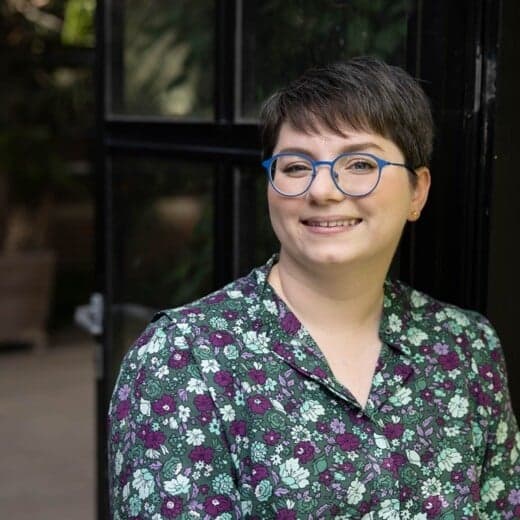
Rebecca Poulson
Rebecca Poulsen, this episode's guest, who moved from California to Belgium for grad school.
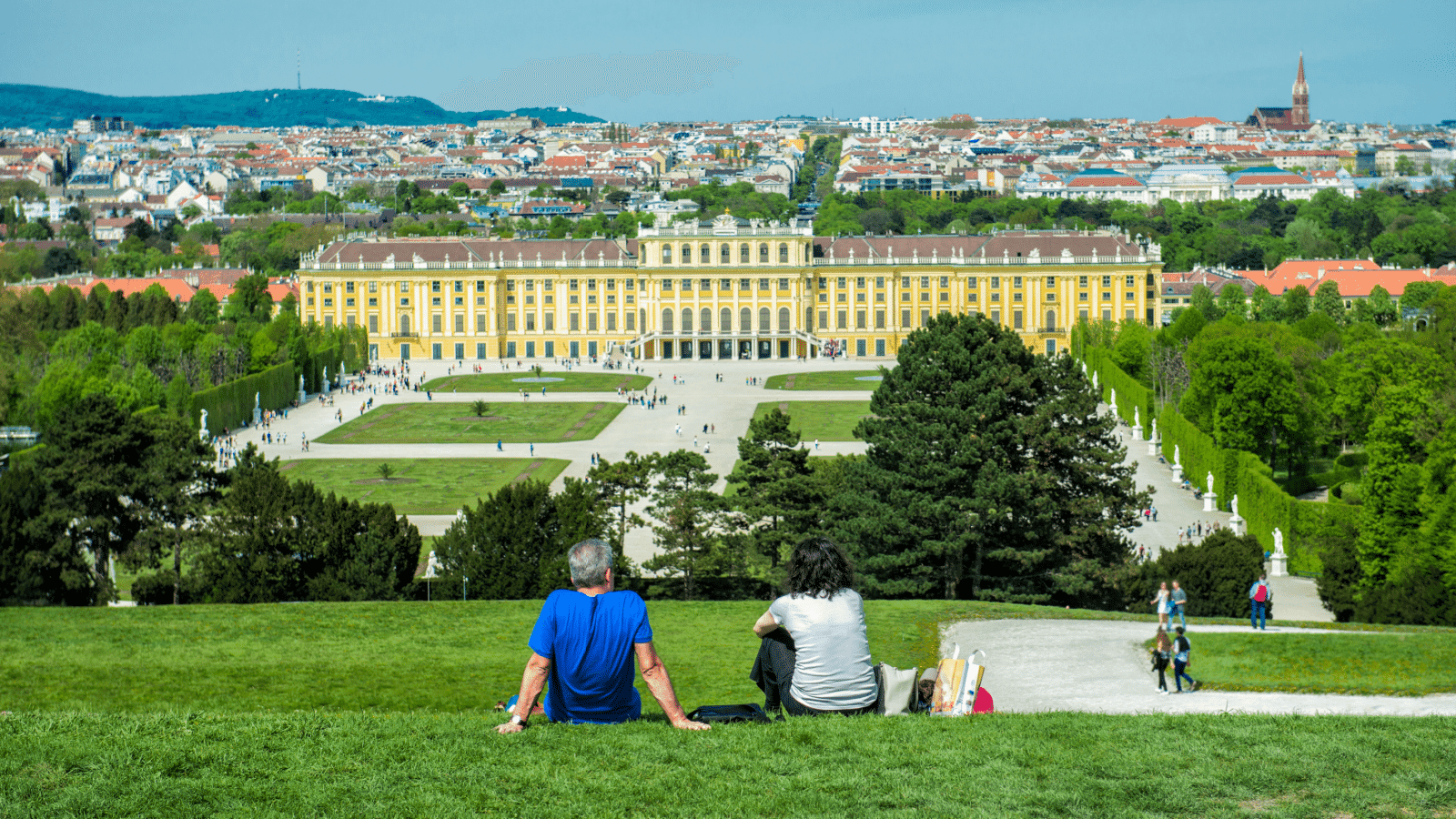
Austria Job Seeker Visa 2026: 70 Points, 6 Months
Jen names Austria's job seeker visa as a way to move without a company sponsoring you.

29 Countries with Free College Tuition - No Loan Forgiveness Needed
Rebecca's master's in Belgium cost just over €1,000 in tuition, far less than a US degree.

Complete Guide to Job Seeker Visas
Jen points to job seeker visas in Austria and Germany for workers without a sponsor.

Want to Move to Europe? Here Are 16 In-Demand Jobs and How to Apply
Jen lists logistics, healthcare, construction trades and chefs as fields Europe is short on.
Transcript
Transcript is auto-generated and lightly corrected; it may contain errors.
Read the full transcript(6,902 words)
English speakers are still a novelty. Here And of course I had two cats who basically destroyed their carriers on days one and three. There was a lot of discussion to make sure that we were aligned and that we were doing it for for similar reasons. What are the visa paths? Are you running towards something or are you running away from something?
And then what? I can't believe we're finally here. This is Americans Abroad. Welcome to this week's episode of Americans Abroad. This week we talked to Rebecca Poulsen about living in Belgium and studying abroad. Jen, you went to college, correct? You have at least a bachelor's, master's degree. I have a bachelor's degree and I have an MBA, so I went to undergrad at Auburn and I started in the 80s at a different school.
I graduated in 92 and then I went and got my MBA at Emory and graduated in 2005. So one of the things that I'm excited to hear about from Rebecca is cost of education in Europe because it is significantly less than what we experienced here in the States. Jen, did you do student loans? Are you still paying on student loans?
That's exactly. A student loan debt. I know. So OK, so that is I was fascinated by the way, I'm looking forward to everybody hearing it because I was fascinating to learn about. I didn't realize that she went on a study abroad path and her experience, but yeah, absolutely. So my undergrad I paid for out of pocket. I, it was, listen, college didn't cost as much back then, OK? It was a lot cheaper.
It's a absolute crime how expensive it is now. And then when I went to Business School, I actually got a huge scholarship that covered 70% of my tuition. That was 21 years ago. I graduated and I am still paying on that, on that student loan for 30% of my tuition plus, you know, living expenses. That's wild. While you were talking about that, I just looked up the cost of the university that I went to.
So I graduated from Our Lady of the Lake University in San Antonio, and part of the reason why I went there is because they gave me a full ride. I got into more prestigious schools that were maybe more in line with what I thought I was going to be doing for the rest of my life. That's all another story. But basically mom was like this one we can afford, this one we can't.
So you're going here essentially a. Full ride is a full ride, Man is a full. Ride is a full ride, absolutely. And I think I graduated high school in 1996 and I think at the time it was $5000 a semester, $6000 a semester. I just looked up Our Lady Lake University undergrad $31,728.00 a year. So a $16,000 a semester. I I don't that's insane.
Go look. Go see how much the Emory NBA is now. I'm dying to know. I'm dying to know listen, and I, I loved my school. I'm glad that I had the opportunity to do it. I, you know, I had wanted to go to Emory for undergrad and it was out of our price range. So it felt really good to go back later when I was on my own dime.
The good part, the bad part is I was on my own dime and I'm still on my own dime. Bang on that. And don't even get me started on Brad's loans. We'll Oh my gosh. Now that said, people who have student loans and then go and work abroad, if they're federal student loans and they're on income based repayment, you know, your salary shows up as zero because anything under like $132,000 right now, which is a King's ransom in most other countries on your U.S. tax forms, it shows up as zero because of foreign earned income credit.
So you may end up not having to pay on them and them eventually being forgiven. But yeah, that is not my experience. And so I, I don't want to spoil it, but Rebecca is going to tell us how much she paid for her entire master's degree in Belgium. And let's just say we're talking the price of a of 1/4 at Auburn in 1990. I was going to say 1/4 at Auburn, like one day at Auburn, but yes, in 1990, do you want so do you want to know how much if you were to go to Business School at Emory today would would be for?
You. Yes, yes. How much? For a year. I was in the two year. Yeah, so 769-A year, a year, so 153,800 for your two year program. And I'm laughing not because it's funny, but because I don't know what else to do. That's insane. That's insane. I mean, basically what that does is it forces everyone to come out and be investment bankers because you, you know, I'm not a I, I'm just not that.
I'm just not that guy. You know, I graduated with people who were, who were very talented and they went on to be investment bankers or they're at, you know, they're at Meta or at Google or, you know, these huge companies. And I'm sure it's well worth it, but I just that's not my life. I'm entrepreneurial. I am a little fly by the seat of my pants. And so it's, I feel like I learned a lot and I'm really glad I did it.
But boy, I sure if I had it to do over again, absolutely 100,000% I would get this. I would go to this program abroad. Yeah. And I mean, add to that the expanding of the experience, the expanding of horizons, the expanding of opportunity by getting out. You know, that's one of one of the things that, you know, I, I regret is not fighting for myself more. I understand money is money is money and but not leave literally this universe.
Great university. Shout out to Our Lady, the lake private university, Catholic University. Great. So like a social worker program. Love it. Beautiful campus, but the school is 10 minutes from the house that I grew up in. So, you know, just being so insular, you know, my, my dream was to go to New York, but could I got into the school but couldn't afford to go. And so just living the beginnings of my life in this 10 mile radius other than when we traveled. And you really can't put a price on just the experience of being able to meet new people and be
exposed to new cultures. And I think that's a lot of what college is for and what university is for is that expanding of horizons. And here I go being woke, but indoctrinating our kids. But I think it's really, really important. And, and man, if you could do that for, you know, less than 1/10 of what an American University may cost you, I think it's a, it's a great opportunity. And, and my hope is that one, one or both of my 2 nieces take advantage of an opportunity like that. I, I keep whispering in their parents ears, you know, just look into it.
It could be really, really great for either one of them. So you know what? We'll see how that plays out. Start with a huge leg up and without $200,000 in debt. I mean, that is win win, are you? Thinking about moving abroad but you're not sure where to start? Join us at Move Abroad Con. It's a 2 day event where you'll meet experts, get your questions answered, and leave with a real move abroad plan. It's happening May 9th and 10th in San Diego, CA. You can learn more and grab your ticket at moveabroadcon.com. We'd love to see you there.
This week on Americans Abroad, we're excited to have Rebecca Poulsen. Rebecca lives in Belgium and she is coming up on her five year anniversary of living there. So we're going to talk to her about living in this country that we honestly don't know a lot of people that have moved to and find out what it's like, how she did it, and how you can do it too. Welcome, Rebecca.
Thanks for having me, I'm excited. Absolutely. So first of all, what made you decide to move abroad? Where were you living in the USI? Was originally living in California with my in laws during COVID and I really wanted to not be doing that so I decided to look at living abroad as an option. That was always a dream of mine and so I had a lot of time to think during COVID and that's kind of when I started thinking about moving abroad as an option. You got as far away as you could. I do love them.
I should be on the record. I I love my in laws, but there is something about having your own space, you know, with your spouse. So, Rebecca, how? Did you choose Belgium? And also tell us where in Belgium do you live and how did you choose that city specifically? Yeah. So I'm currently residing in Louvre in Belgium.
It's about a 20 minute train ride from Brussels. It's in the Flemish region and I get this question a lot. Why did I move to Belgium? Especially from Belgians, they kind of look at me very quizzically and say, why would you choose Belgium? Because honestly, a lot of people don't choose Belgium. Belgium chooses them. It's not like Spain or France, you know, where you can move for retirement and you have beautiful weather and all of that stuff. You really do need a reason to come to Belgium. And it was during COVID that I decided, OK, I would like to move abroad and I would also
like to pursue a master's degree. So let's do both. And so my spouse and I, we started looking around at different areas. There could have been a possibility where we lived in Scotland because I got into a school there. There was a possibility that we would move to Germany because my husband got to schools there. But we both got into a university here called KU Louvin.
It's one of the Top 40 universities in the world. And we said, OK, let's do it. We both got into a program here. We don't want to live separately, Let's do it. And it was a bit serendipitous because a few years before that, we did a Christmas vacation in Belgium, where we stayed in Louvin to do like Christmas markets, like a European Christmas market holiday. A couple of years before that, we didn't even realize that Louvin was a university town.
And so it felt very serendipitous that we had stayed there, you know, for a week visiting, and then we ended up actually living there, which was very, very cool. I'm so jealous. I want to go to the Christmas market so badly. They're so. Cozy, I really love them. So do you study? Did you study in Flemish or was your program in English?
And what did y'all study? My program was in English. The Katy Loovin is a very International School. I don't remember a recent figure, but I feel like when I graduated in 2022, the figure was around 40% of the students were internationals, and I think it might be even more at this point. So it's a very International School. There are a lot of English programs. I studied a program called Digital Media and Society. That's a fancy way of saying digital marketing. And my spouse studied transportation engineering and his program was also in English.
Mine was just a one year program. His was a two year program and the school is quite good at supporting their students post graduation. You have something called the search year permit after you graduate where you have a year to look for a job without being worried that your visa will run out. So they try to give you a bit of buffer after you graduate to, you know, make sure if you want to stay you can.
And did you get job roles in Belgium? I had a lot of interviews for my field, but considering that I didn't, I wasn't fluent in the language and that that was a really big hurdle for me was not knowing the language for well enough for work. I struggled a bit, but I found a strategy of, you know, looking into international companies that are larger and the main language was English and you know, I had some more luck there.
I did end up going the freelancing route actually. I didn't get like a, a work permit from an employer. I, I went the freelancing route and so now I freelance and that worked out really well for me because as a marketer, that was just like perfect. And so for me, that's worked really well. Whereas my spouse, he was able to find a job pretty quickly that would sponsor his visa because he's an engineer. And that's just kind of the difference here of social sciences versus engineer.
And I think just that field in general. But we're both very happy in our jobs and things have worked out really well and I'm I'm very happy. Tell us a little bit about the vibes that Belgium offers. Oh, boy, I can just give you, you know, I wake up and I live in city center and there's musicians playing on the street.
So you get live music when you open the windows and the shops are opening. On my way to work, I stopped by a bakery for like, a croissant or, you know, a yummy pastry. And then for lunch, I go to, you know, a little sandwich shop with my colleagues, and you've got like, a very idyllic old historic bell tower that's like playing bells during the lunch hour. And it's just, so I've been here almost five years, and every time I'm walking through the streets, I still go. I can't believe I'm here.
This is like a fairy tale. It's very idyllic and beautiful, and I just really love it. And I think my favorite thing about the work culture, just the culture in general, is things move slower here and you really have time to enjoy things. You're not rushed, you're not pushed to do anything. I think coming from California, it felt like, especially in the Bay Area, a hobby was always like monetized and you had to be the best in your hobby. And I think in other parts of America, that's kind of the thing as well.
But here people have been playing tennis for their whole life and they're terrible at it. And that's OK because it brings them joy. And I just really love that as a concept to just do things slower and just do them because you enjoy them. And that has brought me so much, just like calmness in my life to slow things down.
That's honestly the biggest benefit for me of moving abroad. Yeah, and I, I love the way that you describe your morning. All I can picture is the opening sequence with Belle and Beauty and the Beast where she's like, bonjour and people are popping out of their window to say hello and a lady with eggs and bread. Like that's all I can picture. And I absolutely adore that.
Have you had much? Have you had much chance to travel to other areas in in Belgium? And if so, can you tell us a little bit about maybe some of the other locations for folks who may be curious about? Definitely. Belgium and the areas outside of Lubin. Definitely so. Belgium is such a tiny country. I think if you're comparing it to state sizes, it's about the same size population wise as Maryland, and yet it still has two different languages and dozens of different dialects and three different governments.
I think it's really wild how much they've packed into such a small country. I do think for internationals specifically, unless you speak French, it makes sense to probably stay in the Flemish side or go into Brussels. You don't necessarily have to speak French to live in Brussels. I think that I heard a stat recently that 80% of the people that live in Brussels were not born in Brussels. So they've, you know, all gone to Brussels, you know, from somewhere else.
And so English is very commonly spoken in Brussels. It's also very international tourist city. So it's not a problem. But in terms of opportunity, I think there is more on the north side. I could do a whole nother podcast about the history of Belgium and why that is, but we won't get into it. But for cities, I think Brussels is certainly a great place for internationals and Antwerp is also a really nice city.
It's like a 45 minute train ride from where I live and that's closer to the Dutch border and I think there's a lot of opportunity there as well. Yent is also a really lovely city that's closer to Bruges. I'm not sure about the opportunities there, but I feel like it's very like family oriented, a little bit more livable, and it's one of the bigger cities. And then Louvre in as small as it is, it's got a lot of opportunities simply because it's a university town and there's a lot of STEM opportunities here. If you've got an engineering
background, you are likely to find a job in Louvin. What's it like making friends and building community? Do you? Do you play bad tennis? How do you get out there and meet people? You know, one of my best friend groups that I have, I found at a coffee shop, they were knitting and I was knitting and I went up and I said, hey, are you guys accepting new people?
Like do you do this frequently? And they said, yes, we do. And most of them were English speaking. So that, you know, helped. So that was just my initiative and just good timing of finding someone. For the Belgians, it it is a little bit trickier to get into their friendship circles. The way I describe it is with America versus Belgium. America is very much a Peach culture. We're very soft on the outside and very friendly and welcoming, but getting into the inner circles are really difficult. We have a very hardcore, whereas Belgium is a coconut culture. They're very hard on the
outside, hard to really get into, but once you do, you've got a friend for life and they are really dependent. But it can be really difficult as an international. I think when you're dealing with so much, learning the language, understanding the admin, the culture, to then also have the patience to try and be very persistent with the Belgians.
But you know, I think it's very worth it, that effort being put in. But to be honest, a lot of my friends are internationals. My work is in an international center and I've found a lot of friends through that organization because we're all going through similar things of moving from our home countries to something new, and we all really relate in that way, so we had fast friendships that way.
Are you learning Flemish now? How are you learning it? How's it going? Yeah, Zakir, I'm learning Flemish. I've taken a lot of courses and I I would say I can understand more than I can speak and I can get by, of course, like in the streets, in the grocery store, if someone approaches me, I can certainly give them directions if they need it. I couldn't have a conversation about philosophy in Flemish by any means, but I feel like it's coming along. And the locals here are really impressed when people commit to learning Dutch because not many countries speak Dutch. It's, you know, so there's not
really a point in learning it. But when you do learn it, the, the locals like, I'll say donkey bell and they'll be like, wow, that's amazing. Your Dutch is so good. And I'm just like, oh, thank you. OK. But just the smallest amount of effort really goes a long way. And that's one of the things you can do to break down the walls of the locals is show that you're trying to integrate and be here.
Because I think one thing that the locals have a hard time with is they've maybe had expat or international friends, but they leave. Maybe they go back home or they move to a different country. And that's hard for them to make friends with someone when they know that they're going to leave. And so they distance themselves from the internationals. But I'm an international that intends on staying here for until I die.
Like I this is my home. And so it just takes some patience and some convincing to say like I am integrating, I am learning, I do want to be your friend. I'm going to stick around, I promise. So you mentioned that your plan is to stay in Belgium forever and you've been there five years already. Is there a pathway to Belgium citizenship for you?
And if So, what does that look like? Yes, I have a countdown clock next March I can apply for citizenship and I'm so excited. I can't wait. I'm going to throw a big party once I get it full of waffles and beer and fries. But for me, because I came here as a student, your student time counts as half time here because you're not paying taxes. So my one year counts as if I've lived here for six months, for example, and then it's five more years to get citizenship. So I have to live here 5 1/2 years to be able to apply for it.
So far, I feel like the student route, I mean, I'm biased in this because this is the route I'm going, but that feels like the best route for Belgium because I think I mentioned this earlier, you don't just come to Belgium because you want to. You really have to have a reason, whether that's as a student or you've been asked to work at a company in Belgium or you have someone that lives here, like a spouse that you're, you know, reuniting with or, you know, coming to Belgium with.
It's Belgium has really strict rules and they really like to follow them. And so for me, I found that the student way was the most sustainable because it gave me time to integrate into the culture slowly. I had time to like look for jobs and figure things out a little bit slower, which is important because things go very slowly in Belgium. It's very, very bureaucratic.
In terms of your citizenship requirements, beyond the the five year residency that you talked about, is there a language test, anything else that you have to prove in order to qualify for your citizenship? Yeah, I can at least speak to the Flanders side. I'm not sure what it is for Brussels or for Willonia, but I know for Flanders you do have to speak a certain level of Dutch. And I believe the government, they either just passed this or they're planning on passing it.
It's now a higher level of Dutch than it initially was. Before it was like you take two classes of Dutch and then that's enough. But now it's, I think closer to six classes of Dutch, which is about two years of, you know, slow learning. So that's really important to take into account. But you, you've got five years already that you're waiting around for citizenship.
So that's not so bad to spread out. But yeah, it's I, I know of people who have lived here 10 years and they've never learned the language and they're happy. But I really do think that learning the language is the best way to integrate and have a better well-being yourself. You get to, you know, have small conversations with the cafe owners and you just feel more comfortable and confident in your life when you know the language.
Going back to your school, how did you go about finding researching programs in Europe and how much does it cost to go to snow there? My favorite question, one of the reasons I studied in Europe, specifically Belgium, the cost is great. But first I'll answer your question about how did I find it. I think I just did like a Google search.
I found a portal that had all of the different masters listed in Europe under, you know, marketing, digital marketing, business management, which is what I was interested in. And I just kind of went through and decided to apply to a ton and that's how we landed on KU Louvre. And also it was a program that I was very interested in.
And As for the cost, for my one year program, I think that I paid just over €1000 for one year. Master's degree, people, That is Rebecca says is saying she got a master's degree for €1000, which is about $1100 right now, maybe 1200. Yeah, we, it was a bit sad because at the same time, I had a family member going to school in Boston and her tuition alone was still more than my tuition, my spouse's tuition and our yearly rent combined.
Putting that into perspective of, you know, livability of Belgium and, you know, and it's a good education too. Like it's very accessible and it's very, it's, it's not less of an education because it's cheaper. It's really a good education and really bang for your buck. Yeah, we, I have two nieces, one who just graduated or she's about to graduate high school this year, and then another one who's entering sophomore year. And I've been telling my brother-in-law and sister-in-law, like send them to Europe, you're not going to have $30,000 a year of student loan debt. Like they, they can come live
with Uncle Dave and Aunt Stephanie while, while they come and study here in Portugal. So, but what a, what an amazing opportunity to be able to study and, you know, not graduate with your master's degree sunk in debt like a lot of Americans are. So I'm curious, who would you recommend to move to Belgium? And maybe conversely, who is Belgium not for? I think Belgium is for people like myself who want to further their education or even get a second master's. That's OK too.
If your goal is to move abroad and you don't know how, get a second master's or I've convinced some friends do a PhD if that's what you're into, just get here as a student because it will give you time to integrate. And so I think the student route, if you're of that age or of that, you know, you want to learn more, that's great. If you have a STEM background, like I said, Louven is very STEM heavy with the, I think we have a chip factory or a chip organization here called iMac that employs so many internationals.
I want to say like 90% of their workforce is internationals and they are massive. Then of course for Brussels, if you're into the politics side or maybe translation side, that could be an interesting thing as well, or the tourist sector as well. You could certainly go that route. But I can't speak so much for the South part. I don't know enough about it to be able to provide information on that, but I'd say people who want to study, people who have an engineering STEM background and yeah, people who are willing to maybe learn another language
who it's not for, it's they don't have a retirement visa, for example. And so it's really hard to just come here to retire. And it's, yeah, like I said, it's just hard to come to Belgium just because you really do need a reason to be here. How's the cost of living for y'all? Salaries versus taxes? Healthcare. Yeah.
So I think the thing that scares people the most about Belgium is we have about a 50% tax rate and that turns people away before they even start looking into Belgium, which is why a lot of people say I didn't choose Belgium, Belgium chose me. And that did scare me at first when I was applying for jobs and I naively, you know, told them, oh, I'm expecting 100K for a junior level position because I just came from California.
And they said, oh, no, it's, you know, way less than that. But I quickly learned that it doesn't matter if the salaries here are half because you are really taken care of in other areas. Like I pay €4.00 for a doctor's appointment. And so I go to my doctor. You know what? I don't wait until it's past the point of this is so bad. And in fact, I think I scared my doctor the first time that I moved to Belgium because, you know, I went to them and I was like, I have problems with this
and this and this and this. And they were like, how long have you been having this? I was like, I don't know, probably five years. And they're like, why didn't you come sooner? And I'm like, well, I wasn't dying and I lived in America, so why would I? But now I have access to this healthcare that is just there.
And I've really, I feel so taken care of here, even though, you know, things are taxed pretty heavily. I'm just taken care of. There are programs in place that I have access to that are free, that are reduced prices. And it's just, it feels safe. It feels affordable. I feel taken care of by the government. I feel taken care of by like the police force here.
That was actually a very interesting thing I had to switch my mind on was when I saw the police walking down the street, I would get a little bit nervous, I guess 'cause I was used to the police in the States and they had all of their gear and I was always a bit nervous, like what's happening.
But I learned here that the police are just like your friendly neighborhood person. They're just checking on you. Like everyone feels really comfortable going up to them and like asking them for help. Then they're very, very nice, you know, competent people that are just here to help people feel safe, not intimidated. And that was a huge shift for me to just feel like I feel safe, I feel taken care of.
It's nice. I love that even law enforcement is part of this Beauty and the Beast Belle walking through the village fantasy. We're going to put in another NPC into this this sequence. Last question that we have for you is, do you miss anything about the United States? You know, I was telling my friend today, one thing I do miss sometimes is like a good burger, milkshake and fries.
They don't quite do that the same. Here, it's always the food. It's always the food. But I I do miss our, our national parks. That is one thing that I miss. I love the beauty and the landscape of America, like the vastness and the wildness of it. You don't quite get that in Belgium and but, but I do think I can find that in other ways. Oh, I didn't answer this question before. Do I travel?
Yes. That's one of the greatest benefits of Belgium is it's the center of the EU. So if I'm missing the mountains, I can, you know, look at my schedule because I have 42 plus vacation days and say when do I want to take a week off and go to Slovenia and hike in the mountains? I have that as an option.
Like I'm not stuck here in Belgium. There's train networks everywhere. There's really great flights, you know, that are just two hours away. And I'm in a different landscape. So I don't necessarily feel stuck here. I don't feel like I'm missing much from home because there's so much here that I have gained that I don't think I can get in the States.
And even though I've only been here for five years, I feel like when I do visit home in the States, I get a bit of culture shock. I you've heard of Panic at the Disco, but have you heard of culture shock in Costco? Because Oh my gosh, that place is massive and there's so many choices and it's overwhelming. And all of the cars, like I haven't had a car for five years.
I and I haven't needed it. I bike and I walk and I take the bus and train everywhere and it's amazing. And so there's not, I mean, besides my family, of course, that's the hardest thing I think is leaving family. But you know, we've established weekly calls to stay up to date with them. I text them frequently.
And we've gotten used to like when I'm going to bed, they're kind of starting to wake up. So they see my updates and when I wake up, they're going to bed. So it's just something you get kind of used to. But then when they come to visit, you just get to show them this amazing world that is now your home. And it's a really nice feeling.
Amazing. Well, when you get your citizenship, let me know because I want to come and crash this beer waffle and French fry party. I'm super, I'm super excited for you. You're absolutely welcome. Well. Rebecca, thank you so much for joining us today on Americans Abroad. Thank you so much for having me, I really enjoyed it and hopefully you know people will consider Belgium as a place to live.
Jen, do you know what time it is? I always know what time it is and and I have a brand new song that I wrote just for this occasion. OK, let's go. Are you ready? Yeah. Where do we go? Where do we go now? Where do we go? Where do we go, sweet child? Sweet expat of mine.
So listen, I'm knocking them out. I've bangers one after the other. And you know when you when you got a voice like an Angel, you really have to to pair it with one. Gift Yes, this is for our. Hide it under a bushel. This is for our new compilation. Now that's what I call Expatsi volume one. We're just going to put all of our segue songs onto this mixtape for y'all.
We'll create a Spotify playlist. Let's jump into our question. We had somebody who wrote it and asked. I have some questions that could be used in the podcast. We agree. How easy is it to get a work permit if you are not a highly skilled worker? Relatedly, how prevalent is it that there are companies willing to sponsor your work visas for expats?
So this is such a good question. And I think the most important thing is to define highly skilled worker because I think we all have a preconceived notion of what that means. And we think it means rocket surgeon, you know, or some equivalent thing. And what it means is just that you have skills that that country needs.
It does not always, it's not always a degreed thing. It's not always massive amounts of experience and it just means that that country is lacking it. For example, in Europe, the EU does tons and tons of statistical reporting and they have their own website for job hunting and things like that. And they always need people in logistics.
So they need drivers, they need people to work in warehouses. And I don't think that people would think of those as particularly highly trained. But they are skills, right? I can't do it. And so I can't fulfill that need. And they don't have enough people locally to fulfill that need. The most in demand roles for Europe in particular, which is where most of our listeners express interest in moving, are healthcare, obviously. But keep in mind what that means. A country may not have, you know, respiratory technicians. They may have nurses who fulfill that role. It depends on what the structure
is. A lot of countries don't have nurse practitioners at all, for example. It's just not a thing that exists. But healthcare in general, high tech, of course, you know as you think, software developers and things like that, Engineers, especially sustainability engineers, environmental engineers, construction trades. This is one of the biggest categories. So electricians, machinists, plumbers, Masons, things like that.
And then teachers and some roles, like I mentioned, logistics, I've seen a lot of roles for chefs. And So what it boils down to is what the path is into a particular country. If it is a country like Austria or Germany, they have job seeker visas where potentially if you qualify, you can get a visa to go and look for work.
And if you get one of those types of visas, a company doesn't have to sponsor you because you are pre qualified by the state. Similarly in Spain there is a program like that just for people with AV experience. It's called the Audio Visual Hub. And so they have a path. So it depends on you. There are, you know, 194 other countries and hundreds of thousands of kinds of job roles. So it's very unique to you and your situation. However, if you are like me and you have soft skills, you know my background is marketing and that's challenging, right, Especially later in my career to
just hop up and go find a marketing job in Australia or Switzerland. But there are opportunities like teaching English as a foreign language that can help you get your foot in the door at least and start to get the land of the lay of the land and and build those networks that you need to find a more permanent role. And there's also starting your own business. I think a lot of times for people with soft skills, it is easier to say, you know what, I need to earn $1800 a month. And so I'm going to find 2
clients who each spend $900 a month on marketing strategy. And that's going to be my job. Which, you know, as you heard from Rebecca, that's that's essentially the life that she and her partner lead. Jen, can you talk a little bit about employer of record because we we're starting to hear this term thrown around when it comes to getting that visa sponsored.
What is an employer of record and and how does it work? So the way an employer of record works is that you go to work for a company, you know, you never meet them, they pay your paycheck, you never go to their offices, it's not where your boss works, and they essentially lease you out to another company. It's kind of like being a temp, except in a permanent way. So let's say that you really do your work for Google, but Google doesn't want to pay.
Such a terrible example. I guess Google probably pays taxes in every country, but let's presume that they don't, and so they don't want to pay taxes in Ireland. So you go to work for Acme in Ireland. Acme hires you, has the right to have employees in Ireland, pays all your taxes and then they lease you back out, contract you back out to Google. So for you, your life stays pretty much the same. You keep doing your work as you are doing it, but now you collect your income.
If you get any health insurance or any services like that, you get them from. Acme, Perfect. Well, Jen, thanks so much for answering questions about working abroad. If you have a question you'd like us to address here on the podcast, you can e-mail your questions to podcast at expatsi.com. Americans Abroad is an Expatsi production. Please like, share, subscribe and leave a review.
Are you thinking about moving abroad? Start with our quiz at expatsi.com. That's EXPATSI. Dot com.
Not sure where you’d go?
Take the free Expatsi test to see which countries fit you, then come back and listen to the episodes about them.