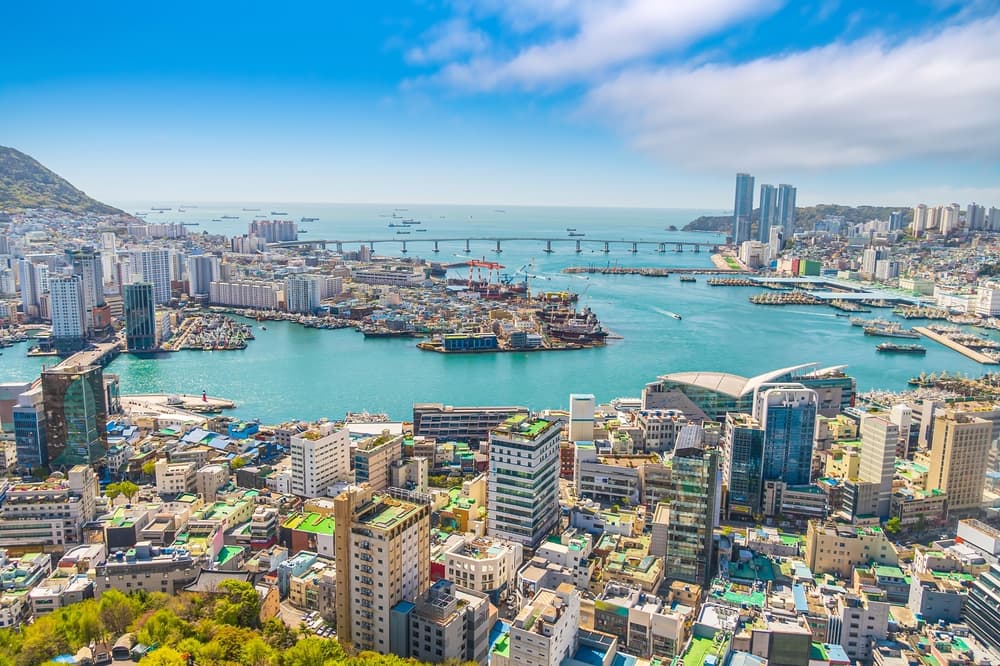
Busan: big-city Korea with the beach on the subway line
Cost of living, safety and retiring in Korea's second city, where Line 2 runs out to Gwangalli and Haeundae and life moves at an easier clip than in Seoul.
- 3,453,198
- Population (2018)
- $1,800/mo
- Monthly budget · single
- 60°F / 15°C
- Avg temperature
Plan on about $1,800 a month in U.S. dollars for one person in Busan (2026 estimate). A one-bedroom apartment near the center rents for about $750, or about $600 farther out. Seoul, by comparison, runs about $2,200 a month for one person, with central one-bedrooms near $1,000.
Busan suits Americans who want a major Korean city without capital-city rents: remote workers who'd like a beach walk after the workday, English teachers, and families looking for an American-curriculum school. Gwangalli and Haeundae are the beach districts most newcomers look at first. Seomyeon is the downtown transfer hub, and Centum City holds the newer office towers and department stores.
The good news is you can run a whole week here on a transit card. The tradeoff is a smaller foreign community than Seoul's, so Korean becomes part of daily life early.

Reviewed and updated October 22, 2026 · 4 min read
At a glance
$1,800
Monthly budget · single person
$750/mo 1-bed rent, center
76/100
Safety index
$20
Internet / month
60°Fannual average
Jan 39° · Aug 80°
Climate
3,453,198
Population (2018)
Expatsi estimates, updated Oct 2026, based on rental listings, government statistics, and local reporting.
Cost of living
What it costs to live in Busan
Single person
$1,500–$2,100/mo
about 40% below Austin, TX
Couple
$2,200–$3,200/mo
about 40% below Austin, TX
Family of four
$3,200–$4,600/mo
about 50% below Austin, TX
Compared with Austin, TX (Expatsi estimate, 2026).
- $7 −65%
- Inexpensive meal
- $600–$900/mo −62%
- 1-bed rent, center
- $500–$700/mo −56%
- 1-bed rent, outside
- $20/mo −69%
- Internet
- $40/mo −3%
- Transit pass
- $511/sq ft −21%
- Buy price, center
Expatsi estimates, updated Oct 2026, based on rental listings, government statistics, and local reporting.
Daily life
How Busan lives
- B- grade, 31st percentile among the cities we track
- Dining & caféstypical
- B- grade, 26th percentile among the cities we track
- Arts & culturetypical
- B- grade, 36th percentile among the cities we track
- Parks & outdoorstypical
- A- grade, 74th percentile among the cities we track
- Schools & educationstrong
- B+ grade, 65th percentile among the cities we track
- Healthcare accessstrong
- B+ grade, 56th percentile among the cities we track
- Bike infrastructurestrong
- B grade, 50th percentile among the cities we track
- Public transittypical
- B grade, moderate physical accessibility
- Accessibilitymoderate
Graded on OpenStreetMap amenity density relative to the 436 cities we track. Accessibility is the exception: it's graded against a fixed standard (terrain steepness and sidewalk surfaces), not a curve.
Climate
Weather through the year
Annual average 60°F (15°C) · 63 in of rain a year · Source: Meteostat station normals (47159, 1991-2020)
On the ground
Scenes from Busan
Getting around
Transport in Busan
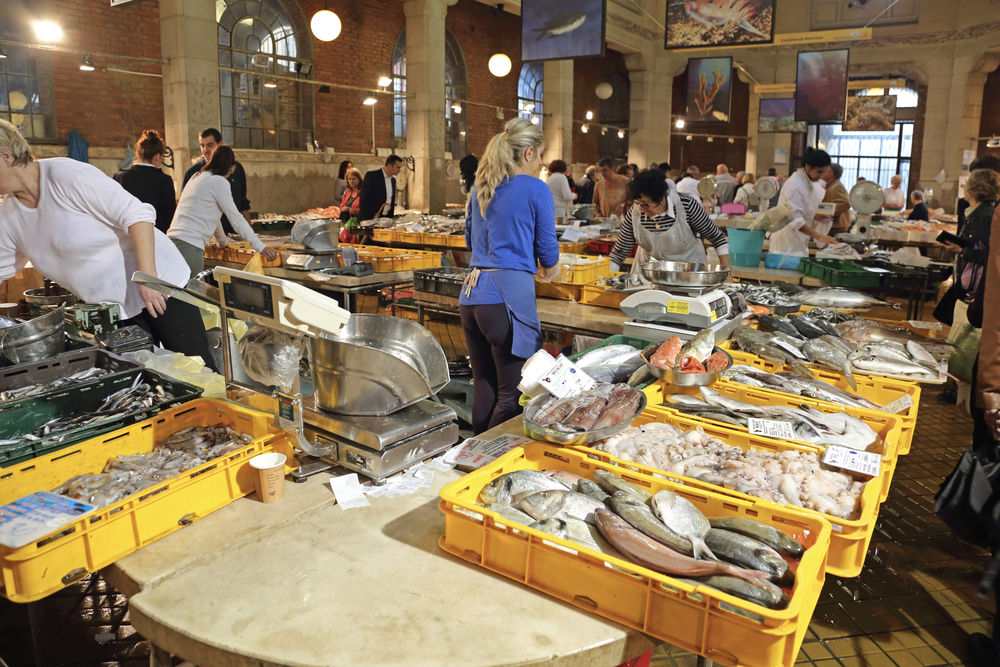
Most of daily life runs on the subway. Line 2 is the one newcomers lean on: it follows the shore past Gwangalli and Haeundae and meets Line 1 at Seomyeon, the city's busiest interchange, so avoid it at rush hour if you can. Line 1 covers the old port side, including Busan Station, Nampo-dong and Jagalchi Market. The Donghae Line, run by Korail rather than the city, heads up the east coast through Centum, Songjeong, Osiria and Gijang, then on to Ulsan. Our data puts a month of transit at about $40.
Pick up a rechargeable transit card at any convenience store. Busan's own Hanaro card works, and so do T-money and Cashbee, so a card from Seoul comes with you.
Gimhae International Airport sits west of the city. The Busan-Gimhae Light Rail runs from the airport to Sasang, where you change to Line 2, or to Daejeo for Line 3. There are no nonstop flights from Busan to the mainland U.S., so trips home start with a connection, either a short flight or a train north.
Do you need a car? Not if you live near Line 1 or Line 2. The bigger factor is the terrain. Busan is a city of steep hillsides, and some neighborhoods sit well above the nearest station, so walk the route from any apartment to the subway before you sign a lease.
- 21/sq mi
- Transit stops
- 7.5/sq mi
- Bike infrastructure
- 4.6/sq mi
- Wheelchair-accessible places
Mapped features per square mile from OpenStreetMap.
Keep exploring
Places like Busan
Gondomar
Portugal
164.3K people · $1,800/mo
Maia
Portugal
135K people · $1,900/mo
Póvoa de Varzim
Portugal
63.4K people · $1,900/mo
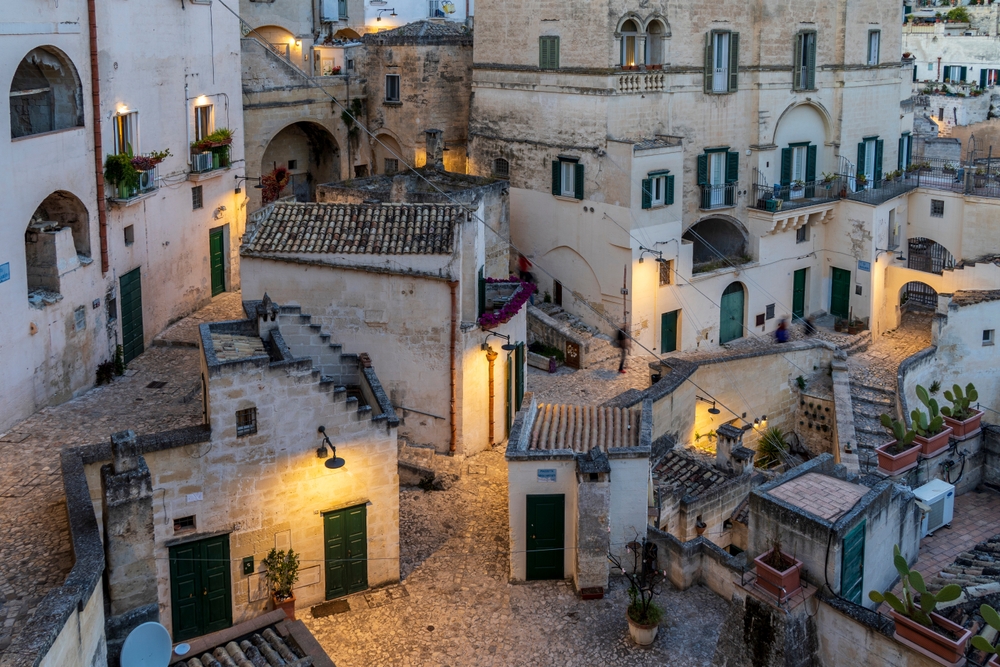
Matera
Italy
59.7K people · $1,700/mo
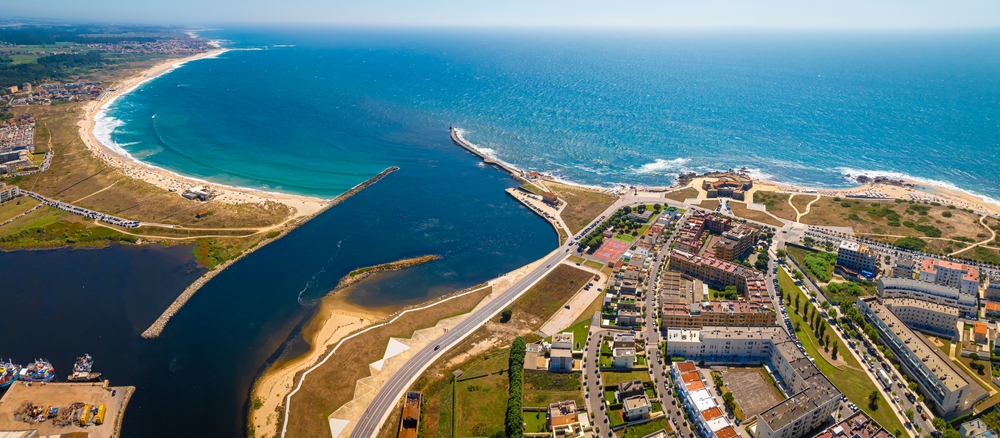
Vila do Conde
Portugal
79.5K people · $1,900/mo
Rijeka
Croatia
108K people · $1,800/mo
Community & practical notes
Settling in beyond the beach
Finding your footing: The Busan Global Center is the city's help desk for foreign residents. It's on the 13th floor of the National Pension Service building, at exit 2 of City Hall Station on Line 1, and runs counseling, interpretation and Korean classes for residents on visas longer than 90 days. Its call center is 1577-7716. With fewer foreigners than Seoul, most people build a circle through work, classes and language exchanges rather than walking into a ready-made expat scene.
Healthcare: Busan St. Mary's Hospital has an International Medical Center that offers English-language help, and its emergency center is open 24 hours. The city also places interpreters, English among them, at the public Busan Medical Center by reservation. After six months in Korea you're enrolled in the National Health Insurance Service, the same public plan Koreans use, with premiums set by income and property. Arrange private coverage for the first six months.
Schools: Busan Foreign School in Haeundae teaches an American, Common Core-based curriculum with AP courses and is WASC accredited; at least one parent must hold non-Korean citizenship. The International School of Busan in Gijang teaches the International Baccalaureate. Ask each school about current tuition and openings.
Remote work: Home internet runs about $20 a month, and coworking spaces cluster in Seomyeon and Centum City. Korea doesn't use daylight saving time, so Busan is 13 to 14 hours ahead of Eastern, by season. Because Busan is outside the Seoul region, remote workers aged 18 to 34 can qualify for the lower income tier of the F-1-D workation visa.
LGBTQ expats: Busan held its first Queer Culture Festival on Gunam-ro in Haeundae in 2017 and a second in 2018, both met by church protests. Organizers canceled the 2019 festival after the Haeundae district refused permission. South Korea doesn't recognize same-sex marriage or civil unions, though the Supreme Court ruled in July 2024 that same-sex partners can get dependent coverage on public health insurance. Expect a community that exists but keeps a low public profile.
Black Americans: A 2022 academic study of Black residents in Korea found Black Americans were treated better than Black Africans but faced more discrimination than white Americans. Personal accounts are warmer: Candace Green, a teacher from Texas, wrote for Travel Noire about living a ten-minute walk from the beach in Haeundae and loving it. One visiting American student group found the staring stronger in Busan than in Seoul. Expect attention, especially away from the beach districts.
Limited mobility: Busan's name is often glossed as "many mountains," and dense neighborhoods climb steep valley sides. The city has added fixes, like the inclined elevator in Jwacheon-dong, where more than half the riders are elderly, and the transit operator publishes elevator locations for its stations. Before you commit to an apartment, check for an elevator in the building and at your nearest station.
Retirement: South Korea has no retirement visa. Americans of Korean heritage may qualify for the F-4 overseas Korean visa; most others are left with investment routes such as the F-5-5 investor visa. Compare options in our guide to retirement visas and the full guide to moving to South Korea.
Housing
Renting and buying
- 1-bed rent (center)
- $600–$900/mo
- 1-bed rent (outside center)
- $500–$700/mo
- Buy price (center)
- $511/sq ft
- Buy price (outside center)
- $353/sq ft
Expatsi estimates, based on rental listings, government statistics, and local reporting.
Good to know
Frequently asked questions
Can Americans retire in Busan?
Not on a retirement visa, because South Korea doesn't have one. Americans of Korean heritage may qualify for the F-4 overseas Korean visa. Most other retirees need an investment-based route. Anyone living in Korea more than six months is enrolled in the National Health Insurance Service, with premiums based on income and property.
Do I need to speak Korean to live in Busan?
You can arrive without it, but you'll want to learn. The Busan Global Center offers Korean classes to foreign residents on visas longer than 90 days, and foreign residents can request interpretation for hospital and government visits through its call center at 1577-7716.
Is Busan safe for Americans?
Yes. Busan scores 76 out of 100 on Expatsi's safety index, close to Seoul's 78, with a crime index of 24. Normal city sense applies, especially on crowded trains and late nights in the nightlife districts.
How much does it cost to live in Busan, South Korea?
Single budgets in Busan run about $1,500 to $2,100 a month in U.S. dollars. A couple should plan on about $2,700 a month, and a family of four about $3,900 (2026 estimates). Where you rent moves the total most: a one-bedroom away from the center costs less than one in the beach and downtown districts.
How long does it take to get from Busan to Seoul?
About 2 hours 15 minutes on the fastest KTX trains, station to station; some services take much longer. Flights are shorter in the air, but once you count the trips to and from the airports, the train usually comes out ahead.
What is the weather like in Busan?
Mild winters and hot, wet summers. Average highs are near 47F in January and about 85F in August. July is the wettest month, averaging about 0.45 inches of rain a day, and the city gets about 63 inches of rain a year.
Can I live in Busan on South Korea's digital nomad visa?
Yes, if you've worked remotely for a foreign employer or run your own foreign business for more than a year. Since June 30, 2026, applicants aged 18 to 34 who live outside Seoul, Incheon and Gyeonggi, which includes Busan, need income of about $37,000 a year; Korea sets it at one times its GNI per capita, about ₩52.41 million. Older applicants face a higher bar of up to twice that. The visa allows stays of up to three years.
See how Busan fits your life
Take the free Expatsi Test and compare South Korea with other countries on what actually matters: cost, healthcare, climate, and safety.
Why not you?