Portugal's student visa asks for a year of money, or a lease
What a Portuguese degree really costs an American, what goes in the consular file, and why no federal loan money follows you here.
A degree here costs a fraction of an American one, and the visa is straightforward once you see what the consulate is really measuring. The money test surprises people, in both directions.
The two prices
That famous 697 euros isn't your tuition
Portuguese law caps what public universities charge, and for 2025/26 that cap is 697 euros a year for a bachelor's. The figure is all over the internet. It just isn't yours. Americans enroll under the estudante internacional statute, and each faculty sets its own fee for that bracket.
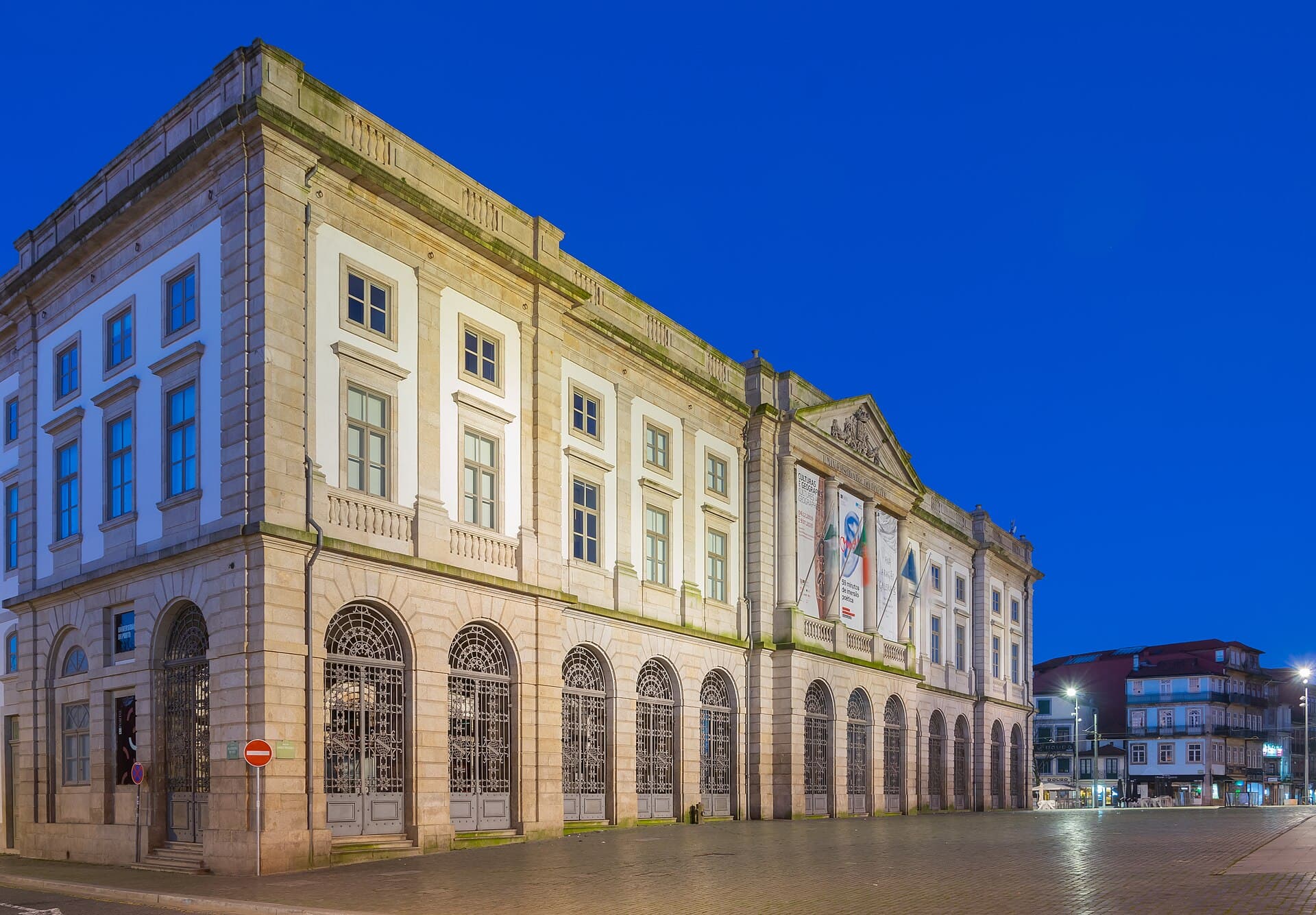
At the University of Lisbon the international rate runs roughly 3,500 to 7,000 euros a year, about $4,000 to $8,000 while the euro trades near $1.15. The University of Porto, pictured, publishes a wider band of 3,500 to 16,500 euros, medicine at the top. Private schools price higher again.
The exception that catches families out
Live in Portugal legally for more than two unbroken years on a residence permit and you apply in the national competition instead, at the Portuguese fee. Parents who moved first and enrolled a kid later land on the cheap side of that line.
The whole first year, in four figures
$12,700
Savings you show for a year
920 euros a month, twelve months, before tuition
$4,000 to $8,000
Non-EU tuition, a year at Lisbon
set faculty by faculty, not nationally
$127
The consular visa fee
110 euros, plus $43.91 to VFS in the States
Zero
Portuguese schools in the U.S. loan program
no new borrowing, no deferment either

The bank statement
Show the money, or show the room
Portugal measures your means against its minimum wage, set at 920 euros a month for 2026 by Regulatory Decree 139/2025. A study visa asks for twelve months of it, so the number is 11,040 euros, about $12,700, sitting somewhere you can document.
Here's the catch, but for once it runs your way. The same rule lets that income drop by half when you prove accommodation is arranged by any means, and by up to 90 percent when meals are covered too. Consular checklists print it plainly. A dorm assignment or signed lease pulls the bar down to about 5,520 euros.
There is also a full exemption
Students admitted to an institution approved under Portaria 111/2019 skip the subsistence proof and tuition receipt entirely. Approval is granted school by school and the education ministry keeps the list, so ask admissions where yours stands before you assemble a single bank statement.
Student Visa
For full-time study in Portugal. Allows part-time work. Not a direct pathway to citizenship, but time may count toward residency requirements for other visas.
- Government cost
- $127
- Processing time
- ~60 days
- Timeline
- 1-year residence permit, renewed while you stay enrolled (2 years on an EU mobility program)
- Difficulty
- Easy
Key requirements
- Acceptance or enrollment letter from a recognized Portuguese institution
- Proof of EUR 11,040 for 12 months (2026), halved if accommodation is arranged
- Apostilled FBI background check
- Health insurance valid in Schengen until the residence permit starts
- Proof of accommodation
About that data card
The $127 on the card is the 110 euro consular visa fee. Budget another $43.91 for VFS, the contractor that takes applications in the States. Euro figures are the legal ones. Dollars convert at roughly $1.15 per euro, where the rate sat in September 2026.
Admission first
You apply to a university, not to a national system
Portuguese teenagers compete for places through a national contest. You won't. Non-EU applicants use the concurso especial para estudantes internacionais, filed straight with each university. Every school runs its own rounds, usually a first phase between January and March and later ones through summer.
Send your high school diploma and final results, apostilled and translated, and the university converts your grades onto Portugal's 0 to 20 scale. Most faculties accept SAT, IB or AP results as the exam evidence. Your transcript gets converted, in other words, not judged against a Portuguese school-leaving exam.
Language narrows the list fast
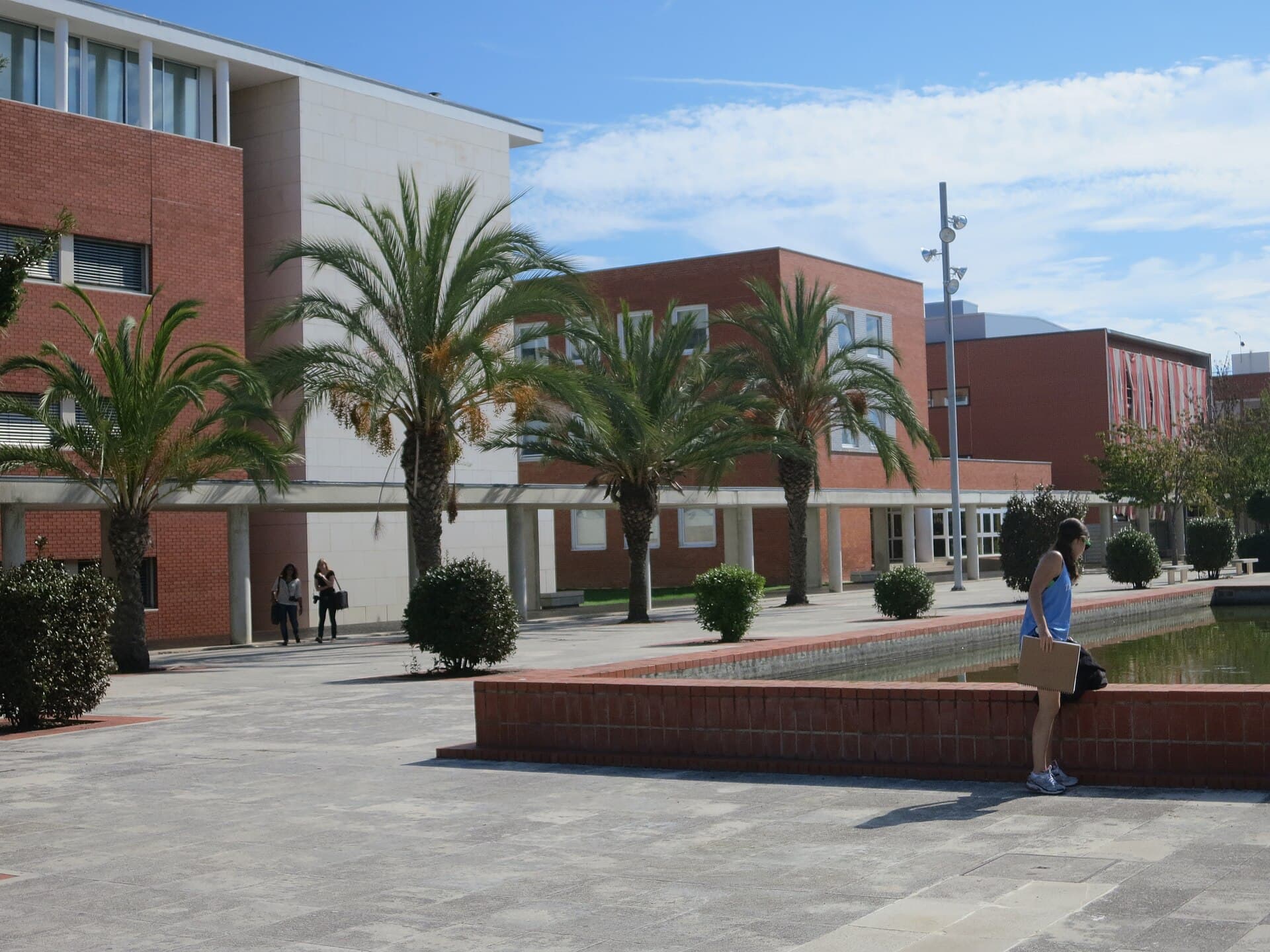
English-taught master's programs are easy to find, especially in Lisbon. Undergraduate teaching is mostly in Portuguese, and those programs often want a B1 or B2 certificate. Aveiro, pictured, is one of many strong universities outside the two big cities, and the smaller towns are where the rent math works.
What that checklist means in practice
Enrollment in writing
A matrícula or enrollment declaration from the Portuguese school, naming your program.
Twelve months of money
Statements covering 11,040 euros, or the reduced figure once housing is locked.
An address in Portugal
A lease, a dorm assignment, or a hosting declaration from someone who lives there.
An FBI background check
Apostilled, plus written consent for Portugal to pull its own criminal record.
Cover for the first four months
Insurance good across Schengen until the residence permit takes over.
Biometrics in person
Fingerprints and a photo at the VFS center for your consular district.
Once the card arrives
Portugal doesn't count your hours
Most study destinations hand you a weekly ceiling. Portugal doesn't. Article 97 of the immigration law lets a higher education student work, employed or self-employed, so long as the job stays second to the degree. Plenty of guides print a 20 hour rule; no Portuguese statute we could find sets one. Failing your courses is what actually costs you the permit.
The tradeoff is paperwork. You notify AIMA with the employment contract or start-of-activity declaration at the tax office, plus proof of social security registration; your card gets swapped for one saying professional activity is allowed. High school students, unpaid interns and volunteers get no such right.
Finish, then stay a year
A master's or a doctorate buys something extra: Article 122 hands those graduates up to twelve months to job hunt or start a company, no new visa. Bachelor's graduates use the neighboring rule, which wants a signed contract first. AIMA said in January 2026 that both go through its contact form, not the renewals portal.
Where else a move to Portugal can start
Entrepreneur Visa
- Valid passport
- Viable business plan or proof of entrepreneurial activity
- Means of subsistence of EUR 11,040 (12 months of the 2026 minimum wage of EUR 920)
Passive Income Visa
- Passive income of at least EUR 920 a month (2026 minimum wage), plus 50% for a spouse and 30% per child
- Proof of the income source (pensions, rental income, dividends)
- Clean criminal record
Digital Nomad Visa
- Proof of remote work or self-employment for a foreign company
- Minimum monthly income of €3,680 (as of 2026)
- Clean criminal record
Golden Visa (Residency by Investment)
- Qualifying investment: EUR 500,000 in a non-real-estate Portuguese fund, EUR 500,000 in research, EUR 500,000 to capitalize a company creating 5 jobs, EUR 250,000 for arts or cultural heritage, or creating 10 jobs (real estate no longer eligible)
- Investment funded from outside Portugal
- Minimum stay: 7 days in the first year, then 14 days per 2-year period
Work Visa
- Work contract, promise of contract or employer declaration of interest, with a certified employer signature
- Pay of at least the minimum wage (€920 a month in 2026)
- Clean criminal record (FBI check, apostilled)
Jobseeker Visa
Closed to new applicants since October 23, 2025; the skilled replacement is not open yet.
- Higher education or specialized technical skills (criteria pending regulation)
- Search for highly qualified work only
- Means of subsistence for the stay (amount pending regulation)
Paying from home
The loan question has a very short answer here
The Department of Education keeps a roster of overseas institutions cleared to handle US federal student loans. Germany has 266 entries on it, Ireland 13. Portugal has none, in either column.
That bites twice. No new Direct Loan money for a Portuguese degree, and because in-school deferment runs off the same roster, the loans you already carry stay on their repayment clock through every semester here.
One route still works
A semester or a year abroad gets certified by your American home school instead, so aid can travel if the program earns credit toward the degree you're in. Borrowing at a foreign school needs a program of at least a year, taught in person, nothing online. Pell money has never been spendable outside the country. Grad PLUS shut to new borrowers on July 1 2026, leaving a graduate year at $20,500 and graduate lifetime at $100,000. Get your aid office's answer in writing before you accept anyone's offer.
Names worth having before September
Skola
Studying Abroad in Europe
Skola places Americans into European programs. That help lands early here, because the faculty you pick sets both your tuition band and your language requirement.

Legalize That Doc
Document Preparation
Legalize That Doc runs FBI checks, apostilles and certified translations. Portugal wants all three, and a criminal record that aged out is a classic reason a file bounces.
Viv Europe
Portugal Relocation Specialist
Viv Europe is our Lisbon relocation partner and lives inside AIMA's queue, which is where a clean approval turns into a long wait for the card.
Before you send the deposit
Do Americans need a visa to study in Portugal?
Only if you stay past 90 days. A US passport gets you 90 visa-free days in any 180, which covers a summer program or a short course. A full semester or a degree needs a national residence visa for study, filed through VFS Global before you fly.
Can I work in Portugal on a student visa?
Yes. Article 97 lets higher education students work as employees or freelancers, provided the job stays secondary to the degree. No weekly hour limit appears in the statute, despite what many guides claim. You will need a Portuguese tax number and a social security number before a first paycheck.
Can I use US federal student loans to study in Portugal?
Not for a Portuguese degree. No institution in Portugal has been cleared by the Department of Education to handle federal student loans, so there's no new borrowing and no in-school deferment. Study abroad for credit toward a US degree is different: your home campus certifies that.
Can I stay in Portugal after I graduate?
If you finished a master's or a doctorate, Article 122 gives you up to a year to look for work or launch a company with no new visa. Bachelor's graduates use the neighboring provision, which wants a work contract or self-employment declaration.
Do I need to speak Portuguese to study there?
It depends on the level. Whole master's and doctoral programs run in English, concentrated in Lisbon and at the technical schools. Bachelor's degrees are a different story: the teaching is Portuguese and the application wants a language certificate. Daily life outside Lisbon and Porto runs on Portuguese either way.
How much is tuition in Portugal for American students?
The 697 euro cap you see quoted applies to EU students. Americans pay the international rate each faculty sets, commonly 3,500 to 7,000 euros a year at Lisbon and up to 16,500 at Porto. Application fees run roughly 100 to 150 euros per university.
How much money do I have to show for a Portugal student visa?
Twelve months at the 2026 minimum wage of 920 euros, so 11,040 euros, about $12,700. Proving accommodation cuts that in half, and covered meals can cut it by up to 90 percent. Bringing a spouse adds 50 percent to the figure and each child adds 30 percent.
Does a student visa lead to Portuguese citizenship?
Slowly. Student years count as legal residence and permanent residence still arrives at five. Citizenship changed in May 2026: Americans now need ten years, counted from the day your first permit card was issued, plus an A2 Portuguese test and a civics exam.

Run the numbers on a few more countries
Answer a few questions about your field, your money and your dealbreakers, and see which countries actually fit the plan.
Why not you?
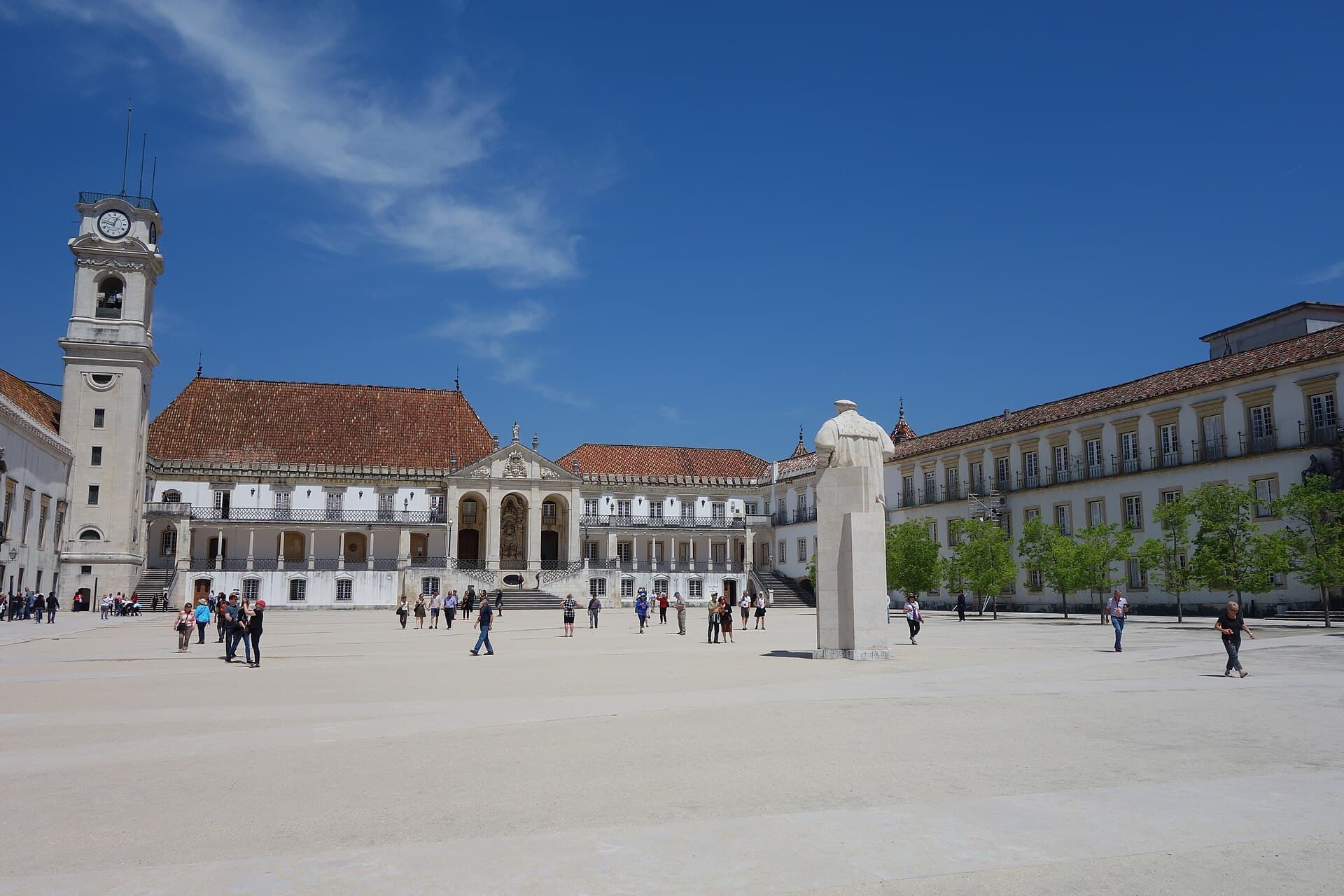
Photos: “Coimbra University (41846113045)” by FlyingCrimsonPig, CC BY 2.0 · “Rectory of the University of Porto (1)” by Krzysztof Golik, CC BY-SA 4.0 · “Campus der Universität Aveiro” by Goyah, CC BY-SA 3.0