The Dutch student permit is routine. Finding a room is not.
You show about $15,660 for the year. Tuition runs another $10,400 to $34,600, and work is capped at 16 hours a week unless you freelance.
Dutch universities teach more than 2,000 programs in English. Americans skip the entry visa. What you can't skip is the money test, or the room.
How it works
Only your school can file this with the IND
Dutch law won't let a student file this permit alone. Your school must be recognized by the immigration service as a sponsor, your program accredited and full time, and the school sends the application in for you. You deal with a university visa office, not an immigration officer.
Two things Americans get to skip
U.S. citizens don't need the MVV, the entry sticker other nationalities collect at a consulate, so there's no embassy appointment in your timeline. Americans also sit on the service's tuberculosis test exemption list, which saves a test and its fee.
What the school wants first
Nothing reaches the IND until your file is complete, and "complete" means the whole first year of tuition gets paid in one transfer. Maastricht spells it out: no payment plan, and the file leaves at least eight weeks before classes start. The 254 euro fee rides along with it.
The figures that shape a Dutch year
$15,660
Proof of funds, one year
12 x 1,130.77 euros, before tuition
$293
The IND fee
254 euros in 2026, via your school
16 hours
Work cap during term
or full time in June to August
$625
Average room, shared kitchen
540 euros a month, 2026 monitor
The money
The number that gets your permit is not a budget
The 2026 study norm is 1,130.77 euros a month. You show twelve months of it, so 13,569.24 euros, which was roughly $15,660 in mid-September 2026. Every dollar figure here moves with the euro, so price yours on the day you transfer. Now the slippery part: that norm is lifted from the maximum grant a Dutch student can draw living in a dorm. The national housing monitor puts real student spending near 1,340 euros a month. Prove the norm, budget for the truth.
What counts as proof
Six routes work: your own account, a scholarship letter, a parent's statement from abroad, or a deposit into the school's account that's refunded after you arrive. Statements must be under three months old. Schools also round the norm up, and their figure is the one you pay: 1,140 euros a month in Amsterdam, 1,225 at Utrecht, 1,250 at Maastricht.
Tuition has two prices
That 2,694 euro statutory fee belongs to EU students. Americans pay the institutional rate, and the Dutch study portal puts a bachelor's at 9,000 to 20,000 euros annually, a master's at 12,000 to 30,000. Call it $10,400 to $34,600, none of which counts toward the funds you prove.
Student Visa
For full-time study at a Dutch university or college. Allows limited part-time work.
- Government cost
- $350
- Processing time
- ~60 days
- Timeline
- 2 months
- Difficulty
- Easy
Key requirements
- Admission to a recognized Dutch educational institution
- Proof of sufficient financial means
- Health insurance
- Return ticket or proof of funds for return
About that data card
Two lines up there need a footnote. That dollar figure is an all-in estimate, not the government fee, which is 254 euros in 2026 and gets collected with your tuition. A return ticket is not a published condition for this permit. The IND checks admission at a recognized school, an accredited full-time program, and the study norm.
Working while you study
Your employer needs a permit before you clock in
Flip the residence card over and it says a work permit is required. As an employee you can only work if your employer holds a TWV. You pick one of two options: either 16 hours per week all year, or full-time in June, July and August. Not both. The Dutch labor inspectorate checks, fines the employer, and tells the immigration service, which calls your school.
Freelancing has no cap
Self-employment is the quiet exception. The IND's own wording: no work permit needed, and you may work as much as you want, so long as you meet the permit's conditions. You register at the chamber of commerce and pay Dutch tax. For a student with U.S. clients, that door opens wider.
One job changes your insurance
Study without working and you can't buy Dutch public health insurance, so you carry private student cover. Take a job, paid internship or zero-hour contract and the basic Dutch policy turns compulsory, with an allowance to offset it. Miss the switch and the fine is 529.74 euros.
What else the permit brings
A preparatory year
A pre-master or language year runs on this permit.
Schengen on one card
The residence card is your Schengen travel document.
360 days elsewhere in the EU
If your program spans two or more European schools.
Three months of runway
Valid three months past your program's end.
A year to job hunt
The orientation year, with no limit on work.
Switching schools is fine
Move to another recognized school; the permit holds.
The room problem
A permit doesn't mean a place to live
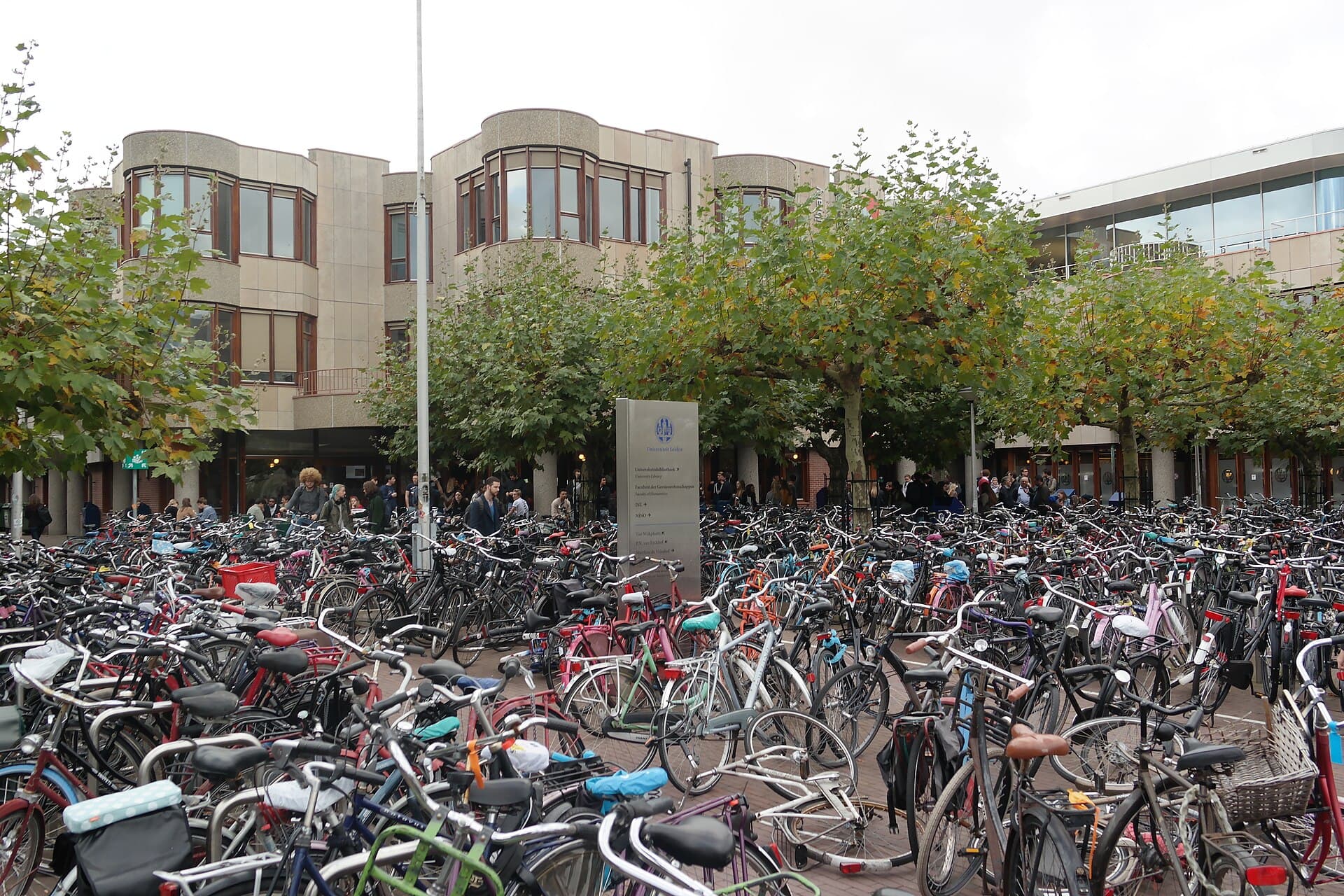
The 2026 national student housing monitor counts 20,200 rooms missing, down 1,300 in a year, and students who leave home take five months on average to land one. A room with a shared kitchen averages 540 euros a month, nearer 650 in Amsterdam, The Hague and Rotterdam. The squeeze is worst in Amsterdam, Delft, Eindhoven, Leiden, Nijmegen, Rotterdam, Utrecht and Zwolle, gentlest in Tilburg and Wageningen. You need an address your landlord lets you register at, too, because signing in at the town hall within five days is what gets you the ID number a bank asks for.
Half your credits, every year
You have to earn at least 50 percent of your credits each academic year. Your school tracks that; if you fall short without a reason it accepts, your school's obliged to report you to the immigration service.
English tracks can be capped
Dutch politics spent two years pushing bachelor's degrees back toward Dutch, then dropped the language test for existing programs in 2026. The caps survived: seventeen English-taught bachelor's tracks select or draw lots for 2026 to 2027. Those close on January 15; you get two tries a year, and master's degrees are largely untouched.
The other Dutch permits
DAFT Visa
- U.S. citizenship
- Register a Dutch business
- Open a Dutch business bank account
EU Blue Card
- Higher professional education (bachelor's or master's degree)
- Job offer in the Netherlands for at least one year
- Minimum salary threshold (higher than standard highly skilled migrant)
Family Reunification Visa (Partner/Spouse Route)
- A sponsor in the Netherlands who is a Dutch national or holds a valid Dutch residence permit (e.g., Highly Skilled Migrant, EU Blue Card)
- A genuine, durable relationship: marriage/registered-partnership certificate (apostilled + sworn-translated) or proof of a committed unmarried partnership
- Sponsor income at or above the IND threshold — about €2,337/month gross (partner sponsor, H2 2026), reassessed each January and July
Highly Skilled Migrant Visa
- Job offer from a recognized Dutch employer
- Minimum salary threshold (varies by age)
- Valid employment contract
Paying for it from home
Two big Dutch universities have left the U.S. loan program
This is the part that decides whether the plan works, and it has moved recently. The Education Department's roster of foreign schools still lists five Dutch institutions as loan-eligible, but that file is dated January 2024. Since then, the University of Amsterdam finished a voluntary exit and sits at deferment-only, and Utrecht pulled out in February 2025, certifying private Sallie Mae loans instead. Vrije Universiteit Amsterdam says it stays eligible for 2026 to 2027. Maastricht lends, but not for joint programs or medicine.
Get it in writing
The U.S. side narrowed, too. Grad PLUS shut its door to anyone new in July 2026. Graduate loans now stop at annual and lifetime ceilings Federal grants don't travel abroad, and enrolling in a single online class disqualifies you for that whole term. Write to the aid office about your program and year before you take a seat.
Worth a call before you commit
Skola
Studying Abroad in Europe
Skola advises American students on English-taught degrees in Europe. The program you pick sets your fee band, your deadline and whether the track is capped.

Moneycorp
Currency Exchange
A year of tuition has to land in a Dutch account in euros, in one go, before your school files. Moneycorp moves education payments that size and can agree to a rate up front.
GTFO Tours - Netherlands
Netherlands Tours, Visas & Relocation
GTFO Tours coaches American newcomers through the unglamorous first month: rooms, registration, a bank account, a doctor.
Dutch student permit questions
How much is tuition in the Netherlands for American students?
Americans pay the institutional rate, not the 2,694 euro statutory fee EU students pay. The Dutch study portal puts a bachelor's at 9,000 to 20,000 euros annually and a master's at 12,000 to 30,000, so about $10,400 to $34,600.
Do Americans need a visa to study in the Netherlands?
Not an entry visa. U.S. citizens are exempt from the MVV sticker other nationalities collect at a consulate. A student residence permit is still required for any program over 90 days, and only your university can apply for it.
Is it hard to find student housing in the Netherlands?
Harder than getting admitted. The 2026 national monitor counts 20,200 rooms missing, and students who leave home take five months on average to find one. Start the day your offer lands, and treat cash up front as a scam.
Can you work on a Dutch student residence permit?
Yes, with limits. As an employee you choose either 16 hours a week year-round or full time in June, July and August, and your employer must hold a Dutch work permit. Working for yourself needs no permit and has no hour cap, but you register a business and pay Dutch tax.
How long does a Dutch student residence permit take?
Plan on a couple of months once the file is complete. Universities file about eight weeks ahead of the start date, and the slow part is proof of funds and paying tuition, not the decision itself. Don't fly before it lands.
How much money do you have to show for a Dutch student residence permit?
Twelve months of the 2026 study norm of 1,130.77 euros a month: 13,569.24 euros, or roughly $15,660, with tuition outside that. Universities round the monthly figure up to 1,140, 1,225 or 1,250 euros, and their number is the one you meet.
Can you stay in the Netherlands after you graduate?
Graduates can apply for the orientation year: twelve months of unrestricted work or self-employment, a 254 euro fee, any time within three years of graduating. It also drops the skilled migrant salary bar to 3,122 euros a month, roughly $3,600.
Do you need health insurance to study in the Netherlands?
Yes, and which kind turns on whether you work. Study only and you can't buy Dutch public insurance, so you carry private student cover. Any job or paid internship makes the basic Dutch policy compulsory, and going without it costs 529.74 euros.
Pick the country before you pick the campus.
Tell us what you can spend and what you want to study. The Expatsi Test does the math.
Why not you?