Keep your U.S. job and live in Malta for up to four years
You need about $47,900 a year in gross income (Malta sets it at €42,000) from employers or clients outside Malta.
This one's for Americans whose paycheck or client list already sits outside Malta. You apply online through Residency Malta, the paperwork's in English, and Malta doesn't tax your remote-work income for the first 12 months you hold the permit.
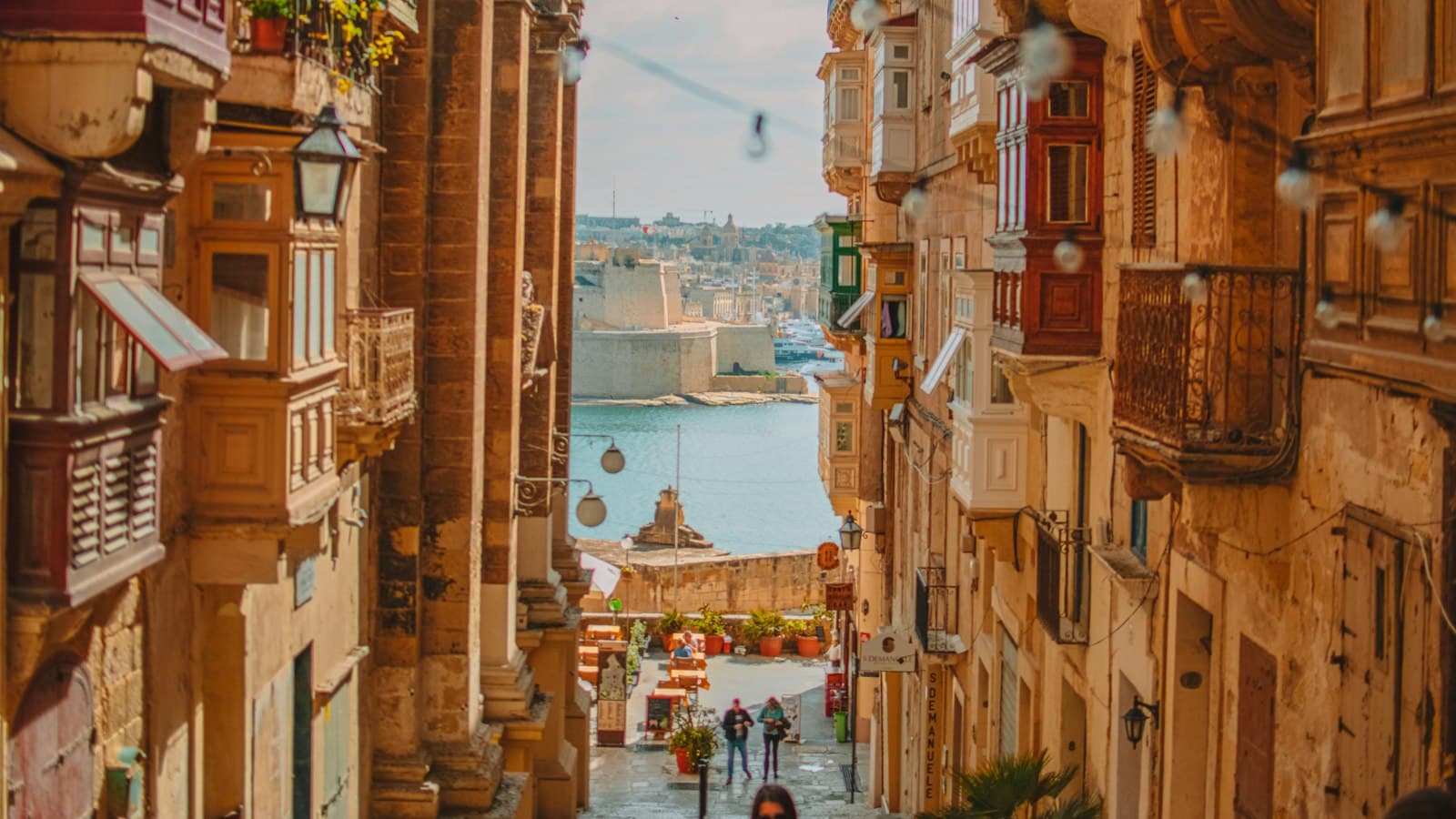
Nomad Residence Permit
Designed for remote workers, freelancers, and entrepreneurs. Allows legal residence in Malta while working for a non-Maltese employer. Renewable annually.
- Government cost
- $300
- Processing time
- ~30 days
- Timeline
- ~1 month
- Difficulty
- Easy
Key requirements
- Proof of remote employment or freelance work
- Minimum income threshold
- Health insurance
- Proof of accommodation
Who qualifies
Your money has to come from outside Malta
Three kinds of worker qualify: an employee of a company registered abroad, a partner or shareholder in a foreign company, or a freelancer whose clients are established abroad. Your contract must say the work can be done remotely.
Who should skip it
Anyone who wants Maltese clients. You can't do business with companies based in Malta, and a foreign contract that really serves a Maltese subsidiary doesn't count, either. Breaking that rule can cost you the permit.
Money and time, at €1 = $1.14 (September 2026)
$47,900
Minimum gross income, per year
Malta sets it at €42,000
$342
Application fee, per person
€300, non-refundable
$114
Residence card, per person
€100, paid in Malta
10%
Malta tax on remote-work income
Nothing in your first 12 months
4 years
Longest total stay
One-year cards, renewed up to 3 times
5 months
Time in Malta to renew
Cumulative, over the previous 12
The process
From online form to residence card
- Gather your file: a copy of every passport page (blank ones too), a federal police certificate under six months old, your contract, and three months of bank statements downloaded as PDFs from online banking. Your income has to land in your own account.
- Apply on Residency Malta's portal and pay €300 per person from your own bank account.
- Background checks take about 30 working days. Then, you get a Letter of Approval in Principle.
- Within 30 working days, send a lease covering the whole permit and year of comprehensive health coverage for everyone on the file. Travel insurance won't pass.
- After final approval, you give biometrics in Malta and the card follows in three to four weeks.
A law firm that files these says the whole thing commonly takes two to three months. The agency's decision is final, with no appeal.
Four years, then you need a plan
Residency Malta says plainly that this permit doesn't lead to permanent residence or citizenship. To renew each year, you also have to show at least five months in Malta out of the previous 12; the agency checks it through the card payments on your bank statements. If you want to stay past year four, you'll need a different status.
Taxes and family
Two tax returns, one household
Malta takes nothing on your remote-work income for 12 months from the permit's issue date, then 10%. Malta's March 2026 guidance says foreign tax of at least 10% on the same income can satisfy it. Other income, like rent or investments, is taxed at Malta's normal rates.
The U.S. side
You still file a 1040. The foreign earned income exclusion goes up to $132,900 per person for 2026. FBAR applies once your foreign accounts pass $10,000, and Malta has no Social Security agreement with the U.S.
Bringing family
Your spouse and children can join you. Each pays the same fees, and your insurance has to cover them.
People who can help with the nomad permit

Tim Percival
Malta Local Guide
Tim Percival is our Malta local guide. He can tell you which towns work for a year of remote work, before you sign a lease that has to cover the whole permit.

Suzanne Severance
Solo Nomad Coach
Suzanne Severance coaches people who want to live and work abroad on their own, from planning the move to settling in.
MyExpatTaxes
U.S. Expat Tax Service
MyExpatTaxes files U.S. returns for Americans living overseas, including the foreign earned income exclusion and FBAR.
Moneycorp
Currency Exchange
Moneycorp exchanges currency and sends international payments, useful when your pay arrives in dollars and your rent is due in euros.

Hunter Schultz
Healthcare Coach
Hunter Schultz is a healthcare coach who helps you plan care and coverage before you move.
ExpatInsure
Global Health Insurance
ExpatInsure brokers international health insurance, including year-long plans for you and your family.
Malta nomad permit questions from Americans
Do digital nomads pay tax in Malta?
Income from qualifying remote work isn't taxed in Malta for the first 12 months after the permit is issued. After that, Malta taxes it at 10%. Other income, such as rent or investments, is taxed at normal Maltese rates. Americans still file a U.S. return every year.
Can my spouse and children come with me to Malta?
Yes. The permit can include a spouse, minor children, unmarried adult children who depend on you, and adult children who can't live independently because of a disability. Each person pays the €300 application fee and the €100 residence card fee, and your health coverage has to include all of them.
How long can I stay in Malta on the nomad permit?
Up to four years. The permit is issued for one year and can be renewed up to three times. Each renewal requires proof that you spent at least five months, in total, in Malta during the previous 12 months, shown through transactions on your bank statements.
Does Malta's nomad permit lead to permanent residence or citizenship?
No. Residency Malta states that the Nomad Residence Permit doesn't lead to any form of permanent or long-term residence or citizenship. It's separate from the Malta Permanent Residence Programme, so staying longer means qualifying for a different status.
Can Americans apply for the nomad permit after arriving in Malta?
Yes. U.S. citizens can visit Malta without a visa for up to 90 days, and Residency Malta says applicants already in the country legally can go straight to their biometrics appointment. The application itself is filed online through Residency Malta's portal.
How much income do I need for Malta's Nomad Residence Permit?
At least €42,000 a year in gross income, about $47,900 at September 2026 exchange rates. It has to come from a foreign employer, a foreign company you co-own, or freelance clients established outside Malta. Applications filed before April 1, 2024 were judged against the older €32,400 floor.
Can I work for Maltese companies or clients on the nomad permit?
No. Holders can't provide services to or do business with employers or companies based or registered in Malta, and working for a foreign firm that serves a Maltese subsidiary doesn't qualify. Residency Malta says breaking this rule can lead to the permit being revoked.
Can I travel around Europe with a Malta nomad permit?
Yes. A residence permit from a Schengen country like Malta lets you visit other Schengen countries for up to 90 days in any 180-day period. It doesn't give you the right to live or work in those countries.
Find out if Malta fits your remote-work plan
Speak to an Expatsi advisor about the nomad permit and how it compares with your other options.
Why not you?