Germany's student visa is the easy part
Public tuition is still close to nothing, you park about $13,700 in a blocked account, and you can work 140 days a year. Admission is the part that stops Americans.
A public German university can hand you a degree for the price of a semester fee and a transit pass. The visa rules are clear and the money bar is one fixed number. Getting admitted on an American transcript is what takes planning.
The hard part
Your high school diploma is not a German qualification
German universities do not read a transcript the way an American admissions office does. A federal agency, the ZAB, decides in its anabin database whether your certificate equals a German Abitur, and a U.S. diploma alone does not.
Coming for a bachelor's
DAAD's guidance for U.S. applicants is specific: grades 9 through 12 with 16 academic units, an unweighted GPA of at least 3.0, and five AP exams scored 3 or better, in calculus, a lab science, English, a foreign language and one more. Four APs open a single subject area; two years of U.S. college does the same job. Online diplomas, homeschool diplomas and the GED are not accepted. The fallback is a Studienkolleg and its Feststellungspruefung exam.
Coming for a master's
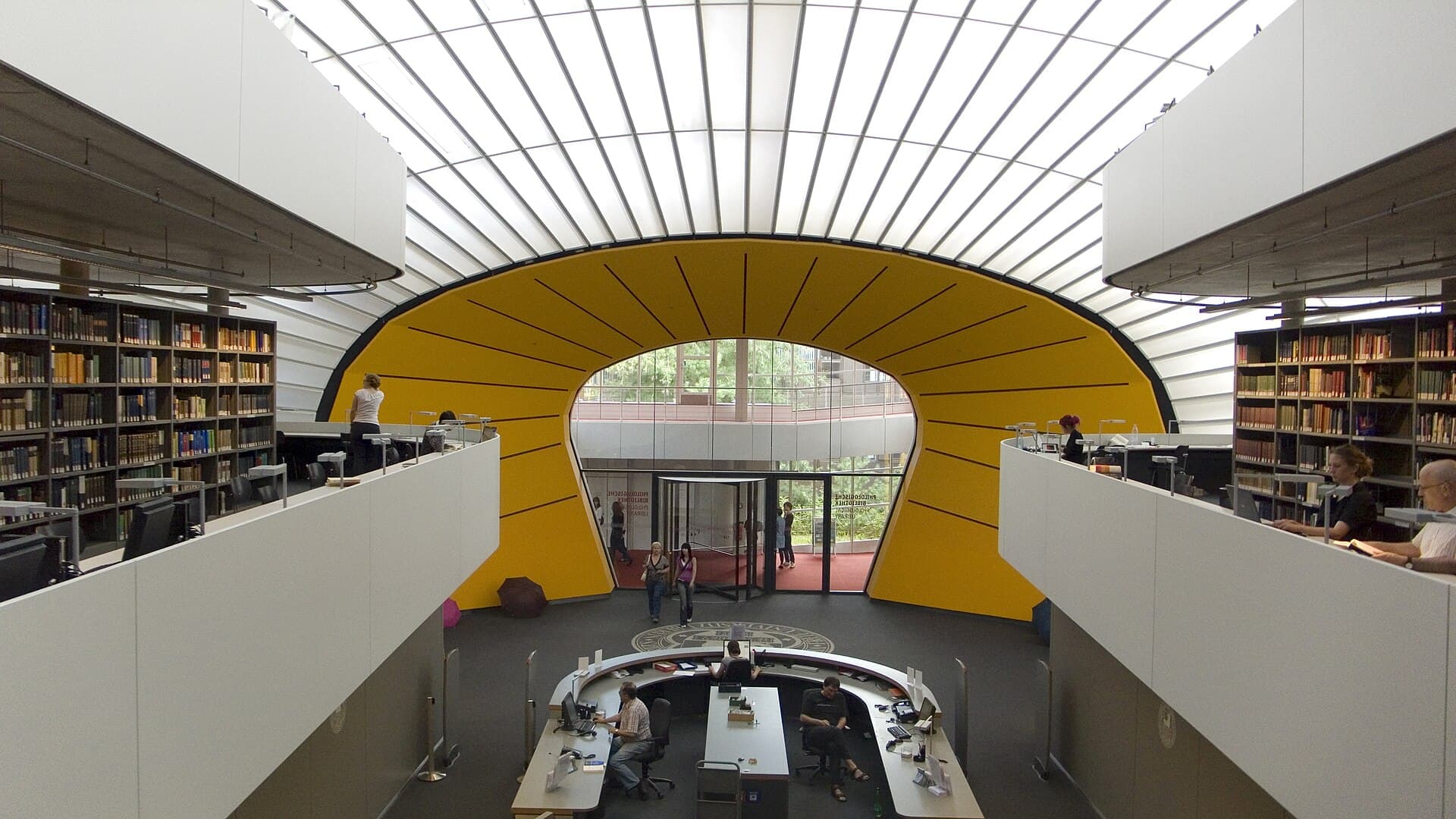
An American bachelor's is usually enough, and this is where the English-taught programs sit: about 1,930 of Germany's 2,400 English-language degrees are master's. At bachelor's level it's roughly 4 percent, so expect a German exam. Pictured is the Philological Library at the Free University of Berlin.
The budget, in four lines
$13,700
Parked in a blocked account before the permit
11,904 euros for year one
$0
Tuition at a typical public university
Baden-Wurttemberg and TUM excepted
140 days
Full work days per calendar year
or 20 hours a week in term
$168
Student health insurance, monthly
146 euros at TK, up again in 2026
Tuition, state by state
Free is the rule, but it's no longer a promise
Germany has over 300 public universities; the standard price of a first degree at them is nothing. You pay the semester contribution, roughly 100 to 400 euros, mostly a transit pass: the student Deutschlandticket costs 37.80 euros a month from winter 2026/27.
The exceptions are spreading. Baden-Wurttemberg has charged non-EU students 1,500 euros a semester since 2017, roughly $3,450 a year. TU Munich went first in Bavaria; it asks new non-EU students for 2,000 to 3,000 euros a semester at bachelor's level, 4,000 to 6,000 at master's. Erlangen-Nuremberg, with 40,000 students, starts charging 1,000 to 6,000 euros per semester in summer 2027, though anyone enrolled by winter 2026/27 is exempt. Two Bavarian universities of applied sciences add 500-euro service fees.
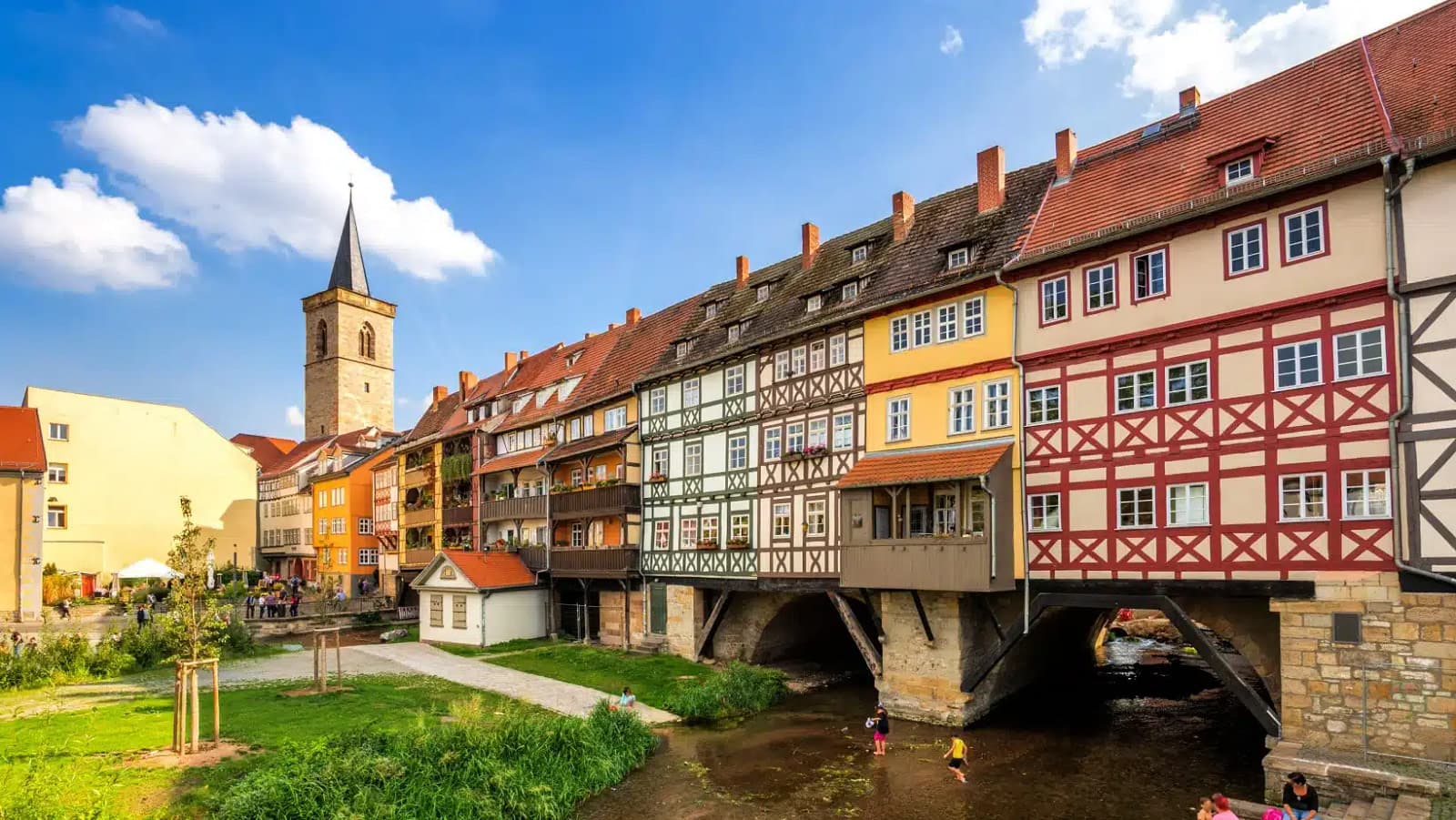
The fee lives at the program level, not the country level, so open the fee page for your exact degree. Erfurt, pictured, is in Thuringia, where that line is still zero.
Student Visa
For full-time study at a recognized German institution. Allows limited part-time work.
- Government cost
- $75
- Processing time
- ~60 days
- Timeline
- Duration of study program
- Difficulty
- Easy
Key requirements
- University admission letter
- Proof of financial means (€11,208/year in blocked account)
- Health insurance
- Valid passport
About that data card
Three lines up there need a footnote. The blocked-account figure is the 2024 number: for 2026 it's 11,904 euros a year, released at 992 a month. The 75 dollars is really 75 euros, the consulate fee, which plenty of Americans never pay because the permit you apply for in Germany costs 100 euros. Also, 60 days is neither real clock: the Federal Foreign Office quotes 25 days at a U.S. consulate, while Berlin's Free University tells students to expect 8 to 14 weeks at the immigration office. Euro amounts here are the legal ones; dollars assume roughly $1.15 to the euro in mid-September 2026.

The account you open first
A year of money, released one month at a time
The Sperrkonto is a German account you fund before you apply and cannot empty afterward. You put in 11,904 euros, about $13,700; once you land and activate it, the bank pays out 992 euros a month, roughly $1,140. A sponsor's declaration or a scholarship letter can stand in, but the account is what gets approved without argument. One trap: language-course and Opportunity Card applicants show 13,092 euros instead.
The other fixed bill is insurance, and Germany will not take yours: Berlin's immigration office says foreign health insurance is not sufficient. Statutory student cover is a set 87.38 euros a month plus your fund's surcharge plus long-term care, landing near 146 euros, about $168, at Techniker Krankenkasse. It rose this year with the average surcharge. Watch your birthday, too: the student rate ends with the semester you turn 30, and the voluntary rate runs near 267 euros.
The rights that come with it
140 full days
Or 280 half days, counted per calendar year, never prorated.
Campus jobs are extra
Assistant work on campus and required internships sit outside the limit.
Two years at a time
Issued for about two years, renewed while you stay enrolled.
Schengen included
The card travels with you through the rest of the Schengen area.
18 months to job hunt
Graduates switch to a job-search permit with no hour cap.
Half credit, then full
Study years count half on the five-year residence track, in full toward citizenship.
Paperwork order
Where you apply is mostly your choice
The 90-day window you file inside
Americans are on the short list of nationalities who may fly in visa-free and apply for the study permit after arrival, so long as the application reaches the local Auslaenderbehoerde inside 90 days. The Federal Foreign Office attaches a warning to that right: some of those offices still want the visa applied for in advance because they've run out of appointments. Register your address within two weeks of moving in. The Anmeldung is what lets you file, and ask for a Fiktionsbescheinigung if your stay would lapse first.
When the degree is done
Graduates get up to 18 months on a job-search permit, with no limit on the work they take while looking. It can't be extended; the clock starts when your studies officially end, not when the card is printed. Find qualified work, switch to a Blue Card or skilled-worker permit, and permanent residence arrives two years later because the degree is German.
The permits a German degree opens
EU Blue Card
- University degree recognized in Germany
- Job offer in Germany with minimum salary (€43,800 for 2025, lower for shortage occupations)
- Health insurance
Freelancer/Self-Employment Visa
- Business plan
- Proof of demand for services
- Proof of financial means
National Work Visa (D-Visa)
- Job offer from German employer
- Qualification recognition for regulated professions
- Health insurance
Opportunity Card (Chancenkarte)
- Points-based eligibility (degree, language, experience, age, Germany connection)
- Proof of financial means (typically €12,000 in blocked account)
- Health insurance
Paying for it from home
Four German schools can lend you federal money, and none of them are free
The Department of Education's list of foreign schools in the federal loan programs has 266 German entries. Generous, until you read the status column. Four can disburse a US federal loan, and all four are private schools with real tuition: ESMT Berlin, Frankfurt School of Finance and Management, the Hertie School and HHL Leipzig. The other 262, including every tuition-free public university on it, are deferment only. Existing loans can pause while you study. New Direct Loan money can't follow you.
The U.S. side tightened at the same time. Grad PLUS closed to new borrowers in July 2026. Graduate borrowing is capped at $100,000 a degree with a yearly limit of $20,500 and lifetime ceiling of $257,500. Pell has never worked abroad, and one online course ends federal aid for that term. Ask your school's aid office in writing what it can certify before you accept a place.
Who to hand the paperwork to

Skola
Studying Abroad in Europe
Skola places Americans into European university programs. On a German application, that help pays off early because the admission file is where these plans stall.

Legalize That Doc
Document Preparation
uni-assist charges 75 euros to check your diploma and transcripts and wants them in a form a German office accepts. Legalize That Doc handles apostilles and sworn translations.

Moneycorp
Currency Exchange
The blocked account has to arrive in euros, in one transfer, before your appointment. Moneycorp lets you fix the rate instead of taking whatever your bank offers.
Straight answers on studying in Germany
Can I work while I study in Germany?
Yes: 140 full days or 280 half days a year, or 20 hours a week during lecture periods, and a day over four hours counts as a full one. Assistant jobs at your university and required internships sit outside the limit.
Can I stay in Germany after I graduate?
Yes. A German degree buys up to 18 months on a job-search permit with unrestricted work, then a Blue Card or skilled-worker permit once you have qualified work. Permanent residence follows two years into that job, citizenship after five years.
Are German universities really free for Americans?
At a typical public university, yes, for a first bachelor's or master's, plus a semester contribution of 100 to 400 euros. The exceptions: Baden-Wurttemberg charges 1,500 euros a semester, TU Munich 2,000 to 6,000, and Erlangen-Nuremberg starts charging in 2027.
Do I need the visa before I fly to Germany?
As an American, no. You may enter visa-free and apply at the local immigration office within 90 days. The Federal Foreign Office warns that some offices ask for a visa in advance anyway, because appointments are scarce. Do not start a job before the permit is issued.
Is my American high school diploma enough to get into a German university?
Usually not alone. DAAD's US guidance asks for grades 9 to 12 with 16 academic units, an unweighted GPA of 3.0, and five AP exams at 3 or higher. Two years of US college works instead. GEDs and homeschool diplomas are not accepted.
Can I use US federal student loans at a German university?
Almost never at a free one. Of 266 German institutions on the Department of Education's list, four can disburse a federal loan, and all four charge tuition. The rest are deferment only: old loans pause, no new money.
Do I have to speak German?
For a master's, often not: about 1,930 German master's programs are taught in English. At bachelor's level only around 4 percent are, so expect a DSH or TestDaF exam. You will still want German for the apartment hunt.
How much money do I have to show for a German student visa?
For 2026 it is 11,904 euros for the first year, about $13,700, in a German blocked account that releases 992 euros a month once you arrive. A sponsor's declaration of commitment or a recognized scholarship letter can replace it.
Should this degree happen in Germany at all?
Tell the Expatsi Test your budget, your field and your dealbreakers, and see where you would actually land.
Why not you?