Freelance your way into Germany
The Freiberufler permit is how Americans move to Germany without an employer. Here's who qualifies, what the file has to prove, and the catches nobody mentions.
Germany has no digital nomad visa. It has something better for people who work for themselves: a residence permit built for freelancers, and Americans get to apply for it after they land.
The big idea
Fly over, then file
Plenty of countries make you win the visa before you pack. Germany lets Americans skip that. You enter on the 90 day visa waiver, register your address, and apply for the freelance permit at the local immigration office once you are already living there.
The good news is you get to do this without an employer, a sponsor, or a German company behind you. Your clients can sit in Ohio or Osaka. What you are proving is that people pay you for skilled work and that the money covers your life in Germany.
- No job offer and no employer sponsor
- Clients anywhere in the world count
- Around 175 euros in official fees through a consulate, about 100 if you file in Germany
The numbers that matter
3 years
The legal maximum on one permit
First permits usually run 1 to 2 years
2 letters
Client letters of intent Berlin asks for
Signed contracts carry more weight
No minimum
There is no statutory income floor
Your projection has to cover rent, insurance and living costs
Age 45
When the pension test switches on
Americans are not exempt from it
The first fork
Freiberufler or Gewerbe? Pick wrong and you start over

German law splits self employment in two, and the split decides which permit you need.
Freiberufler (liberal profession)
Consultants, software developers, designers, writers, translators, journalists, teachers, doctors, lawyers, architects, engineers. This is Section 21(5), the lighter track. You register with the tax office only, you pay no trade tax, you join no chamber of commerce, and the economic interest test Germany puts on business founders does not formally apply to you.
Gewerbe (a trade)
Shops, agencies, e-commerce, anything selling products, anything with employees. That is Section 21(1), and it adds a business registration, a chamber of commerce opinion, trade tax, and a test that your business serves a regional economic need.
Here is the catch: the tax office decides which one you are, not you. Berlin's immigration office simply follows their call. If your work sits on the line, pay a German tax advisor for a written opinion before you file anything.
Freelancer/Self-Employment Visa
For self-employed individuals and freelancers. Requires approval from local authorities and proof that the business serves German interests.
- Government cost
- $100
- Processing time
- ~90 days
- Timeline
- Up to 3 years, renewable
- Difficulty
- Hard
Key requirements
- Business plan
- Proof of demand for services
- Proof of financial means
- Health insurance
Your file
What the immigration office actually reads
Files rarely fail on one missing page. They fail when the story does not hold together: your background, your clients, your projected income and your savings all have to point at the same conclusion.
- A plain description of what you do and who pays for it
- An Ertragsvorschau, the official revenue forecast, with 12 months of numbers you can defend
- Letters of intent or signed contracts from real clients, with the work and the rate spelled out
- Printed work samples, because Berlin does not accept a link to your website
- German health insurance, public or private, from the day the permit starts
- Proof of your address registration and your rent
Turning 46 changes the application
Applicants over 45 have to show retirement provision. Berlin's current bar is a pension of at least 1,612.53 euros a month for twelve years from age 67, or assets of 232,204 euros. Five nationalities are waived from the proof and the United States is not one of them, so Social Security statements, a private pension, a brokerage balance or business assets all become part of the file. The figures are set state by state and were last raised in July 2025, so ask your office for its own number.
The money
Health insurance is the bill nobody budgets for
German coverage is not optional and travel or nomad policies get you turned away at the counter. As a freelancer you pay the whole premium yourself, with no employer splitting it. Public insurance runs 14.6 percent of income, or 14 percent if you give up sick pay, plus an extra contribution averaging 2.9 percent in 2026, with long-term care insurance on top, and it stops rising once your income clears 69,750 euros. Private insurance is priced on your age and health instead, and it is close to a one way door: getting back into the public system is hard before 55 and mostly impossible after.
One exception is worth real money. Writers, designers, musicians, journalists and other creative freelancers can join the Künstlersozialkasse, which pays the employer half of health, care and pension contributions. It roughly halves the bill, and the immigration office accepts KSK enrollment as your proof of coverage.
On taxes, freelancers file income tax and skip trade tax entirely. If your turnover stayed under 25,000 euros last year and stays under 100,000 this year, you can invoice without charging VAT. And you still file a US return every April, so get a cross border accountant before your first invoice, not after.


Pick your office, not just your city
Where you register sets your clock

Berlin
Capital and creative hub
Startups, art, and nightlife in a capital that is unusually English-friendly and still cheaper than most in Western Europe. It has the biggest American scene by far, though rents are climbing fast.
Hamburg
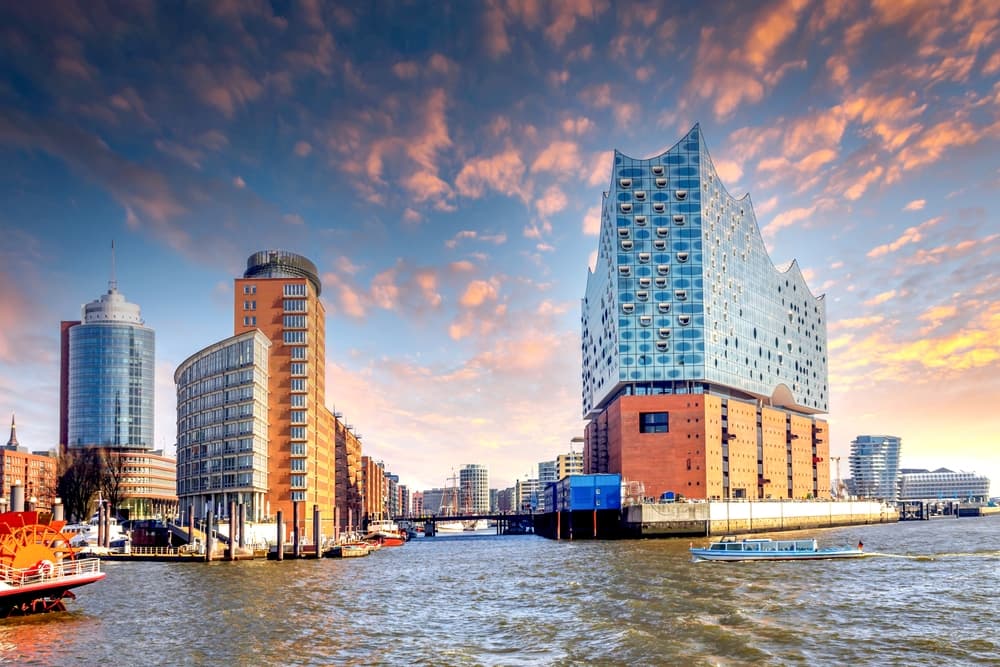
Port city with green space
Canals, parks, and an easygoing northern mood, plus strong media, logistics, and trade jobs. Locals are famously reserved and the rain is part of the deal.

Munich
High salaries, high rents
Bavaria's polished capital pays the best and feels the safest, with the Alps an hour away for weekends. The catch is Germany's priciest housing and a more traditional streak.
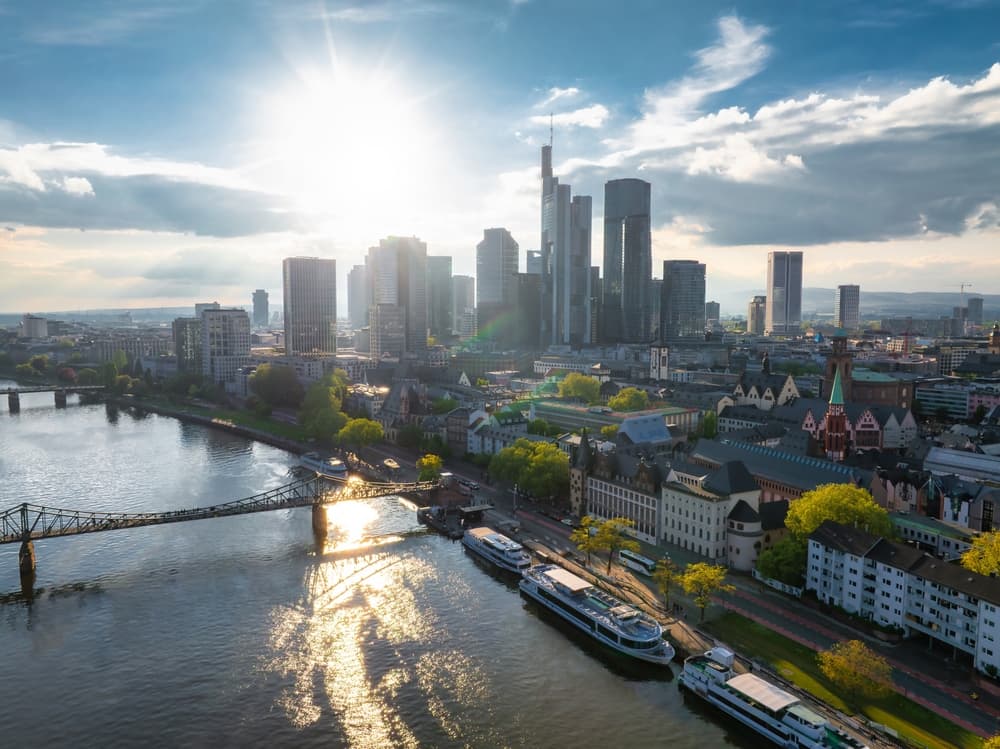
Frankfurt
Banking and the airport
Germany's banking capital and the one real skyline in the country, with the busiest airport for flights home and about a third of residents holding a foreign passport. Apple wine and old taverns hold on across the river in Sachsenhausen. People come for a posting and leave, so friendships turn over fast.
People who do this every week

Get In Expat
Germany Relocation Specialist
A German relocation specialist who handles residence permit files start to finish, including the appointment paperwork.

Moneycorp
Currency Exchange
Currency specialists for the freelancer who invoices in dollars and pays rent in euros.
MyExpatTaxes
U.S. Expat Tax Service
US expat tax specialists for the return you still owe the IRS once your invoices are in euros.
Freelance visa questions
How much money do you need for a German freelance visa?
There is no legal minimum. Offices want to see projected income that covers your rent, your health insurance premium and your monthly living costs, with savings behind it. Published guidance ranges from roughly 10,000 euros a year in Berlin to more than double that in Munich or Hamburg, and it climbs if you are supporting a spouse or kids. Build the projection around your actual rent rather than a number you read online.
Does Germany have a digital nomad visa?
No. There is no visa by that name in German law. The closest thing is the freelance residence permit under Section 21(5) of the Residence Act, which lets you live in Germany and invoice clients anywhere in the world, as long as your work counts as a liberal profession. The Opportunity Card is not an alternative here, because it does not allow self employment at all.
Can freelancers get permanent residence in Germany after three years?
No, and a lot of guides get this wrong. The three year settlement route applies to people running a commercial business, not to freelancers. Berlin's own immigration office puts it plainly: a freelancer may be granted permanent residence at the earliest after five years. That also means five years of income, B1 German and 60 months of pension contributions, which freelancers usually have to pay voluntarily because nobody enrolls them automatically.
Do you need German clients to get the freelance permit?
Not as a matter of law. The liberal profession track has no requirement that your clients be German, so a consultant billing only US companies can qualify. In practice, Berlin asks for at least two letters of intent, and having one or two German or European clients makes a first application noticeably stronger because it shows you are building a working life there, not just a mailing address.
How long does the German freelance visa take?
Two clocks run, and people only plan for one. The decision itself usually takes about six to ten weeks after your appointment. Getting that appointment is the slow part: Berlin reported waits of three to nine months in 2024 and 2025, while Munich and Frankfurt ran four to eight weeks and Leipzig one to three. Where you register your address decides which office handles you.
What health insurance do you need as a freelancer in Germany?
German coverage, either voluntary public insurance or a private policy that matches public benefits. Travel and international nomad plans are not accepted, and Berlin also refuses private policies with an annual deductible above 300 euros. Freelancers pay the whole premium with no employer share. Artists, writers, musicians and journalists should look at the Künstlersozialkasse, which covers the employer half and roughly halves what they pay.
Can Americans apply for the German freelance visa after arriving?
Yes, and it is a real advantage US citizens have over most other applicants. Americans can enter Germany without a visa, register an address, and apply for the permit at the local immigration office. Most other nationalities have to get a long stay visa from a German consulate first. One warning: entering visa free does not let you start working. You have to wait for the permit or a Fiktionsbescheinigung before you invoice anyone.
Can your family come along on a German freelance permit?
Yes. Once you hold the permit, a spouse and children under 18 can apply to join you through family reunification, and your spouse can work in Germany. You have to show income that supports everyone, so add their costs to the projection you hand in rather than applying on a number that only covers you.
Other German permits worth a look
A job offer in Germany, permanent residence 21 months later
The EU Blue Card goes to degree holders whose German salary clears about $58,600. Americans get to skip the consulate and file for it after they land.
Germany's work visa with no salary floor
If your German job offer pays less than the Blue Card asks, or you trained in a trade instead of at a university, Sections 18a and 18b are your way in.
Move to Germany first, find the job once you're there
The Opportunity Card lets skilled workers live in Germany for up to a year and job-hunt on the ground, no offer required.
Germany's student visa is the easy part
Public tuition is still close to nothing, you park about $13,700 in a blocked account, and you can work 140 days a year. Admission is the part that stops Americans.

Would Germany actually fit your life?
Answer a few questions and see how it scores for you.
Why not you?