Dominica gives Americans six months for free. This permit is for month seven.
The residence permit runs a year at a time and costs about $296, which the Treasury bills as EC$800. Here's when it beats Dominica's WIN remote-work visa, and when it doesn't.
A U.S. passport clears Dominica's border for half a year with nothing filed and nothing paid, so the real question is what happens in month seven. This is the permit for that year and the four after it. It's also a different decision from the WIN visa the island advertises to remote workers, and the two routes pull apart on tax.
Start with what you already have
6 months
What a U.S. passport buys at the border
No form, no fee, no permission
18 months
The longest a WIN visa runs
One stretch, and it does not renew
$50,000
Income WIN expects over your next year
Or the means to support everyone coming
0
Local jobs either route opens
A Dominican employer needs a work permit
Dominica Temporary Residence Permit
Allows legal residence in Dominica for one year, renewable annually. Requirements vary by visa type.
- Processing time
- ~30 days
- Timeline
- 1 year, renewable
- Difficulty
- Easy
About that data card
"Requirements vary by visa type" is our own database talking, and Immigration is more specific than that. It publishes one document set for this permit; renting or owning property isn't on it. We switched the requirement list off rather than show you a condition the ministry never asks for. Treat the thirty-day processing figure as a planning number too. Nothing Immigration publishes commits it to a deadline.
Who files it
The permit is a decision about year two
Six months covers a season. A winter, a book, a contract, a trial run with the kids in a rented house. None of it needs a lawyer.
The permit is what you file when you want the year after that; it goes to the Ministry of National Security, Labour and Immigration in Roseau. It runs 12 months and renews once a year. Renew it until you've been resident five years, then permanent residence opens. An American who wants the passport is looking at a seven-year test from the same starting line.
Here's the catch. This is permission to live in Dominica, not to earn there. Employment runs through the Labour Division on its own application, and the investment authority notes that a work permit lasting more than six months hands you residency by itself. So the permit suits the person whose money already comes from somewhere else: a salary paid into a U.S. bank, clients in three time zones, a company registered anywhere but here.
What the ministry asks you to bring
Two application forms
Filed in duplicate, with a medical form and a checklist. Every question gets an answer.
A medical, with a chest x-ray
A doctor signs that you've had no communicable disease in three years. The HIV and x-ray results go on it.
Two testimonials
One has to come from your last employer. These are character references, not financial ones.
A sponsor letter
Someone on the island writes in, accepting responsibility for you while you are there.
A banker's statement
A reputable bank sets out the financial position. It can be your sponsor's rather than yours, which is unusual.
A return ticket, or a deposit
Proof you can get home, plus two passport photos and a recent police record.
The three-way choice
WIN, the permit, or neither
Dominica sells two different long stays, which are built for different people.
Nothing at all, for up to six months
The State Department's Dominica page puts it in one line: no visa is required for six months or less. For a remote worker trying the island out, that's the whole answer. You're a visitor, your clients are not here, and you leave before the stamp runs out.
WIN, for eighteen months and then a flight home
The Work in Nature visa costs $100 to apply and $800 more on approval, or $1,200 for a family filing together. The stamp goes into your passport on arrival, not before you fly. It buys two things the permit does not: a published waiver on Dominica income tax, and three duty-free months to ship in your desk, your tools and your car. The car has to leave again at the end. What it doesn't buy is a renewal, or any standing to ask for one.
The permit, for people who want a second year
One year, renewable, filed with the ministry. It starts a clock the WIN stamp never starts. It's the one of the three that assumes you're staying.
You are a visitor until the permit lands
While the file is being processed, your status hasn't changed. That means asking the Immigration Department for an Extension of Stay and getting it recorded in your passport, every time the last one runs out. Skip it and, in the government's own words, you are on island illegally. One more line from the same page: if your passport has less than six months left, Immigration will not hand you an application form at all.
Working from here
The router, the road and the season
Our own country data puts Dominica at 35 Mbps, but that figure runs behind. Flow sells fiber from EC$185 a month at up to 400 Mbps and has launched matched upload and download speeds. Digicel's home fiber reaches 500 Mbps down where it has built out. Starlink has served the island since June 2025. The real constraint is geography. Flow's fiber is mostly a Roseau product, and neither carrier has switched on 5G as of September 2026. Outside the towns, you're choosing between mobile data and a dish.
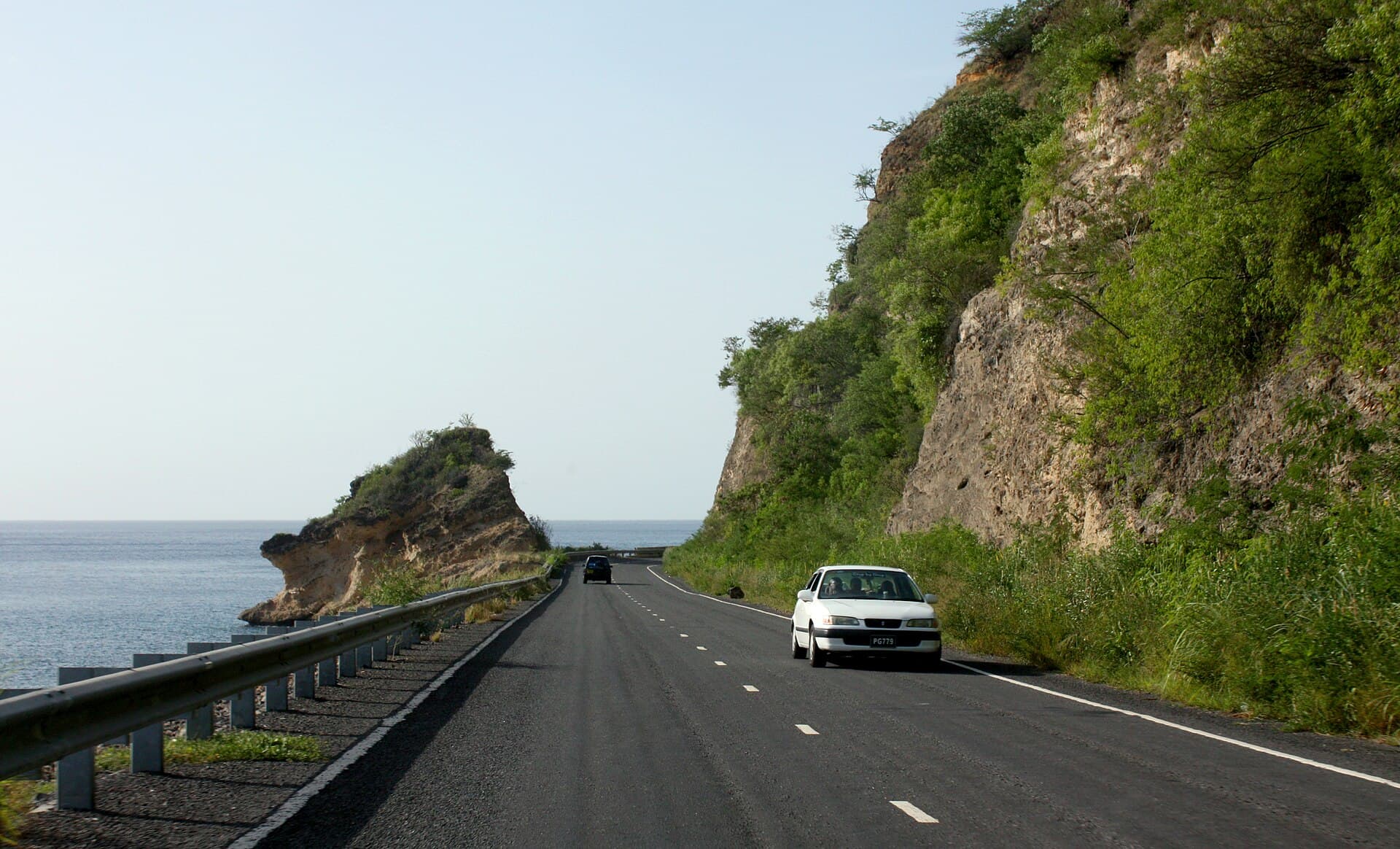
A car is practically mandatory. Minibuses run the main roads on a commuter timetable. You drive on the left. The State Department notes you need a local temporary license, sold at rental offices and at the Traffic Department in Roseau. Douglas-Charles airport sits on the northeast coast, about ninety minutes from the capital.
Then there's the season. Hurricanes run June through November and peak from August to October, which is when power and connection both get tested.
Tax
WIN's tax waiver, and who else gets it
The Work in Nature fees page carries a sentence the residence permit has no equivalent for: a waiver on income tax is granted to people working remotely from Dominica under the WIN visa. Holders still owe tax wherever they're normally resident. A permitholder who crosses into Dominica tax residency gets no waiver, and Dominica does levy income tax on residents.
That gap is what the 2026 budget was written to erase. The flat rate and territorial switch announced for January 2027 would give every resident what WIN holders already have. Announced is the operative word. The measure arrived in a budget address and no amendment has reached the statute book, so price this year on this year's rules.
Neither version changes what you owe the IRS.
The two questions this page can't answer

Hunter Schultz
Healthcare Coach
WIN applicants have to upload health insurance valid in Dominica. The residence permit asks for none, which is how people end up living here with nothing. Hunter Schultz maps what care on this island can and cannot handle.

Suzanne Severance
Solo Nomad Coach
Our own country notes call the American community here tiny, and flag no digital nomad scene at all. Suzanne Severance lives a few months at a time in small places, solo. Ask her how she fills a week.
Questions about living here for a year
Do Americans need a visa to live in Dominica?
Not for the first six months. U.S. government guidance for Dominica sets the visa-free limit at six months, so a remote worker can land, work for clients abroad and fly out without filing anything. Past that mark the choice is a Work in Nature visa or a residence permit.
Can I work for a Dominican company on a residence permit?
No. Hiring runs through the Labour Division, which issues work permits separately. One quirk worth knowing: a work permit that lasts beyond six months carries residency status with it, so employees often end up holding both. On its own this permit lets you live in Dominica, not work for a Dominican business.
Will Dominica stop taxing foreign income in 2027?
That is what the August 2026 budget said. The finance minister announced a flat 10 percent rate from January 2027, with the first EC$30,000 free, and the government said tax would fall only on income earned inside Dominica. It is an announcement rather than law, so plan around today's rules.
How much does a Dominica residence permit cost?
About $296 a year for a non-CARICOM applicant, which the Treasury Department bills as EC$800. CARICOM nationals pay EC$250. You pay it again at every yearly renewal. Nothing on the published document list sets a minimum income. What it asks for instead is a banker's statement.
Is the internet fast enough to work remotely from Dominica?
In Roseau, yes. Both carriers retail home fiber in the hundreds of megabits, and Flow now sells matched upload and download speeds. Outside the towns the honest answer is mobile data or a satellite dish. Neither runs 5G yet, so the gap between the capital and a village is real.
How long does a Dominica residence permit take?
There is no published service standard, and the thirty days that circulates reads optimistic. What matters more is your status while you wait. You stay a visitor, so the Immigration Department has to grant an Extension of Stay and record it in your passport until the permit is issued.
Should a remote worker take the WIN visa or a residence permit?
WIN if you are trying the island out. It runs up to eighteen months, waives Dominica income tax on foreign earnings and lets you import your gear duty free for three months. The permit if you expect to still be there in year two, because WIN cannot be renewed.
A year is a long time to bet on a place you've only visited
Tell us what you earn, where your work sits and who is coming with you. The Expatsi Test lines Dominica up against everywhere else.
Why not you?