Austria's Retirement Visa: The Quota Is the Hard Part
The permit Austria gives retirees asks for about $3,020 a month (2,616.78 euros), A1 German before you arrive, and one of a small number of quota slots that open in January.
Austria has no visa actually called a retirement visa. What retirees use is a settlement permit with a blunt name: gainful employment excepted. You prove a pension, a home, A1 German, and then wait on a quota that is handed out in order every January.

Retirement Visa
Third-country nationals wishing to settle in Austria without gainful employment (e.g. pensioners, financially independent individuals) may obtain a residence title “settlement permit – gainful employment excepted.“
- Government cost
- $150
- Processing time
- ~90 days
- Timeline
- 1 year, renewable up to 3 years
- Difficulty
- Hard
Key requirements
- Valid passport
- Proof of sufficient retirement income (approx. €2,000/month)
- Comprehensive health insurance
- No intention to work
- Clean criminal record
- Proof of accommodation
About that data card
Two lines above need a footnote. The income requirement is not about 2,000 euros a month. Austria's 2026 figure is 2,616.78 euros for one person and 4,128.24 euros for a couple. That's because the rule is double the ASVG reference rate, not the plain rate. The card also says nothing about the quota, which is the hardest part of this permit. The fee is 218 euros per person as of January 1, 2026, roughly $250. We've asked for both to be fixed.
The real gate
The quota is the whole game
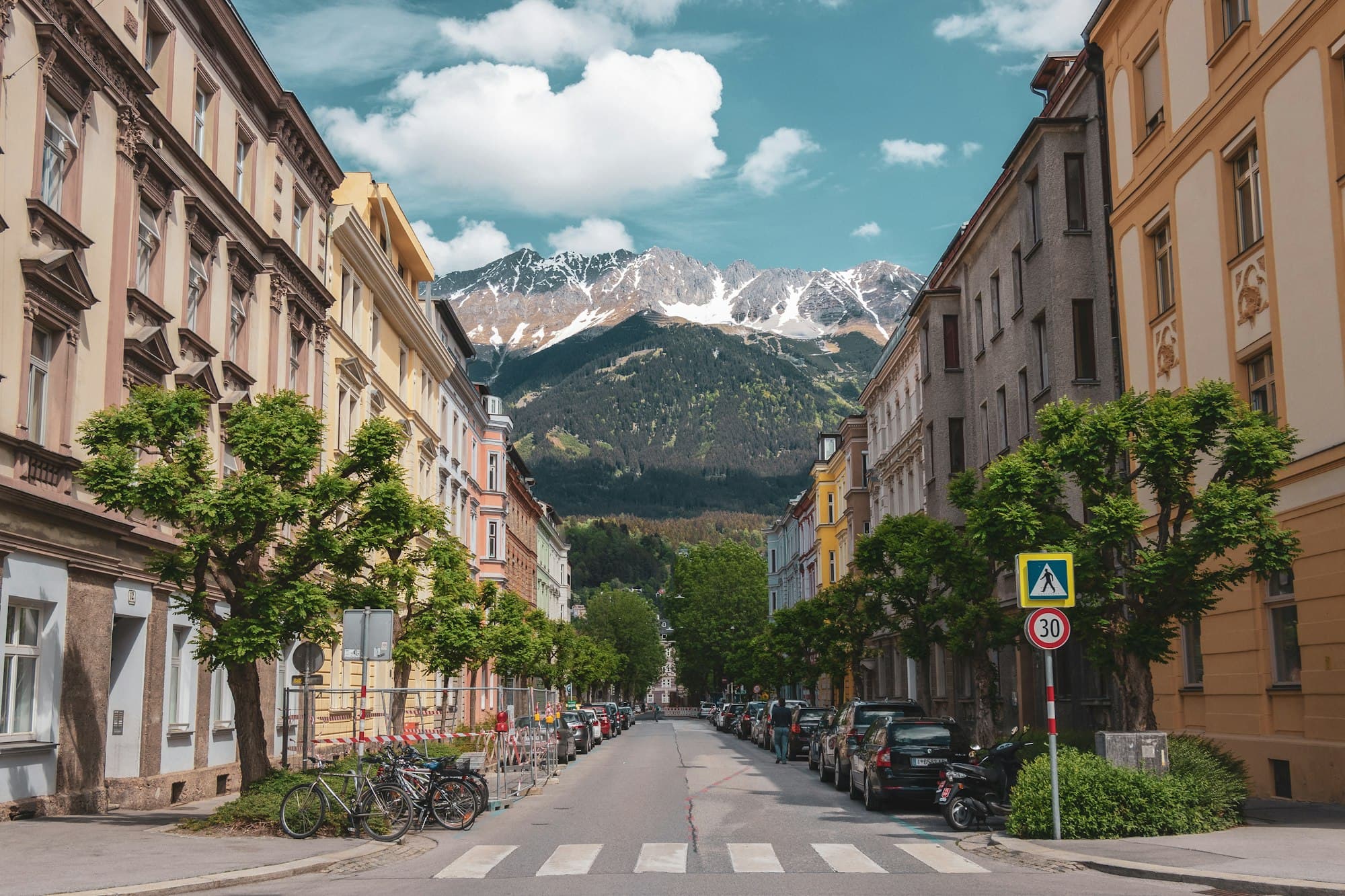
A limited number of slots, split by state
This permit sits under section 44 of Austria's settlement law and is capped. Each year the federal government sets how many each state may hand out, and the numbers are small: Styria, a state of 1.2 million people, expected about 75 slots for all of 2025. Applications go into the state's register by the date and time you file; if the slots are gone when your turn comes, your application is turned away to try again next year.
It starts on the first working day of January
This is a real race. For the 2025 quota, Styria took appointment requests by email from December 4, confirmed times by December 18, then opened several counters on January 2. Linz spells out the part that catches people: the slot isn't reserved by mailing in an application, only by showing up in person. The question isn't just whether you qualify. It's whether you qualify on the right morning, in the state you plan to live in.
- Renewals do not need a quota slot. Only the first permit does.
- Every family member takes a slot of their own.
The numbers Austria actually checks
$3,020
Monthly income, one person
2,616.78 euros, 2026
$4,770
Monthly income, a couple
4,128.24 euros, 2026
$655
Public health cover, each
565.25 euros a month
12 months
Length of the first permit
then 12 more, then 3 years

The money test
Austria wants proof of more than you'll spend
Here's the part that surprises people. A couple has to show about $4,770 a month, which is 4,128 euros. A couple actually living in Austria spends closer to $3,850 a month, all in. You're proving you can afford a life more expensive than the one you're moving to.
The income has to be regular and yours: a pension, an annuity, foreign business profits, income from savings or investments. It's measured after your fixed costs, so Vienna rent comes off the top before anyone compares you to the threshold. Expect to hand over a lease and bank statements with the pension letters, plus 404 euros a month for each child.
The good news is that the rest of the budget is friendlier than Vienna's reputation suggests. A one bedroom in the city center runs about $1,050, a transit pass around $60, a plain restaurant meal about $18.
Your Social Security stays American
Under the U.S. and Austria tax treaty, Social Security and government service pensions are taxed only by the United States. Once you live in Austria, though, you're taxed there on worldwide income, so private pensions, annuities, 401(k) and IRA withdrawals are Austria's to tax. There's no special break for foreign retirees the way Italy and Portugal have had, so run the numbers with a cross-border accountant before you commit.
Two requirements that cost real money
Health cover, and German before you fly

Insurance that covers everything
Austria wants cover that pays out in Austria for all risks, and travel insurance doesn't count. Retirees who can't join through a job or a spouse usually buy into the public system, and self-insuring with the ÖGK costs about $655 a month per person in 2026, or 565 euros. You can ask for that to be reduced if your finances justify it, and Vienna publishes a list of private policies it accepts. Either way, budget it like rent.
A1 German, proved with the application
This is where Austria differs from every sunny retirement visa you've read about. You have to show A1 German when you file the first application, and only four certificates count: ÖIF, ÖSD, Goethe or telc. Then demonstrate A2 within two years to keep renewing, and B1 if you want permanent residence at the five year mark. Start lessons a year before you plan to apply.
What goes in the file
A1 German certificate
From ÖIF, ÖSD, Goethe or telc. Nothing else is accepted.
Income and outgoings
Pension letters, bank statements, and proof of your regular bills.
All risk health insurance
Public self insurance or a policy from the accepted list.
A home in Austria
A lease, a purchase contract or a registered right to live there.
Police certificate
From your home country, less than three months old.
Passport and photo
The passport, a full copy of it, and a photo under six months old.
Read this before you fall in love
Here's the catch
No work means no work
The permit is literally named gainful employment excepted. No job, no freelancing, no business. If your plans change, you have to tell the authority and file to change the purpose of your stay. Staying quiet can cost you a fine. Whether a remote job for a U.S. employer counts is a common question. We couldn't find a clear official answer, so treat it as a no until an Austrian immigration lawyer tells you otherwise.
Filing from inside Austria does not buy you time
Americans can file during a visa-free stay instead of at a consulate. That sounds like a shortcut, but Vienna says plainly that if your case isn't decided before your visa-free days run out, you leave and wait abroad.
Citizenship costs you the U.S. passport
Five years of settlement plus B1 German gets you long term EU residence. Citizenship is generally a ten-year road, and Austria expects you to give up your existing nationality in order to take it.
If the quota shuts you out, you have options. Austria's Red-White-Red Card is a different animal with no quota at all if you're still working, and our retirement visa hub compares the income floors on paths like Portugal's D7 and Spain's non lucrative visa, both of which ask for less money and no language test.
Other ways into Austria
Artist Visa
- Valid passport
- Proof of artistic activity and recognition
- Sufficient income from artistic work
EU Blue Card
- University degree or equivalent
- Binding job offer in Austria with minimum annual salary (€51,500 in 2025)
- Employment corresponds to qualifications
Highly Qualified Worker Visa
- Job offer from Austrian employer
- Meet points-based criteria (qualifications, experience, language, age)
- Proof of adequate means of subsistence
Job Seeker Visa
- Proof of qualifications
- Proof of sufficient funds
- Health insurance
Student Visa
- Letter of acceptance from Austrian educational institution
- Proof of sufficient funds
- Health insurance
Austria retirement visa questions
How much does health insurance cost in Austria?
Buying into the public system on your own costs roughly $655 per person a month in 2026, or 565.25 euros, and you can ask for a reduction based on your finances. Private policies are fine if they cover all risks in Austria. Travel insurance is not enough.
Will Austria tax my Social Security?
No. The US and Austria treaty gives the United States the only right to tax US Social Security and government service pensions. Austria does tax your other worldwide income once you live there, including private pensions, annuities and withdrawals from a 401(k) or IRA.
What is the Austrian quota and can I get around it?
The government caps how many of these permits each state issues each year. Slots are logged by the date and time you apply and given out in order, so states typically open applications on the first working day of January. If they run out your case is turned away and you reapply next year. Renewals need no slot.
How long does the permit last and where does it lead?
The first card is valid up to 12 months, then renewed for another 12. After two years with A2 German you get a three year card. Five years plus B1 German opens long term EU residence. Citizenship is generally ten years and means giving up your US passport.
How much income do I need for Austria's retirement visa?
In 2026 you must show 2,616.78 euros a month, about $3,020, if you are single, and 4,128.24 euros, about $4,770, for a couple, plus 403.76 euros per child. That is double Austria's standard reference rate, and it is measured after your regular bills.
Can I apply while I am already in Austria?
Americans can file inside Austria during a lawful visa free stay instead of at a consulate. It does not let you stay while you wait. If the decision has not come by the time your visa free days end, you leave and wait abroad.
Do I need to speak German to retire in Austria?
Yes, and earlier than you would expect. You prove A1 German when you file the first application, with a certificate from ÖIF, ÖSD, Goethe or telc. A2 is due within two years to keep renewing, and permanent residence at five years needs B1.
Can I work remotely for a US employer on this permit?
Assume no. The permit excludes gainful employment, employed or self employed, and Austrian sources do not spell out an exception for remote work for a foreign company. If remote income matters to your plan, ask an Austrian immigration lawyer before you file.

Not sure Austria is your country?
Take the Expatsi Test and see which countries fit your budget, your health needs and your paperwork tolerance.