
Episode 13 · June 9, 2026 · 37:31
"We've All Had This Love Affair" Moving to France
A French relocation company's COO on the visas, healthcare, and regions Americans need to know before moving to France.
Listen on Spotify →Featured in this episode

In this episode
Jen Barnett and Stephanie trade stories about their lifelong crush on France, then talk with Louis Bouyala, co-founder and COO of EasyStart, which helps non-citizens move to France. Louis grew up in Paris. He walks through how Paris differs from smaller towns and where Americans are settling, from Carcassonne and Biarritz to Bordeaux and Béziers.
The interview covers the long stay visitor visa for retirees and remote workers, the paths open after five years, and how French healthcare works for new residents. Louis's advice is short: learn French. Then pick your region carefully. The episode closes with a listener question on shipping household goods versus replacing them.
Key takeaways
- On the long stay visitor visa you sign a statement swearing you won't work in France. The visa lasts a year, and the yearly renewal can be done fully online.
- After five years of legal residency you have two paths. One is a 10-year resident card with the right to work. The other is citizenship, which is much harder to get.
- Remote workers also come on the long stay visitor visa, and consulates issue it to them daily. The legal picture still isn't fully clear, because France's tax administration and immigration services disagree.
- Long stay visitor visa holders can join the public healthcare system after three months of legal residence. Enrollment takes about four or five months.
- The carte Vitale is a green card you show at appointments. The state reimburses about 70% of a general practitioner visit and 100% of an emergency room visit.
- Entrepreneur visa holders get covered through social contributions, about 25% of their revenue.
- Learn some French. English is spoken in major cities, but outside them people may struggle to understand you.
Chapters
Show notes
Want to move to France? Dreaming about Paris or the beautiful coastline? For many, a place like France seems unattainable, but it isn't! Louis Bouyala is the Co-Founder and COO of Easy Start, an organization dedicated to helping non-citizens move to France. We go through the process, from the decision to assimilation.
Easy Start France Relocation Specialists
To begin your journey abroad take our FREE quiz!
This episode is general information, not legal, tax or financial advice. Talk to a professional about your own situation.
Questions from this episode
What happens after five years of living in France?
You have two paths. The first is the 10-year resident card, which gives you legal residency for 10 years with the right to work. The second is citizenship. It's much harder to get than other residence permits.
Should I ship my household goods to Europe or replace them?
Get rid of general household goods like blenders, dishes and curling irons. Shipping them costs more in money, time and headache. Other countries have appliances, and your old electronics may not match the local wattage. Bring sentimental items you'd miss forever, like family photos. For bigger items, some companies ship pallets and half pallets. Before you think about cost, decide what you want your new life to look like.
What visa do retirees use to move to France?
The long stay visitor visa. It's one of France's most straightforward paths. You need at least the French minimum wage in passive income or Social Security, about 22,000 gross per year, and you sign a statement swearing you won't work in France. It's granted for a year, and the renewal is simple. You can do it fully online.
Can Americans on a long stay visitor visa use French public healthcare?
Yes. If you're retiring in France on a long stay visitor visa, you can join the public system after three months of legal residence. Enrollment takes about four or five months. Then you get a green card called the carte Vitale to use at appointments. The state reimburses about 70% of a general practitioner visit and 100% of an emergency room visit. Parliament is discussing a small fee for people coming from abroad, but it isn't enforced yet.
Go deeper
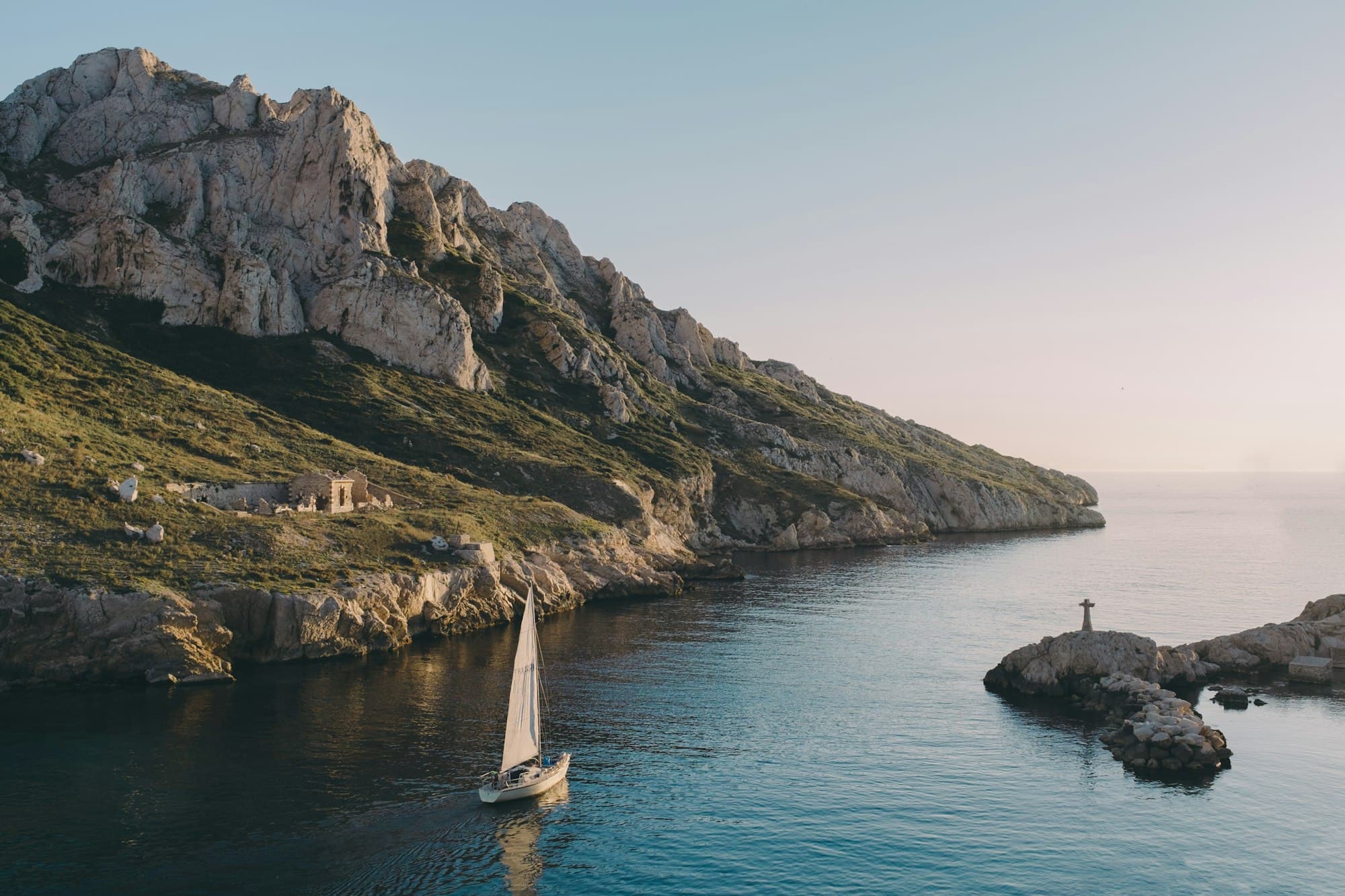
Moving to France, the real guide
France is the country Louis Bouyala walks through, from Paris to the southwest towns that draw Americans.

Retire in France on a long-stay visa
The long stay visitor visa is the route Louis describes for retirees and many remote workers moving to France.
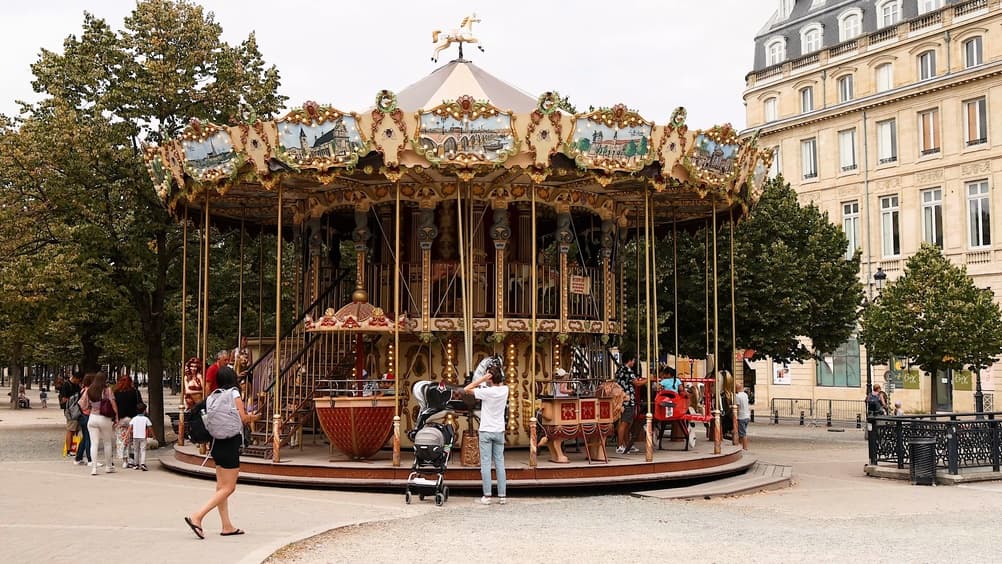
Living in Bordeaux, France: Costs, Safety and Daily Life
Louis says Bordeaux draws American families for its international schools.

Shipping Items Abroad vs Selling: 2026 Cost-Benefit Guide
The episode closes with a listener question on whether to ship household goods or replace them.

EasyStart
EasyStart, the France relocation company co-founded by this episode's guest, Louis Bouyala.
Transcript
Transcript is auto-generated and lightly corrected; it may contain errors.
Read the full transcript(6,333 words)
English speakers are still a novelty here. And of course I had two cats who basically destroyed their carriers on days one and. Three, there was a lot of discussion to make sure that we were aligned and that we were doing it for for similar reasons. What are the visa paths? Are you running towards something or are you running away from something?
And then what? I can't believe we're finally here. This is Americans Abroad. Welcome to Americans Abroad. On this week's episode, we're going to be talking about moving to France and what you need to know. Jen, have you ever been to France? Yes, and I am so surprised that I don't live in France. What about you? I've been to France multiple times.
I have a degree in French which of course the smartest decision living in San Antonio, TX is to study French. But growing up I had this this love affair that I think a lot of people do, this romantic notion of what France of what France is. Was it the same for you? This romanticism of France and the French culture.
Oh, 1000%. You know, I have that piece of lore that I tell every week in my You Can Move abroad talk, but I went to, I mean, the tiniest Pentecostal school in first grade you could possibly imagine. And we, for whatever reason, had France week. And we set up little sidewalk cafes in the hall and I mean, back rooms. This is where the back rooms were invented. And we set up little cafes in the hall and we learned French words and that was it.
Man, I was obsessed with France from that moment on. I was like Hoffman, Alabama, ain't it? Like I got to go to France. And so when I was in high school, my mom wanted me to go to this magnet school. I didn't want to go. And she made me at least go on the tour. And we went on the tour on the 3rd floor in the French room. It said all the dates for the French trip. And I was like, I will come to the school if I can go on that trip.
And it was going to be for me, it was going to be like 3. And my mom kept that, kept that deal. And I went and we spent three weeks. I tell a little bit about that later when we talked to Louis about one thing that happened on the trip. There's a lot of other stuff that happened on the trip.
I got caught sunbathing topless in. Americans abroad after dark. Which is, I mean, you know, listen. When it When in Rome? When? When in France? Uh huh. When being 16 in 1987 was different than being 16? I mean, in 1988 is different than being 16 now. So anyway, but then after I was, I minored in French again, equally dumb of me.
I would give anything to speak Spanish today. And and then I tried to run away to France. I dropped out of grad school and tried to run away to France. They were not interested. And then the next time I went, I went on a work trip because we had a big global client in France, in Paris. And they I got to go because I was the only person in the office who spoke French.
And I partied all night with the client and someone stole my purse with my passport in it. And yeah, and I got to practice my French, but good. Because I had to go to three different police stations and give a police report. The only word I could not come up with was swayed. My bag was swayed. And I could not.
I could not. Give you that at school. No. But anyway, then I got to go to the embassy and this was not long after 911. And so the Marines stationed outside all of the embassies, and so they just wanted you in and out. So I walked in. They said, who are you? I said, you know, I'm Jen Barnett.
And they turned to my boss's wife and said, is she? And she was like, yeah. And they gave me my passport. Like I'm not completely on the honor system. Amazing. Do you still speak French? You know, beyond beyond the basics Like because for me, I feel like I have lost so much of it. How like you mentioned that you were fluent?
Like on a on a scale of 1 to 10, how fluent do you think you still are? I wasn't fluent. I was just. I don't even know what you'd call it now. Like a like AB2. Maybe my accent was really good. That's the that's the thing. And my teacher was Parisian. Again, I'm from Alabama. This is a big deal. And we did the French competition every year. So we would, I mean, it was my favorite class. I loved it.
I was obsessed with my teacher. And I think that having a good accent get got me by in a lot of ways. But I realized like, I still don't. I don't. I think I probably speak more Spanish now than I ever spoke French. I knew a lot more of a pagulary in French, but I don't think I never got really great on tenses.
You know? My landlord here is French. Oh, no kidding. In Mexico, Yeah, He's from Lyon. And I was thinking it'd be funny if he came by today to get the rent while we're on the podcast, and he could stop in and be like, hi, hello. Bonjour. Yeah, the experience of someone from France moving somewhere else. So, OK, so you also have interest in France, so tell me your experience.
Yeah. So, you know, like, like I mentioned, I think it was a general romanticism not only of just being outside of my bubble in Texas, but France specifically because it is art and its culture and I was a pretentious teenager and what a better thing to lean into. Prince. Absolutely. We'd be writing sad poetry together in the hall.
In the bell jar together. Oh my. Gosh, Oh my gosh. I started studying French my junior year of high school, fell in love with very much like you. My teacher was from France, just the the best teacher and it was other than the first day we spoke no English in that class for year for year one and year 2.
And that was the best language learning situation that I think I, I ever could have had. But one of the joys of living in Europe or close to the European continent is how cheap flights are. So when I was staying in Dublin, be like, do you want to catch a €8 flight to Paris? Yes, absolutely. And we would go for, you know, 2 days and come back or do you want to catch an 8 euro flight to visit our friends in Sweden. So that was my first time.
It was trying to run away a hunkering down in London for a little bit and in Dublin for a little bit and then just going, Oh my God, Paris is at my doorstep and absolutely fell in love. We went again. My my husband and I went in 2017, 20/17/2018. I haven't been back since. But now that I'm going to have my really collared exactly now that I'm now that I'm officially legal in Portugal, I'm just waiting for a piece of mail to get delivered. I can go any time, but I, I absolutely still love France. I love southern France, I love
Marseille, I love Lyon. Foodie towns for sure. And you know, I, but when we were moving abroad, we didn't really consider France. Did you and Brett think about France and why are you not in France if we've had this? And maybe some questions I need to ask myself. Why with this lifelong love affair? Well, it's in the top 10, so you know, we have our top ten list of countries we were considering and we ended up visiting Mexico 1st and it's on the list now. Brett does not have the same feelings about France I do. He studied it also, but you he
doesn't remember a thing. And the, my favorite place in France is this little seaside town in the north called Petrotop. And I have never been to like any of the British Cliff areas. I've only ever been to London. And so it's that same part of the world. And Oh my God, I just thought it was the most magical place I've ever seen in my life. I and by the way I should point out for concerned listers, my parents have passed on so they will never know that I went to this.
My teacher called me and agreed to not tell them and now they have passed on so they will never know. If they did that, may they rest in peace without that knowledge. So and I, I mean I love Paris too. I've I've stayed in a number of places when I went, when I dropped out of school, I ended up staying in a hostel and just getting up every day and walking.
I will put my feet in every erroneous moment. And then the last night I ran out of money even for the hostel, which was about 12 bucks. And I spent the last night in the airport and I looked up. That's a whole nother story. I got a ton of crazy stories about France. Anyway, you would think that the airport like Charles de Gaulle is open all night, or at least I did right? Because I'm naive and I don't realize planes don't land in the middle of the night.
So I just think it's bustling. It's always open and it is open, you know, but nothing is happening. So I spent the night there with this Russian lady who lived in Toronto and said her boyfriend, oh, it's a whole crazy story. And she read me her book all night in Russian. And this British kid with like a big huge Shiner who was clearly off his rocker. I've had, I've had some fun.
Adventures. Adventures for for sure. I'm not there now. We came to Mexico and just fell in love with it. I, I can't say that I wouldn't go back now as an adult adult with Brett and find another path at some point. I can't say. But I I do love it and I look forward to visiting again soon.
You can come and visit it with me during Christmas so we can hit up all the French Christmas markets together. I'm there, say less. This week on Americans Abroad, we're talking all about how to move to France. And we have our guest, Louis Bouyala. Is that right? Louis Bouyala? And he. OK good. Thank you. And he is going to tell us everything we need to know about moving to France.
We had the opportunity to meet last month at Move Abroad Con. Will you just share your experiences there? You had a huge crowd for your talk. Absolutely. Thank you Jen for the introduction. So Moverbroad con was now about two weeks ago and I had a one hour speaking slot. If I, if I recall correctly, there were about what 606 hundred people there? Jen yes, I think the most important part was that people didn't know much about friends compared to what we usually see with the people that, you know, book meeting with us. And they discovered things about
friends that they didn't know in terms of how easy it can be to move and the advantages that you can get when moving to this country, mainly in terms of healthcare, which we call Social Security for you guys, and the digital nomad aspect, which was largely unknown. But it was really fun. I, we had a lot of one on ones that were booked and I had the chance to speak to so many, you know, nice and kind people that were considering a move. Most of them were, I would say, considering multiple countries at once and not having completed
their, their mind made if that makes sense. But they had really relevant questions and it was a pleasure meeting them all. That's a great insight. People who come to move abroad con are often at that point in the process where they're trying to decide where to go and they have no idea what the visa pads are. So they come there to get immersed in that info all at once. And we find that we pull them before the conference and after the conference as to the countries they're considering. And there are huge swings because you're right, people don't often know that there are
fairly easy ways to move to France. Now, Louis, you're originally from France, is that correct? Well, what makes you think that? The love, the lovely accent. Where in France did you grow up? So I was born in Paris and part of my family is from the South in nearest a town named Nîmes and the small town is called Uses. It's in literally in the South of France. But I was born in Paris and grew up there, and I'm the company and myself are still here.
Can you talk to us a little bit about life in Paris and life in a in a smaller town in France? Just, you know, kind of high level overview? I think a lot of people when they think of France, they think Eiffel Tower and baguettes and you know, and coffee, but there's a lot of variances. So can you just talk a little bit about the differences in French life in the big cities, in the smaller towns?
Sure. It's, it's completely different lives both in terms of the budget that you have to plan for and and the quietness that you want to achieve when moving. So just so you have a bit of background, but the, the, a significant part of the people that we're working with are going to retire in France. And this is not the demographic that is going to move to Paris. Paris is, is, as you know, a big city is pretty packed. So I don't think you have more than two kilometers square of territory in Paris.
So you have a lot of people everywhere and it's extremely busy since it's, you know, the capital cities in terms of politics and economically it's way more expensive than what you can see in other cities, like like two or three times. I would compare it to New York or Los Angeles if I have to make a comparison in terms of pricing.
The good thing about France, I would say is that you have many kind of weather and seasons that you can get throughout the year. So you have, you know, the French Alps where you can go in the, it's a mountainy part. You have the whole S Mediterranean where most of the retirees are going, which would be Nice Cannes Monaco, these type of cities.
And then you have the whole Southwest, where a majority of Americans are, are coming to as well, mainly because it has become a hub for people from the US. So they have this huge expat community that they can relate to and, you know, hang out with during their retirement. And this is something that they really value because getting accustomed to life in France, you know, when you don't speak the language or anything, can be fairly complicated in the very beginning in particular. And this is another topic, but we have different interpersonal relationship than what you can
see in the USI would say. So it can be a bit more complicated to make friends and strong relationships in a short amount of time. What are some of those cities in southwest France that people want to move to? So the, the most popular at the moment is is rather an unknown city for most people. It's called Carcassonne.
You have a lot of people that are going there. You you know it. Stephanie. Yeah. I do, yeah. I do know Carcassonne. Honestly, I know it from a board game. OK. You have another one that's Biarritz. So it's it's, it's an Oceanic city which is in the southwest completely and it's a Surf City with a lot of young people.
It's pretty dynamic. It's it's it's a rising city. I would say Bordeaux is also one of them, but it's a bit up north and it's one of the major cities in France. A lot of families are relocating there because parents would be still working and you have very good international schools etcetera. I would say these are the main 3 where people are going. We have also Béziers which is another 1B is that Bez i.e. Rs similar as Carcassonne, many many US and UK CS and are relocating there.
And Carcassonne is very convenient to Spain as well, right? It's close to Gerona. Oh yes, yes, I, I think it's something like a two hours drive, but you have the, the, you know, the Pyrene, the the mountains chain that is separating. So you have to make a bit of a tour, but it's it's super close and they they speak English usually pretty well in, in this region Spanish.
Louis, before you were born, I was stuck in Nîmes one time on a tour group and my friend and I decided we didn't want to climb this one more set of stairs to the top of one more church and we snuck off and we got caught in a torrential downpour. And so I always will have a memory of Nîmes.
This is so funny. You know, this is one of these cities where you have a strong bull culture, the animal, the bull, similar to what you see in Spain. So these are one of the last regions where you can have, you know, the corridas. Like. Well, you have an arena and you have like a tornado inside. And they, the goal is to is to yeah, it's to kill the animal, which is not really fun. But this is one of the last areas in France that has the right to do this.
And Nîmes is a city that's known for this. They have this huge arena that dates back like to the Roman Empire or something. And it's pretty impressive. But you remember the churches and the. Yes. So how did did you and Anne start EasyStart together? How did that get started? What was the? What was the problem that you saw? Actually, Anne was the one starting it. If I remember correctly, the story, she was moving from the US to France and working for various companies in France. And then COVID hit and she started, you know, seeing a lot of people asking on Facebook
groups, expats group help about this specific relocation issues because people were moving like during COVID for some reason. And she started doing housing search for these people like really as a volunteer thing. And then it, it continued to be then people starting telling her that she should make it a business and relocation existed in France. I mean, it has existed for a while.
So she started, if I understood correctly, rather as a freelance operation. And as you know, the business grew and everything she needed someone to, to, to partner up with. I used to be a lawyer and it matched perfectly because after four years, I wanted to do something else while still using, you know, the legal aspect of my, of my training and everything.
And I thought that the immigration and visa aspect was. Served in, in France in general, purely in terms of business companies, you know, you have incumbents that are providing a service that is not matching what Americans and other nationalities expect. So we partner up. I joined the company officially in September 2024. So it's gonna be two years in a few months.
And that's how it that's how it started. Louis, are you starting to see more Americans explore moving to France, especially over the last couple of years? Yes. So we've seen a huge influx right after the elections last year, I would say, but rather from people considering the move, you know, rather than actually taking the step. So, so we've seen an increase in people thinking about it essentially for, for political reasons and naturally more people have relocated during that year. But we're seeing in general an, an increase in interest in the, in the, in France in general, I would say we have a lot of Americans.
I think this is one of the biggest foreign group that we have. It's it's. I don't have the number on the top of my head, but this is huge. So the people who are meeting with you who are considering France, It sounds like these are people who are maybe pre planning for a move in the future. Have they shared some of their reasons of why they're considering France?
So you have the the political reason that I mentioned, but I think it's incidental. It's not something that's going to last forever. Something that we hear a lot is that people are trying to be more intentional about what they do in their lives. And so this is the first one, because in Europe in general and in France in particular, we don't, we don't put work at the centre of everything.
So, so we have very separate lives between life and work, except when you start a company, for instance. But this is another subject. So this is the first thing. Usually they're French lovers, like they've been to France many times or they've bought a property in France or something. This, this is something we increasingly see. And the second thing that is important is that they want their children to see something else when people are relocating as a family. So this is the second one.
And the third one, we have a lot of business people coming on business. So starting businesses in France, either they keep working for their, you know, their business that is, that remains US based or they just, you know, set up a branch in France to do something completely different or something related. But we're having a lot of these clients. I don't have the exact client mix, but this is something significant, yes.
When you're talking about the people who have the intention to do it but don't follow through, what do you think happens? I wouldn't say that. So this is not the majority of the people we talk with cuz we're trying to get as many ready people as we can. But I think, I mean, I think moving abroad in general can be a fantasy because everything changes. But the step, the step is huge.
I mean, if I don't think I could do it myself, like to give you an example. So I completely understand that people would not leave their country while they went wrong. Their family is here, their friends are here. I mean, and I some somehow under somewhat or somehow understand that they are not taking the step. But it's probably, it's probably it's too big of a change.
I'm not ready to take that step. And it's going to Take Me Out of my comfort zone in in such a way that I don't think I'm ready to handle essentially. I don't know if that makes sense, but this is this is I'm probably not the best place to answer this question, but yeah. No, it's good. It's good. I was curious.
I I don't think I could leave France either, so I don't blame you. I think there's a big difference between between leaving France and leaving the US. So I know that there are some really common visa paths that you mentioned. What is this path for people who are retired or who are on passive income? So we we call that the visa, the long visual visitor.
It's, it's in English, the long stay visitor visa. It's one of the most straightforward paths that we have and the main requirement that you have to meet is going to be financial. Essentially they expect you to earn at least, or have as passive income or, or Social Security, at least the minimum wage in France, which is approximately, you know, 22,000 gross per year.
So most Americans are meeting the threshold. And the other thing that you have to do is to swear sign a statements swearing that you will not work in France. And then you have, you know, specifics and administrative details that you have to, to, to complete. But essentially these are the 2 main things that they're looking at for, for retirees, the visa is granted for a year and then you renew every year. The renewal is super simple and straightforward. You can do it fully online, but you cannot have more than a year after five years of legal residency in France. You have two different paths and
we get this question a lot. So This is why I'm I'm getting into this. The first one is, is the 10 year resident card, which is one of the most favorable residence permit that you can have, which grants you legal residency for 10 years essentially with the right to work and everything. The second one is citizenship, which to be perfectly transparent is is way harder to get than than than other types of residence permit because you essentially become a citizen of the of the country. What about the digital nomad path? I know that there isn't a straightforward digital nomad visa, but there is something
that exists. We do have a lot of self-employed folks who end up in France. So it's, it's, it's a debated topic in the, in the very small immigration space. But essentially there is, there is, there is a disagreement between the tax administration in France and and the Immigration Services essentially. So the rationale behind to answer your question first, people coming and want to be and they want to be digital nomads. They come on the same visa as retirees. It's called a long stay visitor visa that I mentioned earlier that you have to sign a statement swearing that you will not work in France.
And the rationale behind this is to protect the the French job market. So many people have interpreted this as saying no, you cannot work, do anything, be on your laptop and work for a foreign business here in France. But the consulates are, are taking a completely different stance. So we have a lot of people that decide to relocate on long stay visitor visa because they have, you know, business space in the US that they can handle fully online. It's online sales or coaching or thing like this. But there are there are still some legal intricacies and, you know, contradictions that are
not completely clear. Even though consulates keep issuing long stay visa visa to remote workers on a daily basis. Yes, not legal advice. Can you share a little bit about the French healthcare system? One of the things that our clients mention when they're considering moving abroad is better access to healthcare and better affordability with healthcare. Can you just hear a little bit about what that looks like? And if Americans who get one of these visas are eligible for the public system, what does it look like for them? So the, the we have what we called, I don't know if it translates in English, but a
Providence states. So essentially everyone in France can be covered by healthcare as long as they're a legal resident. We call healthcare sécurité sociale. So essentially it's Social Security, but it's not the same as retirement as you guys have in the US. There are different categories and types of people that can get it. So essentially, if you're on a long stay visitor visa, you're retiring in France, you can access the public health care system after three months of, of legal residence in France.
There are currently discussions in parliament about this because they, we have a significant debt in France and they are trying to find ways to, you know, reduce the debt and make more money. So they are thinking about, you know, putting a small fee for people coming from abroad. I don't anticipate it to be very high, but just so people know what to expect.
And it's, it's not a completely free process. They might be a little fee involved. It's not enforced yet, but this is something they're thinking about. But it's very easy for someone to enroll into French healthcare when they're retiree retirees. Yeah, when they're retirees. And it takes approximately I would say four or five months to get enrolled, which by French standards it's pretty quick. And then you get a little card essentially it's called like carte Vitale.
It's a green card that you use at doctor's appointments essentially. And with this card, the states reimburses the majority of the consultations and doctor's appointments that you go to essentially. So it can range from approximately 70% for, you know, a General practitioner. And if you go to the hospital at the emergency room, it's going to be 100%, for instance.
So essentially it's zero out of pocket. And, and, and, and this is how it works if you are here as, as an entrepreneur with an actual entrepreneur visa, which isn't something that we see a lot actually on, but from people from the US, they, they relocate a lot on this entrepreneur visa, which is very different from the digital.
Number one. They, part of their revenue is being redistributed to the states. So they value social contributions that allow them to be covered. Essentially, it's about 25% of your revenue. This is how it would work. So, Louis, thank you so much for all this info. If you could share one piece of advice to Americans that would make it easier, or how to avoid the most common mistakes that you see them making, what would it be?
You mean in general with the relocation process or with the visa specifically? Relocation process to France. Learn French. That I was about to say this, but it's deterring a lot of people after when I say this. I think you can get by in major cities without speaking French. The only thing is that English is not very much spoken in France. It is in major cities, but outside outside major cities you kind of have trouble having people understand you. So it's rather for day-to-day life and integration then, you know, a pure requirement that I
would recommend out of the blue. I think it really helps like in any country, you go to Mexico, you want to speak a bit of Spanish to be able to order your Taco. You know, I would say this is the same in France. People that we locate usually have at at least a level of French. They're not coming from nowhere, nowhere, you know, they, they know the country, they know a bit of the language and everything.
No, a bit of French is, is very important, in my opinion. The second one would be drilling down exactly where you want to live in terms of cities and region, because as I said before, the, the, the differences between the regions can be huge. And if you go to the north, you're going to be, you know, there's going to be rain pretty much every day, which if you come from California, you're not going to like. So some people end up changing a lot of, you know, they, they change cities and every other month because they don't think it fits.
Which is why a scouting trip to France could be a very good idea in the future. We're working on it coming soon. Stay tuned. Louis, thank you so much for being here with us today and sharing so many insights on how to move to France. If you are interested in potentially moving to France, we have webinars and resources from EasyStart and you can book a one-on-one session and get started. Thank you so much.
Thank you very much. Jen, do you know what time it is? OK, so listen, I do know it's. Going to be good when you go, OK, so listen. But I have an internal clock, right? And it tells me it's time. It's time. And I wanted to tell you I spent all weekend. I'm so tired of playing this bait and switch, Lucy and the football game with you. So I sat down this weekend and I finally wrote a theme song. OK.
For our listener questions. Original theme song like all the other ones. Completely, completely. And so OK, I'm just going to go into it. OK, You ready? It's kind of catchy. OK, 2020, 24 hours to go. I want to be immigrated everywhere to everything to do, everywhere to go. Oh, I want to be expatriated. And listen, that's all I've got so far. I'll keep working on it.
I love it. OK, so listen, we have a listener question this week that only you can answer and I'm excited to hear your response. Gretchen asks is it better to ship household goods or replace them after you move? What is the cheapest way to ship things to Europe? What are your thoughts? You know, I hate answering a question with vagueness, but I'm going to do a little bit of that and then quantify it. So it is a it depends if it if we're talking general household goods, you know, your, your, your blender, your curling iron, your dishes, get rid of them.
It's going to cost you more to ship them over, not only just financially but in time and headache and, you know, wrapping up each world's greatest Dad coffee mug, get rid of it. Other countries have blenders and hair dryers and curling irons and TV's and you know, these things that you know folks want to have in their new place, but really doesn't make sense to ship now. Of course, sentimental items, your family photos, you know, grandma's quilt, bring those, the things that you would go, you know what I am going to think about this item for the rest of my life, bring that
stuff. And that's that's basically what my partner and I did is of how did we decide what we were going to keep and what we're going to get rid of is OK, what are the things that feel truly, truly irreplaceable? Now I will tell you, we are not the most sentimental people in the world. So it was fairly easy.
We came over with two carry on suitcases on the plane and then we shipped 8 good sized moving boxes. You know, 16 by 20, you know, normal size moving boxes. Primarily it was clothes again, family photos, a couple out of print books that Dave did not want to get rid of. But the things that were really essential because we knew once we got here we could go to IKEA and get new plates and pots and pans and spatulas. Also thinking about electronics.
We did bring our laptops, but we weren't going to bring, you know, normal electronics again, you know, hair dryer, blenders, food processor because it's a different wattage. So we'd have to get converters to plug our old stuff in and trip a breaker. We might as well just replace them. So we used a service that basically we just shipped it DHL our six boxes took about 2 1/2 weeks for it to get here. We paid our little customs charge and we had our stuff. Now, if you are shipping more items, let's say you want to ship that armour that's been in
the family for 300, they came over on the Mayflower. There are companies that assist with shipping these larger items or these larger combinations of items, shipping pallets and half pallets. In fact, at Expatsi, we have a company that we partner with Aqua Moving Services that will give you a free quote to ship these things over. But I think before you start thinking about cost is really decide what do you want your new life to look like and which which of the items are in your house that fit that new life.
And I think you might be surprised that you don't need to bring as much as you thought you did. And if you have a question you want us to address on the podcast, you can e-mail your questions to podcast at expatsi.com and you may hear an answer on an upcoming episode. And I will write you a song, Americans.
Abroad is an Expatsi production. Please like, share, subscribe and leave a review. Are you thinking about moving abroad? Start with our quiz at expatsi.com. That's expatsi.com.
Not sure where you’d go?
Take the free Expatsi test to see which countries fit you, then come back and listen to the episodes about them.