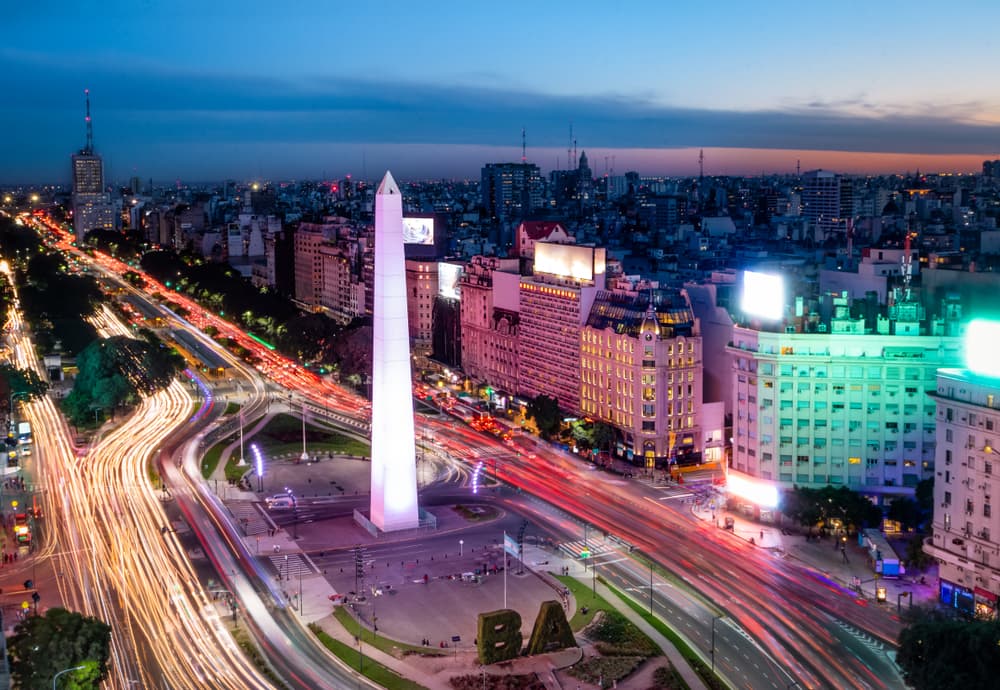
Buenos Aires: late dinners, full theaters, and prices on the move
Argentina's flat, walkable capital of about 3.1 million, with mild winters, a subway and bus network across the city, and an economy worth watching closely.
- 3,121,707
- Population (2022)
- $1,700/mo
- Monthly budget · single
- 64°F / 18°C
- Avg temperature
Plan on about $1,700 a month in U.S. dollars for one person in Buenos Aires, and most single budgets land between $1,400 and $2,000. A couple spends about $2,500 and a family of four about $3,700. A one-bedroom apartment in the center averages $750 a month, or about $550 farther out, and a meal at an inexpensive restaurant runs around $9. These are 2026 figures.
The city suits people who want a big capital's culture on a mid-range budget: theater, bookstores, late dinners, and neighborhoods like Palermo and Recoleta where most errands are a short walk. Remote workers and retirees with income from home both do well here, as long as they're ready to live in Spanish.
Here's the catch: Argentina's economy moves fast. Peso prices shift from month to month, transit fares rose again in August 2026, and a budget that works this year needs a cushion for the next. The safety index sits at 50, right in the middle, so big-city street sense matters.

Reviewed and updated October 8, 2026 · 3 min read
At a glance
$1,700
Monthly budget · single person
$750/mo 1-bed rent, center
50/100
Safety index
$25
Internet / month
64°Fannual average
Jul 52° · Jan 76°
Climate
3,121,707
Population (2022)
Expatsi estimates, updated Oct 2026, based on rental listings, government statistics, and local reporting.
Cost of living
What it costs to live in Buenos Aires
Single person
$1,400–$2,000/mo
about 45% below Austin, TX
Couple
$2,000–$3,000/mo
about 45% below Austin, TX
Family of four
$3,000–$4,400/mo
about 55% below Austin, TX
Compared with Austin, TX (Expatsi estimate, 2026).
- $9 −55%
- Inexpensive meal
- $600–$900/mo −62%
- 1-bed rent, center
- $450–$650/mo −59%
- 1-bed rent, outside
- $25/mo −62%
- Internet
- $40/mo −3%
- Transit pass
- $269/sq ft −59%
- Buy price, center
Expatsi estimates, updated Oct 2026, based on rental listings, government statistics, and local reporting.
Daily life
How Buenos Aires lives
- A grade, 89th percentile among the cities we track
- Dining & cafésstandout
- A grade, 95th percentile among the cities we track
- Arts & culturestandout
- A- grade, 73rd percentile among the cities we track
- Parks & outdoorsstrong
- A+ grade, 98th percentile among the cities we track
- Schools & educationstandout
- A grade, 93rd percentile among the cities we track
- Healthcare accessstandout
- B grade, 51st percentile among the cities we track
- Bike infrastructuretypical
- A+ grade, 100th percentile among the cities we track
- Public transitstandout
- A+ grade, good physical accessibility
- Accessibilitygood
Graded on OpenStreetMap amenity density relative to the 298 cities we track. Accessibility is the exception: it's graded against a fixed standard (terrain steepness and sidewalk surfaces), not a curve.
Climate
Weather through the year
Annual average 64°F (18°C) · 42 in of rain a year · Source: Meteostat station normals (87582, 1991-2020)
On the ground
Scenes from Buenos Aires
Getting around
Transport in Buenos Aires
Most of daily life happens on foot. Buenos Aires is flat, the central neighborhoods sit on a street grid, and in Palermo, Recoleta or San Telmo the grocery store, café and pharmacy are usually a few blocks away. The sidewalks are the weak spot: tiles are often broken or uneven, so watch your step.
For longer trips, you'll use the subte (the subway) and the colectivos, the city buses. Both run on the SUBE card, and registering your card gets you the lower fare. Our data puts a month of transit at about $40, but fares are adjusted often. Check the current price before you budget around it.
Ecobici, the city's bike-share, is free and open 24 hours a day. Signing up asks for an Argentine ID (DNI) and proof of address, so it's easier once you have residency.
Black-and-yellow taxis are easy to flag down, and Uber, Cabify and DiDi all work here. A May 2026 court ruling ordered app drivers to carry the same professional license and passenger insurance as taxi drivers, so the rules around ride apps are still settling.
You don't need a car. Traffic is heavy and parking in the central neighborhoods is hard, while walking, the subte, buses and taxis cover daily life.
- 158/sq mi
- Transit stops
- 7.5/sq mi
- Bike infrastructure
- 44/sq mi
- Wheelchair-accessible places
Mapped features per square mile from OpenStreetMap.
Keep exploring
Places like Buenos Aires

Community
Community & practical notes
Community: Newcomers tend to start in Palermo, Recoleta, Belgrano or Villa Crespo, where furnished rentals, cafés and coworking spaces cluster. The city keeps late hours, with dinner rarely before nine, and social life happens around the table. Daily life runs in Spanish, and landlords, building managers and government offices will expect it, so start classes before you arrive.
Healthcare: Public hospitals treat everyone, foreigners included, free at the point of use, though some provinces have started charging non-residents for non-emergency care. Most foreign residents buy a prepaga, a private health plan; OSDE, Swiss Medical, Galeno and Medicus are the big names, and Hospital Italiano and Hospital Alemán are the private hospitals people mention first. Pre-existing conditions are often handled with waiting periods or surcharges rather than exclusions, so ask each plan before you sign. Medicare doesn't cover care in Argentina.
Internet and coworking: Home internet runs about $25 a month, but quality varies by building. Test an apartment's fixed-line connection before you sign a lease if you work on video calls. Coworking options include Huerta and AreaTres in Palermo and Joy Cowork in Villa Crespo.
Limited mobility: The flat terrain helps, but broken sidewalks and high curbs make some blocks hard going in a wheelchair. The subte is being upgraded station by station, with new elevators and escalators tendered for stations on lines B, C, D and E, but not every station has an elevator yet. Plan routes ahead, and lean on taxis and ride apps where the subte falls short.
Retirement: Buenos Aires works for retirees who want city life rather than a beach town, with a couple's budget near $2,500 a month. Argentina's pensionado visa is built around a monthly pension and is filed after you arrive; the details are in our Argentina retirement visa guide. Compare it with other countries in our retirement visa options, and get the wider picture in our Argentina guide.
Housing
Renting and buying
- 1-bed rent (center)
- $600–$900/mo
- 1-bed rent (outside center)
- $450–$650/mo
- Buy price (center)
- $269/sq ft
- Buy price (outside center)
- $186/sq ft
Expatsi estimates, based on rental listings, government statistics, and local reporting.
Good to know
Frequently asked questions
Do you need a car in Buenos Aires?
No. The central neighborhoods are flat and walkable, the subte (subway) and city buses cover the city on one SUBE card, and taxis plus Uber, Cabify and DiDi fill the gaps. Traffic is heavy and parking is hard, so a car is optional for city life.
Can foreigners use hospitals in Buenos Aires?
Yes. Public hospitals in Argentina treat foreigners free at the point of use, though some provinces have begun charging non-residents for non-emergency care. Most foreign residents also buy a prepaga, a private health plan, from companies such as OSDE, Swiss Medical, Galeno or Medicus. Medicare doesn't pay for care in Argentina.
What is the weather like in Buenos Aires?
Buenos Aires has hot summers and cool winters, with the seasons reversed from the U.S. January average highs are near 83F, and July averages run from about 46F at night to 58F in the afternoon. The city gets about 42 inches of rain a year, spread through every month.
Can I retire in Buenos Aires?
Yes. Argentina has a pensionado (retiree) visa built around a monthly pension, and you file it after you arrive in the country. A couple spends about $2,500 a month in Buenos Aires, and the city's private hospitals and health plans are a big draw for retirees.
Is Buenos Aires safe for Americans?
Buenos Aires scores 50 on our safety index, right in the middle of the scale. Treat it like any large city: keep your phone and bag close in crowds and at street-side tables, and use a taxi or ride app late at night. Newcomers often settle in neighborhoods like Palermo, Recoleta and Belgrano.
How much does it cost to live in Buenos Aires?
One person spends about $1,700 a month in U.S. dollars in Buenos Aires, with most single budgets between $1,400 and $2,000 (2026 figures). A couple spends about $2,500 and a family of four about $3,700. Rent for a one-bedroom in the center averages $750 a month. Peso prices change often, so build in a cushion.
Do I need to speak Spanish to live in Buenos Aires?
For a smooth life, yes. You'll hear English in some cafés and coworking spaces, but leases, doctors, building managers and government offices run in Spanish. Argentine Spanish has its own accent and slang, so plan on classes before and after you arrive.
See how Buenos Aires fits your life
Take the free Expatsi Test and compare Argentina to over 100 countries on what actually matters: cost, healthcare, climate, and safety. About five minutes.
Why not you?