The Best Countries for Republicans and Conservatives to Move To


By Jen Barnett, Co-founder, Expatsi
November 23, 2023 · Updated November 10, 2026 · 14 min read
Plenty of Americans who lean right think about living abroad. Some want a lower tax bill in retirement. Some want a slower, more traditional place to raise kids. Some just want their Social Security check to go further somewhere warm. The usual "best countries" lists don't help much, because they rank places on things you may not care about and skip the things you do.
This guide looks at countries through the questions conservative Americans actually ask us: How much tax will I pay? Can I own a gun? Can I homeschool? Will I fit in at church? Is it safe? Can I own my house outright? And can I get a visa without a job offer?
No country gets every answer right. Most places with low taxes have strict gun laws, and most places with traditional values have weaker institutions than you're used to. For each country below we say what fits and what doesn't, and we link to our full country and visa guides.
The short version:
- Panama is the strongest all-round fit: territorial tax, U.S. dollars, a $1,000-a-month retirement visa, and a churchgoing, socially traditional culture.
- Paraguay is the cheapest and lowest-tax option, if you can live with fewer comforts.
- El Salvador has become one of the safest countries in the Americas, with real civil-liberties tradeoffs.
- Switzerland, Poland and Czechia suit people who want Europe with a strong gun culture, a strong military or strong faith, but none of them is easy to get into.
- The UAE has no income tax and almost no crime, but it is not a place for gun owners, and the current U.S. travel advisory is serious.
Before you pick a country: U.S. taxes follow you

Photo Credit: Shutterstock.
This is the part most people get wrong, so it comes first. The United States taxes its citizens on their worldwide income no matter where they live. Moving to a country with no income tax does not end your U.S. tax bill. As long as your income is above the normal filing threshold, you still file a federal return every year.
What changes is how much of that bill is left:
- Wages and self-employment income can be excluded up to the Foreign Earned Income Exclusion: $130,000 for 2025 and $132,900 for 2026, per person. To qualify you generally need to be a bona fide resident of another country or spend 330 full days abroad in any 12-month period.
- Social Security, pensions, IRA withdrawals, dividends, interest, capital gains and rent are not earned income, so the exclusion does not touch them. If you retire to a zero-tax country on investment income, you pay U.S. tax on it as if you lived in Ohio, minus the state tax.
- Foreign income tax you pay can usually be credited against your U.S. tax on the same income. That's why moving to a high-tax country often means you owe the IRS little or nothing. Our guide to the FEIE versus the foreign tax credit walks through which one to use.
- Self-employed people still owe U.S. self-employment tax abroad. The income exclusion doesn't reduce it. A totalization agreement can switch you into the other country's system instead, but of the countries below only Switzerland, Poland and Czechia have one with the U.S. In Panama, Paraguay, El Salvador, Costa Rica and the UAE, self-employed Americans keep paying U.S. self-employment tax.
- Reporting: if your foreign accounts add up to more than $10,000 at any point in the year, you file an FBAR. Living abroad, you also file Form 8938 once foreign assets pass $200,000 at year-end or $300,000 at any time (double that for joint filers). Our FBAR and FATCA primer covers the details.
- Your state may not let go. States like California, Virginia, New Mexico and South Carolina can keep taxing you if you haven't clearly given up your domicile there. Sell or rent out the house, move your driver's license and voter registration, and keep records.
Giving up citizenship is the only way out of the U.S. system entirely. The State Department cut the renunciation fee from $2,350 to $450 in April 2026. But people with a net worth of $2 million or more, or average U.S. income tax above $211,000 a year (the 2026 figure), can owe an exit tax on leaving. Very few people should take this step, and nobody should take it without a tax lawyer.
1) Panama

Photo Credit: Shutterstock.
Best for: retirees and families who want low taxes, U.S. dollars and a traditional culture, a few hours' flight from home.
Panama taxes only income earned inside Panama. Your Social Security, pension and U.S. investment income are not taxed there. It uses the U.S. dollar, so there's no currency risk on a dollar income.
The Pensionado visa is one of the easiest retirement visas anywhere. You need a lifetime pension of $1,000 a month ($750 if you buy a home worth at least $100,000). There's no minimum age, and it gives you permanent residency directly. Pensionados also get discounts on things like utilities, flights and medical bills. For investors, a decree signed in September 2026 set the Qualified Investor minimums at $300,000 for new property bought from a developer and $500,000 for resale property, with separate securities and bank-deposit options. The Friendly Nations visa now requires a $200,000 property purchase, a $200,000 fixed deposit or a job with a Panamanian employer.
Culturally, Panama is Catholic and evangelical, and socially traditional. In Pew's 2014 survey of Latin America, 61% of Panamanians said religion is very important in their lives, compared with 53% of Americans in Pew's survey from the same year. Its Supreme Court upheld the ban on same-sex marriage in 2023. Homeschooling became legal under a 2021 law.
The tradeoffs: Panama's 2025 homicide rate was 12.9 per 100,000, higher than the U.S. rate, though the violence is concentrated in a few areas. Foreigners can own guns only with permanent residency and a permit from the Ministry of Public Security. Bureaucracy is slow, and Panama City is humid and pricey compared with the rest of the country.
Where people land: Boquete for cool mountain air, Coronado for the beach, Panama City for jobs and hospitals. Start with our Panama guide.
2) Paraguay

Photo Credit: Shutterstock.
Best for: people who want the lowest taxes and costs in the Americas and don't need polish.
Paraguay has a territorial tax system with personal income tax rates of 8% to 10%, and foreign passive income generally falls outside it. Combined with low living costs, that makes it one of the cheapest places in South America to live on a U.S. retirement income.
Residency starts with a two-year temporary residence, which then converts to permanent residence. The rules tightened in 2026: permanent residency now asks you to show active, verifiable income, such as a pension, a registered job or tax filings. If you'd rather skip the two-year wait, a 2026 investor route grants permanent residency in one step for $200,000 in income-producing real estate. A home you live in yourself doesn't count.
Paraguay is socially conservative. Its constitution defines marriage as between a man and a woman, abortion is legal only to save the mother's life, and Catholic traditions run deep. Safety has improved: the homicide rate fell to 6.1 per 100,000 in 2025, and the State Department rates Paraguay Level 1, its lowest advisory, with extra caution near the Brazilian border.
The tradeoffs: Paraguay is landlocked, hot, and poorer than its neighbors, with patchier roads, healthcare and English. Its money is the guaraní, not the dollar. Homeschooling isn't clearly regulated. Gun ownership is legal through a registration with the military's arms office (DIMABEL), but rules for foreigners are not well documented, so ask a local lawyer.
Most expats choose Asunción or Encarnación. Read the full Paraguay guide.
Which country fits you best?
This article is the same for every reader. The Expatsi Test ranks 100 countries on what matters to you: answer 25 questions and see your top 10.
Why do you want to move abroad?
Pick all that apply.
Free · 5 minutes · 400,000 people have taken it
3) El Salvador
Best for: people who put public safety first and want a dollar economy with no tax on foreign income.
El Salvador's turnaround is real. Its homicide rate fell to 1.3 per 100,000 in 2025, among the lowest in the hemisphere, and the State Department rates it Level 1. Since 2024 the country has exempted foreign-source income from tax, so your pension and U.S. investments aren't taxed there. It uses the U.S. dollar. Bitcoin is still legal, but since a 2025 amendment businesses no longer have to accept it.
It's one of the most religious countries in the region: 85% say religion is very important and 61% attend services weekly. Abortion has been banned in all cases since 1998.
Retirees and people with steady passive income can apply for permanent residency. Larger investors can use the investor route. Permanent residents aged 21 and over can apply for a firearms license.
The tradeoffs: the safety came from a state of exception that has been renewed continuously since March 2022. Rights groups report tens of thousands of detentions and hundreds of deaths in custody, and a 2025 constitutional change allows indefinite presidential reelection. If due process and checks on power matter to you, weigh that. Homeschooling is not legal, and infrastructure outside San Salvador is basic. See our El Salvador guide.
4) Costa Rica
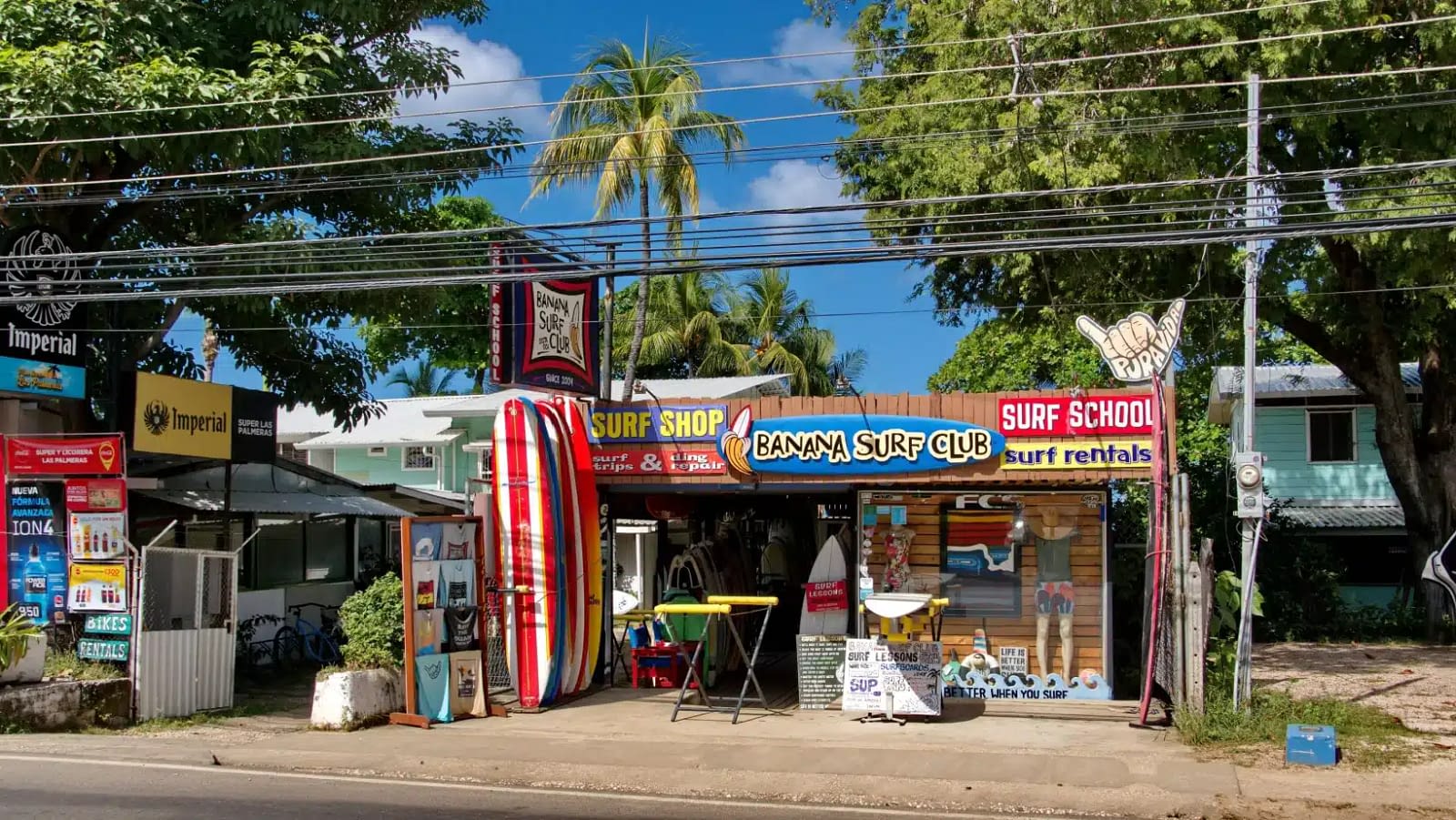
Photo Credit: Shutterstock.
Best for: retirees who want an established American community and a straightforward pension visa.
Costa Rica taxes only local income, so Social Security and pensions aren't taxed there. The pensionado visa needs $1,000 a month in lifetime pension income. The rentista visa needs $2,500 a month for two years, often shown with a $60,000 bank deposit, and the investor visa is back to a $200,000 minimum after a temporary $150,000 threshold expired in July 2026. Costa Rica is also religious: 75% told Pew religion is very important.
The tradeoffs: Costa Rica is more socially liberal than its neighbors. Same-sex marriage has been legal since 2020. Homeschooling isn't recognized, so kids need an authorized school. Only citizens and permanent residents can own guns, which means three years on a temporary visa first. The 2025 homicide rate was 16.8 per 100,000. And a bill introduced in September 2026 would tax residents 15% on foreign investment income. It hasn't passed, but watch it if you live on dividends.
Popular with retirees: Atenas, Grecia and Tamarindo. Full details in our Costa Rica guide.
5) Switzerland

Photo Credit: Shutterstock.
Best for: high earners and wealthy retirees who want local control, low crime and a real gun culture.
Switzerland comes closest to American ideas about decentralized government. Cantons set much of their own tax policy and compete with each other, and voters decide major questions by referendum. It ranked 3rd on the 2026 Global Peace Index; the U.S. ranked 134th. Gun ownership is common, and foreigners with a C settlement permit buy firearms under the same rules as Swiss citizens. Homeschooling is decided canton by canton, and the French-speaking cantons tend to allow it.
The tradeoffs: getting in is hard. Non-EU work permits are capped at 8,500 a year and need an employer to sponsor you. Wealthy people who don't work in Switzerland can negotiate lump-sum taxation, based on living costs rather than income, but the federal minimum tax base is around CHF 435,000 a year. Several cantons, including Zurich, have voted to abolish it. Remember that the IRS still taxes your worldwide income on top. Switzerland is also among the most expensive countries on earth, and only 9% of Swiss say religion is very important. Citizenship takes 10 years. See our Switzerland guide.
6) Poland

Photo Credit: Shutterstock.
Best for: Catholic families and people who value a strong national defense.
Poland is the most religious of the European countries here: in Pew's survey 41% of Poles attend services weekly, against 9% in Hungary and 7% in Czechia. It spends more of its economy on defense than any other NATO member, an estimated 4.48% of GDP in 2025. It ranked 22nd on the 2026 Global Peace Index. Homeschooling is legal with the school director's approval and yearly exams, though a 2025 funding change has made it harder for some families. Our list of the best countries for Catholics covers Poland's church life in more depth.
The tradeoffs: Poland has no retirement or passive-income visa for Americans. You need a job offer or a registered business, and permanent residence comes after five years. Income tax runs 12% and 32%, and social contributions on top are heavy for the self-employed. Getting a gun permit for self-defense requires showing an above-average threat; sport and hunting permits are the usual route. Look at Kraków or Gdańsk, and start with the Poland guide.
7) Czechia

Photo Credit: Shutterstock.
Best for: gun owners who want to live in Europe, and self-employed people.
Czechia is unusual in Europe: in 2021 it amended its constitution to guarantee the right to defend your life with a weapon. A new Firearms Act, tightened after the December 2023 Prague university shooting, took effect on January 1, 2026, with two permit levels and medical checks every five years. Ownership is still far more accessible than in most of Europe, but you must be a resident to apply. Czechia ranked 13th on the 2026 Global Peace Index, its income tax is a flat 15% on most incomes (23% above roughly CZK 1.76 million a year), and homeschooling is legal as "individual education" with regular exams.
The most common route for Americans is the long-term residence permit, often through a Czech trade license (the "živno"). IT and marketing professionals can use the digital nomad program.
The tradeoffs: Czechia is one of the least religious countries in the world. Only 7% told Pew religion is very important. Winters are long and gray, and outside Prague and Brno English is limited. Read our Czechia guide.
8) United Arab Emirates

Photo Credit: Shutterstock.
Best for: high earners who want zero local income tax and very low street crime.
The UAE has no personal income tax. If you work there, the Foreign Earned Income Exclusion can wipe out U.S. tax on most of your salary, which makes it one of the few places where a working American can owe almost nothing. Residency options are clear: a 10-year Golden Visa for property worth AED 2 million (about $545,000), a retirement visa from age 55, and a remote work visa for people earning $3,500 a month from abroad.
The tradeoffs: this is the wrong place for gun owners, since civilian gun ownership is effectively limited to Emirati citizens. Islam is the official religion, and laws on speech and public behavior are far stricter than in the U.S. There's no path to citizenship you can apply for, so you're a long-term guest. Remember the exclusion doesn't cover pensions or investment income. Most important right now, the State Department rates the UAE Level 3: Reconsider Travel because of terrorism and regional armed conflict. It was raised in March 2026, during the U.S. conflict with Iran, and had not been lowered as of this update. Check the current advisory before you plan anything. See our UAE guide.
Countries that look like a fit but may not be
Hungary. For years Hungary drew conservative Americans because of Viktor Orbán's government. That changed in April 2026, when Péter Magyar's Tisza party won a two-thirds majority and Magyar became prime minister. A draft bill published in November 2026 would stop new applications for the Guest Investor golden visa from January 1, 2027. Homeschooling has been almost impossible there since 2019. Hungary is still safe, with a 15% flat income tax, but if you were planning around its politics or its golden visa, recheck both.
Uruguay. It's the most stable, least corrupt country in South America, and gun ownership is legal with a license. But it's also the most socially liberal: legal same-sex marriage, abortion on request and legal recreational cannabis, and only 28% of Uruguayans say religion is very important. Its famous tax holiday on foreign income also got harder to get from 2026. If stability matters more to you than culture, read our Uruguay guide.
Not abroad, but worth a look: Puerto Rico
If what you want is lower taxes without giving up the Second Amendment, consider Puerto Rico. It's a U.S. territory, so there's no visa and the Second Amendment applies, though Puerto Rico has its own weapons law and you need a local license even to own a gun. Income sourced in Puerto Rico is excluded from federal tax for bona fide residents. Under Act 38 of 2026, new resident-investor decrees applied for from January 1, 2027 carry a 4% tax on interest, dividends and capital gains, and those applied for by December 31, 2026 keep the old 0% through 2035. The law was still awaiting final approval from the federal oversight board, which has raised objections, so confirm its status with a Puerto Rico tax lawyer before you move. Income from outside Puerto Rico, including most U.S. investments you already hold, is still federally taxed.
Gun ownership abroad: what to expect
Very few countries give foreigners anything close to American gun rights. A few patterns hold almost everywhere:
- Residency first. Panama, Costa Rica, El Salvador and Mexico let foreigners own guns only once they hold permanent residency. Switzerland treats you like a citizen once you hold a C permit.
- Licenses, not rights. Even in gun-friendly countries you'll need a license, a background check and often a medical or psychological exam. Carry permits are much harder than ownership.
- You can't easily bring your own. Taking guns abroad temporarily for hunting or competition is allowed under export rules, but moving a collection permanently needs export licenses and import permits, and it's generally impractical. Most people sell and buy again.
Quick comparison
| Country | Tax on your foreign income | Easiest route for Americans | Foreign residents can own guns | Homeschooling |
|---|---|---|---|---|
| Panama | None (territorial) | Pensionado, $1,000/month | Yes, with permanent residency | Legal |
| Paraguay | Generally none (territorial) | Temporary residence, then permanent | Legal with registration; check rules for foreigners | Not regulated |
| El Salvador | None since 2024 | Retiree or income residency | Yes, permanent residents 21+ | Not legal |
| Costa Rica | None today (bill pending) | Pensionado, $1,000/month | Permanent residents only | Not recognized |
| Switzerland | Taxed (lump-sum option for the wealthy) | Employer-sponsored permit | Yes, with permits; C permit treated like citizens | Varies by canton |
| Poland | Taxed | Work or business permit | Yes, with a permit | Legal with approval |
| Czechia | Taxed (15%/23%) | Trade-license residence | Yes, as a resident with a permit | Legal |
| UAE | None | Golden, retirement or remote work visa | Effectively no | Allowed for expats |
Remember that the IRS taxes U.S. citizens on worldwide income in every one of these countries. "None" above means the foreign country doesn't tax that income.
Where to go from here
Your priorities won't match anyone else's exactly. A retiree living on Social Security will lean toward Panama or Costa Rica, while a high-earning family that wants to homeschool might end up in Switzerland or Panama. Take the Expatsi Test to see which countries match your budget, climate, safety and lifestyle answers. For the tax side, our guide to how much expats pay in taxes is a good next read.
Visa rules and tax laws in this guide were checked in November 2026. They change often, so confirm current requirements with the country's immigration office or a licensed attorney before you apply.